

Reviewed · ATHENS MYTHOLOGY TOURS
Athens Highlights: Myths & Philosophers Walking Tour
The most unusual part of this Athens walk is its subject: you are not simply ticking off ancient sites, you are tracing how Socrates, Plato, Aristotle, and the early Greek thinkers shaped ideas about democracy, ethics, science, and daily life. The route begins near the Academy of Athens and ends on Areopagus Hill, with the Acropolis above you.
I like the private format, since you can stop and ask about a philosopher, myth, or modern Athens question instead of following a fixed lecture. I also like the mix of famous places and quieter corners, from the National Garden and Ermou Street to Anafiotika. Guides named Bianca, John, Gianni, and Effrosyni have led this experience, with Bianca receiving especially strong praise for her storytelling and ability to adjust the conversation.
The main consideration is the four-hour length. It is a good choice if you enjoy walking and discussion, but it may feel long if you want a fast sightseeing circuit. Entrance fees are not included, and the itinerary is primarily an outdoor walk, so hot weather can affect your comfort.
Key points before you book
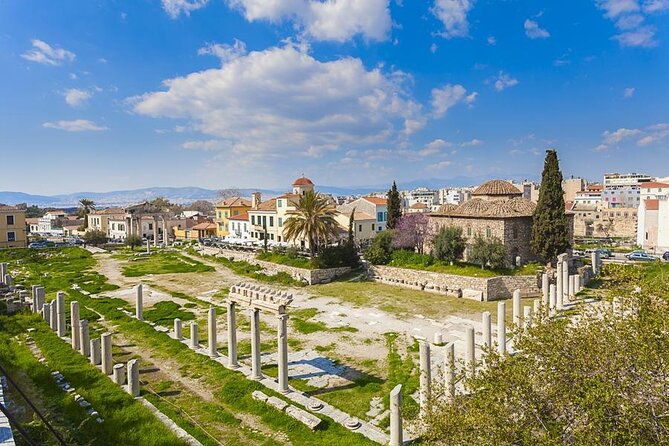
- Philosophy becomes part of the city walk: Ideas about democracy, physics, ethics, astronomy, and Stoicism are tied to real Athens landmarks.
- Private attention makes a difference: Your group can ask questions throughout and shape the depth of the discussion.
- The route ends with a superb view: Areopagus Hill gives you a memorable look toward the Acropolis and a fitting place to discuss Greek gods and myths.
- Several guides may lead the tour: Bianca, John, Gianni, and Effrosyni are named in the feedback, so the exact guide may vary.
- It costs $102.80 per person: The price makes the most sense for a private group that values conversation rather than a basic city overview.
- Bring walking shoes and patience: The walk lasts about four hours, and some stops involve outdoor discussion rather than indoor sightseeing.
Why this Athens walk feels different
Many Athens tours arrange the city around monuments. This one arranges it around questions. What is justice? How should a city govern itself? Can the natural world be understood through reason? What makes a good life?
That approach gives familiar places a second layer. The Hellenic Parliament is not only a grand building. The National Garden becomes a place to connect ancient ideas with modern scientific thought. The Ancient Agora is not just another archaeological site, but the setting associated with public debate and Stoic philosophy.
You will still see recognizable Athens, but the guide’s job is to connect places, people, and ideas. That makes this a better fit for you if you enjoy conversation and stories. It is less suitable if you want a rapid list of dates, photo stops, and little commentary.
The tour is private, so only your group takes part. That matters here. Philosophy works better when you can interrupt, ask for an example, or say that you disagree. Several accounts describe guides adjusting the level for mixed groups, including families with teenagers, couples with different backgrounds, and people who had studied philosophy before.
More Greek mythology tours in Athens:
- Athens: Mythology of Delphi, Museum and Arachova Guided Tour
★ 4.6 · 4,008 reviews - Athens & Acropolis Highlights: Greek Mythology Small-Group Tour
★ 5.0 · 2,370 reviews - Athens: Acropolis and Mythology Highlights Small Group Tour
★ 4.8 · 2,275 reviews
Starting at the Academy of Athens
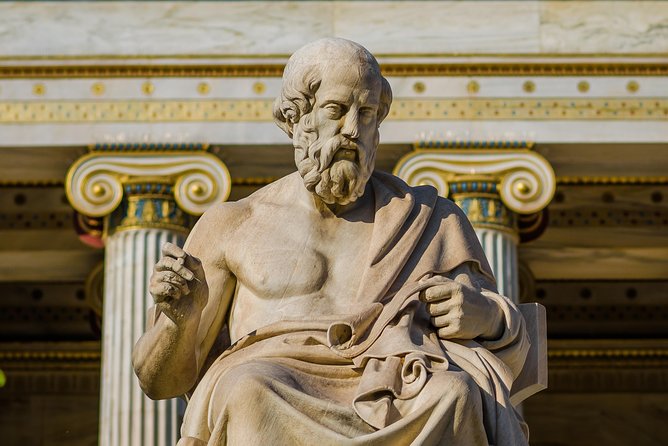
The walk begins at Panepistimiou in central Athens, near the Academy of Athens. The first stop lasts about 15 minutes and introduces the Trilogy of Athens, the group of major neoclassical buildings in this part of the city.
This is a smart starting point. The Academy gives the tour a direct link to learning, while the discussion reaches back through the main movements of ancient Greek philosophy. You can expect the guide to place the pre-Socratic thinkers, Socrates, Plato, and later philosophers into a larger story rather than treating them as isolated names.
The stop is brief, so do not expect a full interior visit. Admission is not included, and the walk is built around seeing and discussing the area from outside. If you already know a little about Greek philosophy, this is a good point to tell your guide what interests you. The private structure gives the conversation room to change direction.
The schedule also includes a stop connected with a museum holding one of the world’s major collections of ancient and modern coins. The supplied details do not clearly identify the museum or explain whether the tour enters it, and admission fees are not included. If coins are important to you, ask the operator for clarification before booking.
The Hellenic Parliament and the Changing of the Guard
At the Hellenic Parliament, the tour turns from ancient thought to a living Greek tradition. You will see the Changing of the Presidential Guard in front of the building, with about 15 minutes allocated here.
This stop gives the walk a useful modern counterpoint. Athens is not an archaeological park frozen in the fifth century BC. It is a working capital, and the Parliament is a direct reminder that Greek political life continues in the same city whose ancient thinkers wrestled with citizenship and government.
The guide can use this setting to discuss democracy and the way later generations have interpreted ancient Athens. You also get one of the city’s best-known public landmarks without paying an entrance fee.
Timing may matter here. The stated itinerary includes the guard change, but it does not specify which daily ceremony or exact schedule applies. Ask the provider about timing if this is a major reason for booking. The tour may pause near the Parliament, but you should not assume that every formal ceremony is included in full.
The National Garden: science, ethics, and public life
The 15-minute National Garden stop offers shade and a change of pace. The guide links the garden walk with democracy, physics, astronomy, ethics, and other applied sciences connected to Greek thought.
I especially like this part for families and curious first-time visitors. It can be hard to discuss abstract ideas while standing in a crowded street. A garden gives the group a calmer place to pause, listen, and ask questions.
The subject range is broad. In a short stop, you are unlikely to receive a full course in ancient science or political theory. Instead, think of it as a guided conversation that shows how Greek philosophy reached beyond temples and famous statues. If you want a detailed treatment of one subject, tell the guide early.
The itinerary allows about 15 minutes here, but some accounts describe guides finding shady places for longer discussions. The exact rhythm depends on your guide, your group, and the questions you bring.
More philosophy walks in Athens:
- Philosophy and Democracy tour of Athens
★ 5.0 · 285 reviews - Athens: Philosophy and Democracy Walking Tour
★ 5.0 · 91 reviews - Mythology, Philosophy and Democracy Tour
★ 5.0 · 64 reviews - Athens: the Great Greek Philosophers Guided Tour in Spanish
★ 4.9 · 59 reviews
Ermou Street and the many sides of Hermes
Ermou Street brings the tour into one of central Athens’s main shopping areas. Here, the focus shifts to Hermes, the mischievous god associated with travel, communication, trade, and cleverness.
This is a nice example of the tour’s method. You are not taken away from ordinary Athens to discuss mythology. Instead, the story is placed in the middle of a modern street where commerce and movement are still part of daily life.
The stop is scheduled for about 15 minutes and is free. Do not expect a museum display or a large ancient monument at this point. Its value is in the guide’s storytelling and in the way myth is connected to the city around you.
After Ermou Street, the route includes a square named for the Church of the Pantanassa. The available details do not give this stop a separate duration or full description. Treat it as part of the walk between the main points, and ask your guide to explain its place in the route if you want more time there.
The Ancient Agora and the birth of Stoic philosophy
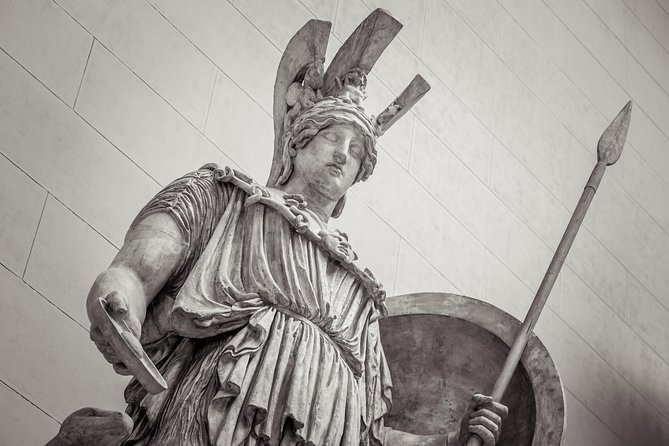
The Ancient Agora is one of the most meaningful stops for the tour’s central theme. This was a place of public life, discussion, trade, and civic activity. The walk connects it with the Poikile Stoa, or Painted Porch, associated with the beginnings of Stoic philosophy.
The setting helps you understand why philosophy in ancient Athens was not only a private academic exercise. Ideas were argued in public spaces, shaped by civic life, and tested through conversation. That makes the Agora a strong place to talk about Stoicism and the practical question of how a person should live.
The stop lasts about 15 minutes. Admission is not included, so you should not assume that your ticket allows entry to the archaeological site. The tour may discuss or view the area as part of the route, but confirm the exact access arrangements before booking if entering the Agora is essential to you.
This is also a point where the private format earns its keep. You can ask how Stoicism differs from Socratic questioning, Platonism, or the Cynic tradition discussed later. A large group would make that exchange harder.
The Tower of the Winds and the keeper of the weather
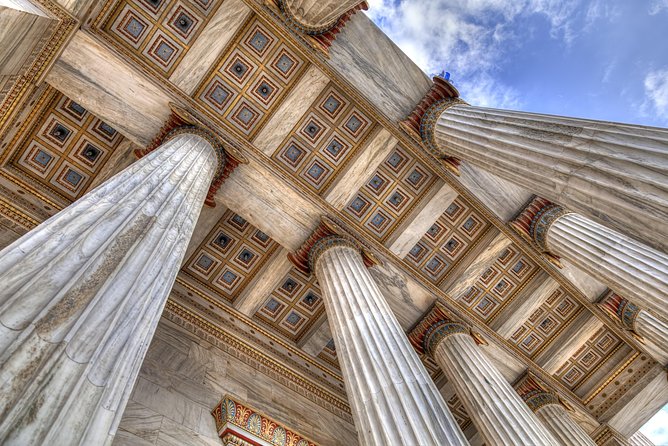
At the Tower of the Winds, the guide introduces Aiolos, the keeper of the winds. The tower itself gives the discussion a direct connection between mythology, observation of nature, and early efforts to measure time and weather.
The stop is listed at about 15 minutes, and admission is not included. Even from outside, the monument provides a strong visual anchor for the story. You can look at a real ancient structure while hearing about the gods and forces once used to explain the natural world.
This is another brief stop, so expect a clear introduction rather than a full archaeological lecture. If you are interested in ancient engineering or astronomy, tell the guide. The tour’s private format makes it possible to give that subject more attention, although the total route still has to keep moving.
Anafiotika and the Cynic philosophers

The route then climbs toward Plaka and Anafiotika, beneath the Acropolis. This section lasts about 20 minutes and focuses on the Cynic philosophers.
Anafiotika is a fitting setting for a discussion of people who challenged social habits and conventional ideas. The small neighborhood brings you into a more intimate part of Athens, away from the larger ceremonial spaces earlier in the route. The area is also free to visit.
You should expect some uphill walking as the route reaches the Acropolis slopes. The information provided does not promise a particular accessibility arrangement, though most people can participate and service animals are allowed. Comfortable shoes matter more here than stylish footwear.
This may be one of the most rewarding stops if you like philosophy that feels practical and provocative. Cynic thought can lead to lively questions about possessions, status, comfort, and independence. It is also a good place for a guide to adapt the conversation to teenagers or younger adults, who may find these ideas more direct than a formal lecture on philosophical schools.
Areopagus Hill and the final Acropolis view
The tour ends on Areopagus Hill, also called Mars Hill, with a view toward the Acropolis. The final 15 minutes connect the setting with myths about the Olympian gods.
Ending here is a strong choice. After several hours of moving through modern streets, gardens, archaeological areas, and Plaka, you finish with one of the clearest visual reminders of ancient Athens. The view gives the tour a natural pause and lets the mythological side of the experience come forward.
The hill is free, but the surface can be uneven and the route includes walking. Take care on the stone, especially in warm or dry weather. The tour does not include a visit inside the Acropolis, so book this experience for the city’s ideas, stories, and viewpoints rather than as an Acropolis ticket substitute.
The meeting point is at Panepistimiou, and the end point is Areopagus Hill at Theorias 21. Since the walk crosses central Athens and finishes near the Acropolis area, you can plan a meal or another activity afterward, though leave yourself enough time to reach any reservation.
How the guides handle the philosophy
The guide can make or break a tour built around abstract ideas. Here, Bianca is praised repeatedly for warmth, storytelling, and her ability to adjust the discussion to the group. John is also described as engaging and generous with his time, while Gianni and Effrosyni are named as other guides who have led the experience.
That does not mean Bianca or any particular guide is guaranteed for your date. The provider is Be a Greek, and the exact guide should be confirmed when you book if that matters to you.
The best part of the guiding style is the conversational approach. You are encouraged to ask questions, compare philosophers, and relate old ideas to ordinary life. One family found the tour worked for parents and teens with different levels of interest. Another group spent much of the time discussing pre-Socratic thinkers, Socrates, Plato, and Aristotle.
Expect a thoughtful walk, not a performance with constant jokes. The guides have been praised for making philosophy accessible, but the subject still requires attention. If your group prefers a fast-moving sightseeing tour with minimal discussion, this may not be the right match.
Price, timing, and what you receive
At $102.80 per person, this is not a budget walking tour. The value depends heavily on group size and your interest in the subject.
For one or two people, the cost may feel high compared with a standard group walk. For a family or small group using the private format, the price can make more sense, especially with group discounts available. You are paying for personal discussion and a specialized route, not for entrance tickets to a long list of monuments.
The experience lasts about four hours. Coffee or tea and bottled water are included, which is useful during a long outdoor walk, but personal expenses and all entrance fees are extra. The tour is offered in English and accepts mobile tickets.
The experience has a 5.0 rating from 125 reviews, with 99 percent of customers recommending it. That record points to a clear strength in the guide-led discussion, though it should not make you ignore the practical limits: four hours on foot, outdoor exposure, and no included admission to the major archaeological sites.
You can cancel for a full refund up to 24 hours before the start time. Changes made less than 24 hours before the start are not accepted, and poor weather may lead to a new date or a full refund.
Who should book this experience
I would choose this tour if you want Athens to feel like a place of ideas rather than a sequence of monuments. It suits:
- Philosophy students and lifelong readers
- Families with teenagers or young adults
- Couples who prefer conversation to a standard sightseeing script
- First-time visitors who want context for Athens landmarks
- Repeat visitors who have already seen the main sites
- People interested in both Greek mythology and ancient thought
You do not need a philosophy degree. The guides are described as able to meet beginners and more advanced participants at the same time. Still, you should enjoy listening, asking questions, and walking for several hours.
I would be less likely to book it for a very young child who needs constant movement, for anyone looking mainly for interior visits, or for a visitor who wants a low-cost overview of Athens. The tour’s strength is its depth of conversation, and that is also what makes it less suitable for a quick sightseeing schedule.
Should you book the Myths and Philosophers Walking Tour?
Book it if you want to connect the Academy, Parliament, Agora, Tower of the Winds, Plaka, and Areopagus through stories about how people think and live. The private format, guide flexibility, and final Acropolis view give it more personality than a standard city walk.
Before paying, confirm the guide assigned to your date, the exact plan for the coin museum stop, and whether the Ancient Agora or Tower of the Winds will be entered. If you are comfortable with the four-hour length and extra entrance fees, this is a strong choice for making Athens feel intellectually alive, not just historically important.
FAQ
How long does the Athens Myths and Philosophers Walking Tour last?
The tour lasts approximately four hours.
Is this a private tour?
Yes. Only your group participates, so you can ask questions and discuss the subjects with your guide throughout the walk.
What language is the tour offered in?
The experience is offered in English.
Where does the tour begin and end?
It begins at Panepistimiou, Athens 106 79, Greece, and ends at Areopagus Hill, Theorias 21, Athens 105 55, Greece.
Are entrance fees included?
No. Entrance fees to points of interest are not included. Personal expenses are also extra.
Are food or drinks included?
Coffee or tea and bottled water are included.
Can I cancel for a full refund?
Yes, if you cancel at least 24 hours before the experience start time. Poor weather may lead to a different date or a full refund.
More city tours in Athens
- Best of Athens Half Day Private Tour
★ 5.0 · 3,714 reviews - Athens Half-Day Sightseeing Tour with Tickets of Acropolis
★ 4.0 · 1,402 reviews - Highlights of Athens biketour
★ 5.0 · 840 reviews - Essential Athens Highlights Plus Cape Sounion Skip-The-Line Tour
★ 5.0 · 705 reviews
More walking tours in Athens
- Athens: Acropolis and Parthenon Guided Walking Tour
★ 4.6 · 5,882 reviews - Greek Food Walking Tour in Athens
★ 5.0 · 4,740 reviews - Acropolis: Acropolis and Parthenon Guided Walking Tour
★ 4.7 · 3,442 reviews - Acropolis monuments & Parthenon Walking Tour with Optional Acropolis Museum
★ 5.0 · 2,678 reviews
Newly reviewed around Athens
- Feel Ancient thermal Spa Visit Delphi, Leonidas ℨoo Spaʀtan★ 5.0 · 4 reviews
- Food Tour★ 5.0 · 3 reviews
- Explore the Hidden Food Gems of Athens★ 5.0 · 57 reviews
- Food Experience in Athens including Unlimited Lunch★ 5.0 · 3 reviews
- Eat Your Way Through Athens: A Local Food Walk★ 4.9 · 97 reviews
- From Athens: Delphi Private Tour with Lunch Time★ 4.0 · 3 reviews
- Delphi: Spanish guided one day tour★ 4.6 · 55 reviews
- Early Entry Acropolis & Museum. Beat the Crowds & the heat★ 5.0 · 3 reviews
Athens Mythology Tours, compared.
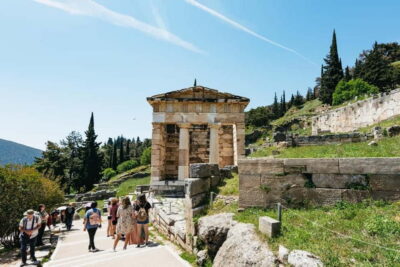
Mythology of Delphi, Museum and Arachova Guided Tour
Read our review →
Athens & Acropolis Highlights: Greek Mythology Small-Group Tour
Read our review →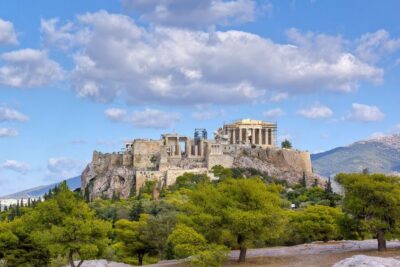
Acropolis and Mythology Highlights Small Group Tour
Read our review →

Greek Mythology Treasure Hunt for Kids – Athens Private Tour
Read our review →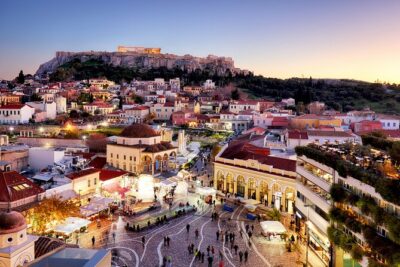
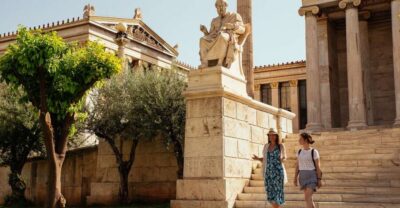

Browse the lists this tour appears in