
Reviewed · ATHENS MYTHOLOGY TOURS
Greek Mythology Treasure Hunt for Kids – Athens Private Tour
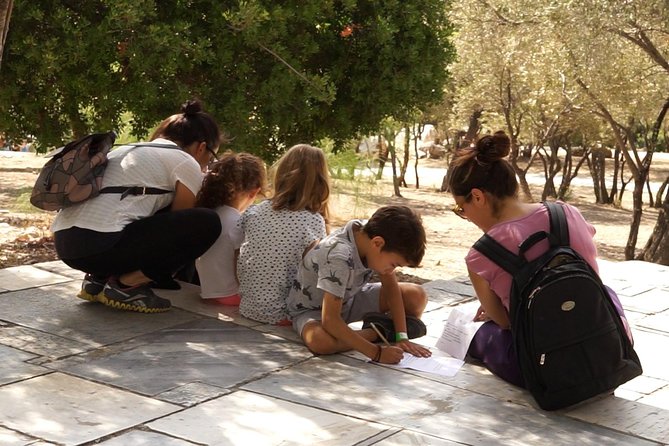
Athens can be a tough sell to young children: hot stones, long names, and ruins that may look like piles of old marble. This private treasure hunt changes the mood by turning Greek mythology into a game, with riddles, challenges, map reading, points, and a final code. The city becomes the game board.
I especially like the family-only format, since the guide can adjust the pace and questions to your children instead of managing a large mixed group. I also like the route, which links major landmarks with pleasant city streets and green spaces. The main caution is age: younger children and mythology fans often get the most from it, while some older children may find the games too simple.
Key points to know before booking

- The route connects five central Athens stops: the Temple of Olympian Zeus, Plaka, the Panathenaic Stadium, the National Garden, and Syntagma Square.
- The guide leads games rather than giving a standard lecture: expect stories, riddles, challenges, activity sheets, and clues that build toward a treasure-hunt solution.
- It is a private four-hour outing: only your family participates, making it easier to pause, ask questions, or adjust the pace.
- You do not enter the major sites: entrance fees are not included, and the experience works as an outdoor walking activity rather than an Acropolis or ancient ruins tour.
- The strongest age range appears to be younger school-age children: ages 4 through 10 are repeatedly described as engaged, though older children can enjoy it when they already like mythology.
- A refreshment is included for each person: the price also covers activity materials, taxes, and fees.
Why this mythology hunt works for families
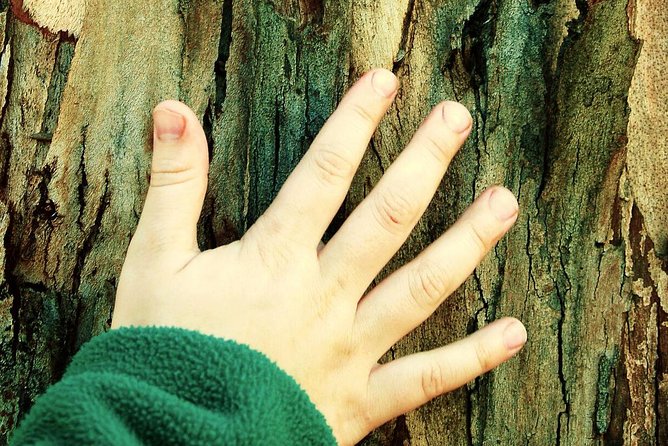
The best family sightseeing has a simple trick: it gives children something to do. Here, your child is not only listening to a story about Zeus or Athena. They may be solving a riddle, earning points, reading a map, searching for a clue, or competing against the adults.
That shift matters in Athens. A conventional city walk can ask children to admire one monument after another. This tour gives each stop a purpose. The Temple of Olympian Zeus becomes part of the hunt. Plaka becomes a place to follow the myths. The National Garden provides a cooler setting for another activity.
The private format is a major advantage. Your guide works with one family, not a busload of children at different energy levels. If your four-year-old needs a slower pace, or your older child wants to ask about a particular god, the guide can respond without holding up a group.
Guides named in family feedback include Bianca, Antonia, Niki, Effie, and Alexandra. The strongest praise goes to their storytelling and ability to draw children into the activity. Bianca is described as especially good at bringing shy children into the conversation. Antonia is praised for adjusting the material for children ranging from toddlers to teenagers. Effie is noted for handling a five-year-old and an eleven-year-old in the same family.
That flexibility is useful, but you should still share every child’s age when booking. The activity is designed around children, yet one family with children aged 8, 10, and 12 found the games too young for the older end of that range. The guide may adjust the stories and questions, but the basic hunt format remains the same.
More Greek mythology tours in Athens:
- Athens: Mythology of Delphi, Museum and Arachova Guided Tour
★ 4.6 · 4,008 reviews - Athens & Acropolis Highlights: Greek Mythology Small-Group Tour
★ 5.0 · 2,370 reviews - Athens: Acropolis and Mythology Highlights Small Group Tour
★ 4.8 · 2,275 reviews
The Temple of Olympian Zeus starts the hunt
The first stop is the Temple of Olympian Zeus, one of the grandest ancient sites on the route. The children learn about the huge temple and begin the treasure hunt with its first story or challenge.
The site gives the guide a strong opening subject. The scale of the columns helps children understand that ancient Athens was not a small village with a few broken stones. It was a place that attempted enormous building projects in honor of the gods.
You should know that the entrance ticket is not included, and the activity does not promise entry to the temple. The tour uses the area as part of the outdoor route, so plan a separate visit if you want to walk inside the archaeological site. This distinction is important: you are booking a mythology walk, not a full ancient Athens admission tour.
The scheduled time is about 30 minutes. That keeps the opening from becoming a long history lesson, and it gives the guide room to move the children into the next challenge before attention fades.
Plaka adds stories, streets, and a change of pace
From the temple area, the hunt continues into Plaka, the old neighborhood below the Acropolis. This is one of the more useful parts of the route for families because the setting feels less formal than an archaeological site.
Plaka gives children ordinary streets, shopfronts, lanes, and small details to notice while the guide continues the mythology. The neighborhood is also a practical place to get your bearings near the Acropolis area. You may pass through places you want to revisit later for food or a relaxed walk.
The tour allocates about 30 minutes here, and there is no admission charge. That makes Plaka a good place for an activity that depends on movement and observation rather than standing in one spot.
The tradeoff is that this is not a focused Plaka history tour. The neighborhood serves the treasure hunt, so the guide’s attention stays on myths, clues, and challenges. If you want detailed architecture or shopping advice, ask your guide, but do not expect a dedicated neighborhood tour.
The Panathenaic Stadium brings Greek sport into the story

The next stop is the Panathenaic Stadium, also called the Kallimarmaron. Built entirely from marble, it is one of Athens’s most striking landmarks and an easy place to connect ancient life with something children understand: sport and competition.
The hunt can use the stadium as a natural setting for questions about ancient contests, heroes, or the role of athletic achievement in Greek culture. The activity is not simply about seeing the stadium. It gives the children a reason to pay attention to its shape and scale.
Again, the admission fee is not included. The route takes you to the landmark, but you should arrange a separate ticket if you want to enter. This is one reason to treat the experience as a family orientation walk rather than a substitute for a full site visit.
Thirty minutes is enough for the guide to use the stadium as a dramatic backdrop without making the stop feel like a formal museum visit. Families who want to see the inside should allow extra time before or after the tour.
More treasure hunts and city games in Athens:
- The Acropolis Treasure Hunt: Licensed Guide + Interactive Puzzles
★ 5.0 · 60 reviews - Athens: Family Mythology Treasure Hunt and Tour
★ 4.8 · 42 reviews - Athens: Percy Family Treasure Hunt & Tour
★ 4.8 · 19 reviews - Athens Escape City Game “The Journey Through Time”
★ 5.0 · 12 reviews
The National Garden offers shade and myth-making

The National Garden is a smart stop in the middle of a four-hour walk. It gives children a break from open stone plazas and creates a more comfortable place for games and stories.
Here, the guide explains how ancient Greeks created myths to make sense of the natural world and events they could not explain scientifically. That idea gives the activity more depth than simply memorizing the names of gods. Your children begin to see mythology as a way people once explained storms, seasons, nature, hope, and human behavior.
This is also where the tour’s practical family design shows itself. One family specifically appreciated that the guide looked for shaded places while leading the activities. Athens can be hot, and a four-hour outdoor experience needs smart pauses. The garden does not eliminate the heat, but it gives the group a better setting for sitting, listening, and solving clues.
The stop is free and lasts about 30 minutes. Bring water, even though each person receives a coffee or traditional refreshment during the experience. The supplied drink is a pleasant extra, not a replacement for your own water planning.
Syntagma Square completes the story with hope
The final listed stop is Plateia Syntagmatos, or Syntagma Square, the large central square in Athens. Here, the children learn about hope and how people have found it and represented it.
That makes a thoughtful ending for a hunt built around gods, heroes, and human questions. The final part may include the last clue or solution, and the route’s activities use points and numbers that can help children crack a code. One family described the excitement of waiting to open Pandora’s box, another classic mythology touch that gives the finish a clear sense of reward.
The tour ends at Syntagma Square, which is useful for the rest of your day. You are near public transportation and central Athens, rather than being returned to the starting point. Remember this when planning your route back to your hotel or onward meal.
The end point also gives you a chance to continue sightseeing on your own. You could treat the hunt as a morning orientation and spend the afternoon at the Acropolis, the Ancient Agora, or another museum. Those visits are not included, so plan them separately.
What the activities are really like
The exact games vary with the children’s ages, but the basic pattern is clear. You can expect stories at each stop, questions that invite children to answer, riddles, small challenges, and a collection of clues or numbers that lead toward a final solution.
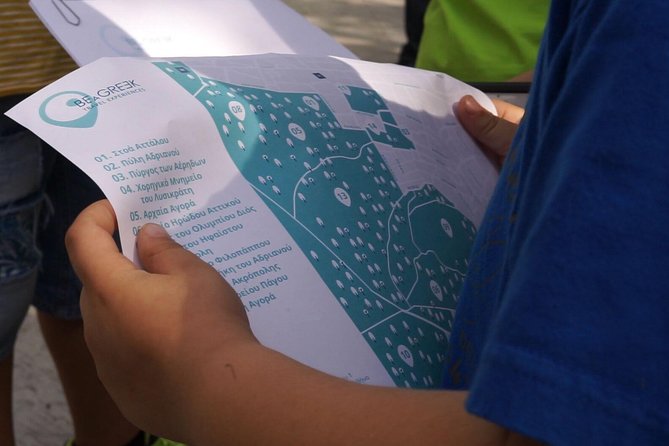
Map reading is part of the fun. The children may help direct the family from one place to another, which turns the walking between stops into part of the experience rather than dead time. Several families found that their children covered a fair amount of ground without complaining because they were focused on the hunt.
The guide also keeps the adults involved. While the children work on a task, you can ask about Greek customs, myths, or places to eat and visit afterward. Alexandra, for example, is noted for giving local suggestions in addition to telling the stories.
Do not expect a theatrical performance or a formal classroom lesson. The experience works best when your children are willing to answer, move around, and play along. A shy child may need a little time before joining in, though the private setting makes that easier than a large group.
Age range: best for younger school-age children
The activity can work for a wide family age range, but the sweet spot appears to be roughly 5 to 10. Children in that range can follow a story, enjoy a challenge, and still respond strongly to the treasure-hunt format.
Younger children can participate too. One family said a four-year-old kept up, and another included a three-year-old who sometimes used a carrier during the walk. The guide can involve small children with simple questions, while older siblings handle more complex clues.
Older children are a less certain match. A 13-year-old reportedly found the experience surprisingly fun, especially in a mixed-age family. A different family with children aged 8, 10, and 12 felt the games did not become advanced enough for the older children.
My advice is straightforward. Book it for an older child who already loves Greek mythology, puzzles, or family competitions. Skip it if your 12-year-old wants detailed archaeology, serious historical analysis, or independent exploration of ancient sites.
Four hours of walking, with no site admissions
The tour lasts about four hours, and the route crosses several central areas of Athens. Reviews describe a meaningful amount of walking, though the game format helped children stay interested. A carrier may be useful for a very young child, especially if your family is already tired from travel.
The activity takes place in English. A children’s specialist from the Be a Greek team leads the experience, and the tour is private for your group only. Service animals are allowed, and the route is near public transportation.
Because no entrance fees are included, budget separately for any archaeological sites you want to visit. This is not a flaw, but it affects the value calculation. You are paying for personal guidance, activity materials, a private format, and a four-hour family program, not a bundle of admission tickets.
The listed price is $174.98 per person. That is a serious cost for a family activity, especially once you add separate site tickets and meals. The value improves if you want one carefully planned outing that keeps children engaged while giving adults useful context and a route through central Athens.
It is less attractive if you only want a quick walk past the landmarks. A standard sightseeing tour may cover more history for less money, but it is unlikely to provide the same child-focused games and private attention.
A practical way to fit it into your Athens plans
This tour works well near the start of an Athens stay because it helps you understand the central area without asking children to absorb a long museum lecture. It begins near Acropoli, at Athens 117 42, and ends at Syntagma Square.
You could pair it with a separate Acropolis visit, but I would not try to force both into the same four-hour block. The treasure hunt does not replace a proper visit to the Acropolis, the Ancient Agora, or the Temple of Olympian Zeus. It gives your family a reason to notice those places from the outside and builds interest for later visits.
The tour can also work after an early arrival. One family used it after reaching Athens in the morning and found that even a child as young as four and a teenager could take part. Still, consider your own family’s energy. Four hours outdoors is a lot after a flight, even with games.
Free cancellation is available up to 24 hours before the start time. Changes or cancellations made less than 24 hours ahead are not accepted for a refund.
Should you book the Greek Mythology Treasure Hunt?
Book this experience if you want your children to remember Athens as a place where they solved problems, followed clues, and helped lead the family through the city. It is particularly well suited to children ages 5 to 10, mythology fans, and families who prefer a private guide to a fixed group schedule.
The strongest reasons to book are the engaging guides, the clever use of central landmarks, and the way the hunt makes walking feel purposeful. Bianca, Antonia, Niki, Effie, and Alexandra are all praised for warm, flexible work with children, though guide assignment is not guaranteed.
Think twice if your children are older and expect advanced material, or if you need a tour that includes entry to the Acropolis and other sites. You will pay for a private, activity-led family experience, not a complete archaeological tour.
For the right family, the price buys more than facts. It buys a shared four-hour story, with your children at the center of it. That is a good reason to book, as long as you understand the age range, walking, and separate admission costs.
FAQ
How long does the Greek Mythology Treasure Hunt last?
The experience lasts approximately four hours.
Where does the tour begin and end?
It begins at Acropoli, Athens 117 42, Greece, and ends at Syntagma Square, Pl. Sintagmatos, Athens 105 63, Greece.
Which places are included in the route?
The route includes the Temple of Olympian Zeus, Plaka, the Panathenaic Stadium, the National Garden, and Syntagma Square.
Are entrance fees included?
No. Entrance fees for points of interest are not included in the tour price.
Is the tour private?
Yes. Only your group participates in the activity.
Is the activity offered in English?
Yes. The tour is offered in English, and confirmation is received when you book.
Newly reviewed around Athens
- Feel Ancient thermal Spa Visit Delphi, Leonidas ℨoo Spaʀtan★ 5.0 · 4 reviews
- Food Tour★ 5.0 · 3 reviews
- Explore the Hidden Food Gems of Athens★ 5.0 · 57 reviews
- Food Experience in Athens including Unlimited Lunch★ 5.0 · 3 reviews
- Eat Your Way Through Athens: A Local Food Walk★ 4.9 · 97 reviews
- From Athens: Delphi Private Tour with Lunch Time★ 4.0 · 3 reviews
- Delphi: Spanish guided one day tour★ 4.6 · 55 reviews
- Early Entry Acropolis & Museum. Beat the Crowds & the heat★ 5.0 · 3 reviews
Athens Mythology Tours, compared.
Mythology of Delphi, Museum and Arachova Guided Tour
Read our review →
Athens & Acropolis Highlights: Greek Mythology Small-Group Tour
Read our review →
Acropolis and Mythology Highlights Small Group Tour
Read our review →

Athens Highlights: Myths & Philosophers Walking Tour
Read our review →

Browse the lists this tour appears in