
Reviewed · ATHENS ACROPOLIS TOURS
Athens: Acropolis and Mythology Highlights Small Group Tour
The clever part of this Athens tour is that it treats mythology as a key to understanding the ruins, not as a separate lesson. At the Acropolis, your guide connects Athena, Poseidon, Dionysus, and Asclepius to the temples, theater, and daily life around you. You get stories, dates, architecture, and the reasons Athens became so powerful.
I like the small groups, which make it easier to hear and ask questions, and I like the mix of famous monuments with less obvious corners such as the Sanctuary of Asclepius. Guides including Antonia, Alex, Danae, Stellios, and Athina are repeatedly praised for warm storytelling, humor, and patient answers.
The main drawback is the amount of walking on uneven ancient ground, often in direct sun. The tour can last two to four hours, and the longer option includes the Ancient Agora, so bring water, wear sound shoes, and do not carry a large bag or backpack.
Key points at a glance
- Myths tied to real places: Learn how stories about Athena, Poseidon, Dionysus, and other gods relate to the buildings around you.
- Small-group format: A limited group gives you a better chance to hear the guide and ask questions than a large coach tour.
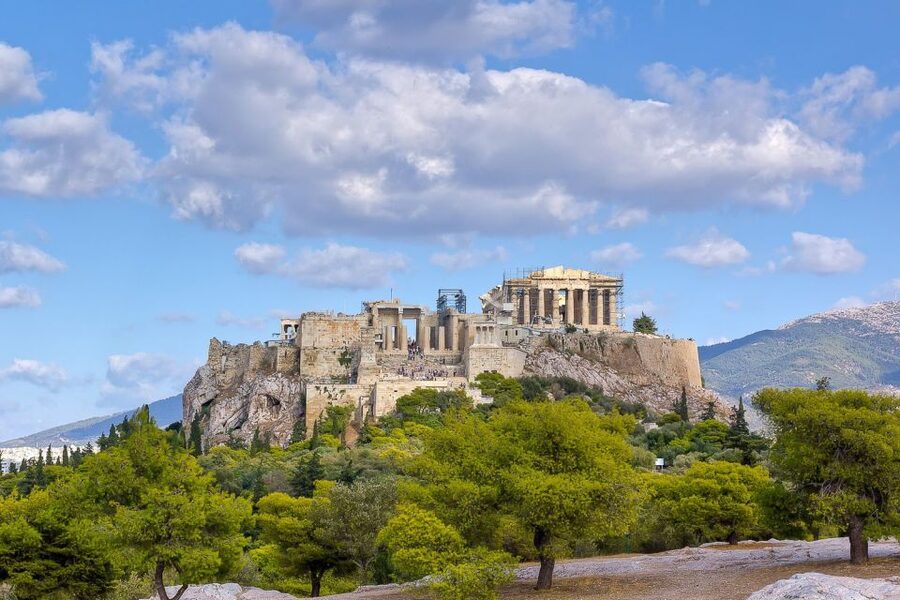
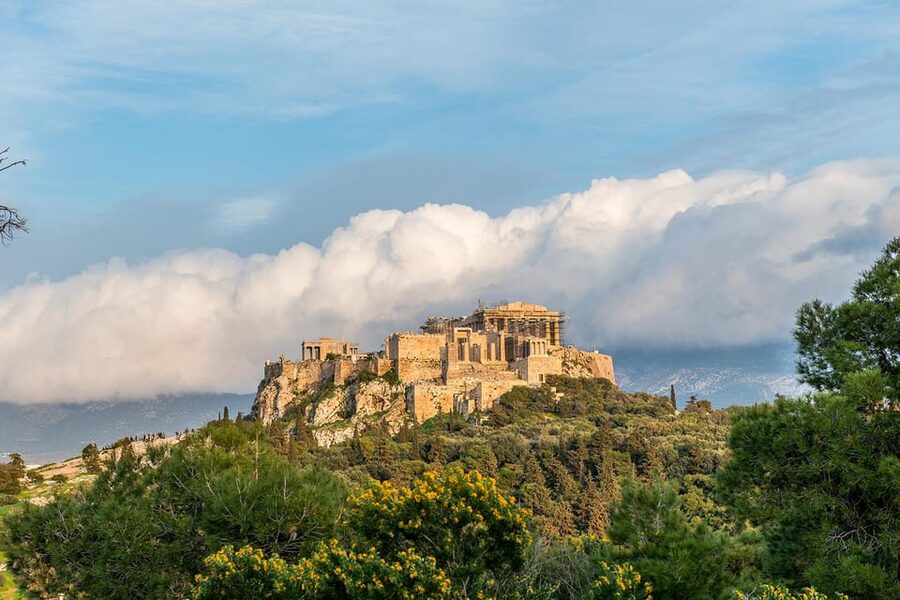
- Major Acropolis sights: See the Parthenon, Temple of Athena Nike, Erechtheion, Theatre of Dionysus, and Sanctuary of Asclepius.
- Ancient Agora option: Add the Agora and Temple of Hephaestus for a fuller picture of civic and everyday Athenian life.
- Strong guide team: Guides such as Alex, Antonia, Christina, Vicky, Maria, and Danae are known for clear explanations and engaging stories.
- Practical timing matters: Early starts can help you avoid long lines, heat, and some of the heaviest crowds.
Why mythology makes the Acropolis easier to understand
A visit to the Acropolis can be visually stunning but intellectually thin if you only hear the names of buildings. You see columns, foundations, and broken sculpture, then move on. This tour gives those stones a plot.
Your guide explains the contest between Athena and Poseidon for control of the city, then shows how that rivalry helps explain the Acropolis as a sacred center. Myth is not presented as proven history. Instead, it is used to show how ancient Athenians understood their city, their gods, their bodies, their illnesses, and their place in the world.
That approach works especially well for families. Children who already know Greek myths from books or Percy Jackson stories can connect familiar names to real sites. Adults who know little mythology are not left behind, because the guides explain the relationships among the gods and place the stories beside historical facts.
I especially like the way the best guides use visual aids. Danae Kousouri, for example, used images of the buildings as they may once have looked and diagrams showing how the gods were related. That can make a major difference when you are looking at ruins rather than complete temples.
The tour also explains Athens as a society. You learn why the city became a center of politics, theater, philosophy, religion, and public life. The story reaches from the city’s birth and Golden Age to its defeat by Sparta. That wider frame keeps the Acropolis from feeling like an isolated monument.
More ways to see the Acropolis:
- Athens: Acropolis & up to 5 Archaeological Sites Combo Pass
★ 4.4 · 12,619 reviews - Athens: Acropolis Ticket with Optional Audio or Live Guide
★ 4.2 · 11,055 reviews - Athens: Acropolis, Parthenon & Acropolis Museum Guided Tour
★ 4.8 · 9,316 reviews
Meeting beneath Hadrian’s Arch
The tour begins beneath the Arch of Hadrian on Leoforos Vasilisis Amalias 50, next to the Acropolis. Your guide waits with an Alternative Athens sign. The Acropolis metro station is the closest stop, followed by a walk of about five minutes.
This is a sensible meeting point because the arch is easy to identify and puts you near the ancient center from the start. Arrive with a little time to spare. Athens traffic and crowded sidewalks can make a short walk take longer than expected, especially if you are unfamiliar with the area.
The opening stop is the Temple of Olympian Zeus, viewed from outside. Your guide spends about 15 minutes here, introducing one of Athens’ grandest projects and explaining how ambition, religion, and imperial power shaped the city.
Do not expect to enter the temple at this point. The value of this stop is orientation. You begin to see that ancient Athens was not only the hilltop Acropolis. It was a wider city filled with sanctuaries, theaters, public spaces, and huge building schemes.
Climbing toward the Acropolis
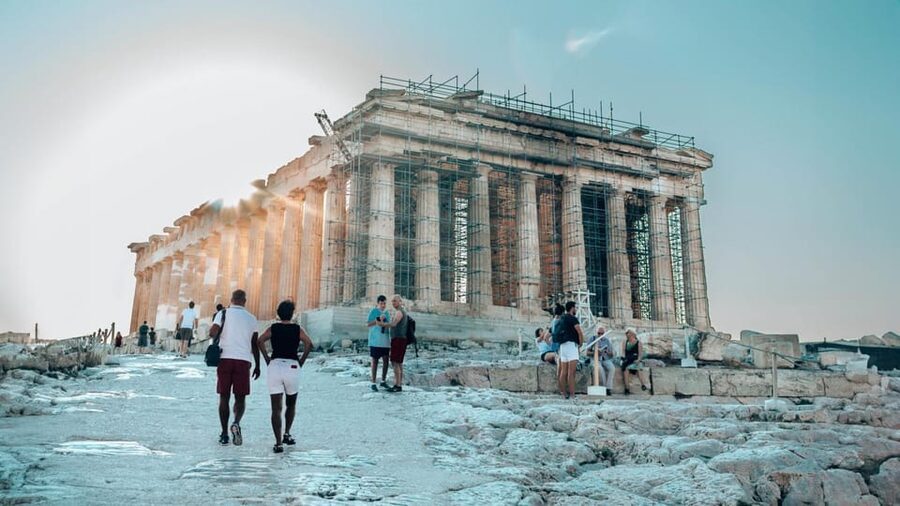
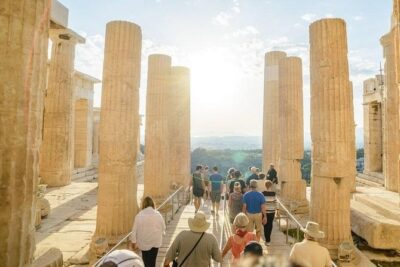
From Hadrian’s Arch, you walk toward the Acropolis. The route includes slopes and ancient paving, so comfortable shoes are essential. The walk itself is short in the published schedule, but the total experience is not a quick photo stop. You are on your feet for much of the visit.
Once inside the Acropolis area, the guide spends about 90 minutes explaining the site. The pace needs to balance sightseeing with movement. You will have chances to stop for photos and take in the views, but this is still a guided walk, not a free-form afternoon at every monument.
The heat deserves respect. Several guides, including Alex, Antonia, Sophia, and Virginia, are praised for finding shade, allowing water breaks, and checking that the group is coping. That matters in summer, when the white stone and open hill can make conditions feel more demanding than the schedule suggests.
In cooler months, the Acropolis can be more comfortable, and a sunny winter morning may be ideal. An early January tour with children benefited from pre-booked tickets and lighter conditions. Still, crowds can occur in any season, so an early start is a sensible choice when available.
Temple of Athena Nike and the entrance to the sacred hill
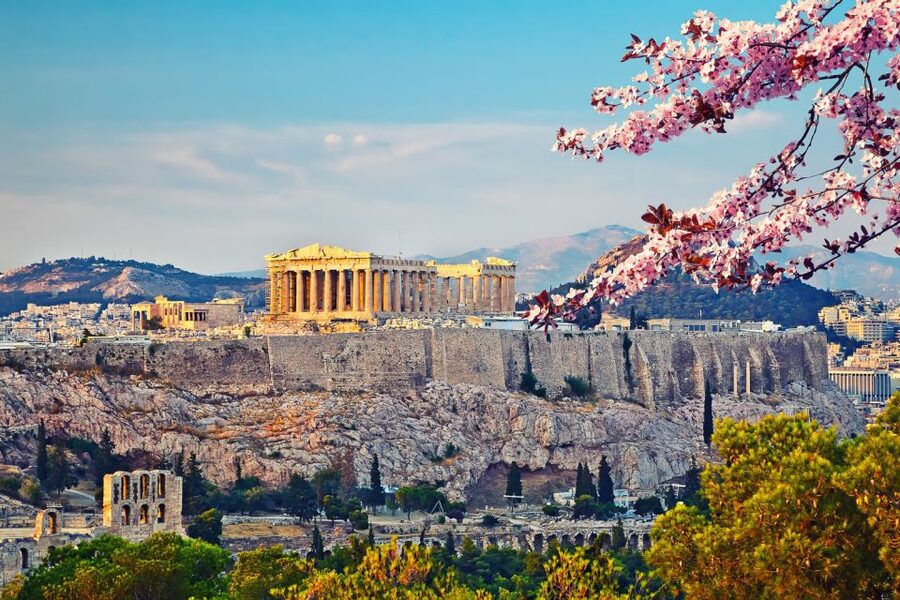
The Temple of Athena Nike is a small but elegant temple near the entrance to the Acropolis. Its position gives it a powerful role in the visit. Before you reach the larger monuments, you meet Athena in her role as a bringer of victory.
The guide uses this stop to explain how the ancient Athenians linked religious belief with military success and civic identity. Because the temple is much smaller than the Parthenon, it is easy to overlook when visiting alone. With a guide, it becomes part of the larger argument about what the Acropolis was meant to communicate.
The stop is scheduled for about 15 minutes. That is enough for a focused explanation, but not enough for a long examination of every architectural detail. If you are an architecture specialist, you may want extra independent time after the tour.
More Greek mythology tours in Athens:
- Athens: Mythology of Delphi, Museum and Arachova Guided Tour
★ 4.6 · 4,008 reviews - Athens & Acropolis Highlights: Greek Mythology Small-Group Tour
★ 5.0 · 2,370 reviews - Athens: Mythology Tour for Families
★ 4.8 · 173 reviews - Athens Highlights: Myths & Philosophers Walking Tour
★ 5.0 · 125 reviews
The Erechtheion and the contest for Athens
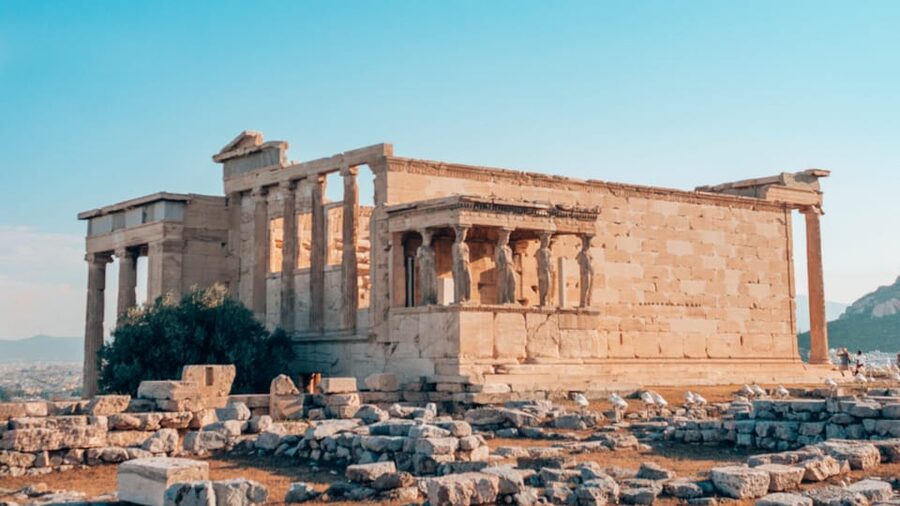
The Erechtheion is one of the most memorable buildings on the Acropolis, partly because its design is less straightforward than the Parthenon. Your guide discusses the ruins of the Temple of Athena Polias and the traditions connected with the city’s earliest myths.
This is where the contest between Athena and Poseidon becomes particularly useful. The story helps you understand why certain sacred places were kept together and why the Acropolis was more than a single temple built for a single god.
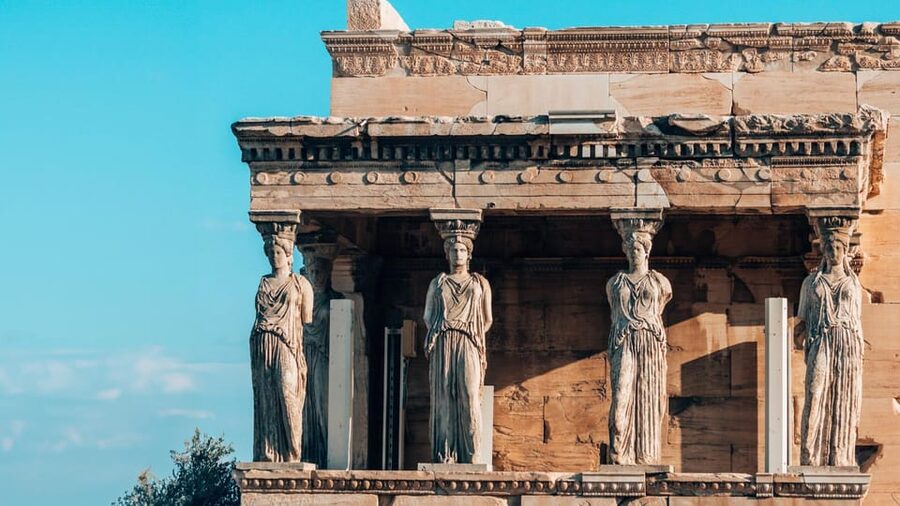
The tour also includes the famous caryatid porch area, though the supplied schedule identifies the stop as the Erechtheion rather than promising a specific viewing arrangement. Expect a 15-minute explanation and time to look, listen, and take photographs.
The uneven ground and crowds can make it difficult to stand in one perfect spot. Stay close enough to hear, but do not block other groups. Guides may need to move the group along when space is tight.
The Parthenon, Athens’ great symbol

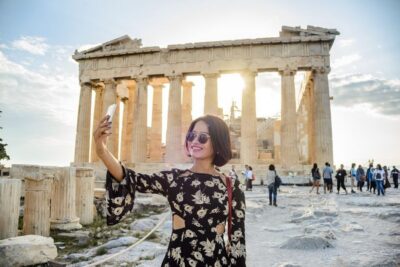
The Parthenon gets about 30 minutes, making it the longest single stop on the Acropolis schedule. That is appropriate. This is the monument most people come to see, yet it is also the one most likely to be reduced to a quick photograph.
Your guide explains the temple’s dedication to Athena and points out what its scale, design, and placement said about Athens during its Golden Age. You learn how the monument fit into the city’s political confidence and religious life, not simply when it was built.
The guide’s interpretation is the real value here. It is difficult to read the Parthenon’s meaning from scattered columns and partial walls. A clear explanation helps you imagine the building as part of a planned sacred setting and understand why its reputation reached far beyond Athens.
You should also allow time for the views. From the Acropolis, you can look across the modern city and toward the surrounding hills. The tour leaves room for photos, but you may want to return independently if you prefer a long, quiet pause.
The Theatre of Dionysus and the Sanctuary of Asclepius
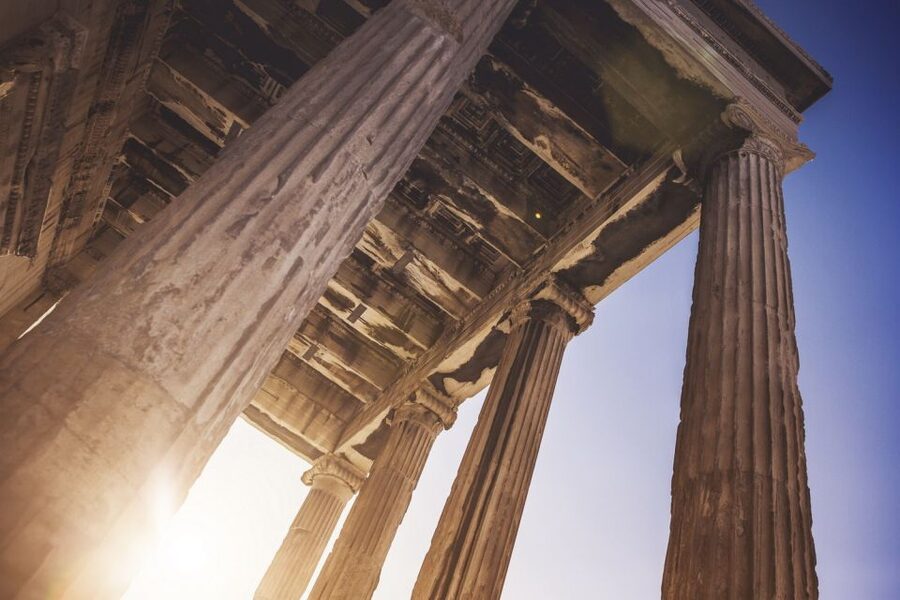
The Theatre of Dionysus is a welcome change from temple architecture. This is where the tour explains how theater functioned in ancient Athenian society and how worship, performance, politics, and public life overlapped.
The name Dionysus can sound familiar from mythology, but the site makes the god more tangible. You are looking at a place tied to performances that shaped drama for centuries. The guide helps you picture the audience and the civic importance of theater rather than treating the ruins as another stop on a checklist.
Nearby, the Sanctuary of Asclepius adds a different subject: healing. Its presence shows how religious practice reached into ordinary concerns such as sickness and recovery. This is one of the less obvious stops, and I value it because it broadens the visit beyond war, kings, and grand temples.
The tour does not give every secondary area the same amount of time. That is unavoidable on a two to four hour visit. You get a useful introduction, then continue toward the larger monuments and the Agora.
The Ancient Agora and Temple of Hephaestus
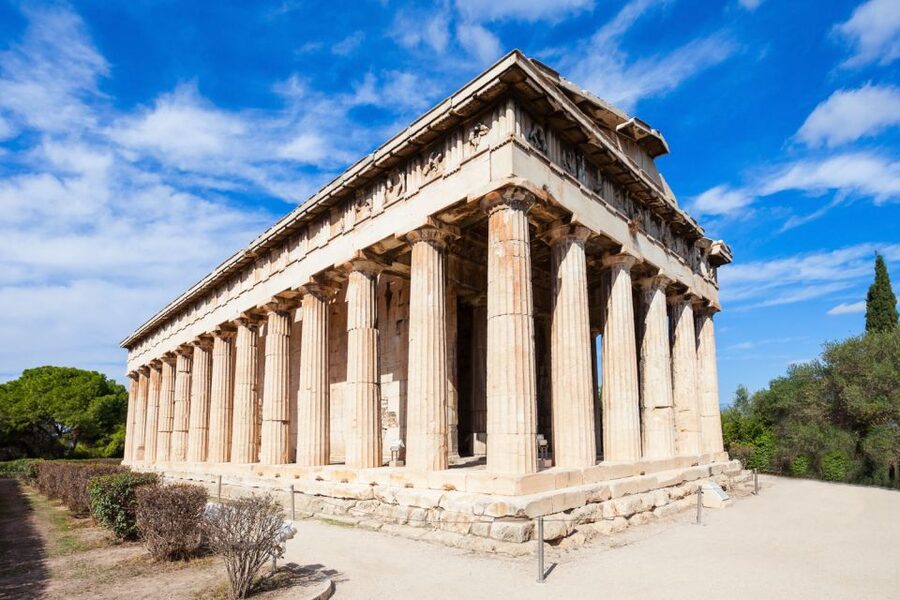
The Agora is included in the longer version of the experience, and it gives you the civic counterpoint to the sacred Acropolis. Here, your guide helps you understand the place where Athenians met, traded, debated, and handled public business.
The scheduled walk through the Agora takes about 30 minutes, followed by about 30 minutes at the Temple of Hephaestus. The Agora is generally a less pressured setting than the Acropolis, making it easier to absorb the explanations and look around at your own speed.
The Temple of Hephaestus is particularly valuable because it remains more complete than many ancient structures in Athens. Your guide connects Hephaestus with craftsmanship, metalwork, and the practical side of Greek religious life. The stop complements the Parthenon nicely. One monument represents Athens at its most celebrated, while the Agora shows the city working as a community.
Check your booking carefully before arrival. The tour can be arranged with Acropolis admission alone or with Acropolis and Ancient Agora admission, depending on the option selected. Entry fees may be separate, and the company can pre-purchase tickets if you ask. Tickets are non-refundable and non-exchangeable, so confirm what is covered before paying.
Small groups, guide quality, and hearing the stories

The tour’s strongest feature is the guide. Names that receive especially strong praise include Alex, Antonia, Christina, Vicky, Danae, Stellios, Athina, Maria, Sophia, and Chrysa. Several are archaeologists, and many combine academic detail with humor and clear storytelling.
That combination matters. A guide who only lists dates can make the Acropolis feel remote. A guide who only tells myths can leave you without a grasp of the historical sequence. The best balance connects the two and answers questions without losing the group.
Small groups also help. Groups of around seven have been described, and some departures may be even smaller. You can usually hear more easily, move through tight spaces with less trouble, and ask questions without interrupting a large crowd.
One practical caution: hearing conditions vary. At times, wind, nearby groups, and the open spaces can make a guide hard to hear. Some departures provide headsets, while one visitor specifically wished for hearing devices. Stay near the guide and ask about audio equipment when booking if this is important to you.
Price, pace, and who gets the most value
At $53 per person, this is a fair price if you want both the Acropolis and a clear explanation of what you are seeing. Admission can add to the total, depending on the option you choose, so compare the final price rather than the headline figure alone.
You are paying for a certified guide, a planned route, small-group attention, and the time saved by arranging entry. The value is highest for a first visit, a family trip, or anyone who finds ancient ruins hard to interpret without context.
The tour lasts two to four hours. A shorter version may focus on the Acropolis, while the longer route adds the Ancient Agora and Temple of Hephaestus. Ask yourself how much walking and information you want in one block.
I would choose this tour if you want a strong first look at ancient Athens. I would not choose it as your only Acropolis experience if you prefer to linger for hours at one building, sketch, photograph, or read every museum label at your own pace.
Bring a passport or ID card, comfortable clothes, and sturdy shoes. Do not bring a backpack, large bag, baby stroller, or pet, although assistance dogs are allowed. Food and drinks are not included, so carry water in a permitted container and plan a break before or after the walk.
Should you book the Acropolis and Mythology Highlights tour?
Book it if you want the Acropolis to make sense, not merely look impressive. It is especially suited to families, first-time visitors, mythology fans, and anyone who appreciates a guide who can move from a story about Athena to the political and social facts behind it.
The strongest reason to choose it is the human explanation. Guides such as Alex, Antonia, Danae, and Stellios bring energy, humor, and patience, while the small groups keep the walk personal. The main tradeoff is that you must keep moving and manage heat, uneven surfaces, and ticket details.
Choose an early departure when possible. Select the Agora option if you want a fuller picture of Athens beyond the hilltop temples. At $53 before any separate admission fees, this is a sensible way to turn a famous but complicated site into a memorable story you can follow.
FAQ
Where does the tour meet?
The meeting point is under Hadrian’s Arch at Leoforos Vasilisis Amalias 50. The closest metro station is Acropolis, about a five-minute walk away. Your guide will hold an Alternative Athens sign.
How long does the tour last?
The activity lasts between two and four hours, depending on the option and route selected. The longer route includes the Ancient Agora and Temple of Hephaestus.
Which languages are available?
The tour is offered in English and French.
Are entrance tickets included?
Acropolis tickets, or Acropolis and Ancient Agora tickets, are included if you select the relevant option. Entrance fees may otherwise be separate, and the company can pre-purchase them if you request this.
Can I bring a stroller or backpack?
No. Baby strollers, backpacks, and large bags are not allowed at the Acropolis and should not be brought on the tour. Assistance dogs are allowed, but other pets are not.
What should I bring?
Bring a passport or ID card, comfortable shoes, and comfortable clothing. Food and drinks are not included. EU citizens under 25 and non-EU citizens under 18 may enter the Acropolis and Ancient Agora free with valid identification.
Newly reviewed around Athens
- Feel Ancient thermal Spa Visit Delphi, Leonidas ℨoo Spaʀtan★ 5.0 · 4 reviews
- Food Tour★ 5.0 · 3 reviews
- Explore the Hidden Food Gems of Athens★ 5.0 · 57 reviews
- Food Experience in Athens including Unlimited Lunch★ 5.0 · 3 reviews
- Eat Your Way Through Athens: A Local Food Walk★ 4.9 · 97 reviews
- From Athens: Delphi Private Tour with Lunch Time★ 4.0 · 3 reviews
- Delphi: Spanish guided one day tour★ 4.6 · 55 reviews
- Early Entry Acropolis & Museum. Beat the Crowds & the heat★ 5.0 · 3 reviews
Athens Acropolis Tours, compared.
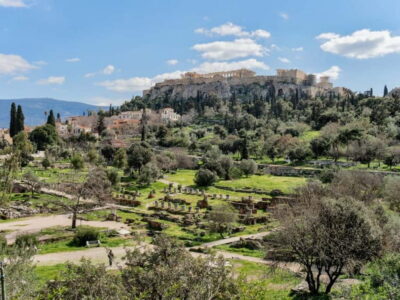
Acropolis & up to 5 Archaeological Sites Combo Pass
Read our review →
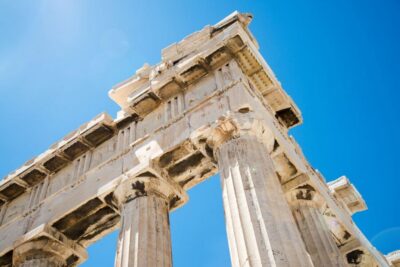
Acropolis, Parthenon & Acropolis Museum Guided Tour
Read our review →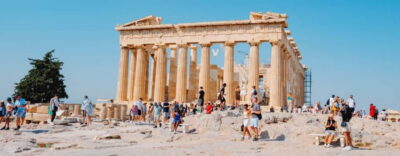
Acropolis, Parthenon & Acropolis Museum Guided Tour
Read our review →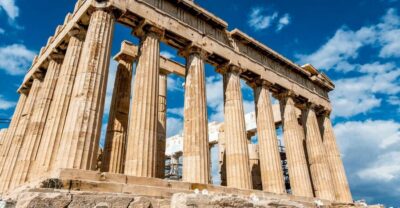
Acropolis monuments & Parthenon Walking Tour with Optional Acropolis Museum
Read our review →Browse the lists this tour appears in