
Reviewed · ATHENS ACROPOLIS TOURS
Athens & Acropolis Highlights: Greek Mythology Small-Group Tour
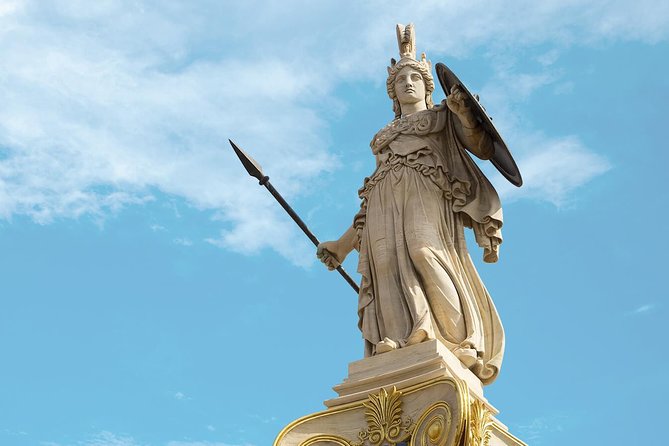
The best part of this Athens walk is the way mythology gives the ruins a human voice. Instead of seeing the Parthenon as a grand pile of marble, you hear about Athena, Nike, Hephaestus, Dionysus, and the rivalries that shaped the city. Guides such as Irene, Michael, Dani, Athena, and Alexandros have been praised for making that connection clear and lively.
I like the small-group format, advertised for no more than 15 people, and I like the route itself. It links the Acropolis with the Ancient Agora, so you see both the city’s sacred hill and the place where civic life unfolded. The main catch is that tickets are extra, and the walk includes steep slopes, stairs, and uneven ancient paving. One guide also received criticism for letting a group spread out, so staying alert at meeting points matters.
Key points to know before you book
- Mythology shapes the whole walk: Stories about Athena, Nike, Dionysus, and Hephaestus help explain what you are seeing.
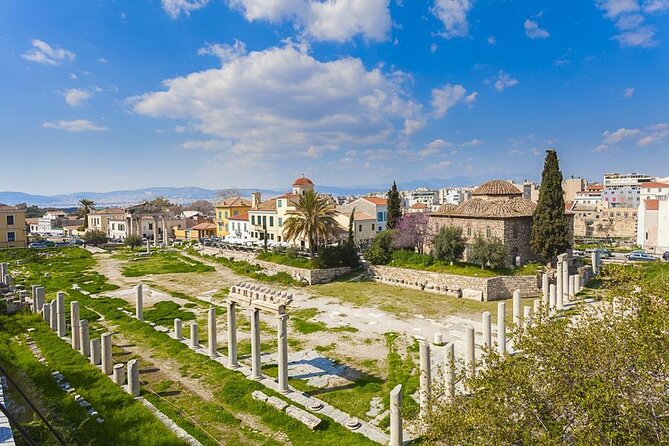
- The route covers two major archaeological areas: You visit the Acropolis and the Ancient Agora, ending near the Temple of Hephaestus.
- Admission costs extra: Plan on €30 for the Acropolis and €20 for the Ancient Agora for the four-hour option.
- Guides use visual aids and questions: Some guides bring printed images, test your memory of the gods, and pause for discussion.
- Expect a real uphill walk: Good shoes, water, and sun protection are important, especially in warm weather.
- The tour ends at the Ancient Agora: You will need to arrange your own return transport after the final stop.
Why Greek myths make the Acropolis easier to understand
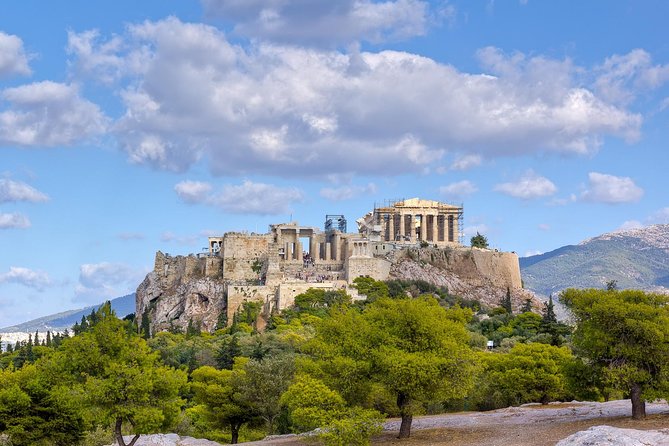
The Acropolis can overwhelm you. You arrive among columns, broken stones, restoration cranes, tour groups, and sweeping views, then try to remember which temple is which. A guide who connects each building to a story gives your visit a useful thread.
This tour begins with the gods and then adds architecture, politics, and daily life. You learn why Athena mattered so much to Athens, how victory was represented at the Temple of Athena Nike, and why the Parthenon was more than a beautiful shell on a hill. The myths are not treated as isolated fairy tales. They help explain the values and rivalries of ancient Greek society.
I particularly like the way this approach can work for different levels of interest. If you already know Greek mythology, guides such as Dani have been praised for adding less familiar details. If the names of the gods are new to you, guides such as Theo have been noted for explaining the basics in a clear, entertaining way.
The quality of the experience depends heavily on your guide. Irene and Michael are praised for teaching through stories, while Chrysanthi and Marika are noted for pacing breaks in shaded spots on hot days. One guide, an archaeologist, was especially good at answering detailed questions. That range is worth keeping in mind: the route is strong, but the personality and skill of the guide will shape your morning.
More ways to see the Acropolis:
- Athens: Acropolis & up to 5 Archaeological Sites Combo Pass
★ 4.4 · 12,619 reviews - Athens: Acropolis Ticket with Optional Audio or Live Guide
★ 4.2 · 11,055 reviews - Athens: Acropolis, Parthenon & Acropolis Museum Guided Tour
★ 4.8 · 9,316 reviews
Starting near Hadrian’s Arch and Olympian Zeus
The meeting point is listed at Hadrian’s Arch, on Leoforos Vasilisis Amalias 50. From there, the experience turns toward the Temple of Olympian Zeus, also called the Olympeion. The temple lies between the Acropolis and the Ilissos River and was once one of the largest temples in the ancient world.
You discuss the temple from outside rather than entering it. That short opening stop lasts about 15 minutes, so do not expect a long examination of every column. Its value is as a scene setter. The enormous surviving columns give you an early sense of the scale and ambition of ancient Athens, while the stories about Zeus introduce the mythological focus of the walk.
Check the exact meeting instructions carefully. The listed start point is Hadrian’s Arch, while the first sightseeing stop is the Temple of Olympian Zeus. This is not a problem when the guide gathers the group, but you should arrive at the stated meeting point rather than walking straight to the temple on your own.
Climbing the Acropolis, one story at a time
The Acropolis receives roughly an hour and a half of the four-hour tour. That is enough time for a guided overview of the main monuments, but not enough for a quiet, museum-style study of every detail. You will be moving with the group and sharing the hill with other visitors.
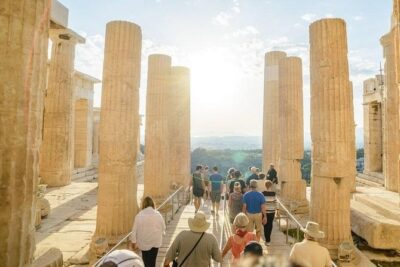
The route includes the Propylaia, the main entrance gateway, along with the Parthenon, Temple of Athena Nike, and Erechtheion. The Theatre of Dionysus is also part of the visit. Your guide explains how the monuments relate to one another and how the hill functioned as Athens’ major sanctuary.
The climb is manageable for most people who can take part in a normal walking tour, but it is not flat or easy. Several people found the uphill section steeper than expected. The stone surfaces can be uneven, and you may need to negotiate stairs and worn paving. Wear shoes with a firm grip, carry water, and bring a hat in sunny weather.
The best guides break the climb into short sections. Michael has been praised for stopping often to explain points of interest, while Marika made a point of finding shade and places to refill water. That pace helps you enjoy the site instead of treating the hill as a race.
One practical issue is sound. A guide was praised for strong information but criticized because there was no microphone, making it hard to hear at times. In a crowded archaeological site, stand close enough to your guide to catch the explanations, especially when the group pauses near a popular monument.
Theatre of Dionysus and the origins of drama
The Theatre of Dionysus is a short stop of about 15 minutes, but it adds a useful dimension to the Acropolis visit. Dionysus was associated with wine and the grape harvest, and the theatre was the first major theatre founded in Athens.
This is where works by Aeschylus, Sophocles, Euripides, and Aristophanes were first performed. The stop helps you see ancient Athens as a place of performance and public debate, not just temples and religious ceremonies.
Theatre lovers will appreciate the context, while families may find the stories easier to remember than a list of dates. You will not sit down for a performance, of course, and the short timing means the guide must keep the explanation focused. Still, it is one of the stops that makes the city feel more complete.
More Greek mythology tours in Athens:
- Athens: Mythology of Delphi, Museum and Arachova Guided Tour
★ 4.6 · 4,008 reviews - Athens: Acropolis and Mythology Highlights Small Group Tour
★ 4.8 · 2,275 reviews - Athens: Mythology Tour for Families
★ 4.8 · 173 reviews - Athens Highlights: Myths & Philosophers Walking Tour
★ 5.0 · 125 reviews
Athena Nike, the Erechtheion, and the Parthenon
The Temple of Athena Nike receives about 10 minutes. Athena Nike represents Athena in her role as bringer of victory, and the small temple occupies a prominent position near the Acropolis entrance. One memorable story concerns the wingless cult statue. The idea was that Nike would not be able to fly away from Athens.
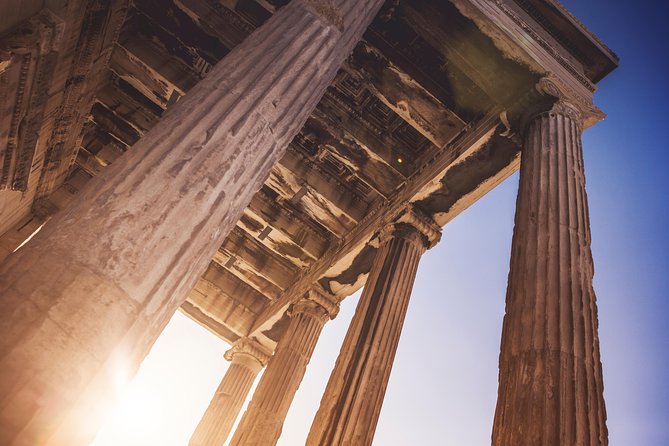
The Erechtheion receives another 10 minutes. Its unusual design reflects the layered religious traditions of the Acropolis. It was built to house the ancient wooden cult statue of Athena and to honor the city at the height of its power.
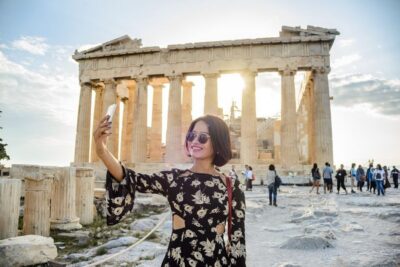
The Parthenon gets about 20 minutes, making it the longest individual monument stop on the hill. Built in the mid-5th century BCE, it was dedicated to Athena Parthenos, Athena the Virgin. Your guide also explains its place in the Doric architectural tradition, whose plain, sturdy design became a model for later buildings.
The Parthenon is the visual centerpiece, but do not rush past the smaller monuments. The Temple of Athena Nike and Erechtheion show different sides of Athenian religion and design. A good guide helps you compare them rather than treating the Parthenon as the only building worth seeing.
Guides have used printed photographs and other visual aids to show how the site may have looked in the past. That is especially helpful because you are seeing weathered marble, partial structures, and open spaces rather than the complete ancient complex. You may also get a few minutes to look around independently near the top, depending on the guide and crowd flow.
The Ancient Agora, where Athens did business and argued
After the Acropolis, the route continues to the Ancient Agora. This is a valuable second half because it shifts the focus from sacred buildings to public life. The Agora was the center of political, commercial, administrative, social, religious, and legal activity in ancient Athens.
You spend about an hour here. That gives the guide time to explain how the spaces worked and how citizens used them. The Agora helps you picture Athens as a functioning city, with merchants, officials, judges, religious participants, and ordinary people crossing paths.
The contrast with the Acropolis is one of the strongest reasons to choose this tour. On the hill, you focus on worship, monuments, and civic identity. In the Agora, you consider practical life and public decision-making. The two sites together give you a better sense of how Athens operated.
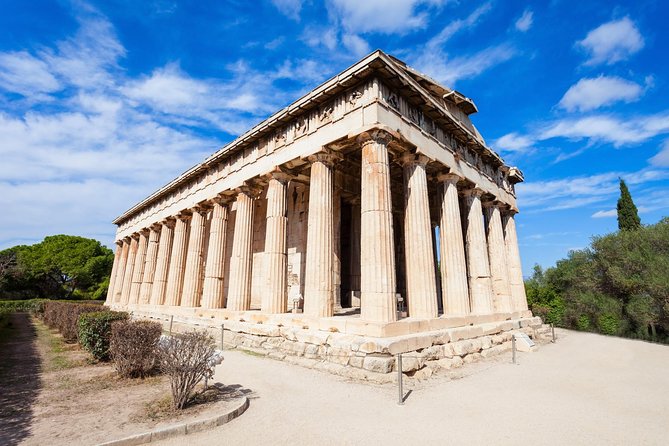
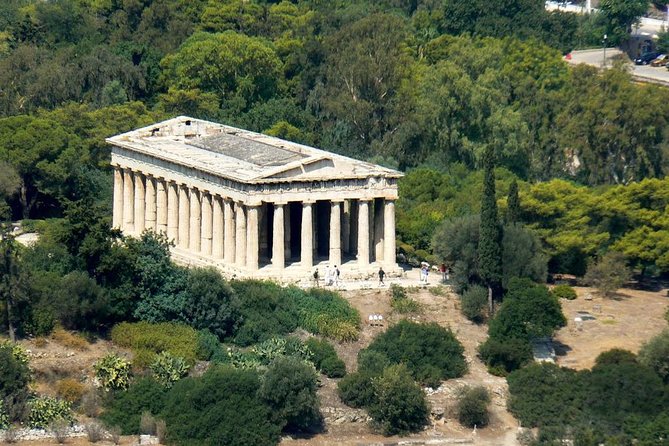
The tour ends at the Temple of Hephaestus, described in the schedule as the Temple of Aries. The correct historical focus here is Hephaestus, the god associated with metalworking, along with Athena Ergani, who protected potters and small industries. The temple served merchants and craftspeople connected with the Agora.
This is one of the best-preserved ancient Greek temples, so it makes a fitting final stop. You linger outside and hear about its design and purpose. Since the tour ends at the Agora, you can continue exploring on your own, but your transport back to your hotel is not included.
What the $54.42 price really covers
The base price of $54.42 per person is reasonable for a four-hour guided visit across two major archaeological areas, particularly if you want interpretation rather than simply entry. The included certified guide, small-group setting, and map add useful value.
The advertised admission fees are separate. For the four-hour option, the Acropolis requires €30 per person and the Ancient Agora requires €20, for €50 in entry fees before any applicable discount. That brings the rough combined cost to $54.42 plus €50, with currency conversion affecting the final amount.
The operator can pre-purchase the tickets if you request it. That may make the process easier, since the ticket add-on has caused some confusion. Entry fees are not refundable or exchangeable, so check the details before committing.
People under 25 should carry an ID card or passport in case a discount applies. The tour price does not include food, drinks, or transfers to and from the meeting point. You receive a mobile ticket and English-language guiding.
The average booking lead time is about 46 days, which suggests that popular dates can fill ahead of time. If your Athens schedule is fixed, booking early makes sense. The tour is also offered as a small group with a stated maximum of 15 people, though one account described a group of 18. If group size is crucial to you, confirm it when booking.
Timing, heat, bags, and other practical details
Four hours is a useful length for the route. You get substantial time at the Acropolis and Ancient Agora without spending an entire day on archaeological sites. Morning timing can be especially useful because the Acropolis may become much more crowded later, although the exact departure time depends on the option you select.
The tour requires good weather. If poor weather causes cancellation, you are offered another date or a full refund. You can cancel for a full refund up to 24 hours before the start time. Inside that window, changes and refunds are not accepted.
Do not bring a stroller, backpack, or large bag to the Acropolis. The site does not allow them, and it is best to plan around that rule rather than arrive with luggage. A small amount of water and sun protection is sensible, provided your items meet site rules.
The route is near public transport, but no transfer is included. You should plan your way to Hadrian’s Arch and remember that the tour finishes at the Ancient Agora. Most people who can manage stairs and uneven surfaces can participate, but the walk is not suited to someone seeking a flat, low-effort outing.
Who will get the most from this Athens tour
I would choose this experience if you want the major ancient sights explained in plain language, especially if Greek mythology interests you. It also suits first-time visitors who want the Acropolis and Agora covered in one morning rather than arranging separate visits.
Families and mixed-age groups may like the storytelling approach. Guides often ask questions, connect myths to the buildings, and pause when the group needs a rest. The format can make a difficult subject easier to follow than a long lecture filled with dates.
It is also a good fit for people who prefer a human guide to an audio app. Guides such as Alexandros have been praised for linking mythology, architecture, ancient life, and modern Athens in one explanation. The strongest guides also keep an eye on the group’s pace and make room for questions.
I would hesitate if you want a slow photographic visit or extended time inside each monument. Four hours covers a lot, and the group must keep moving. I would also think twice if hot weather, steep climbs, or uneven ground would make the Acropolis uncomfortable.
Should you book the Athens mythology tour?
Book it if you want the Acropolis to make more sense than it would on a quick self-guided walk. The combination of Athena’s sanctuary, the Theatre of Dionysus, the Parthenon, and the Ancient Agora gives you a strong overview of Athens’ sacred and civic life.
The price is fair only after you budget for the separate entrance fees. Ask for ticket pre-purchase, arrive ready for a climb, and stay near the guide in crowded areas. With a strong guide, this is an engaging way to connect marble ruins with the myths, politics, and daily work that gave ancient Athens its character.
FAQ
How long does the tour last?
The tour lasts approximately four hours.
Where does the tour start?
The listed meeting point is Hadrian’s Arch at Leoforos Vasilisis Amalias 50 in Athens. The route then begins with the Temple of Olympian Zeus.
Where does the tour end?
The tour ends at the Ancient Agora of Athens.
Are Acropolis tickets included?
No. Acropolis admission is separate. The stated fee for the four-hour option is €30 per person.
Is Ancient Agora admission included?
No. Ancient Agora admission is separate. The stated fee for the four-hour option is €20 per person.
Can tickets be purchased in advance?
Yes. The operator can pre-purchase entry tickets if you request it.
What language is the tour offered in?
The tour is offered in English.
Can I cancel for a full refund?
Yes, if you cancel at least 24 hours before the experience start time. Cancellations or changes made less than 24 hours before the start time are not refunded.
Newly reviewed around Athens
- Feel Ancient thermal Spa Visit Delphi, Leonidas ℨoo Spaʀtan★ 5.0 · 4 reviews
- Food Tour★ 5.0 · 3 reviews
- Food Experience in Athens including Unlimited Lunch★ 5.0 · 3 reviews
- Eat Your Way Through Athens: A Local Food Walk★ 4.9 · 97 reviews
- Explore the Hidden Food Gems of Athens★ 5.0 · 57 reviews
- From Athens: Delphi Private Tour with Lunch Time★ 4.0 · 3 reviews
- Delphi: Spanish guided one day tour★ 4.6 · 55 reviews
- Early Entry Acropolis & Museum. Beat the Crowds & the heat★ 5.0 · 3 reviews
Athens Acropolis Tours, compared.
Acropolis & up to 5 Archaeological Sites Combo Pass
Read our review →
Acropolis, Parthenon & Acropolis Museum Guided Tour
Read our review →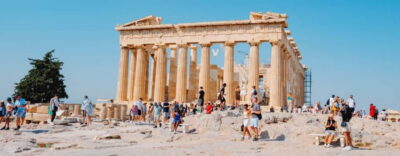
Acropolis, Parthenon & Acropolis Museum Guided Tour
Read our review →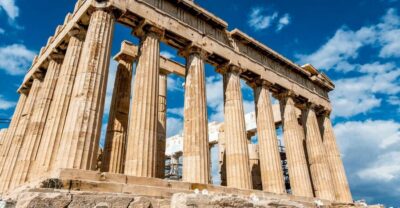
Acropolis monuments & Parthenon Walking Tour with Optional Acropolis Museum
Read our review →Browse the lists this tour appears in