
Reviewed · ATHENS PHILOSOPHY TOURS
Philosophy and Democracy tour of Athens
Athens makes more sense when you connect its ruins to the arguments, laws, and public debates that took place around them. This walking tour does exactly that, moving from the old cemetery at Kerameikos through the Agora and up to Pnyx Hill, where citizens gathered to shape the city’s future. The focus is not only on stones, but on the ideas behind them.
I like the way philosophy and democracy are treated as living subjects, not as dusty school topics. I also like the route’s less obvious stops, especially Kerameikos and the Prison of Socrates, plus the practical food and sightseeing advice that guide Panos shares along the way.
The main consideration is the walking. The tour lasts about three and a half hours, includes several outdoor archaeological sites, and has some uphill movement toward Pnyx Hill. Admission fees for several sites are not included, so you should budget for those if you want to enter rather than view them from outside.
Key points about the Athens philosophy walk
- Pnyx Hill puts democracy in its original setting, with broad views toward the Acropolis and Athens.
- Kerameikos adds a quieter side of ancient Athens, combining pottery workshops, city gates, and a major cemetery.
- The Ancient Agora links famous names to ordinary city life, from Socrates and Plato to merchants and citizens.
- Guide Panos gives the tour its intellectual spark, explaining difficult ideas in clear, lively language.
- A maximum of 15 people keeps the group small, making questions and conversation easier.
- The $50.81 price is strong value if you want context for Athens beyond the Parthenon.
Why this tour changes the way you see Athens
Many Athens walking tours point out temples, columns, and famous views. This one asks you to think about what happened in those places. Who had a voice? How did citizens make decisions? What did ancient philosophers mean by a good life, justice, or freedom?
That approach gives the city a useful frame. You are not simply moving between ruins. You are following the development of public discussion, political power, and philosophical thought through the places where those ideas took shape.
Guide Panos is repeatedly identified as the person leading the experience, and his role matters here. This is not a tour that can rely on a short list of dates. The subject needs explanation, comparison, and a willingness to answer questions. Panos is described as clear, funny, passionate, and able to make complex ideas easier to follow.
The tour also works well for different ages. It is aimed at adults, but the material has been engaging for children as young as 11 when they are interested in history and big questions. You should expect discussion, not a simple parade of monuments.
More philosophy walks in Athens:
- Athens Highlights: Myths & Philosophers Walking Tour
★ 5.0 · 125 reviews - Athens: Philosophy and Democracy Walking Tour
★ 5.0 · 91 reviews - Mythology, Philosophy and Democracy Tour
★ 5.0 · 64 reviews
Kerameikos: Athens begins at its cemetery
The tour starts at the Statue of Theseus in central Athens before heading toward Kerameikos. This archaeological area is easy to miss if you stick to the city’s most famous sights, yet it gives you an unusual introduction to Athens.
Kerameikos takes its name from keramos, meaning ceramic or pottery. Pottery workshops once operated here, and the area later became one of Athens’ main cemeteries. The remains connect craft, daily life, religion, and public memory in one place.
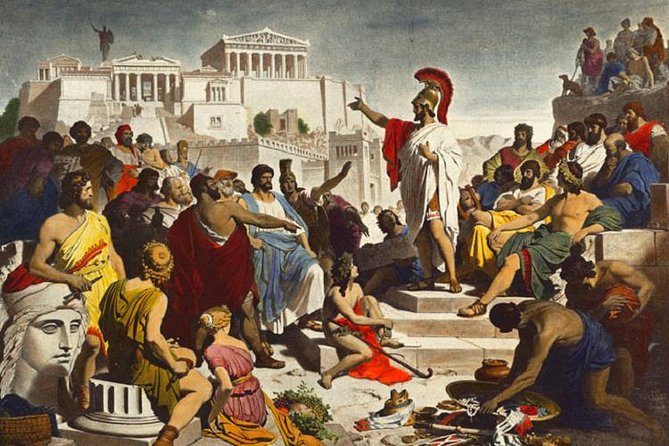
You will spend about 15 minutes at the site. That is not enough for a full independent visit, but it can be enough for a focused explanation of why the area mattered. Prominent Athenians were buried here, and the site also connects with Pericles’ famous funeral speech for those who died in the early part of the Peloponnesian War.
That speech praised the virtues of Athens and its political system. It gives the tour an early chance to compare the ideals of democracy with the way democracy actually worked. The ancient system excluded women, enslaved people, and foreigners from citizenship, so the discussion is not likely to treat Athenian democracy as a perfect model.
Admission is not included at Kerameikos. If you want to explore the archaeological grounds more fully, check the entry cost before booking. The short stop works best as part of the larger route rather than as a replacement for a dedicated Kerameikos visit.
The Flea Market and Athens between the ruins
From Kerameikos, the group takes an easy-paced walk through the Athens flea market. This short 15-minute stretch changes the mood. Instead of looking only at ancient remains, you see a working part of modern city life.
The flea market also helps break up the history lesson. A three-and-a-half-hour walking tour needs pauses between the major sites, and this section gives you a chance to observe shops and street life while still moving toward the next historical stop.
Do not expect a long shopping session. The stop is brief and the tour keeps going. Think of it as a city walk with local orientation rather than a market tour.
Hadrian’s Library and the Roman chapter
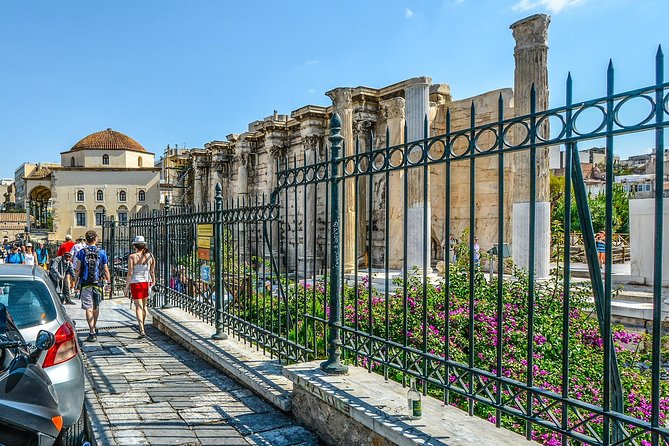
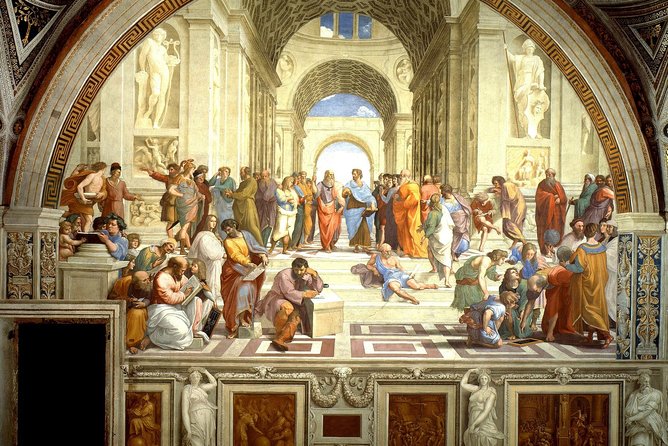
Hadrian’s Library was built in AD 132 by the Roman Emperor Hadrian on the north side of the Acropolis. Its location helps show how Athens remained important after the classical Greek period.
The 15-minute stop is useful because visitors often treat Athens as if the story ended with Pericles and Socrates. It did not. Roman rulers admired Greek culture, used Athens as a center of learning, and added their own buildings to the city.
Admission is not included. The tour’s short visit is mainly about placing the monument in the city’s timeline and connecting Roman Athens with the earlier Greek world. If you want time to inspect the remains closely, you may need to return on your own.
A different kind of day out from Athens:
- Athens: Acropolis & up to 5 Archaeological Sites Combo Pass
★ 4.4 · 12,619 reviews - Athens: Acropolis Ticket with Optional Audio or Live Guide
★ 4.2 · 11,055 reviews - Athens: Acropolis, Parthenon & Acropolis Museum Guided Tour
★ 4.8 · 9,316 reviews - Athens: Cape Sounion & Poseidon Temple Sunset Half-Day Trip
★ 4.8 · 8,241 reviews
Roman Agora and the Tower of the Winds

The Roman Agora lies north of the Acropolis and east of the Ancient Agora. It offers another look at the city’s later public life and gives the guide a chance to explain how civic spaces changed over time.
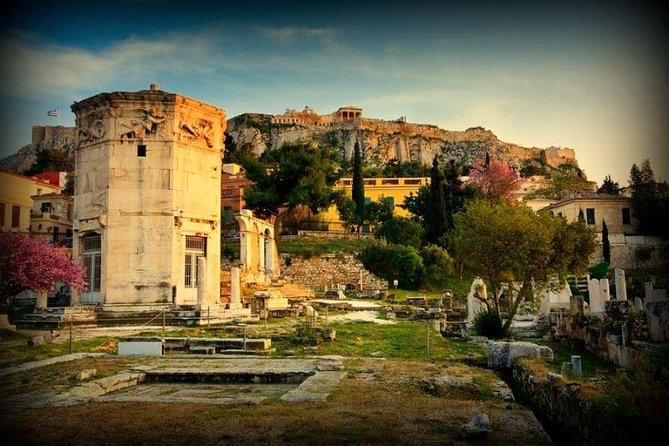
The nearby Tower of the Winds is one of the tour’s most memorable small stops. This octagonal building was created in the first century BC by Andronicus of Kyrrhos, an astronomer. It served as a wind indicator, a sundial, and a weather station.
The tower is especially good for making ancient science feel practical. Its clock used the sun, and a hydraulic system could mark the hours when clouds blocked the light. You spend only about five minutes here, but the example helps correct the idea that ancient Athens was concerned only with speeches and sculpture.
The Roman Agora and Tower of the Winds both require separate admission if you enter. The listed route allows only a brief stop, so consider the tour’s visit an introduction rather than a complete archaeological examination.
Plaka adds a more relaxed Athens
The route passes through Plaka, a scenic area of small houses and narrow streets below the Acropolis. This is a pleasant change from formal archaeological sites and a useful reminder that Athens is also a lived-in city.
Plaka is not presented as a long scheduled stop. You pass through it as part of the walk, so your time there depends on the group and the guide’s pace. The narrow streets can be enjoyable for photos and orientation, but you should not book this tour expecting a detailed Plaka food or shopping visit.
The guide’s recommendations for where to eat, drink, and explore add value here. You get suggestions you can use after the tour, when you are deciding where to spend the rest of your day.
The Ancient Agora, where public life took shape
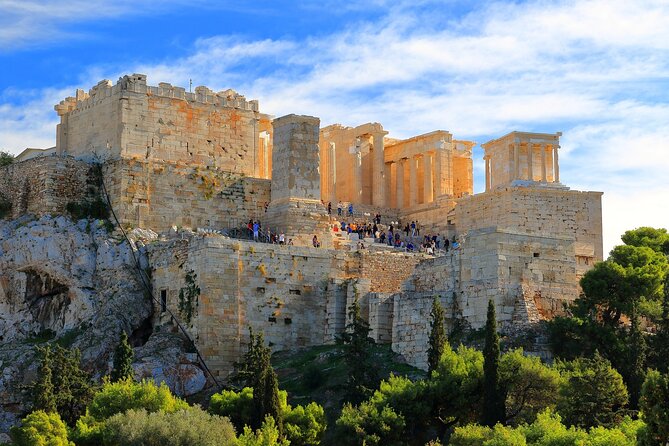
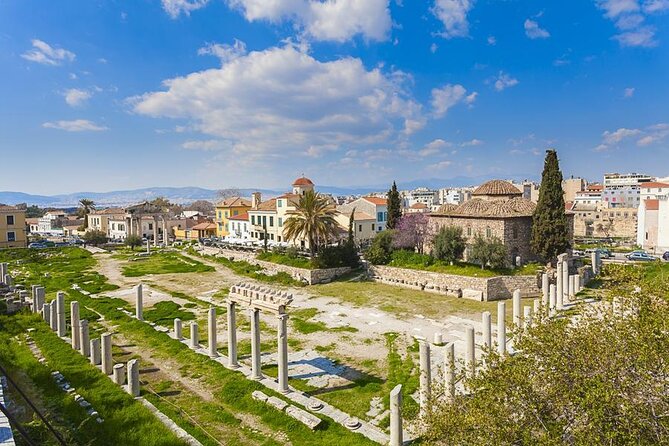
The Ancient Agora is the heart of the route. This was not just a collection of ruins. It was where citizens walked, argued, traded, judged, governed, and met one another.
Names familiar from history and philosophy are tied to this setting: Socrates, Plato, Solon, Themistocles, Pericles, Thucydides, Sophocles, and Aristophanes. The important point is that the Agora was not reserved for famous thinkers. Ordinary citizens also used this public space and took part in the city’s political and social life.
The scheduled stop is about 20 minutes, with admission not included. That is a short visit for such a major site. Still, a strong guide can make those minutes count by showing how the physical setting relates to the city’s institutions.
I would not use this tour as your only Ancient Agora visit if you want to examine every building or spend time at the Temple of Hephaestus. Instead, use the tour to understand the site, then return independently if the Agora becomes a priority.
This is also where the philosophical theme becomes most useful. You can hear about famous thinkers without reducing them to quotations and statues. The guide explains how their ideas related to law, citizenship, ethics, politics, and daily life.
The Prison of Socrates and the limits of certainty
The stop known as the Prison of Socrates lasts about 10 minutes and is free to visit. It serves as a tribute to one of Athens’ best-known philosophers.
The site is small, and the identification of ancient locations can require care. The value here comes less from the physical remains than from the story and the questions it raises. Why was Socrates put on trial? What happens when a city’s laws conflict with an individual’s conscience? Can a democracy make an unjust decision?
Those are exactly the kinds of questions that make this tour different from a standard city walk. The stop connects philosophy to civic responsibility, rather than treating Socrates as a remote figure from a textbook.
Pnyx Hill, the tour’s strongest finish
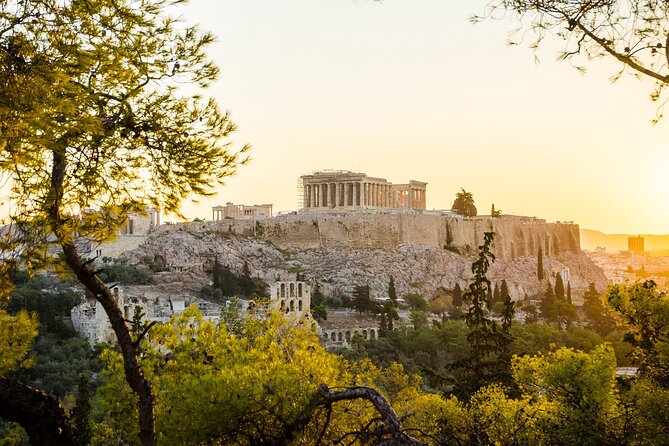
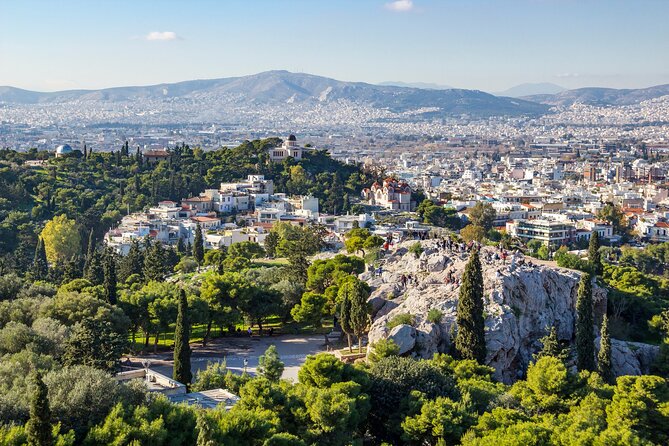
Pnyx Hill is the natural climax. It is widely described as the cradle of democracy because citizens gathered here to discuss and decide matters affecting Athens.
The group spends about 30 minutes at Pnyx, longer than at most earlier stops. That time matters. You can pause, look across toward the Acropolis, and consider the practical setting of ancient public decision-making.
The views are a major reward. From the hill, you see the Acropolis and Athens spread around it. The setting also makes the political system easier to picture. Democracy was not an abstract word. Citizens came to a particular place, listened, argued, and voted.
You should keep the limits of ancient democracy in mind. Participation was restricted to male citizens, and the system did not offer political equality to everyone living in Athens. A useful tour should explain both the innovation and the exclusions.
The uphill walk is manageable for most people, but it is still a consideration in hot weather. Bring water. One person who took the tour noted a break at a kiosk with restroom facilities, but you should still arrive prepared for a morning outdoors.
What the $50.81 price really buys you
At $50.81 per person, this is a reasonable price for a three-and-a-half-hour English walking tour with a maximum group size of 15.
You are paying mainly for interpretation and route design. Several archaeological sites charge admission separately, so the total cost can rise if you enter Kerameikos, Hadrian’s Library, the Roman Agora, or the Ancient Agora. The tour is not a bundled archaeological ticket.
The value is strongest if you want the sites to connect. Buying individual entry and walking between them without context may cost less, but you would miss the sustained discussion about democracy, philosophy, and the changing city.
The small group also matters. Fifteen people is not private, but it is far easier to hear a guide and ask questions than in a large coach group. One particularly useful detail is that Panos has been praised for speaking clearly enough that earphones were not needed.
Timing, meeting point, and practical planning
The tour begins at the Statue of Theseus in Athens and ends at Theorias 21 in Athens, near the Acropolis area. Because it is a one-way walking route, plan your day around the finish rather than expecting to return to the starting point.
The experience is offered in English and uses a mobile ticket. Confirmation is provided at booking, and the group can include up to 15 people. The tour is near public transportation, and most people can take part. Service animals are allowed.
The tour requires good weather and a minimum number of participants. If poor weather cancels it, you are offered another date or a full refund. If the minimum group is not reached, you receive the same choice of another experience or a refund.
Free cancellation is available up to 24 hours before the start time. Changes or cancellations inside that window are not accepted for a refund, so keep the local start time in mind when making plans.
Wear shoes suited to uneven outdoor surfaces and bring water. The route includes several archaeological areas, city streets, and a hill. A morning start is sensible in warm weather, though the exact start time should be checked when booking.
Who should book this Athens walking tour?
I would choose this tour if you want Athens to make intellectual sense, not just look impressive in photographs. It suits history fans, philosophy students, curious families, and anyone who wants a stronger framework before visiting the Acropolis or other major sites.
It is also a good first or second activity in Athens. Taken early in your stay, it can help you understand later visits. Several people have found that other monuments and tours made more sense after hearing how Athens developed through the centuries.
I would hesitate if you want a relaxed stroll with little talking, or if you prefer to spend a long time inside each archaeological site. The pace is described as good, but the tour covers a lot of ground and asks you to listen, think, and move on.
Should you book it?
Book this tour if the words democracy, Socrates, Agora, and Pnyx sound more appealing than another quick monument checklist. The route reaches several important sites, including places many first-time visitors skip, and Panos brings energy and clarity to difficult subjects.
Skip it if your main goal is entry to the Acropolis or a detailed archaeological tour of one monument. Those are not the purpose here.
For $50.81, the tour offers a useful Athens primer, a small group, strong guide-led explanation, and views that tie the city’s past to its present. Bring water, allow for separate entry fees, and arrive ready to ask questions. That is where this experience earns its keep.
FAQ
How long does the Philosophy and Democracy tour of Athens last?
The tour lasts approximately 3 hours and 30 minutes.
What language is the tour offered in?
The tour is offered in English.
How many people can join the tour?
The maximum group size is 15 travelers.
Are archaeological site admission fees included?
No. Admission is not included at Kerameikos, Hadrian’s Library, the Roman Agora, the Tower of the Winds, or the Ancient Agora. The Flea Market, Prison of Socrates, and Pnyx stops are listed as free.
Where does the tour start and finish?
The tour starts at the Statue of Theseus in Athens and ends at Theorias 21, Athens 105 58.
Can I cancel for a full refund?
Yes. You can cancel at least 24 hours before the experience starts for a full refund. Cancellations or changes made less than 24 hours before the start time are not accepted for a refund.
Newly reviewed around Athens
- Feel Ancient thermal Spa Visit Delphi, Leonidas ℨoo Spaʀtan★ 5.0 · 4 reviews
- Food Tour★ 5.0 · 3 reviews
- Explore the Hidden Food Gems of Athens★ 5.0 · 57 reviews
- Food Experience in Athens including Unlimited Lunch★ 5.0 · 3 reviews
- Eat Your Way Through Athens: A Local Food Walk★ 4.9 · 97 reviews
- From Athens: Delphi Private Tour with Lunch Time★ 4.0 · 3 reviews
- Delphi: Spanish guided one day tour★ 4.6 · 55 reviews
- Early Entry Acropolis & Museum. Beat the Crowds & the heat★ 5.0 · 3 reviews
Athens Philosophy Tours, compared.

Athens Highlights: Myths & Philosophers Walking Tour
Read our review →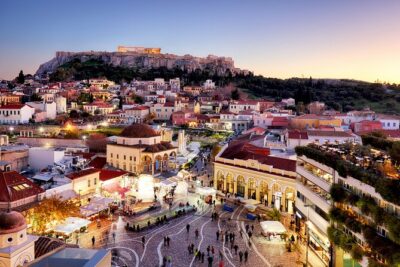
the Great Greek Philosophers Guided Tour in Spanish
Read our review →
Athens Highlights: Myths & Philosophers Private Walking Tour
Read our review →
Aristotle’s Philosophy Experiential Workshop, Lyceum, Athens
Read our review →
Browse the lists this tour appears in