
Reviewed · ATHENS PHILOSOPHY TOURS
Athens: Philosophy Experience at Plato’s Academy Park
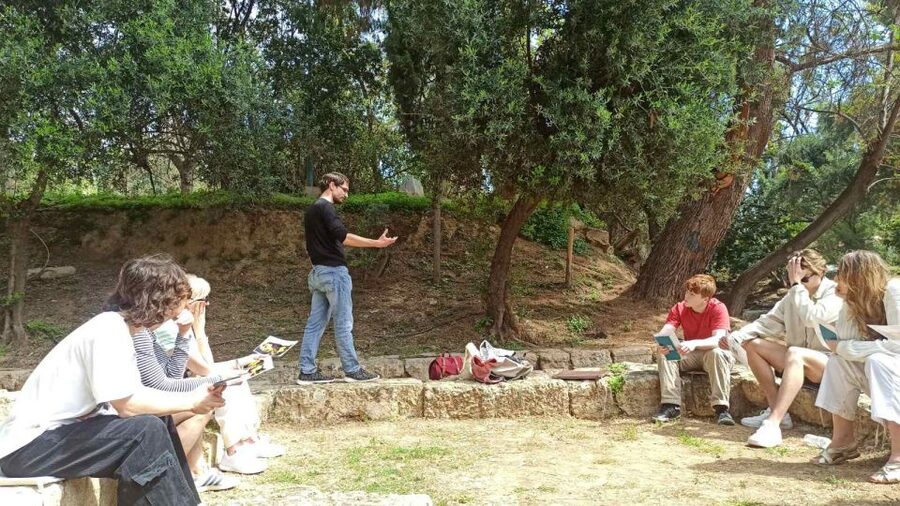
Plato’s Academy Park gives this experience its real spark. Instead of sitting through a standard guided tour, you use the Digital Museum, ancient ruins, questions, and debate to think like a student in Plato’s school. The workshop is held in plain English, so you do not need a philosophy degree or a pocket full of Greek terminology.
I like the small-group format, which gives you room to speak rather than simply listen. I also like the way the instructor connects the Allegory of the Cave to modern life, turning an ancient idea into something you can test against your own choices and beliefs. The main drawback is that the Digital Museum’s schedule can change, and archaeological work may limit how closely you approach the gymnasium ruins.
Key points to know
- The setting is the site of Plato’s ancient Academy, with the workshop taking place in and around the archaeological park.
- You begin with the Digital Museum, if it is open and operating, and gather information for the discussion.
- The workshop is made for beginners, using plain English and avoiding difficult terminology.
- Socratic questioning drives the session, helping you examine your own views instead of memorizing facts.
- A final debate game puts philosophy into practice, using a modern case based on Plato’s ideas.
- The $90 price pays for an active learning session, not a conventional sightseeing tour.
Plato’s Academy is the classroom
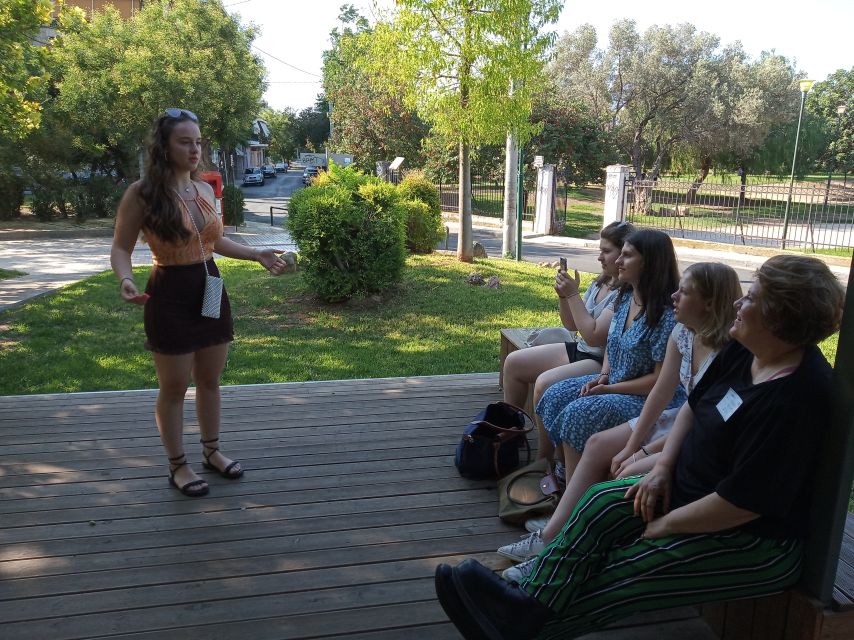
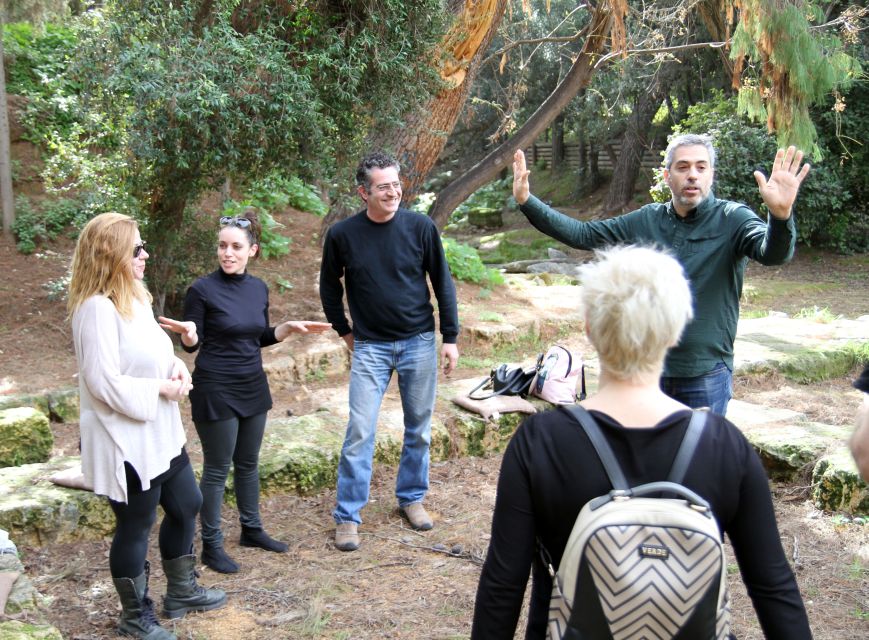
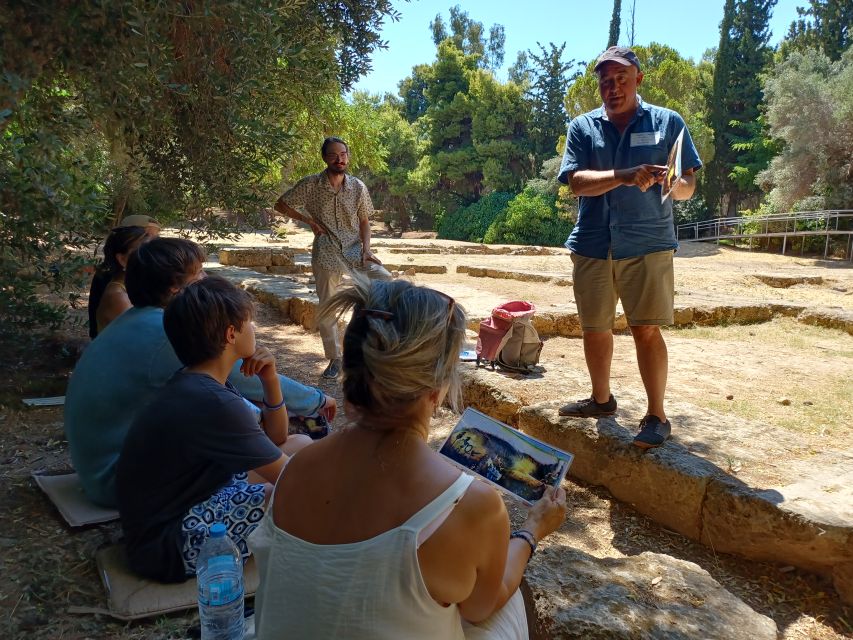
The setting does much of the teaching here. Plato’s Academy was the world’s first Academy, and the park lets you consider that fact while standing near the remains of its ancient gymnasium. You are not just hearing about philosophy in a downtown room. You are discussing it in the place linked to Plato’s school.
The site is an archaeological park rather than a polished monument complex. That matters. You will not find a long row of intact columns or a perfectly reconstructed classroom. The ruins can feel modest, but the open setting gives the workshop space to move between observation, conversation, and quiet thought.
The ancient gymnasium is an especially useful focus. In classical Greece, a gymnasium was connected with physical training and education, and here it becomes the point where your group considers what it meant to be a philosopher in ancient Athens. If an excavation is underway, you may see the ruins from a short distance and settle in another part of the park instead.
That change can reduce the visual impact, but it does not cancel the main activity. The workshop is built around discussion and questions, not a close inspection of masonry.
More philosophy walks in Athens:
- Philosophy and Democracy tour of Athens
★ 5.0 · 285 reviews - Athens Highlights: Myths & Philosophers Walking Tour
★ 5.0 · 125 reviews - Athens: Philosophy and Democracy Walking Tour
★ 5.0 · 91 reviews
Start at the Digital Museum
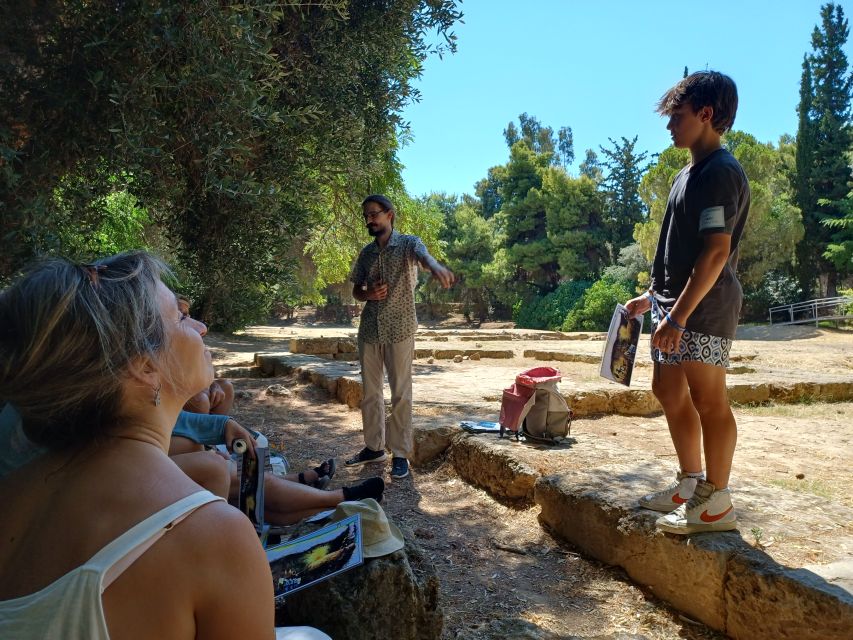
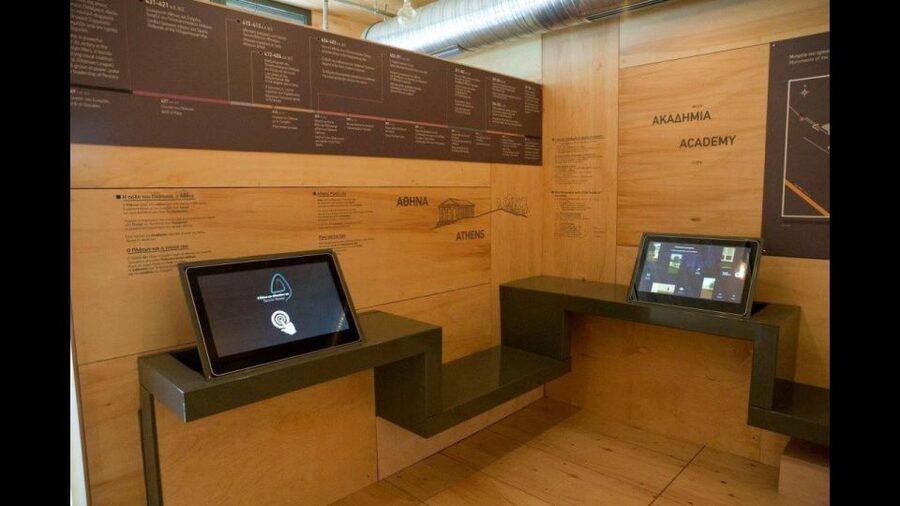
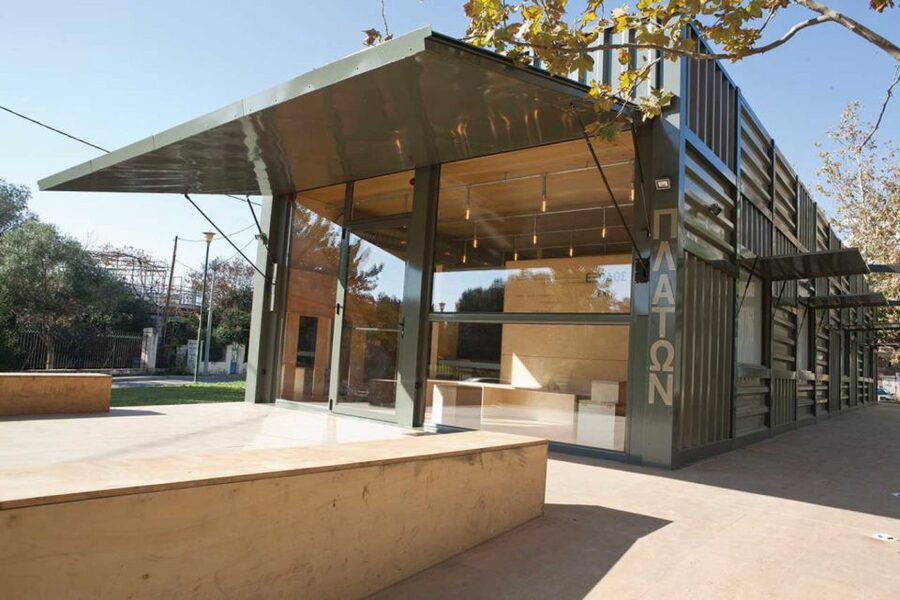
Your meeting point is outside Plato’s Digital Museum. Look for the instructor holding a Hellas Revival sign at the entrance. This simple detail matters because the activity is not designed as a general tour of the neighborhood, and you want to be in the right place from the start.
If the museum is open and operating, entrance is free as part of the experience. The first task is not simply to wander through the displays. You are asked to gather specific information about Plato, his works, and the Academy. That turns the museum visit into a short investigation.
I like this approach because it gives you a reason to pay attention. You are collecting ideas that will return later in the park. The museum section also helps set a shared baseline for the group, particularly when some people arrive with a little philosophy background and others arrive knowing only Plato’s name.
The museum schedule changes often, and it sometimes closes without notice. If it is shut, the planned museum portion cannot operate in the usual way. The workshop still centers on the park, Plato, and the philosophical exercises, but you should treat the museum visit as a welcome possibility rather than a guaranteed stop.
Walk to the ancient gymnasium ruins
After the museum, you walk through Plato’s Academy Park to the ancient gymnasium ruins. This is not a conventional guide-led march from one famous sight to another. The instructor uses the walk and the site to shift the group from gathering facts to asking what those facts mean.
You will have a chance to share what you discovered about Plato and the Academy. The discussion then moves toward the daily identity of a philosopher in ancient Athens. That is where the activity becomes more personal. You are encouraged to consider philosophy as a way of living and questioning, not only as a set of old texts.
The ruins provide a useful physical anchor, even if they are not dramatic in the way Athens’ major temples are. You can connect the discussion to a real place, and the setting helps separate this workshop from a classroom lecture. Still, set your expectations correctly. The included service is an educational interactive workshop, not a full guided tour of the park or a broad archaeological explanation of every feature.
Comfortable shoes are a smart choice. Bring water, a sun hat, and comfortable clothing, especially because the work takes place outdoors at a historical site.
The Allegory of the Cave becomes a group exercise
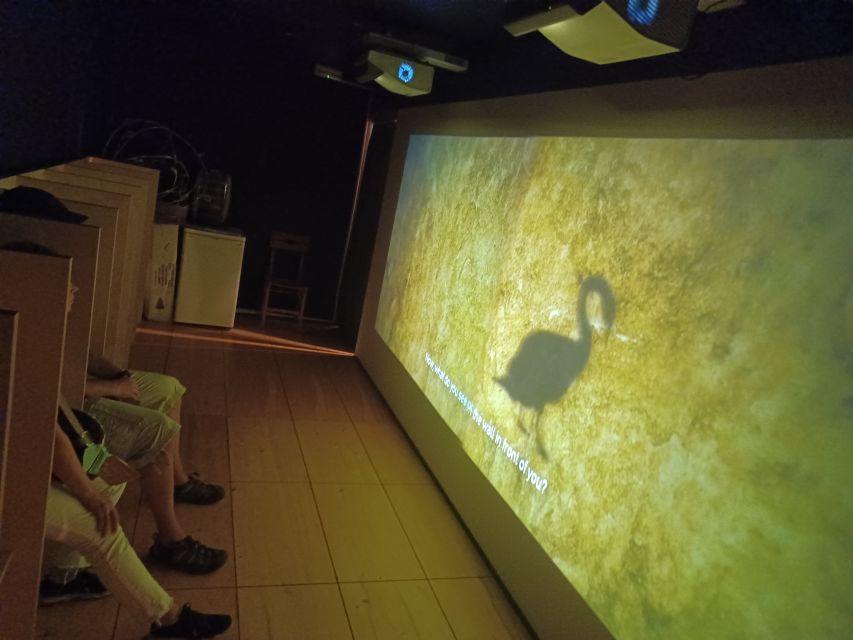
The central subject is Plato’s Allegory of the Cave. You may already know its basic image: people mistake shadows for reality, then face the difficult process of turning toward a clearer understanding. The workshop does not leave the idea on the page. You work through its meaning in conversation.
The instructor uses Socrates’ maieutic art, often described as a midwife method. The basic idea is to help you bring your own understanding into the open through questions. Instead of receiving a finished answer, you examine what you believe, why you believe it, and what might change your mind.
That method can feel refreshing if you enjoy conversation. It can also feel demanding if you prefer a quiet lecture with clear conclusions. You may be asked to explain a view, listen to a different one, and rethink your first response. The aim is not to win every exchange. It is to make the thinking more careful.
The discussion uses Platonic dialogue techniques and invites the group to exchange opinions, beliefs, experiences, and views. The strongest part of the format is its balance. You get instruction, but you also have to do some of the intellectual work yourself.
The language is plain English, and the activity is designed for people without previous philosophy study. That makes it a good fit for a first encounter with Plato. At the same time, the open discussion gives people with more background a way to ask harder questions without turning the session into a specialist seminar.
A different kind of day out from Athens:
- Athens: Acropolis & up to 5 Archaeological Sites Combo Pass
★ 4.4 · 12,619 reviews - Athens: Acropolis Ticket with Optional Audio or Live Guide
★ 4.2 · 11,055 reviews - Athens: Acropolis, Parthenon & Acropolis Museum Guided Tour
★ 4.8 · 9,316 reviews - Athens: Cape Sounion & Poseidon Temple Sunset Half-Day Trip
★ 4.8 · 8,241 reviews
A short debate puts the ideas to work
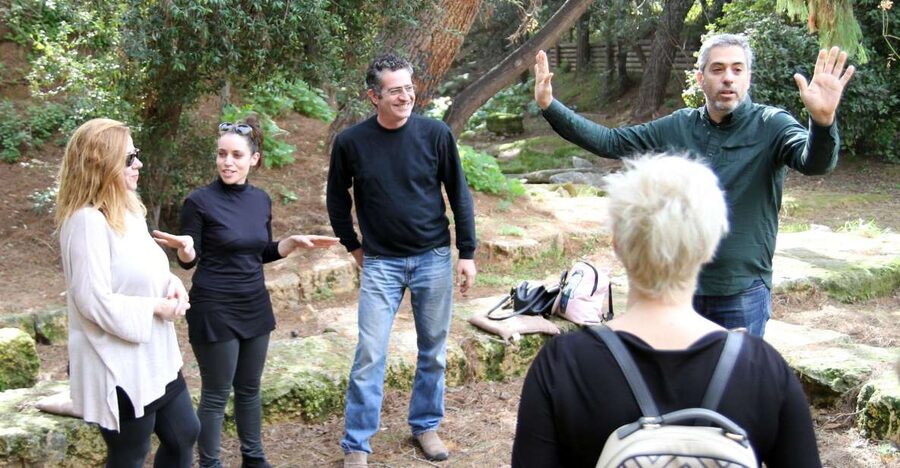
The final stage is a debate game based on Plato’s view of how a philosopher should act. You discuss a modern-life case study and take a position. This gives the workshop a clear finish and tests whether the earlier ideas have moved beyond theory.
A debate can sound formal, but the session is described as productive and joyful rather than competitive in a harsh way. You should expect to speak, defend a position, and respond to other views. The point is not to produce a perfect philosophical argument. It is to practice clear thinking in a social setting.
This modern connection is one reason the experience works better than a basic talk about ancient Greece. Plato’s ideas become tools for examining choices and public behavior today. You may leave with an answer to the case study, but the more useful result may be a new question about your own habits.
The format also helps a mixed group. People with some knowledge can contribute context, while beginners can test ideas without needing to master technical vocabulary first.
What the $90 price includes
The experience costs $90 per person for two hours. That is a fairly serious price for a short activity, so the value depends on what you want from Athens.
You are paying for an expert facilitator, the workshop materials, local taxes, and a carefully planned educational format. You are not paying for transportation, a meal, or a standard sightseeing tour. The price makes more sense if you want a guided discussion with structure and a small group, rather than a quick look at ruins.
I would compare it with the cost of a private lesson or specialist cultural activity. The session gives you direct access to an instructor, time to speak, and a chance to apply the ideas. If you prefer collecting famous sights, $90 may feel high for a park and a two-hour workshop. If you enjoy thoughtful conversation and want a different side of Athens, the price can be reasonable.
Private or small-group options are available. A small group is the better choice for most people because the activity depends on participation. Ask about the group type when booking if having more room to speak is important to you.
The practical details that shape the experience
The activity lasts two hours, with starting times shown according to availability. It begins and ends at the entrance to Plato’s Digital Museum, so you return to the original meeting point rather than finishing at a separate location.
The instructor teaches in English. The workshop is suitable for beginners, and the language is intended to remain clear and free of difficult terms. That does not mean the ideas are shallow. It means the instructor aims to explain them without making you feel as if you need prior study.
The site is wheelchair accessible. Because the activity takes place at a historical site and in a public park, conditions can change. Excavation work may affect where the group sits, and the museum may be closed unexpectedly.
You must also follow the site’s conduct rules. Dress respectfully, keep the area clean, avoid excessive noise, and follow instructions about photography and video. The facilitator can end your participation without a refund if your conduct is considered disrespectful or unsuitable for the site.
Photo and video recording may take place during the public workshop, including possible future publication. If you do not want to appear, withdraw your consent in writing before the activity.
Free cancellation is available up to 24 hours in advance for a full refund. You can also reserve now and pay later, which helps if your Athens schedule is still taking shape.
Who will enjoy this most
I would choose this experience if you want to connect Athens with ideas rather than only monuments. It suits curious beginners, couples who enjoy discussing big questions, students, educators, and anyone who likes an activity that asks for participation.
It can also work well for a mixed group. One person can arrive with a working knowledge of Plato while another knows very little. The museum task and the instructor’s plain English help bring everyone into the same conversation.
You may want to skip it if you want a relaxed walk with no speaking, a detailed archaeological tour, or guaranteed access to the Digital Museum. The workshop asks you to share opinions and take part in a debate. That is its strength, but it is not ideal for someone who wants to remain in the background.
The outdoor setting also means you should prepare for sun and bring water. This is not a formal indoor seminar with fixed seating and a climate-controlled room.
Final verdict: book it for questions, not checklists
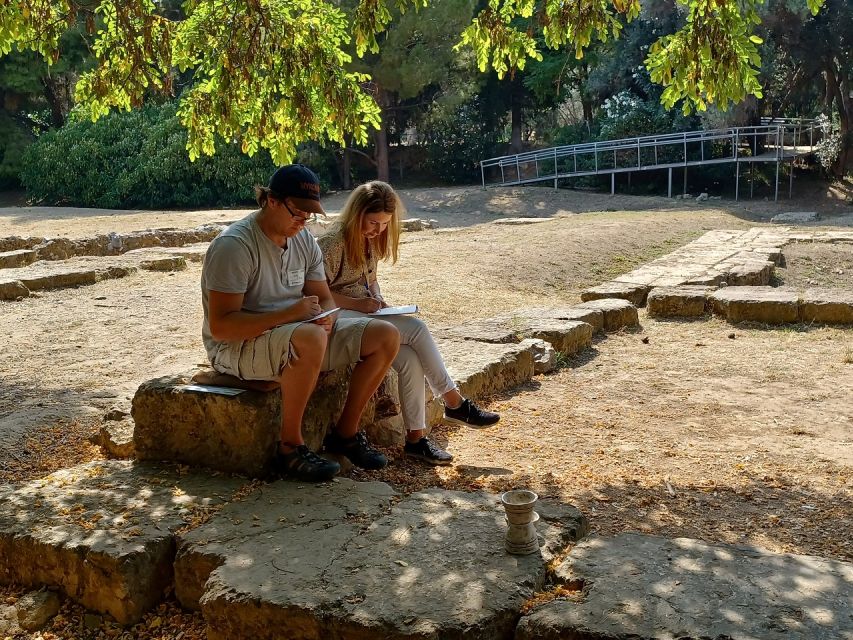
I recommend this experience for readers who want a thoughtful break from Athens’ major archaeological sights. The strongest elements are the authentic Academy setting, the small-group dialogue, and the way the Allegory of the Cave becomes a tool for examining modern life.
Book it if you want to think aloud, meet Plato through discussion, and leave with new questions rather than a list of dates. Consider another activity if your main goal is a full guided tour or a guaranteed museum visit. At $90, it earns its value through participation and the quality of the conversation, not through the number of monuments covered.
FAQ
Where does the philosophy workshop begin?
Meet the instructor outside Plato’s Digital Museum at the entrance. The instructor will hold a Hellas Revival sign.
How long does the activity last?
The workshop lasts two hours. Starting times depend on availability.
Is the Digital Museum included?
Yes. Entrance to Plato’s Digital Museum is free when the museum is open and operating. Its schedule changes often, and it may sometimes be closed without notice.
Do I need to know philosophy before joining?
No. The workshop is designed for beginners and uses plain English without difficult terminology.
Is this a guided tour of Plato’s Academy Park?
No. It is an educational interactive workshop rather than a conventional guided tour. You explore the park, discuss Plato, and take part in structured philosophical activities.
What should I bring?
Bring comfortable shoes, a sun hat, water, and comfortable clothing.
Can I cancel the booking?
You can cancel up to 24 hours in advance for a full refund. Reserve now and pay later is also available.
Newly reviewed around Athens
- Feel Ancient thermal Spa Visit Delphi, Leonidas ℨoo Spaʀtan★ 5.0 · 4 reviews
- Food Tour★ 5.0 · 3 reviews
- Explore the Hidden Food Gems of Athens★ 5.0 · 57 reviews
- Food Experience in Athens including Unlimited Lunch★ 5.0 · 3 reviews
- Eat Your Way Through Athens: A Local Food Walk★ 4.9 · 97 reviews
- From Athens: Delphi Private Tour with Lunch Time★ 4.0 · 3 reviews
- Delphi: Spanish guided one day tour★ 4.6 · 55 reviews
- Early Entry Acropolis & Museum. Beat the Crowds & the heat★ 5.0 · 3 reviews
Athens Philosophy Tours, compared.


Athens Highlights: Myths & Philosophers Walking Tour
Read our review →
the Great Greek Philosophers Guided Tour in Spanish
Read our review →
Athens Highlights: Myths & Philosophers Private Walking Tour
Read our review →
Aristotle’s Philosophy Experiential Workshop, Lyceum, Athens
Read our review →
Browse the lists this tour appears in