

Reviewed · ATHENS MYTHOLOGY TOURS
Athens: Mythology Tour for Families
The clever part of this tour is that it uses Greek mythology as the key to the Acropolis. Instead of asking children to memorize dates and architectural terms, your guide connects Athena to the Erechtheion, Dionysus to the first theater, and famous heroes to the hill you are walking across. I like the way this gives the stones a human story.
I also like the small group limit of 15 and the final activity at the Pnyx, where children can use their imagination rather than simply listen. Guides such as Sophia, Demi, Maria, and Chrysa have been praised for keeping both children and adults involved. The main caution is the three-hour length: in Athens summer heat, that can feel long, especially for younger children.
Key Points for Families
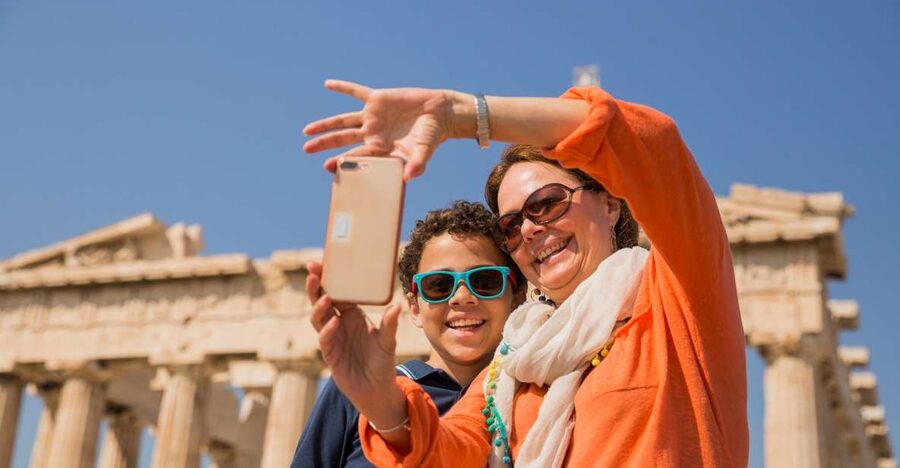
- Mythology leads the tour: Hear stories of Zeus, Athena, Poseidon, Dionysus, Hera, Aphrodite, Theseus, and the Minotaur as you visit the Acropolis.
- A real family pace: The guide is trained to speak to children aged roughly 5 to 11 while still giving adults useful history and cultural context.
- Major Acropolis sights included: See the Theater of Dionysus, Propylaea, Temple of Athena Nike, Erechtheion, and Parthenon.
- The Pnyx adds something different: Finish at the birthplace of democracy with a family activity linked to the myths.
- Small groups matter: A maximum of 15 people gives children more room to ask questions and interact with the guide.
- Plan for the sun: Bring water, a hat, sunglasses, and comfortable shoes. Strollers, backpacks, and large bags are not allowed at the Acropolis.
Why Mythology Works Better Than a Standard Acropolis Tour
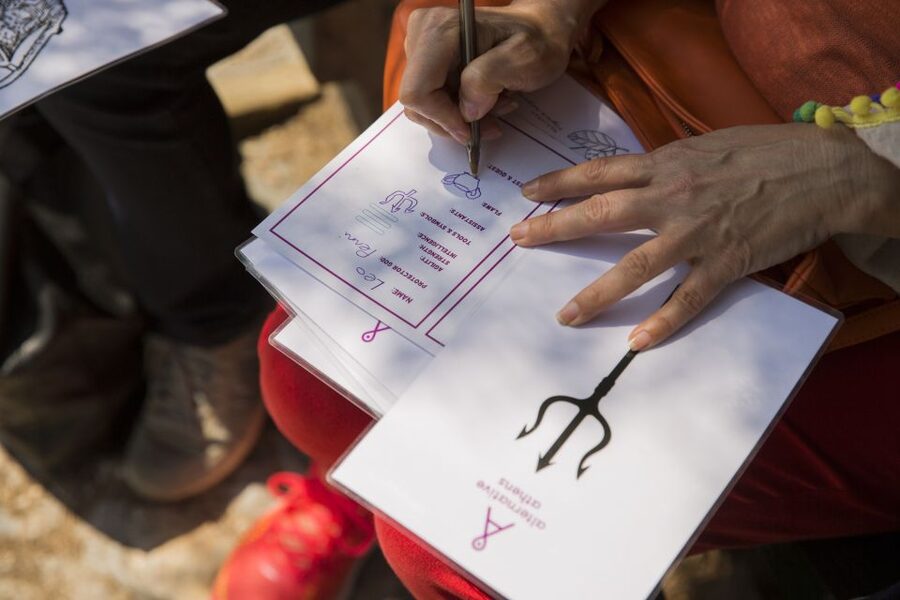
The Acropolis can be a tough sell to a child. It is a hot hill covered with ancient marble, broken columns, and names that may sound like homework. This tour takes a more useful approach: it treats the monuments as parts of a story.
Your guide explains the gods and heroes behind the city. Zeus provides the larger family drama of Olympus. Athena represents wisdom and the city’s identity. Poseidon brings the sea into the story, while Dionysus explains why theater became such an important part of ancient Greek life.
I like this method because it gives children something to follow from one stop to the next. Adults still get the history, architecture, and civic background, but the tour does not depend on a child’s patience for a long lecture.
The strongest age range is about 5 to 11, which the operator states directly. Older children can still enjoy it, especially if they already like Greek myths. Families with children around 8 to 11 seem especially well matched to the mix of stories, questions, and movement.
More Greek mythology tours in Athens:
- Athens: Mythology of Delphi, Museum and Arachova Guided Tour
★ 4.6 · 4,008 reviews - Athens & Acropolis Highlights: Greek Mythology Small-Group Tour
★ 5.0 · 2,370 reviews - Athens: Acropolis and Mythology Highlights Small Group Tour
★ 4.8 · 2,275 reviews
Starting at the Theater of Dionysus
The tour begins at the Acropolis area, with the exact meeting point depending on the option you book. Confirm the location carefully before leaving your hotel. Two families had trouble with incorrect or confusing meeting-point information, although the provider helped them get sorted out. Build in extra time, especially if you are arriving with several children.
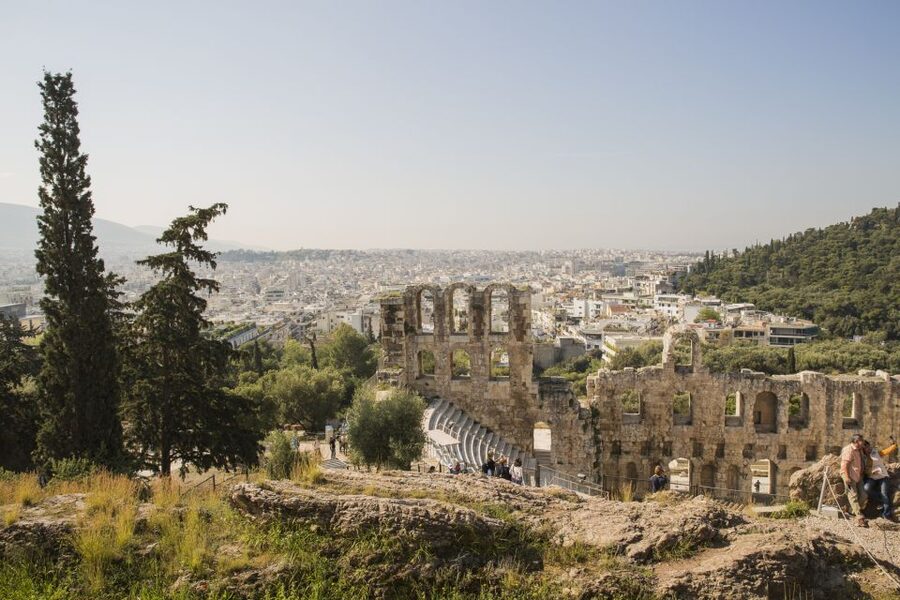
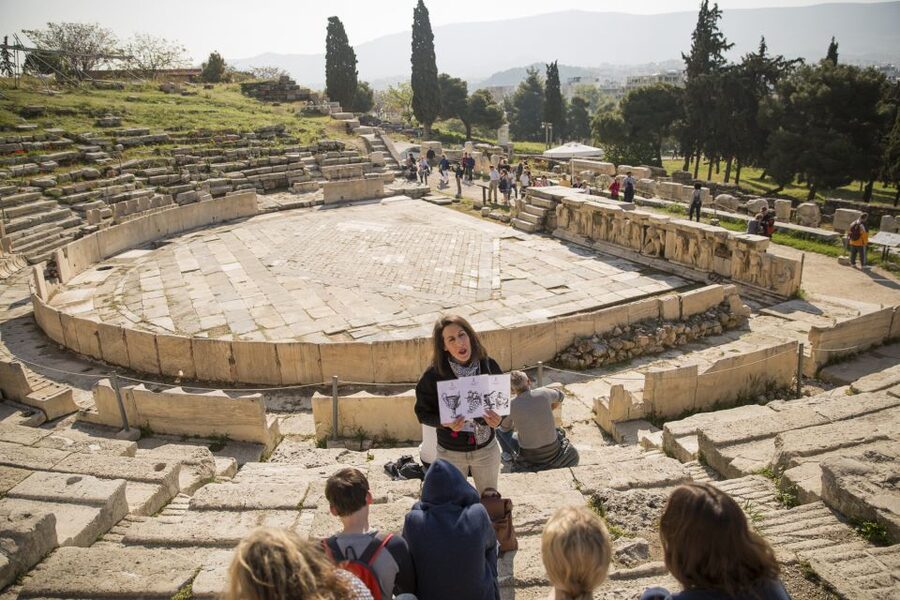
The first major stop is the Theater of Dionysus, described as the first home of drama. This is a smart opening because it gives the guide an immediate way to talk about Dionysus, the god of wine and theater, and about how ancient performances connected religion, civic life, and public gatherings.
The guided portion here lasts about 15 minutes. That is enough time for a clear introduction without asking young children to sit still for too long. You can expect storytelling rather than a technical lecture, with the theater used as a real place where myths and public performance met.
Propylaea and the Temple of Athena Nike
From the theater, the route continues toward the Propylaea, the monumental gateway to the Acropolis. The guided stop is short, about 10 minutes, but the gateway gives you a useful sense of arrival. This was not simply an entrance for tourists. It framed the approach to the sacred hill and made the climb feel important.
Next comes the Temple of Athena Nike, with about 15 minutes of explanation. Athena Nike represents Athena as a bringer of victory. Here, mythology and the city’s hopes come together in a way children can understand: the Athenians were placing a powerful protector near the entrance.
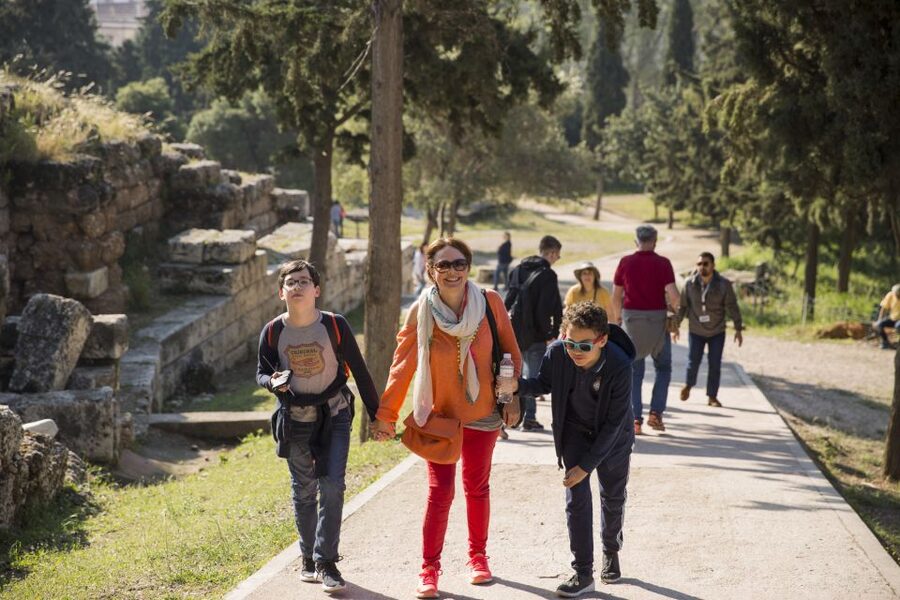
The route involves uneven ancient ground and uphill walking. You should choose shoes for grip and comfort, not fashion. The tour is not suitable for wheelchair users, and the Acropolis rules mean that strollers, backpacks, and large bags should not be brought along.
The Erechtheion and Its Competing Myths
The Erechtheion receives about 10 minutes of guided attention. It is one of the most memorable buildings on the Acropolis because of its unusual design and its connection to several sacred traditions.
This is an ideal place for the guide to explain the contest between Athena and Poseidon for the city’s protection. The two gods offered different gifts, and the story helps children understand why both figures mattered to Athens. The building also offers a good reminder that the Acropolis was not one simple temple complex built for one purpose. It held several sacred associations.
A family guide has to judge when to keep moving and when to answer questions. That seems to be one of the strongest features of this experience. Sophia, for example, was praised for handling a multigenerational group, while other guides such as Maria, Demi, and Chrysa were singled out for answering children patiently.
A different kind of day out from Athens:
- Athens: Acropolis & up to 5 Archaeological Sites Combo Pass
★ 4.4 · 12,619 reviews - Athens: Acropolis Ticket with Optional Audio or Live Guide
★ 4.2 · 11,055 reviews - Athens: Acropolis, Parthenon & Acropolis Museum Guided Tour
★ 4.8 · 9,316 reviews - Athens: Cape Sounion & Poseidon Temple Sunset Half-Day Trip
★ 4.8 · 8,241 reviews
Seventy Minutes at the Parthenon
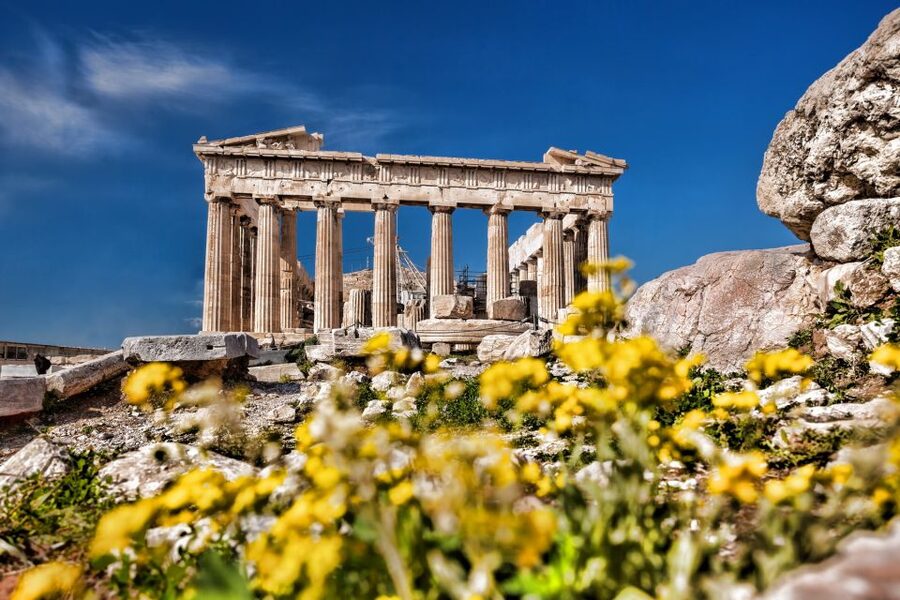
The longest stop is the Parthenon, with about 70 minutes of guided time. That tells you something important about the tour: the Parthenon is not treated as a quick photo stop.
Your guide links the building to Athena and to the city’s political and religious identity. You will hear about the meaning of the monument, the stories attached to its decoration, and the way the Acropolis became a symbol of Athens. The mythology gives children an entry point, while adults can pay closer attention to the architecture and historical setting.
Seventy minutes is a substantial amount of time in the open sun. For an interested family, it allows room for questions and pauses. For a tired five-year-old in July, it may be the hardest section. One family felt the complete three-hour tour was too long in the heat and wished it had been an hour shorter.
I would book an early start if possible. A 9:30 a.m. entry helped one family avoid the worst part of the heat and secure a time they might not have found late in the booking process. Starting early also gives children a better chance of staying alert through the full visit.
Walking Down to the Pnyx

After the Acropolis, you walk for about 15 minutes to the ancient Pnyx. This changes the subject from gods and temples to citizens and democracy.
The Pnyx was the gathering place where Athenians discussed political matters. It is a valuable second half because it shows that ancient Athens was not only about religion and heroic legends. It was also a place where citizens debated how their city should function.
The walk gives everyone a change of scene after the crowded monuments and uphill paths. Still, it is another part of the total walking time, so children should have comfortable footwear and water. There are not many water stops along the route, according to one family’s practical warning.
The Family Activity at the Pnyx
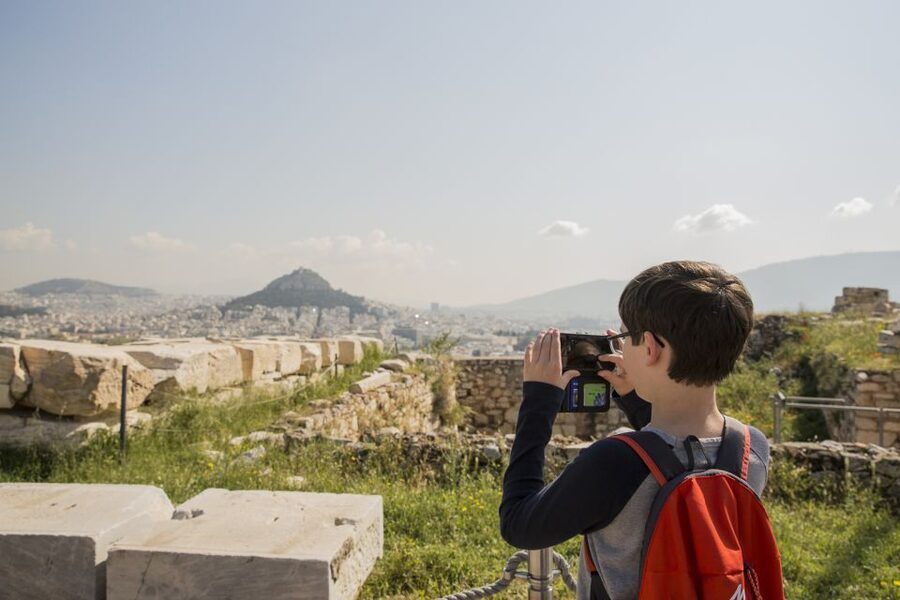
The final 45 minutes at the Pnyx are built around a group activity inspired by the gods and heroes introduced earlier. The exact activity is not specified in advance, so you should think of it as an imaginative, guide-led exercise rather than a fixed craft or performance.
That open format can work well. Children have already heard about Theseus and the Minotaur, Hera’s jealousy, and Aphrodite, the goddess of love and beauty. At the Pnyx, they get a chance to respond to those stories and use the ancient setting in a more active way.
This is where the tour’s family focus matters most. Guides have kept children involved with games, questions, and age-appropriate explanations, even when youngsters were tired or not very responsive. The activity also gives parents something to do with their children, rather than leaving adults to watch from the side.
You finish at Pnyx Hill, not back at the original starting point. Plan your next stop from there rather than assuming you will return to the Acropolis entrance.
The Guides Make or Break the Experience
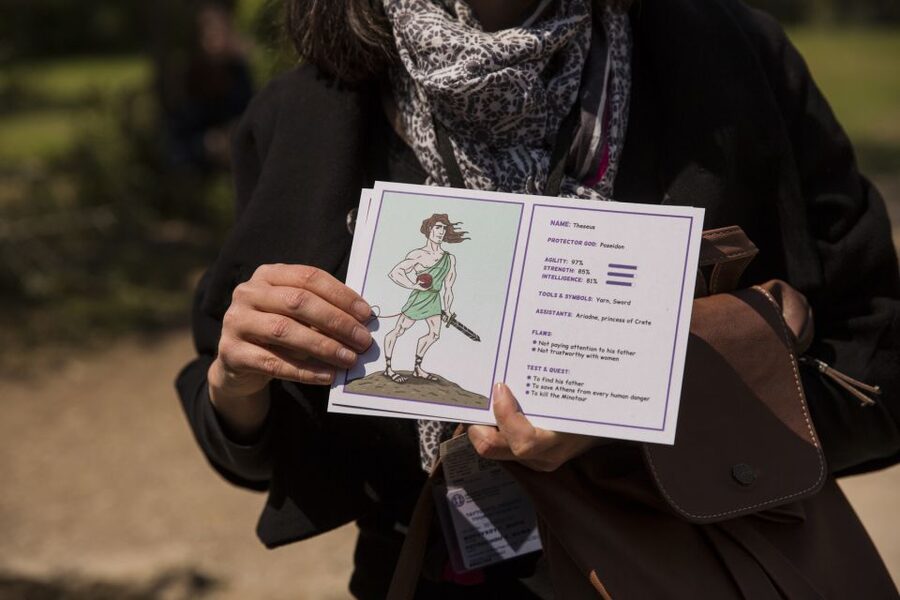
A family tour depends heavily on the guide’s energy and judgment. A dry speaker can lose a child in minutes, even at the Parthenon. A good guide notices when to shorten an explanation, ask a question, or turn a myth into a game.
The guides named in family feedback include Christina, Kelli, Chrysa, Maria, Sophia, Demi, Dani, Marika, Angelica, Viki, Amarylis, and Heleni. Their praised qualities are consistent: patience, humor, expressive storytelling, and the ability to answer children without talking down to them.
Some guides have handled groups with children as young as 3, though the stated best age is 5 to 11. Others have worked well with 10- and 12-year-olds who wanted more detail. You cannot select a particular guide unless the private option or provider arrangements allow it, but the family-guide format is designed for this range.
English and French tours are available. A private group is also an option, which may suit a family with very young children, older relatives, or different walking speeds.
Is $79 a Fair Price?
At $79 per person, the value depends on what is included in the option you choose. A family-friendly guide, a three-hour route, children’s activity materials, and structured interpretation can make the cost worthwhile if you want more than a quick look at the monuments.
Acropolis entry tickets may be included if you select that option. In other cases, entrance fees are extra, and the provider can pre-purchase them for you. Check this point carefully before paying, since ticket fees are non-refundable and cannot be exchanged.
The price is easiest to justify for families who would otherwise struggle to keep children interested. You are paying for the guide’s ability to connect the monuments, manage questions, and make the visit feel like one story rather than five unrelated ruins.
It is less compelling if your family prefers to wander alone, already knows Greek mythology well, or wants a short visit. The tour is three hours, and the heat and uphill walking are real considerations.
Practical Advice Before You Go
Wear comfortable shoes and bring sunglasses, a sun hat, and plenty of water. Food and drinks are not included. You should also carry a passport or ID card because identification may be needed for entry discounts.
The Acropolis has strict bag rules. Do not bring a baby stroller, backpack, or large bag. Families with toddlers should think carefully about this restriction and the amount of uphill walking.
Children under certain age thresholds may qualify for free entry with valid identification. European Union citizens under 25 can enter free with ID or a passport, and from April 1, 2025, EU and non-EU citizens under 18 can enter free with valid identification. Confirm how this applies to your booking before you purchase tickets.
The tour offers free cancellation up to 24 hours before the start, and you can reserve now and pay later. Those options are useful if your Athens schedule is still moving.
Who Should Book This Acropolis Tour?
I would choose this tour for a family that wants the Acropolis to mean something to children, not just appear in holiday photographs. It is especially well suited to children aged 5 to 11, first-time visitors, and parents who would like a guide to handle the historical storytelling.
I would also consider it for a mixed-age group. The best guides balance mythology for children with history, philosophy, and civic life for adults. The private option may be worth considering if your children need frequent breaks or if your family wants to set the pace.
I would skip it if you need a wheelchair-accessible route, cannot manage three hours of walking, or are visiting during the hottest part of the day without enough water. I would also check the meeting point twice, since incorrect directions have caused avoidable stress.
FAQ
How long does the mythology tour last?
The tour lasts three hours, including the Acropolis visit, the walk to the Pnyx, and the activity at Pnyx Hill.
Which Acropolis sights are included?
The route includes the Theater of Dionysus, Propylaea, Temple of Athena Nike, Erechtheion, and Parthenon.
Does the tour include Acropolis admission?
Acropolis entry tickets are included only if you select the ticket-inclusive option. Otherwise, entrance fees are extra, and the provider can pre-purchase them for you.
What age group is the tour best for?
The tour is most suitable for children aged 5 to 11. Older children can also enjoy it, especially if they are interested in Greek mythology or Classics.
What languages are available?
The tour is available in English and French.
How large is the group?
The small group option allows a maximum of 15 people. A private group is also available.
Is the tour suitable for wheelchair users?
No. The tour is not suitable for wheelchair users.
Can I bring a stroller or backpack?
No. Strollers, backpacks, and large bags are not allowed at the Acropolis and should not be taken on the tour.
What should I bring?
Bring a passport or ID card, comfortable shoes, sunglasses, a sun hat, and water. Food and drinks are not included.
Should You Book It?
Book this tour if you want a lively, child-focused introduction to the Acropolis and like the idea of connecting the monuments to gods, heroes, theater, and democracy. The small group and final Pnyx activity give it more purpose than a standard walk past the ruins.
Just plan around the heat, check the meeting point carefully, and remember that three hours is a serious outing for a young child. For families who prepare properly, this is a smart way to turn Athens mythology into a shared story your children can remember.
Newly reviewed around Athens
- Feel Ancient thermal Spa Visit Delphi, Leonidas ℨoo Spaʀtan★ 5.0 · 4 reviews
- Food Tour★ 5.0 · 3 reviews
- Explore the Hidden Food Gems of Athens★ 5.0 · 57 reviews
- Food Experience in Athens including Unlimited Lunch★ 5.0 · 3 reviews
- Eat Your Way Through Athens: A Local Food Walk★ 4.9 · 97 reviews
- From Athens: Delphi Private Tour with Lunch Time★ 4.0 · 3 reviews
- Delphi: Spanish guided one day tour★ 4.6 · 55 reviews
- Early Entry Acropolis & Museum. Beat the Crowds & the heat★ 5.0 · 3 reviews
Athens Mythology Tours, compared.
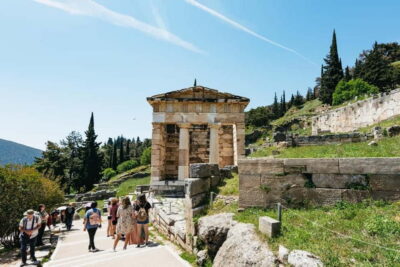
Mythology of Delphi, Museum and Arachova Guided Tour
Read our review →
Athens & Acropolis Highlights: Greek Mythology Small-Group Tour
Read our review →
Acropolis and Mythology Highlights Small Group Tour
Read our review →
Athens Highlights: Myths & Philosophers Walking Tour
Read our review →
Greek Mythology Treasure Hunt for Kids – Athens Private Tour
Read our review →


Browse the lists this tour appears in