
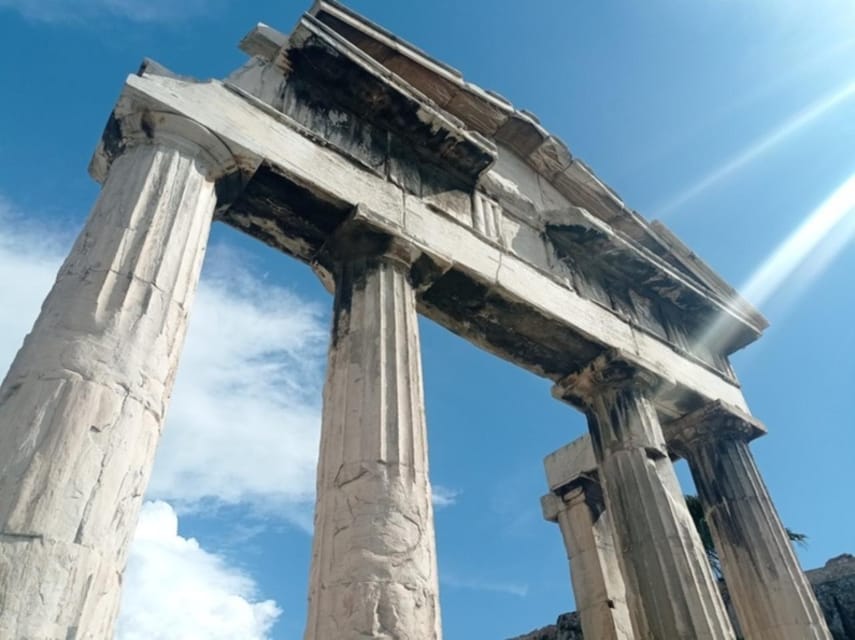
Reviewed · ATHENS PHILOSOPHY TOURS
Athens: the Great Greek Philosophers Guided Tour in Spanish
Athens becomes much more than an ancient city backdrop on this walking tour. You follow the places tied to Socrates, Plato, and Aristotle, then see how debates about virtue, politics, justice, and knowledge grew out of ordinary public life. The route includes Plato’s statue, the Areopagus, Socrates’ Prison, the Agora, and the Pnyx.
I like two things right away: the tour connects famous sights with lesser-known corners, and the guide invites you to think rather than simply listen. Guides named Gregory, Gregori, and Sunny appear in the booking information, with Gregory receiving especially warm praise for his clear explanations, humor, and ability to adjust the discussion to the group. The main consideration is language: the advertised live tour is in Spanish, and you should expect a fair amount of walking over 150 minutes.
Key points to know before booking
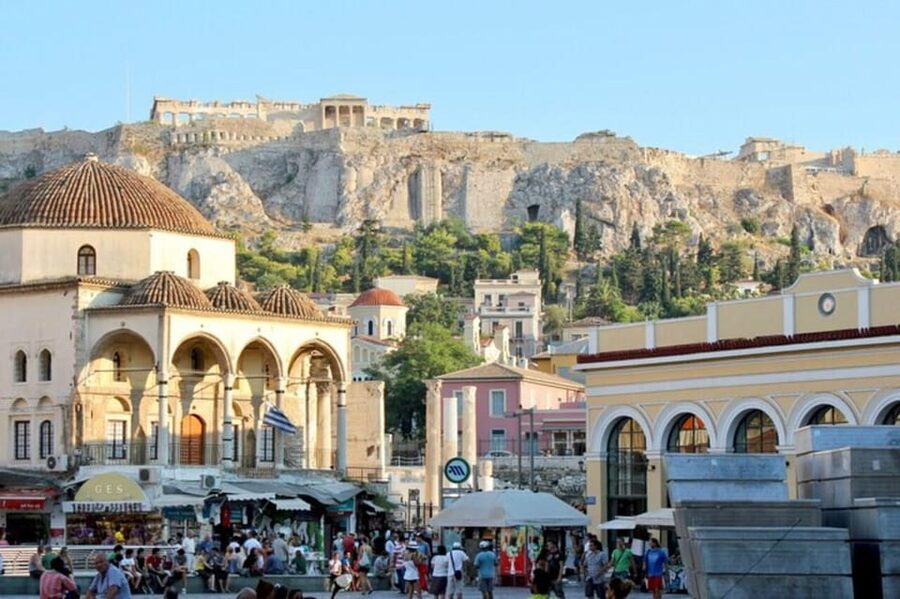
- Plato’s statue is the meeting point: Arrive 10 minutes early and look for the guide in front of the statue.
- The tour turns places into arguments: The Agora, Pnyx, Areopagus, and Socrates’ Prison are used to explain ideas, not just dates.
- Expect discussion, not a lecture: Guides ask questions and may use simple mind games to get you thinking.
- Gregory is a frequently named guide: His style is described as warm, funny, flexible, and passionate about philosophy.
- Bring water and walking shoes: Athens can be hot, and the route includes hills and uneven city surfaces.
- The price is $34: For two and a half hours with an official guide, that is a fair rate if you care about ideas as much as monuments.
Why philosophy works so well in Athens
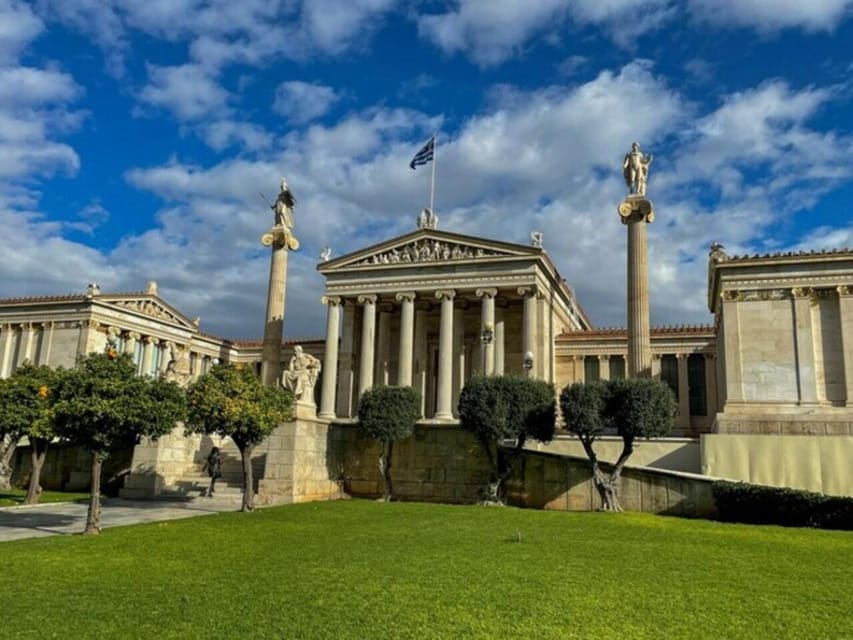
Many Athens tours race from monument to monument. This one follows a single subject, the birth and development of philosophy, and uses the city as its classroom.
That focus matters. Instead of hearing a quick fact about Socrates before moving on, you can spend time considering why his questions made people uncomfortable, how Plato recorded and developed his ideas, and how different schools of thought shaped later thinking. The tour also treats philosophy as something you can use, not just a subject from a textbook.
I like the way the route links public space with public debate. Ancient Athenians did not keep philosophy behind university walls. Ideas were argued in civic areas, political meeting places, and open gathering spots. As you walk, you get a clearer sense of how the city’s layout supported discussion, persuasion, and conflict.
This is not a tour for someone who wants only a fast introduction to the Acropolis. It is better suited to you if you enjoy questions without simple answers, stories about famous thinkers, and conversations that continue after the guide has finished speaking.
More philosophy walks in Athens:
- Philosophy and Democracy tour of Athens
★ 5.0 · 285 reviews - Athens Highlights: Myths & Philosophers Walking Tour
★ 5.0 · 125 reviews - Athens: Philosophy and Democracy Walking Tour
★ 5.0 · 91 reviews
Starting at Plato’s statue
The meeting point is in front of the Statue of Plato, and you should arrive 10 minutes before the start. This is a smart opening location because Plato gives the guide a natural way to introduce the relationship between teacher and student.
From Plato, the conversation can widen to Socrates and Aristotle. Socrates left no writings of his own, so much of what you know about him comes through later accounts, especially Plato’s dialogues. Aristotle, in turn, represents a different approach, with broad work in logic, ethics, politics, science, and the natural world.
The value here is not memorizing a family tree of philosophers. Your guide uses these figures to show how ideas were passed on, challenged, and reshaped. The best part of the opening is likely to be the connection between a statue you can see and the living arguments associated with the person it represents.
Because the advertised language is Spanish, confirm that the session you choose is the one you want. One piece of supplied feedback also refers to an English and Spanish-speaking guide, but Spanish is the stated tour language, and guide assignments can vary.
The Agora and the city of public debate
The route then turns toward the Greek Agora, one of the most useful settings for understanding ancient Athenian life. The Agora was not simply a market area in the modern sense. It was tied to civic activity, social contact, and the exchange of ideas.
Here, your guide explains why philosophy developed in a city where people met face to face and argued about how society should work. The discussion may touch on the difference between winning an argument and finding the truth, a question that sits at the heart of the Socratic method.
This section can make the rest of Athens easier to read. You start to notice that the old city was not only a collection of temples. It was a place where citizens debated laws, duties, education, leadership, and moral conduct.
A useful point to keep in mind: this tour is built around interpretation rather than entry into a single major monument. The supplied information does not state that admission tickets to archaeological sites are included, so do not book it expecting a full interior visit or a replacement for an Acropolis ticket. The strength is the guide’s explanation of the places along the route.
Pnyx and the politics of persuasion
The walk continues toward the Pnyx, a hill connected with public meetings and political life. This stop gives the philosophy theme a wider frame. The ancient thinkers were not working in isolation from civic affairs. Their ideas were tied to questions about citizenship, power, education, and the duties of a person within a community.
You may find this one of the most useful parts of the tour if you want to connect philosophy with democracy. The Pnyx helps show why public speaking mattered so much and why persuasion could shape the life of the city.
Guides are encouraged to make the tour interactive. Several accounts describe questions, group discussion, and thought exercises. Gregory, in particular, is praised for adapting explanations to the group’s interests, including a participant with a background in law and society. That flexibility is valuable here because the same site can raise different questions for a student, a parent, a teacher, or someone simply curious about politics.
The climb is also practical information. You should wear comfortable shoes and carry water. Athens is not always kind to feet, and a hill feels different after two hours of walking than it does at the start.
A few more Athens tours worth putting side by side
- Athens: Acropolis Ticket with Optional Audio or Live Guide
★ 4.2 · 11,055 reviews - Athens: Acropolis, Parthenon & Acropolis Museum Guided Tour
★ 4.8 · 9,316 reviews - Athens: Acropolis and Parthenon Guided Walking Tour
★ 4.6 · 5,882 reviews - Athens: Cape Sounio & Poseidon Temple Trip with Audio Guide
★ 4.4 · 4,521 reviews
The Areopagus and difficult questions
The Areopagus adds another layer to the route. The rocky hill is one of Athens’ best-known viewpoints and a place with strong legal and civic associations. It is also the sort of stop where a good guide can move from physical setting to a larger question.
Expect discussion about justice, law, responsibility, and the tension between social rules and personal conscience. These subjects fit naturally with the story of Socrates, whose commitment to questioning accepted beliefs brought him into conflict with the city.
The footing around the Areopagus can be uneven, so take care rather than focusing only on the view. The tour’s walking pace and exact route may vary, but the basic advice remains simple: wear shoes with a firm sole and bring water.
This is also a good place to judge the guide’s style. A dry lecture about a rocky hill would waste the setting. The strongest guides turn it into a prompt for thought, asking you to consider what justice means and who gets to define it. The available comments repeatedly point to guides who are friendly, patient, and willing to answer questions instead of rushing through a script.
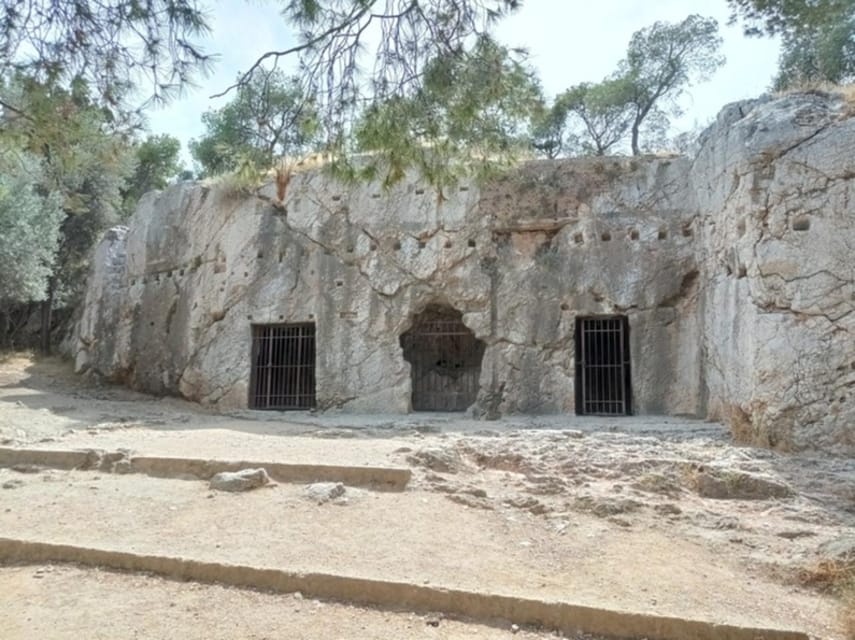
Socrates’ Prison and the cost of wisdom
Socrates’ Prison is one of the most memorable stops because it gives the story a human cost. The tour presents Socrates not only as a famous thinker but as a man whose questions and principles had consequences.
The central idea is simple and unsettling: being wise, or at least insisting on examining your beliefs, does not always make life easier. Socrates’ story lets the guide discuss obedience, conscience, public opinion, and the price of refusing to say what others want to hear.
You should treat the site with some care. The name connects it to the traditional story of Socrates, but the important part of the stop is the philosophical meaning rather than a promise that every detail can be proven beyond doubt. Your guide can help separate the historical setting from the later traditions attached to it.
This stop seems particularly effective for people who know Socrates only as a name. Stories, dialogue, and questions make him easier to understand than a list of dates ever could. The tour also gives you a chance to think about why his ideas still matter, instead of leaving him trapped in the ancient world.
A guide-led conversation, not a standard sightseeing walk
The strongest feature of this tour is the guide’s role. Several named guides receive praise for being warm, funny, patient, and open to questions. Gregory is described as someone who explains difficult concepts in plain language, uses objects or daily situations for comparison, and encourages people to develop their own views.
That matters because ancient philosophy can become abstract very quickly. Terms such as ethics, virtue, morality, logic, and the examined life may sound heavy in a classroom. A guide who turns them into everyday questions can make the subject accessible even if you have never read Plato.
You do not need to arrive as a philosophy student. One participant specifically recommended the tour even for people who do not consider themselves philosophy lovers. The format seems to work for beginners because the guide builds ideas from stories and places, while more experienced listeners can ask more detailed questions.
The discussion also gives the walk a personal quality. You may be asked to examine your own assumptions or consider a moral problem from another angle. That can be rewarding, but it is worth knowing what you are signing up for. If you prefer to remain quiet and take photographs, an interactive tour may feel more demanding than a conventional sightseeing walk.
What $34 buys you in 150 minutes
At $34 per person, this is reasonably priced for a 150-minute guided walk with an official guide. You are paying for a focused subject, local interpretation, and the time to connect several places that you might otherwise visit without understanding their relationship.
The value is strongest if you already plan to spend time in central Athens and want a different lens on the city. You get more than a short story at a monument, but you are not paying for a full-day private guide.
Food, drinks, and personal expenses are not included. Plan to eat before or after the tour and carry your own water. No group size is provided, so you should not book on the assumption that it will be private or limited to a small number of people.
The tour allows free cancellation up to 24 hours before departure for a full refund, and you can reserve now and pay later. Those terms are useful if your Athens schedule is still shifting.
Who should book this Athens walk?
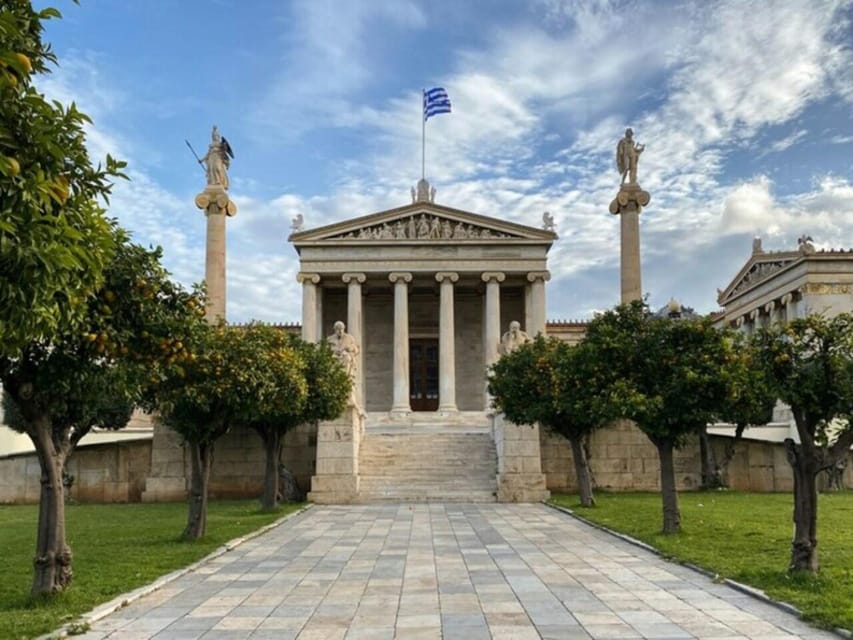
I would choose this tour if you want to understand why Athens became such an important center for ideas, not simply photograph ancient stones. It suits adults, students, couples, and curious first-time visitors who enjoy conversation.
It is also a good choice after a standard Acropolis visit. The Acropolis gives you architecture, religion, and political power. This walk adds the city’s debates, personalities, and moral questions.
You may want to skip it if your time in Athens is very short and you have not yet seen the city’s major archaeological sights. The tour does not replace those visits, and its pace leaves room for conversation rather than a rapid checklist.
Language deserves one final reminder. The activity is advertised with a Spanish-speaking live guide. If you need English, confirm the available language before paying rather than relying on an individual guide’s past language ability.
My verdict on the Great Greek Philosophers Tour
Book this walk if you want Athens to ask something of you. The route covers Plato’s statue, the Agora, Pnyx, Areopagus, and Socrates’ Prison, but the real subject is how people decide what is true, fair, and worth defending.
I especially like the combination of lesser-known stops and open discussion. The price is fair, the duration is long enough to build a story, and the guides appear to bring real enthusiasm to the subject. Just bring water, wear solid shoes, expect hills, and confirm Spanish is right for your group.
For a philosophy-minded visitor, this could become one of the most memorable two and a half hours in Athens. For someone seeking only monuments and quick facts, it may feel too thoughtful and too conversational. Know which kind of day you want, then make the call.
FAQ
How long does the Great Greek Philosophers Tour last?
The tour lasts 150 minutes, or two and a half hours.
What language is the tour conducted in?
The advertised live tour guide language is Spanish.
Where is the meeting point?
You meet in front of the Statue of Plato.
How early should I arrive?
You should arrive 10 minutes before the tour begins.
Which places are included in the route?
The tour highlights Plato’s statue, the Greek Agora, the Pnyx, the Areopagus, and Socrates’ Prison.
Is food or drink included?
No. Food and drinks are not included, so bring water and plan any meals separately.
What should I bring?
Wear comfortable shoes and bring water.
How much does the tour cost?
The listed price is $34 per person.
Newly reviewed around Athens
- Feel Ancient thermal Spa Visit Delphi, Leonidas ℨoo Spaʀtan★ 5.0 · 4 reviews
- Food Tour★ 5.0 · 3 reviews
- Explore the Hidden Food Gems of Athens★ 5.0 · 57 reviews
- Food Experience in Athens including Unlimited Lunch★ 5.0 · 3 reviews
- Eat Your Way Through Athens: A Local Food Walk★ 4.9 · 97 reviews
- From Athens: Delphi Private Tour with Lunch Time★ 4.0 · 3 reviews
- Delphi: Spanish guided one day tour★ 4.6 · 55 reviews
- Early Entry Acropolis & Museum. Beat the Crowds & the heat★ 5.0 · 3 reviews
Athens Philosophy Tours, compared.

Athens Highlights: Myths & Philosophers Walking Tour
Read our review →

Athens Highlights: Myths & Philosophers Private Walking Tour
Read our review →
Aristotle’s Philosophy Experiential Workshop, Lyceum, Athens
Read our review →
Browse the lists this tour appears in