
Reviewed · ATHENS PHILOSOPHY TOURS
Philosophy Experiential Workshop at Plato’s Academy Park -Athens
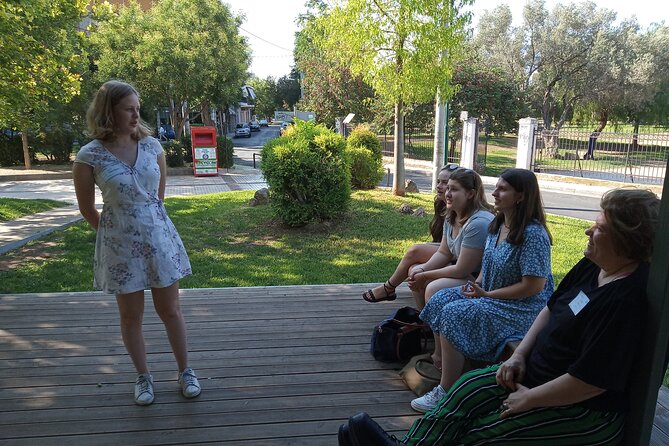
Plato’s Academy Park is not just a place to look at old stones. Here, you use those ruins as the setting for a real discussion about ideas. The two-hour session moves from the small digital museum to the ancient Gymnasium, then into Plato’s Allegory of the Cave and a lively debate timed with a replica water-clock.
I like the small group size, capped at 10, and the way the Socratic questions make philosophy easy to follow. I also like that Olga, one of the named facilitators, uses plain English and practical examples rather than turning the session into a lecture. The main drawback is that this is an outdoor activity, so rain can cancel it, and the museum may be closed outside its stated hours or without notice.
Key points before you book
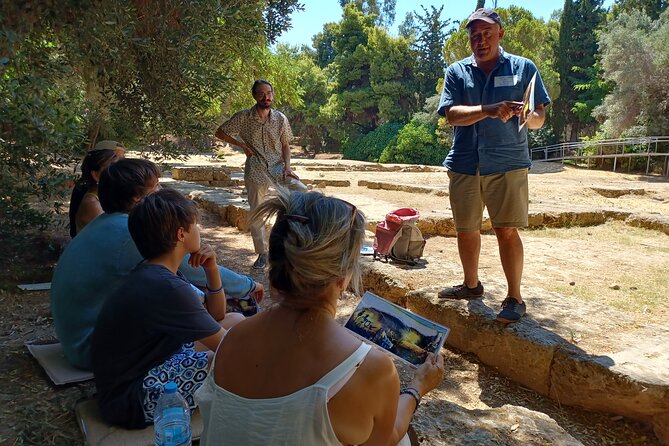
- Plato’s Academy becomes a classroom: You discuss philosophy beside the remains of the ancient Gymnasium.
- The museum visit is brief and free: The Digital Museum helps you understand Plato’s world before the outdoor session begins.
- The Allegory of the Cave is the centerpiece: You interpret the text and connect it to modern life through guided questions.
- The ending is hands-on: A replica ancient water-timer controls a role-play debate.
- The group is limited to 10 people: That gives you a better chance to speak and ask questions.
- A one-hour Aristotle add-on is available: You can continue with a game about virtue and personal choice.
Why this Athens workshop feels different
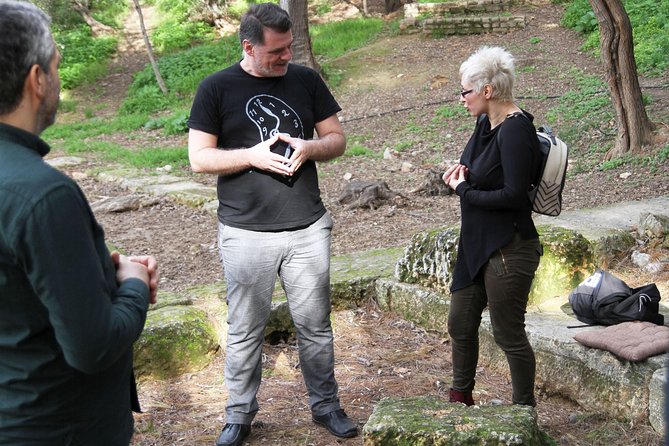
Many Athens visits ask you to look, listen, and move on. This one asks you to think. You do not simply hear that Plato taught near this spot. You work with one of his most famous ideas and test it through conversation.
That difference matters. Philosophy can feel remote when you meet it in a book or on a museum label. At Plato’s Academy Park, the setting gives the subject a clear physical anchor. The ruins of the Gymnasium are not a grand monument, so you should not come expecting the scale of the Acropolis. Their value is more personal. You sit or stand near the remains while considering how people once taught, argued, and searched for better answers here.
The workshop is designed for adults and teenagers aged 14 and older. You do not need a background in philosophy. The facilitator keeps the language plain and avoids difficult terminology, which makes this a good pick if words such as dialectic and metaphysics normally send you toward the nearest café.
The experience lasts about two hours and accepts no more than 10 participants. That small number is important. A philosophical discussion only works if you can speak, question, and change your mind without shouting across a large group.
More philosophy walks in Athens:
- Philosophy and Democracy tour of Athens
★ 5.0 · 285 reviews - Athens Highlights: Myths & Philosophers Walking Tour
★ 5.0 · 125 reviews - Athens: Philosophy and Democracy Walking Tour
★ 5.0 · 91 reviews
Starting at the Plato’s Academy Digital Museum
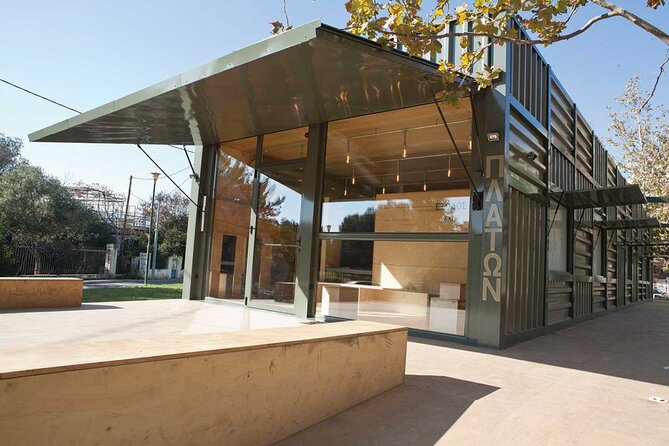
You meet at the Plato’s Academy Digital Museum on Alkmeonos 1. The first stop is brief, and entrance to the museum is free. Its role is to give you a basic picture of Plato, his Academy, and the setting you are about to explore outdoors.
Do not expect a large museum visit. This is a small digital museum, and the workshop does not treat it as a full sightseeing stop. Instead, it works as an introduction. You get the key ideas, then carry them into the park where the discussion becomes more active.
The museum is open Tuesday through Friday from 10:00 AM to 4:00 PM, but its operating hours can change. It can also close without notice. If it is not open on your date, the facilitator replaces the museum visit with a discussion covering the same main points. That means the workshop can still make sense, but you may miss the visual material and indoor setting.
I would confirm the museum situation when planning your day, especially if seeing the digital displays is important to you. The workshop itself begins and ends at the same meeting point, so you do not need to arrange a separate return transfer.
Reading ancient Greek ideas in plain English
After the museum, the facilitator leads a philosophy warm-up. You read and interpret ancient Greek texts, with help from the guide. This is not a test of translation skills. The purpose is to get you thinking about how an old passage can carry several meanings.
That opening exercise sets the tone for the rest of the session. You are not expected to sit quietly while someone recites dates and names. You take part from the start. The questions help you notice what the text says, what it might mean, and how your own assumptions affect your interpretation.
This part also helps mixed groups. One person may have studied Plato, while another may be meeting his work for the first time. Since the facilitator uses plain language, both can enter the discussion without feeling behind.
The approach has received its strongest praise for this reason. The session makes complex ideas easier to understand through questions, answers, and examples. I would choose it for a family group with older teenagers, a couple who likes talking about big ideas, or anyone who wants an Athens activity that asks more than a quick photograph.
Walking to the ancient Gymnasium ruins
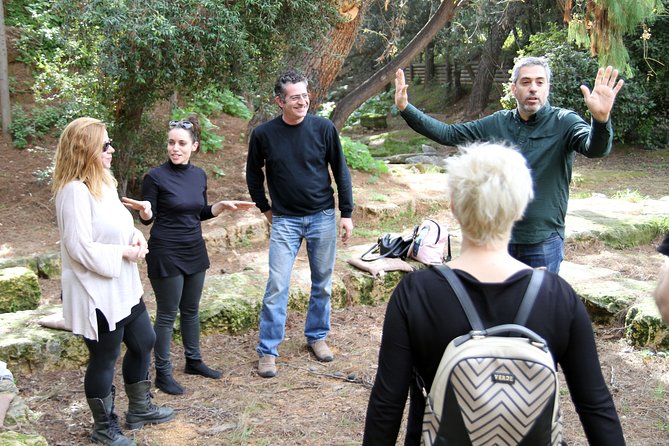
The group then walks through Plato’s Academy Park to the remains of the ancient Gymnasium. This is the point where the setting begins to do some of the teaching.
The ruins are modest, and you may see them from a short distance if archaeological excavation is taking place. In that case, the facilitator chooses another spot in the park. You should keep your expectations realistic: this is not a preserved lecture hall with intact columns and dramatic walls.
What you get instead is a connection between place and thought. The facilitator explains the timeline of Greek philosophical heritage and links Socrates, Plato, and Aristotle. This gives you the family tree of ideas before you focus on Plato himself.
That context is useful because Plato did not develop his thinking in isolation. Socrates shaped the habit of questioning. Plato developed those questions into dialogues and theories. Aristotle, who studied under Plato, later took a different approach. The workshop uses that sequence to help you see how the ideas connect and where they differ.
The park is an outdoor historical site, so respectful behavior matters. You are expected to remain sober, clean, suitably dressed, quiet enough for the setting, and polite to the facilitator and other people present. The provider can end your participation without a refund if your conduct is disrespectful.
More hands-on workshops in Athens:
- Athens: Classic Cooking Class with Market Visit and Wine
★ 5.0 · 1,101 reviews - Athens: Food Market Visit and Cooking Class with Wine
★ 4.9 · 1,087 reviews - Greek Cooking Class in Athens Including Rooftop Dinner with Acropolis View
★ 5.0 · 826 reviews - Greek Small-Group Athens Cooking Class & Dinner
★ 5.0 · 574 reviews
Plato’s Allegory of the Cave beside the Academy
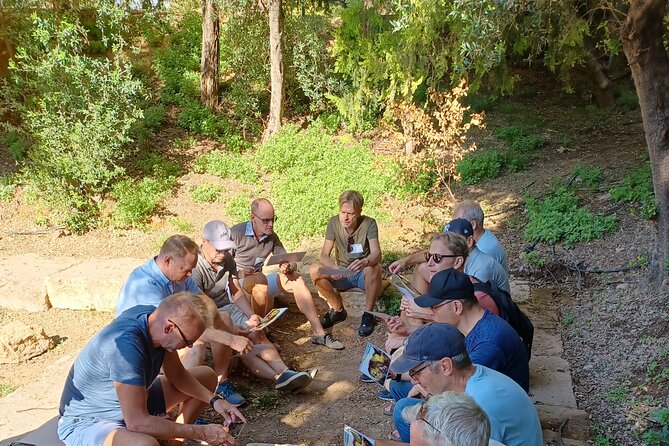
The central discussion focuses on Plato’s Allegory of the Cave. In simple terms, the allegory asks you to consider the difference between appearances and reality, and what happens when a person begins to see beyond familiar beliefs.
You do not just hear an explanation and move on. The facilitator uses the Socratic method, asking questions that lead you to examine the story for yourself. You may discuss what the cave represents, why someone might resist a new view, and how the allegory relates to modern life.
The strength of this section is its open structure. There is room for your own response, not only the guide’s interpretation. One discussion may focus on education. Another may turn toward media, public opinion, or the difficulty of changing your mind. The point is not to produce one approved answer. It is to practice asking better questions.
I especially like this format for people who find traditional guided tours tiring. You are still learning about Plato, but you are not trying to remember a long chain of facts. You are handling one major idea closely enough for it to stay with you.
The setting adds weight without requiring a grand presentation. Sitting near the Gymnasium ruins while discussing the Cave gives the subject a physical link to the place where Plato’s Academy once operated. The ruins do not speak for themselves, so the conversation gives them meaning.
A water-timer and a role-play debate
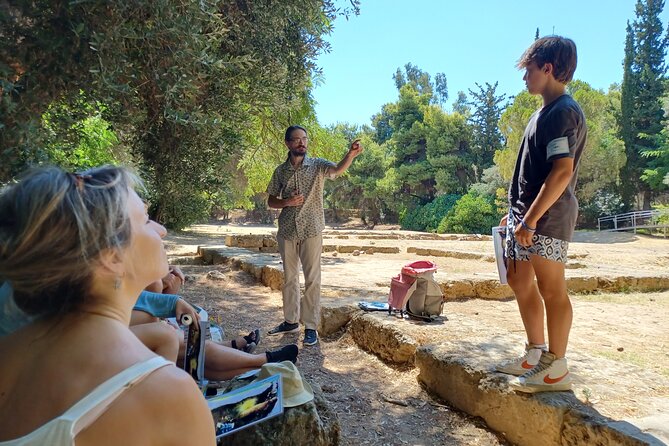
The final part is the most playful. You take part in a role-play debate modeled on ancient discussion, using a real replica of an ancient water-timer to control speaking time.
This detail gives the session a clear finish. The debate is not an abstract promise to discuss philosophy someday. You have a rule, a role, and limited time to make your point. The water-timer also shows how ancient speakers could organize debate before modern clocks and phones.
You do not need to be a confident public speaker. The format is meant to make discussion active, not to turn you into a professional debater. Still, if you strongly dislike speaking in front of other people, this is the part to consider carefully. The group is small, which makes participation easier, but it also means you cannot disappear in a crowd.
The role-play adds humor and energy after the more reflective Allegory of the Cave discussion. It also reinforces the workshop’s main lesson: philosophy is something people do together through questions, reasons, listening, and replies.
The optional Aristotle hour
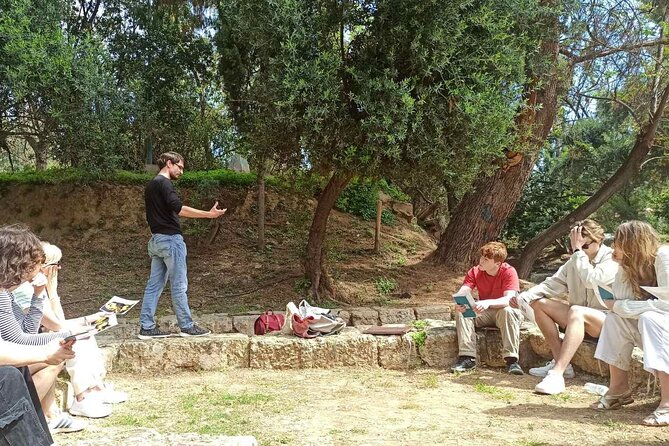
You can request an extra hour focused on Aristotle’s philosophy. This add-on uses a game about virtue and choice, extending the session beyond Plato.
The extra hour may suit you if the Socrates, Plato, and Aristotle timeline interests you and you want more than the basic two-hour experience. It also gives families with older teenagers another way to keep the subject active rather than turning it into a second lecture.
The standard workshop already covers Aristotle as part of the wider philosophical timeline. The additional hour is for people who want a separate look at his ideas, especially the connection between character, decisions, and virtue. Ask about availability when booking, since the supplied details do not state an additional price or exact operating schedule for this option.
Price, group size, and what you receive
At $53.92 per person, this costs more than simply walking through Plato’s Academy Park on your own. The park itself is not a conventional admission-based attraction, and the Digital Museum has free entrance.
The value comes from the facilitator and the structure. You are paying for a two-hour educational session, guided text work, the historical context, the Socratic discussion, and the timed role-play. The price also includes liability insurance and Greece’s 24 percent local VAT.
I think the cost makes sense if you want active learning and a small group. It is less convincing if you only want to see the ruins or collect a few facts about Plato. In that case, you can visit the area without committing to a discussion-based activity.
The group maximum of 10 is a strong point. It allows the facilitator to respond to individual questions and keeps the conversation from becoming a lecture to a crowd. Group discounts are available, which may help if you are booking for a family or several friends.
A private option can be requested. The details provided do not state the private price, so ask before committing if privacy or a custom pace matters to you.
Who should book it, and who should skip it
I would choose this experience for you if you enjoy asking why, not just asking where. It works particularly well for adults, couples, families with teenagers over 14, and students who want to connect classroom ideas with a real place.
It is also a smart choice if you have already seen the major archaeological sites in Athens and want something less conventional. You will not get another grand monument, but you will get a more active way to approach Greek culture.
You might skip it if your schedule is packed with outdoor sightseeing and you do not want a fixed two-hour commitment. It may also frustrate you if you expect a standard guided tour with a long list of archaeological facts. This is an educational workshop, not a conventional walking tour.
Under-18 participants cannot book alone. At least one adult must book and supervise them. Service animals are allowed, and the site is near public transportation. Most people can participate, but the session takes place outdoors and requires decent weather.
Weather, closures, and practical planning
Good weather is required. If poor conditions force a cancellation, you will be notified at least three hours before the start time and offered another date, a similar workshop, or a full refund.
The Digital Museum schedule is less dependable than the workshop format. It is normally open Tuesday through Friday from 10:00 AM to 4:00 PM, yet hours can change and unexpected closures can occur. The replacement discussion covers the same key insights, so the activity does not depend entirely on entering the museum.
Book with a little flexibility if the museum visit matters most to you. Also allow time to reach the meeting point on Alkmeonos 1, rather than arriving at the last moment. The activity returns to that same meeting point.
You can cancel for a full refund up to 24 hours before the start time. Cancellations or changes made less than 24 hours ahead are not refunded or accepted. The cut-off follows local Athens time.
Because this takes place in a public space, photos and video may be taken during the session and used later by the provider or other participants. You can withdraw your consent in writing, but the provider is not responsible for images made or used by other people.
Should you book this Plato workshop?
Book it if you want Athens to give you something to think about, not only something to photograph. The combination of the Digital Museum, the Gymnasium ruins, Plato’s Allegory of the Cave, and the water-timer debate gives the two hours a clear shape and a memorable finish.
The strongest reason to go is the discussion format. Olga and the other facilitators turn Plato into a subject you can question in plain English, even if you have never studied philosophy. The main caution is simple: this is outdoors, participatory, and weather-dependent.
For a small group, an inquisitive family, or a curious adult who prefers conversation to a standard tour, I consider the $53.92 price fair. If you only want archaeological remains and quick background facts, save your money and visit the park independently.
FAQ
How long does the Philosophy Experiential Workshop last?
The main workshop lasts about two hours. An additional one-hour session on Aristotle’s philosophy may be available upon request.
Where does the workshop start and end?
It starts at Plato’s Academy Digital Museum, at Alkmeonos 1, Athens 104 42, Greece. The activity ends back at the same meeting point.
Is the Digital Museum entrance included?
Yes. The Digital Museum has free entrance, and the workshop begins with a brief visit when the museum is open.
What happens if the Digital Museum is closed?
The facilitator replaces the museum visit with a discussion covering the same key insights. The museum’s hours can change, and it may sometimes close without notice.
Is the workshop suitable for beginners?
Yes. The session is designed for people without previous philosophical knowledge and uses plain English without difficult terminology.
What age group can participate?
The workshop is suitable for adults and teenagers aged 14 and older. Anyone under 18 cannot book alone. At least one adult must book and supervise underage participants.
What is the cancellation policy?
You can cancel up to 24 hours before the start time for a full refund. Changes or cancellations made less than 24 hours before the start are not accepted or refunded. If bad weather causes the provider to cancel, you can choose another date, a similar workshop, or a full refund.
Newly reviewed around Athens
- Athens: workshop for painting landscape with local artist★ 4.6 · 3 reviews
- Athens: Greek Wine & Olive Oil Tasting at Brettos Plaka★ 4.5 · 3 reviews
- Ultimate Tasting of the Volcanic Wines of Greece★ 5.0 · 3 reviews
- Outdoor Yoga and Pilates with Akropolis view★ 4.0 · 5 reviews
- Acropolis of Athens: 60′ Tour in a Vintage Motorcycle★ 5.0 · 4 reviews
- workshop for painting acropolis/landscape with local artist★ 5.0 · 3 reviews
- Athens at Twilight Night Tour with Drinks and Meze Dishes★ 4.8 · 4 reviews
- Breakfast in the markets with olive oil and honey tasting★ 4.8 · 8 reviews
Athens Philosophy Tours, compared.
Athens Highlights: Myths & Philosophers Walking Tour
Read our review →
the Great Greek Philosophers Guided Tour in Spanish
Read our review →
Athens Highlights: Myths & Philosophers Private Walking Tour
Read our review →
Philosophy Experiential Workshop at Aristotle’s Lyceum, Athens
Read our review →
Browse the lists this tour appears in