
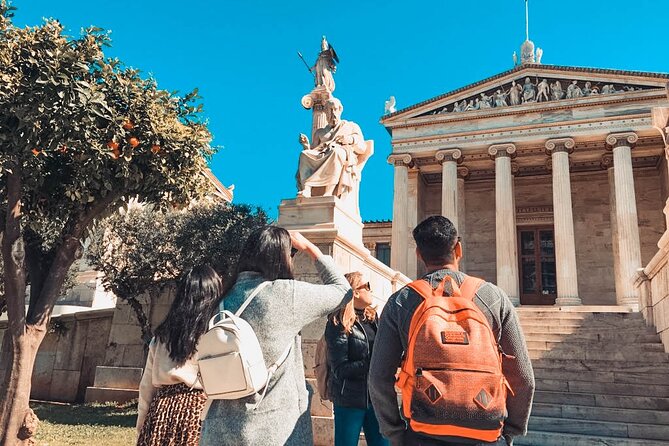
Reviewed · ATHENS MYTHOLOGY TOURS
Myths and Legends of Athens Walking Tour
Greek mythology gives Athens a second layer. On this 2-hour-15-minute walking tour, you move from grand civic buildings to quiet gardens and old Plaka lanes while hearing how gods, heroes, monsters, and fate shaped Greek stories. The tour is led in English, with guides named Kara and Chiara associated with the experience.
I like the small group of no more than 10 people, which gives a storytelling guide room to keep the group together and answer questions. I also like the route: it links places you may otherwise pass quickly, including the Academy of Athens, the National Garden, Syntagma Square, and Plaka.
The main consideration is that this is a mythology and city-atmosphere walk, not a tour of major archaeological interiors. You will not receive admission to the Acropolis or another paid site, and the route depends on good weather.
Key points
- Stories give the route its purpose: Hear about the main Greek gods and goddesses, the creation of the world, the Trojan War, and myths tied to Athens.
- Five central Athens stops: The route runs from the Academy of Athens to the Numismatic Museum, National Garden, Syntagma Square, and Plaka.
- A gentle walking pace: The tour involves city walking but little climbing, making it suitable for most people who can participate in a standard walking tour.
- A small English-speaking group: The maximum group size is 10, with a storytelling approach rather than a formal lecture.
- A playful National Garden activity: You can join a light improv storytelling game based on the whims of the gods and the chaos of fate.
- Useful start and finish points: Begin near public transportation at Korai 4 and finish in Monastiraki Square.
Why mythology is a smart way to meet Athens

Athens can feel like a city of separate pieces: neoclassical buildings, modern traffic, ancient ruins, formal squares, and old neighborhood streets. A mythology-focused walk gives those pieces a common thread.
Instead of treating the city as a list of monuments, the guide uses stories to explain how Greek culture imagined the world. You will hear about the gods and goddesses, the creation of the world, heroic figures, and the Trojan War. Those stories are familiar in outline, but they become more useful when connected to actual streets, buildings, statues, and public spaces.
I like this approach for a first or final day in Athens. At the beginning of a trip, it helps you get your bearings without the pressure of a long archaeological visit. At the end, it gives you a way to connect the modern city with the mythology you have encountered elsewhere.
The tour also suits families better than a dry lecture might. The storytelling format held the attention of children aged 10 and 12 during one outing, and the guide connected myths with modern buildings. That makes this a practical choice if your group includes children who may lose interest during a standard history walk.
More Greek mythology tours in Athens:
- Athens: Mythology of Delphi, Museum and Arachova Guided Tour
★ 4.6 · 4,008 reviews - Athens & Acropolis Highlights: Greek Mythology Small-Group Tour
★ 5.0 · 2,370 reviews - Athens: Acropolis and Mythology Highlights Small Group Tour
★ 4.8 · 2,275 reviews
Starting at the Academy of Athens
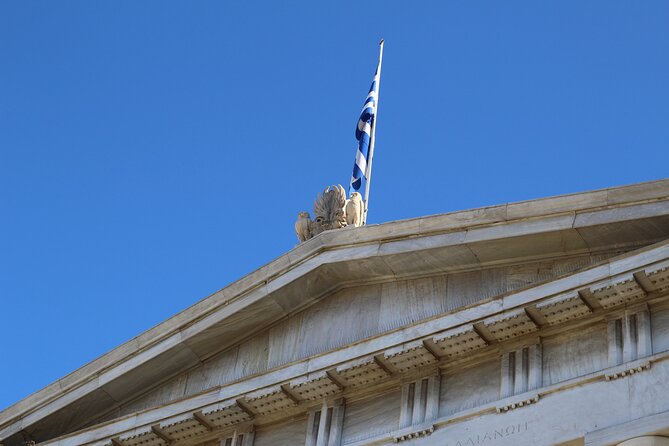
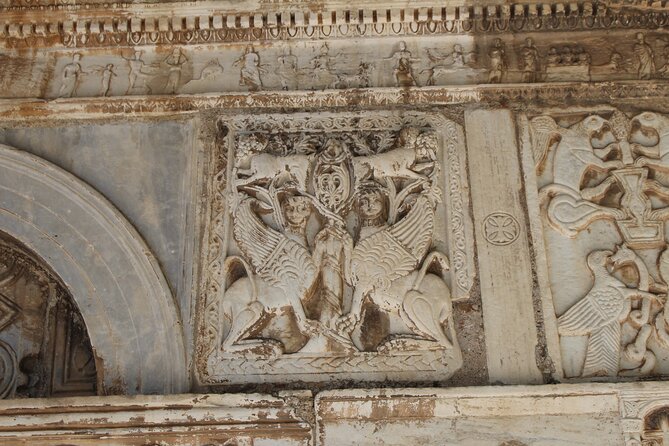
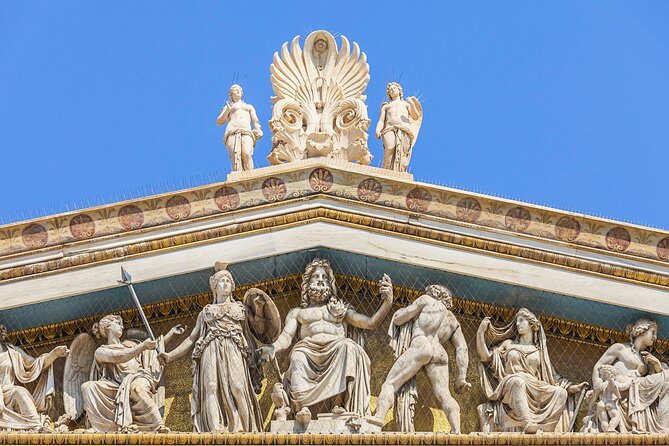
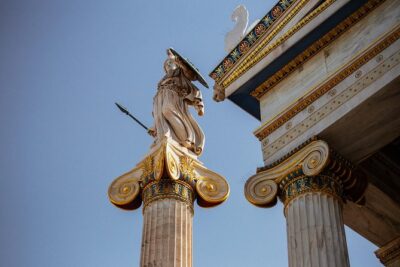
The first stop is the Academy of Athens, where the tour spends about 50 minutes. This is the longest stop, and that makes sense: the guide sets up the main gods and goddesses and explains the Greek mythological account of how the world began.
You can expect the guide to establish the relationships and rivalries that make later stories easier to follow. Greek mythology is not one tidy story with a single hero. It is a large family of divine figures, competing claims, sudden punishments, and imperfect choices. A good opening gives you the framework before the tour moves into individual legends.
The Academy also provides a strong setting for this introduction. You are not simply standing in a classroom. You are beginning near one of central Athens’s formal public buildings, then using the surrounding city as a backdrop for ancient stories.
Admission is free at this stop, and the activity is outdoors as part of the walking route. The drawback is that the stop may feel story-heavy if you already know Greek mythology well. If you can name every Olympian and explain the family tree without help, some of the opening material may be familiar.
For most people, though, the first stop is valuable because it keeps the myths organized. You can listen for the names, symbols, and conflicts that return later in the walk.
The Trojan War near the Numismatic Museum
The second stop is the Numismatic Museum, with about 30 minutes devoted to the Trojan War, its heroes, and the gods involved. The location adds a different feel from the Academy. Here, the focus shifts from the creation of the world and the major divine family to a famous human conflict shaped by divine interference.
The Trojan War is especially useful for showing how Greek mythology blends gods and people. Heroes make choices, gods take sides, and personal rivalries can affect entire armies. The guide uses the story to bring out the roles of both the heroic figures and the deities behind them.
You will not pay an admission fee for the stop, and the tour does not present itself as a museum visit. That distinction matters. If you want to explore the Numismatic Museum’s collections, you would need to plan that separately. Here, the building serves as one point in a wider walking route and a place for the guide’s story.
I would pay attention to how the guide connects the war with Athens and the wider Greek world. The value is not only in hearing a familiar legend again. It is in seeing how the story fits into the cultural setting around you.
The 30-minute length keeps the stop from becoming too long. You get a clear episode in the mythological journey, then continue on foot rather than spending the whole tour in one place.
A quieter pause in the National Garden
The National Garden changes the mood. After the formal city streets and the stories of gods and war, you enter a green public space in the center of Athens. The scheduled time here is about 15 minutes.
The guide uses the garden to explore the connection between nature and myth. The themes include divine hunters, vanished goddesses, and lunar mysteries. These subjects show a different side of mythology, where the natural world is not just scenery. Trees, animals, the moon, and disappearance can all carry symbolic meaning.
This is also where the tour adds a light improv storytelling game. Inspired by the whims of the gods and the chaos of fate, the activity gives you a chance to participate rather than only listen. You can step into the myth for a moment and help shape a story.
The game will not suit everyone. Some people prefer a guide to speak while they take photographs and listen quietly. If you dislike participating in group activities, this is the one part you may find less appealing. It is described as light and playful, so it is not presented as a serious performance or demanding exercise.
I like the change of pace. A short pause in the garden keeps the tour from becoming a steady stream of names and plot lines. It also gives families a natural moment to reset before the route continues.
More walking tours in Athens:
- Athens: Acropolis and Parthenon Guided Walking Tour
★ 4.6 · 5,882 reviews - Greek Food Walking Tour in Athens
★ 5.0 · 4,740 reviews - Acropolis: Acropolis and Parthenon Guided Walking Tour
★ 4.7 · 3,442 reviews - Acropolis monuments & Parthenon Walking Tour with Optional Acropolis Museum
★ 5.0 · 2,678 reviews
Syntagma Square and a mysterious god
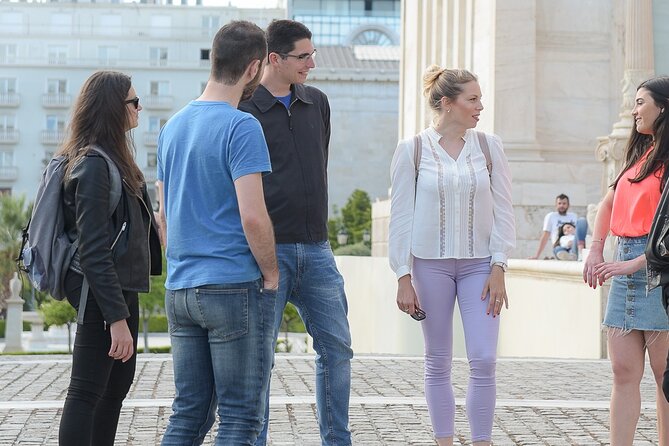
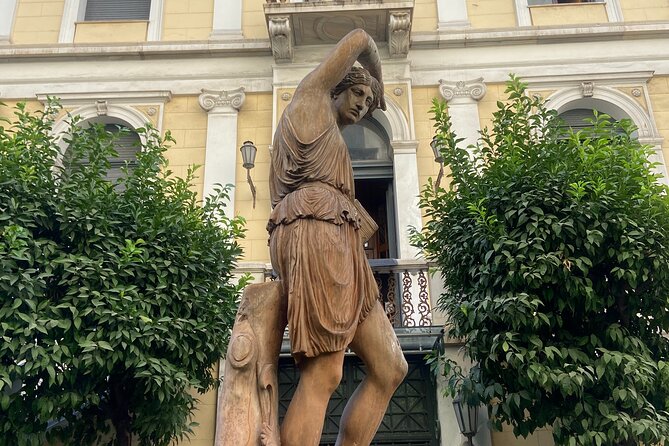
The Syntagma Square Fountain stop lasts about 10 minutes. The focus is a statue, a mysterious god, and the way Greek mythology still appears around Athens today.
This is a short stop, but it makes an important point. Mythology is not locked inside an ancient ruin or an academic book. It remains part of the city’s public imagery, architecture, statues, and names. A guide can help you notice details that you might otherwise walk past.
The brief timing keeps the tour moving. Do not expect an extended historical explanation of Syntagma Square itself. The point is to use the statue as a doorway into another mythological figure, then relate that figure to modern Athens.
This stop may be especially useful if you are trying to understand how classical references remain present in the capital. You will not need specialist knowledge to follow it. The storytelling format makes the connection accessible.
Finishing in Plaka near Monastiraki
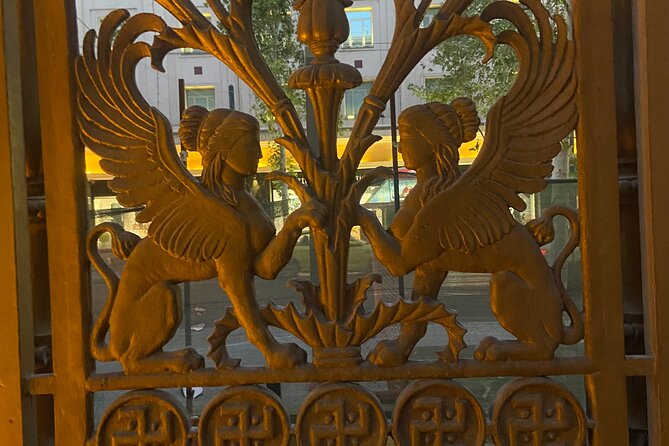
The final stop is Plaka, the old neighborhood close to the Acropolis. The tour spends about 30 minutes strolling through the area and discussing myths connected to Athens.
Plaka is a fitting ending because the surroundings feel more intimate than the formal Academy or Syntagma Square. Narrow streets and older buildings create a setting for stories tied directly to the city. The guide can bring together the gods, heroes, and local legends introduced earlier and show how Athens developed its own mythological identity.
The route ends in Monastiraki Square. That is useful for the rest of your evening. You are already close to public transportation and can continue with dinner, shopping, or another central Athens walk. The end point also makes this tour easy to pair with other plans, though you should allow yourself enough time to arrive at the starting point in advance.
The walk through Plaka is not an archaeological site visit. You are there for atmosphere, stories, and connections between myth and place. If your main goal is to see the Acropolis interiors or examine ancient monuments up close, choose a separate site tour as well.
What the pace feels like over 2 hours and 15 minutes
The total duration is long enough to tell several connected stories without taking up half a day. The scheduled stops add up to about 135 minutes, or 2 hours and 15 minutes, though the actual pace may vary slightly as the group moves between locations.
The route is described as slow and steady, with little walking that requires climbing. That makes a real difference in Athens, where heat, uneven streets, and hills can make an ordinary city walk tiring. You should still wear comfortable shoes, but this is not presented as a strenuous hike.
The small maximum group of 10 is another practical advantage. With a large group, storytelling can become hard to hear and questions can slow everything down. A group this size should feel more manageable, particularly in public areas where people are moving around.
The tour is offered in English. You receive a mobile ticket, and the meeting point at Korai 4 is near public transportation. The exact route is built around central Athens, so you do not need a separate transfer between the stops.
Is $41.70 a fair price?
At $41.70 per person, the cost is reasonable if you want a guided introduction to mythology and central Athens rather than entry to a major paid attraction. Every listed stop has free admission, so you are paying for the guide’s preparation, storytelling, route design, and the convenience of moving between several areas with a clear theme.
The value depends on how much you enjoy interpretation. If you only want to see the buildings and squares, you can walk through much of central Athens without paying for a tour. If you want someone to explain the gods, Trojan War, heroes, local myths, and modern references as you go, the price is easier to justify.
The group limit also helps. A private tour would cost much more, while a large group experience could be cheaper but less personal. This sits in the middle: a public tour with a small group and a guide-led narrative.
It is booked an average of 28 days ahead, so you should not leave it until the last minute if the timing matters to you. Free cancellation is available until 24 hours before the start time. The tour requires good weather and a minimum number of participants. If weather or group size causes cancellation, you are offered another date or experience, or a full refund.
Who will enjoy this Athens walking tour?
I would choose this for several kinds of visitors:
- First-time visitors who want a gentle introduction to central Athens.
- Families with older children, especially those who like stories and can take part in a short improv activity.
- Mythology fans who want legends connected to real streets and public buildings.
- Repeat visitors who have already seen the main archaeological sites and want a different theme.
- Evening planners who like ending near Monastiraki and continuing into the city afterward.
I would be more cautious if you want a rigorous academic treatment of mythology, a focused architecture tour, or entry to museums and archaeological monuments. The format is friendly and story-led. It is designed to make the myths enjoyable and memorable, not to replace a specialist lecture.
The guide names associated with the experience include Kara and Chiara. One guide is originally from Italy and brings a personal perspective to Athens and Greek mythology. That international viewpoint can add interest, especially when the guide connects ancient stories with modern buildings and the city you are seeing now.
Should you book it?
Book this tour if you want mythology brought into the streets of Athens, with a modest amount of walking, a small group, and a guide who can keep the stories lively. The route covers more than the usual postcard stops, and the National Garden activity adds a playful break from listening.
Skip it if you want admission to major ancient sites or a detailed museum tour. This is best understood as a storytelling walk through central Athens, not a substitute for the Acropolis or the city’s museums.
For many visitors, it works particularly well near the start or end of a trip. You get the basic mythological framework early, or a pleasant way to tie together the city’s statues, buildings, and neighborhoods before you leave.
FAQ
Where does the Myths and Legends of Athens Walking Tour start?
The tour starts at Korai 4, Athina 105 64, Greece. The meeting point is close to public transportation.
Where does the tour end?
The tour ends in Monastiraki Square in Athens.
How long does the tour last?
The tour lasts approximately 2 hours and 15 minutes.
What language is the tour offered in?
The tour is offered in English.
How large is the group?
The experience has a maximum of 10 participants.
Does the tour require good weather?
Yes. If poor weather causes cancellation, you will be offered a different date or experience, or a full refund.
Can I cancel for a full refund?
Yes. You can cancel at least 24 hours before the experience start time for a full refund. Cancellations or changes made less than 24 hours before the start time are not refunded or accepted.
Newly reviewed around Athens
- Athens: workshop for painting landscape with local artist★ 4.6 · 3 reviews
- Athens: Greek Wine & Olive Oil Tasting at Brettos Plaka★ 4.5 · 3 reviews
- Outdoor Yoga and Pilates with Akropolis view★ 4.0 · 5 reviews
- Acropolis of Athens: 60′ Tour in a Vintage Motorcycle★ 5.0 · 4 reviews
- Ultimate Tasting of the Volcanic Wines of Greece★ 5.0 · 3 reviews
- workshop for painting acropolis/landscape with local artist★ 5.0 · 3 reviews
- Athens at Twilight Night Tour with Drinks and Meze Dishes★ 4.8 · 4 reviews
- Breakfast in the markets with olive oil and honey tasting★ 4.8 · 8 reviews
Athens Mythology Tours, compared.
Mythology of Delphi, Museum and Arachova Guided Tour
Read our review →
Athens & Acropolis Highlights: Greek Mythology Small-Group Tour
Read our review →
Acropolis and Mythology Highlights Small Group Tour
Read our review →
The History of Athens: Greek Mythology Private Tour
Read our review →
Athens Highlights: Myths & Philosophers Walking Tour
Read our review →
Greek Mythology Treasure Hunt for Kids – Athens Private Tour
Read our review →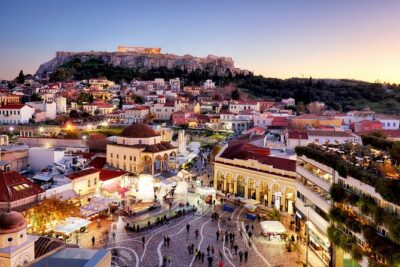
Browse the lists this tour appears in