
Reviewed · CLASSICAL GREECE MULTI-DAY TOURS
Indulge to the beauty of Greece with the 4 days Classical Greece private tour
The great appeal here is the sheer range: in four days, you move from the Corinth Canal and Mycenae to Olympia, Delphi, Meteora, and the battlefield of Thermopylae. This is Greece’s ancient story told on the road, with mountain towns and monastery cliffs between the major ruins.
I like the privacy of a car and driver, especially when the route covers so much ground. I also like that three nights of accommodation and breakfast are included, so you are not rebuilding the trip from scratch each evening. The tradeoff is clear: this is a fast-moving tour with long stretches in the vehicle, and entrance tickets and meals are extra.
Key points to know before booking
- Seven major ancient sites in four days: Corinth, Mycenae, Olympia, Delphi, Meteora, and Thermopylae all appear on the route.
- Private transport for up to two people: You travel in an air-conditioned vehicle rather than joining a large coach.
- Your driver is not a licensed site guide: The driver explains Greece on the road and takes you to the entrances, but cannot lead you inside the archaeological sites and museums unless you pay for a licensed guide.
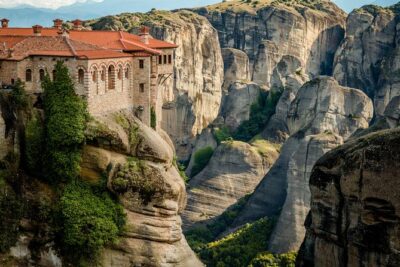
- Meteora is the visual high point: The monasteries rise above Kalambaka on enormous rock pillars, but many require stairs and careful footing.
- Long drives are part of the bargain: Pack snacks and water for the road, particularly on the Olympia and Delphi sections.
- The quoted price is per group: At $3,275.19 for two people, the cost buys privacy, transport, hotels, and breakfast, but you still need to budget for admissions, meals, and any added guide service.
What this four-day Greece tour really covers
This private tour is best understood as a compact grand circuit rather than a relaxed stay in one region. You start in Athens, cross the Corinth Canal, visit major sites in the Peloponnese, continue north to Delphi and Thessaly, then return to Athens by way of Meteora and Thermopylae.
The route is ambitious. You will see places that deserve a full day on their own, but the schedule gives most of them one to two hours. That makes the trip useful for a first look, especially if you have limited time in Greece, though it will feel rushed to anyone who prefers long museum visits or slow meals.
The practical setup is simple. Pickup is offered from your hotel, and cruise passengers can meet the driver outside the terminal with a sign bearing their name. Airport transfers can also be arranged on request. At the end, you return to the original pickup point.
More multi-day classical Greece tours:
- 4-Day Classical Greece Tour: Epidaurus, Mycenae, Olympia, Delphi, Meteora
★ 4.5 · 732 reviews - 3-Day Classical Greece Tour: Epidaurus, Mycenae, Nafplion, Olympia, Delphi
★ 4.5 · 342 reviews - From Athens: 4-Days Classical Tour with Meteora
★ 4.4 · 50 reviews
Day 1: Corinth Canal, ancient cities, and Nafplio
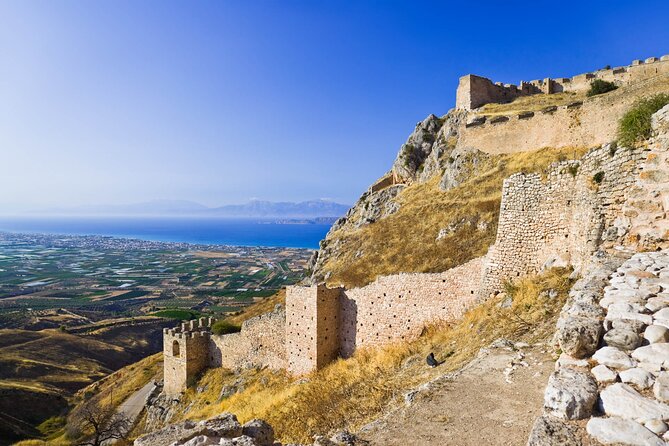
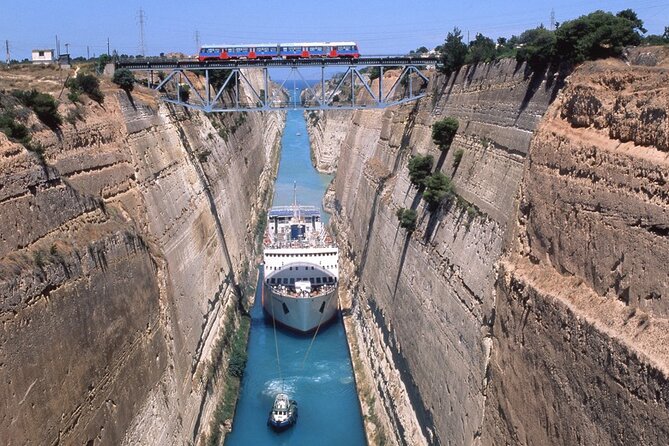
The first stop is the Corinth Canal, a short photo break with a big engineering story. The canal cuts through the narrow Isthmus of Corinth, linking the Gulf of Corinth with the Saronic Gulf and separating the Peloponnese from mainland Greece.
The idea goes back to the tyrant Periander in 602 BC, though the modern canal was completed much later. You have about 20 minutes here, which is enough to look down into the channel and understand its purpose. It is not a full sightseeing stop, but it gives the opening drive a clear sense of place.
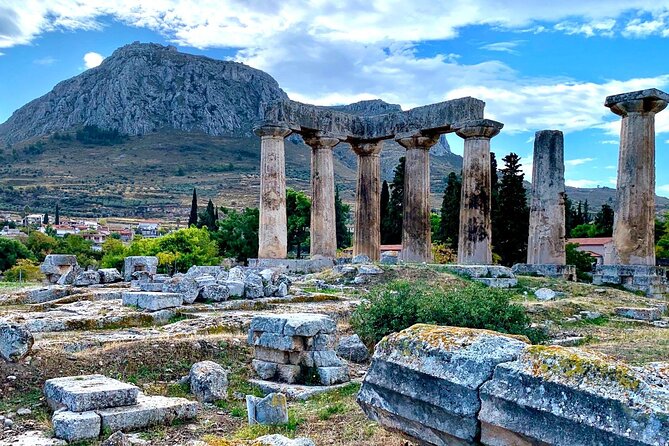
Next comes Ancient Corinth, where you have about an hour. The city grew from a strong position between land routes and sea lanes, and its location helped it become a major commercial power. The site gives you an early lesson in how geography shaped Greek history.
Admission to Ancient Corinth is not included, so plan for that extra cost. The driver can take you to the entrance and explain the area, but a licensed guide is required if you want a formal guided visit inside.
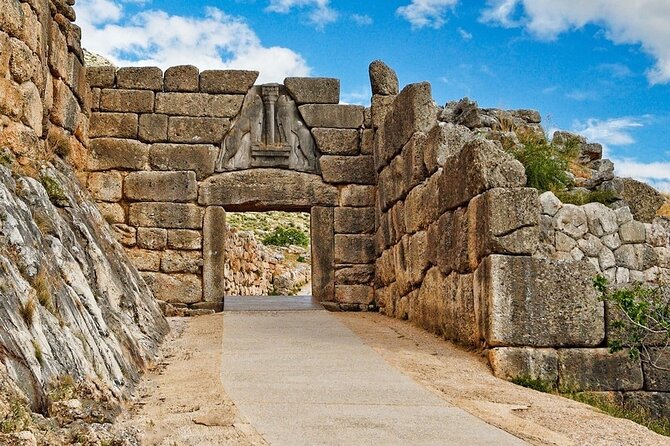
Mycenae is the day’s major archaeological stop. Allow about two hours to see the hilltop citadel associated with Agamemnon and the Mycenaean civilization. The site is famous for its monumental gateway, fortified walls, and connection to the stories later preserved by Homer and Greek drama.
Mycenae is not just a pile of old stones. It represents a much earlier Greece, long before the Classical age of Athens. The setting also helps you understand why a fortified palace was placed here, high above the surrounding countryside. Wear shoes with a good grip, since the visit involves uneven ground and slopes.
The final stop is Nafplio, where you have around two hours. This attractive harbor town served as the first capital of the modern Greek state from 1823 to 1834. Venetian, Ottoman, medieval, and neoclassical influences are all part of its character.
Nafplio provides a welcome change after the archaeological sites. You can use the free time for a walk, a coffee, or a simple meal, though food is not included. The day ends with an overnight stay in the Olympia area, and the long first day means you should not expect much spare time after arrival.
Day 2: Olympia and the road toward Delphi
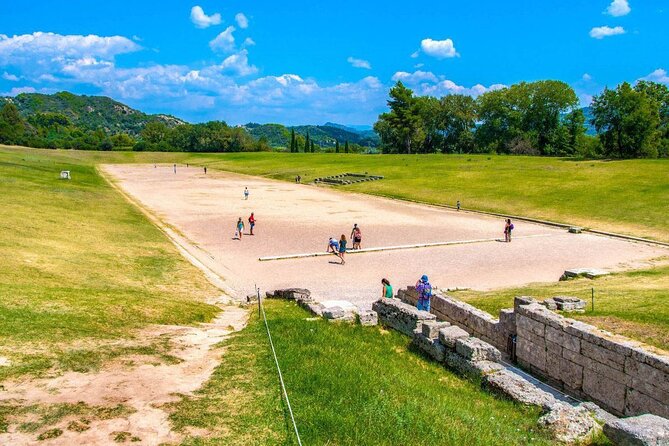
Olympia is the focus of the second day. The sanctuary became the home of the Olympic Games, which began in 776 BC and brought Greek communities together every four years under a truce. The site once included temples, training areas, meeting spaces, and a stadium.
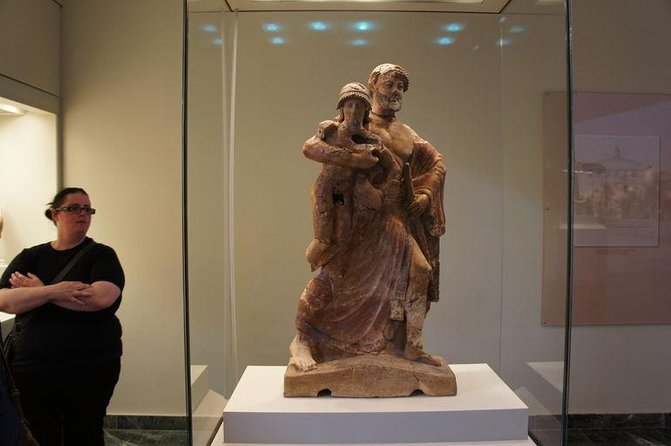
You have time to see the archaeological site and the nearby Archaeological Museum of Olympia. The remains of the Temple of Zeus and Temple of Hera are central sights, while the stadium gives the ancient games a physical setting. The museum holds sculpture and bronze objects, including the Hermes attributed to Praxiteles.
The supplied schedule lists the initial Olympia stop as about an hour, followed by a very brief museum and site entry period. In real terms, allow flexibility. The total visit may depend on opening hours, walking speed, traffic, and how much time you want in the museum.
Olympia is one of the places where a licensed guide would add real value. The ruins are spread across an open area, and a guide can help you understand what belonged to worship, sport, training, and public life. Without one, the driver can provide background before you enter, but cannot accompany you through the site.
After Olympia, you head north through Central Greece toward Delphi. The route passes through areas including Thebes, Livadia, and Arachova. This is a long driving day, and the road time is not a minor detail. Bring snacks, water, and anything you need to stay comfortable in the car.
You spend the night in Delphi. That overnight stop is useful because Delphi is much better when you are not trying to squeeze the site into a rushed day trip from Athens. It also breaks up the journey before the route continues toward Kalambaka.
Day 3: Delphi, Apollo, and the omphalos
Delphi sits on the slopes of Mount Parnassos and was regarded by ancient Greeks as the center of the world. Its oracle, the Pythia, made the sanctuary a religious and political center for centuries.
The main archaeological visit includes the Sacred Way, the Temple of Apollo, and the famous omphalos, or navel-stone. The Temple of Apollo is now a ruin, but its position remains powerful. It was rebuilt more than once after fire and earthquake, with the final version dating to the fourth century BC.
The omphalos is tied to the story of two eagles sent in opposite directions by Zeus. They met above Delphi, marking the site as the earth’s center. The surviving marble example is a later copy, but it preserves the symbol that gave Delphi much of its meaning.
The Tholos of Athena Pronaia is another essential stop. Its circular form and surviving columns make it one of Delphi’s most recognizable monuments. It sits apart from the main sanctuary, so your driver needs to account for the short transfer between areas.
You have about an hour at Delphi, with a further half hour listed for the Temple of Apollo and shorter periods for the omphalos and Tholos. That is enough for a purposeful visit, but not for a slow reading of every monument or a long museum session.
The same guide rule applies here. Your English-speaking driver can explain the setting and guide you to the site entrance, but a licensed guide must be arranged separately if you want detailed commentary inside. I would strongly consider adding one at Delphi, since the site’s meaning is tied to myths, politics, architecture, and religious practice.
After Delphi, the route continues into Thessaly and on to Kalambaka. You spend the night there before the Meteora visit. This is another substantial drive, so keep the day’s schedule in mind when judging the tour. You gain access to remarkable places, but you do not get much unplanned time.
More four-day trips from Athens:
- 4-Day Tour of Mycenae, Epidaurus, Olympia, Delphi & Meteora
★ 4.8 · 168 reviews - 4-Day Greece Highlights Tour: Epidaurus, Mycenae, Olympia, Delphi and Meteora
★ 5.0 · 79 reviews - From Athens: Explore Ancient Greece 4-Day Tour
★ 4.7 · 73 reviews - 4day Spanish tour in Epidaurus Mycenae Olympia Delphi and Meteora
★ 4.5 · 27 reviews
Day 4: Meteora’s monasteries above Kalambaka
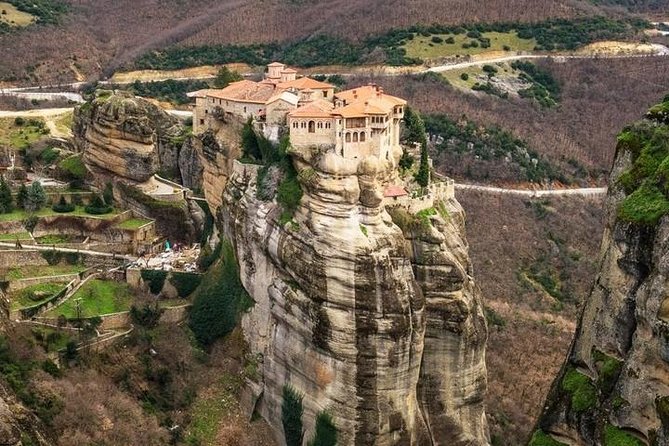
Meteora is the visual centerpiece of the journey. Six Eastern Orthodox monasteries sit on tall rock pillars above Kalambaka, creating one of Greece’s most unusual settings. The monasteries became a major monastic center, and the group was added to the UNESCO World Heritage List in 1988.
The day includes visits to several monasteries, with the schedule allowing about two hours for Meteora and additional time at individual sites. The exact order can vary with opening times and short-term closures, so do not assume every monastery will be open on the day you visit.
The Great Meteoron is the oldest and largest of the surviving monasteries. Founded in the fourteenth century by Saint Athanasios the Meteorite, it occupies the highest and most commanding rock in the complex. Inside, you may see religious art, old buildings, and views across the surrounding area, though admission is extra.
Saint Nicholas Anapafsas is smaller and built into a tight rock platform. Its vertical arrangement makes the monastery feel compact and unusual. The visit includes steps and changing levels, so it is not simply a flat walk from a parking area to a doorway.
Saint Stephen is more accessible than several of the other monasteries because of its position and approach. Its story reaches back to the late twelfth century, with later building work creating the form you see today.
Varlaam Monastery began with the hermit Varlaam and later developed into a larger community in the sixteenth century. Its chapel, church, and rock-top position make it one of the key stops in the complex.
The Holy Trinity Monastery requires a more demanding approach, including a downhill path and 145 carved steps up to the rock. This is where the tour’s physical-fitness warning matters. You should be comfortable with stairs, uneven surfaces, and exposed walking areas.
Rousanou, dedicated to Saint Barbara, is another memorable monastery on its own rock. It now operates as a nunnery and was restored in the twentieth century. The approach and interior visit can involve steps, so comfortable shoes are important.
You may not visit all six monasteries in detail. The schedule names the main sites, but admission, opening days, local conditions, and the time available can affect the final plan. Modest clothing is also appropriate for monastery visits, since these are active religious places.
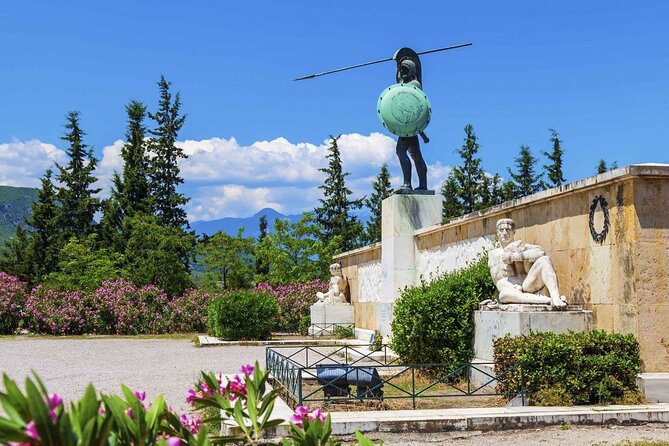
The day ends with Thermopylae and the Leonidas Monument. The ancient shoreline has shifted because of deposits from the Spercheios River, so the battlefield does not look exactly as it did in 480 BC. The memorial near the road honors Leonidas and the Greek defenders who resisted the Persian army.
The stop is brief, about 20 minutes at Thermopylae and 10 minutes at the monument. It is a fitting final chapter: after temples, sanctuaries, and monasteries, you pause at a place tied to military sacrifice and national memory before returning to Athens.
Private transport, hotels, and the real cost
The price is $3,275.19 per group of up to two people. That works out to roughly $1,638 per person if two people share the vehicle. It is not a budget trip, but the price covers private transportation, an air-conditioned vehicle, an English-speaking driver, three nights of accommodation, and three breakfasts.
The value depends on how much you care about privacy and convenience. You avoid arranging several hotels, finding transport between remote sites, and working out a complicated route across the Peloponnese and Central Greece. You also avoid joining a large coach group.
Still, the inclusions have limits. Archaeological and museum entrance fees are extra. Lunches, dinners, drinks, and snacks are also your responsibility. Most important, the driver is not a licensed guide and cannot accompany you inside the sites and museums unless you arrange and pay for one separately.
I would treat the added guide service as optional at Corinth and Thermopylae, but more useful at Mycenae, Olympia, and Delphi. Ask about availability when booking, since licensed guides are freelance and depend on the date.
The tour has a 4.7 rating from 11 reviews, with 91 percent recommending it. The strongest practical praise centers on the quality of the Delphi and Meteora portions and the accommodation in those areas. The weaker point is Olympia, which some people may find less gripping than Delphi or Meteora. That is a fair expectation to set before you go.
Who should book this route?
I would choose this tour if you have four days, want to see the major ancient sites outside Athens, and prefer a private vehicle to a scheduled coach. It also suits couples who value included hotels and a driver who can keep the route moving.
I would be more cautious if you dislike long drives, need generous time at museums, or want every site explained by a licensed guide. The itinerary covers a lot of ground, and the short stop lengths mean you must accept an overview rather than a slow archaeological study.
Book well ahead if possible. The experience is booked an average of 29 days in advance, and entrance availability can be a problem at popular sites. Pre-purchasing tickets is sensible, especially since the operator can arrange them for a small service fee.
You can cancel for a full refund up to six full days before the start time. A cancellation two to six days ahead receives a 50 percent refund, while cancellations less than two days before departure are not refunded.
Should you choose this four-day Classical Greece tour?
Choose it if your goal is breadth. You will see Corinth’s canal, Mycenae’s citadel, Olympia’s athletic sanctuary, Delphi’s oracle, Meteora’s monasteries, and Thermopylae in one carefully linked route.
Do not choose it expecting a restful holiday. The drives are long, the visits are tightly timed, and major admissions and meals sit outside the headline price. For the right person, though, private transport and three included hotel nights make this an efficient way to connect Greece’s greatest ancient and religious sites.
FAQ
Is this a private tour?
Yes. Only your group participates, with a maximum of two people listed for the quoted price.
What does the price include?
The price includes an air-conditioned vehicle, private transportation, an English-speaking professional driver, three breakfasts, and three nights of accommodation.
Are entrance fees included?
No. Entrance fees for archaeological sites and museums are not included. Food and drinks are also extra.
Is the driver a licensed tour guide?
No. The English-speaking driver can explain the history and culture of Greece and take you to the entrances, but drivers are not licensed to accompany you inside archaeological sites and museums. A licensed guide can be arranged for an additional cost, subject to availability.
Where does pickup take place?
Hotel pickup takes place at the main entrance. Cruise passengers should exit the terminal, where the driver will wait with a sign bearing the passenger’s name. The return is to the same spot, and airport transfers can be arranged on request.
How physically demanding is the tour?
A moderate fitness level is recommended. You will walk on archaeological ground and climb stairs at some Meteora monasteries, including about 145 carved steps at the Holy Trinity Monastery. Comfortable shoes, sunscreen, and a hat are recommended in summer.
Newly reviewed around Athens
- Athens: workshop for painting landscape with local artist★ 4.6 · 3 reviews
- Athens: Greek Wine & Olive Oil Tasting at Brettos Plaka★ 4.5 · 3 reviews
- Outdoor Yoga and Pilates with Akropolis view★ 4.0 · 5 reviews
- Acropolis of Athens: 60′ Tour in a Vintage Motorcycle★ 5.0 · 4 reviews
- Ultimate Tasting of the Volcanic Wines of Greece★ 5.0 · 3 reviews
- workshop for painting acropolis/landscape with local artist★ 5.0 · 3 reviews
- Athens at Twilight Night Tour with Drinks and Meze Dishes★ 4.8 · 4 reviews
- Breakfast in the markets with olive oil and honey tasting★ 4.8 · 8 reviews
Classical Greece Multi-Day Tours, compared.
4-Day Classical Greece Tour: Epidaurus, Mycenae, Olympia, Delphi, Meteora
Read our review →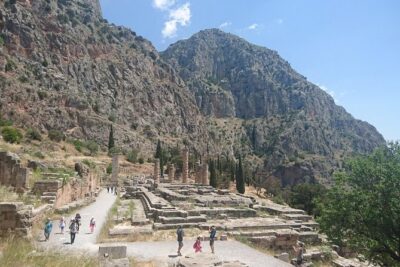
3-Day Classical Greece Tour: Epidaurus, Mycenae, Nafplion, Olympia, Delphi
Read our review →
BEST 3-Day CLASSICAL GREECE: Corinth Epidaurus Olympia Delphi
Read our review →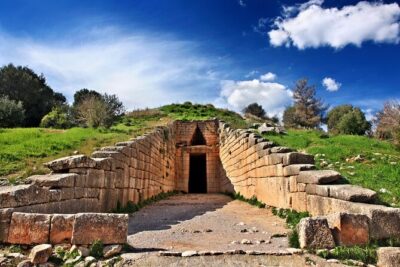
Classical Greece 3-Day Tour: Epidaurus, Mycenae, Olympia and Delphi from Athens
Read our review →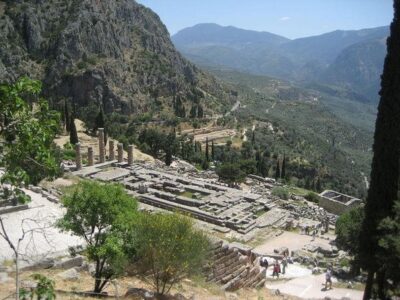
BEST 4-Day CLASSICAL GREECE: Corinth Epidaurus Delphi Meteora
Read our review →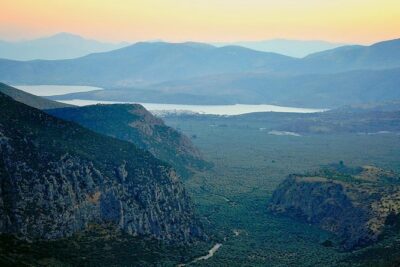
4-Day Private Tour of Classical Greece from Athens
Read our review →
4 Days Classical Private Tour/ Corinth,Mycenae,Nafplio,Sparta,Olympia,Delphi
Read our review →Browse the lists this tour appears in