
Reviewed · METEORA TOURS FROM ATHENS
From Athens: 4-Days Classical Tour with Meteora
Meteora is the showstopper here: Byzantine monasteries perched on giant rock pillars, reached after four days of ancient theaters, royal tombs, temples, and sacred sites. I like that entrance fees and coach transport are included, and I like the route itself, which links major Greek sights without asking you to plan several hotel changes alone.
You also get useful historical context from a live guide, with English, French, and Italian offered. The tradeoff is clear: this is a busy road tour with plenty of coach time, and the included dinners may feel more practical than distinctly Greek. Past departures received warm praise for guides such as Georgia Dova, Evie, and Anthony, plus drivers John and Socrates.
Key points at a glance
- Meteora on the final morning: See monasteries set high above Kalambaka among enormous rock formations.
- Four major ancient sites: Visit Epidaurus, Mycenae, Olympia, and Delphi, each with a different role in Greek history.
- A well-packed Peloponnese route: The first day covers Corinth, Epidaurus, Nafplio, Mycenae, and the road to Olympia.
- Three nights away from Athens: Sleep in Olympia, Delphi, and Kalambaka instead of returning to the capital each evening.
- Practical package pricing: The $711 rate includes hotels, breakfast and dinner, a guide, coach transport, Wi-Fi, and entrance fees.
- Hotel choice matters: An upgrade to four-star accommodation may be worth considering, based on the difference in comfort described by past participants.
Why this four-day route works
Greece can be awkward to tour independently if you want to connect the Peloponnese with Delphi and Meteora. The sites are spread across the mainland, and public transport does not create a simple chain between them. This trip solves that problem with one air-conditioned coach, three overnight stops, and a guide who helps connect the ruins to the wider story of Greece.
I like the sweep of the route. You begin with the world of Homeric kings and classical theater, continue to Olympia and Delphi, then finish with Byzantine monasteries. The sequence moves through prehistory, the classical age, Roman and Byzantine periods, the Crusades, and modern Greece without trying to turn every stop into a full museum day.
You should still set your expectations properly. Four days is enough to see the major places, not enough to explore each one at leisure. The route covers long stretches of central Greece, so you will spend a fair amount of time on the bus. That is the price of fitting so much into one trip.
The $711 cost looks strongest if you value convenience. Hotels, breakfast, dinner, entrance fees, guiding, coach transport, and bus Wi-Fi are included. Lunches, drinks, and the accommodation tax are extra. The tax ranges from €1.50 to €10 per night per room, depending on the hotel category and the current charge.
More Meteora trips from Athens:
- Athens: Meteora Monasteries Day Trip with Caves and Lunch
★ 4.7 · 2,964 reviews - Athens: Meteora Monasteries Day Tour with Lunch
★ 4.8 · 2,196 reviews - Athens: Meteora Tour with Local Guide and Greek Lunch
★ 4.8 · 1,561 reviews
Day one: Epidaurus, Mycenae, and the road to Olympia
The opening day starts along the coast with a short stop at the Corinth Canal. It is a brief introduction rather than a full visit, but the canal gives you a striking look at the narrow cut separating the Peloponnese from mainland Greece.
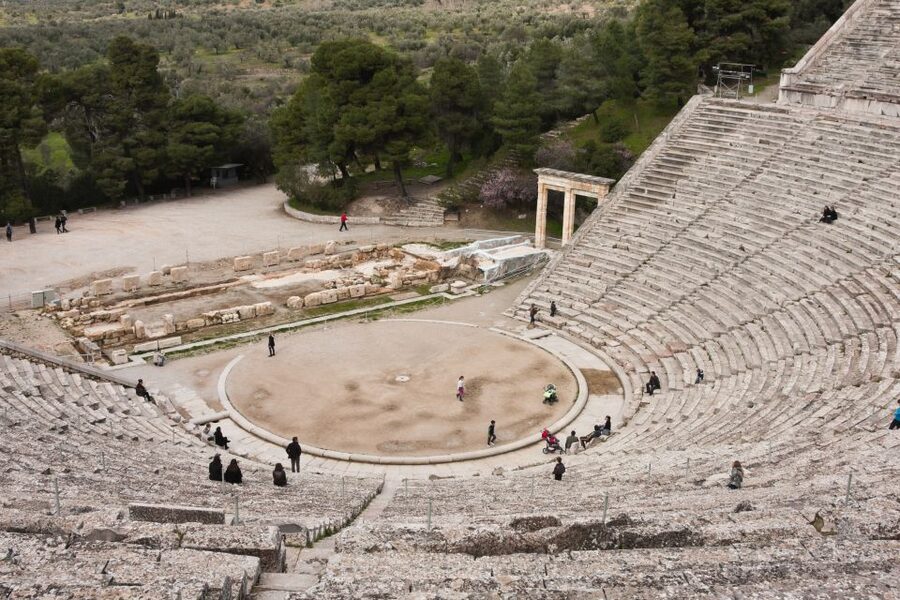
From there, the route continues to Epidaurus. The ancient theater is the main event, famous for its remarkable acoustics. Even with a short stop, you can appreciate the careful design of the semicircular seating and the way the theater fits into its setting. Your guide can help you understand why this was more than an entertainment venue: drama was tied to worship and healing at the sanctuary of Asklepios.
Next comes Nafplio, one of the prettiest towns on the route. The stop is only for photographs, so do not expect free time to wander its streets or waterfront. Still, it breaks up the driving and gives you a quick look at a historic coastal town before the ancient sites take over again.
Mycenae brings you further back in time. You visit the archaeological site and the Tomb of Agamemnon, usually called the Treasury of Atreus. The name connects the place to the legendary king from the Trojan War, but the site itself belongs to the powerful Mycenaean civilization that flourished long before classical Athens.
I especially like the contrast between Epidaurus and Mycenae. Epidaurus shows the refinement of classical Greek architecture and performance. Mycenae feels older and heavier, with massive stonework and a strong connection to heroic legend. The famous Lion Gate and the tomb are the details to watch for, while the guide supplies the context that can be hard to reconstruct from scattered ruins.
After Mycenae, you cross the central Peloponnese through Tripolis and Megalopolis before reaching Olympia. This is a substantial driving day. The upside is that you get directly to the next major site without losing an extra day to transport. The downside is that the schedule leaves little room for unscheduled stops.
Dinner and the overnight stay are in Olympia. Because the first day is full, I would keep your evening simple and save your energy for the archaeological site the next morning.
Day two: Ancient Olympia and the Corinthian Gulf
Olympia is the cradle of the Olympic Games, and the morning visit covers both the archaeological site and the museum. You see the Sanctuary of Olympian Zeus, the ancient stadium, and the place where the flame for the modern Olympic Games is lit.
The site is less about one perfectly preserved monument and more about understanding how a religious sanctuary, athletic festival, and political meeting place worked together. The stadium gives the visit a strong sense of scale. It is easier to picture athletes gathering there than it is to understand the site from photographs alone.
The Archaeological Museum adds the pieces that are no longer in place among the ruins. This pairing is valuable because the museum helps explain what you have just seen outside. Allow your guide’s explanation to do some of the organizing, since the site can otherwise feel spread out.
After Olympia, the coach crosses the plains of Ilia and Achaia toward the bridge over the Corinthian Gulf, linking Rion and Antirion. It is a modern engineering landmark and a welcome change after a morning among ancient stones.
The route then passes Nafpaktos, also known as Lepanto, and Itea before reaching Delphi. These are scenic passing points rather than long independent visits. You will see more of Greece from the road, but you should not expect a separate sightseeing program in each town.
Dinner and the overnight stay are in Delphi. This second day balances a major archaeological visit with a long transfer, so comfortable shoes and a willingness to sit on the coach matter more than an ambitious evening plan.
Day three: Delphi, the ancient oracle
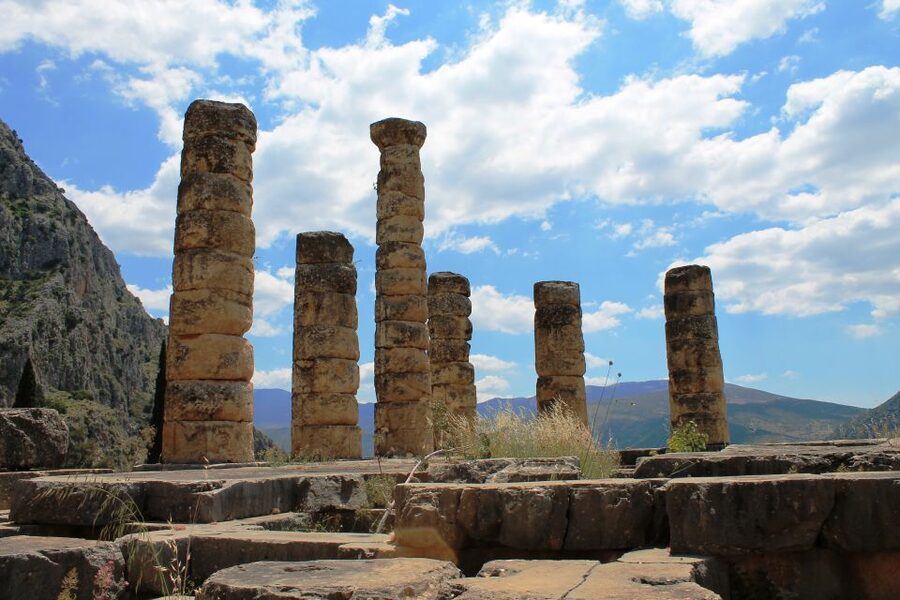
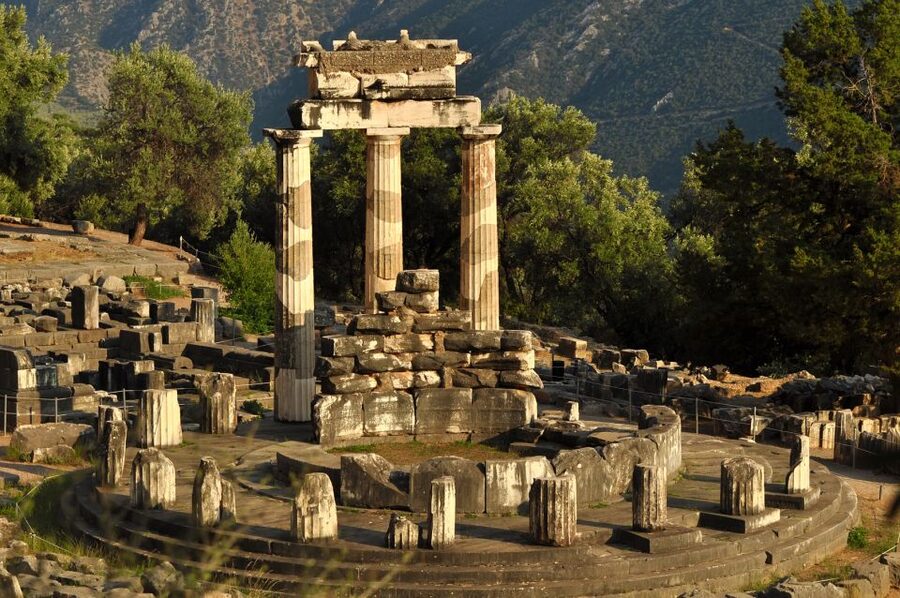
Delphi receives a full morning visit to its archaeological site and museum. In the ancient world, this was the home of Apollo’s oracle, a place where rulers and ordinary people sought guidance about wars, colonies, politics, and personal choices.
The site is compelling because it sits above the surrounding valley and feels tied to its setting. You can see the remains of the sanctuary, including the Temple of Apollo and the route once lined with offerings from Greek cities. The museum then gives shape to the fragments, with sculpture and architectural pieces that are difficult to read when they are scattered outdoors.
I would pay close attention to the guide here. Delphi is full of partial walls and broken columns, so the value of a guided visit lies in explaining what each building did and how the sanctuary operated. The live commentary is available in English, French, or Italian, depending on the option booked.
After Delphi, you travel north to Kalambaka. The town lies below Meteora’s huge rock formations, which rise abruptly from the surrounding area. Arriving in the evening gives you a first look at the setting, but the main visit comes on day four.
This is another long transfer, but it is also one of the reasons to choose the tour. Reaching Meteora after Delphi by independent public transport would require more planning and probably more time. Here, the overnight in Kalambaka places you near the monasteries for the next morning.
More multi-day classical Greece tours:
- 4-Day Classical Greece Tour: Epidaurus, Mycenae, Olympia, Delphi, Meteora
★ 4.5 · 732 reviews - 3-Day Classical Greece Tour: Epidaurus, Mycenae, Nafplion, Olympia, Delphi
★ 4.5 · 342 reviews - BEST 3-Day CLASSICAL GREECE: Corinth Epidaurus Olympia Delphi
★ 5.0 · 18 reviews - Athens: Private Full-Day Classical Tour
★ 5.0 · 4 reviews
Day four: Meteora monasteries and Thermopylae
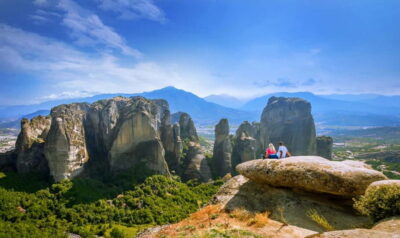
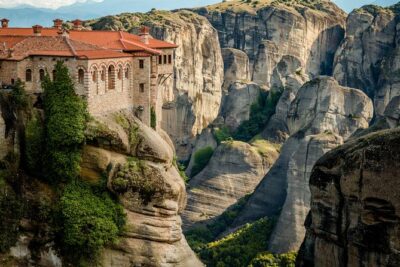
Meteora is the visual climax of the trip. Monasteries sit atop tall rock pillars that appear almost suspended above the ground. The setting is memorable before you even consider the buildings, and the monasteries add a strong Byzantine chapter to a route otherwise dominated by ancient Greece.
Inside, you can see examples of Byzantine art. The visit is not simply a scenic lookout. These monasteries were religious communities built in difficult positions, and their paintings, chapels, and surviving details show a different side of Greek culture from the temples at Olympia or Delphi.
The supplied details do not specify which monasteries are visited or how many interiors are included, so check the departure information before booking if that distinction matters to you. Monastery visits may also involve steps and uneven ground, so practical shoes are sensible.
After Meteora, the coach returns to Athens through Trikala, Lamia, and Thermopylae. There is a short stop at Thermopylae to see Leonidas’s Monument from across the road. It is a quick historical pause, not a full battlefield visit, but it gives the return journey one last link to ancient Greek history.
The tour reaches Athens in the early evening and ends back at the meeting point. Since the exact starting location can vary among the three listed Zappeio options, confirm your pickup instructions before departure.
Hotels, meals, and comfort on the road
The accommodation is included, as are breakfasts and dinners. Lunch and drinks are not included, so plan to buy those during the day. The schedule makes lunch a practical matter rather than a long culinary break, and you may want to keep snacks and water available for the coach.
Hotel quality deserves attention. A past departure included an upgrade to a four-star hotel, which was described as a particularly good choice. Another account gave a clear warning that the standard hotels were less satisfying than the upgraded selections. I would compare the hotel categories carefully before booking rather than treating the upgrade as a small detail.
The dinners may be buffet-style and fairly safe in their choices. That suits a group moving on a tight schedule, but it may disappoint you if you are hoping for small tavernas and strongly local cooking each night. The price is easier to judge when you see the meals as included fuel and convenience, not as the main food experience of the trip.
Transport is by luxury air-conditioned coach, with free Wi-Fi on board. That matters on the longer transfers between Olympia, Delphi, Kalambaka, and Athens. The driver is also important on a route with many hours on the road. Past departures specifically praised drivers John and Socrates, while guides Georgia Dova, Evie, and Anthony received strong personal praise for their work.
Guide assignments change, so do not book on the assumption that one named guide will lead your departure. The important point is that the trip includes a live guide rather than leaving you to decode large archaeological sites alone.
Who will enjoy this tour most
I would recommend this trip if you want to see Greece’s major mainland sites in one organized sweep. It suits first-time visitors who want ancient monuments, museums, monasteries, and broad scenery without arranging several intercity transfers.
It is also a good fit if Meteora is high on your list but you do not want to build a separate northern Greece itinerary. The overnight in Kalambaka makes the visit possible within a four-day route from Athens.
You may prefer a slower trip if your priority is long meals, independent walks, or detailed exploration of each town. Nafplio, Nafpaktos, Itea, and Thermopylae receive short or passing visits, while the archaeological sites follow a firm schedule.
The route also asks for reasonable stamina. You will spend hours on the coach and walk through large archaeological areas. The reward is range: Mycenaean tombs, a classical theater, the Olympic sanctuary, Delphi’s oracle, and Byzantine monasteries all appear in one compact journey.
Should you book it?
Book this tour if you want maximum historical coverage with minimum planning. The strongest value comes from the combination of transport, entrance fees, guiding, three hotel nights, breakfast, and dinner. Meteora is the special payoff, while Olympia and Delphi give the trip its intellectual weight.
Think twice if you dislike long coach journeys or want every meal and hotel to feel distinctly local. In that case, a slower self-guided trip may suit you better.
For most visitors with four days to spare, I would choose the hotel upgrade if the price difference is reasonable. I would also confirm the meeting point, hotel category, monastery details, and language before paying. With those points clear, this is a practical and well-planned way to see the Greek mainland beyond Athens.
FAQ
How long is the tour?
The tour lasts four days and returns to Athens in the early evening of the fourth day.
Where does the tour start and finish?
It starts at a meeting point that may vary according to the option booked. The listed starting location options are at Zappeio. The tour ends back at the meeting point in Athens.
Which languages are available?
The live guide service is available in English, French, and Italian.
What sites are visited?
The route includes the Corinth Canal, Epidaurus, Nafplio, Mycenae, the Tomb of Agamemnon, Olympia, Delphi, Meteora, and a short stop at Thermopylae to see Leonidas’s Monument.
Are hotel nights included?
Yes. Overnight accommodation in Olympia, Delphi, and Kalambaka is included.
Are meals included?
Breakfast and dinner are included according to the schedule. Lunch and drinks are not included.
Are entrance fees included?
Yes. Entrance fees for the included visits are part of the tour price.
Is transport provided?
Yes. The tour uses a luxury air-conditioned coach and includes free Wi-Fi on the bus.
Is there an extra accommodation tax?
Yes. The accommodation tax is paid at the hotel before checkout. The stated amount ranges from €1.50 to €10 per night per room, depending on the hotel category and applicable charge.
Newly reviewed around Athens
- Feel Ancient thermal Spa Visit Delphi, Leonidas ℨoo Spaʀtan★ 5.0 · 4 reviews
- Food Tour★ 5.0 · 3 reviews
- Eat Your Way Through Athens: A Local Food Walk★ 4.9 · 97 reviews
- Explore the Hidden Food Gems of Athens★ 5.0 · 57 reviews
- Food Experience in Athens including Unlimited Lunch★ 5.0 · 3 reviews
- From Athens: Delphi Private Tour with Lunch Time★ 4.0 · 3 reviews
- Delphi: Spanish guided one day tour★ 4.6 · 55 reviews
- Early Entry Acropolis & Museum. Beat the Crowds & the heat★ 5.0 · 3 reviews
Meteora Tours from Athens, compared.
Meteora Monasteries Day Trip with Caves and Lunch
Read our review →
Meteora Tour with Local Guide and Greek Lunch
Read our review →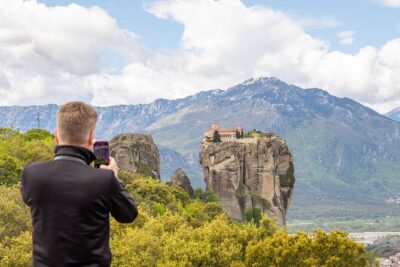
Meteora Monasteries, Caves & Coastal Stopovers with Lunch
Read our review →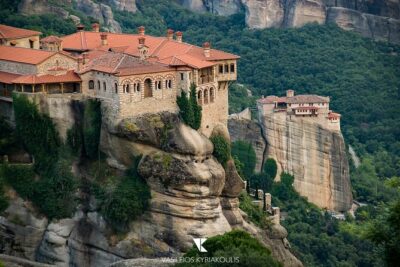
Meteora Monasteries & Caves DayTrip from Athens with Greek Lunch
Read our review →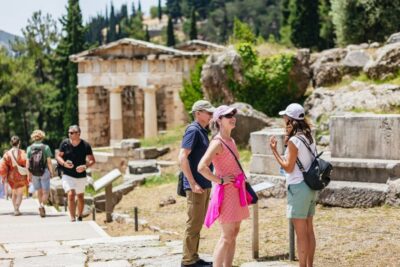
4-Day Classical Greece Tour: Epidaurus, Mycenae, Olympia, Delphi, Meteora
Read our review →
Meteora Monasteries, Hermit Caves Tour with Pickup
Read our review →Browse the lists this tour appears in