
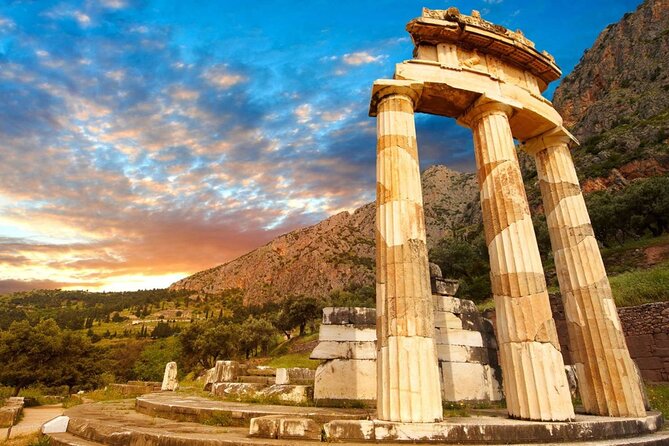
Reviewed · DELPHI TOURS FROM ATHENS
4day Spanish tour in Epidaurus Mycenae Olympia Delphi and Meteora
The best thing about this four-day circuit is its reach. In one fast-moving trip, you see the Corinth Canal, the Tomb of Agamemnon, Epidaurus, Olympia, Delphi, and the cliff-top monasteries of Meteora. I like the Spanish-only guiding, especially when guides such as Gogo, Magdalena, Fanery Aguirre, Elena, Zoe, and Estela bring history, mythology, and art to life.
I also like the practical package: entrances, three hotel nights, breakfast, dinner, and coach transport are covered. The trade-off is serious mileage. Some days involve six to seven hours on the bus, so this suits you if you value seeing many major sites more than taking a slow, relaxed holiday.
Key points to know
- Six major ancient and religious sites: Corinth Canal, Mycenae, Epidaurus, Olympia, Delphi, and Meteora all fit into four days.
- Spanish-speaking guide throughout: The guide stays with the group and uses headsets, with past departures led by Gogo, Magdalena, Fanery, Elena, Zoe, and Estela.
- Long road days: The route crosses the Peloponnese, Central Greece, and Thessaly, with limited free time at each stop.
- Good package value: The $728.56 price includes three hotel nights, breakfast, dinner, transport, admissions, WiFi, and guide service.
- Maximum group of 55: This is a full-size coach tour, not a small private outing.
- Three-star or four-star hotels: Accommodation and meals are included, but local hotel taxes, lunches, drinks, tips, and personal costs are extra.
Why this route covers so much of mainland Greece
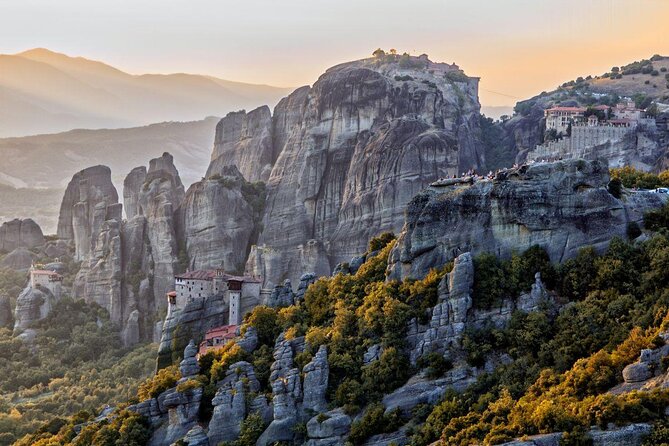
This is a history-heavy circuit with a useful geographic sweep. You begin near Athens, cross into the Peloponnese, continue west to Olympia, then head north through Delphi and Arachova before reaching Meteora in Thessaly.
The route connects places from very different eras. Mycenae introduces the Bronze Age world linked with Agamemnon. Epidaurus shows the refinement of Classical Greek theater. Olympia recalls the ancient Olympic Games, Delphi brings in prophecy and religion, and Meteora shifts the focus to Byzantine monasteries and Orthodox art.
I like that range. You are not seeing five versions of the same ruin. You move from fortified walls and royal tombs to a theater, a sanctuary, a museum collection, and monasteries perched above the plain.
The pace is the price. The tour description is clear about the stops, but the distances are substantial. You should expect the coach to be part of the experience, not just a way to move between attractions. The upside is that you cover ground that would take much more planning by public transport or rental car.
More Delphi trips from Athens:
- Athens: Mythology of Delphi, Museum and Arachova Guided Tour
★ 4.6 · 4,008 reviews - From Athens: Delphi Full Day V.R. Audio Guided Tour
★ 4.6 · 3,028 reviews - From Athens: Small-Group Delphi, Museum & Arachova Day Trip
★ 4.8 · 2,476 reviews
Day one: Corinth Canal, Mycenae, and Epidaurus
The first stop is the Corinth Canal, where you have about 20 minutes for photographs. The canal links the Saronic Gulf with the Corinthian Gulf, cutting through the narrow Isthmus of Corinth.
This is a short orientation stop rather than a full visit. You will have time to look, take pictures, and get back on the coach. It breaks up the morning drive, but do not expect a long walk or a detailed canal tour.
Mycenae is the first major archaeological visit. The scheduled time is about one hour, covering the archaeological area, the Lion Gate, the Cyclopean Walls, the royal tombs, and the local museum. You also visit the Treasury of Atreus, identified in the program as the royal tomb of Agamemnon.
Mycenae rewards a guide because the stones alone do not explain the place. The Lion Gate and huge defensive walls are striking, but the meaning comes from the Bronze Age setting, the royal burials, and the later myths connected with Agamemnon and the Trojan War.
One hour is enough for the main route, but not enough for a leisurely archaeological study. If you enjoy examining construction details or reading every museum label, you will need to keep moving. Wear practical shoes, since archaeological sites involve uneven ground and outdoor walking.
The Ancient Theatre of Epidaurus follows, with about one hour inside the classical theater dating from the fourth century BC. Its design and acoustics are the main attractions. You will likely hear the guide explain how a theater of this size could carry sound across the seating area.
Epidaurus is a fine contrast to Mycenae. Mycenae feels defensive and royal, while Epidaurus is orderly, open, and built around performance. The visit is compact, but the theater gives you one of those rare moments when an architectural idea is easy to understand simply by standing in the space.
After Epidaurus, you continue to Olympia for the overnight stay. This is when the route begins to feel demanding. You have already visited two major sites, yet the longest transfers are still ahead.
Day two: Olympia and the Rio to Antirrio crossing
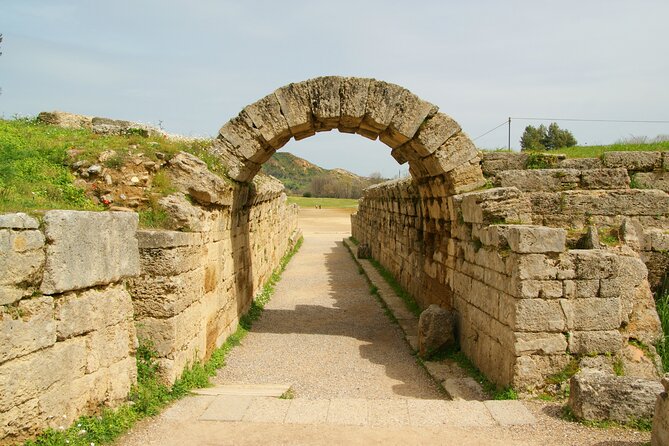
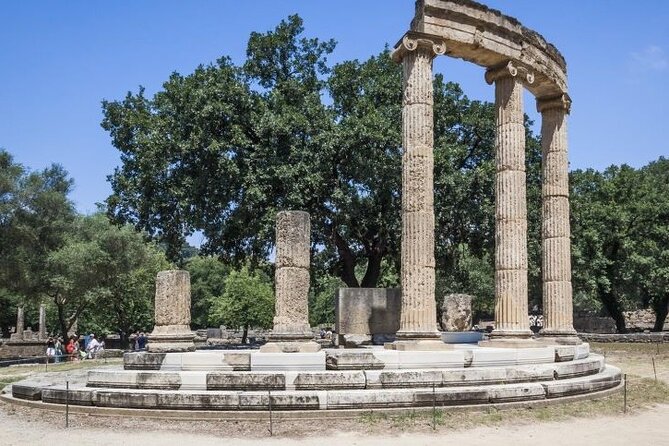
Olympia receives the largest site visit of the trip, with two hours at the archaeological area followed by one hour in the museum. That extra time matters. The sanctuary covers more ground than a quick photo stop can convey, and the museum adds objects that help explain what you see outside.
Olympia was the center of the ancient Olympic Games, but it was also a major religious sanctuary. The ruins include the setting in which athletic competition, worship, and public ceremony came together.
The separate museum visit is one of the strongest parts of the program. Its collection includes the Hermes of Praxiteles, a celebrated marble statue attributed to the sculptor Praxiteles. Seeing the museum after the ruins gives you a better sense of what the site looked like when sculpture and architecture were still in place.
Three hours at Olympia is generous compared with the shorter visits at Mycenae and Epidaurus. I would use the time carefully: listen to the explanation, see the main ruins, and leave enough time for the museum rather than lingering too long at the first few remains.
After Olympia, the coach heads toward Delphi and crosses the Rio to Antirrio Bridge. The bridge links the Peloponnese with mainland Greece across the Gulf of Corinth. At 2,883 meters, it is an impressive piece of modern infrastructure, built to cope with difficult conditions in the strait.
The crossing is not a formal sightseeing stop, but it gives the journey a change of scale. You move from ancient sanctuaries to a major modern bridge, then continue inland toward Delphi.
You arrive in Delphi for the night. The exact hotel is not fixed in the tour details, but accommodation is in three-star or four-star hotels, with breakfast and dinner included. Past departures have used hotels such as Neda in Olympia, Olympique in Delphi, and Orfeas, though you should confirm current lodging at booking.
Day three: Delphi, Arachova, and the road to Kalambaka
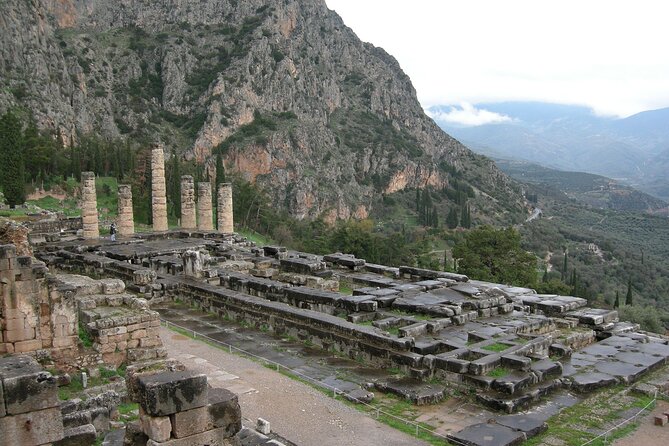
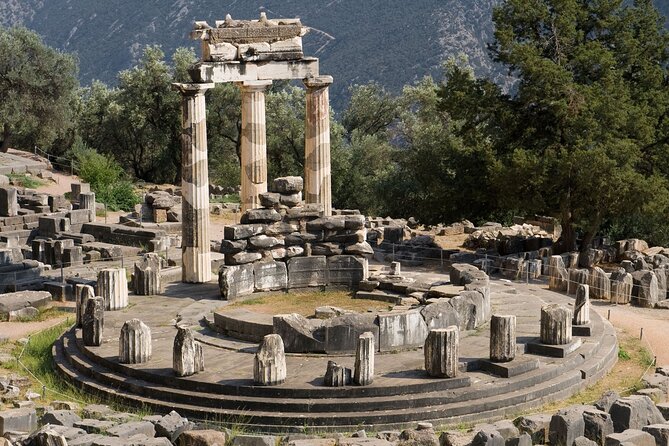
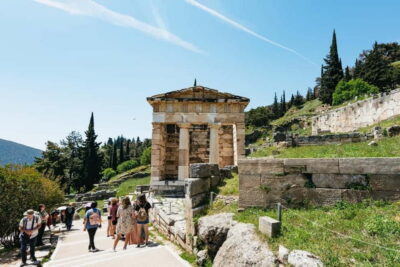
Delphi is the most concentrated archaeological visit of the circuit. The site tour lasts about 90 minutes and includes the Sacred Way, the Treasury of the Athenians, and the Temple of Apollo. The route also reaches a panoramic point near the local theater.
Ancient Delphi was known as a sacred center where people came to consult Apollo’s oracle. The physical setting matters here. The sanctuary rises above the surrounding valley, and the views help explain why the location carried such spiritual weight.
The Treasury of the Athenians is a small building, but it is important because it shows how city-states expressed power and devotion within the sanctuary. The Temple of Apollo is more fragmentary, yet it remains the central focus of the site.
The Delphi Archaeological Museum gets about 45 minutes. The star object is the Charioteer of Delphi, a bronze figure of an athlete. It is one of the clearest reasons to keep the museum visit rather than treating Delphi as an outdoor ruin only.
Ninety minutes at the site and 45 minutes in the museum gives you a useful introduction, though the schedule remains brisk. If Delphi is your main interest, you may wish you had more time to explore its details and surrounding paths.
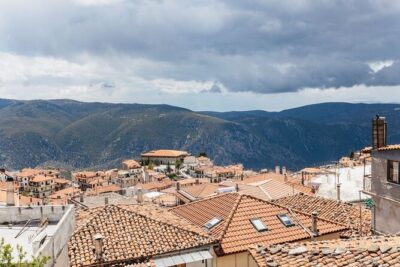
The coach then passes through Arachova, a mountain town known for local crafts. The scheduled time is only about 20 minutes, so think of this as a brief look rather than a full town visit. It is a pleasant change after the archaeological sites, but the itinerary does not offer much independent shopping or wandering.
From Delphi, you continue toward Kalambaka, the base for the next morning’s Meteora visit. This is another long transfer, and it is the day when the tour’s value depends most on your tolerance for bus travel.
More Meteora trips from Athens:
- Athens: Meteora Monasteries Day Trip with Caves and Lunch
★ 4.7 · 2,964 reviews - Athens: Meteora Monasteries Day Tour with Lunch
★ 4.8 · 2,196 reviews - Athens: Meteora Tour with Local Guide and Greek Lunch
★ 4.8 · 1,561 reviews - Athens: Meteora Monasteries, Caves & Coastal Stopovers with Lunch
★ 4.5 · 1,432 reviews
Day four: Meteora and Thermopylae
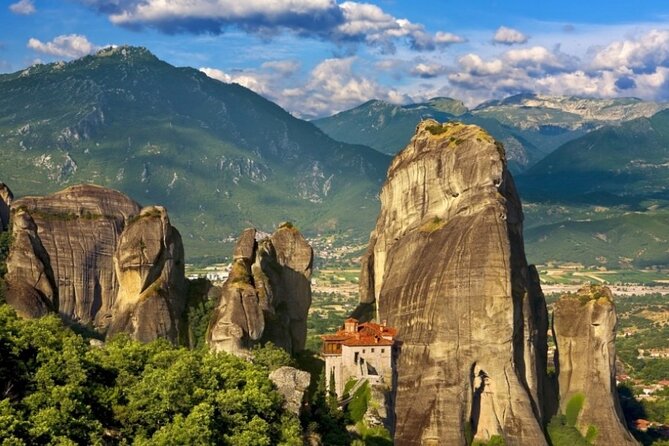
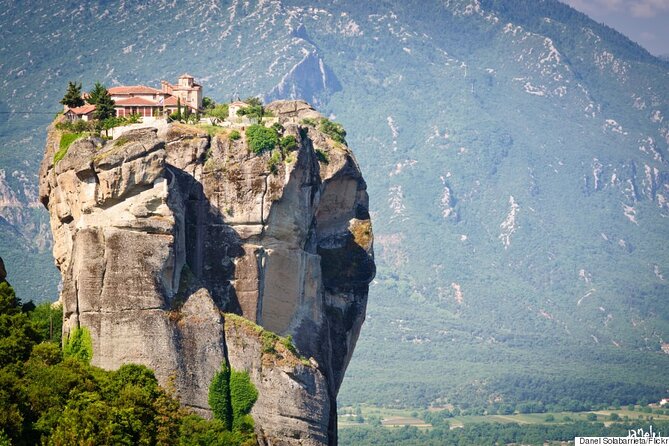
Meteora is the visual high point of the route. The program includes visits to two monasteries, with about two hours devoted to the area. The monasteries sit on tall rock formations above the Thessalian plain and have been recognized as a UNESCO World Heritage Site since 1988.
The visit focuses on Byzantine art and religious culture. Inside the monasteries, you can expect a more active cultural experience than at the earlier ruins, with painted decoration and sacred objects forming part of the visit.
Two monasteries in two hours gives you a useful introduction, but it cannot cover every building or provide a slow photographic tour. The program does not specify which monasteries you will enter, so the exact experience may vary.
Meteora also requires practical preparation. You will be walking around elevated sites and entering religious buildings. The information provided does not state a dress code, but conservative clothing is a sensible choice for monastery visits.
The final sightseeing stop is the Leonidas Monument at Thermopylae, with about 20 minutes for a brief visit. The statue recalls the battle of 480 BC, when King Leonidas and his Spartan force became part of one of ancient Greece’s most famous military stories.
This is a quick roadside history stop, not a full archaeological visit. It works well as a final pause before the return to Athens, especially because the route has shifted from art and sanctuary ruins back to military history.
The tour ends at the Melina Mercouri Monument, the same central meeting point used at departure. The stated start time is 8:00 a.m.
What the $728.56 price really covers
At $728.56 per person, this is not a budget bus ride, but the inclusions make the figure easier to judge. You receive transport in a luxury air-conditioned coach, WiFi on board, headsets, a professional Spanish-speaking guide, entrance fees, three hotel nights, three breakfasts, and three dinners.
Those inclusions remove several planning chores. You do not need to arrange separate tickets for Olympia, Delphi, or Meteora, and you do not need to book transport between towns. Breakfast and dinner also reduce daily meal planning.
The package has clear extra costs. Lunches, drinks, tips, personal expenses, and the hotel fee are not included. The hotel fee varies by season and category: the stated rates are €1.50 in winter and €3 in summer for three-star hotels, or €3 in winter and €7 in summer for four-star hotels, per room per night.
The value is strongest if you want a guided overview and would otherwise need to hire a car, book several hotels, arrange site tickets, and plan a complicated route. It is weaker if you prefer choosing your own meal stops, lingering at museums, or spending several nights in one town.
The Spanish guiding is a major part of the experience
This tour is designed for Spanish speakers, not as a multilingual outing with occasional Spanish commentary. The guide accompanies the group throughout the journey, and headsets are supplied so you can follow explanations at the sites.
The guide quality matters because many stops require context. Names praised in the supplied feedback include Gogo, Magdalena Kotsakinou, Fanery Aguirre, Elena, Zoe, and Estela. The strongest descriptions focus on clear explanations of art, mythology, history, and local geography, along with good time management and a friendly manner.
I would pay attention to the guide assignment if the operator can provide it before departure, though the information does not promise a particular person. A strong guide can make a one-hour visit to Mycenae feel purposeful. A weaker one would leave you rushing through stones without understanding the story.
The coach can hold up to 55 people, so expect a full group rather than a quiet private tour. Headsets help at the monuments, but the size still affects how quickly the group moves and how easy it is to ask personal questions.
Who should book this four-day circuit
I would recommend it to a first-time visitor who wants the main mainland Greek sites in one organized trip. It is also a good match if Spanish is your preferred language and you want explanations of mythology, ancient art, and historical settings rather than simple transport and photo stops.
It suits people who value coverage. You will see places that are difficult to combine independently in four days, and the route avoids the stress of changing buses or arranging several overnight stays.
It is less suitable for you if you dislike early starts, long coach rides, or changing hotels. The program gives you limited free time, and the most memorable places can also leave you wishing for another hour.
The route is physically manageable for most participants according to the provided information, but it still involves walking around archaeological sites and visiting elevated monasteries. Good shoes and a willingness to keep to the schedule will help.
You can cancel for a full refund if you do so at least three full days before the start time. Late cancellations are not refunded, and the operator may offer a new date or a full refund if poor weather or too few bookings force cancellation.
The bottom line: a strong overview with a demanding pace
I like this tour because it gives you an unusually broad look at mainland Greece in only four days. Mycenae, Epidaurus, Olympia, Delphi, Meteora, and Thermopylae each add something different, while the Spanish guide and included admissions make the route easier to manage.
The main warning is simple: you will spend a lot of time on the coach. The 4.6 rating from 27 published ratings and 93 percent recommendation figure fit the experience well, but the positive side depends on accepting the schedule.
Book it if your priority is seeing the essential sites with a Spanish-speaking guide and a mostly covered package. Skip it if you want slow mornings, long museum visits, or the freedom to set your own route.
FAQ
Where does the tour start?
It starts at the Melina Mercouri Monument, Leof. Vasilisis Amalias 54, Athens, at 8:00 a.m.
Where does the tour end?
The activity ends back at the starting meeting point in Athens.
How long is the experience?
The tour lasts approximately four days and includes three hotel nights.
Is the tour conducted in Spanish?
Yes. A professional Spanish-speaking guide accompanies the group throughout the journey.
Which major sites are included?
The route includes the Corinth Canal, Mycenae, Epidaurus, Olympia, Delphi, Meteora, and the Leonidas Monument at Thermopylae.
Are entrance fees included?
Yes. Entrance fees to the listed places of interest are included in the tour package.
Are accommodation and meals included?
Three-star or four-star hotel accommodation, three breakfasts, and three dinners are included. Lunches and drinks are not included.
How large can the group be?
The tour can have a maximum of 55 participants.
Can I cancel for a full refund?
Yes, if you cancel at least three full days before the experience start time. Cancellations made less than three full days before departure are not refunded.
More Epidaurus trips from Athens
- 3-Day Classical Greece Tour: Epidaurus, Mycenae, Nafplion, Olympia, Delphi
★ 4.5 · 342 reviews - Mycenae, Epidaurus, Nafplio Full Day Private Tour from Athens
★ 5.0 · 270 reviews - Mycenae, Epidaurus & Nafplio Full-Day V.R audio guided Tour
★ 4.5 · 248 reviews - Ancient Corinth, Epidaurus, Nafplio full day private tour from Athens
★ 5.0 · 206 reviews
More Mycenae trips from Athens
- From Athens: Mycenae, Epidaurus & Nafplio Full Day Trip
★ 4.8 · 2,438 reviews - From Athens: Mycenae, Epidaurus & Nafplio Full-Day Tour
★ 4.5 · 1,580 reviews - 4-Day Classical Greece Tour: Epidaurus, Mycenae, Olympia, Delphi, Meteora
★ 4.5 · 732 reviews - Mycenae and Nafplion Day Trip from Athens with Official guide
★ 4.5 · 501 reviews
Newly reviewed around Athens
- Athens: workshop for painting landscape with local artist★ 4.6 · 3 reviews
- Athens: Greek Wine & Olive Oil Tasting at Brettos Plaka★ 4.5 · 3 reviews
- Outdoor Yoga and Pilates with Akropolis view★ 4.0 · 5 reviews
- Acropolis of Athens: 60′ Tour in a Vintage Motorcycle★ 5.0 · 4 reviews
- Ultimate Tasting of the Volcanic Wines of Greece★ 5.0 · 3 reviews
- workshop for painting acropolis/landscape with local artist★ 5.0 · 3 reviews
- Athens at Twilight Night Tour with Drinks and Meze Dishes★ 4.8 · 4 reviews
- Breakfast in the markets with olive oil and honey tasting★ 4.8 · 8 reviews
Delphi Tours from Athens, compared.
Mythology of Delphi, Museum and Arachova Guided Tour
Read our review →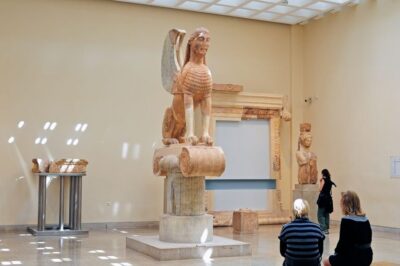
Small-Group Delphi, Museum & Arachova Day Trip
Read our review →
Delphi English Day Trip from Athens with Official Guide
Read our review →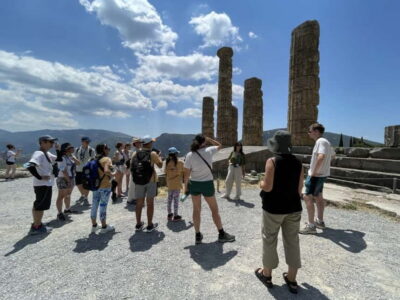
Delphi Guided Trip with Optional Lunch and Entry
Read our review →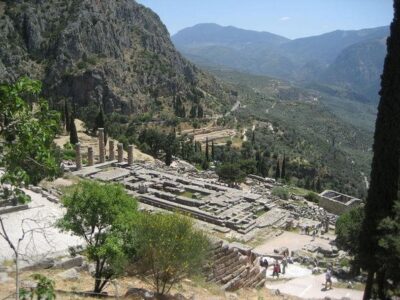
Historical Delphi One Day Tour with Arachova Stop & Expert Guide
Read our review →
Premium Delphi Day Trip with an Expert Guide, Museum & Lunch
Read our review →
Browse the lists this tour appears in