
Reviewed · 4-DAY EXPERIENCES
From Athens: Explore Ancient Greece 4-Day Tour
The most striking part of this four-day tour is its range. In one loop from Athens, you visit the theatre of Epidaurus, the royal ruins of Mycenae, the birthplace of the Olympic Games, the sacred site of Delphi, and the cliff-top monasteries of Meteora. Ancient Greece comes in many forms here, from myth and sport to religion and royal power.
I like the way the tour handles the long distances with a comfortable, air-conditioned coach, and I like that breakfast and dinner are included, which removes some planning after full days on the road. Guides such as Christina Stamou, Dosia, Sofia, and Angela have been singled out for clear site explanations and strong knowledge of Greek mythology and archaeology.
The trade-off is time. You cover a large part of mainland Greece in only four days, so some visits feel brisk, and the journey between sites can be tiring. The group may also grow larger at Meteora, making it harder to hear and move around easily.
Key points to know before booking
- Epidaurus lets you test its famous acoustics: Speak from the theatre stage and listen for the sound carrying up the stone seats.
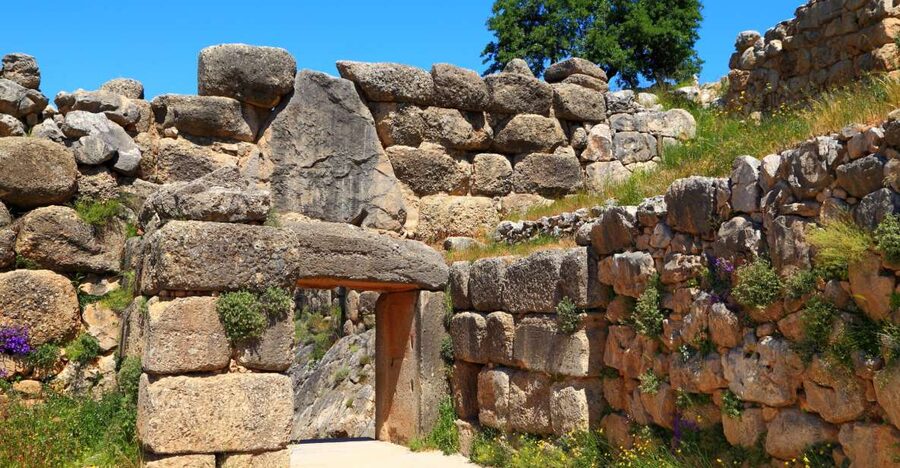
- Mycenae connects myth with real ruins: Walk through the Lion Gate and toward the Tomb of Agamemnon.
- Olympia is more than a stadium: Temples, the Olympic flame altar, and the museum give the site useful context.
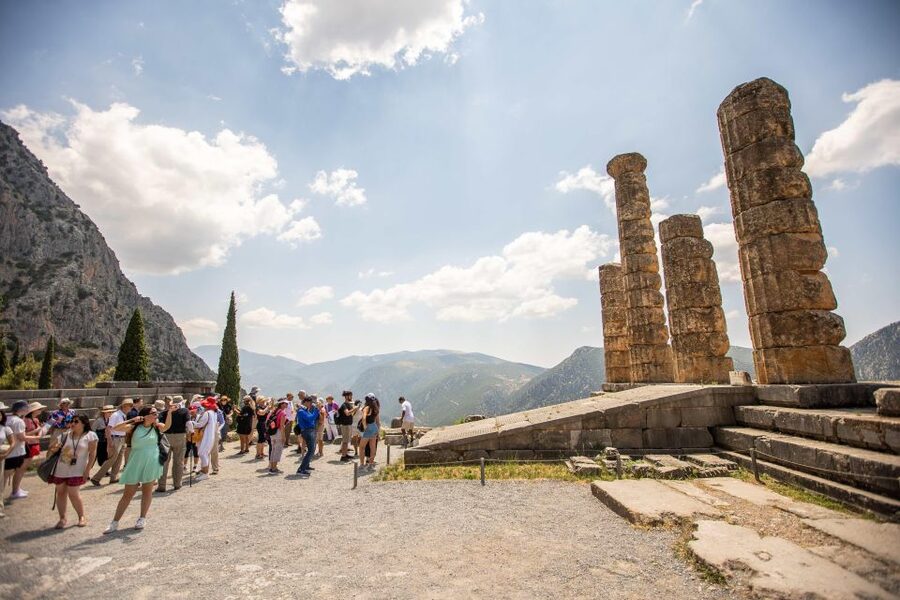
- Delphi brings mountains and mythology together: This was considered the center of the ancient Greek world.
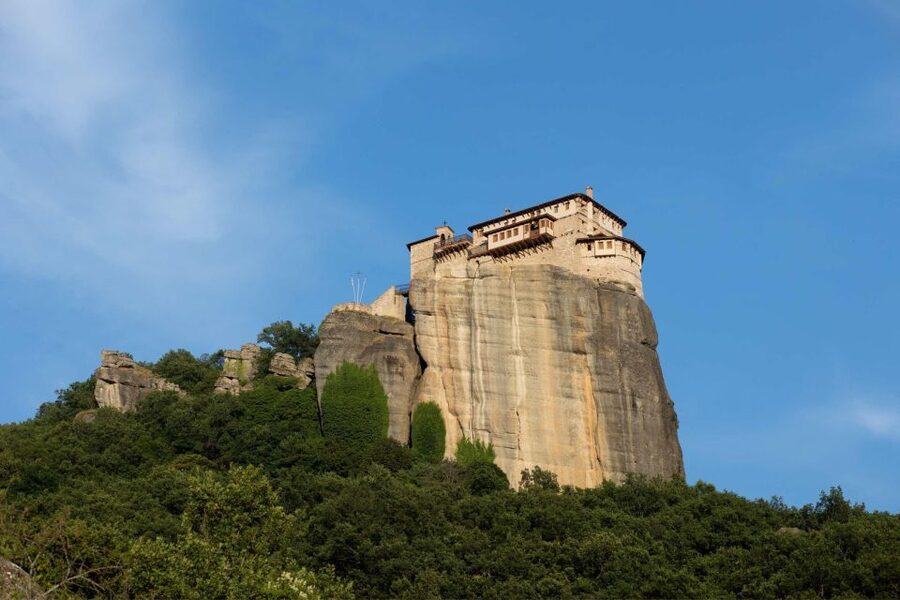
- Meteora changes the mood completely: High monasteries on sandstone pillars replace classical temples with Eastern Orthodox religious architecture.
- The price covers more than transport: At $742 per person, you receive three or four nights of lodging, entrance fees, guiding, breakfasts, and dinners, but not lunches, drinks, or hotel taxes.
Why this four-day route works
This is not a relaxed countryside holiday. It is a compact circuit for anyone who wants to see several major Greek sites without renting a car or arranging separate hotels, buses, entrance tickets, and guides.
The route also gives you more variety than a tour focused only on classical temples. You hear about healing at Epidaurus, royal power at Mycenae, athletics at Olympia, prophecy at Delphi, and Orthodox monastic life at Meteora. That variety keeps the trip from feeling like four versions of the same ruin.
The coach is a major part of the experience. You spend many hours on the road, but the bus has air conditioning, and some vehicles have phone chargers. The tour is described as using a low-carbon or zero-carbon travel approach, which may appeal to you if you want to cover this much ground without adding several separate transport legs.
Pickup is available from most centrally located Athens hotels, usually about an hour before departure. You can also meet at the supplier’s office 15 minutes before the scheduled departure. The exact departure time depends on availability, so check it before you plan an early-morning Athens activity on your return day.
More four-day trips from Athens:
- 4-Day Classical Greece Tour: Epidaurus, Mycenae, Olympia, Delphi, Meteora
★ 4.5 · 732 reviews - 4-Day Tour of Mycenae, Epidaurus, Olympia, Delphi & Meteora
★ 4.8 · 168 reviews - 4-Day Greece Highlights Tour: Epidaurus, Mycenae, Olympia, Delphi and Meteora
★ 5.0 · 79 reviews
Day one: Epidaurus, Nafplio, and Mycenae
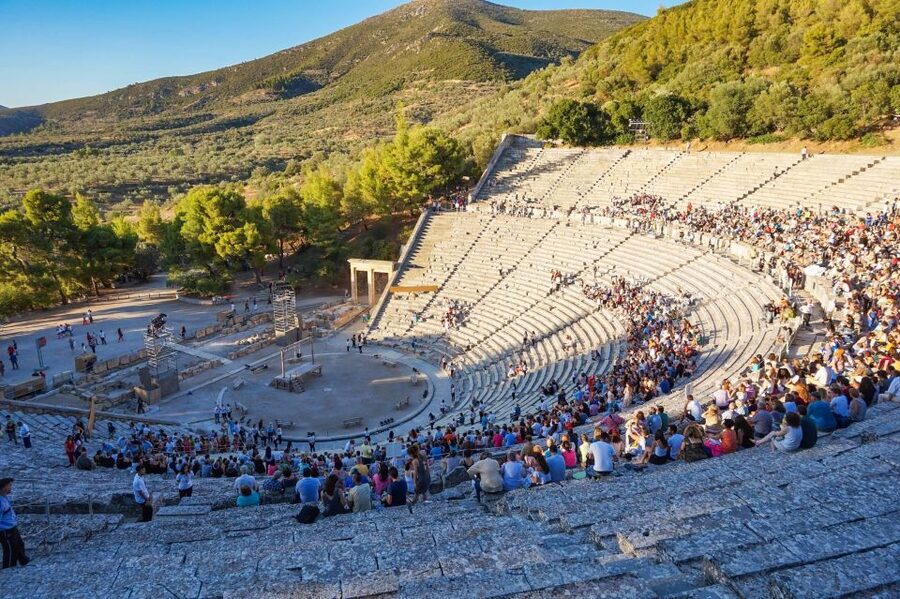
The first morning takes you along the Corinth Canal toward Epidaurus. The canal is a quick visual introduction to the journey: a narrow cut through the land linking the Gulf of Corinth with the Saronic Gulf. The main stop, though, is the ancient theatre.
Epidaurus is famous for its symmetry and acoustics. Stand near the center of the orchestra and speak while someone listens from higher up in the seats. You may find that your voice carries far better than expected. It is a simple moment, but it turns an architectural fact into something you can test yourself.
The site is also linked with Asclepius, the healing god and son of Apollo. That gives the sanctuary a different feel from the grand political centers later in the itinerary. You are not only looking at a theatre. You are visiting a place connected with ancient ideas about medicine, worship, and performance.
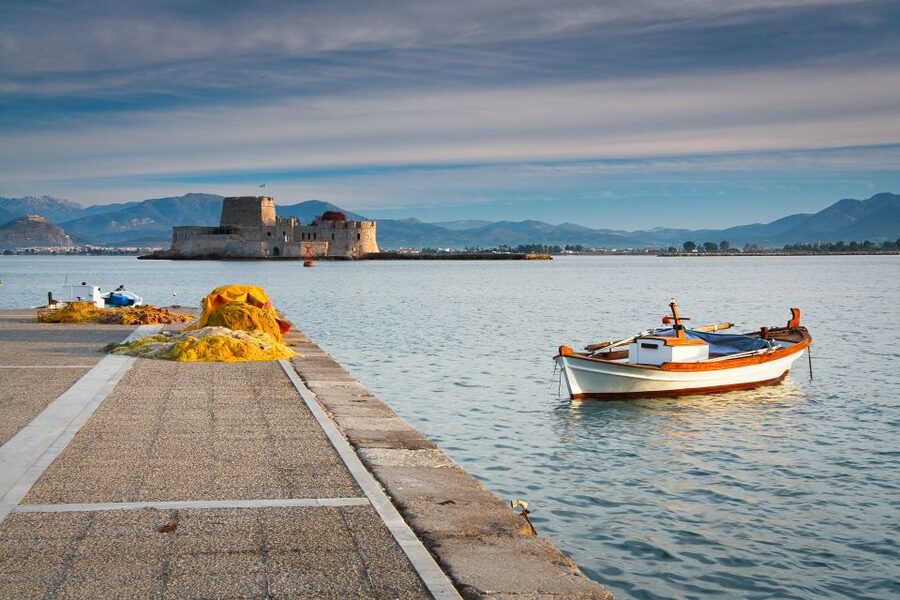
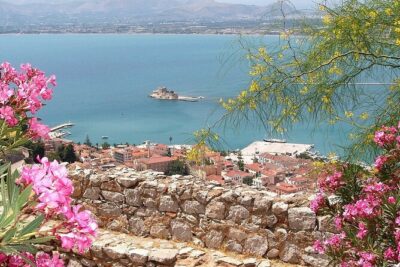
Next comes Nafplio, a seaport town in the Peloponnese. The stop is short, so treat it as a pause rather than a full town visit. You may have time to stretch your legs, take in the waterfront setting, or get a quick sense of the town before the coach continues through the plain of Argos.
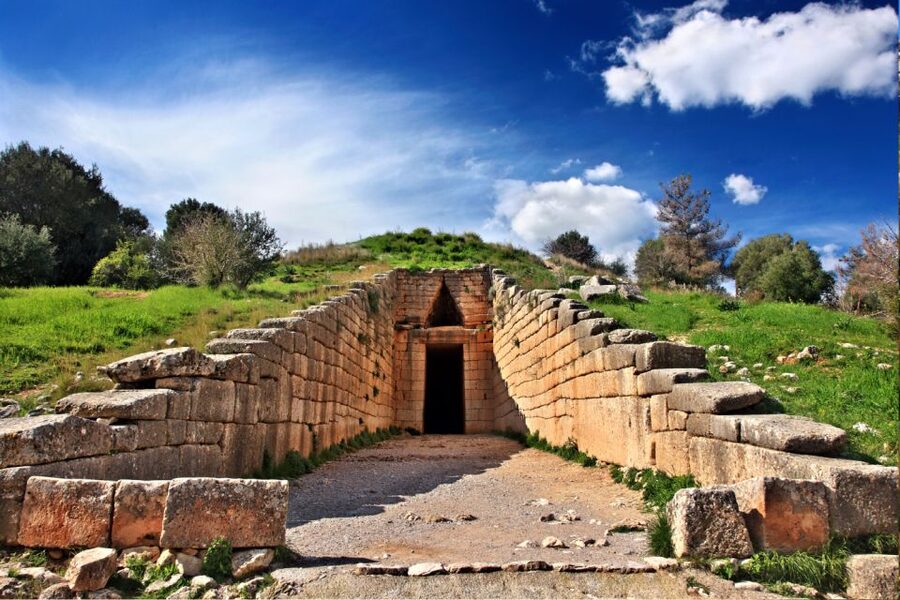
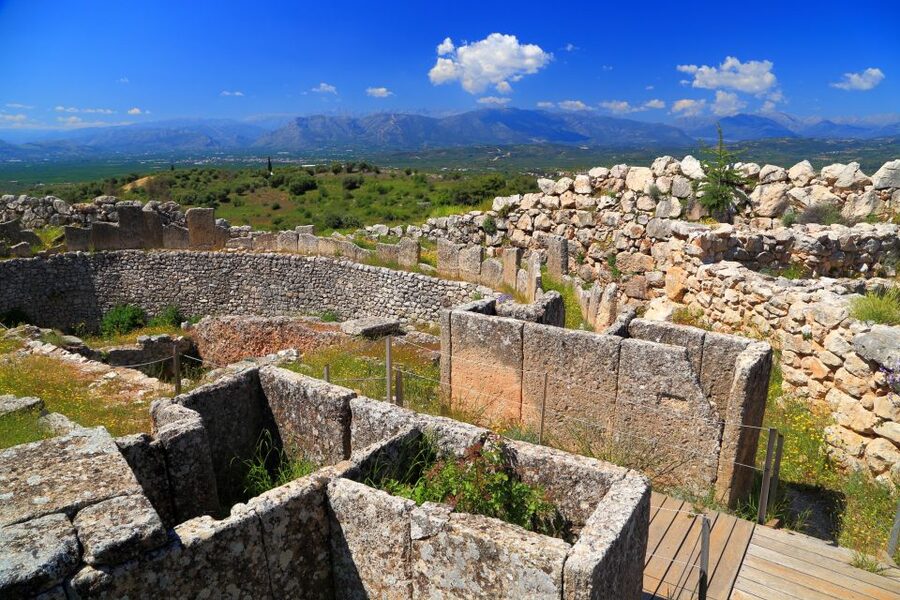
Mycenae is the day’s strongest historical stop. It was a major center of early Greek civilization, and its ruins have an imposing position above the surrounding plain. The Lion Gate is the famous entrance, while the Tomb of Agamemnon adds a powerful link to the stories of the Trojan War.
The useful thing about visiting Mycenae with a guide is the help in sorting legend from archaeology. Agamemnon belongs to the epic tradition, but the site itself is a real royal center with monumental walls, tombs, and evidence of an organized society. The guide can give the stones a human scale instead of leaving you with a pile of massive masonry and a few names.
You then continue to Olympia for the night. This is a long opening day, with several major stops and substantial driving. Wear shoes that work on uneven archaeological ground, and keep water close even though lunches and drinks are not included.
Day two: Olympia and the road to Delphi
Olympia is one of the most rewarding stops because the ancient site is tied to an event you still recognize today. The Olympic Games began here, but the sanctuary was also a religious center dedicated to Zeus and Hera.
You will see the temples of Hera and Zeus, the area connected with the Olympic flame, and the site museum. The museum matters because many original objects and sculptures are easier to understand indoors than scattered across open foundations. If you enjoy mythology, sport, or ancient public life, Olympia gives you all three in one visit.
Try to imagine the original athletes using the site rather than treating it as only a sports venue. The games were part of religious worship, and the sanctuary drew people from across the Greek world. The tour’s guide can help connect the running track and temples to that wider setting.
After Olympia, the route continues toward Patras and Rio. You cross the Rio-Antirrio Bridge, a modern engineering landmark that provides a sharp contrast with the ancient sites. The road then passes Nafpaktos and follows the coast toward Delphi.
This is one of the more scenic stretches of the tour, but it is also another long travel period. The coach lets you watch the coastline and mountains without handling the driving yourself. On the other hand, you cannot stop whenever a view catches your eye, so think of this section as moving scenery rather than a series of photo stops.
You may visit the mountain village of Arachova in the afternoon before reaching Delphi for the night. Arachova provides a change of pace from ruins and museums, with a high mountain setting and a more modern village atmosphere.
The overnight stay in Delphi is useful. You are not rushing through the sanctuary and immediately setting off for another city. You get an evening in the area and a second chance to prepare for the site visit the next morning.
Day three: Understanding Delphi before Kalambaka
The ancient Greeks considered Delphi the center of the world, or its navel. That belief explains why the site carried such weight. People came to consult Apollo’s oracle, and decisions made here could influence rulers, cities, and military plans.
Delphi is set on a mountainside, so expect slopes and uneven ground. The setting is a large part of its power. The sanctuary looks across a broad Greek valley, and the relationship between the ruins and the mountains helps explain why this was treated as a meeting point between the human and divine worlds.
A good guide makes a real difference here. Angela, who is described as a Greek archaeologist, used images and pictures to show what parts of the site once looked like and directed attention to important museum objects. Guides including Dosia and Christina Stamou have also been praised for explaining mythology and keeping a sensible pace.
That kind of guiding is especially useful at Delphi because the remains can be hard to read on your own. Columns, foundations, treasuries, and retaining walls do not always explain their purpose at a glance. Clear commentary helps you understand how the sanctuary was organized and why different city-states built structures there.
The afternoon drive takes you to Kalambaka, the town below Meteora. This is another substantial transfer, but it sets up the next morning’s visit. Depending on the selected hotel category, the overnight stays are in three-star or four-star properties. Past stays have included hotels with good views, pleasant rooms, and evening meals, though the quality is not identical at every stop.
A different kind of day out from Athens:
- Athens: Acropolis & up to 5 Archaeological Sites Combo Pass
★ 4.4 · 12,619 reviews - Athens: Acropolis Ticket with Optional Audio or Live Guide
★ 4.2 · 11,055 reviews - Athens: Acropolis, Parthenon & Acropolis Museum Guided Tour
★ 4.8 · 9,316 reviews - Athens: Cape Sounion & Poseidon Temple Sunset Half-Day Trip
★ 4.8 · 8,241 reviews
Day four: Meteora monasteries and the return to Athens
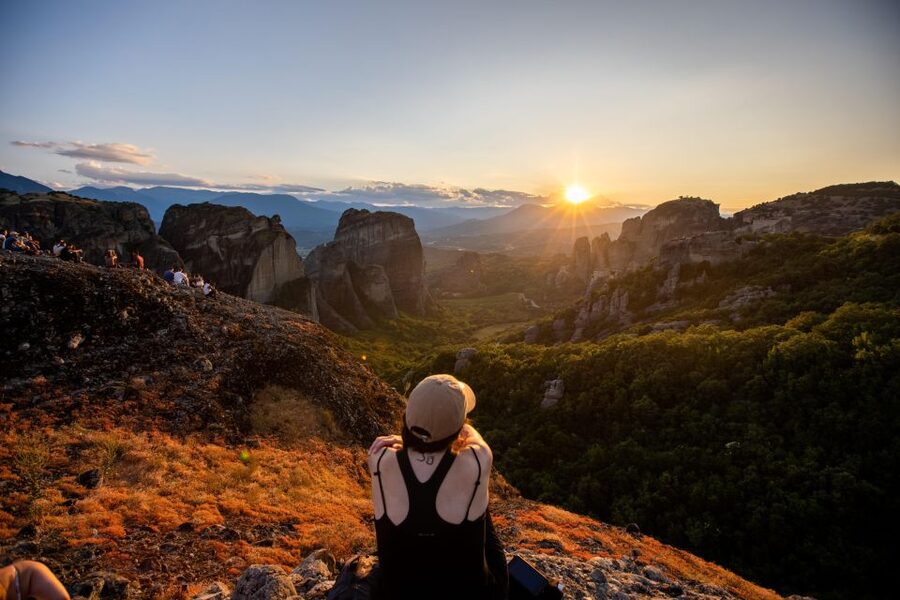
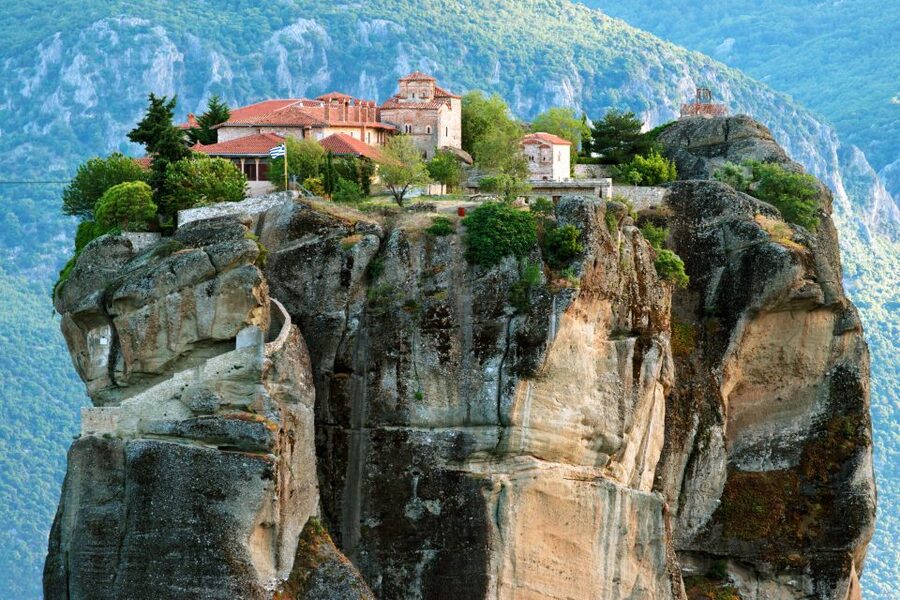
Meteora is the visual surprise of the tour. Tall sandstone pillars rise above Kalambaka, with Eastern Orthodox monasteries built high on the rock. After three days centered on classical Greece, you encounter a different religious tradition and a completely different style of architecture.
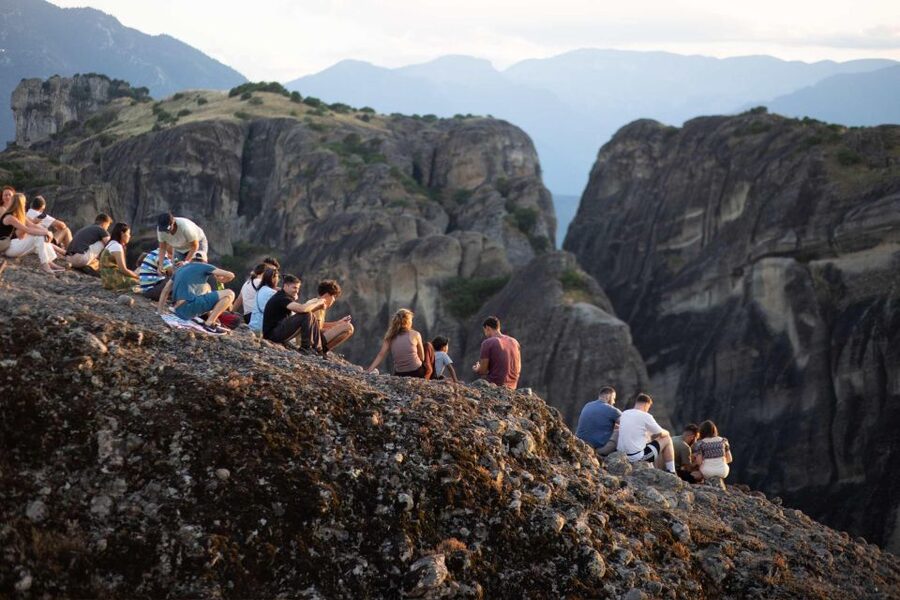
The monasteries are the main reason to make the long trip north. Their position seems improbable, and the views from the heights are memorable. Nature and human construction share the attention here: the rock formations set the stage, while the monasteries show how religious communities adapted to an extreme setting.
You need to plan your clothing carefully. Shorts are not allowed, short skirts are unsuitable, and women are asked to wear long-sleeved tops. These rules are part of entering active religious sites, not simply an inconvenience created for tour groups. If your clothing is borderline, choose the more conservative option.
Meteora can be harder to manage than the earlier sites because the group may become larger. A smaller group is easier for listening and moving through tight areas, while a larger group may mean waiting or standing farther from the guide. The monasteries also bring practical limits for anyone who finds stairs, uneven ground, or height difficult.
The return to Athens includes an optional stop at a workshop or factory producing Byzantine-style icons. This is not the main point of the tour, but it can offer a useful link between the religious art of Meteora and modern Greek craft.
The route also passes the monument to Leonidas, the Spartan king associated with the Battle of Thermopylae. It is a fitting final historical stop, bringing the tour back to the warriors, rulers, and legends that shape so much of ancient Greek storytelling. Arrival in Athens is expected in the late afternoon, although road conditions and the length of the day can affect the timing.
Hotels, meals, and the real cost of $742
At $742 per person, this is not a budget bus outing, but the cost needs to be judged against what is included. You receive three nights of accommodation, entrance fees, a live English or Spanish guide, coach transport, breakfast, and dinner.
That bundle has real value. Entrance fees at several major sites can add up, and arranging hotels in Olympia, Delphi, and Kalambaka on your own takes time. Dinner is especially helpful after long coach days, since you do not need to search for a restaurant in an unfamiliar town.
You still pay for lunches, drinks, personal expenses, and hotel accommodation tax. The tax is listed as €5 per room per night at three-star hotels and €10 per room per night at four-star hotels. It is paid directly to the hotel.
The three-star option can be a sensible choice if you care more about location, meals, and a clean place to sleep than extra polish. Past stays have been described as perfectly serviceable, with some hotels offering pools or attractive views. The four-star option costs more, but the exact difference in comfort depends on the properties used for your dates.
Rooms are assigned as double or triple rooms. If you want a single room, you need to make a separate booking for one person. That is worth checking before payment, especially if you are traveling alone.
Guides and group size can shape the trip
The guide is one of the most important parts of this experience. The ruins are impressive, but a strong explanation can turn a theatre, tomb, or broken temple into a place with purpose.
Names associated with especially strong guiding include Panaiota, Dozia, Dosia, Ivan, Stavros, Sofia, Christina Stamou, and Angela. Their reported strengths include mythology, archaeology, Greek culture, clear explanations, patience, and a steady pace. Your guide may be different, since the tour is offered in English and Spanish and staff assignments vary.
Drivers also matter on a route with mountain roads and long distances. Stelios, Evan, George, Leo, and Theo have been praised for calm, careful driving and for helping passengers feel comfortable. You will spend enough time on the bus that a smooth ride is more than a minor convenience.
Group size is less predictable. The tour can have a small-group feel at some points, then expand at Meteora. If you prefer quiet, flexible site visits, a private tour would suit you better. If you value an organized route and the chance to cover a lot without driving, this format is the practical choice.
Who should book this tour?
I would choose this tour if you want a broad first look at mainland Greece and care about history, mythology, archaeology, religion, and scenery. It is particularly good for someone who wants the major sites explained rather than simply photographed.
You should be comfortable with full days, coach travel, uneven archaeological ground, and changing hotels. This is not the right fit if you want long lunches, slow village walks, or plenty of free time at each stop.
It is also not suitable for wheelchair users according to the activity information. The route includes ancient sites, slopes, and monasteries with access limits, so mobility needs should be considered before booking.
Final verdict: a strong route for history-minded visitors
Book this four-day tour if you want an efficient, well-supported circuit from Athens that reaches places difficult to combine on your own. Epidaurus, Mycenae, Olympia, Delphi, and Meteora each offer a different story, and the included meals and hotels make the price easier to justify.
Skip it if you dislike long drives or need complete control over your schedule. The tour asks you to accept some early starts, brisk visits, and a larger group at Meteora. For the right person, though, it offers an unusually full look at Greece beyond Athens, with good guiding and a useful balance of ancient sites, mountain roads, and modern Greek towns.
FAQ
How long is the tour?
The tour lasts four days and returns to Athens in the late afternoon on day four.
What sites are included?
The route includes Epidaurus, Nafplio, Mycenae, Olympia, Delphi, Arachova, Meteora, and the monument to Leonidas.
Are hotels included?
Yes. Overnight accommodation in three-star or four-star hotels is included, depending on the option selected.
Are meals included?
Breakfast and dinner are included. Lunches, drinks, and personal expenses are not included.
What languages are available?
Live guiding is available in English and Spanish.
Is transportation included?
Yes. Transport is provided by a luxury, air-conditioned bus. Pickup and drop-off are available from most centrally located Athens hotels.
What clothing is required at Meteora?
Shorts are not allowed, short skirts should not be worn, and women are asked to wear long-sleeved tops when entering the monasteries.
Is the hotel tax included?
No. The hotel tax is paid directly to the hotel. It is listed as €5 per room per night for three-star hotels and €10 per room per night for four-star hotels.
Is the tour suitable for wheelchair users?
No. The activity is not suitable for wheelchair users.
Newly reviewed around Athens
- Athens: workshop for painting landscape with local artist★ 4.6 · 3 reviews
- Athens: Greek Wine & Olive Oil Tasting at Brettos Plaka★ 4.5 · 3 reviews
- Outdoor Yoga and Pilates with Akropolis view★ 4.0 · 5 reviews
- Acropolis of Athens: 60′ Tour in a Vintage Motorcycle★ 5.0 · 4 reviews
- Ultimate Tasting of the Volcanic Wines of Greece★ 5.0 · 3 reviews
- workshop for painting acropolis/landscape with local artist★ 5.0 · 3 reviews
- Athens at Twilight Night Tour with Drinks and Meze Dishes★ 4.8 · 4 reviews
- Breakfast in the markets with olive oil and honey tasting★ 4.8 · 8 reviews
4-Day Experiences, compared.
4-Day Classical Greece Tour: Epidaurus, Mycenae, Olympia, Delphi, Meteora
Read our review →
4-Day Tour of Mycenae, Epidaurus, Olympia, Delphi & Meteora
Read our review →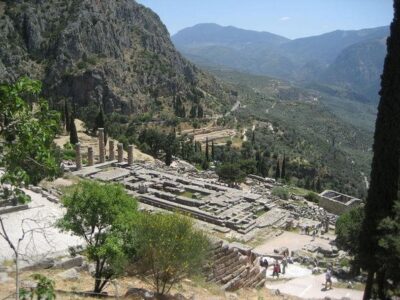
4-Day Greece Highlights Tour: Epidaurus, Mycenae, Olympia, Delphi and Meteora
Read our review →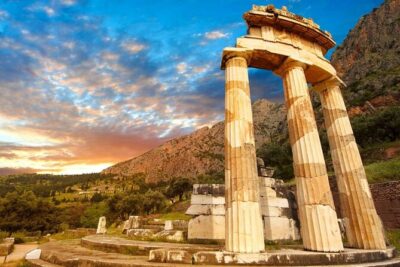
4day Spanish tour in Epidaurus Mycenae Olympia Delphi and Meteora
Read our review →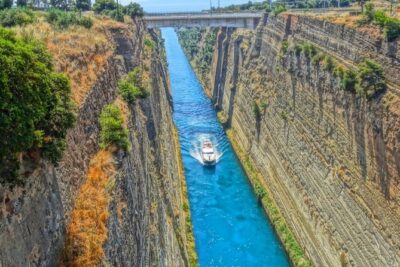
4 Day Private Tour, Mycenae, Nafplio, Olympia, Delphi, Meteora
Read our review →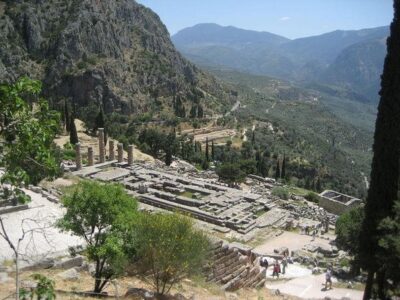
BEST 4-Day CLASSICAL GREECE: Corinth Epidaurus Delphi Meteora
Read our review →
Indulge to the beauty of Greece with the 4 days Classical Greece private tour
Read our review →Browse the lists this tour appears in