
Reviewed · ATHENS MYTHOLOGY TOURS
Private Tour: Athens Mythology Family Tour
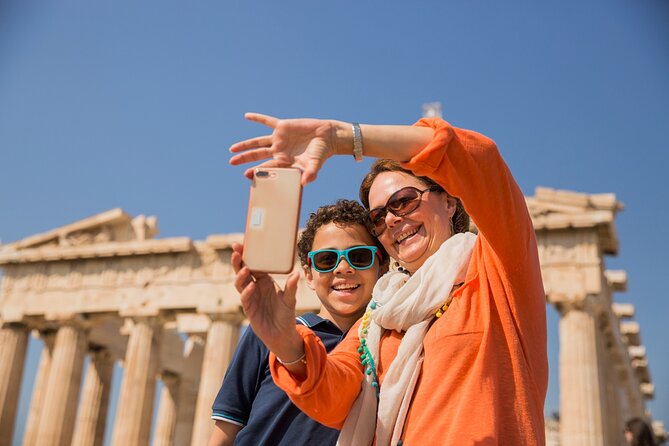
The best part of this three-hour tour is the way it turns Athens’ major ruins into a family storybook. At the Acropolis, you connect the Parthenon, Erechtheion, Theater of Dionysus, and Temple of Athena Nike with tales of Athena, Zeus, Poseidon, and other gods. I like the myth-first approach, which gives children something memorable to follow while you see the city’s essential ancient sights.
I also like the move to Pnyx, where the tour shifts from looking at ruins to taking part in an interactive activity inspired by ancient Athens. The private format lets the guide adjust the pace and explanations to your own children. The main drawback is cost: at $307.13 per person, this is a serious splurge, and Acropolis admission is extra.
Key points to know before booking
- Best for children ages 5 to 11: Older children may find the separate Athens Highlights: a Mythological Tour a better fit.
- The Acropolis is the main event: You see the Parthenon, Propylaea, Erechtheion, Temple of Athena Nike, and Theater of Dionysus.
- Pnyx adds participation: The final hour uses an interactive activity linked to ancient Athens and the beginnings of democracy.
- Private means personal attention: Only your group takes part, so the guide can respond to your children’s questions and energy levels.
- Tickets are extra: Entry fees are not included, though the operator can pre-purchase them.
- Pack light: Backpacks and large bags are not allowed inside the Acropolis.
Why mythology works so well on the Acropolis
The Acropolis can be a lot for a child. There are marble columns, broken stones, formal names, and several sites competing for attention. Myth gives those remains a human shape.
Instead of simply pointing out the Parthenon, your guide can explain its connection to Athena, the city’s patron goddess. The Erechtheion opens the door to stories involving Athena and Poseidon, while the Theater of Dionysus brings in the god of wine and drama. Zeus, the powerful ruler of the gods, adds another familiar figure to the story.
I like this method because it does not treat children as small adults who need a shortened lecture. It gives them a reason to care about the places they are seeing. You may find that a child who has tuned out a date or architectural term suddenly pays attention when the subject becomes a rivalry between gods or a heroic tale.
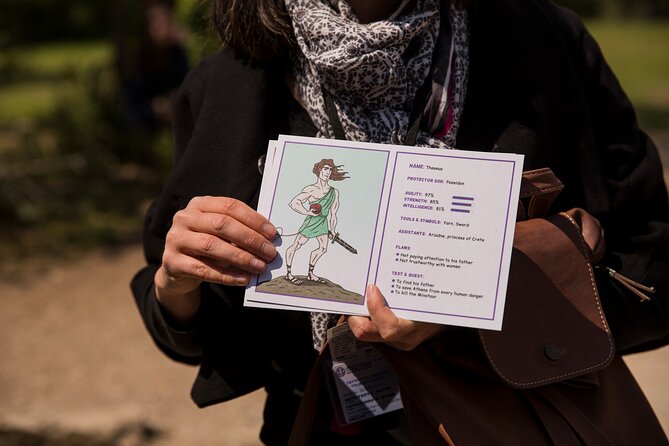
The guide is licensed and supplies fun, educational material for children. The exact activities can vary, but the goal is clear: connect what your child already knows with the monuments in front of you. One guide named Kat was specifically praised for building on the children’s existing knowledge and adding less familiar myths. That is a useful strength for families who already have mythology books at home.
More Greek mythology tours in Athens:
- Athens: Mythology of Delphi, Museum and Arachova Guided Tour
★ 4.6 · 4,008 reviews - Athens & Acropolis Highlights: Greek Mythology Small-Group Tour
★ 5.0 · 2,370 reviews - Athens: Acropolis and Mythology Highlights Small Group Tour
★ 4.8 · 2,275 reviews
Starting at the Acropolis with five major sights
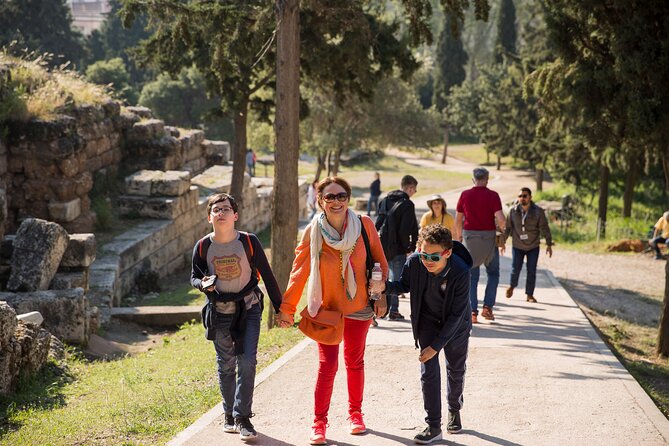
The tour begins at the Acropolis in central Athens and spends about two hours on the hill. You should expect walking over uneven ancient surfaces, stairs, and exposed areas. Comfortable shoes, water, and sun protection make sense, though large bags should stay behind because backpacks and big bags are not allowed inside.
The climb and site layout mean this is not a completely effortless outing for young children. Still, the private setup helps. If your child needs a short pause or asks an unexpected question, the guide is not trying to keep a large group moving.
Theater of Dionysus
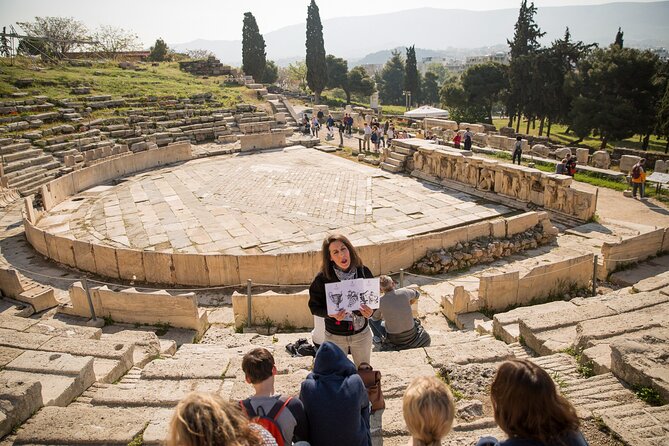
The Theater of Dionysus is a strong opening stop for children because it connects the stones to something they recognize: performance. It is presented as the first home of drama, and the mythology of Dionysus gives the site extra color.
Your guide can explain why this place mattered to ancient Athenians and how the god of wine became linked with theater and public celebration. It is a good point to ask your children what makes a story worth watching, or which modern performances they enjoy.
The site is also a reminder that the Acropolis was not only a religious center. It was part of a wider civic and cultural life.
Propylaea
The Propylaea is the grand entrance to the Acropolis. It may not have the instant recognition of the Parthenon, but it helps you understand how ancient visitors approached the sacred hill.
For children, the entrance works as a natural transition. The guide can frame it as the gateway into the world of the gods, then use the buildings ahead to build the next part of the story. I appreciate that the tour includes the Propylaea rather than rushing straight to the famous temple.
A few more Athens tours worth putting side by side
- Best of Athens Half Day Private Tour
★ 5.0 · 3,714 reviews - Athens Full Day Private Tour
★ 5.0 · 2,903 reviews - Athens Airport Private Arrival Transfer with Meet & Greet
★ 4.5 · 1,495 reviews - Athens Airport to Athens Hotels Private Arrival Transfer
★ 5.0 · 947 reviews
Temple of Athena Nike
The small Temple of Athena Nike honors Athena in her role as a bringer of victory. Its size makes it easy to miss when the Parthenon is nearby, so having a guide point it out is useful.
This is a good stop for explaining that Greek gods often had several roles. Athena was not only associated with wisdom. She was also linked with strategy and victory, which helps children see mythology as a set of connected stories rather than a list of names.
Erechtheion
The Erechtheion is one of the most unusual buildings on the Acropolis. Its asymmetrical design and famous Caryatid figures make it especially appealing to young visitors.
The building opens up stories about Athena, Poseidon, and the contest for control of Athens. You can expect the guide to use these myths to explain why the city’s identity was tied so closely to its gods.
This is also a good place to remind children that myths were not ancient cartoons. They helped explain why places, traditions, and communities mattered. The story gives meaning to the building, while the building gives the story a real setting.
Parthenon
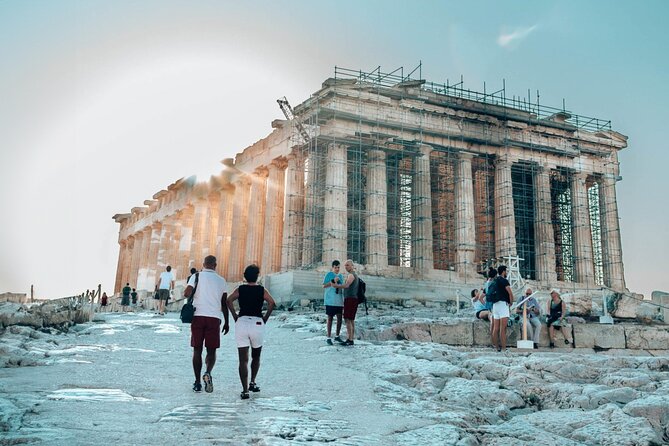
The Parthenon is the visual high point of the Acropolis and the building most children are likely to recognize from books or school. Seeing it in person can be impressive, but the crowds, bright sun, and scale of the site may test younger children.
A guide makes the visit more useful by giving your family a clear focus. You will learn about Athena and the temple’s role in ancient Athens, while also hearing about the wider cast of gods and heroes.
Do not expect a quiet, private look at the monument simply because your tour is private. The private element applies to your guide and group, not to exclusive access to the Acropolis. You will still be visiting one of Athens’ busiest sights, and entry lines or crowd levels can affect the pace.
From gods and heroes to the Pnyx
After roughly two hours at the Acropolis, the tour continues to Pnyx for about an hour. The end point is Pnyx, Athens 117 41, Greece, rather than the starting point, so plan your next activity from there.
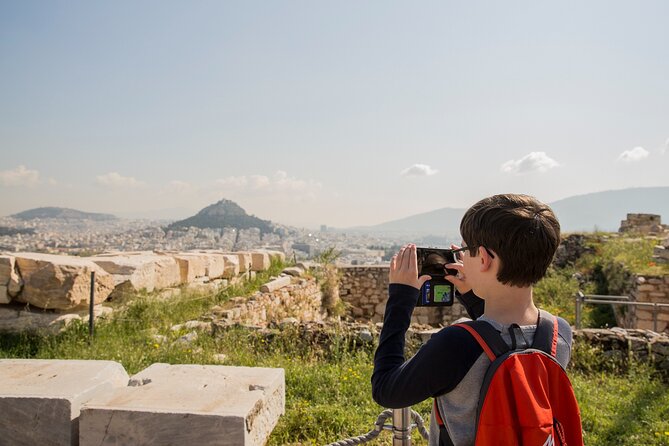
Pnyx is important for a different reason. It is associated with the birth of democracy, and the tour uses the hill for an interactive activity inspired by ancient Athens. The description also links the place with nymphs and muses, keeping the mythological theme alive.
I like this change of setting. The Acropolis gives you temples and famous monuments. Pnyx gives children room to think about public life, decision-making, and how ancient Athenians gathered. The experience becomes more than a walk between ruins.
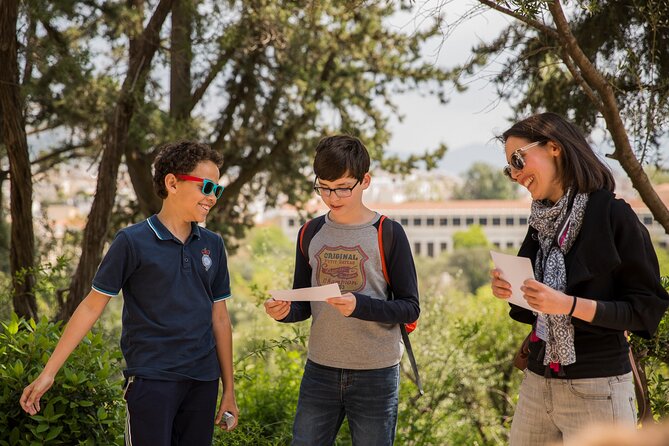
The activity is especially valuable for children who learn by doing. Instead of asking them to remember a long explanation, the guide can use the setting and materials to help them act out or consider an ancient idea. The exact format is not specified, so you should view it as a guided, interactive learning session rather than a fixed theatrical show.
Pnyx is also a sensible final stop because it avoids ending the tour with another formal temple explanation. After two hours of monuments, children get a different kind of focus.
What the private format changes
A private tour can be worth more than a standard group walk for a family, but only if you use its flexibility. Your guide can adjust the language, pause for questions, and spend more time on the myths that catch your children’s attention.
That matters with ages five to eleven, a wide range of attention spans. A five-year-old may respond best to gods, monsters, and heroes. An eleven-year-old may want more context about democracy, theater, or the way Athens was organized. The guide can place the emphasis where your family needs it.
The experience is not designed mainly for older children. The operator advises families with older children to choose Athens Highlights: a Mythological Tour instead. Take that seriously. If your children are teenagers, ask about the alternative before paying the higher private-tour price.
The private setup also keeps the experience from becoming a one-size-fits-all lecture. A guide named Vassia was praised for adapting a visit to a ten-year-old and the adults in the family. That kind of adjustment is exactly what you want here, though your own guide will depend on availability.
Price, tickets, and the real value
At $307.13 per person, this is expensive for a three-hour walking experience. Acropolis entry fees are not included, which raises the total cost. The operator can pre-purchase tickets if you request it, but entrance fees are non-refundable and non-exchangeable, so check your plans carefully.
The value comes from the private guide, the family-specific approach, and the educational materials. If you have one child who loses interest quickly at archaeological sites, a myth-based walk may save the visit. If your children already love Greek mythology, the stories can give the Acropolis a strong framework.
The price is harder to justify if you only want a quick introduction to the monuments or if your children are too young to follow the material. You are paying for attention and structure, not for special access or included admission.
The tour is booked, on average, seven days in advance. That suggests planning ahead, especially if you need a particular day during a busy Athens visit. Confirmation is provided at booking, and group discounts may be available.
Practical advice for a smoother three hours
Wear shoes suited to uneven ground. The Acropolis is an archaeological site, not a polished city sidewalk, and you will be walking uphill and over old stone surfaces.
Bring water and protect yourself from the sun. The tour spends time outdoors, and weather matters. If poor weather causes cancellation, you are offered another date or a full refund.
Travel light. Backpacks and large bags are not allowed at the Acropolis and should not be brought along. If you qualify for free or reduced admission, carry a valid identity card or passport. Without the required proof, you may not receive the reduced rate.
The tour is near public transportation, and service animals are allowed. Most people can participate, but the walking and terrain still deserve consideration for anyone with limited mobility.
You can cancel for a full refund up to 24 hours before the start time. Changes or cancellations inside that window are not accepted and are not refunded. The experience also requires a minimum number of participants, despite being private for your own group, so the provider may offer another date or a refund if that minimum is not met.
Who should book this Athens family tour
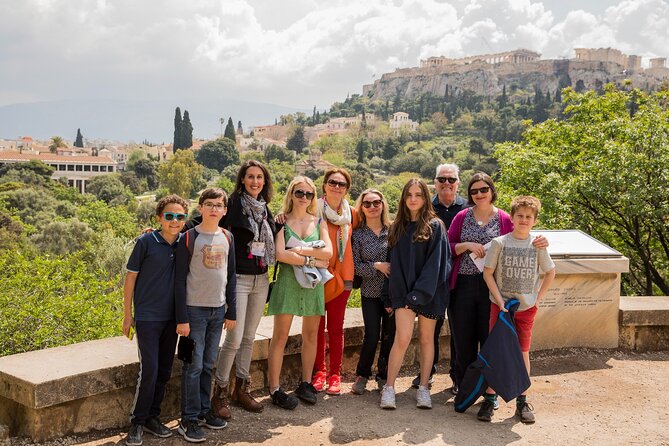
I would choose this experience for a family with children between five and eleven who already enjoy stories about gods, heroes, and ancient worlds. It is also a smart choice if your children need a clear activity to make archaeological sites meaningful.
It suits parents who want a licensed guide but do not want to manage a large group. The combination of the Acropolis and Pnyx gives you both famous monuments and a more active learning session.
I would hesitate if your children are teenagers, if your budget is tight, or if you expect admission to be included. I would also think twice if your family prefers a relaxed museum visit to outdoor walking in the sun.
Should you book it?
Book this tour if mythology is the hook that will keep your children interested in Athens. The Acropolis sights are essential, but the real value is the way the guide connects them to stories and then gives your family an interactive hour at Pnyx.
Skip it if you want the lowest-cost way to see the monuments, or if your children are older than the recommended age range. For the right family, the private format can turn a demanding archaeological visit into a clear, memorable three hours. For everyone else, the price may be more than the experience delivers.
FAQ
How long does the Athens Mythology Family Tour last?
The tour lasts approximately three hours. About two hours are spent at the Acropolis and about one hour at Pnyx.
What sites are visited at the Acropolis?
The tour includes the Theater of Dionysus, Propylaea, Erechtheion, Temple of Athena Nike, and Parthenon.
Is Acropolis admission included in the price?
No. Entry fees are not included. The operator can pre-purchase tickets for you if requested.
What age group is this tour best suited for?
The tour is more suitable for children ages five to eleven. Families with older children are advised to consider the Athens Highlights: a Mythological Tour instead.
Is this a private tour?
Yes. Only your group participates in the private tour or activity.
Where does the tour start and end?
The tour starts at the Acropolis in Athens and ends at Pnyx, Athens 117 41, Greece.
Can I cancel for a full refund?
Yes. You can cancel at least 24 hours before the experience start time for a full refund. Cancellations or changes made less than 24 hours in advance are not refunded or accepted.
Newly reviewed around Athens
- Athens: workshop for painting landscape with local artist★ 4.6 · 3 reviews
- Athens: Greek Wine & Olive Oil Tasting at Brettos Plaka★ 4.5 · 3 reviews
- Outdoor Yoga and Pilates with Akropolis view★ 4.0 · 5 reviews
- Acropolis of Athens: 60′ Tour in a Vintage Motorcycle★ 5.0 · 4 reviews
- Ultimate Tasting of the Volcanic Wines of Greece★ 5.0 · 3 reviews
- workshop for painting acropolis/landscape with local artist★ 5.0 · 3 reviews
- Athens at Twilight Night Tour with Drinks and Meze Dishes★ 4.8 · 4 reviews
- Breakfast in the markets with olive oil and honey tasting★ 4.8 · 8 reviews
Athens Mythology Tours, compared.
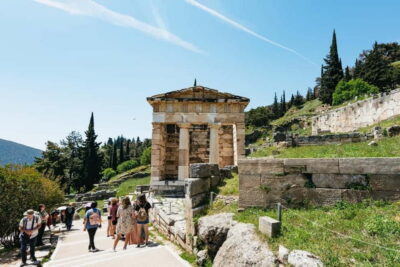
Mythology of Delphi, Museum and Arachova Guided Tour
Read our review →
Athens & Acropolis Highlights: Greek Mythology Small-Group Tour
Read our review →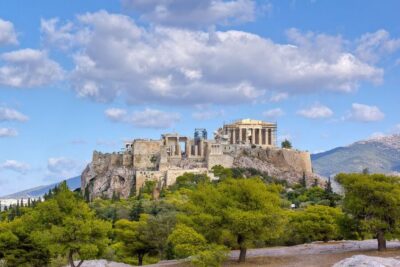
Acropolis and Mythology Highlights Small Group Tour
Read our review →
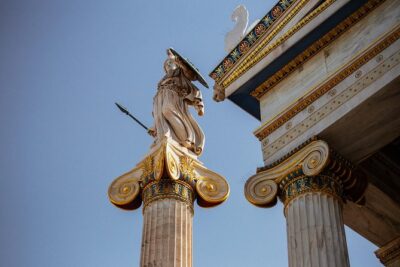
The History of Athens: Greek Mythology Private Tour
Read our review →
Athens Highlights: Myths & Philosophers Walking Tour
Read our review →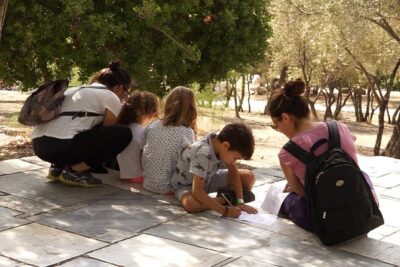
Greek Mythology Treasure Hunt for Kids – Athens Private Tour
Read our review →
Browse the lists this tour appears in