
Reviewed · ATHENS PHILOSOPHY TOURS
Philosophy Experiential Workshop at Aristotle’s Lyceum, Athens
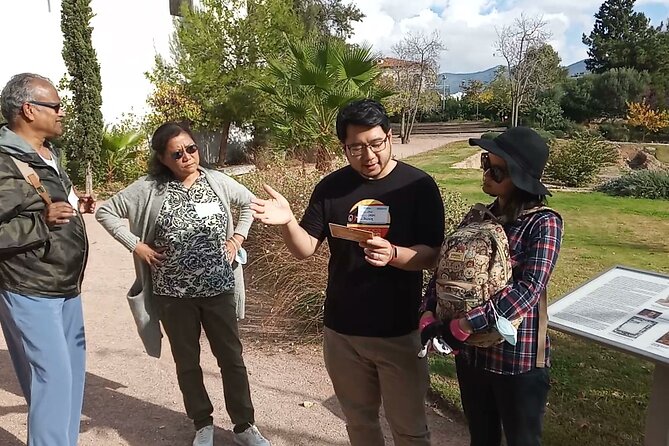
Aristotle’s Lyceum is not just a ruin to glance at before moving on. This small-group philosophy workshop uses the site as a classroom, with discussion, walking, and simple ethical games that connect ancient ideas to daily life.
I like the calm start beneath the trees in Rizari Park, and I like the way the session makes philosophy usable rather than academic. Alex and Eva have both been praised for making questions feel easy to ask and for shaping the discussion around the people in the group.
The main thing to consider is that this is not a guided sightseeing tour. You pay $54.01 per person, then pay another €5 for entry to the Lyceum. You also need decent weather, since much of the experience takes place outdoors.
Key points about this Athens philosophy workshop
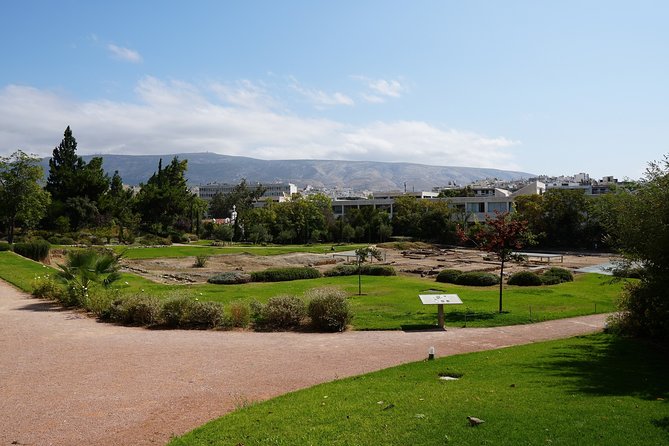
- Walk where Aristotle taught: The session moves from Rizari Park into the archaeological site of Aristotle’s Lyceum.
- Designed for beginners: Terms are explained in plain English, with examples rather than heavy academic language.
- A real discussion, not a lecture: You take part in ethical questions, a virtue-choice game, and group conversation.
- Small groups help: The maximum is 10 people, with a private option available for your own group.
- The golden mean gets practical: You explore how Aristotle saw virtue as a balanced position between excess and deficiency.
- Budget for the site ticket: The €5 Lyceum admission is not included in the workshop price.
Why Aristotle’s Lyceum works better as a classroom than a quick stop
Athens gives you plenty of famous monuments, but this experience asks you to slow down and think. The Lyceum was the school founded by Aristotle, and the workshop uses its paths in a way that fits the place. Ancient students and teachers were associated with walking discussions, so you are not simply standing in front of stones while someone recites dates.
The focus is Aristotle’s idea of eudaimonia, often explained here as a life well-lived. That does not mean a life of constant pleasure. It asks what kind of habits, choices, and character help a person live well over time.
That question gives the session a useful shape. You are not expected to remember a list of philosophers or arrive with a university background. You are asked to consider familiar problems, explain your choice, and listen to other ways of looking at the same problem.
I like this approach for a first meeting with Greek philosophy. It gives you enough background to understand the discussion, but it does not turn the morning or afternoon into a classroom lecture.
More philosophy walks in Athens:
- Philosophy and Democracy tour of Athens
★ 5.0 · 285 reviews - Athens Highlights: Myths & Philosophers Walking Tour
★ 5.0 · 125 reviews - Athens: Philosophy and Democracy Walking Tour
★ 5.0 · 91 reviews
Starting beneath the trees at Rizari Park
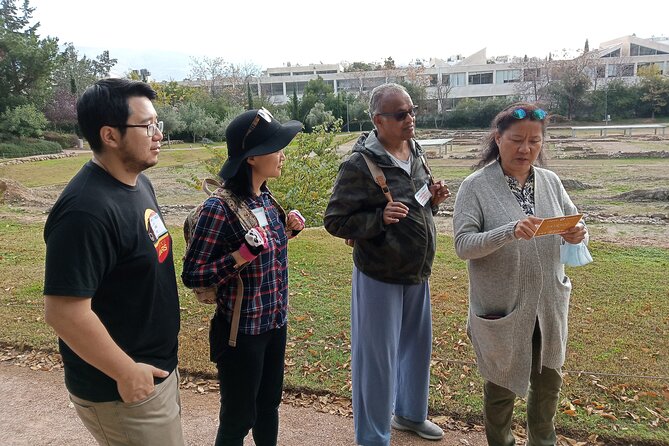
The meeting point is Vasilissis Sofias 24, near Rizari Park in central Athens. The session begins in the park, where the facilitator lays out a short timeline linking Socrates, Plato, and Aristotle.
This opening matters because Aristotle makes more sense when you see where he fits. Socrates is connected with questioning accepted ideas. Plato, his student, developed a more formal philosophical tradition. Aristotle, Plato’s student, looked closely at ethics, politics, nature, logic, and how people actually live.
You get this background in a short and accessible form. The stated aim is not to teach every part of ancient Greek philosophy. It is to give you a working map before you enter the Lyceum.
The park setting should help keep the tone relaxed. You are under the trees, not seated in a formal lecture hall, and the workshop encourages questions from the start. That is useful if you feel unsure about speaking in a group or worry that you lack the right vocabulary.
Still, remember that this is an outdoor activity. Athens can be hot, and shade does not remove the need for water, sensible clothing, and protection from the sun. If the weather is poor, the experience may be canceled at least three hours ahead, with the choice of another date, a similar workshop, or a full refund.
Walking into Aristotle’s Lyceum
From Rizari Park, the group walks to the nearby Archaeological Site of Lyceum. The entry fee is €5 per person and is paid separately, so include it in your budget when comparing this with other Athens activities.
The site itself is important, but the value here comes from using it as part of the conversation. You follow paths associated with Aristotle’s school while discussing the choices and habits that shape a good life. The walk gives the ideas a physical setting, which can make them easier to remember than information delivered indoors.
Do not book this expecting a full archaeological explanation of every remaining feature. The experience is built around philosophy, not a standard site tour. If you want detailed excavation dates, architectural analysis, or a long account of the ruins, you may find the format too light.
If you want to connect an ancient place with a modern question, the design makes more sense. You can look at the site, then consider what Aristotle’s ideas mean for school, work, family life, ambition, or personal responsibility.
The group is limited to 10 people. That is a practical advantage for a discussion-based session. A large crowd would make it difficult for everyone to speak, while a smaller group gives the facilitator more room to respond to different opinions.
The virtue-choice game and Aristotle’s golden mean
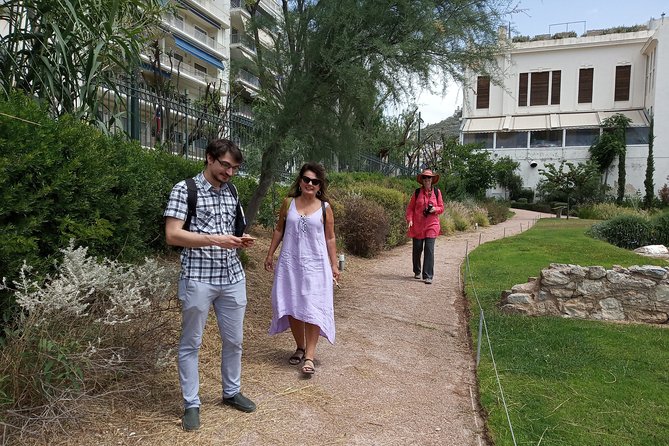
One of the livelier parts is a virtue-choice game built around ethical dilemmas. The point is not to find a single answer that everyone must accept. Instead, you explore how a decision might reflect courage, honesty, generosity, self-control, or another quality.
This leads into Aristotle’s idea of the golden mean. In simple terms, virtue often sits between two damaging extremes. Courage, for example, is not the same as charging into every danger, nor is it the same as avoiding all risk. The useful choice may lie between recklessness and cowardice.
That sounds abstract until you apply it to a situation. The workshop’s interactive format lets you test the idea with real choices and hear how other people reason. One person may focus on intention, another on results, and another on the effect a choice has on other people.
I see this as one of the strongest reasons to book the experience. You are not merely told what the golden mean means. You get a chance to see how difficult balance can be.
The format also gives teenagers and families a way into the subject. The activity is suitable for adults and teenagers over 14, and the language is intended for people without previous philosophy study. A minor cannot book alone and must attend with an adult who supervises them.
More hands-on workshops in Athens:
- Athens: Classic Cooking Class with Market Visit and Wine
★ 5.0 · 1,101 reviews - Athens: Food Market Visit and Cooking Class with Wine
★ 4.9 · 1,087 reviews - Greek Cooking Class in Athens Including Rooftop Dinner with Acropolis View
★ 5.0 · 826 reviews - Greek Small-Group Athens Cooking Class & Dinner
★ 5.0 · 574 reviews
Finishing at the open-air amphitheater
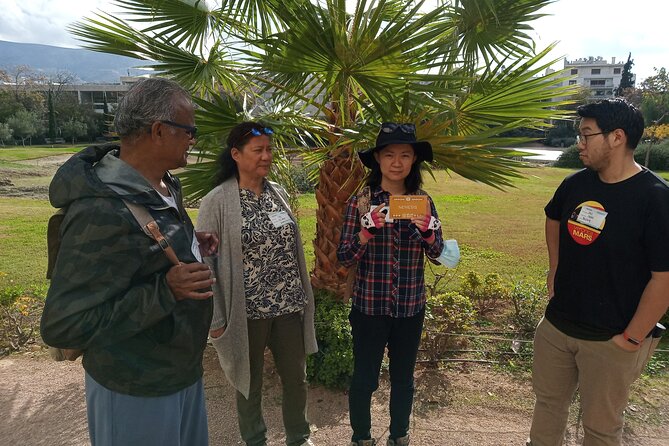
The final gathering takes place at a small open-air amphitheater overlooking the ruins. Here, the group reads selected passages from Aristotle, including some in Ancient Greek, then reflects on why the ideas still matter.
The Ancient Greek reading is a nice touch, but you do not need to understand Ancient Greek. The activity is presented in English, and the workshop explains its terms in plain language. The original language gives you a sense of the texts as historical works without making the session inaccessible.
The closing discussion is a chance to pull the strands together. You have heard about Socrates, Plato, and Aristotle, walked through the Lyceum, and considered virtue in practical situations. The final reflection asks you to connect those ideas with your own view of a worthwhile life.
That is also where the experience may feel personal. Facilitators such as Alex and Eva have been noted for their communication skills, warm manner, and ability to adjust the discussion to the group. Eva, in particular, has been praised for personalizing the session, while Alex has been described as encouraging questions and making beginners comfortable.
Because the session depends on conversation, your experience will partly depend on the people who attend and the facilitator leading that date. Some groups may be lively and talkative. Others may need more prompting. The 10-person limit helps, but it cannot guarantee the same rhythm every time.
The optional hour on Plato
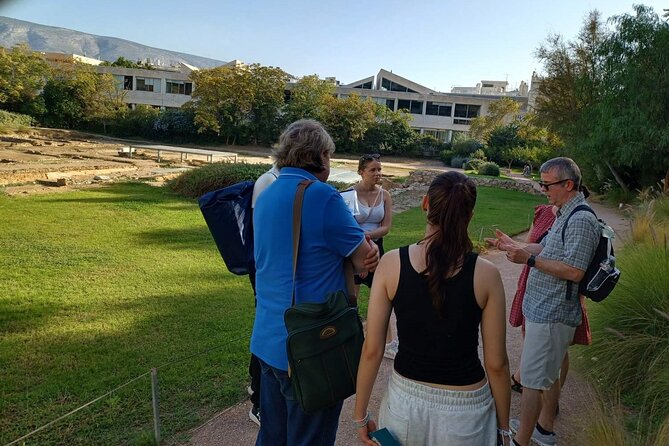
You can add an extra hour focused on Plato’s philosophy. This extension includes an interactive debate about an ethical dilemma, giving you more time with the ideas introduced during the main session.
The added hour makes sense if you enjoy discussion and want a broader comparison between Plato and Aristotle. It is less necessary if you mainly want a short introduction to the Lyceum or have a packed Athens schedule.
The standard workshop lasts about 1 hour and 45 minutes. That is long enough for a meaningful exchange without taking over your day. If you add the Plato session, plan for a longer commitment and make sure you have room in your schedule.
What the $54.01 price gives you
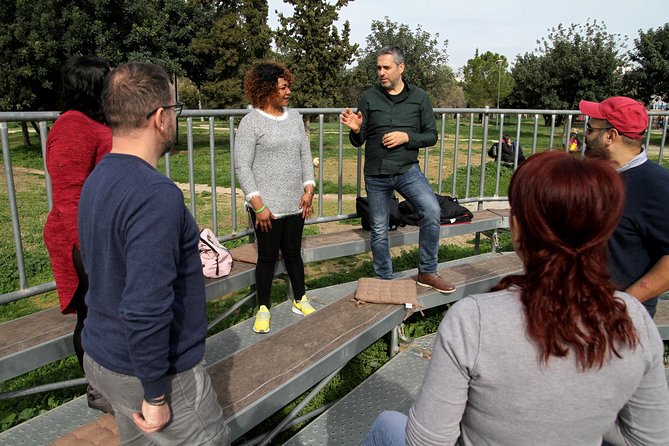
At $54.01 per person, this is not the cheapest way to spend two hours in Athens. The price includes the expert facilitator, liability insurance, and local VAT, but not the €5 entry ticket to Aristotle’s Lyceum.
The value depends on what you want from a cultural activity. If you only want to see the ruins, you can visit the archaeological site without paying for a workshop. If you want context, conversation, and a chance to test the ideas rather than simply hear about them, the additional cost has a clear purpose.
The group cap also matters. You are paying for a small, guided discussion rather than a large presentation. A private version is available if you want the conversation limited to your own group, though the supplied information does not give a separate price for that upgrade.
I would compare this with the cost of a typical short Athens tour by asking one question: do you want facts, or do you want participation? This experience leans strongly toward participation.
Who will get the most from this experience
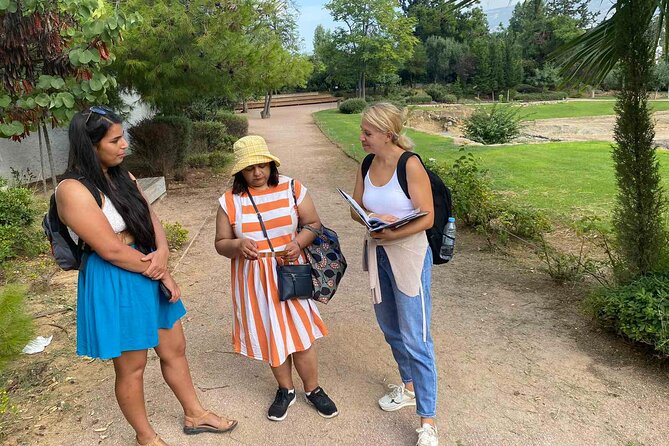
I would choose this workshop if you enjoy asking questions, discussing moral choices, or finding a different way to experience an archaeological site. It suits couples, families with older teenagers, educators, and curious adults who want more than a quick photograph among ruins.
It is also a good option if you have little or no philosophy background. The language is plain English, and the facilitator explains terms through examples. You do not need to read Aristotle before arriving.
You may want to skip it if you prefer a quiet, self-guided visit or a traditional historical tour packed with dates and architectural detail. The session asks you to speak, listen, and think. Someone looking for a passive activity may find that effort unnecessary.
The setting also requires basic planning. Wear suitable clothing for an outdoor historical site, bring any medication you need, and be prepared for sun or changing weather. Service animals are allowed, and the meeting point is near public transportation.
Booking, conduct, and cancellation details
The workshop is offered in English and confirmation is provided when you book. It is free to cancel up to 24 hours before the start time for a full refund. Cancellations or changes made less than 24 hours before the experience are not accepted for a refund.
The Lyceum is a heritage site, so respectful conduct is required. That includes appropriate dress, reasonable noise, cleanliness, and considerate photography or video. The facilitator can end participation without a refund if someone behaves disrespectfully toward the place or other people.
Because the session takes place in a public space, photographs or videos may be taken during the activity. You can withdraw consent by contacting the provider in writing, but the provider is not responsible for images made or used by other participants.
Should you book the Aristotle’s Lyceum workshop?
Book it if you want Athens to raise a question rather than simply provide a backdrop. The walk through the Lyceum, the virtue-choice game, and the open-air discussion give Aristotle’s ideas a practical shape.
I especially recommend it for beginners, older teenagers, and people who prefer conversation to a standard lecture. The price is fair for a small English-language workshop, but remember the separate €5 site admission and the need for good weather.
Skip it if you want a detailed archaeological tour or do not enjoy group discussion. For everyone else, this is a thoughtful way to spend 1 hour and 45 minutes in Athens, with a good chance of leaving not just with facts about Aristotle, but with a question about how you want to live.
FAQ
Is this a guided tour of Aristotle’s Lyceum?
No. It is a philosophy experience rather than a conventional guided tour. The focus is discussion, ethical questions, Aristotle’s moral theory, and applying philosophical ideas to real life.
How long does the workshop last?
The main experience lasts approximately 1 hour and 45 minutes. An optional extra hour focused on Plato’s philosophy is also available.
Is admission to Aristotle’s Lyceum included?
No. The archaeological site admission costs €5 per person and is not included in the workshop price.
Do I need previous knowledge of philosophy?
No. The workshop is designed for people without previous philosophy knowledge. The facilitator explains terms in plain English and uses examples.
Is the experience suitable for teenagers?
Yes. It is suitable for adults and teenagers over 14. Underage participants cannot book alone, and an adult must attend and supervise them.
What happens if the weather is poor?
Because the workshop takes place outdoors, it may be canceled in poor weather. You will be notified at least three hours ahead and offered another date, a similar workshop, or a full refund.
Newly reviewed around Athens
- Athens: Greek Wine & Olive Oil Tasting at Brettos Plaka★ 4.5 · 3 reviews
- Athens: workshop for painting landscape with local artist★ 4.6 · 3 reviews
- Outdoor Yoga and Pilates with Akropolis view★ 4.0 · 5 reviews
- Acropolis of Athens: 60′ Tour in a Vintage Motorcycle★ 5.0 · 4 reviews
- Ultimate Tasting of the Volcanic Wines of Greece★ 5.0 · 3 reviews
- workshop for painting acropolis/landscape with local artist★ 5.0 · 3 reviews
- Athens at Twilight Night Tour with Drinks and Meze Dishes★ 4.8 · 4 reviews
- Breakfast in the markets with olive oil and honey tasting★ 4.8 · 8 reviews
Athens Philosophy Tours, compared.


Athens Highlights: Myths & Philosophers Walking Tour
Read our review →
the Great Greek Philosophers Guided Tour in Spanish
Read our review →
Philosophy Experiential Workshop at Plato’s Academy Park -Athens
Read our review →
Athens Highlights: Myths & Philosophers Private Walking Tour
Read our review →
Browse the lists this tour appears in