
Reviewed · ATHENS PHILOSOPHY TOURS
Athens: Stoic Philosophy and Wine
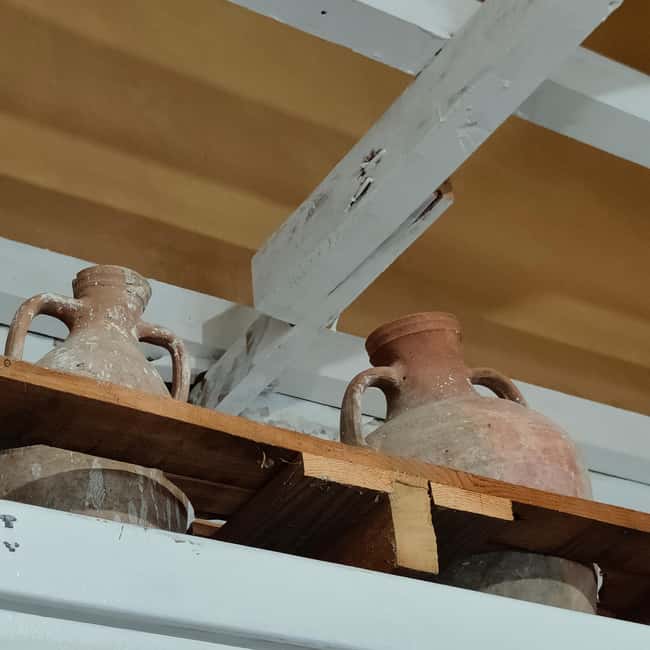
Stoicism gets a practical Athens treatment here. Over a glass of Greek wine, you discuss how ideas from around 300 BC, later shaped by Seneca and Marcus Aurelius, might help with modern frustration and daily pressure. I like the mix of serious philosophy and simple pleasure, and I like that the setting is a small wine and olive oil bar rather than a classroom.
I also like the focus on Greek grape varieties, which gives the conversation a local taste as well as an intellectual one. The main drawback is the short 45-minute format: it is enough for a lively introduction, but not enough for a full philosophy course or a long tasting.
Key points to know before booking
- Stoicism in its birthplace: Explore a school of thought that began in Athens around 300 BC.
- Wine with a purpose: Taste Greek wines while discussing ways to approach everyday problems.
- Ancient grape varieties: Learn about Greek wine through varieties connected to the country’s long wine tradition.
- A small, social setting: The group is limited to 10 people, making conversation easier.
- A personal host: Antonio leads the session in English or Greek and brings his own experience into the discussion.
- A quick central Athens stop: The activity lasts 45 minutes, so it fits neatly between sightseeing plans.
Why this short Athens session feels different
Most Athens activities ask you to look outward, at temples, streets, monuments, and museums. This one asks you to look inward. The subject is Stoic philosophy, but the goal is not to memorize names or repeat schoolbook definitions. You are encouraged to think about how you respond to pressure, disappointment, and the parts of life you cannot control.
That makes the session useful for someone who wants more than another ancient site. You still get a link to classical Athens, but the conversation moves from the ancient world to your own routines. The central question is practical: can an old way of thinking help you live with a little more calm and purpose?
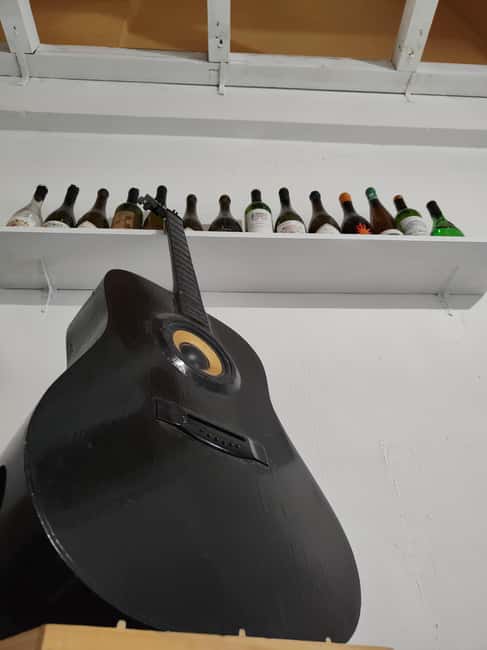
The setting helps. You meet in an atmospheric wine and olive oil bar, where wine and small bites make the discussion feel social instead of formal. This is not a walking tour, so you will not see the Acropolis or visit a monument during the 45 minutes. Instead, you get a quiet pause from the usual sightseeing rhythm.
The activity is led by Antonio, also referred to as Anton in the description. He speaks English and Greek, and the format gives him room to guide a real conversation rather than deliver a memorized speech. One especially useful feature is that he connects philosophy with personal experience, which can make the subject easier to understand than a standard lecture.
More philosophy walks in Athens:
- Philosophy and Democracy tour of Athens
★ 5.0 · 285 reviews - Athens Highlights: Myths & Philosophers Walking Tour
★ 5.0 · 125 reviews - Athens: Philosophy and Democracy Walking Tour
★ 5.0 · 91 reviews
Stoicism from Athens to Rome
Stoicism began in Athens around 300 BC. The school later found a strong audience in the troubled Roman world, especially through Seneca and the Emperor Marcus Aurelius. That path from Greek beginnings to Roman practice forms the historical backbone of the session.
You will likely hear about Stoicism as a way of approaching reality, not as a demand to suppress every emotion. The central appeal is its attention to judgment, self-control, and the difference between what you can change and what you cannot. Those ideas can sound simple, but they become more useful when discussed through ordinary frustrations.
The activity is aimed at people looking for ways to improve daily life and move away from a constantly frustrated routine. That focus matters. You do not need a university background in philosophy, and you do not need to know the works of Seneca or Marcus Aurelius before you arrive.
I would choose this session if you enjoy asking questions and comparing ideas. It works less well if you want a tightly scripted historical presentation with dates, monuments, and a long list of facts. The host’s personal approach is part of the appeal, but it also means the tone may feel more like a guided conversation than a formal academic lesson.
A wine bar instead of a lecture hall
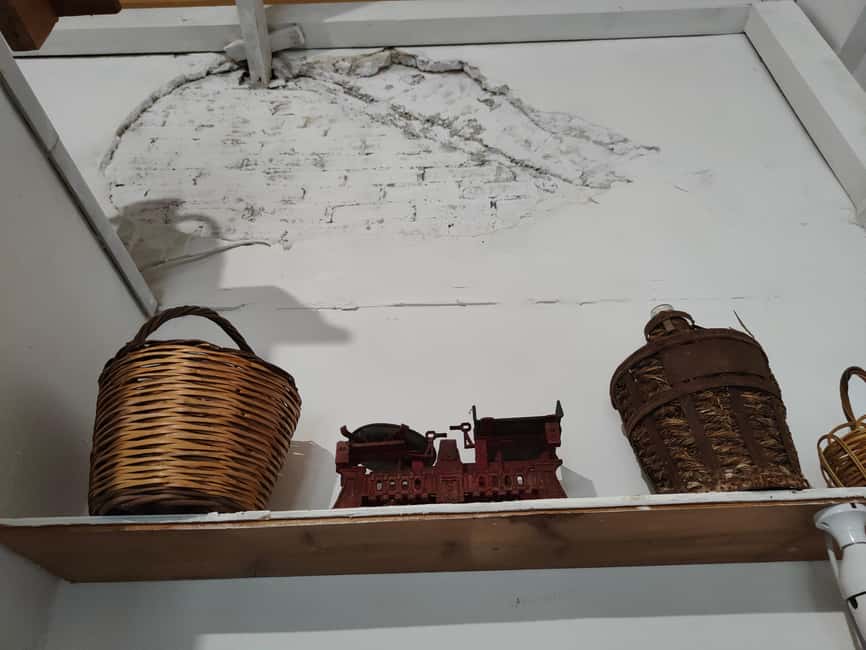
The wine and olive oil bar is an important part of the design. The drink is not simply an extra included with the talk. It gives everyone a shared starting point and keeps the atmosphere relaxed.
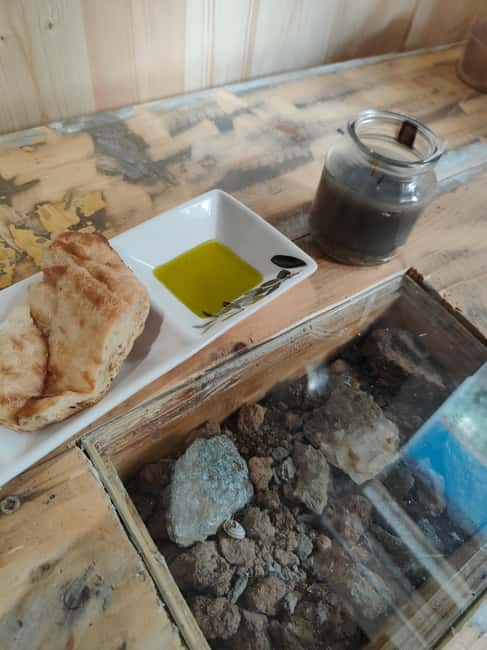
You can expect a glass of wine and ancient nibbles while the discussion develops. The food is described as small bites rather than a meal, so you should not book this as a substitute for lunch or dinner. Think of it as a light tasting alongside the conversation.
Wine also connects the modern session to Greek culture in a direct way. Ancient Greek life gave wine a major social and cultural role, and the setting lets you consider ideas while doing something ordinary and local. You are not only hearing about Greece. You are tasting a small part of it.
The relaxed setting has one practical limitation. A wine bar may suit you if you like talking with new people, but it may not be ideal if you want complete silence or a private one-on-one lesson. The group can include up to 10 participants, so the format is small but still social.
Greek wine and ancient grape varieties
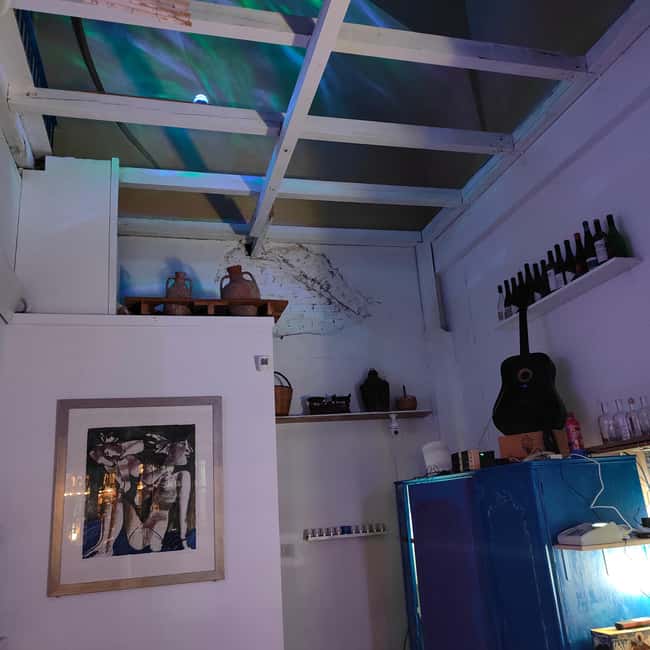
The wine portion focuses on Greek grape varieties, including varieties described as ancient. This is a useful addition because many Athens sightseeing plans mention Greek food and wine only in passing. Here, the wine is part of the subject.
The available information does not specify the exact labels, regions, or number of pours, so you should not expect a detailed winery-style tasting menu. What you can count on is an introduction to Greek wine through tasting and conversation. If you are curious about local varieties, this gives you a starting point for choosing wine later during your stay.
I like this approach because it avoids separating culture into neat boxes. Philosophy, history, food, and wine sit at the same table. That combination can tell you something about how ideas were shared in the ancient world, while still giving you a pleasant break in the present.
People with nut allergies should not book this activity. Nuts may be present in the ancient nibbles, and the activity is specifically listed as unsuitable for people with nut allergies. The minimum age is 19, so this is an adults-only experience.
More wine tastings around Athens:
- Athens: Classic Cooking Class with Market Visit and Wine
★ 5.0 · 1,101 reviews - Athens: Food Market Visit and Cooking Class with Wine
★ 4.9 · 1,087 reviews - Athens: Swimming Cruise with Lunch, Wine & Live DJ on Board
★ 4.6 · 1,085 reviews - Best rated Acropolis Wine Tasting
★ 5.0 · 568 reviews
What the 45 minutes are likely to feel like
The short length is both a strength and a limit. At 45 minutes, the session is easy to fit into a busy day in Athens. You could place it between major sightseeing stops, use it as a break from the heat, or schedule it before an evening meal.
You should expect a compact introduction rather than a long, staged itinerary. There are no transport sections, museum entries, or multiple stops. You arrive at the specified location, enter, and say your name. The meeting point is identified by the coordinates 37.984947204589844, 23.731922149658203, so check the map carefully before setting out.
The likely flow is simple:
- You arrive at the central Athens venue and check in by giving your name.
- Antonio introduces the main Stoic ideas and their Athenian origins.
- The discussion moves through Stoicism’s later Roman figures, including Seneca and Marcus Aurelius.
- You taste Greek wine and small ancient-inspired nibbles.
- You connect the philosophy to daily habits, frustration, and personal choices.
- You leave with a short introduction rather than a complete study of Stoic thought.
That compact flow suits you if you want one strong theme without giving up half a day. It will not suit you if you expect a broad Athens tour or a full meal.
The value of a small group
The group limit is 10 people. That number is large enough to create a lively exchange, but small enough for the host to hear questions and keep the discussion moving.
Group size matters more here than it would on a simple sightseeing transfer. The value comes from conversation. If everyone remains silent, you receive a short talk. If people ask questions and share examples, the session becomes much more personal.
The format also makes it easier to meet people outside your own travel party. You may be sitting with people who have very different reasons for booking: some may be interested in ancient Greece, others in self-improvement, and others in Greek wine. That mixture can give the discussion more range.
Still, a small group does not guarantee a private conversation. If you want the host’s attention throughout, or if you prefer not to speak in front of others, you may find a private activity more comfortable. The available format is designed for shared discussion.
What makes Antonio’s role important
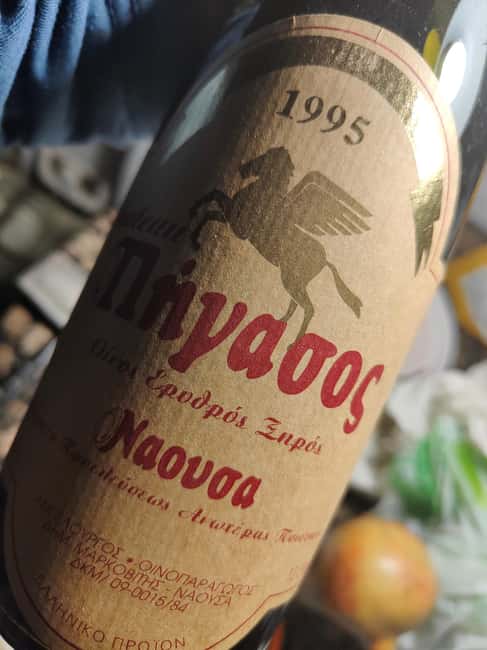
The host is central to this activity. The description presents Antonio as someone who speaks from personal experience and brings clear enthusiasm to the subject. That matters because Stoicism can easily become dry when reduced to names, dates, and quotations.
A good host can show how the ideas connect to real decisions. Instead of treating Seneca and Marcus Aurelius as distant figures, Antonio can help you consider why their thinking still attracts people dealing with stress and uncertainty. The activity is designed around that bridge between ancient thought and present-day life.
The tone also seems well suited to people who are new to philosophy. You are not expected to arrive with a reading list. If you already know Stoicism, you may find the short session too basic, but you can use the conversation to ask more specific questions.
The strongest reason to book is the combination of host-led discussion, wine, and a small group. You are not simply passing through an ancient subject. You are given time to consider what it might mean for you.
Where it fits in an Athens itinerary
This activity makes the most sense as a short cultural pause. It does not replace an Acropolis visit, an archaeology museum, or a walking tour of Athens. Instead, it adds a different kind of understanding to a city often seen only through its ruins.
I would consider booking it after you have spent some time with Athens’ ancient sites. Once you have seen temples and learned the names of major figures, a conversation about the ideas behind the ancient world can add meaning. You can also book it early in your stay if you want a thoughtful introduction before visiting more sites.
The 45-minute duration gives you flexibility. Since no transportation is included or required, you are responsible for reaching the venue on your own. Use the exact meeting point and allow enough time to locate the bar in central Athens.
The activity is also a reasonable choice for a rainy afternoon or a day when you need to reduce the pace. You sit, taste wine, and talk. That change of rhythm can be welcome after several hours of walking on stone streets and climbing archaeological sites.
Price and booking value
No price is provided here, so I cannot judge the exact cost against other Athens activities. The value depends on what you want from the session.
If you are mainly buying wine, the 45-minute format may not feel like enough. If you are paying for a guided conversation that combines Greek culture, ancient history, wine, and practical philosophy, the experience offers more than a standard tasting.
The small group and named host add value because the activity depends on personal contact. A large group would make it harder to discuss private reactions or ask follow-up questions. The short length also keeps the commitment low, which helps if you are unsure whether philosophy belongs in your Athens plans.
Booking terms are flexible. You can reserve now and pay later, and you can cancel up to 24 hours before the activity for a full refund. Check the available start times when booking, since the duration is fixed at 45 minutes.
Who should book this experience
I would recommend it to you if you:
- Want a thoughtful break from monuments and standard sightseeing.
- Are curious about Stoicism but have never studied it in depth.
- Enjoy Greek wine and want to learn about local grape varieties.
- Prefer small groups and conversation.
- Are interested in applying old ideas to modern daily life.
- Have at least 45 minutes available in central Athens.
I would think twice if you want a long wine tasting, a substantial meal, a walking tour, or a formal academic lecture. The program is short and conversational. Its success depends on your interest in taking part, not just sitting back.
It is also not suitable for anyone under 19 or anyone with a nut allergy. Those restrictions are firm practical points, not minor details.
Should you book Athens: Stoic Philosophy and Wine?
Book it if you want Athens to be more than temples and photographs. The session gives you a pleasant glass of Greek wine, a taste of ancient-style nibbles, and a direct way to think about Stoicism’s Athenian roots.
The strongest part is the combination of Antonio’s personal conversation and the small group setting. You can leave with a clearer sense of why Stoicism still appeals to people, along with a better starting point for exploring Greek wines.
Skip it if you need a full meal, a long tasting, or a detailed tour of physical sites. For the right audience, though, this is a compact and memorable way to connect ancient Greek thought with ordinary modern life.
FAQ
How long does Athens: Stoic Philosophy and Wine last?
The activity lasts 45 minutes.
Where is the meeting point?
The activity takes place at the specified central Athens address. The coordinates are 37.984947204589844, 23.731922149658203. Enter the venue and say your name.
Who leads the activity?
The host is named Antonio, and he is also referred to as Anton in the activity information.
What languages are available?
The session is offered in English and Greek.
How many people can join the group?
The group is limited to 10 participants.
What does the activity include?
You can expect a discussion of Stoic philosophy, a glass of wine, ancient nibbles, and an introduction to Greek ancient grape varieties.
Is the activity suitable for people under 19?
No. People under 19 are not permitted to join.
Can people with nut allergies participate?
No. The activity is listed as unsuitable for people with nut allergies.
Can I cancel or pay later?
You can cancel up to 24 hours in advance for a full refund. You can also reserve your place and pay later.
Newly reviewed around Athens
- Feel Ancient thermal Spa Visit Delphi, Leonidas ℨoo Spaʀtan★ 5.0 · 4 reviews
- Food Tour★ 5.0 · 3 reviews
- Explore the Hidden Food Gems of Athens★ 5.0 · 57 reviews
- Food Experience in Athens including Unlimited Lunch★ 5.0 · 3 reviews
- Eat Your Way Through Athens: A Local Food Walk★ 4.9 · 97 reviews
- From Athens: Delphi Private Tour with Lunch Time★ 4.0 · 3 reviews
- Delphi: Spanish guided one day tour★ 4.6 · 55 reviews
- Early Entry Acropolis & Museum. Beat the Crowds & the heat★ 5.0 · 3 reviews
Athens Philosophy Tours, compared.


Athens Highlights: Myths & Philosophers Walking Tour
Read our review →
the Great Greek Philosophers Guided Tour in Spanish
Read our review →
Athens Highlights: Myths & Philosophers Private Walking Tour
Read our review →

Aristotle’s Philosophy Experiential Workshop, Lyceum, Athens
Read our review →Browse the lists this tour appears in