
Reviewed · ATHENS PHILOSOPHY TOURS
Philosophy Experience at Plato’s Academy Park – basic version
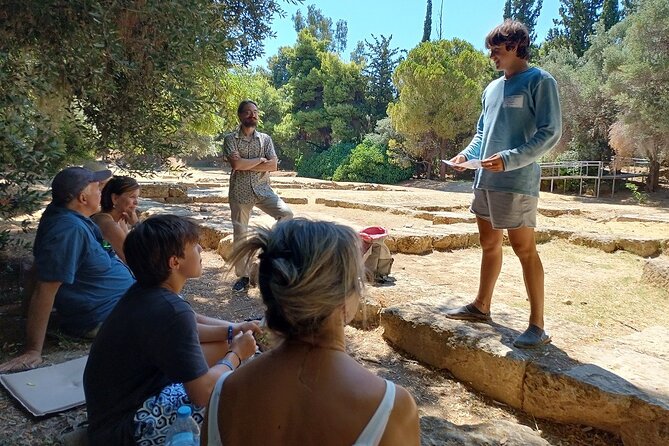
Plato’s Academy Park is not just a place to look at old stones. Here, you sit near the ruins of the ancient Gymnasium and take part in a guided debate about Plato’s Allegory of the Cave, using modern examples rather than a lecture full of dusty terms. It is a rare Athens activity where the main attraction is your own thinking.
I like the small maximum group of 10, which gives you a real chance to speak, and I like the setting under shaded trees on the remains of the world’s first Academy. The free digital museum is a useful opening, though some screens may not work and the museum can close without notice.
The $495 price deserves a careful look because the supplied details do not say whether it is charged per person or per booking. This is an educational workshop, not a conventional guided tour, so book it for discussion and participation rather than a long list of monuments.
Key points at a glance
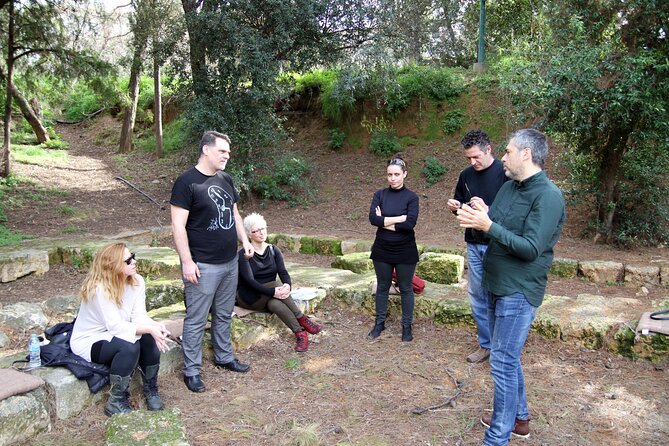
- A debate on Plato’s Cave: Apply a famous philosophical idea to real modern-life situations through questions and discussion.
- Ancient Gymnasium setting: Sit on foundation stones near the ruins where young people once trained and philosophers gathered.
- Small group of up to 10: The format makes it easier to speak, ask questions, and stay involved.
- Free digital museum visit: Begin with screens, wall displays, and videos, although technical closures are possible.
- Plain English for first-timers: You do not need previous study of philosophy, and difficult terminology is avoided.
- Designed for ages 15 and older: Teenagers may join with an adult, making this a thoughtful family option.
Why this Athens workshop feels different
Most Athens tours ask you to listen, look, and move on. This one asks you to form an opinion, explain it, test it, and listen to someone else challenge it. That change matters. You are not simply receiving information about Plato. You are using one of his methods.
The session lasts about two hours and remains in the Plato’s Academy area. It begins at the digital museum, then continues with a walk of roughly 300 meters through the archaeological park. The main discussion takes place outdoors, near the ancient Gymnasium ruins, under shaded trees.
The basic version is led by a junior facilitator. That does not mean you need to arrive with a background in philosophy. The activity is presented in plain English, and the facilitator guides the group through the process so that everyone has a chance to take part.
You should expect a social workshop, not a private lesson. The point is to exchange beliefs, experiences, and views. If you prefer to stay silent and let a guide do all the talking, this may not be your best use of time in Athens.
More philosophy walks in Athens:
- Philosophy and Democracy tour of Athens
★ 5.0 · 285 reviews - Athens Highlights: Myths & Philosophers Walking Tour
★ 5.0 · 125 reviews - Athens: Philosophy and Democracy Walking Tour
★ 5.0 · 91 reviews
Starting at Plato’s Academy Digital Museum
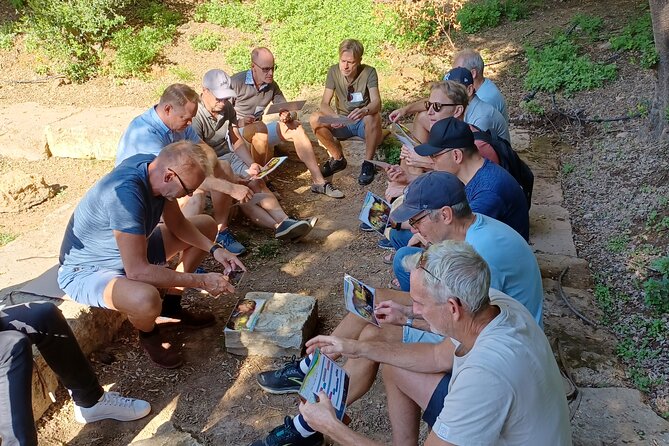
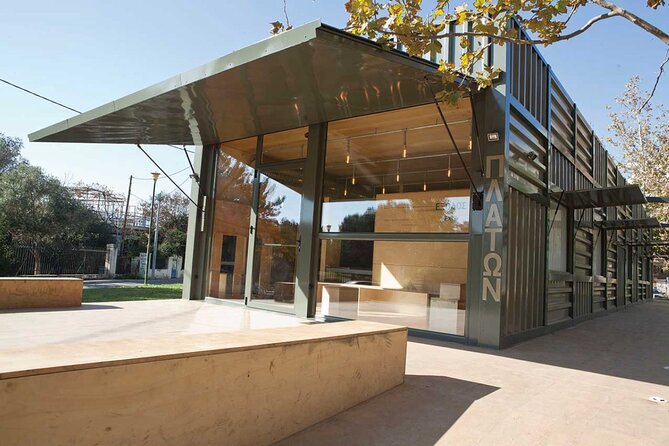
The meeting point is Plato’s Academy Digital Museum at Alkmeonos 1 in Athens. Your first stop is a short museum visit intended to prepare you for the discussion that follows.
The museum uses information on screens and walls, along with videos. Its role is practical: it gives you a basic introduction before the outdoor session begins. You can get a sense of Plato’s work and methods, then carry that background into the conversation at the park.
Do not build your whole day around the museum alone. Its opening days and hours change, and it may sometimes close without warning because of technical problems. Some screens have also been reported as not working. The workshop can still continue, and the facilitator can make the best of the available material, but you should treat the museum as a useful extra rather than the main reason to book.
The museum entrance is free as part of this experience. That is a welcome touch, especially if you want a short introduction without paying a separate admission charge.
Walking 300 meters to the ancient Gymnasium
After the museum, you walk about 300 meters through Plato’s Academy Park. This is a short distance, but the outdoor route and archaeological setting are important parts of the activity.
The session settles near the ruins of the ancient Gymnasium. In the ancient Greek world, the Gymnasium was connected with physical training and education. The site also served as a gathering place where philosophers taught young people. Sitting on or near the foundation stones gives the discussion a direct connection to the place itself.
The setting is simple. You are not entering a restored hall or a formal classroom. You sit outdoors under shaded trees, close to archaeological remains. That can make the discussion feel more grounded, but it also means comfort depends on the weather and the exact spot available.
Archaeological excavation sometimes takes place in the park. If work is underway, you may view the Gymnasium ruins from a short distance and settle elsewhere in the park. The activity does not promise one fixed seating point, so keep your expectations flexible.
Using the Allegory of the Cave today
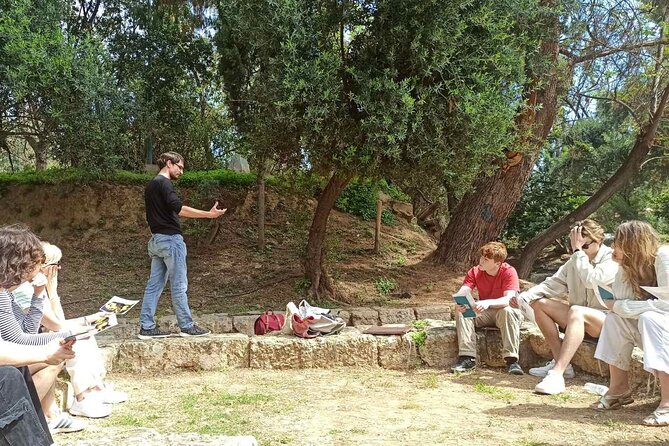
The central topic is Plato’s Allegory of the Cave. In simple terms, the allegory asks you to consider how people understand reality, how limited information shapes belief, and how difficult it can be to question what seems obvious.
You will not just hear an explanation and move on. The facilitator presents questions and modern examples, then invites you to examine your own position. You may compare your view with the rest of the group, defend it, or change it after hearing another argument.
That is where the workshop earns its place in an Athens itinerary. The ancient text becomes a tool for looking at current life. The activity description does not specify the exact modern cases used, so you should expect examples and discussion rather than a fixed scripted debate.
The tone is intended to be productive and joyful. You can take part seriously without treating the session like an academic exam. The best approach is to arrive ready to speak plainly, listen closely, and accept that the discussion may not end with one neat answer.
A different kind of day out from Athens:
- Athens: Acropolis & up to 5 Archaeological Sites Combo Pass
★ 4.4 · 12,619 reviews - Athens: Acropolis Ticket with Optional Audio or Live Guide
★ 4.2 · 11,055 reviews - Athens: Acropolis, Parthenon & Acropolis Museum Guided Tour
★ 4.8 · 9,316 reviews - Athens: Cape Sounion & Poseidon Temple Sunset Half-Day Trip
★ 4.8 · 8,241 reviews
The Socratic method without the classroom pressure
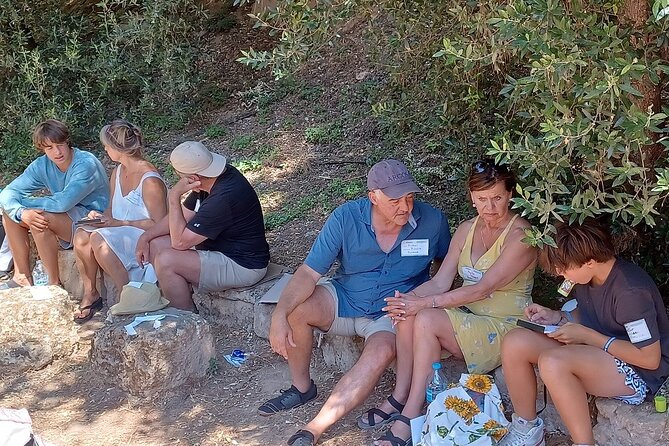
The workshop uses Socrates’ maieutic method, often described as the midwife method. The idea is that questioning helps you bring your own thoughts into the open. Instead of handing you a final answer, the facilitator uses questions to help you examine what you already believe.
You also practice Platonic dialogue techniques. That means the conversation is not simply a series of speeches. You exchange ideas and test them against real situations, personal experiences, and other opinions.
For a first encounter with philosophy, this hands-on format may be easier than reading a long text before your trip. You do not need previous knowledge, and the session avoids difficult terminology. You only need enough comfort to join a group conversation in English.
The facilitator’s job is especially important here. The session is designed so that everyone is equally involved, which helps prevent one confident speaker from taking over. Still, a small-group debate always depends on the people present. A group of three may feel more personal, while a group of 10 may bring more varied opinions but less time for each person.
One previous session with Olga was praised for guiding the discussion and making the ideas feel close to modern life. Olga may not be your facilitator for this basic version, since the basic option is hosted by a junior facilitator, but her example shows the kind of active guidance the format requires.
What the museum and reviews suggest about the experience
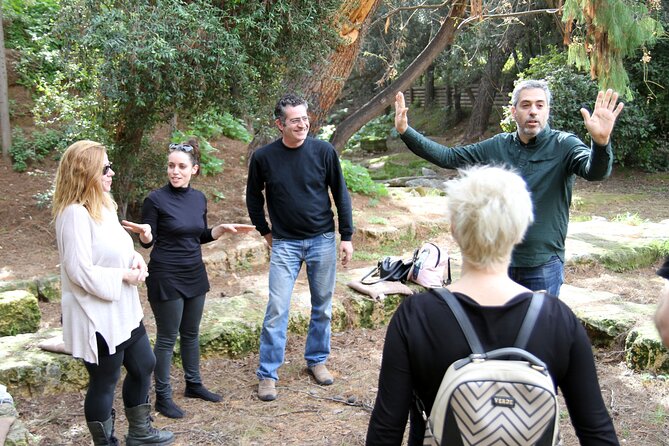
The strongest praise for this activity centers on participation. The appeal is not a polished monument tour. It is the pleasure of learning while talking, questioning, and debating in an unusual place.
One account describes a visit to the museum followed by discussion on the ancient ruins and a debate about Plato’s ideas applied to a modern case. That sequence explains the design well: the museum gives you an introduction, and the park gives you room to work with the idea yourself.
The experience also surprised at least one Greek participant who initially doubted its value for someone familiar with the country. That is useful advice. You do not need to be a foreign visitor or a philosophy student to find the workshop worthwhile. The method can offer a new way to look at a place you think you already understand.
At the same time, the museum is not guaranteed to work perfectly. Some screens have failed, and the building can close for technical reasons. If you are most interested in digital displays, that is a real drawback. If you mainly want the outdoor dialogue, the facilitator can continue with less museum material.
Price, group size, and what you are paying for
The listed price is $495, and the provided information does not clarify whether this amount applies per person or to the group. Confirm the final price before booking. That point is important because the value changes greatly depending on how the charge is calculated.
You are paying for a two-hour facilitated educational activity, not for a full-day tour, transportation, meals, or a private archaeological guide. The package includes liability insurance, the junior facilitator, and local VAT at 24 percent. The digital museum entrance is free.
The strongest value comes from the format. A group capped at 10 is small enough for a real conversation, and the setting adds something a standard indoor workshop cannot. If you enjoy philosophy, thoughtful discussion, or unusual cultural activities, the cost may make sense.
If you are comparing it with a conventional Athens sightseeing tour, remember that this does not promise a broad tour of the city or a detailed walk through every archaeological feature. The activity ends back at the meeting point. You are buying time to think and talk in a significant place.
Weather, clothing, and respectful conduct
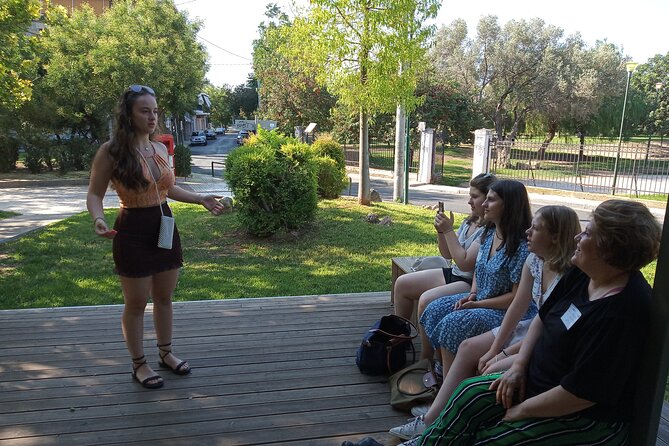
This is an outdoor experience, so good weather is required. If poor weather forces a cancellation, you will be notified at least three hours in advance and offered another date, a similar workshop, or a full refund.
Wear clothing suited to sitting outdoors and walking through an archaeological park. The exact seating location can change if excavation is underway, so practical clothes and shoes are wiser than anything formal. The supplied information does not promise chairs, so be prepared for the possibility of sitting on foundation stones or another outdoor surface.
The site requires respectful behavior. You are expected to remain sober, clean, quiet enough for the setting, and respectful of the archaeological remains and other people. Photo and video rules also matter. Since the workshop takes place in a public space, images may be recorded during the activity and later used by the organizers or other participants.
You can withdraw your consent in writing, but the provider is not responsible for pictures or videos taken and used by other people. If privacy is a major concern, ask about the process before joining.
Who will get the most from this activity
I would recommend this workshop to adults who want more than a standard archaeological stop. It also suits teenagers over 15, provided an adult books with them and supervises them. The format can work well for a family that enjoys talking through big questions instead of simply collecting photographs.
It is also a good choice for a repeat visitor to Athens. You may already have seen the Acropolis and the major museums, but this gives you a different connection to the city’s ancient intellectual life.
You should think twice if you want a guide to narrate the site from beginning to end. The provider clearly describes this as an interactive educational workshop, not a guided tour. You will be expected to participate.
The basic version may suit curious beginners, but the junior facilitator is worth noting. If you want the most senior or specialized guide available, check whether another version exists before booking. The supplied details only identify the basic option as hosted by a junior facilitator.
Service animals are allowed, and the meeting point is near public transportation. Most people can participate, but the outdoor setting, weather, and possible stone seating are practical factors to consider.
Booking flexibility and group conditions
You receive confirmation at the time of booking. Free cancellation is available if you cancel at least 24 hours before the local start time. Inside that window, changes are not accepted and the amount paid is not refunded.
The activity also requires a minimum number of participants. If the provider cancels because that minimum is not reached, you can choose another date or a similar activity, or receive a full refund.
The group maximum is 10 people. That limit is one of the activity’s best features, but it also means dates may be limited. Plan ahead if you want a specific day during a short Athens stay.
Should you book Plato’s Academy workshop?
Book it if you want a small, active, thoughtful experience that connects an ancient idea with modern life. The strongest reasons are the outdoor setting near the Gymnasium ruins, the limited group size, and the chance to use Socratic questioning rather than simply hear a lecture.
Skip it if your main goal is a conventional guided tour, a large number of archaeological sights, or a guaranteed museum visit with fully working screens. Also confirm how the $495 price is calculated before you commit.
For the right person, this is an appealing way to spend two hours in Athens. You leave with more than a few facts about Plato. You leave having tested your own assumptions, which is a fitting result for a visit to the world’s first Academy.
FAQ
How long does the Plato’s Academy workshop last?
The experience lasts approximately two hours, including the museum visit, the walk through the park, and the outdoor philosophical discussion.
Where does the activity begin and end?
It begins at Plato’s Academy Digital Museum at Alkmeonos 1, Athens 104 42, Greece. It ends back at the same meeting point.
Is this a guided archaeological tour?
No. It is an educational, interactive philosophy workshop. You will visit the museum and archaeological park, but the main focus is dialogue, debate, and applying Plato’s ideas to modern examples.
Do I need previous knowledge of Plato or philosophy?
No. The activity is designed for people without previous knowledge and is conducted in plain English without difficult terminology.
Can teenagers join?
Yes. The workshop is suitable for adults and teenagers over 15. A minor cannot book alone, and at least one adult must book and supervise them.
What happens if the weather is poor?
Because the workshop takes place outdoors, it may be canceled in poor weather. You will be notified at least three hours ahead and offered a different date, a similar workshop, or a full refund.
Can I cancel for a full refund?
Yes, if you cancel at least 24 hours before the experience starts, based on local time. Cancellations made less than 24 hours before the start time are not refunded.
Newly reviewed around Athens
- Athens: workshop for painting landscape with local artist★ 4.6 · 3 reviews
- Athens: Greek Wine & Olive Oil Tasting at Brettos Plaka★ 4.5 · 3 reviews
- Outdoor Yoga and Pilates with Akropolis view★ 4.0 · 5 reviews
- Acropolis of Athens: 60′ Tour in a Vintage Motorcycle★ 5.0 · 4 reviews
- Ultimate Tasting of the Volcanic Wines of Greece★ 5.0 · 3 reviews
- workshop for painting acropolis/landscape with local artist★ 5.0 · 3 reviews
- Athens at Twilight Night Tour with Drinks and Meze Dishes★ 4.8 · 4 reviews
- Breakfast in the markets with olive oil and honey tasting★ 4.8 · 8 reviews
Athens Philosophy Tours, compared.
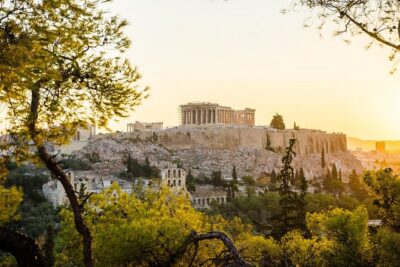

Athens Highlights: Myths & Philosophers Walking Tour
Read our review →
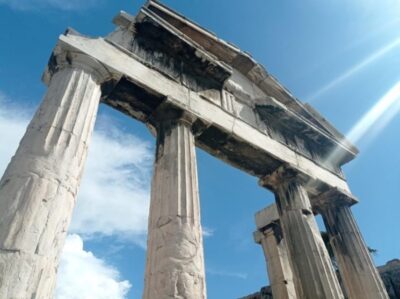
the Great Greek Philosophers Guided Tour in Spanish
Read our review →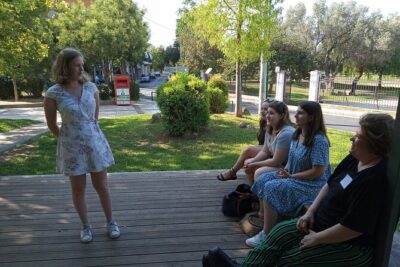
Philosophy Experiential Workshop at Plato’s Academy Park -Athens
Read our review →
Athens Highlights: Myths & Philosophers Private Walking Tour
Read our review →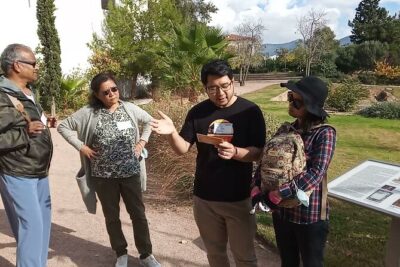
Philosophy Experiential Workshop at Aristotle’s Lyceum, Athens
Read our review →Browse the lists this tour appears in