
Reviewed · PELOPONNESE TOURS FROM ATHENS
Hydra Island & Mythical Full Peloponnese Private 9-Day Tour
The great appeal here is the sheer range: in nine days, you move from car-free Hydra and Venetian Nafplio to Mycenaean ruins, Byzantine hill towns, mountain villages, caves, and the birthplace of the Olympic Games. This is not a quick highlights bus trip. It is a long, winding look at the Peloponnese.
I like the private format, which lets you travel with only your own party of up to seven, and I like the route itself. The best moments are often away from the headline ruins: coffee by the sea at Tyros, lunch beneath plane trees in Kosmas, and the cliff-hanging monasteries. The main caution is pace. Several days involve long drives, steep walks, and many archaeological stops, while entrance fees, the Hydra boat, and the scenic train are extra.
Key things to know before booking
- Nine days cover an unusually broad route: Hydra, Mycenae, Monemvasia, Mani, Mystra, Messene, Olympia, Arcadia, Kalavrita, and Corinth all fit into one private journey.
- Your group stays together: The tour is limited to one party of up to seven people, with pickup offered and newer vehicles from 2020 to 2022.
- The Peloponnese is more than ancient ruins: You will stop in fishing villages, stone-built mountain towns, olive country, and old fortress settlements.
- Several major costs are separate: Site admissions, the Hydra boat, train tickets, and an optional professional licensed guide are not included.
- The physical level is moderate: Expect uneven ruins, stairs, the 999 steps from Palamidi, and a 20-minute forest walk to a monastery.
- Planning support matters: Nikos is associated with the detailed advance planning, while Theo is connected with the guiding and archaeology side of the operation.
A private route through the Peloponnese
At $6,193.21 per person, this is a costly trip. Its value depends heavily on your group size and what you want from Greece. If two people book it, the price is hard to justify for anyone watching expenses. For a larger party of four to seven, the private vehicle, driver, accommodation, breakfasts, lunches, and custom planning make more sense.
The price also buys time. You are not tied to a large coach schedule, and your group can spend the day together without strangers setting the pace. The tradeoff is that this is closer to a private touring service than a fully packaged luxury holiday. Several entrance tickets and transport charges remain outside the quoted cost, and the exact accommodation arrangement deserves clarification before you pay.
The tour includes a local driver and guide, bottled water, an information booklet in the vehicle, eight breakfasts, and eight lunches. A professional licensed guide is optional. That last point matters at sites such as Mycenae, Olympia, and Mystra, where the ruins can be easier to understand with expert explanation rather than a booklet alone.
Nikos is linked with the planning side of the experience and is described as highly involved with schedules and custom arrangements. Theo is associated with the on-road service and archaeological knowledge. If site interpretation is important to you, ask in advance who will guide each major ruin and what the optional licensed guide costs.
More island day trips from Athens:
- All Day Cruise -3 Islands to Agistri,Moni, Aegina with lunch and drinks included
★ 5.0 · 4,958 reviews - From Athens: Hydra, Poros, and Aegina Day Cruise with Lunch
★ 4.1 · 4,305 reviews - Athens cruise: Agistri, Moni/Metopi, Aegina with lunch & drinks
★ 5.0 · 1,783 reviews
Day 1: Corinth, Mycenae, Nafplio, and Epidaurus
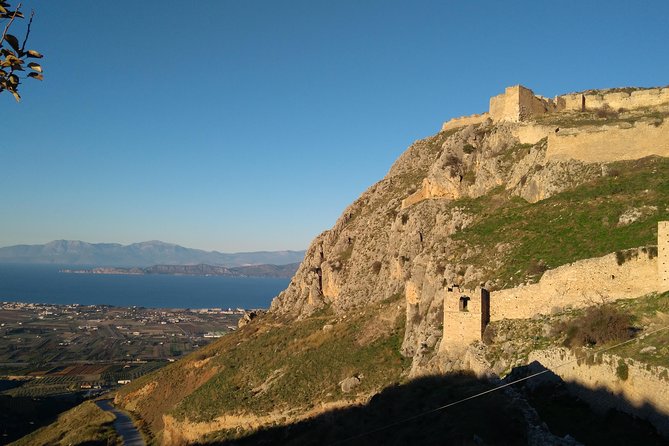
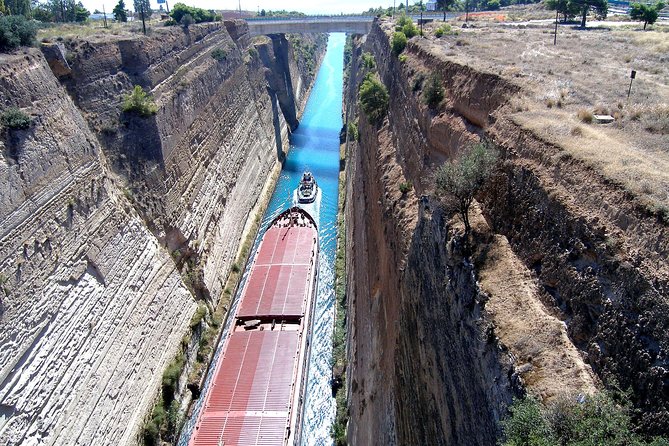
The opening stop is the Corinth Canal, only about 15 minutes for photographs. The canal cuts through the Isthmus of Corinth and separates the Peloponnese from mainland Greece in a way that makes the peninsula feel almost like an island. It is a short stop, but a useful geographical introduction to the days ahead.
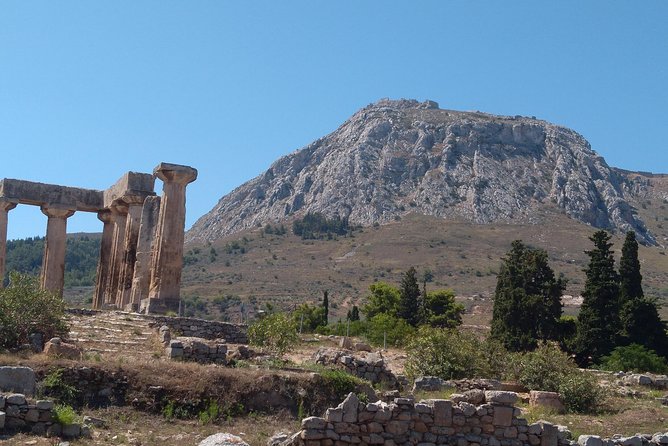
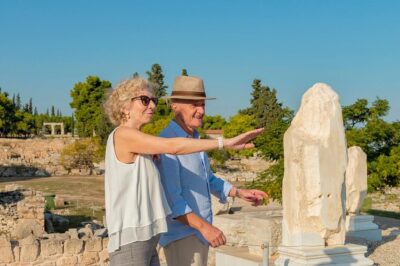
Ancient Corinth follows, with about an hour available if you choose to include it. The site reaches back to the Neolithic period, though Corinth became especially important from the eighth century BC onward. Admission is extra, and the stop is optional, so decide early if you want this first ancient city or prefer to save energy for Mycenae.
Mycenae receives a fuller two-hour visit. This UNESCO World Heritage Site is tied to the Bronze Age world of Agamemnon and the Mycenaean civilization. The Lion Gate, fortified walls, tombs, and museum give the site a strong sense of age and power, though you should expect uneven ground and sun exposure.
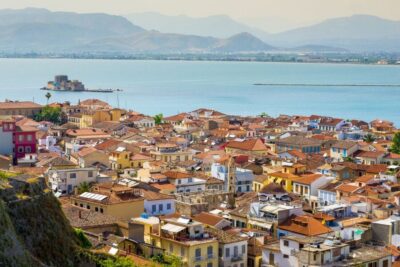
Nafplio is a welcome change of scale. It was Greece’s first capital and is one of the prettiest towns in the Argolis. You have about two hours to walk, look around, and take in the waterfront atmosphere. Later, the tour can drop you at Nafplio port and Old Town for an evening meal before bringing you back to your hotel.
Epidaurus is the day’s great architectural showpiece. Its ancient theater is famous for remarkable acoustics and an unusually complete form. You get about an hour there, with admission separate. If you still have energy, Palamidi Castle adds a steep finish, including the famous 999 steps down toward Nafplio. This is a lot for one day, so sensible pacing matters.
Day 2: Hydra without cars or road noise
Hydra provides a sharp change from the mainland. You drive about an hour from Nafplio to Ermioni or the Metochi pier, then take a boat for roughly 25 minutes each way. The crossing is short, but it gives the day a proper island feel without consuming hours at sea.
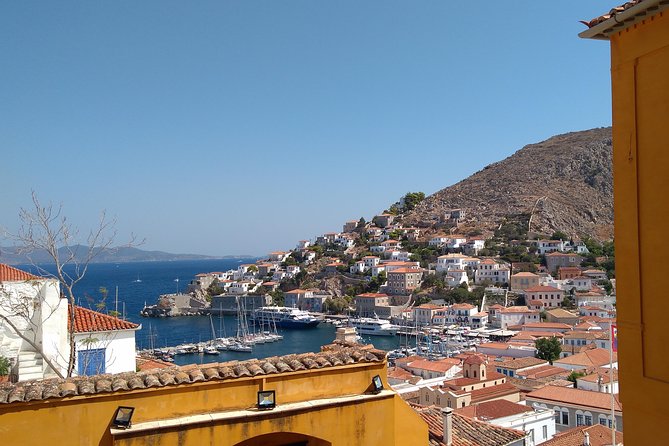
Hydra Town is car-free and built for walking. You have five hours to explore the harbor, lanes, and views at your own speed. There are no cars and no traffic noise, but the town is still popular and cosmopolitan. That combination makes Hydra attractive, though you should not expect an empty island.
The Lazaros Koundouriotis Historical Mansion adds depth to the visit. Built in 1750, it presents the upper-class island life of the eighteenth and nineteenth centuries through family belongings, paintings, and historical and folk exhibits. Admission is not included.
The practical question is timing. Five hours is generous for Hydra Town, but you will need to account for the boat, walking, and the mansion visit. Bring comfortable shoes and keep an eye on the meeting time for the return crossing. The tour description calls this an easy boat ride, but the day still includes plenty of walking on sloping streets.
Day 3: From the coast to Monemvasia
Day three takes the slower coastal route instead of the motorway. At Tyros, you stop for Greek coffee by the sea before climbing the Parnon range. That choice captures what makes this tour different from a standard ancient-site circuit: the drive itself becomes part of the experience.
Leonidio sits between the red rock of the Parnon mountains, with Dafonas Gorge nearby. The town is known in Greece for its eggplant, and you have about 30 minutes to look around. The stop is short, so think of it as a scenic pause rather than a full visit.
The Monastery of Panagias Elonis hangs against the cliffs and gives you another quick stop for mountain views. Then comes Kosmas, a forested village high in the mountains. Temperature can differ sharply from the coast, and lunch beneath the large plane trees in the traditional square sounds like one of the day’s most appealing pauses.
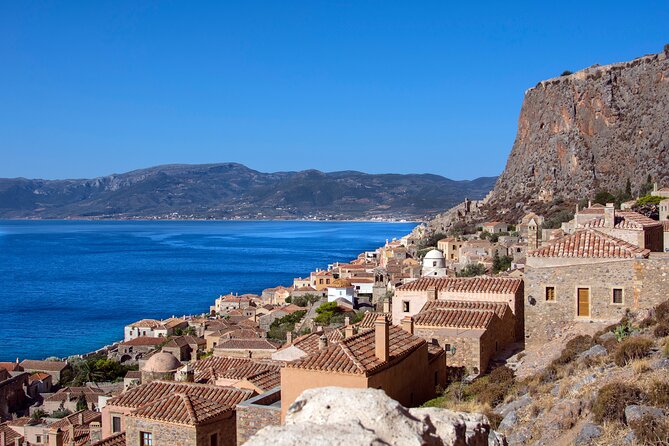
Monemvasia is the reward at the end. The medieval castle town is carved into the back of a sea rock, creating one of the most striking settings in the Peloponnese. Two hours is enough to get a strong taste, but not enough for a leisurely exploration of every lane and viewpoint. Save some energy for slopes and stone surfaces.
More Peloponnese trips from Athens:
- Athens: Peloponnese Highlights Day Trip and V.R. Audio Guide
★ 4.5 · 1,425 reviews - Argolis: Full-Day Tour in Mycenae & Nafplio
★ 4.2 · 350 reviews - PELOPONNESE HIGHLIGHTS PRIVATE: Corinth Mycenae Nafplio Epidaurus
★ 5.0 · 103 reviews - Ancient Sparta Ancient Corinth Private Tour from Athens/ Nafplio
★ 5.0 · 58 reviews
Day 4: The wild Mani Peninsula
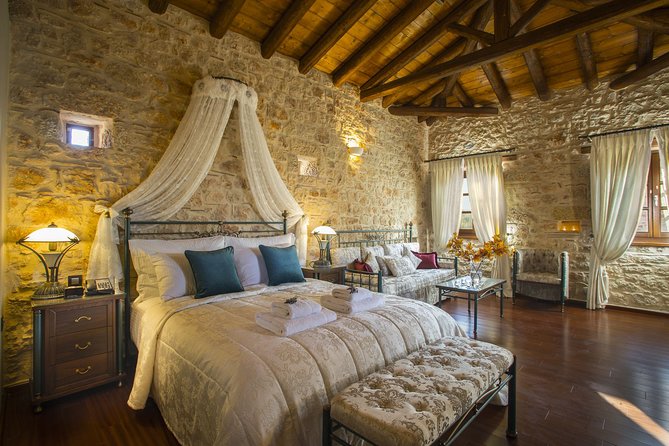
The Mani is one of the most rugged sections of the route. The tour gives you about an hour to experience the peninsula before reaching the Caves of Diros. The coastline, stone settlements, and stark mountain country create a different mood from the cultivated areas farther north.
At Diros, an expert-led boat ride carries you through a large cave system. Stalactites, stalagmites, galleries, and carefully placed lighting shape the visit. Admission is extra, and the boat ride adds a fixed schedule to the day, so ask about timing if you are planning other stops around it.
Areopoli is a stone-built town with a past marked by pirate threats. You get about an hour to walk its streets and absorb the local character. Vathia, the most photographed location on the Mani Peninsula, follows with another hour. Its abandoned tower settlement is especially striking from the outside, with wide views and a strong sense of a community that has faded away.
This day is less about checking off monuments and more about seeing how people adapted to a hard, isolated setting. It is also a day for realistic expectations. Some places are brief stops, and the roads through the Mani can make the schedule feel full.
Day 5: Byzantine Mystra and Spartan memory
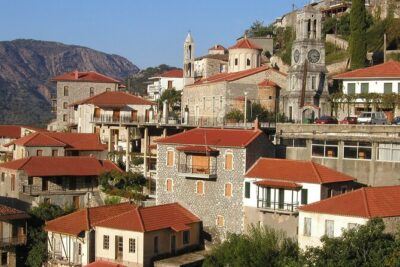
Mystra is one of the finest stops on the whole route. The Byzantine castle town climbs above the plain, with views toward Sparta and the Laconian olive groves. Two hours gives you time to see churches, ruins, and the hillside setting, but the site demands walking on uneven paths and slopes.
The Leonidas Monument takes only about 15 minutes. It sits in front of a football stadium, an amusingly modern setting for a figure associated with the Spartan stand at Thermopylae. The statue provides a quick link to the military ideals of ancient Sparta.
You can add the Museum of the Olive and Greek Olive Oil in Sparta. The museum traces olive cultivation and oil production from prehistoric times to the early twentieth century. It is a useful choice if you want everyday Greek culture and technology alongside temples and battle stories.
This is a comparatively lighter day than the Mani route, but Mystra remains physically demanding. The best approach is to walk steadily, carry water, and avoid treating the two-hour stop as a race.
Day 6: Ancient Messene and Apollo Epikourios
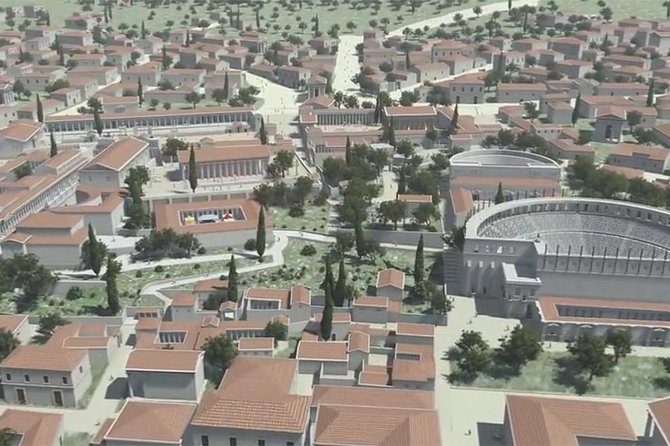
Ancient Messene is one of the tour’s strongest archaeological surprises. The city is large and well preserved, with sanctuaries, public buildings, fortifications, houses, and tombs. Two hours lets you appreciate its scale rather than merely glance at a few columns.
The Temple of Apollo Epikourios adds another major ancient site. The schedule allows about an hour, with admission separate. This day may appeal most to people who enjoy seeing how ancient cities were organized, not just photographing famous monuments.
The route also reinforces a useful point about the Peloponnese: its major ruins are scattered across a broad region. A private vehicle makes that spread manageable, but you should still expect road time between stops.
Day 7: Olympia and the Arcadian mountains
Olympia hosted the original Olympic Games from the eighth century BC. The ruins include the stadium, training areas, and temples dedicated to Zeus and Hera. You have about 90 minutes at the site, followed by half an hour in the archaeological museum.
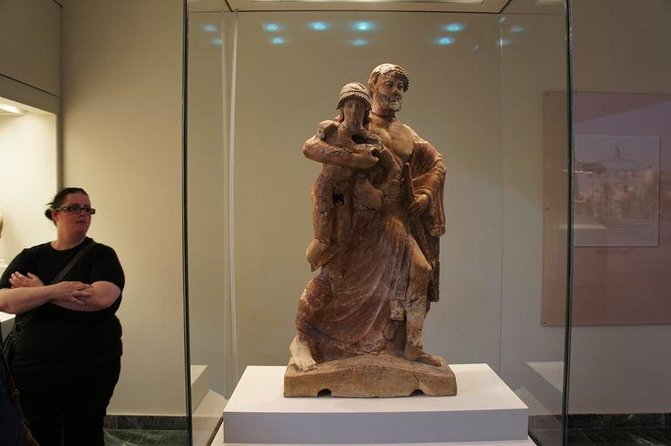
The museum contains sculpture from the sanctuary, including the decoration from the Temple of Zeus and the famous Hermes by Praxiteles. Admission to both the site and museum is extra. If ancient art matters to you, this is a place where the optional licensed guide could add real value.
After Olympia, the route turns toward Arcadia for an overnight stop among stone-built mountain villages. That change is welcome after the open archaeological grounds. You are moving from athletic and religious history into a quieter rural setting.
Day 8: Dimitsana, water power, and a cliff monastery
Dimitsana is one of central Arcadia’s most attractive stone villages. The stop is brief, about 30 minutes, but it introduces the mountain character of the region. The nearby Water-Power Museum shows how water drove a mill, tannery, and gunpowder mill before modern industrial power.
The museum is small in scale but useful because it explains practical life rather than elite history. Admission is extra. I would treat it as a worthwhile addition for anyone who wants more than temples and fortresses.
The Monastery of Agiou Ioanni Prodromou requires a 20-minute forest walk. Once there, the cliff-hanging setting provides one of the route’s memorable views. The total stop lasts about 90 minutes, so wear shoes suitable for an uneven path.
Stemnitsa is the lunch stop, known for stone houses and jewelry making. Its traditional setting gives you another chance to slow down and enjoy a village rather than simply pass through it.
Day 9: The Cave of the Lakes, Kalavrita, and the return to Athens
The Kastria Cave of the Lakes has an unusual design, with galleries and lakes inside the cave system. Stalactite formations and changing underground spaces make it different from the Caves of Diros. Admission is extra, and the visit lasts about an hour.
Kalavrita is the day’s lunch town. It lies below Mount Chelmos and is known for stone houses, small squares, cafés, and tavernas beneath large plane trees. It is also a popular cold-weather destination because of its ski center, so the town has more than a passing seasonal role.
The Diakopto to Kalavryta railway is one of the route’s most distinctive optional costs. The train travels through Vouraikos Gorge and eventually reaches the Corinthian Gulf. The scheduled ride lasts about an hour. Check how this fits with the vehicle schedule, since the train portion has its own timetable and may affect the rest of the day.
Ancient Corinth appears again as an optional final stop before Athens. If you skipped it on day one, this is your second chance to see the site and connect it with the letters of Saint Paul and the city’s long importance on the isthmus.
The tour ends at Syntagma Square, with drop-off at your Athens accommodation or, by arrangement, the port of Piraeus or the airport.
What the price really includes
The package includes newer vehicles, bottled water, a vehicle information booklet, private transport, eight breakfasts, and eight lunches. Two nights of accommodation are also described as included, but the supplied details create some uncertainty because the route covers nine days and lists overnight stops in several places.
I would ask for a written accommodation schedule before booking. Confirm every overnight location, room arrangement, meal count, and what is meant by two nights of accommodation. Also budget separately for archaeological admissions, the boat to Hydra, train tickets, and optional licensed guiding.
Cancellation terms are firm. You can receive a full refund when canceling at least six full days before the start time. A cancellation two to six days ahead receives 50 percent, while cancellation less than two days ahead is nonrefundable.
Who should book this private journey
I would recommend it to a small family group, a group of friends, or a party that values privacy and wants to see much of the Peloponnese without arranging each hotel, road transfer, and meal alone. It suits people who enjoy ruins but also want villages, coastlines, caves, and local food stops.
I would hesitate if you prefer slow travel. The route covers a lot of ground, and several days combine long drives with demanding walks. It is also not ideal for anyone who wants a fully all-inclusive package, since several important admissions and transport pieces cost extra.
The private format is the strongest reason to choose it. You can ask questions, adjust the rhythm within reason, and travel with only your own group. Just make sure the accommodation plan, guide arrangements, and optional costs are clear before committing to the high per-person price.
FAQ
How long is the Hydra Island and Mythical Full Peloponnese tour?
The tour lasts approximately nine days.
How many people can join the private tour?
The private tour is for one related group of one to seven people. The provider asks larger groups to make contact separately.
What time does the tour start?
The listed start time is 8:00 am.
Is pickup available?
Yes. Pickup is offered, and the final drop-off can be at your Athens accommodation or, optionally, the port of Piraeus or the airport.
Are meals included?
Eight breakfasts and eight lunches are included.
Are entrance tickets included?
No. Site admissions are generally not included. The boat to Hydra and train tickets are also listed as additional costs.
Is a licensed guide included?
A local driver and guide lead the tour, but a professional licensed guide is optional rather than included.
More Greek mythology tours in Athens
- Athens: Mythology of Delphi, Museum and Arachova Guided Tour
★ 4.6 · 4,008 reviews - Athens & Acropolis Highlights: Greek Mythology Small-Group Tour
★ 5.0 · 2,370 reviews - Athens: Acropolis and Mythology Highlights Small Group Tour
★ 4.8 · 2,275 reviews - Athens: Mythology Tour for Families
★ 4.8 · 173 reviews
Newly reviewed around Athens
- Athens: workshop for painting landscape with local artist★ 4.6 · 3 reviews
- Athens: Greek Wine & Olive Oil Tasting at Brettos Plaka★ 4.5 · 3 reviews
- Outdoor Yoga and Pilates with Akropolis view★ 4.0 · 5 reviews
- Acropolis of Athens: 60′ Tour in a Vintage Motorcycle★ 5.0 · 4 reviews
- Ultimate Tasting of the Volcanic Wines of Greece★ 5.0 · 3 reviews
- workshop for painting acropolis/landscape with local artist★ 5.0 · 3 reviews
- Athens at Twilight Night Tour with Drinks and Meze Dishes★ 4.8 · 4 reviews
- Breakfast in the markets with olive oil and honey tasting★ 4.8 · 8 reviews
Peloponnese Tours from Athens, compared.
Peloponnese Highlights Day Trip and V.R. Audio Guide
Read our review →
PELOPONNESE HIGHLIGHTS PRIVATE: Corinth Mycenae Nafplio Epidaurus
Read our review →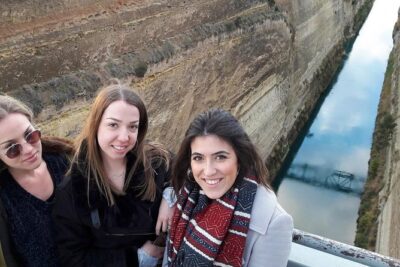
Ancient Sparta Ancient Corinth Private Tour from Athens/ Nafplio
Read our review →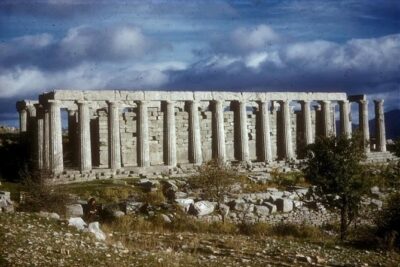
Day tour to Ancient Olympia,Ancient Sparta Mycenae Including Meal
Read our review →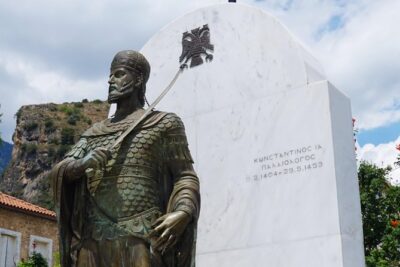
Ancient Sparta & Mystras Private Day Tour from Athens
Read our review →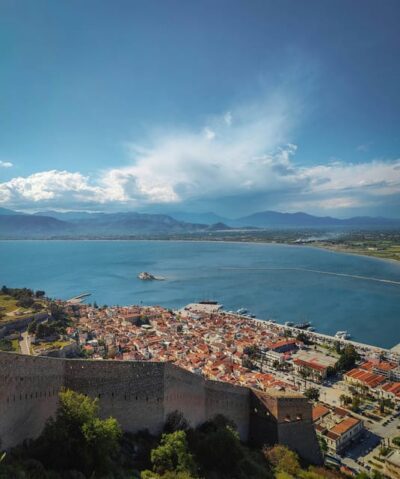
5-Day Best of Peloponnese Private Tour: Nafplio/Olympia/Mycenae/Epidaurus/more
Read our review →Browse the lists this tour appears in