
Reviewed · ANCIENT CORINTH TOURS
Biblical Corinth: St. Paul and His Letters to the Corinthians
The heart of this trip is the chance to connect St. Paul’s letters with the actual places where he worked, preached, traveled, and faced Roman officials. You’ll visit Mars Hill in Athens, the ports of Corinth, the Bema where Paul appeared before Gallio, and the remains of the city he served for about 18 months.
I like the private format, which lets you linger at Akrokorinthos, skip sights you have already seen, or adjust the day around a ship departure. I also like the mix of major ruins and smaller Paul-related places, including Kechries and the Diolkos.
The key thing to understand is that this is a private driver-led tour, not a standard guided walk through every archaeological site. Your driver can explain the history in fluent English, but drivers do not enter the ruins with you unless you separately arrange a licensed guide.
Key points to know before booking
- Mars Hill begins the biblical story: Start in Athens where Paul addressed the council about the Unknown God.
- Private transport keeps the day flexible: Hotel and port pickup, Wi-Fi, bottled water, and an adjustable start time are included.
- Corinth is more than one ruin: You visit the canal, Isthmia, Ancient Corinth, Kechries, churches, and Akrokorinthos.
- A licensed guide costs extra: The driver gives useful context from the vehicle and meeting points, but site visits are self-guided by default.
- Akrokorinthos requires effort: The fortress provides superb views, but the climb can be demanding.
- Lunch can be part of the plan: Choose the Greek traditional food option, or arrange your own meal during the free hour in Corinth.
Why this private Corinth trip works

This is a long day, usually eight to nine hours, but the subject gives it a clear thread. You are not simply ticking off Greek ruins. You are following the setting of Paul’s ministry from Athens to Corinth, then tracing the roads, ports, temples, and public spaces that shaped his work.
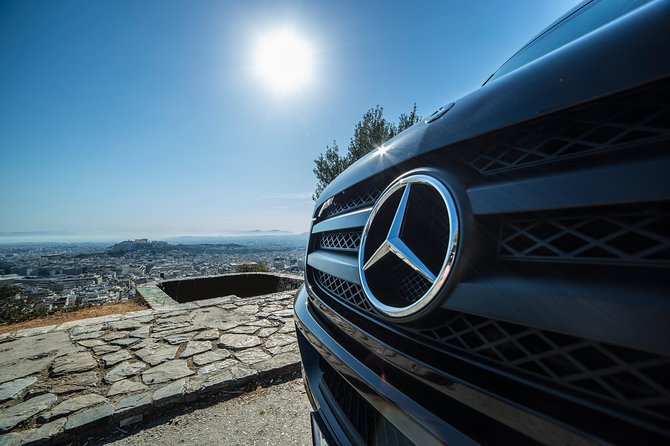
The private vehicle matters. Corinth’s important sites are spread across a wide area, and reaching them by public transport would be awkward. With hotel or port pickup, you can begin at a time that suits your group. The operator can also adjust the route, which is useful if you have already seen central Athens or need to return to a cruise ship.
The price is $218.43 per person. That is not a cheap sightseeing bus, but it can be fair value for a private day if several people share the vehicle. You are paying for transport, fuel, a dedicated driver, Wi-Fi, water, and flexibility rather than a seat on a fixed group coach. Add the €15 entrance charge for Ancient Corinth and the Archaeological Museum of Isthmia, plus a licensed guide if you want one inside the sites.
Several drivers have received especially warm praise for being calm, flexible, and willing to answer questions. Alex, George, Spiros, Stephanos, Panos, Vasilis, Kostas, and Thanous are among the names associated with individual departures. Your driver will vary, so do not book this expecting one particular person unless the company confirms that in advance.
More Ancient Corinth and canal trips:
- From Athens: Ancient Corinth Day Trip with Canal & VR Guide
★ 4.6 · 1,073 reviews - Private Biblical Tour Ancient Corinth & Isthmus Canal from Athens
★ 5.0 · 762 reviews - Athens: Ancient Corinth & Nafplio Full Day Trip with Swim
★ 4.8 · 523 reviews
Mars Hill connects Athens with Paul’s mission
The first stop is Areopagus Hill, also called Mars Hill, near the Acropolis. Paul’s speech here, recorded in Acts, addressed the Athenians’ altar to an unknown god and brought the Christian message into the city’s philosophical center.
You get about 20 minutes at the hill. That is enough to pause, take in the setting, and reflect on the account, but it is not a long Acropolis visit. The tour description places this stop among the sacred grounds around the Acropolis, yet the focus is Mars Hill rather than a full tour of the Acropolis monuments.
The rock can be uneven, so wear shoes with a firm sole. If this moment is central to your trip, tell the company when booking. One party specifically wanted Mars Hill included, and the route was adjusted to make it happen.
The Corinth Canal and ancient Diolkos
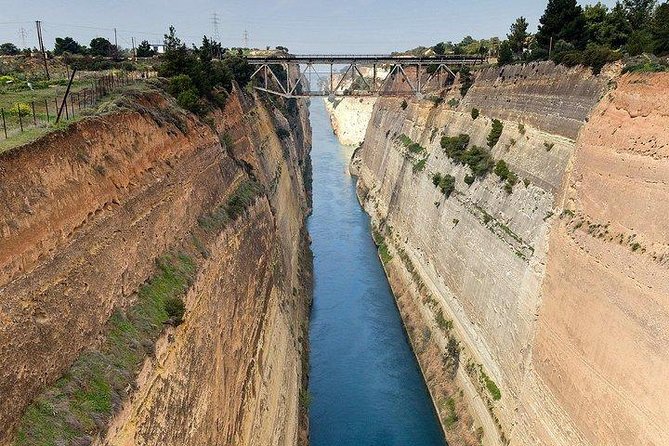
Leaving Athens, you reach the Corinth Canal, one of the day’s clearest visual stops. From above, you can look down the narrow cut in the Isthmus of Corinth and watch vessels move between the Gulf of Corinth and the Saronic Gulf.
The canal is about 6.4 kilometers long and only 21.4 meters wide at its base. It has no locks, and its size limits the ships that can use it. You get around 30 minutes here, which gives you time for photographs and a short explanation from the driver.
The Diolkos provides an older and more surprising link between the two seas. Long before the modern canal, ships and cargo were moved overland across part of the isthmus. The remains are not as visually grand as Ancient Corinth, but they help you picture the commercial world that Paul entered.
This is one reason the private route is useful. The Diolkos is easy to overlook if you only visit the main ruins, yet it explains why Corinth became such a powerful crossroads.
Isthmia and the world of the Isthmian Games
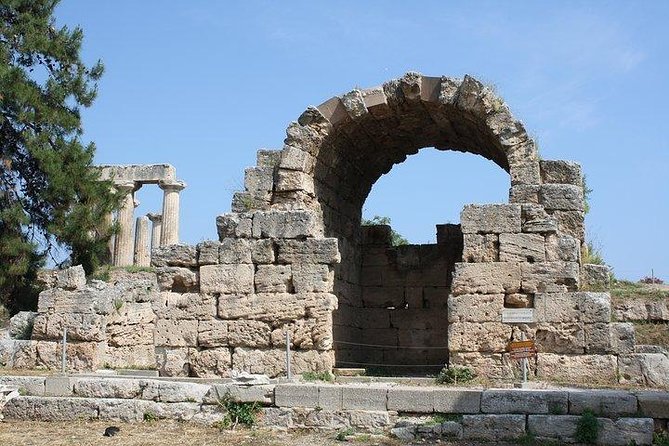
At Isthmia, the tour shifts from Paul’s ministry to the public life surrounding it. The sanctuary was dedicated to Poseidon and hosted the Isthmian Games, which ranked just behind the Olympic Games in importance.
The area brought together athletes, merchants, sailors, officials, and visitors from across the Greek world. The tour connects Paul’s work as a tentmaker with this steady flow of people. The biblical text does not provide a day-by-day account of Paul at the games, so you should treat this as historical context and a plausible setting rather than a documented personal episode.
You spend about an hour at Isthmia, then around 30 minutes in its archaeological museum. The museum contains objects from the Sanctuary of Poseidon, along with statues, offerings, burial material, and glass panels from nearby Kenchreai. These pieces make the site easier to understand because the ruins alone can be hard to read.
The museum entrance is not included. The listed combined entrance charge for Ancient Corinth and the Archaeological Museum of Isthmia is €15 per person, payable on site.
More biblical and Apostle Paul tours in Athens:
- Biblical Tour Letters ToThe Corinthians St Paul’s Footsteps 6Hour
★ 5.0 · 1,065 reviews - Private Tour of Apostle Paul’s Footsteps in Ancient Corinth
★ 5.0 · 275 reviews - Paul”s Footsteps Ancient Corinth Biblical Tour
★ 5.0 · 184 reviews - Private Luxury Biblical Tour: Apostle Paul in Athens & Corinth
★ 5.0 · 162 reviews
Temples, stadiums, and Paul’s public setting
The Archaeological Site of Isthmia adds the Temple of Poseidon, the stadium, the Sanctuary of Palaimon, and the ancient theater to the route. These places show the religious and athletic setting that surrounded Paul’s work.
The stadium is especially useful for understanding the athletic images found in Paul’s writing. The theater, with Roman mosaics showing sea creatures and Dionysian scenes, gives you a glimpse of the entertainment and religious traditions of the time.
The route also presents Isthmia as a place where political and military decisions were made. Its location gave it importance beyond religious festivals. Paul’s message therefore reached a region where trade, power, public ceremony, and competing religious ideas met.
Allow about 40 minutes at the archaeological site, with additional time for the theater and other listed points. Since the driver does not normally enter the site, ask for a short orientation before you walk in. The value of the visit depends partly on how much you enjoy exploring ruins with written information rather than a guide beside you.
Ancient Corinth and the Bema

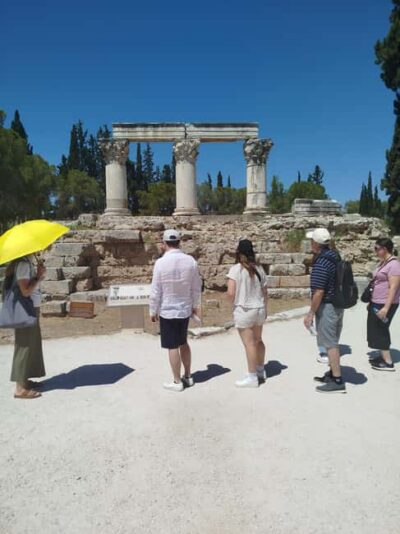
Ancient Corinth is the main stop, and you should allow at least an hour. The city’s position on the isthmus made it a major center for commerce and contact between the mainland and the Peloponnese.
Paul spent about 18 months in Corinth, according to Acts. His letters to the Corinthians later addressed disputes, morality, worship, marriage, spiritual gifts, and the practical problems of a growing Christian community. Standing among the remains gives those letters a much more physical setting.
The Bema, or judgment platform, is the most important Paul-related feature at the site. Acts describes Paul being brought before Gallio, the Roman proconsul, over accusations concerning Jewish law. Gallio declined to treat the matter as a Roman legal case, allowing Paul’s work to continue.
You can see the Bema independently, but your driver will not normally walk through the ruins with you. This distinction caused disappointment for at least one booking, so take it seriously. If you want a full explanation beside the monuments, request a licensed guide before the day of your tour and confirm the extra fee.
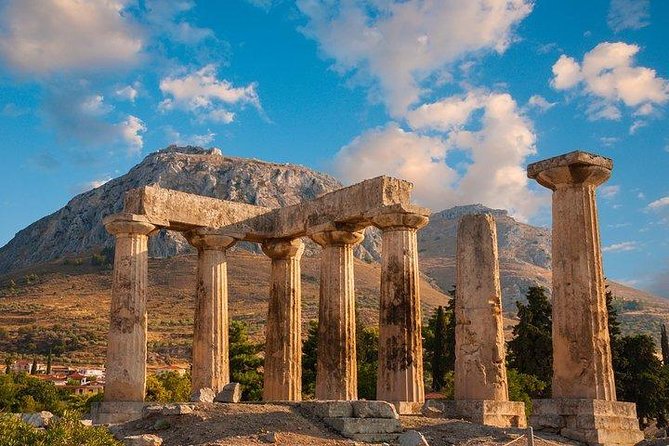
The Temple of Apollo is another major sight. Built around 560 BC, its massive monolithic columns belong to one of Greece’s oldest important temples. During Paul’s time, the temple would have been a powerful reminder of the pagan religious system he was addressing.
Kechries, Paul’s port to the wider world
Kechries, ancient Cenchreae, was Corinth’s eastern port. Acts 18:18 places Paul here before he sailed toward Syria with Priscilla and Aquila. The account also describes Paul cutting his hair in fulfillment of a vow.
Today, this is a quieter seaside stop than the main ruins. You get about 30 minutes to connect Paul’s departure with the practical network of ports that carried people, goods, and ideas across the Mediterranean.
Kenchreai also appears in Paul’s letter to the Romans through Phoebe, who is associated with the church there. That gives the stop a useful connection to the early Christian communities beyond Corinth itself.
The remains are not as extensive as Ancient Corinth, so expectations matter. Come for the setting and the biblical connection, not for a large intact monument.
Apostolou Pavlou and the living Christian connection
The Apostolou Pavlou church honors Paul’s time in Corinth. It serves as a modern place of worship and a visible reminder that this is not only an archaeological story.
You spend roughly 20 minutes here. The stop gives the day a religious dimension that the ruins cannot provide, particularly if your interest is personal or devotional rather than purely academic.
The route also returns to the Bema connection, reinforcing the place where Paul faced Gallio. Taken together, the church and ancient platform show how Paul’s memory has remained part of Corinth’s identity across many centuries.
Lunch with time to breathe
The planned lunch stop gives you about an hour at a traditional seaside Greek taverna. If you choose the With Greek Traditional Food option, the meal is included. Otherwise, lunch is not part of the standard inclusions.
This pause matters on a full itinerary. You have already been walking through exposed archaeological areas, and the day still includes Akrokorinthos. Several routes have included well-regarded local meals with good views, and one driver helped a group choose from the menu.
You can also ask about packing a lunch if seeing more sites matters to you. One private group chose that approach and used the saved time to keep moving. The tradeoff is simple: a proper taverna meal adds local flavor and rest, while a packed lunch may give you more time at the fortress or ruins.
Akrokorinthos requires a real climb
Akrokorinthos is the dramatic finish. The fortress rises above Ancient Corinth, and the upper areas offer wide views over the city and surrounding country.
The listed time is one hour, but the effort needed depends on how far you climb and how long you stop. Several people have found the ascent more strenuous than expected. The views near the Temple of Aphrodite were considered worth the work, but this is not a flat stroll from the vehicle.
Ask your driver how far you can comfortably go and plan your footwear accordingly. If you have limited mobility, make that clear before booking. The tour says most people can participate, but it does not promise that every path or upper section will suit every visitor.
The fortress gives the Apostle Paul story a strong final setting. From above, you can look back toward Corinth and imagine the geographic challenge of serving a city tied to two seas and many cultures.
What the driver can and cannot do
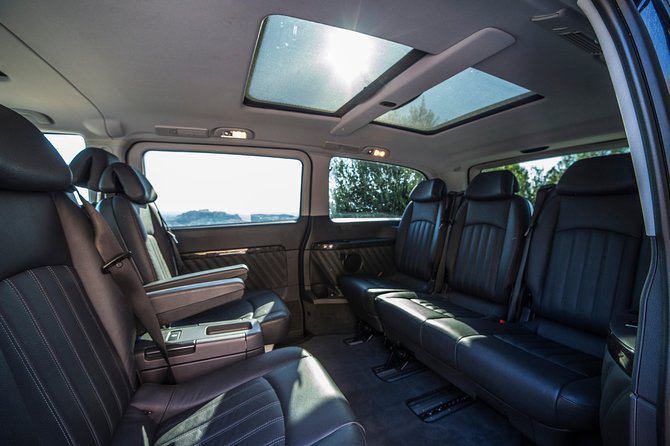
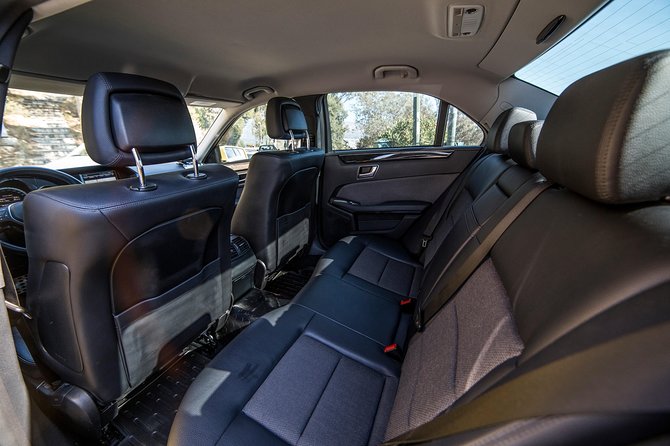
Your driver is central to the experience. The company provides professional drivers with strong historical knowledge, fluent English, private transport, water, air conditioning, and onboard Wi-Fi. Drivers such as Alex, George, and Stephanos have been praised for clear explanations, safe driving, patience, and good pacing.
Still, the driver is not automatically a licensed archaeological guide. The normal arrangement is a briefing in the vehicle or at the entrance, followed by independent exploration inside Ancient Corinth, Isthmia, and the museum.
That setup suits you if you enjoy looking around at your own speed. It is less suitable if you want a continuous lecture beside each column, mosaic, and inscription. Request the optional licensed guide in advance, subject to availability and an additional charge.
The private format also makes it easier to ask for quiet time. One of the useful advantages of a personal driver is that the conversation can be lively when you want background, then quiet when you want to watch the countryside.
Who should book this day trip
I would choose this tour if Paul’s ministry is the main reason you want to see Corinth. It also suits history fans who want more than the central ruins, since the route includes the canal, Diolkos, Isthmia, the museum, Kechries, the church, the port, and the fortress.
It works well for cruise passengers because pickup can take place at the port, with the driver meeting you at the gate holding a sign with your name. Give the company your required return time, and allow a generous margin before sailing. One driver went out of his way to help a passenger correct a return-time mistake, but you should not rely on such a rescue.
I would hesitate if you want a traditional guided archaeological tour included in the base price. In that case, pay for the optional licensed guide or choose a product that clearly includes one.
The tour is also best for people comfortable with a long day and some walking. The itinerary has many stops, and Akrokorinthos can be tiring. On the other hand, the driver can adjust the route, and private transport means you are not forced to keep pace with a large group.
Booking details and final call
Pickup and drop-off are available from hotels, apartments, and ports. Your start time can be adjusted by request, and only your party participates. Confirmation is provided at booking, and cancellation is free up to 24 hours before the start time.
At $218.43 per person, the value improves with a small group that wants a full private day. Remember to add the €15 site and museum fee, and budget for a licensed guide if that is important to you.
Book this tour if you want a flexible, Paul-focused journey with a strong driver, broad coverage, and time to explore independently. Choose another option or add the guide if your priority is detailed commentary inside every archaeological site. The key is knowing what you are buying: a thoughtful private route with an English-speaking driver, not a fully escorted museum and ruins tour.
FAQ
How long does the Corinth tour take?
The experience lasts approximately eight to nine hours.
Is this a private tour?
Yes. Only your group participates, and pickup and drop-off can be arranged from a hotel, apartment, or port.
Does the price include a licensed tour guide?
No. The listed price includes a professional driver with historical knowledge, but drivers do not normally enter archaeological sites with you. A licensed guide may be requested separately, subject to availability and an additional charge.
Are entrance fees included?
No. Ancient Corinth and the Archaeological Museum of Isthmia have a listed combined entrance fee of €15 per person, payable on site.
Is lunch included?
Lunch is included only if you select the With Greek Traditional Food option. Otherwise, you can purchase lunch during the stop in Corinth or discuss bringing your own food.
Can the pickup time be changed?
Yes. The pickup time is adjustable upon request, and the driver can return you to the original location or another agreed point.
Is the tour suitable for cruise passengers?
Yes. Port pickup is available, with the driver meeting you at the gate as you disembark and holding a sign with your name. You should provide your required return time when arranging the tour.
Newly reviewed around Athens
- Athens: workshop for painting landscape with local artist★ 4.6 · 3 reviews
- Athens: Greek Wine & Olive Oil Tasting at Brettos Plaka★ 4.5 · 3 reviews
- Outdoor Yoga and Pilates with Akropolis view★ 4.0 · 5 reviews
- Acropolis of Athens: 60′ Tour in a Vintage Motorcycle★ 5.0 · 4 reviews
- Ultimate Tasting of the Volcanic Wines of Greece★ 5.0 · 3 reviews
- workshop for painting acropolis/landscape with local artist★ 5.0 · 3 reviews
- Athens at Twilight Night Tour with Drinks and Meze Dishes★ 4.8 · 4 reviews
- Breakfast in the markets with olive oil and honey tasting★ 4.8 · 8 reviews
Ancient Corinth Tours, compared.
Ancient Corinth Day Trip with Canal & VR Guide
Read our review →
Private Biblical Tour Ancient Corinth & Isthmus Canal from Athens
Read our review →
Ancient Corinth & Nafplio Full Day Trip with Swim
Read our review →
Private Tour of Apostle Paul’s Footsteps in Ancient Corinth
Read our review →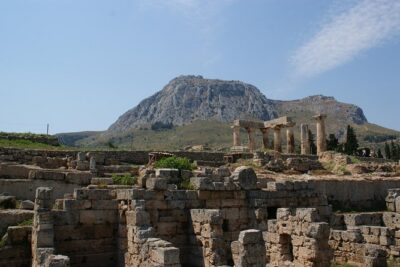
Corinth Half-Day Trip from Athens with Entrance Tickets
Read our review →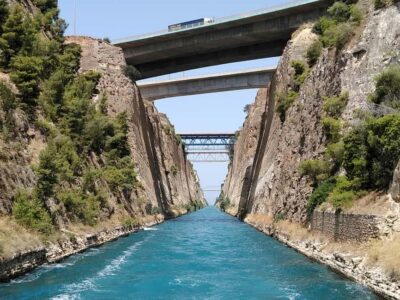
Browse the lists this tour appears in