
Reviewed · ANCIENT CORINTH TOURS
Private Biblical Apostle Paul steps in Ancient Corinth.
Ancient Corinth gives this private outing its real pull: you can walk through the city where the Apostle Paul preached in the 1st century AD, then look up toward the fortress of Acrocorinth and out across the old routes linking Greece. The Bema, the platform tied to Paul’s appearance before Roman officials, makes the biblical connection feel especially direct.
I like the private vehicle and flexible pace, with pickup, air conditioning, WiFi, water, and a toilet included. I also like the way the day joins several kinds of history: early Christianity, Greek and Roman Corinth, an ancient port, a medieval fortress, and the modern Corinth Canal.
The main tradeoff is simple: the $417.57 price covers up to four people, but admission tickets and lunch cost extra. Six hours is enough for a strong overview, not a slow, expert-led study of every ruin.
Key points for your day in Corinth
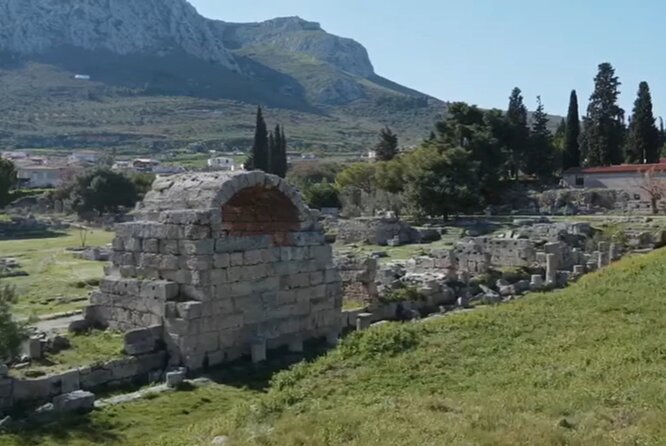
- Paul’s Corinth: See the Bema, Roman Agora, Temple of Apollo, and Archaeological Museum at the main site.
- Private group of up to four: The price is per vehicle and becomes much better value when shared.
- Four very different stops: Ancient Corinth, Kenchreai, Acrocorinth, and the Corinth Canal each tell a separate part of the story.
- Driver-guide Ilias Kanteres: The experience has been praised for his personable manner, clear information, and care with timing.
- Practical transport: Pickup is offered, and the vehicle includes air conditioning, WiFi, water, and a toilet.
- Plan for extra costs: Lunch and entry tickets are not included, so budget for both before you set out.
Why Ancient Corinth matters to Paul’s story
Paul was not one of the original twelve disciples, but his work carried Christianity far beyond its first communities. Corinth was one of the places where he preached, helped establish a Christian community, and addressed difficult questions in letters that remain central to Christian teaching.
That makes this more than a standard archaeological outing. At Ancient Corinth, you are not simply looking at columns and broken walls. You are standing in a city where religious debate, trade, Roman power, and daily life met in one crowded center.
The strongest biblical stop is the Bema, a raised platform in the Roman Agora. It is identified as the place where Paul defended his faith before Roman officials. You should treat the site as a historical setting connected with the account, not expect a preserved courtroom or a fully reconstructed platform. Its value comes from the setting and the story attached to it.
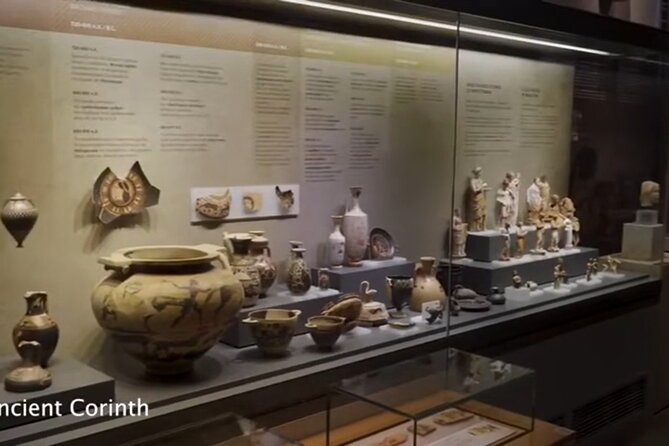
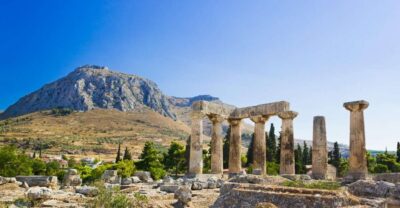
The ruins also show how broad Corinth’s importance was. The Temple of Apollo points to the older Greek city. The Roman Agora reflects the city’s later political and commercial life. The Archaeological Museum helps put the scattered stones into human context, with objects from the excavations giving shape to the people who lived here.
Systematic archaeological work at Corinth began in 1896 under the American School of Classical Studies at Athens. Later work by the Greek Ministry of Culture added more pieces to the picture. You can feel that ongoing process in a place where the exposed ruins reveal much, but never everything.
More Ancient Corinth and canal trips:
- From Athens: Ancient Corinth Day Trip with Canal & VR Guide
★ 4.6 · 1,073 reviews - Private Biblical Tour Ancient Corinth & Isthmus Canal from Athens
★ 5.0 · 762 reviews - Athens: Ancient Corinth & Nafplio Full Day Trip with Swim
★ 4.8 · 523 reviews
Three hours among the ruins of Ancient Corinth
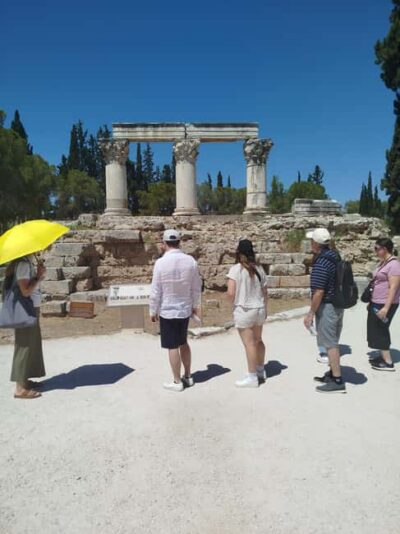
The itinerary allows about three hours at Ancient Corinth, making this the heart of the day. You will have time to walk through the main archaeological area rather than simply stop for a photograph.
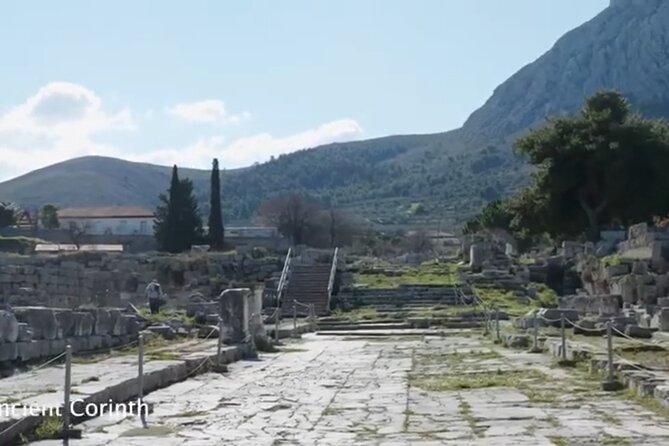
Start with the Roman Agora and the Bema. The open arrangement helps you understand Corinth as a civic center, not just a religious site. Paul’s connection becomes more meaningful when you see the public space around it and consider how faith was discussed under Roman rule.
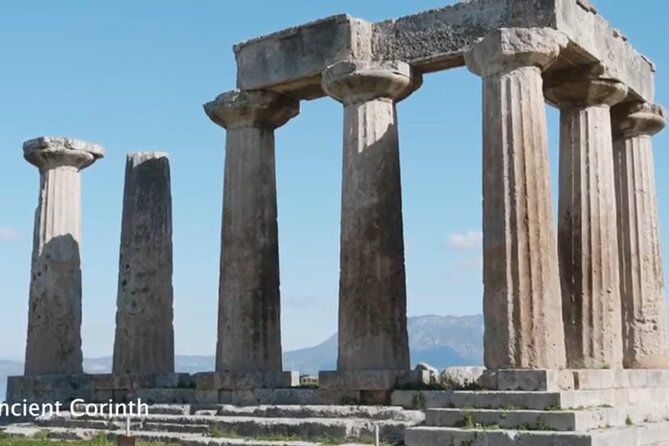
The Temple of Apollo is one of the most recognizable parts of the site. Its remaining columns are a reminder that Corinth’s religious life began long before Christianity arrived. I like this contrast because it prevents the visit from becoming too narrow. You see Paul’s world as a place with established traditions, competing beliefs, public institutions, and international trade.
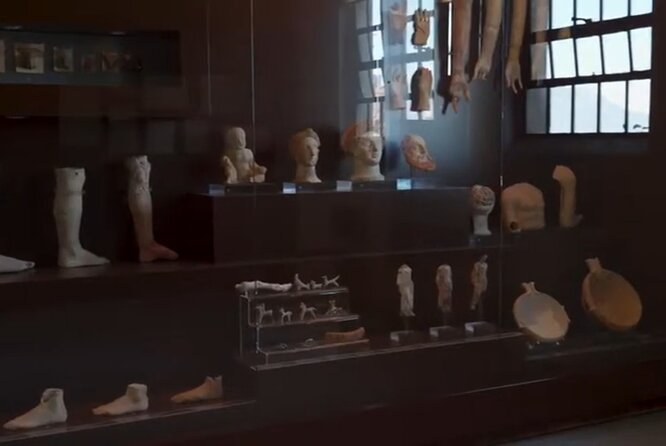
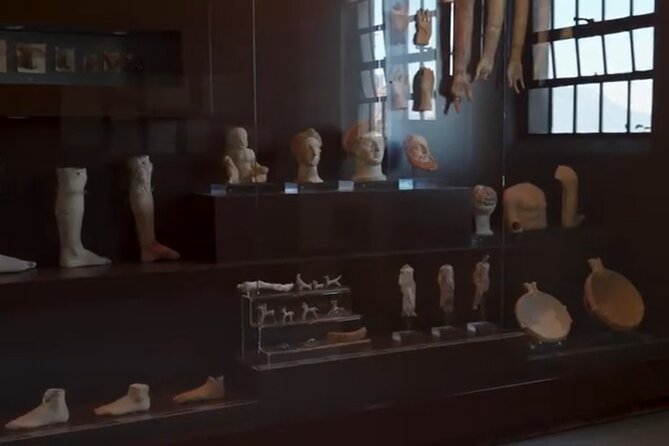
Make time for the Archaeological Museum. The ruins can be hard to read on their own, especially if you do not already know the difference between Greek and Roman periods. The museum provides objects and context that make the outdoor site easier to understand.
The biblical connection will appeal most to Christian visitors, but you do not need a faith background to appreciate the place. The city also matters to anyone interested in Roman Greece, ancient urban planning, or the way major trade routes shaped religious communities.
You should expect walking over an archaeological site, with uneven ground possible. The supplied information does not give a detailed accessibility assessment, so anyone with mobility concerns should ask the provider for current conditions before booking.
Kenchreai, the port tied to Paul’s eastern route
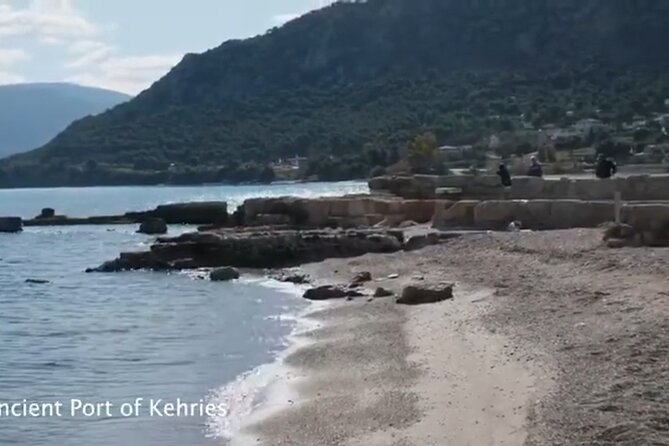
The next stop is Ancient Port of Kenchreai, with about 30 minutes set aside. This is a shorter visit and a quieter one, but it adds an important piece to the story.
Kenchreai was Corinth’s eastern port, serving ships traveling through the Saronic Gulf. Lechaion handled routes toward the west, including Italy and the rest of Europe. Corinth’s position on the narrow Isthmus gave it access to both sea corridors and the overland route between central Greece and the Peloponnese.
The site is also associated with the baptism of Paul’s first Christian converts. That detail gives Kenchreai a particular meaning for people following Paul’s footsteps. The stop is not as visually dense as Ancient Corinth, so its value comes from location and connection rather than a long list of intact monuments.
Admission is listed as free. Since only about half an hour is planned here, keep your expectations sensible. This is a brief historical pause, not a second full archaeological tour.
Acrocorinth and the view over the old city
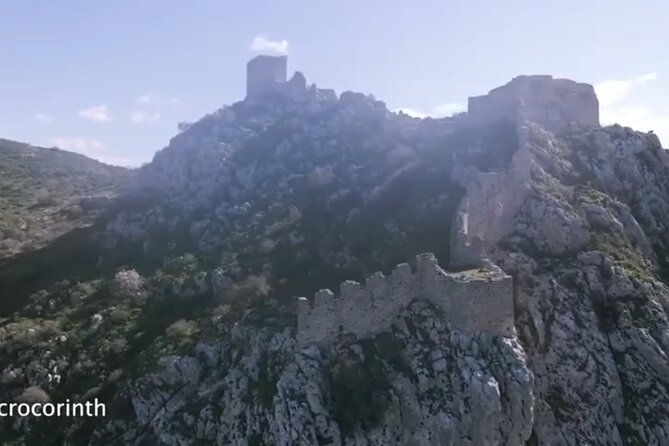
Acrocorinth is the enormous rock above Ancient Corinth, crowned by a fortress that guarded the route into the Peloponnese. The stop is planned for about 30 minutes and admission is listed as free.
Even a short visit gives you a useful change of scale. Down below, Corinth can seem like a collection of foundations and columns. From Acrocorinth, you understand why this position mattered. The rock commands the Isthmus, and its secure water supply helped make it a strong defensive position.
The fortress was used repeatedly as a last line of defense in southern Greece. Its role was practical: control this narrow passage and you could slow or block movement by land into the peninsula.
Do not confuse this stop with a full fortress hike. The allotted time is short, and the information provided does not promise a long ascent or extensive exploration inside the walls. You are mainly getting the dramatic setting and the strategic view.
For photography, this is likely one of the most rewarding parts of the day. The rock rises sharply above the ancient city, and the combination of ruins, stone defenses, and open countryside gives Corinth its strongest visual moment. If you prefer detailed exploration over quick viewpoints, you may wish the schedule allowed more time here.
More biblical and Apostle Paul tours in Athens:
- Biblical Tour Letters ToThe Corinthians St Paul’s Footsteps 6Hour
★ 5.0 · 1,065 reviews - Private Tour of Apostle Paul’s Footsteps in Ancient Corinth
★ 5.0 · 275 reviews - Paul”s Footsteps Ancient Corinth Biblical Tour
★ 5.0 · 184 reviews - Private Luxury Biblical Tour: Apostle Paul in Athens & Corinth
★ 5.0 · 162 reviews
The Corinth Canal, a four-mile cut through Greece
The final major stop is the Corinth Canal, with about one hour planned. This is a striking engineering site rather than an ancient ruin, and it rounds out the day by showing how the old geographic problem was solved in modern times.
The canal cuts through the Isthmus of Corinth and connects the Gulf of Corinth, part of the Ionian Sea, with the Saronic Gulf, part of the Aegean. It separates the Peloponnese from mainland Greece, turning the peninsula into an island in geographic terms.
The canal is 6.4 kilometers long and only 24.6 meters wide at sea level. It has no locks because it was cut at sea level. Modern ships often cannot use it because of its narrow width, so today it is mainly a sightseeing attraction.
The claim that a canal route existed in some form as early as 700 BC adds an ancient layer to the stop, but the present canal is the result of later construction. Keep that distinction in mind when you hear the site described as ancient. The idea is old; the visible canal is a modern work.
An hour here gives you time to take in the scale without rushing. It also offers a welcome break from stone ruins. You move from religious and political history to geography, shipping, and engineering, all in the same narrow strip of Greece.
A private ride that keeps the day easy
The experience is priced at $417.57 per group of up to four people. For a full group, that works out to roughly $104 per person before tickets and lunch. That is a fair value if you want private transportation and a dedicated day away from Athens, especially because the route covers four separate places that would be awkward to connect independently.
For two people, the cost per person is much higher. You are paying for privacy, convenience, and the vehicle rather than a low-cost shared excursion. I would choose it for a family, two couples, or a small group that values control over the day.
Pickup is offered, though the supplied details do not specify the exact pickup area. Confirm that point when you book. The vehicle is air-conditioned and includes WiFi, water, and a toilet, useful comforts on a six-hour outing in warm weather.
The day is private, so only your own group participates. That matters here because the schedule includes short stops and a major three-hour visit. A private arrangement gives you a better chance to ask questions, adjust your attention, and avoid being pushed through the ruins at a fixed group pace.
The driver-guide named in the experience is Ilias Kanteres. His strongest qualities in the available feedback are a personable approach, clear information about Ancient Corinth, Acrocorinth, and the canal, and care in allowing enough time at each stop. One outing also included the Apostle Paul’s Church, but that is not listed as one of the four main itinerary stops, so ask if it is part of your planned route rather than assuming it is guaranteed.
What the day does not include
The price does not include lunch. You should plan to bring money for a meal or ask the provider how the schedule handles lunch. No restaurant or meal location is specified, so do not count on a particular dining stop.
Entry tickets are also extra. Ancient Corinth is listed with admission not included, while Kenchreai, Acrocorinth, and the Corinth Canal are listed with free admission. Ticket prices can change, so confirm the current Ancient Corinth cost before departure.
The experience lasts about six hours, but the listed stop times total five hours: three hours at Ancient Corinth, 30 minutes at Kenchreai, 30 minutes at Acrocorinth, and one hour at the canal. The remaining time presumably allows for pickup, driving, and transitions, but the exact schedule can vary.
This is best treated as a focused overview rather than a full academic tour. You will see the key places tied to Paul and Corinth, but the short Acrocorinth and Kenchreai stops leave little room for slow exploration.
Who should book this Corinth experience
I would recommend this outing to Christian visitors who want to connect Paul’s letters with real places. The Bema, the early Christian community, and Kenchreai’s baptism connection give the day a clear religious thread.
It also suits anyone who wants a private historical excursion from Athens without arranging several separate transfers. The combination of archaeology, a fortress, a port, and a canal gives you more variety than a visit limited to the main ruins.
Families and small groups can benefit from the private format, especially with the vehicle’s air conditioning, water, WiFi, and toilet. The price makes the most sense when four people share it.
I would be more cautious if your main goal is a long visit to Acrocorinth or a detailed archaeological lecture. The schedule gives Ancient Corinth the attention it deserves, but the other locations are compact stops. Ask Ilias about the day’s exact pacing if one site matters most to you.
Free cancellation is available if you cancel at least 24 hours before the start time. Cancellations within 24 hours are not refunded, and changes inside that period are not accepted.
Should you book it?
Book this private Corinth tour if you want Paul’s story placed in its Greek and Roman setting, along with an easy look at Kenchreai, Acrocorinth, and the Corinth Canal. The best value comes with four people, when the private price is shared.
Skip it if you want a low-cost group trip, a long fortress hike, or lunch and admission bundled into one payment. For the right small group, though, the route is well judged: three hours for the main ruins, short stops for the port and fortress, and a full hour at one of Greece’s most unusual engineering works.
FAQ
How long does the private Corinth tour last?
The experience lasts approximately six hours, including the stops and transportation from Athens.
How many people can join the private tour?
The price covers one private group of up to four people. Only your group participates.
Is pickup from Athens offered?
Yes, pickup is offered. The supplied details do not specify the exact pickup locations, so confirm the meeting point when booking.
Are entrance tickets included?
No. Entry tickets are not included in the price. Ancient Corinth is listed with admission not included, while Kenchreai, Acrocorinth, and the Corinth Canal are listed with free admission.
Is lunch included?
No. Lunch is not included, so you should budget for it separately.
What happens if I cancel?
You can receive a full refund if you cancel at least 24 hours before the experience start time. Cancellations or changes made less than 24 hours before the start time are not accepted for a refund.
Newly reviewed around Athens
- Athens: workshop for painting landscape with local artist★ 4.6 · 3 reviews
- Athens: Greek Wine & Olive Oil Tasting at Brettos Plaka★ 4.5 · 3 reviews
- Outdoor Yoga and Pilates with Akropolis view★ 4.0 · 5 reviews
- Acropolis of Athens: 60′ Tour in a Vintage Motorcycle★ 5.0 · 4 reviews
- Ultimate Tasting of the Volcanic Wines of Greece★ 5.0 · 3 reviews
- workshop for painting acropolis/landscape with local artist★ 5.0 · 3 reviews
- Athens at Twilight Night Tour with Drinks and Meze Dishes★ 4.8 · 4 reviews
- Breakfast in the markets with olive oil and honey tasting★ 4.8 · 8 reviews
Ancient Corinth Tours, compared.
Ancient Corinth Day Trip with Canal & VR Guide
Read our review →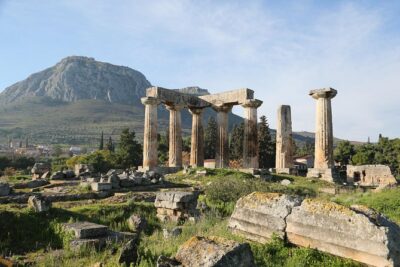
Private Biblical Tour Ancient Corinth & Isthmus Canal from Athens
Read our review →
Ancient Corinth & Nafplio Full Day Trip with Swim
Read our review →
Private Tour of Apostle Paul’s Footsteps in Ancient Corinth
Read our review →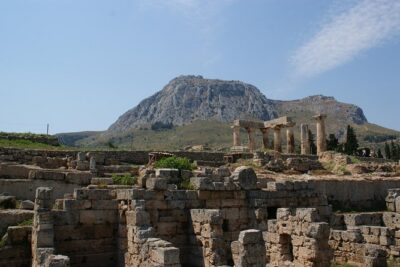
Corinth Half-Day Trip from Athens with Entrance Tickets
Read our review →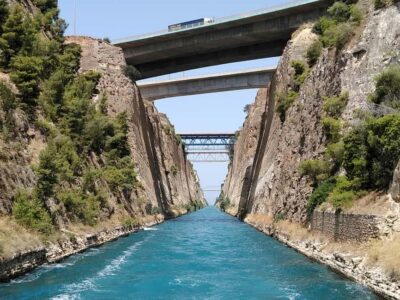
Browse the lists this tour appears in