
Reviewed · ANCIENT CORINTH TOURS
Exploring Corinth: In the Footsteps of the Apostle Paul
Corinth gives you two journeys at once: the ancient route across the isthmus and the road followed by Paul the Apostle. You’ll see the canal, the old shipway, the port where Paul sailed, and the ruins where he built a Christian community. It is a strong choice if biblical history matters as much to you as Greek archaeology.
I especially like the private format, since you can stop the guide with questions instead of waiting for a group to catch up. I also like the pickup and drop-off across Athens, plus onboard Wi-Fi for planning the next part of your trip. The main drawback is clear: your driver is not a licensed guide inside the archaeological sites, and entrance fees and food are extra.
Key points to know before booking
- Paul’s Corinth comes first: Visit Cenchreae, ancient Corinth, and the Apostolos Pavlos Church for a focused look at his time in Greece.
- The Corinth Canal is only the beginning: The isthmus also preserves the Diolkos, an ancient track used to move ships overland.
- A private vehicle saves time: Pickup is available at your hotel, apartment, or port, with your driver waiting at the entrance or gate.
- Theodore receives special praise: He is described as clear in English, full of interesting facts, and ready to answer questions about Paul and Corinth.
- Acrocorinth adds the best views: Set aside an hour for the hilltop citadel and its sweeping outlook over the area.
- Budget for admission costs: Archaeological site and museum entrance fees are not included, and the museum is specifically listed as extra.
Why Corinth makes a worthwhile day trip from Athens
Corinth sits at a natural choke point in Greece. The narrow Isthmus of Corinth joins mainland Greece to the Peloponnese, while the Corinth Canal cuts through it and links the Ionian and Aegean seas. That geography explains much of Corinth’s power, wealth, and strategic importance.
It also explains why this tour works better than a simple ruins visit. You are not only looking at broken columns. You are following the movement of ships, merchants, soldiers, and Paul himself through a place shaped by trade and travel.
The tour lasts about six to seven hours. That is long enough to reach several important sites without turning the day into a rushed checklist. Since you travel in a private, air-conditioned vehicle, you can ask questions along the way and adjust the conversation to your own interests.
The price is $171.52 per person. That is not an inexpensive add-on, but the value improves when you are traveling with others who can share the cost. You are paying for private transportation, pickup and drop-off, bottled water, Wi-Fi, and a dedicated English-speaking driver rather than a seat on a large bus.
You should also read the price carefully. A licensed guide to accompany you inside the archaeological sites is not included. Food, snacks, museum admission, and archaeological entrance fees are extra. If you want a formal archaeological explanation at every monument, you may need to arrange that separately or rely on your driver for context outside the sites.
More Ancient Corinth and canal trips:
- From Athens: Ancient Corinth Day Trip with Canal & VR Guide
★ 4.6 · 1,073 reviews - Private Biblical Tour Ancient Corinth & Isthmus Canal from Athens
★ 5.0 · 762 reviews - Athens: Ancient Corinth & Nafplio Full Day Trip with Swim
★ 4.8 · 523 reviews
The Corinth Canal and the narrow isthmus
The first stop is the Isthmus of Corinth, where you get a quick look at the strip of land separating the Gulf of Corinth from the Saronic Gulf. The modern canal is the obvious attraction. It is a dramatic cut through the land, built to give ships a shorter route between the Ionian and Aegean seas.
You have about 30 minutes here. That is enough to take in the scale of the canal, get photographs, and hear why this strip of land mattered long before the modern waterway was made.
I like beginning here because it gives you a map in physical form. The Peloponnese is no longer an abstract shape on a guidebook page. You can see the narrow crossing that made Corinth a key point for transport and trade.
Do not expect a long canal cruise or an extended engineering visit. The stop is brief, so treat it as an orientation point rather than the main event. The included time is also useful for settling into the day before the ancient sites begin.
The Diolkos, where ships crossed the land
The Diolkos is one of the most unusual stops. This ancient paved trackway dates to the sixth century BC and was used to move ships overland across the isthmus. It allowed vessels to avoid sailing around the Peloponnese, a longer and more dangerous route.
You get about 20 minutes here. That may sound short, but the site is best understood through explanation and imagination. The surviving route is not a complete ancient transport system waiting for you to walk for miles. Its value is in understanding the practical thinking behind it.
I find this kind of stop particularly useful because it shows how ancient engineering answered a very modern problem: how to save time, reduce risk, and move goods efficiently. It also helps explain why Corinth grew important in the first place.
Ask your driver to connect the Diolkos with the canal. Together, the two stops show how the same narrow crossing served different generations of engineers. One used stone paving and manpower. The other cut a deep waterway through the isthmus.
Cenchreae and Paul’s eastern harbor
The ancient port of Cenchreae, also spelled Kenchreai, was one of Corinth’s two main harbors. It sits on the Saronic Gulf and served as a place for trade and transport. The port also has a direct connection with Paul: the New Testament identifies it as the place where he began his final journey to Ephesus.
The visit lasts about 35 minutes. You will not get the same concentration of monuments found at ancient Corinth, but that is part of its appeal. This is a place where Paul’s story connects to a real point of departure, not only to a line in a text.
I would keep your expectations measured. The stop is about setting and context, not a large museum-style presentation. Your driver’s explanation matters here, especially if you want to understand how Cenchreae fit into the wider Corinthian network.
The private format is useful at this point. You can ask about Paul’s travel route, the two ports, and the relationship between the harbor and the city. A group excursion often gives you only a short statement before moving on. Here, you can make the stop as biblical or as historical as you prefer.
More biblical and Apostle Paul tours in Athens:
- Biblical Tour Letters ToThe Corinthians St Paul’s Footsteps 6Hour
★ 5.0 · 1,065 reviews - Private Tour of Apostle Paul’s Footsteps in Ancient Corinth
★ 5.0 · 275 reviews - Paul”s Footsteps Ancient Corinth Biblical Tour
★ 5.0 · 184 reviews - Private Luxury Biblical Tour: Apostle Paul in Athens & Corinth
★ 5.0 · 162 reviews
Ancient Corinth and Paul’s working community
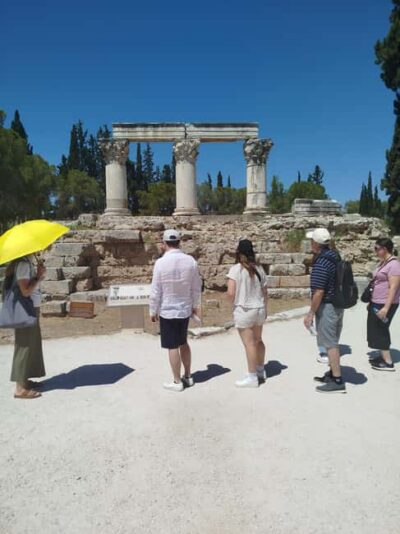
Ancient Corinth is the core of the day. You have about 90 minutes around Archaia Korinthos, with views and references to the Glauke Fountain, Temple of Apollo, Ancient Theatre, Roman Odeon, Temple E, the Bema, and Peirene Fountain.
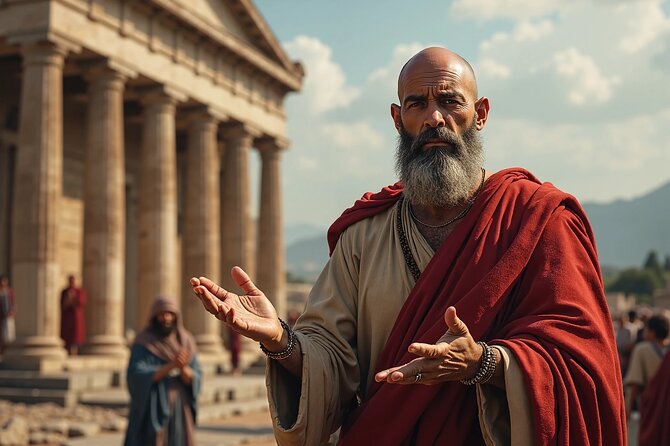
Paul spent a considerable period in Corinth, as described in Acts 18:1-18. He established a Christian community here, and the letters known as First Corinthians and Second Corinthians address its arguments, moral questions, social tensions, and religious life. Visiting the city gives those texts a physical setting.
The Bema is especially important for a Paul-focused visit. It was a public platform in the center of ancient Corinth, associated with civic authority and public judgment. Your guide can help explain why this place matters to the story of Paul and why Corinth was a difficult but promising place for an early Christian community.
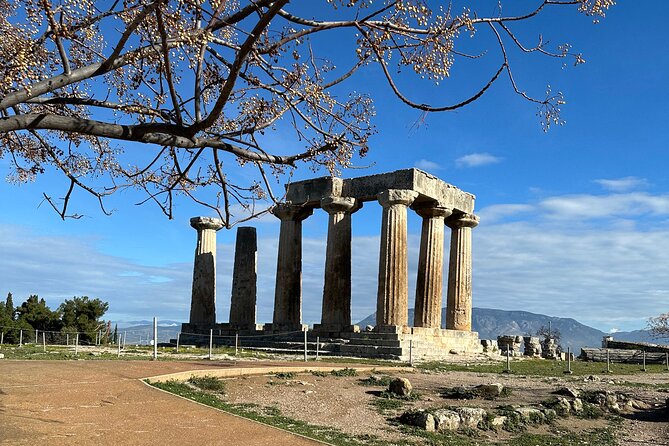
The Temple of Apollo provides a striking link to the older Greek city. Its surviving columns belong to one of the most recognizable sights at Corinth, while the later Roman remains show how the city changed under Roman rule. The theatre, odeon, fountains, and temples help you picture a working city rather than an isolated religious site.
The itinerary says you pass by several of these monuments, so do not assume that each receives a long stop or a separate entry. The 90-minute visit is enough for a focused overview, but not for a slow study of every stone. If you have a strong archaeological interest, ask in advance how much time you will spend walking through the site.
This is also where the lack of a licensed site guide matters most. The driver can provide useful background and answer questions, but the experience is not the same as having an archaeologist lead you from monument to monument. I would choose this tour for the combination of private transport and Paul-related context, not for a full academic reading of the ruins.
The Archaeological Museum of Corinth
Allow about 40 minutes for the Archaeological Museum of Corinth. Its displays include pottery, jewelry, and other finds that explain Corinth’s role in culture, trade, and daily life.
The museum gives you what the outdoor ruins cannot. Instead of seeing only foundations and standing columns, you get objects made and used by people. Pottery can suggest trade connections. Jewelry and small artifacts help bring ordinary life closer. The collection also helps you see Corinth as an active economic center rather than only a setting for Paul’s preaching.
Museum admission is not included, so budget for an additional ticket. The tour information does not give the current entrance price, and fees can change, so check before your visit if you are planning your spending closely.
Forty minutes is a sensible amount of time for a first visit. You can see the main collection without trying to read every label. If museums are your priority, you may wish for longer. If your main interest is Paul, the outdoor city and the church will probably carry more weight.
Acrocorinth and the views above the city
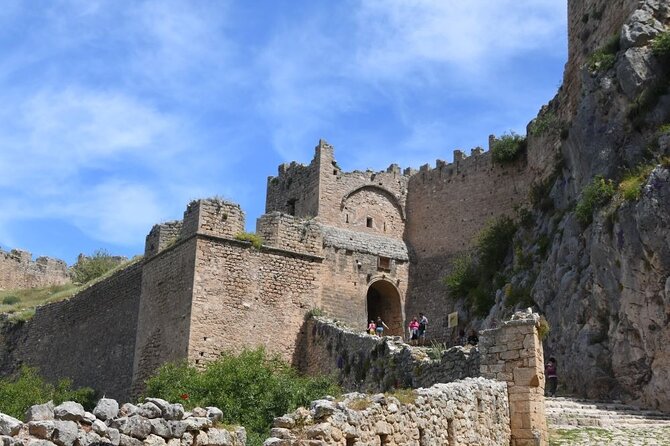
Acrocorinth is the high point of the route, both literally and often visually. This towering citadel rises above ancient Corinth and contains old fortifications. The one-hour visit gives you time to appreciate its position and the views across the surrounding area.
You should expect uneven ground and some walking. The provided information says most people can participate, but it does not give a detailed accessibility description for the citadel. If you have mobility concerns, ask the provider what parts of the visit suit you before booking.
Acrocorinth helps explain Corinth’s strategic importance. From high ground, the city’s location and connections become easier to understand. The fortifications were not placed there by accident. The height offered protection and control over the approaches.
I like this stop because it breaks up the museum and ruin visits with open views. It also gives you a better sense of how ancient Corinth related to the isthmus below. Plan to keep water with you, although bottled water is included in the vehicle.
The itinerary describes admission here as free, while the general conditions say archaeological entrance fees are not included. That is a detail worth clarifying with the provider before the day, since individual access rules may vary.
The Apostolos Pavlos Church and Paul’s continuing presence
The final stop is the Apostolos Pavlos Church in the heart of ancient Corinth. It is dedicated to Saint Paul and contains a mosaic by Pastorutti and Tsotsonis that depicts the Apostle’s journey.
You have about 20 minutes here. That is not enough for a long church visit, but it gives the day a clear ending. After seeing the port linked with Paul’s departure and the city where he formed a Christian community, you finish at a place devoted directly to his memory.
This stop will mean the most to you if you are interested in the religious side of Corinth. It also offers a quieter contrast to the canal, citadel, and open-air ruins. Take a moment with the mosaic, and ask your driver about the story it presents.
Private transport, pickup, and the practical side
Pickup is available from hotels and apartments across Athens. At a port, the driver waits at the gate with a sign bearing your name. For a private tour, that is a real convenience, especially if you are arriving by ship or staying outside the central hotel area.
The vehicle is air-conditioned, and Wi-Fi is included. The Wi-Fi will not transform the journey into a work session, but it is handy for checking plans, saving maps, or arranging dinner while you ride. Bottled water is also provided.
Only your group participates. That gives you control over the pace and makes it easier to ask direct questions. The driver is described as English-speaking, and Theodore is specifically praised for clear English, interesting facts about Paul’s dealings with the Greeks in Corinth, and patient answers to many questions.
Do not confuse a private driver with a licensed guide. The tour does not include a licensed guide inside the archaeological sites. That distinction is important when comparing this experience with a more expensive guided archaeology tour.
Child seats are available on request. The activity is near public transportation, although the included service is private pickup rather than a public transit connection. Airport pickup and drop-off cost extra, so do not assume the standard Athens pickup covers the airport.
Who should book this Corinth experience?
I would recommend it to you if Paul’s story is a central reason for visiting Corinth, or if you want a private day trip without arranging a rental car. It also suits families and small groups who prefer to control the conversation and avoid a fixed large-group schedule.
It is a good fit for first-time visitors who want the main Corinth sights in one outing: the canal, Diolkos, Cenchreae, ancient Corinth, museum, Acrocorinth, and church. The driver’s role is especially valuable if you want historical and biblical background while moving between sites.
I would hesitate if you want long, expert-led walks through every monument. Since site guiding and admission fees are separate, the final cost can rise. I would also think twice if your main goal is a relaxed beach or food day, since this is a focused history tour with several stops.
The free-cancellation policy gives you flexibility. You can cancel for a full refund up to 24 hours before the start time, while changes or cancellations inside that window are not accepted. Keep the local cutoff time in mind.
Should you book it?
Book this tour if you want Corinth explained through Paul, ports, and ancient engineering, and if private Athens pickup is worth paying for. The combination of Cenchreae, the Bema, the church, and Paul-focused conversation gives the day a clear purpose.
Before paying, confirm the current entrance costs and ask how much walking and site access are planned. If you understand that this is a private driver experience rather than a licensed archaeological tour, the $171.52 price can make sense for a small group seeking comfort, flexibility, and a strong biblical connection.
FAQ
How long does the Corinth tour last?
The experience lasts approximately six to seven hours.
Where does pickup take place?
Pickup is offered from hotels and apartments across Athens. At a port, the driver waits at the gate holding a sign with your name.
Is airport pickup included?
No. Airport pickup and drop-off are available at an additional cost.
Is this a private tour?
Yes. Only your group participates in the activity.
Is the driver English-speaking?
Yes. The tour includes an English-speaking tour driver. Theodore is specifically identified as a driver who answers questions in clear English.
Is a licensed guide included at the archaeological sites?
No. A licensed guide to accompany you inside the archaeological sites is not included.
Are entrance fees included?
No. Archaeological site and museum entrance fees are not included. The Archaeological Museum of Corinth is specifically listed as an extra cost.
Is food included?
No. Food and snacks are not included. Bottled water is provided in the vehicle.
Can I cancel for a full refund?
Yes, if you cancel at least 24 hours before the experience start time. Cancellations or changes made less than 24 hours before the start time are not accepted for a refund.
Newly reviewed around Athens
- Athens: workshop for painting landscape with local artist★ 4.6 · 3 reviews
- Athens: Greek Wine & Olive Oil Tasting at Brettos Plaka★ 4.5 · 3 reviews
- Outdoor Yoga and Pilates with Akropolis view★ 4.0 · 5 reviews
- Acropolis of Athens: 60′ Tour in a Vintage Motorcycle★ 5.0 · 4 reviews
- Ultimate Tasting of the Volcanic Wines of Greece★ 5.0 · 3 reviews
- workshop for painting acropolis/landscape with local artist★ 5.0 · 3 reviews
- Athens at Twilight Night Tour with Drinks and Meze Dishes★ 4.8 · 4 reviews
- Breakfast in the markets with olive oil and honey tasting★ 4.8 · 8 reviews
Ancient Corinth Tours, compared.
Ancient Corinth Day Trip with Canal & VR Guide
Read our review →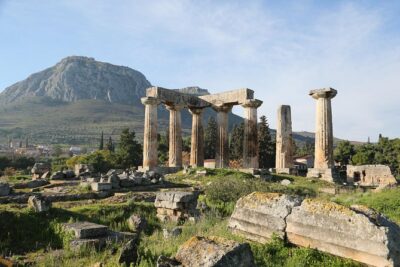
Private Biblical Tour Ancient Corinth & Isthmus Canal from Athens
Read our review →
Ancient Corinth & Nafplio Full Day Trip with Swim
Read our review →
Private Tour of Apostle Paul’s Footsteps in Ancient Corinth
Read our review →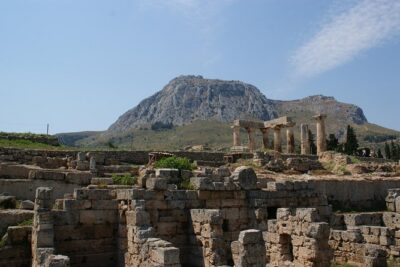
Corinth Half-Day Trip from Athens with Entrance Tickets
Read our review →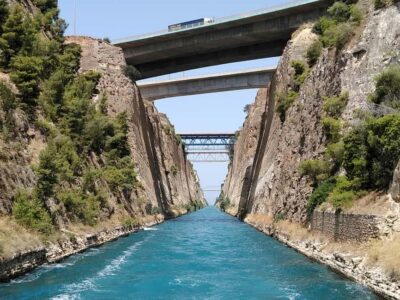
Browse the lists this tour appears in