
Reviewed · PELOPONNESE TOURS FROM ATHENS
Sparta Tour
The ancient city of Sparta makes a fine long day from Athens, especially when you pair its military past with the medieval ruins of Mystras. This private trip also adds the Corinth Canal and a useful stop at the Museum of the Olive and Greek Olive Oil, giving you a wider look at the Peloponnese than a simple Sparta outing.
I like the door-to-door service from Athens or Piraeus, and I like having a private vehicle with Wi-Fi, air-conditioning, and bottled water for the long ride. The main drawback is the price: $802.86 for up to three people is a serious outlay, and entrance fees plus lunch are extra.
Key points before you book
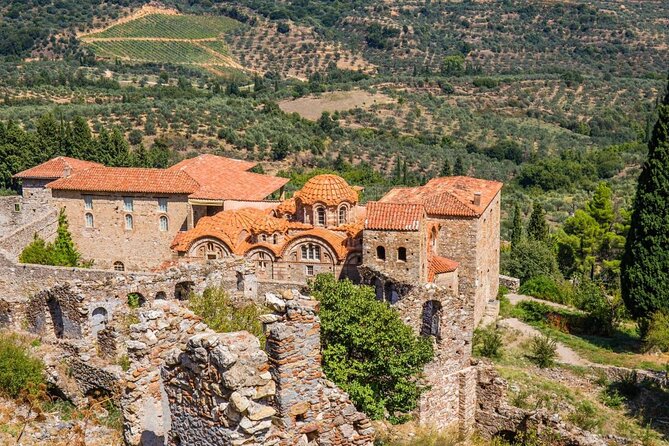
- Mystras is the day’s star sight: The UNESCO-listed Byzantine town offers churches, monasteries, a fortress, and broad views over the area.
- Sparta itself is a short visit: The plan allows about 30 minutes in the city, followed by 30 minutes at its archaeological museum.
- The Corinth Canal is a quick photo stop: You get about 20 minutes to see this narrow engineering work.
- The tour is private for up to three people: You travel only with your own group and an English-speaking driver.
- Lunch comes in Pikoulianika: The one-hour stop takes place at a traditional tavern with views toward Sparta.
- Budget for extras: Admission tickets, drinks, and meals are not included unless you choose the lunch option. Airport pickup costs extra.
Why this Sparta day trip works

Sparta is about a 2.5-hour drive from Athens, so the real question is not simply Do I want to see Sparta? It is Do I want to spend much of a day reaching it? With this tour, the answer is easier because the journey includes several worthwhile stops instead of treating Sparta as the only event.
You leave the driving to someone else, avoid changing buses, and keep the schedule private. That matters on a 10 to 11-hour day. You can also start from a hotel or private rental in Athens or Piraeus, which saves the time and effort of reaching a central meeting point.
The price is $802.86 per group of up to three people. Split among three, that is roughly $268 per person before admissions and food. For one person, or even two, it is much harder to call this a bargain. The value comes from the private car, the long-distance route, the hotel pickup, and the ability to see several places in one day.
Your driver speaks English and remains with you throughout the day, but cannot escort you inside the archaeological sites and museums. Think of this as private transport with guiding and local help around the stops, not as a full licensed guide walking beside you through every exhibit.
More Peloponnese trips from Athens:
- Athens: Peloponnese Highlights Day Trip and V.R. Audio Guide
★ 4.5 · 1,425 reviews - Argolis: Full-Day Tour in Mycenae & Nafplio
★ 4.2 · 350 reviews - PELOPONNESE HIGHLIGHTS PRIVATE: Corinth Mycenae Nafplio Epidaurus
★ 5.0 · 103 reviews
The Corinth Canal sets the tone
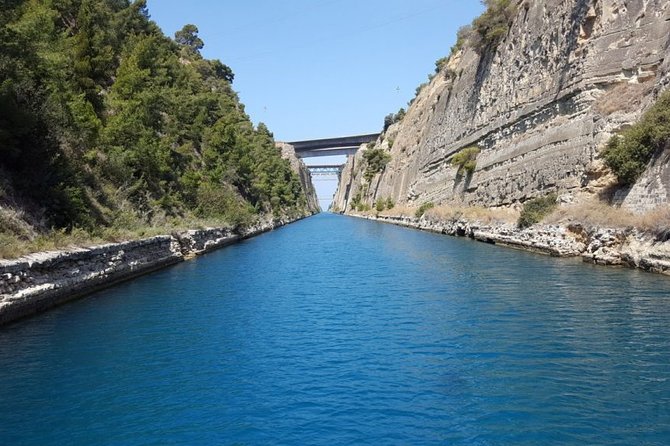
The first stop is the Corinth Canal, about 80 kilometers west of Athens. Cut through the narrow Isthmus of Corinth, the canal separates the Peloponnese from mainland Greece and links the Gulf of Corinth with the Saronic Gulf.
You get around 20 minutes here, which is enough for a look and photographs but not a long visit. The canal is 6.4 kilometers long and only 21.4 meters wide at its base. It was dug at sea level, so it has no locks.
The canal is less important for modern shipping than it once seemed, partly because its narrow width limits the vessels that can use it. That is not a problem for this tour. You are stopping for the striking cut through the rock and the sense of how much work went into separating the two bodies of water.
I like this opening because it gives you a clear physical marker: Athens is behind you, and the Peloponnese begins beyond the canal. The short stop also helps break up the first leg of the drive. Do not expect a full Corinth archaeological visit, though. This stop focuses on the canal only.
Sparta: famous name, modest remains
Sparta has one of the biggest names in ancient Greek history, yet the modern visit can feel more restrained than first-time visitors expect. Ancient Sparta was known as Lacedaemon, with Sparta referring to its main settlement along the Eurotas River in southeastern Peloponnese.
By about 650 BC, Sparta had become the strongest military land power in Greece. It led the unified Greek military effort during the Greco-Persian Wars, competing with Athens, whose strength rested more on its navy. Sparta later defeated Athens in the Peloponnesian War, fought from 431 to 404 BC.
The tour gives you about 30 minutes in Sparta itself. That is enough to get your bearings and connect the modern city with the ancient name, but it is not enough for a slow, detailed examination of every surviving feature. You will want to keep your expectations practical: this is a historical stop within a much larger day, not a full archaeological expedition.
The appeal is the contrast between the powerful image of Sparta and what remains visible now. The city-state is famous for discipline, military training, and King Leonidas, but the physical remains are less dramatic than the stories. That makes the museum especially important.
The Archaeological Museum of Sparta fills in the gaps
At the Archaeological Museum of Sparta, you have about 30 minutes to see objects from the ancient acropolis of Sparta and other parts of Laconia. The collection covers a wide span, from the Neolithic period through the late Roman period.
The museum has seven rooms covering about 500 square meters. Only a small part of the wider collection is displayed, so this is a compact museum visit rather than an all-day stop. Its value is that it gives physical context to a city whose modern reputation can overshadow its surviving evidence.
Admission is not included. Since the driver cannot accompany you into the museum, you should be ready to explore the rooms on your own. If you prefer a slow museum visit with time to read every label, the fixed 30-minute schedule may feel tight. If you want a concise introduction before moving on, it fits the day well.
The tour also includes the Leonidas Tomb as part of the Sparta experience. The tomb is an important reminder of the city’s best-known king and the story attached to Thermopylae. The information provided does not assign a separate visit time, so you should expect it to be handled within the Sparta portion rather than as a long standalone stop.
A different kind of day out from Athens:
- Athens: Acropolis & up to 5 Archaeological Sites Combo Pass
★ 4.4 · 12,619 reviews - Athens: Acropolis Ticket with Optional Audio or Live Guide
★ 4.2 · 11,055 reviews - Athens: Acropolis, Parthenon & Acropolis Museum Guided Tour
★ 4.8 · 9,316 reviews - Athens: Cape Sounion & Poseidon Temple Sunset Half-Day Trip
★ 4.8 · 8,241 reviews
The olive museum adds everyday Greek culture
The Museum of the Olive and Greek Olive Oil is a smart addition because it moves the day beyond battles, kings, and ruins. You get about 30 minutes to learn how olives and olive oil have been used in Mediterranean life from ancient times to the present.
The displays cover cooking, fuel, ritual use, and perfume-making. In the courtyard, reconstructed olive presses show changes in technology from prehistoric times through the Byzantine period. Small working models demonstrate how pressing methods developed.
This is a good stop for you if you enjoy practical history. Olive oil is not treated as just a food product here. It appears as a material used in homes, religious life, lighting, and trade. The reconstructed presses also make the subject easier to understand than a room of static objects would.
Admission is extra, and the half-hour visit is brief. You will get the main idea, but you should not expect enough time for every exhibit. Still, it gives the route a useful change of pace after the ancient Sparta material.
Mystras deserves your best attention
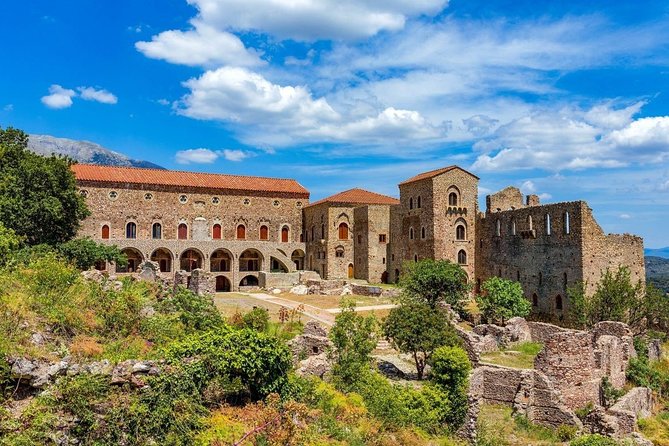
Mystras is the most substantial stop on the route, with about 1 hour and 30 minutes at the archaeological site. It is also the place where comfortable shoes and sensible pacing matter most.
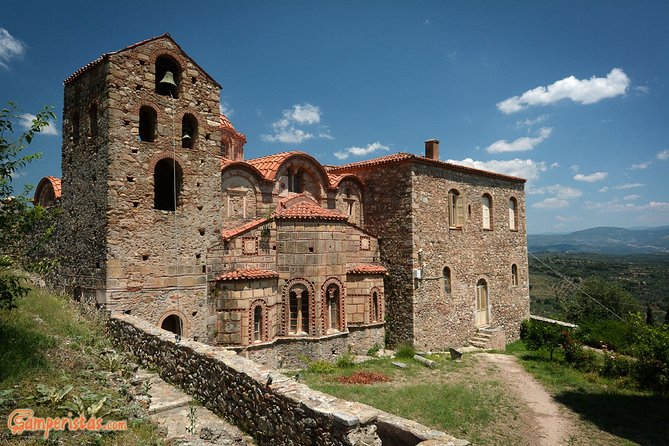
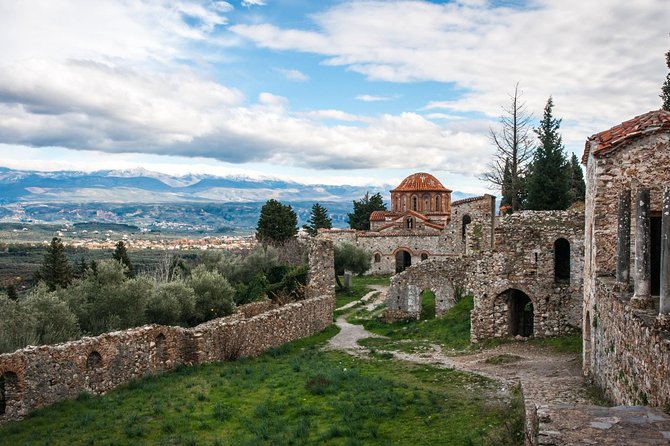
The medieval town was built around a fortress raised in 1249 by William of Villehardouin, prince of Achaia. The Byzantines later reconquered it, and the town was also occupied by the Turks and Venetians. Mystras was abandoned in 1832, leaving churches, monasteries, fortifications, and other ruins spread across the hillside.
The town grew quickly as a center of Byzantine power. The bishopric moved there from Sparta, and the cathedral, known as the Metropolis or Church of Hagios Demetrios, was built after 1264. Monasteries included Brontochion and Christos Zoodotes. Under the Byzantine Despots, Mystras reached its peak, with churches and buildings that remain the main reason to make this long trip.
I like Mystras because it feels different from a standard ancient Greek ruin. You are not looking at one isolated temple or a flat field of foundations. The remains extend around a fortress, with religious buildings and medieval streets set against the hills above Sparta. The scenery is part of the experience, but the site also requires more physical effort than the shorter museum stops.
You get 90 minutes, not unlimited time. The driver cannot escort you inside the site, so you will explore independently. The admission fee is separate. Ask your driver for practical advice about where to begin, then use the time carefully. If Mystras is your main reason for booking, keep your pace steady and avoid spending too long at the first ruins you see.
Lunch in Pikoulianika brings a welcome pause
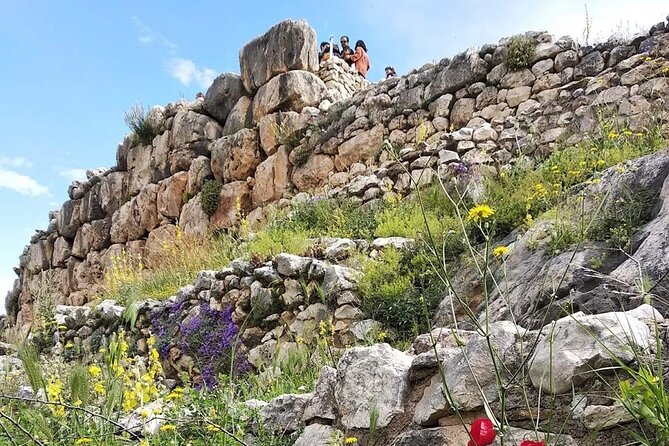
After Mystras, the tour takes you to Pikoulianika, a mountain village, for about one hour of lunch at a traditional tavern. The chosen setting has wide views toward Sparta.
Meals are not included unless you select the lunch option, so check the exact booking choice before you go. Drinks are also separate. This is useful to know because a private day trip can look less expensive at first when the main price excludes food and site tickets.
The stop works well after Mystras. You have time to sit down, eat, and enjoy the view rather than rushing straight back to Athens. I would treat the lunch as a flexible part of the day, but remember that the overall route is long. A leisurely meal may affect how much time remains for the return journey, so keep an eye on the schedule.
What the private vehicle adds
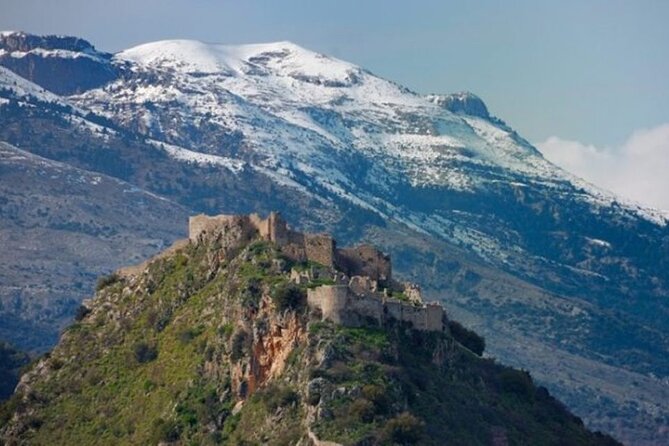
The vehicle is described as a brand-new luxury vehicle with air-conditioning, Wi-Fi, and bottled mineral water. On a route with several hours of road time, these are practical features, not mere decoration.
Wi-Fi can help you stay connected without using roaming data. Air-conditioning matters during a full-day drive, and bottled water means one less thing to organize before departure. The door-to-door pickup and return also remove the need to arrange transport across Athens or Piraeus.
The tour is limited to your own group, up to three people. That gives you more control than a large coach trip, though the fixed itinerary still includes set time blocks. The driver provides service throughout the day, but you should not treat the experience as a private museum tour with a guide inside every stop.
The airport pickup and return option costs extra. Hotel, residence, and port pickup are included, while airport transfers are not. That distinction is easy to miss when comparing the total cost, so factor it in if you are staying near the airport or arriving there directly.
Who should book this tour
I would choose this experience if you have already covered Athens and want a long, private day focused on the Peloponnese. It suits a small family or a group of friends who can divide the cost and value door-to-door service.
It also fits you if Mystras interests you more than a standard beach or resort day. The route combines military history, medieval Byzantine architecture, engineering, and olive production, so the day does not depend on one type of sight.
Families may appreciate the private setup and the ability to travel together without strangers. One family experience included a driver who kept the group engaged with explanations and even remembered a passing mention of a local sweet, buying one later. That small detail points to the sort of personal attention you can get from a private service, though the driver’s name is not provided.
I would hesitate if you dislike long road days, want a slow museum schedule, or are visiting Athens for only a short time. Sparta and Mystras are not quick add-ons. The 10 to 11-hour duration takes most of a day, and entrance fees and meals push the final cost higher.
Cancellation is flexible if your plans change early: cancel at least 24 hours before the start time for a full refund. Changes or cancellations inside that 24-hour window are not accepted for a refund.
Should you book the Sparta tour?
Book it if you want a private, all-day route from Athens that reaches both Sparta and Mystras without arranging several separate connections. The strongest part is the combination of Mystras, the Corinth Canal, the olive museum, and a scenic lunch stop, all handled in one vehicle.
Before paying, calculate the real group cost. Add admission tickets, lunch, drinks, and any airport transfer. For three people, the price can make sense for the comfort and coverage. For one person, it is a premium way to see the area.
My practical advice is simple: choose this tour for convenience and range, not for a leisurely study of Sparta alone. If you can accept a long day and manage your time at Mystras, it offers a useful and varied look at the Peloponnese.
FAQ
How long does the Sparta tour last?
The experience lasts approximately 10 to 11 hours.
Where does pickup take place?
Free pickup and return are offered from hotels, private residences, and ports in Athens and Piraeus. Airport pickup and return are available at an additional cost.
How many people can join the private tour?
The tour is exclusive to your group and can include up to three people.
Is transportation included?
Yes. Transportation is provided in a luxury vehicle with air-conditioning, Wi-Fi, and bottled mineral water.
Are entrance fees included?
No. Entrance fees for the Archaeological Museum of Sparta, the Museum of the Olive and Greek Olive Oil, and the archaeological site of Mystras are not included.
Is lunch included?
Meals are not included unless you choose the lunch option. The planned lunch stop is at a traditional tavern in Pikoulianika.
Can the driver enter the archaeological sites with the group?
No. The English-speaking driver accompanies you throughout the day but cannot escort you inside the sites.
Newly reviewed around Athens
- Athens: workshop for painting landscape with local artist★ 4.6 · 3 reviews
- Athens: Greek Wine & Olive Oil Tasting at Brettos Plaka★ 4.5 · 3 reviews
- Outdoor Yoga and Pilates with Akropolis view★ 4.0 · 5 reviews
- Acropolis of Athens: 60′ Tour in a Vintage Motorcycle★ 5.0 · 4 reviews
- Ultimate Tasting of the Volcanic Wines of Greece★ 5.0 · 3 reviews
- workshop for painting acropolis/landscape with local artist★ 5.0 · 3 reviews
- Athens at Twilight Night Tour with Drinks and Meze Dishes★ 4.8 · 4 reviews
- Breakfast in the markets with olive oil and honey tasting★ 4.8 · 8 reviews
Peloponnese Tours from Athens, compared.

Peloponnese Highlights Day Trip and V.R. Audio Guide
Read our review →
PELOPONNESE HIGHLIGHTS PRIVATE: Corinth Mycenae Nafplio Epidaurus
Read our review →
Ancient Sparta Ancient Corinth Private Tour from Athens/ Nafplio
Read our review →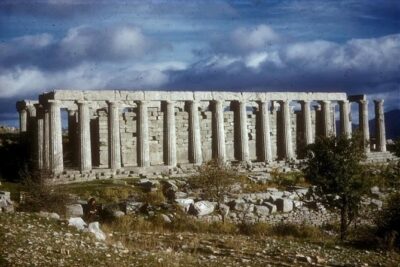
Day tour to Ancient Olympia,Ancient Sparta Mycenae Including Meal
Read our review →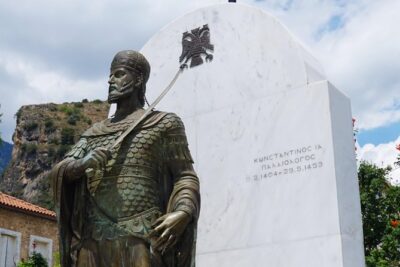
Ancient Sparta & Mystras Private Day Tour from Athens
Read our review →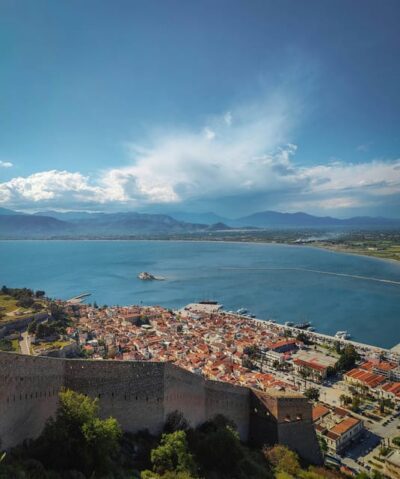
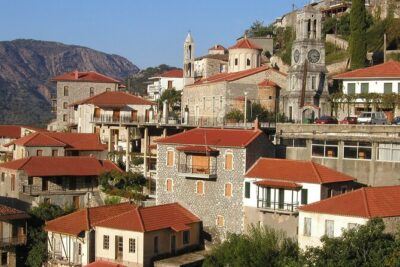
5-Day Best of Peloponnese Private Tour: Nafplio/Olympia/Mycenae/Epidaurus/more
Read our review →Browse the lists this tour appears in