
Reviewed · ANCIENT CORINTH TOURS
Full day Christian tour following Paul In Athens and Corinth
The heart of this tour is the link between St. Paul’s sermon in Athens and his work in Corinth. You will stand at the Areopagus, where Paul spoke about the unknown god, then cross the Corinth Canal and explore the ancient city where his Christian ministry continued. It is a useful pairing of biblical places and major Greek ruins rather than a simple sightseeing drive.
I like two things here. First, the private vehicle lets you set the pace, which matters when the Acropolis and Ancient Corinth compete for your attention. Second, the route includes both Athens and the Peloponnese, with coastal views, the Corinth Canal, and time for a local lunch. The main consideration is that your driver cannot escort you inside archaeological sites, so you must either prepare in advance or pay extra for a licensed guide.
Key points to know before booking
- Paul’s Athens and Corinth are treated as one connected story, beginning at the Areopagus and ending in Ancient Corinth.
- The private vehicle serves up to three people, making the $508.66 group price easier to justify for a small party.
- The driver explains the sites before you enter, but site admission and an official guide cost extra.
- Acropolis time is substantial, including the Parthenon, Propylaea, Temple of Athena Nike, and Erechtheion.
- The Corinth Canal provides a quick but memorable stop between Athens and Ancient Corinth.
- Punctual pickup is a strong point, with drivers such as Spyros and Dimitris praised for early arrival and flexible routing.
Why Paul’s Athens and Corinth make a good pairing
Many Christian tours in Greece focus on a church, a plaque, or a single biblical reference. This one gives you a wider setting. In Athens, Paul’s message meets the intellectual and religious world of classical Greece. In Corinth, you see the setting of one of the most important early Christian communities.
The Areopagus is the key Christian stop. It is also called the Hill of Ares and served as a court and council site long before Paul arrived. A bronze plaque at the foot of the rock presents the text of his famous speech about the unknown god. The physical site is modest, but its location beside the Acropolis makes the moment meaningful.
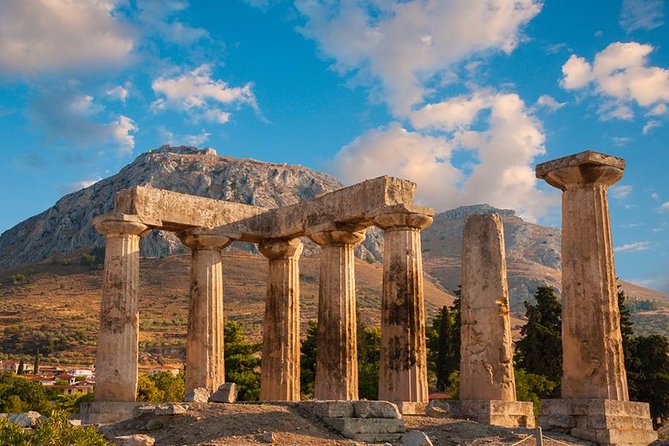
Ancient Corinth adds a second layer. The city occupied a strategic position between mainland Greece and the Peloponnese, with access to major land and sea routes. Its trade and wealth helped make it an important ancient city, and its position later made it an important place for Paul’s work.
I like this structure because you are not simply checking off biblical names. You are seeing the pagan religious center Paul addressed, then the commercial city where Christianity took firmer root. The ancient stones do not tell the whole Christian story, but they give you a clear sense of the worlds Paul encountered.
More Ancient Corinth and canal trips:
- From Athens: Ancient Corinth Day Trip with Canal & VR Guide
★ 4.6 · 1,073 reviews - Private Biblical Tour Ancient Corinth & Isthmus Canal from Athens
★ 5.0 · 762 reviews - Athens: Ancient Corinth & Nafplio Full Day Trip with Swim
★ 4.8 · 523 reviews
Pickup at Piraeus and the Athens Riviera
The day begins around 8:00 a.m. at your Athens hotel or cruise ship pier in Piraeus. At a hotel, meet the driver at the main entrance. At the port, walk outside the terminal exit, where the driver is expected to wait with a sign bearing your name.
From Piraeus, the route follows the coastal road along the Saronic Gulf. This first drive takes about 20 minutes and gives you a look at the Piraeus and Athens Riviera before the ancient sites begin. The vehicle is air-conditioned, and bottled water, fuel, road tolls, and local taxes are included.
For cruise passengers, timing deserves careful attention. You must provide the ship name, docking time, disembarkation time, and re-boarding time when booking. The advertised experience lasts about eight hours, but traffic, port procedures, and site crowds can affect your day, so do not treat the schedule as an excuse to cut your return to the ship too close.
Entering the Acropolis through the Propylaea
The Acropolis section gives you the largest block of ancient Athens. Your driver explains the setting and directs you to the entrance, but does not accompany you through the archaeological site unless you arrange a licensed guide at an extra cost.
The Propylaea forms the grand entrance to the sacred hill. The gateway was part of Pericles’ fifth-century BC building program and was designed by Mnesikles. Its plan was bold, though the project was never completed. You get only about five minutes listed here, but the structure also serves as your physical introduction to the Acropolis precinct.
The Temple of Athena Nike is another short stop, listed at about five minutes. This small Ionic temple sits on a bastion at the southwestern edge of the Acropolis. Its reliefs once showed gods, battles, and the Athenian victory at Marathon. The stop is brief, so have your tickets ready and keep moving with the site flow.
The Parthenon receives about 45 minutes. Built in the fifth century BC for Athena Parthenos, it was the chief shrine of the Acropolis and also connected to the treasury of the Delian League. You will see the building as the center of the hill, but remember that the surviving structure is only part of a larger Periclean program that included the Propylaea, Erechtheion, and Temple of Athena Nike.
The Erechtheion is known for its south porch and the six maiden-shaped supports called caryatids. Five originals are now in the Acropolis Museum, while replicas occupy the porch. The sixth was taken by Lord Elgin and is displayed in the British Museum. That detail gives you a useful reminder that the Acropolis story includes not only architecture and religion, but also the long dispute over removed sculptures.
A practical point: Acropolis admission is not included. Advance tickets are strongly recommended, since availability may be limited. The company can arrange advance purchases for a small service fee, or you can handle them yourself if you prefer.
The Areopagus and Paul’s unknown god
The Areopagus sits beside the Acropolis exit, making it an easy addition to the morning. The rock is uneven, and the tour requires a moderate level of physical fitness, so sensible shoes are a good idea even though the stated dress code is formal.
For a Christian visitor, this is likely the most personally important stop. Paul’s speech here addressed Athenians who worshipped many gods and had even dedicated an altar to an unknown god. The bronze plaque at the foot of the rock marks the speech, but the setting matters just as much as the wording. You can look from this ancient court toward the Acropolis and picture Paul speaking in a city built around religious and philosophical debate.
The listed time is about 20 minutes. That is enough to see the plaque, consider the view, and hear the driver’s introduction. It is not enough for a long study session or a full guided lesson, so read the relevant passage from Acts before you go if Paul’s message is your main reason for booking.
More full days out from Athens:
- All Day Cruise -3 Islands to Agistri,Moni, Aegina with lunch and drinks included
★ 5.0 · 4,958 reviews - From Athens: Delphi Full Day V.R. Audio Guided Tour
★ 4.6 · 3,028 reviews - Athens Full Day Private Tour
★ 5.0 · 2,903 reviews - From Athens: Mycenae, Epidaurus & Nafplio Full Day Trip
★ 4.8 · 2,438 reviews
The Ancient Agora, Athens’ public center
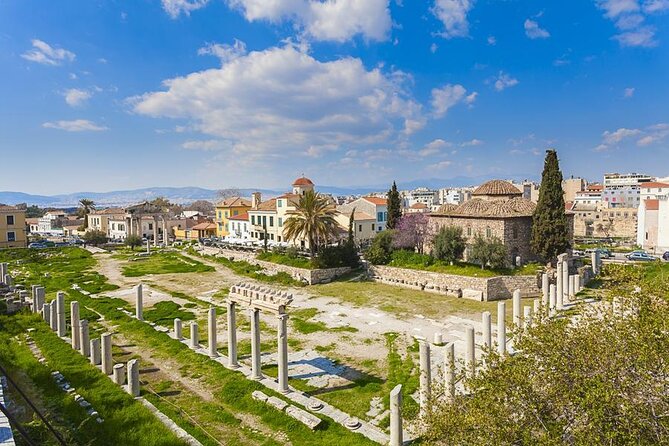
After the Acropolis, the tour allows about an hour and 20 minutes at the Ancient Agora, with roughly 20 minutes of travel between the areas. The Agora was the city’s gathering place, marketplace, political center, and social meeting ground. It remained in use for thousands of years, with layers from Archaic, Greco-Roman, and Byzantine periods.
This stop is valuable because it helps you understand Athens beyond its temples. The Acropolis shows the city’s sacred and ceremonial side. The Agora shows how civic life worked below the hill, where people met, traded, debated, and conducted public business.
Again, admission is extra, and the driver does not act as your official guide inside. You can explore at your own pace, which suits people who like to stop for photographs or read displays carefully. If you want a structured explanation of the buildings and archaeological layers, arrange the licensed guide in advance.
Crossing to the Peloponnese and the Corinth Canal
The drive from Athens to Corinth is a major part of the experience. You follow the Saronic Gulf and enter the Peloponnese, the large peninsula connected to mainland Greece by the narrow Isthmus of Corinth. The journey is listed at about an hour before the canal area, though the full day’s timing depends on traffic and site visits.
The Corinth Canal stop is short, around 15 minutes, but it earns its place. The canal cuts through the isthmus and links the Gulf of Corinth with the Saronic Gulf. It is about 6.4 kilometers long and only about 25 meters wide, with steep sides that make the waterway easy to appreciate from above.
The canal was completed in the late nineteenth century, but the idea is much older. Ancient ships had to sail around the Peloponnese, adding roughly 185 nautical miles to the journey. Periander, the ruler of Corinth, is credited with considering a canal in the sixth century BC, but the ancient solution was a stone track called the diolkos, where ships could be moved overland on wheeled platforms.
Do not expect a long canal visit. This is a photo and orientation stop, not a boat trip or an engineering tour. Its value is in showing why Corinth became so important and why the surrounding isthmus shaped trade for centuries.
Lunch in Ancient Corinth
Lunch is not included, and you receive about an hour for a meal at a traditional restaurant in Ancient Corinth. This is a good place to eat because it breaks up a long day and puts you close to the afternoon archaeological site.
You can ask the driver for a restaurant recommendation. The route allows time for a meal overlooking the sea, according to the tour experience described, and some guests have also used the stop for local shopping. Food costs vary, so budget separately from the tour price.
This is not a formal food tour with tastings included. Think of it as free time for lunch, with the chance to order Greek dishes in a local setting. If your group has dietary needs or wants a quick meal to protect site time, say so early in the day.
Ancient Corinth and the setting of Paul’s ministry
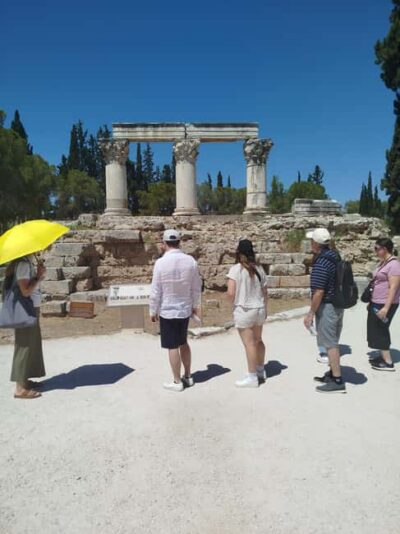
Ancient Corinth receives about an hour and 20 minutes, including the journey from the canal. The site was occupied as early as the Neolithic period and grew because of its fertile soil and strategic position between major routes. Corinthian trade reached the western Mediterranean, while colonies such as Corfu and Syracuse extended its influence.
For a Christian tour, this is the second major anchor after the Areopagus. You are now in the city associated with Paul’s Corinthian ministry, but the ruins also tell a broader story of commerce, politics, religion, and regional power. That wider context is useful because it explains why Corinth mattered to the early Christian movement.
The driver can give you background before you enter, then you explore independently. Some drivers have customized the route within the available time, added a viewpoint toward Acrocorinth, or included extra Athens sights such as the Temple of Zeus, the National Gardens, and the Unknown Soldier when the schedule allowed.
Acrocorinth is not listed as a standard main stop, so treat it as a possible extra rather than a promise. If the view is important to you, ask at the start of the day how much time is available. A private tour gives you more flexibility than a fixed group outing, but there is still only one day and the return drive remains necessary.
What the private format is really worth
The price is $508.66 for the group, up to three people. Divided among three, that is about $169.55 per person before site tickets, lunch, and any licensed guide. For two people, the per-person cost is higher, but you still receive private transport, hotel or port pickup, fuel, tolls, bottled water, and a full day on a route that would be tiring to manage by public transport.
The strongest value comes from the door-to-door service and route flexibility. You do not need to arrange separate transport to Piraeus, the Acropolis, Corinth, and the return point. You can also ask to spend more time at a site that interests you, within the limits of the day.
The cost is less attractive if you want a fully guided archaeological experience included in the base price. The driver is an English-speaking history and culture expert, but drivers are not licensed to accompany you inside the archaeological sites and museums. A state-licensed guide can be arranged for an additional fee, subject to availability.
Add the admission fees before comparing this tour with other options. The Acropolis, Ancient Agora, and Ancient Corinth are not included, and lunch is also your responsibility. The company suggests buying tickets in advance because same-day availability may be limited.
Who will get the most from this day
I would choose this tour if you are staying in Athens, arriving by cruise ship, or traveling with two other people who share your interest in Paul and ancient Greece. It suits people who want Christian context without giving up the major classical sites.
It also works well for families or small groups that dislike rigid group schedules. Drivers such as Spyros and Dimitris have been praised for arriving early, communicating clearly, and adjusting the day to the group’s interests. One driver, Dimitris, helped fit in Acrocorinth and extra city sights within the available time.
You should think twice if you want a slow, scholarly visit to every monument. The day covers a lot of ground, and the Athens to Corinth drive takes time. You will get a strong overview, but not an exhaustive study of each site.
The tour requires moderate physical fitness, especially around the Acropolis and Areopagus. Wear comfortable shoes, bring sun protection, and follow the stated formal dress code. The private vehicle is a welcome relief between walking stops.
Should you book it?
Book this tour if you want Paul’s Athens and Corinth connected in one day, need pickup from Piraeus or an Athens hotel, and value a private vehicle for a small group. It is especially good for a party of three, since the group rate spreads more favorably.
Before paying, decide if you need a licensed guide inside the sites and arrange one early. Also reserve or confirm your admission tickets, allow money for lunch, and ask how much time can be given to optional sights such as Acrocorinth.
The tour’s best features are its punctual service, flexible pacing, comfortable transport, and clear biblical thread. Its limitation is equally clear: your driver prepares you for the ruins but does not guide you through them. If you accept that arrangement, this is a practical and meaningful way to see two of Greece’s most important Christian places in one long day.
FAQ
How long does the tour last?
The tour lasts approximately eight hours and begins at about 8:00 a.m. The day ends with drop-off at the same Athens hotel or Piraeus cruise port location.
Can I be picked up from a cruise ship at Piraeus?
Yes. Cruise passengers can meet the driver outside the terminal exit. The driver will wait with a sign showing your name.
Is hotel pickup and drop-off included?
Yes. Pickup and return are available from hotels in Athens, with the meeting point at the hotel’s main entrance.
Is the tour private?
Yes. Only your group participates, with a maximum of three people at the stated group price.
Does the driver enter the archaeological sites with me?
No. The English-speaking driver provides information and guidance until you enter the sites and museums. A state-licensed guide can be arranged for an extra charge, subject to availability.
Are entrance fees included?
No. Admission to the Acropolis, Ancient Agora, Ancient Corinth, and other archaeological sites is not included.
Is lunch included?
No. You receive free time for lunch at a traditional restaurant in Ancient Corinth, but food and drinks are your responsibility.
What information must cruise passengers provide when booking?
Cruise passengers must provide the ship name, docking time, disembarkation time, and re-boarding time.
Newly reviewed around Athens
- Athens: workshop for painting landscape with local artist★ 4.6 · 3 reviews
- Athens: Greek Wine & Olive Oil Tasting at Brettos Plaka★ 4.5 · 3 reviews
- Outdoor Yoga and Pilates with Akropolis view★ 4.0 · 5 reviews
- Acropolis of Athens: 60′ Tour in a Vintage Motorcycle★ 5.0 · 4 reviews
- Ultimate Tasting of the Volcanic Wines of Greece★ 5.0 · 3 reviews
- workshop for painting acropolis/landscape with local artist★ 5.0 · 3 reviews
- Athens at Twilight Night Tour with Drinks and Meze Dishes★ 4.8 · 4 reviews
- Breakfast in the markets with olive oil and honey tasting★ 4.8 · 8 reviews
Ancient Corinth Tours, compared.
Ancient Corinth Day Trip with Canal & VR Guide
Read our review →
Private Biblical Tour Ancient Corinth & Isthmus Canal from Athens
Read our review →
Ancient Corinth & Nafplio Full Day Trip with Swim
Read our review →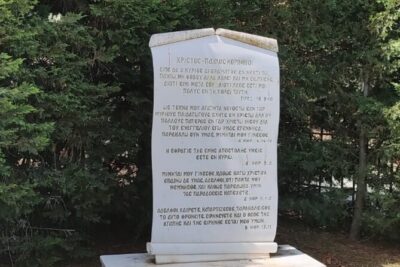
Private Tour of Apostle Paul’s Footsteps in Ancient Corinth
Read our review →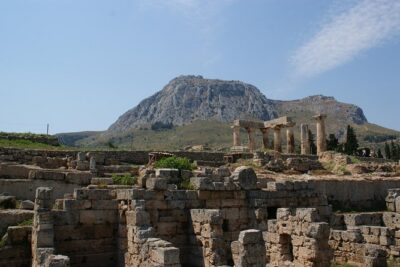
Corinth Half-Day Trip from Athens with Entrance Tickets
Read our review →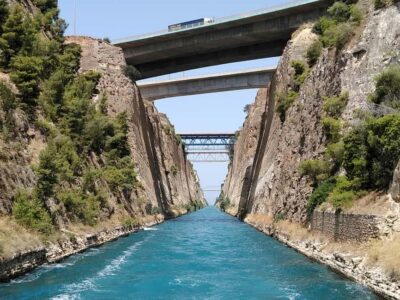
Browse the lists this tour appears in