
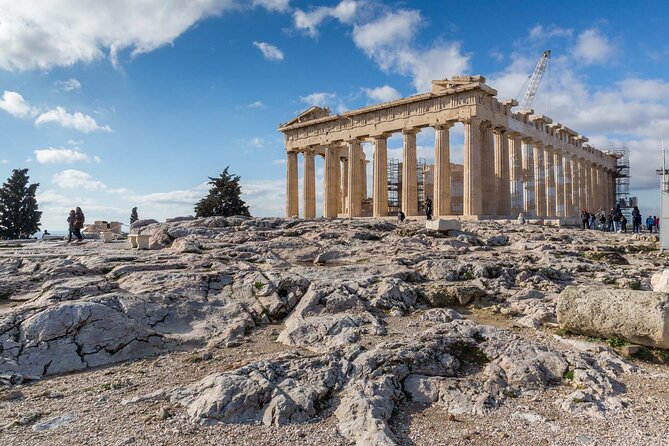
Reviewed · ATHENS ACROPOLIS TOURS
Athens Private Walking City Tour : Acropolis, Ancient Agora and The Agora Museum
The most rewarding part of this private Athens walking tour is the way it links famous monuments with ordinary ancient life. You move from the Acropolis, where temples and theaters shaped public life, down to the Agora, where citizens met, traded, argued, and listened to Socrates and Plato.
I like the one-group format, since your guide can adjust the pace and explain details that might get lost in a large crowd. I also like the final stop at the Attalos Museum, where small objects such as identification cards and market weights bring daily life into sharper focus. The main catch is price: at $289.40 per person, this is costly, and entrance tickets are not included.
Key points to know before booking
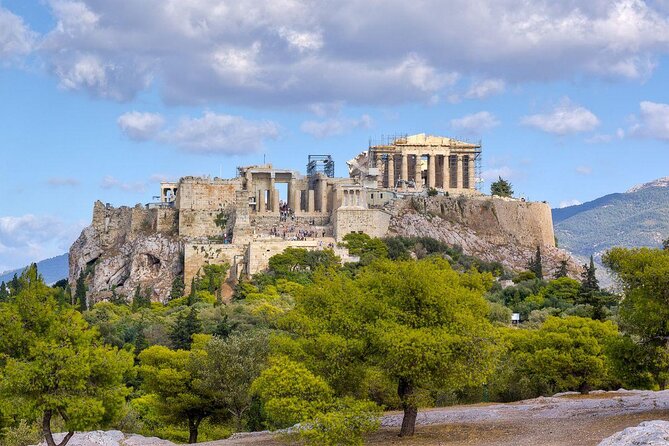
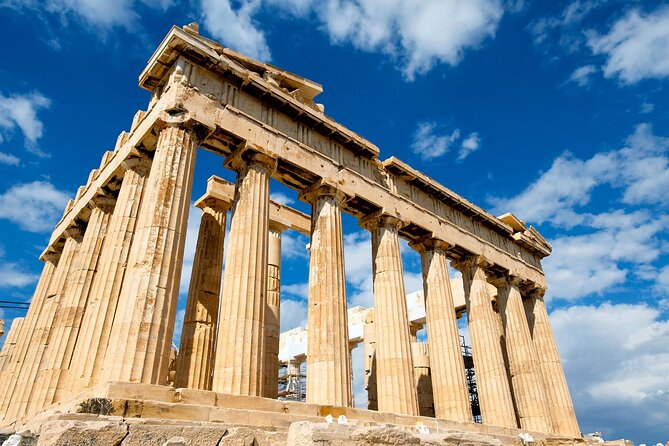
- The Acropolis takes about two hours, with major sights including the Theatre of Dionysus, Propylaia, Temple of Athena Nike, and Erechtheion.
- The Ancient Agora adds a different side of Athens, centered on civic life rather than royal or religious monuments.
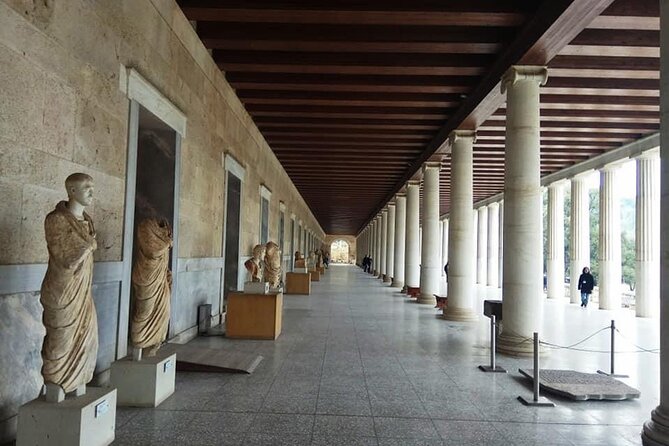
- The Attalos Museum gives the tour a useful finish, with objects linked to trade, public duties, and everyday routines.
- Your group stays private, so the guide can tailor explanations and the pace to your interests.
- Guide Ourania has worked especially well with children, according to the supplied experience details.
- Admission tickets cost extra, and you need to account for both the Acropolis and Ancient Agora fees.
Why this Athens route works so well
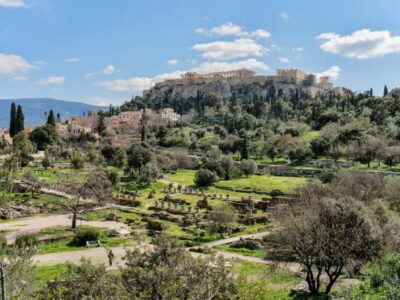
Athens can feel like a stack of separate archaeological sites. The Acropolis is on the hill, the Ancient Agora lies below it, and the modern streets fill the gaps. This tour gives those places a clear order and a human story.
You begin with the monuments most people come to Athens to see. Then you walk down to the place where public business and social life unfolded. Finally, you enter the Attalos Museum, which helps you picture the people who used these spaces.
That order matters. The Acropolis can seem like a grand display of marble and stone if you only look upward at the temples. The Agora shows what happened beneath that symbolic world. It was the community center of ancient Athenian life, a place tied to lectures, markets, religious activity, and public decisions.
The tour lasts about three to four hours, with roughly two hours at the Acropolis, one hour in the Agora, and 30 minutes at the museum. That is enough time for a focused introduction without taking up an entire day. You should still expect plenty of walking and outdoor exposure, since the main parts take place across archaeological grounds.
Because the tour is private, you are not sharing the guide with another group. That makes a real difference if you are traveling with children, have one part of Athenian history you want explained carefully, or prefer not to wait while a large group gathers.
More ways to see the Acropolis:
- Athens: Acropolis & up to 5 Archaeological Sites Combo Pass
★ 4.4 · 12,619 reviews - Athens: Acropolis Ticket with Optional Audio or Live Guide
★ 4.2 · 11,055 reviews - Athens: Acropolis, Parthenon & Acropolis Museum Guided Tour
★ 4.8 · 9,316 reviews
Starting beside the Acropolis
The meeting point is at Dionysos Zonar’s, on Rovertou Galli 43, near the Acropolis. Check the exact meeting details carefully before setting out, since the tour begins at a named location rather than simply at the Acropolis entrance.
The first section focuses on the Acropolis and lasts about two hours. Your guide leads you through a chain of important buildings and spaces rather than treating the hill as one single monument. That helps you understand how the site served religious, civic, and theatrical purposes.
Your route includes the Theatre of Dionysus, often treated as the birthplace of Greek drama in popular accounts, along with the Temple of Asklipios. The theater gives the opening section a useful change of pace. Instead of beginning only with temples, you see a place connected with performance and public gatherings.
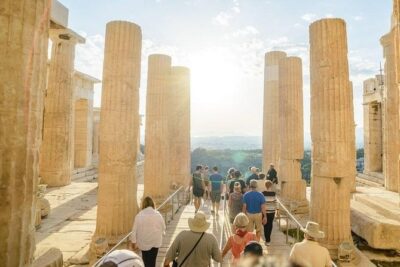
You then encounter the Odeon of Herod Atticus, a major theater structure on the southern slope. From there, the route continues toward the Propylaia, the formal gateway to the Acropolis. The gateway is more than a passage. It prepares you for the shift from the lower city to the sacred hilltop.
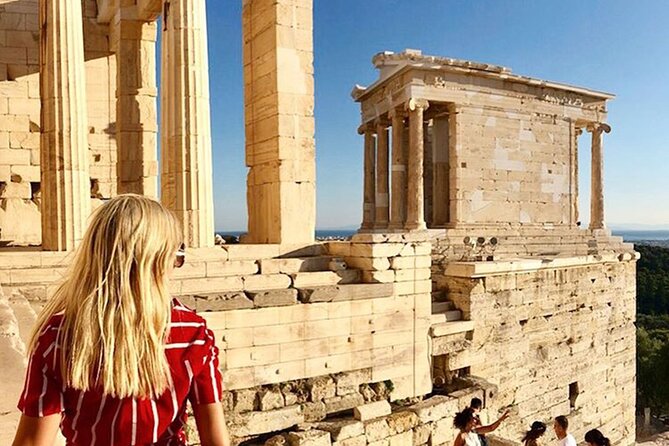
The Temple of Athena Nike is another key stop. Its small size can surprise you after the larger structures around it, but its position at the entrance makes it an important part of the Acropolis approach. A guide can help you read the site as a planned sequence, not just a collection of ruins.
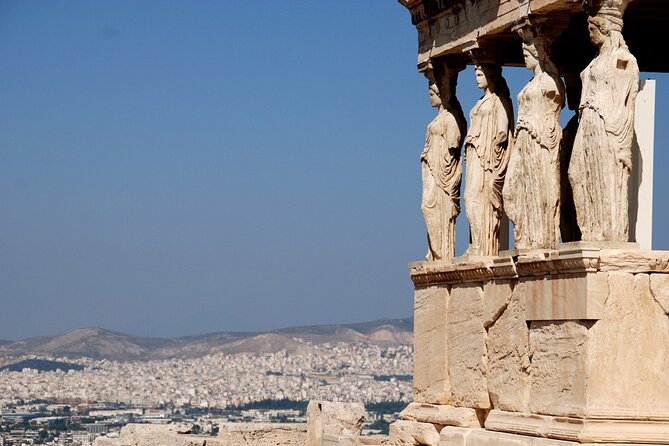
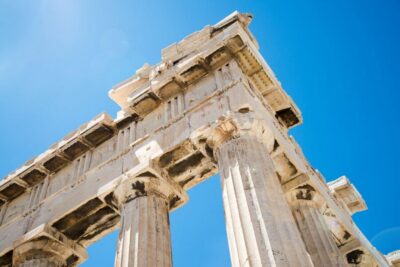
The Erechtheion gives the Acropolis visit its most distinctive architectural feature. Its unusual design and the famous Caryatid porch make it one of the places where a guide’s explanation adds real value. You can learn why the building differs from the Parthenon style and how its location relates to ancient religious traditions.
The supplied route does not list an Acropolis admission ticket as included. You need to budget for that separately. This is one of the most important points to settle before booking, since the advertised per-person price covers the private certified guide but not the entrance fee.
Reading the Acropolis without rushing
Two hours is a sensible amount of time for a guided introduction to the Acropolis. It gives you room to stop at several landmarks without turning every building into a long lecture.
The private format should help here. If your group is made up of adults who want architectural detail, you can ask for more. If you are visiting with children, the guide can keep explanations shorter and focus on stories, people, and visible details.
That flexibility appears to be one of the strongest features of the experience. Guide Ourania received specific praise for tailoring the visit to children. I would consider this a good sign for families, while remembering that no guide can remove the physical demands of a hilltop archaeological site.
The Acropolis section is also the part most affected by timing and crowds. The supplied information does not state a special entry time or skip-the-line arrangement, so you should not assume either. Your guide provides interpretation, but the ticket process and conditions at the site remain separate matters.
A private visit is not automatically a quiet visit. The Acropolis is one of Athens’s major attractions, and you will be walking through a public archaeological area. The benefit is not solitude. The benefit is having one person focus on your questions and keep the route coherent.
Walking down to the Ancient Agora
After the Acropolis, the tour moves to the Ancient Agora. This is where the experience changes tone. Instead of looking mainly at monumental buildings on a hill, you begin to picture the working center of ancient Athens.
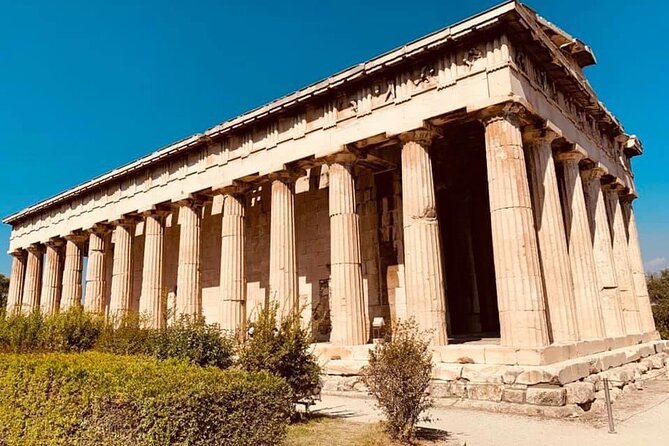
The Agora was tied to community life, and the route includes several remains that show its religious, civic, and social roles. You visit the Temple of Hephaestus, described as the best-preserved Greek temple from the fifth century BC. Its condition makes it especially useful for understanding how a Greek temple was organized.
The route also includes the Church of the 12 Apostles. Its presence adds a later religious layer to the site, reminding you that the area continued to matter after the classical period. Ancient archaeological grounds often contain several chapters of history in the same small area, and this stop helps show that change.
You also see the Temple of Apollo Patroos, the Stoa of Zeus, and the Altar of Zeus. These names can blur together if you are walking alone with only a guidebook, so the private format is useful. Ask your guide to explain what each space did and how people would have encountered it in daily life.
The Agora is also linked with the philosophers Socrates and Plato. The tour presents the site as a place where lectures and public discussion took place. That connection is valuable, but you should think of it as part of the Agora’s wider life rather than the whole reason to visit.
The one-hour schedule gives you a focused look. You will not study every corner of the archaeological grounds, but you should get a clear sense of the site’s purpose and its place below the Acropolis.
Admission to the Ancient Agora is also excluded. Since both major sites require separate tickets, calculate the full cost before you compare this experience with a group tour or a self-guided visit.
More Ancient Agora and Kerameikos walks:
- Athens: Agora and Hephaistos Temple Entrance Ticket
★ 4.0 · 449 reviews - Athens: Ancient Agora E-Ticket and Audio Tour
★ 3.9 · 413 reviews - Athens: Kerameikos Stone House Cooking Class
★ 5.0 · 165 reviews - Athens: Roman Agora & Ancient Agora E-ticket & 2 Audio Tours
★ 4.1 · 107 reviews
The Attalos Museum and the small details of ancient life

The final stop is the Museum of the Ancient Agora, housed in the Stoa of Attalos. You have about 30 minutes here, which is short but well chosen after the outdoor walk.
The museum includes objects that connect grand public spaces with practical routines. Ancient Greek identification cards are especially interesting because they point to systems of citizenship and public identity. They are small objects, but they raise large questions about who belonged to the city and how people were recognized.
You can also see the original weights and measures used by market inspectors. These objects make the Agora feel less like an abstract meeting place and more like a working market where trade required rules and oversight.
I like ending here rather than finishing at the largest temple. The museum gives you something concrete to remember. After seeing temples and civic buildings, you finish with items that suggest buying, selling, checking, and identifying.
The 30-minute visit will not allow a long museum study. It works best as a final layer of context. If you prefer museums to outdoor ruins, you may wish the schedule allowed more time. If you have already spent hours in the sun, however, a short indoor stop may be welcome.
What the $289.40 price really buys
At $289.40 per person, this is a premium experience. The price makes the most sense for a small private group that values personal attention and wants one guide to connect the Acropolis, Agora, and museum.
The guide is the core purchase. You are paying for a private experienced certified guide, not simply for entry to the monuments. That matters if you want help following the route, asking questions, and adjusting the level of detail for your group.
The value becomes harder to justify for one or two people, especially because entrance tickets are extra. A larger private group may find the per-person cost easier to accept, particularly since group discounts are listed as a feature. The exact discount is not provided, so confirm the final amount before booking.
You should compare the total price, not only the advertised rate. Add the Acropolis admission and Ancient Agora admission, then consider what private guiding is worth to you. If you are happy reading signs and moving at your own pace, a self-guided visit will cost less. If you want historical connections explained as you walk, this tour offers a more focused experience.
The short duration is another value question. Three to four hours is efficient, but it does not cover every major Athens sight. You are paying for a concentrated archaeological route, not a full city tour with transport or extra museums.
Who will enjoy this private walking tour most
This experience fits families who want ancient sites explained in a flexible way. The specific note about Ourania adapting the visit for children is useful here. A private guide can change the pace and keep young visitors involved more easily than a fixed large-group tour.
It also suits first-time visitors who want the Acropolis and Agora placed in the same story. You will see the city’s major sacred monuments, then learn how public and commercial life worked below the hill.
History-minded adults may appreciate the range of stops. The route includes temples, theaters, a gateway, a church, civic structures, and museum objects. You get more than a photograph at the Parthenon area.
This may not suit you if you want a relaxed stroll with lots of café time. The schedule is compact and site-focused. It may also disappoint if you expect entrance fees to be bundled into the price or if you want a full-day Athens introduction.
The walk is also not ideal for anyone seeking a purely indoor activity. The Acropolis and Agora sections take place outdoors, and the experience requires moving between archaeological areas. The provided information says most people can participate, but it does not give detailed mobility guidance, so ask the provider if you have specific access concerns.
Practical details that affect your day
The experience begins at Dionysos Zonar’s, Rovertou Galli 43, Athens 117 42, and ends at the Ancient Agora of Athens, Athens 105 55. Since the tour does not return to the starting point, plan your next activity from the Agora area rather than assuming you will finish near the Acropolis meeting point.
A mobile ticket is available, and booking confirmation is received at the time of booking. Keep the confirmation accessible on your phone.
The tour is private, with only your own group participating. Group discounts are listed, but the available information does not state the size of the discount. Ask about that before you make a final price comparison.
You can cancel for a full refund if you do so at least 24 hours before the local start time. Changes or cancellations made inside that 24-hour window are not accepted for a refund. That policy is reasonable for a private booking, but it makes checking your schedule important.
Should you book it?
Book this tour if you want a private guide to connect the Acropolis, Ancient Agora, and Attalos Museum in one compact outing. It is particularly appealing for families, first-time visitors, and small groups who value explanations tailored to their pace.
Think twice if price is your main concern. At $289.40 per person before admission tickets, it is not a budget way to see Athens. You are paying for personal guiding and a carefully linked route, not for entry alone.
My practical call is simple: choose it when the guide relationship matters more than saving money. The combination of major Acropolis landmarks, the philosophers’ Agora, and the museum’s everyday objects gives you a clear introduction to Athens. Just budget for both entrance fees and remember that this is a focused walking tour, not a complete city overview.
FAQ
How long does the tour last?
The experience lasts approximately three to four hours. The planned schedule is about two hours at the Acropolis, one hour at the Ancient Agora, and 30 minutes at the Museum of the Ancient Agora.
Is this a private tour?
Yes. Only your group participates in the private activity.
Is an experienced guide included?
Yes. The tour includes a private experienced certified tour guide.
Are Acropolis tickets included?
No. Acropolis entrance tickets are not included in the price.
Are Ancient Agora tickets included?
No. Ancient Agora entrance tickets are also purchased separately.
Where does the tour begin?
The meeting point is Dionysos Zonar’s, Rovertou Galli 43, Athens 117 42, Greece.
Where does the tour end?
The tour ends at the Ancient Agora of Athens, Athens 105 55, Greece.
Does the tour include the Attalos Museum?
Yes. The route includes the Museum of the Ancient Agora, also called the Attalos Museum, for about 30 minutes.
Can families with children take this tour?
Yes. Most people can participate, and the tour can be suitable for families. The supplied experience details specifically note that guide Ourania tailored a visit well for children.
Can I cancel for a full refund?
Yes, if you cancel at least 24 hours before the experience start time. Cancellations or changes made less than 24 hours before the local start time are not accepted for a refund.
More city tours in Athens
- Best of Athens Half Day Private Tour
★ 5.0 · 3,714 reviews - Athens Half-Day Sightseeing Tour with Tickets of Acropolis
★ 4.0 · 1,402 reviews - Highlights of Athens biketour
★ 5.0 · 840 reviews - Essential Athens Highlights Plus Cape Sounion Skip-The-Line Tour
★ 5.0 · 705 reviews
More walking tours in Athens
- Athens: Acropolis and Parthenon Guided Walking Tour
★ 4.6 · 5,882 reviews - Greek Food Walking Tour in Athens
★ 5.0 · 4,740 reviews - Acropolis: Acropolis and Parthenon Guided Walking Tour
★ 4.7 · 3,442 reviews - Acropolis monuments & Parthenon Walking Tour with Optional Acropolis Museum
★ 5.0 · 2,678 reviews
Newly reviewed around Athens
- Athens: workshop for painting landscape with local artist★ 4.6 · 3 reviews
- Athens: Greek Wine & Olive Oil Tasting at Brettos Plaka★ 4.5 · 3 reviews
- Outdoor Yoga and Pilates with Akropolis view★ 4.0 · 5 reviews
- Acropolis of Athens: 60′ Tour in a Vintage Motorcycle★ 5.0 · 4 reviews
- Ultimate Tasting of the Volcanic Wines of Greece★ 5.0 · 3 reviews
- workshop for painting acropolis/landscape with local artist★ 5.0 · 3 reviews
- Athens at Twilight Night Tour with Drinks and Meze Dishes★ 4.8 · 4 reviews
- Breakfast in the markets with olive oil and honey tasting★ 4.8 · 8 reviews
Athens Acropolis Tours, compared.
Acropolis & up to 5 Archaeological Sites Combo Pass
Read our review →
Acropolis, Parthenon & Acropolis Museum Guided Tour
Read our review →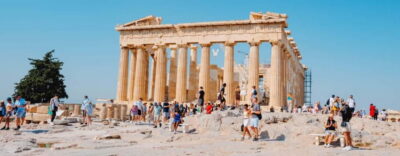
Acropolis, Parthenon & Acropolis Museum Guided Tour
Read our review →

Acropolis monuments & Parthenon Walking Tour with Optional Acropolis Museum
Read our review →Browse the lists this tour appears in