
Reviewed · ANCIENT AGORA TOURS
Athens: Roman Agora & Ancient Agora E-ticket & 2 Audio Tours
The best thing about this experience is the pairing of two important Athens sites in one simple day. The Roman Agora gives you the Tower of the Winds and Gate of Athena Archegetis, while the larger Ancient Agora lets you walk through the civic heart of classical Athens and visit the Stoa of Attalos museum.
I like the offline audio content, which saves you from roaming charges, and I like the freedom to pause, replay, or skip sections. The main drawback is that this is not a live tour. The audio narration may feel mechanical to some listeners, and the route instructions do not fully reflect current construction changes, so you need to check the entrance details before setting out.
Key points to know before booking
- Two archaeological sites in one day: Visit the Roman Agora and Ancient Agora with separate timed tickets.
- Start with the smaller site: The Roman Agora comes first in the suggested schedules, making it a sensible way to get oriented.
- Use the temporary Ancient Agora entrance: Construction has closed the main entrance, so enter from Apostolou Pavlou Street near Akamantos Street.
- Download everything before you go: The app needs about 200 to 300 MB of storage and works offline after setup.
- Expect self-guided sightseeing: There is no live guide, transportation, smartphone, or headphones included.
- Check child and reduced-price rules carefully: The booking is intended for the device being used, and free or reduced admission is handled at the site ticket booth.
Two agoras, two very different Athens experiences
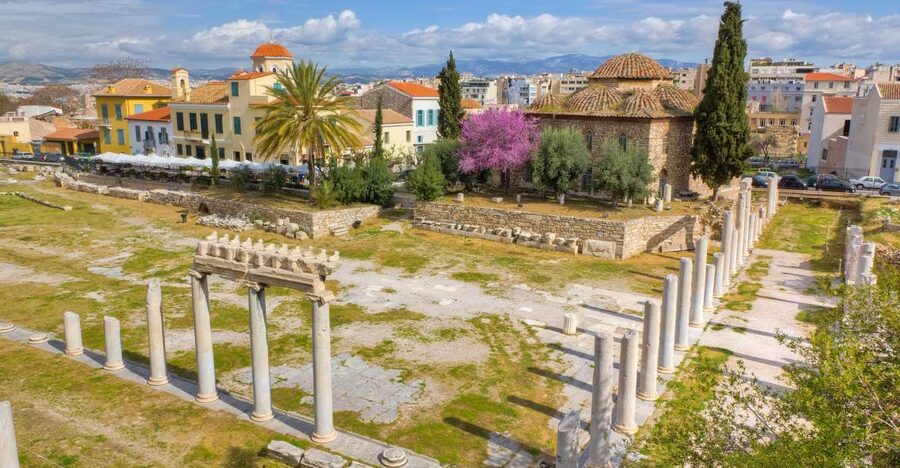
The Roman Agora and Ancient Agora sit close to one another, but they tell different parts of the city’s story. Visiting both helps you see how Athens changed from the center of classical democracy to a city shaped by Roman rule and later centuries.
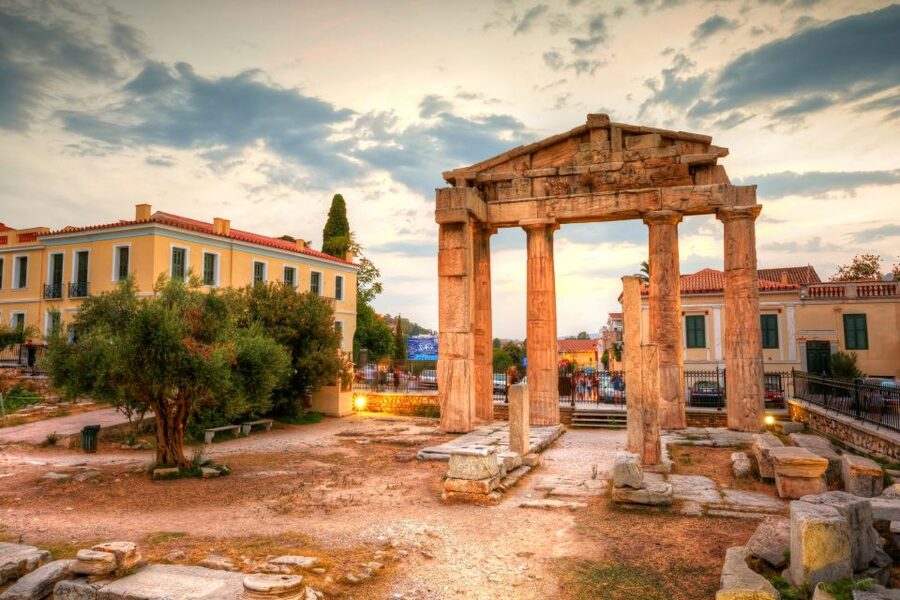
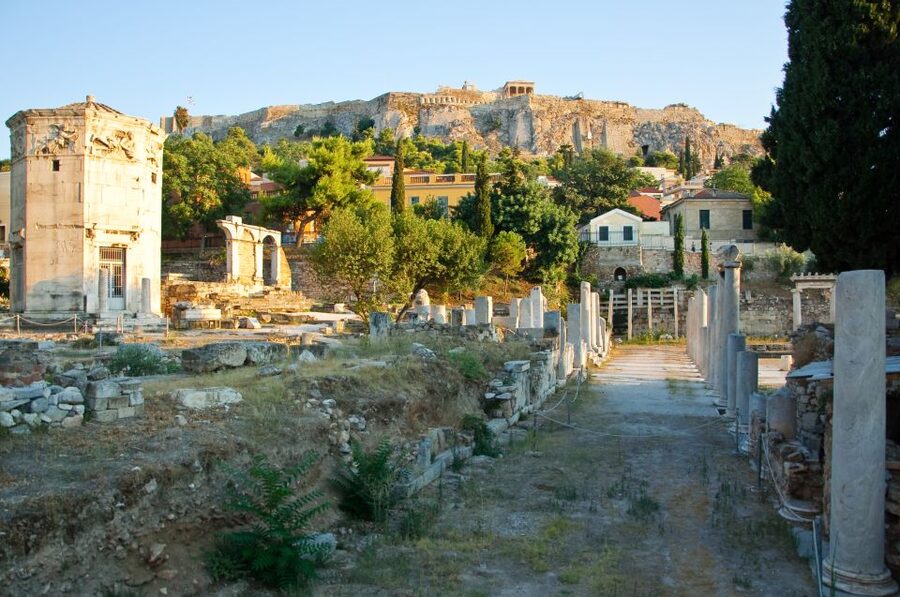
The Roman Agora is compact. You can cover it without spending half a day, which makes it a useful first stop. Its most striking feature is the Tower of the Winds, an octagonal marble building that served as a water clock, weather station, and timekeeper. The nearby Gate of Athena Archegetis gives the site a strong architectural focal point.
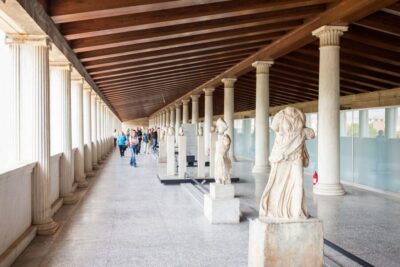
The Ancient Agora is larger and more layered. This was the practical and political center of ancient Athens, where public business, trade, debate, and civic life took place. The site also includes the Stoa of Attalos, reconstructed as a museum with historical objects from the area.
I like this combination because it gives you both atmosphere and context. The Roman Agora is quicker and more focused. The Ancient Agora rewards a slower walk and more attention.
More Ancient Agora and Kerameikos walks:
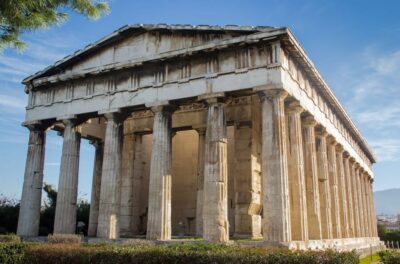
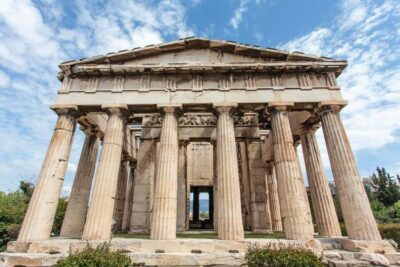
- Athens: Agora and Hephaistos Temple Entrance Ticket
★ 4.0 · 449 reviews - Athens: Ancient Agora E-Ticket and Audio Tour
★ 3.9 · 413 reviews - Athens: Kerameikos Stone House Cooking Class
★ 5.0 · 165 reviews
Starting at the Roman Agora near Monastiraki
The Roman Agora tour is designed to begin at the entrance on Epaminonda Street. The easiest approach is from Monastiraki Metro Station, served by lines 1 and 3. From there, walk along Areos Street for about 230 meters toward the site.
This is a convenient starting point if you are already exploring central Athens. You do not need to find a tour office or meet a guide. You simply open the app, reach the entrance, and follow the audio tour from the designated starting point.
The route ends inside the archaeological area at the Mosque of the Conqueror. Since the tour is self-guided, you can control the pace. Pause when you want photographs, replay a section, or move on if a particular explanation is not holding your attention.
The site itself is not huge, so this first visit works well as a warm-up. You can focus on the Tower of the Winds, the Gate of Athena Archegetis, and the remains around them without feeling rushed by a group.
One practical warning matters here: the audio route was prepared separately from current site changes. Construction or access rules can alter the exact way you move through the area. Follow the signs and staff instructions at the entrance, even if the app suggests something different.
The Tower of the Winds and Gate of Athena Archegetis
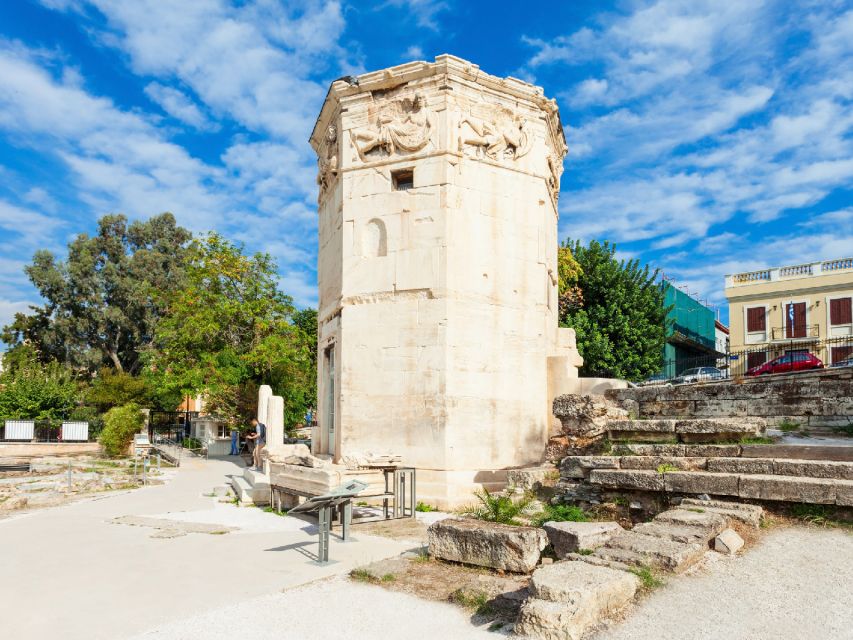
The Tower of the Winds is the Roman Agora’s main visual prize. Its eight sides are decorated with figures representing the winds, and its original functions connected timekeeping, weather, and water.
You will get more from the building if you pause to look closely rather than treating it as a quick photo stop. The audio commentary is meant to explain how the structure worked and why it mattered. The content can be replayed later, which helps if you want to listen first and inspect the details afterward.
The Gate of Athena Archegetis gives you another strong point of reference. It once marked the entrance to the Roman Agora and remains one of the clearest surviving architectural features in the area.
This part of the visit is best for you if you enjoy monuments that are easy to understand at a glance but reveal more with explanation. The drawback is scale. If you expect a large ruin complex with many standing buildings, the Roman Agora may feel brief.
That is why I would not make it your only ancient site in Athens. Paired with the Ancient Agora, it becomes a useful and manageable first chapter.
Walking to the Ancient Agora from Thissio
The Ancient Agora currently has a temporary entrance because construction has closed the main entrance. You need to approach on foot from Thissio Station and use the entrance on Apostolou Pavlou Street, at the level of Akamantos Street.
This detail is easy to miss and important enough to plan around. Do not rely on the usual entrance shown in an old guidebook or map. Give yourself time to reach the temporary access point, especially if you have selected a morning slot.
The Ancient Agora tour ends at the Stoa of Attalos, inside the archaeological site and not far from the entrance. That makes the route fairly easy to follow once you are inside.
There is no transportation included between the two locations. The sites are in central Athens, but you should still allow enough time for the move, finding the correct entrance, and passing through ticket control.
More self-guided audio tours in Athens:
- Athens: Cape Sounio & Poseidon Temple Trip with Audio Guide
★ 4.4 · 4,521 reviews - Athens: Acropolis Ticket with Audio Guide
★ 4.0 · 3,575 reviews - Athens: Acropolis Museum Ticket with optional Audio Guide
★ 4.4 · 2,652 reviews - Athens: Acropolis Ticket & Optional Self-Guided Audio Tours
★ 4.1 · 2,542 reviews
Exploring the Ancient Agora and Stoa of Attalos
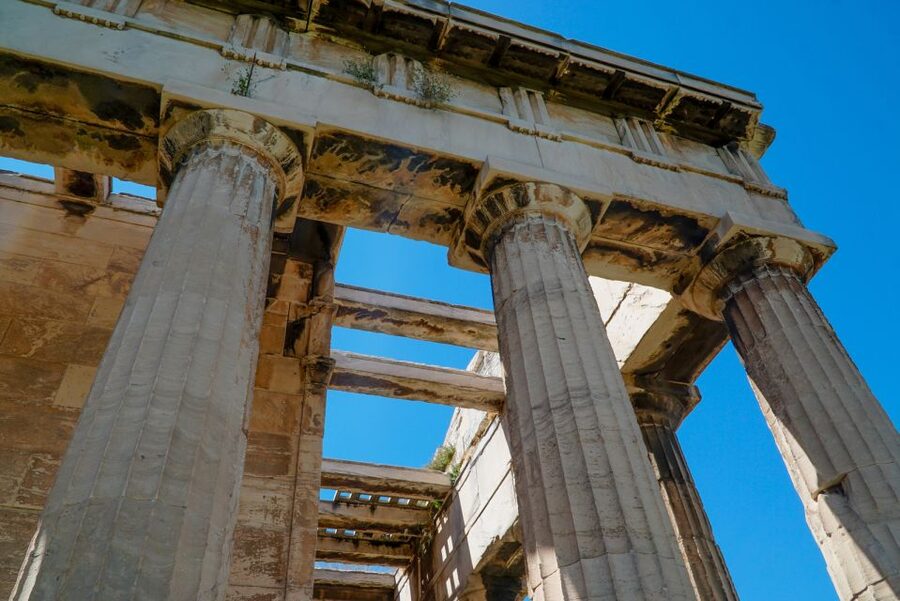
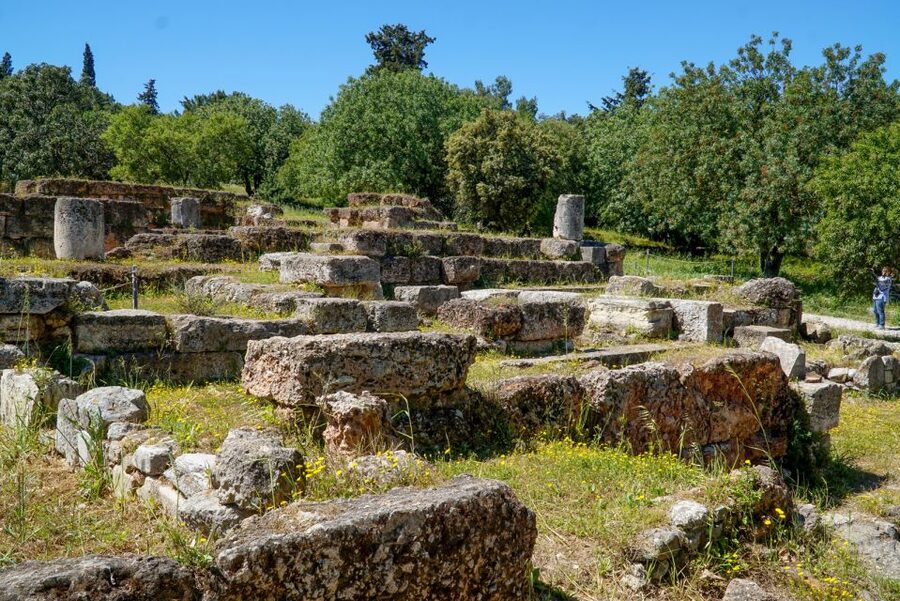
The Ancient Agora is where this experience gains most of its depth. Instead of one main monument, you get a broad archaeological area with remains spread across an open site.
The audio tour helps you connect those remains to the daily workings of Athens. This is especially useful if you are not already familiar with the Agora. Without explanation, low walls and foundations can blur together. With a clear route and context, you can better understand how the space functioned.
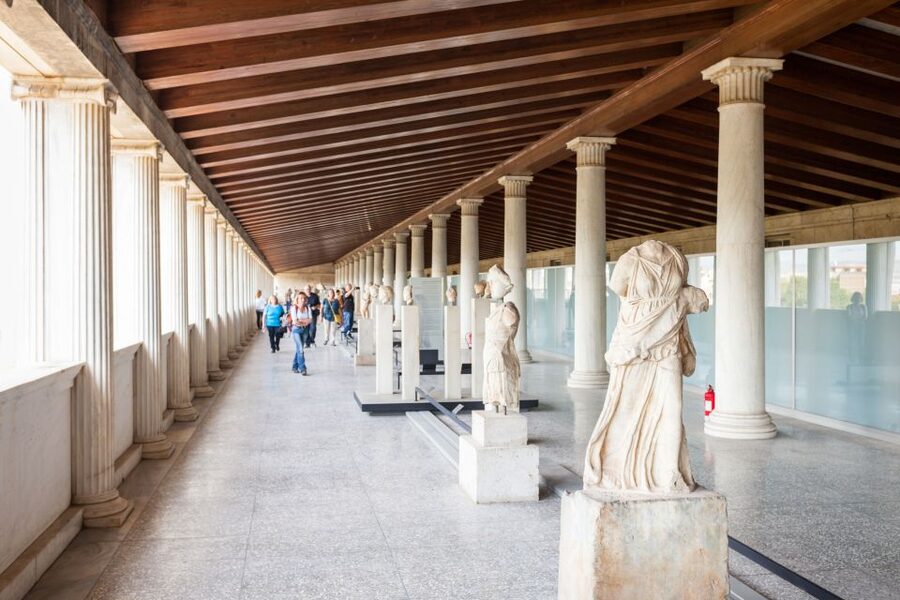
The Stoa of Attalos is the final point of the tour and one of the most useful places on the visit. Its museum houses historical exhibits from the Ancient Agora. I would save enough time here to look beyond the main outdoor ruins.
The indoor exhibits give you physical objects to connect with the larger story. They also offer a break from the sun, which can be welcome during a hot Athens afternoon.
The Ancient Agora is also the better site for city views. From its viewpoints, you can take photographs across Athens and gain a sense of how the ancient center relates to the modern city around it.
Choosing the best time slot
You choose a time slot for each site. The suggested pairings are:
- 8:00 a.m. Roman Agora, followed by 10:00 a.m. Ancient Agora
- 10:00 a.m. Roman Agora, followed by noon Ancient Agora
- 1:00 p.m. Roman Agora, followed by 3:00 p.m. Ancient Agora
- 2:00 p.m. Roman Agora, followed by 4:00 p.m. Ancient Agora
The two-hour spacing gives you time to finish the first site, walk to the second, and deal with entrance procedures. It also leaves room for a short pause between visits.
The early schedule is best if you want cooler conditions and more time afterward for other Athens sights. The afternoon schedule may suit you if you prefer a slower morning, but sun exposure can be a bigger concern. Bring sunglasses, a hat, sunscreen, and water suitable for a day of outdoor sightseeing.
The schedule is not a live group departure. It is a plan built around your timed entries. You still need to arrive at the correct site during the selected period and follow any special restrictions in effect that day.
How the smartphone audio tours work
After receiving the ticket by email, you need to download the app and activate both audio tours before your visit. The content includes audio narration, written information, and maps.
Download it while you have reliable internet. Once saved to your phone, the offline material helps you avoid roaming charges and weak signals at the sites.
You need:
- A charged Android phone running version 5.0 or later, or an iPhone
- About 200 to 300 MB of free storage
- Headphones
- The activation link sent with your booking
The audio tours are available in English, Spanish, German, French, and Italian. Since the experience is self-guided, you can stop playback while taking photos or replay a section you missed.
I like this format for independent sightseeing. You do not have to keep up with a group, and you can spend longer at the Tower of the Winds, museum displays, or viewpoints that interest you most.
The tradeoff is the lack of a person on site to answer questions. Audio narration also depends on your phone, battery, headphones, and comfort with app-based tours. One account described the commentary as sounding like an AI voice and criticized the pronunciation and pacing. That is a fair concern if you prefer a warm, natural delivery from a human guide.
What the $51 price means
At $51 per person, this is not the cheapest way to enter the two sites. Its value depends on how much you want the audio material and the convenience of arranging both admissions together.
You are paying for two timed tickets, two audio tours, offline maps and narration, and a simpler booking process. If you would otherwise buy full-price admission and want commentary in one of the five available languages, the package can be useful.
The price is less attractive for anyone eligible for free or reduced admission. The booking instructions state that reduced-price tickets are obtained at the site ticket booth and do not have skip-the-line privileges. One important caution is that the booking is made per device, not per participant, so read the conditions carefully if you are visiting with children or other eligible visitors.
A child aged 16 was reportedly found to qualify for free entry at the sites, but the booking did not provide a refund afterward. I would check the official admission rules before paying for every member of your group.
Who will get the most from this visit
I would recommend this experience to independent visitors who want structure without a live group. It fits especially well if you like to set your own pace, listen only when useful, and keep the commentary on your phone for later review.
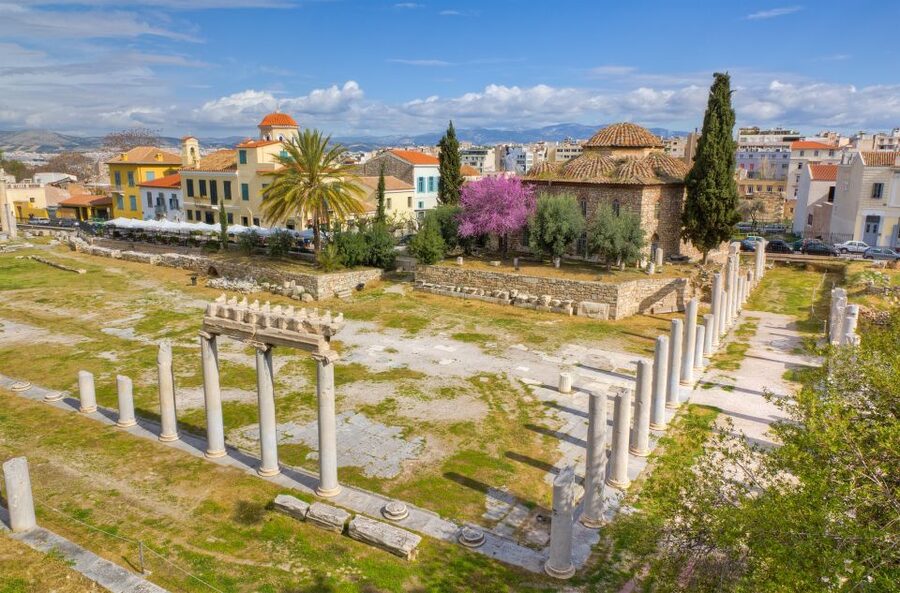
It also suits a first visit to Athens because the two sites cover different periods and functions. The Roman Agora provides a short, focused stop. The Ancient Agora gives you a wider look at civic life, museum objects, and views across the city.
You may want another option if you strongly prefer personal interpretation, natural pronunciation, or on-the-spot answers. This is also not ideal if you need a completely flexible day, since both entries are time-slotted and the activity is non-refundable.
People with reduced mobility should know that the archaeological sites are only partially accessible. Site conditions and routes may change, so check current access information before booking.
What to bring and what to watch for
Wear comfortable shoes. The visit involves walking between sites and moving around open archaeological areas.
Bring sunglasses, a sun hat, sunscreen, headphones, and a fully charged smartphone. Download the app and both tours before leaving your accommodation, not at the entrance while other arrangements are waiting.
Follow staff directions if access routes change. The temporary Ancient Agora entrance is the biggest practical issue at present, and the app may not reflect every current construction adjustment.
Also remember that this is a one-day activity. The exact starting times depend on availability, and you need to select from the offered Roman Agora and Ancient Agora pairings.
Should you book the Roman and Ancient Agoras package?
Book it if you want a self-guided day of ancient Athens with timed entry, offline content, and the freedom to move at your own speed. The Ancient Agora is the stronger half of the experience, with the Stoa of Attalos, museum exhibits, and city views. The Roman Agora works well as a shorter companion visit.
Think twice if you qualify for discounted admission, dislike app narration, or want a live guide. In that case, buying the appropriate tickets directly and choosing a human-led tour may offer better value.
For most independent visitors paying full price, the package is practical, provided you download the content early and plan around the temporary Ancient Agora entrance.
FAQ
How long is the activity valid?
The ticket package is valid for one day. You select available starting times when booking.
Do I visit both sites on the same day?
Yes. The experience provides time-slotted entry for both the Roman Agora and Ancient Agora, with suggested pairings spaced two hours apart.
Is there a live guide?
No. The experience includes two self-guided audio tours on your smartphone and does not include a live guide.
Where does the Roman Agora tour begin?
It begins at the Roman Agora entrance on Epaminonda 6 to 22 in Athens. Monastiraki Metro Station, served by lines 1 and 3, is the easiest nearby transport point, followed by a walk along Areos Street.
Where do I enter the Ancient Agora?
Because of construction, the main entrance is temporarily closed. Use the temporary entrance on Apostolou Pavlou Street, at the level of Akamantos Street, and approach on foot from Thissio Station.
What languages are available?
The audio tours are available in English, Spanish, German, French, and Italian.
Do I need internet access during the visit?
The audio narration, written content, and maps can be downloaded for offline use. You need internet access beforehand to download and activate the app.
What phone is required?
You need an Android smartphone running version 5.0 or later or an iOS smartphone. The tour is not compatible with Windows Phones, iPhone 5 or 5C, iPod Touch 5th generation, iPad 4th generation, or iPad Mini 1st generation.
Are reduced-price tickets available through this booking?
Free and reduced admission tickets must be obtained at the site ticket booth and do not include skip-the-line privileges. Check the admission rules before booking, especially for children.
Newly reviewed around Athens
- Feel Ancient thermal Spa Visit Delphi, Leonidas ℨoo Spaʀtan★ 5.0 · 4 reviews
- Food Tour★ 5.0 · 3 reviews
- Eat Your Way Through Athens: A Local Food Walk★ 4.9 · 97 reviews
- Explore the Hidden Food Gems of Athens★ 5.0 · 57 reviews
- Food Experience in Athens including Unlimited Lunch★ 5.0 · 3 reviews
- From Athens: Delphi Private Tour with Lunch Time★ 4.0 · 3 reviews
- Delphi: Spanish guided one day tour★ 4.6 · 55 reviews
- Early Entry Acropolis & Museum. Beat the Crowds & the heat★ 5.0 · 3 reviews
Ancient Agora Tours, compared.

Ancient Athens, Agora, and Keramikos Segway Tour
Read our review →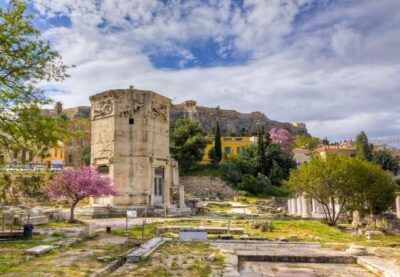
Ancient Agora: Audiovisual self-guided tour with 3D models
Read our review →
Browse the lists this tour appears in