
Reviewed · ATHENS ACROPOLIS TOURS
Athens: Acropolis and Ancient Agora Guided Walking Tour
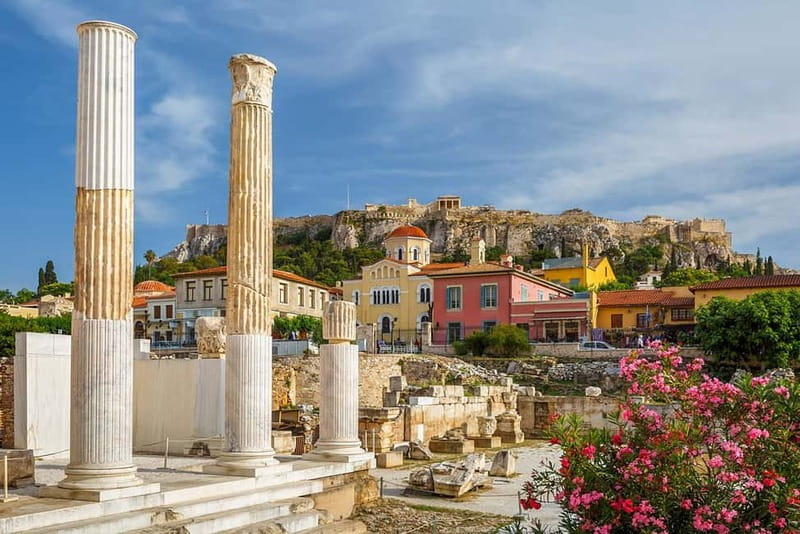
The best part of this Athens walk is the route: you approach the Acropolis from the South Slopes, then continue to the Ancient Agora, the old civic center where citizens, philosophers, and politicians met. I like that the tour links famous monuments with the public life that made ancient Athens more than a collection of temples. I also like the included tickets and wireless listening devices, which save you from queueing and straining to hear a guide in a crowded ruin.
The main consideration is the physical effort. You will walk and climb for about four hours over uneven archaeological ground, so this is not suited to wheelchair users, people with mobility impairments, or children under six. Bring water, sun protection, and shoes you can trust.
Key points to know before booking
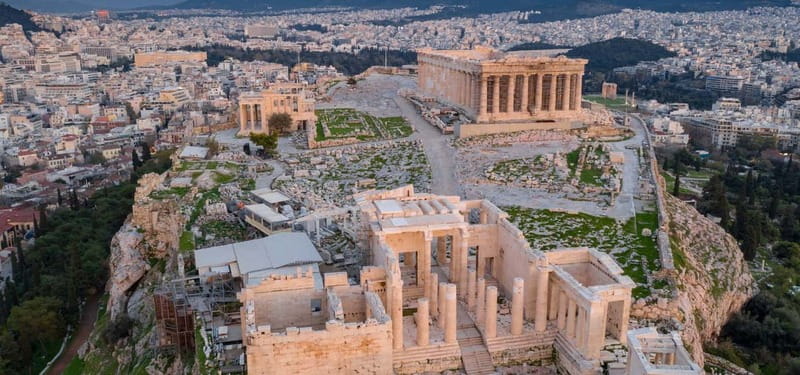
- A South Slopes approach: You enter the Acropolis area through a scenic route that includes the Theatre of Dionysus and the Odeon of Herodes Atticus.
- The major Acropolis monuments: The route covers the Temple of Athena Nike, Propylaea, Erechtheion, Parthenon, and a short break at the Acropolis.
- Ancient Athens in one walk: You finish among the political, commercial, and religious remains of the Ancient Agora.
- Tickets and audio included: Entry to both sites, skip-the-line access, and wireless hearing devices are part of the $102 price.
- A strong guide-led format: Guides including Anastasia and Yanis, also called John, have been described as organized, friendly, and effective at explaining the sites.
- A half-day commitment: Plan on four hours, English only, with no hotel pickup, food, or drinks included.
Starting at Porinou 5 near the Acropolis metro
You meet at the Office of Athens Walks on Porinou 5, about a two-minute walk from the Acropolis metro station. That is a practical start for a sightseeing day because you do not need a taxi or a long cross-town transfer to reach the group.
Arrive 15 minutes before departure. The tour has scheduled starting times, so check the available slot carefully when booking. There is no hotel pickup or drop-off, and meals and drinks are not included.
The guide begins with a short outline of the route. That small orientation matters here. The Acropolis and Agora can feel like a sequence of broken stones if you do not know what you are seeing, while a clear route gives each place a role in the larger story of Athens.
The tour is conducted in English. Wireless hearing devices are included, a useful touch at sites where wind, crowds, and hard stone can swallow a guide’s voice. The supplied equipment also lets you look at a monument without needing to stand shoulder-to-shoulder with the guide.
More ways to see the Acropolis:
- Athens: Acropolis & up to 5 Archaeological Sites Combo Pass
★ 4.4 · 12,619 reviews - Athens: Acropolis Ticket with Optional Audio or Live Guide
★ 4.2 · 11,055 reviews - Athens: Acropolis, Parthenon & Acropolis Museum Guided Tour
★ 4.8 · 9,316 reviews
The South Slopes and the Theatre of Dionysus
The first section takes you up the South Slopes of the Acropolis. This approach is more than a way to reach the top. Your guide points out archaeological features and plant life along the route, then explains the religious activities and rituals once held on these slopes.
The Theatre of Dionysus receives about 15 minutes of guided attention. It is an important early stop because it shifts your focus from temples to public performance. Ancient Athens was not only a place of worship and politics. Theatre was part of civic life, and this stop helps establish that broader picture before you reach the Acropolis monuments.
You will also get views over Athens as you climb. Bring a camera, but keep your attention on the footing. The route involves a moderate amount of walking, and ancient paths are not designed like modern pavements.
The Odeon of Herodes Atticus and the climb ahead
The walk past the Odeon of Herodes Atticus takes about 15 minutes. The itinerary treats this as a walking segment rather than a long formal stop, so expect your guide to explain the structure while the group continues.
The route then reaches the Temple of Athena Nike, with about five minutes of walking time before the next guided section. This small temple honors Athena as the goddess of victory. Its compact size can make it easy to overlook, especially after the larger Theatre and Odeon, but the guide helps you notice its position and decorative detail.
This part of the tour is a good reminder that the Acropolis is not one building. It is a collection of monuments with different purposes, dates, and visual styles. A guide can connect those pieces faster than a quick visit with a site map.
Entering through the Propylaea
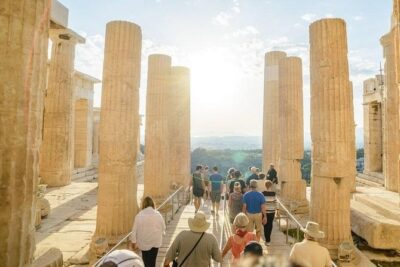
The Propylaea served as the monumental gateway to the Acropolis. You spend about 10 minutes here with the guide, learning how the entrance framed the approach to the sacred area above.
The Propylaea is also where the climb begins to feel like a formal arrival. You are not simply walking uphill toward an old temple. You are passing through a planned entrance that announced the importance of the site.
Expect uneven surfaces, steps, and exposed sun. Comfortable shoes are essential, and a hat and sunscreen are sensible in warm weather. The tour is not suitable for wheelchair users or people with mobility impairments, and this section helps explain why.
More Ancient Agora and Kerameikos walks:
- Athens: Agora and Hephaistos Temple Entrance Ticket
★ 4.0 · 449 reviews - Athens: Ancient Agora E-Ticket and Audio Tour
★ 3.9 · 413 reviews - Athens: Kerameikos Stone House Cooking Class
★ 5.0 · 165 reviews - Athens: Roman Agora & Ancient Agora E-ticket & 2 Audio Tours
★ 4.1 · 107 reviews
The Erechtheion and its Caryatids
The Erechtheion receives about 15 minutes of guided attention. Its design is less regular than the Parthenon, and its famous Caryatids make it one of the easiest Acropolis buildings to recognize.
Your guide explains the structure’s unusual architecture and the meaning attached to the site. This is a place where a short explanation adds real value because the building does not present a simple, symmetrical shape. Look closely at the details, but remember that the famous figures you see are replicas. The originals are protected in the Acropolis Museum, though that museum is not part of this tour.
The Erechtheion also gives you a useful contrast with the Parthenon. The two buildings sit in the same sacred precinct, yet they create very different impressions. One feels complex and finely detailed, while the other is broad, ordered, and powerful.
Thirty minutes with the Parthenon
The Parthenon is the longest formal stop on the Acropolis, with about 30 minutes of guided explanation. That is enough time to hear about its construction, its dedication to Athena, and its role as a lasting symbol of Greek culture and democracy.
Do not expect to walk inside the temple. The experience is about viewing the exterior, understanding its design, and placing it within the history of the Acropolis. Your guide points out architectural features and explains why the building has influenced later art and architecture so strongly.
The Parthenon is often the reason people book an Acropolis tour, but the guided context helps keep it from becoming a simple photo stop. You learn why the temple was built, what it represented, and how it fits with the other structures around it.
You also get time for photographs. The views across Athens are a major part of the visit, though the exact visibility depends on the weather. Check the forecast before you go, and carry water. There is little point arriving prepared for a museum visit when the site demands a sunny outdoor walk.
A fifteen-minute Acropolis break
After the main Acropolis monuments, the schedule allows about 15 minutes of break time. Use it for water, photographs, and a moment to take in the city below.
This is not a long rest period, so do not count on a full meal or extended shopping stop. Food and drinks are not included, and the tour continues to the Ancient Agora. A small water bottle and a snack purchased before the tour can make the second half easier, particularly in hot weather.
The break also gives you a chance to look back at the route. You have moved from theatre and ritual spaces to the central monuments of ancient Athenian identity. Next comes the place where much of civic life took place.
Walking down to the Ancient Agora
The Ancient Agora was the center of public life in Athens. Here, citizens met, conducted business, discussed politics, and gathered around the institutions that helped shape Athenian democracy.
The Agora section receives about 30 minutes of guided touring. That time is well used when the guide explains how the site functioned, rather than simply naming scattered ruins. You will hear about political, social, and commercial activity, along with the people who used the area.
The Agora adds balance to the Acropolis. The Acropolis represents religious devotion, public memory, and monumental design. The Agora shows the practical side of the city, where public decisions and daily exchanges took place.
The ground remains uneven, and the tour continues on foot. If you are already tired after the Acropolis, this is the point to pace yourself. The route is not described as strenuous, but four hours of walking in the sun can feel demanding.
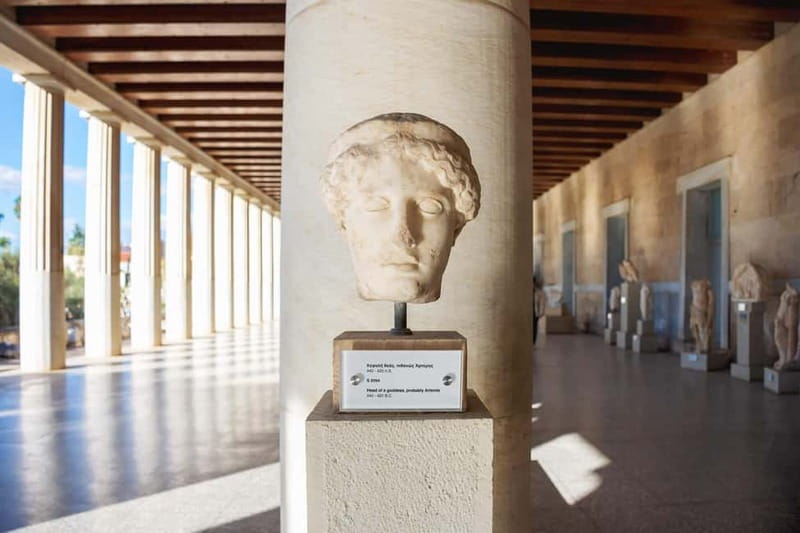
The Stoa of Attalos and its museum
The Stoa of Attalos is one of the clearest structures in the Agora. It has been reconstructed and now houses a museum with artifacts from the site.
Your guide points out the stoa and explains its role in the Agora. The building helps you picture how the area once offered covered space for people to meet and move through the city. It also gives you a more complete sense of the Agora than isolated columns and foundations can provide.
The tour includes the Ancient Agora entry ticket, but the listed route gives only about 30 minutes for the guided Agora visit. Do not expect a long, self-directed museum session. The value here is the focused explanation and the chance to see the key remains without having to work out the site’s layout alone.
The Temple of Hephaestus
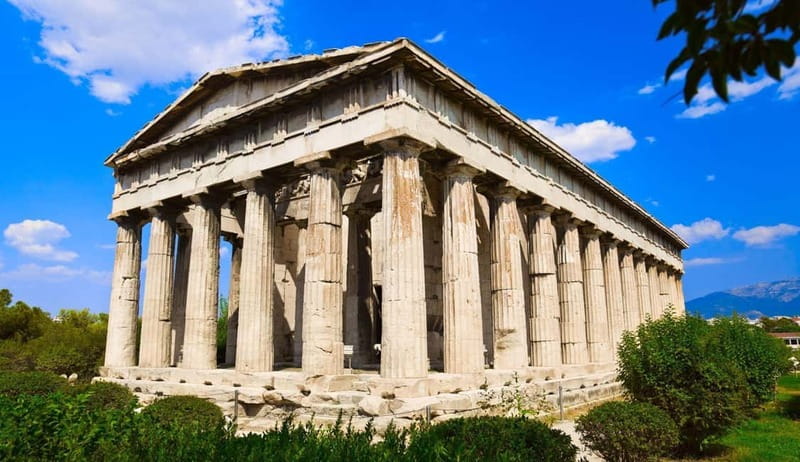
The route includes a walk of about 10 minutes to the Temple of Hephaestus. Dedicated to the god of craftsmanship, it is one of the best-preserved ancient temples in the area.
This temple provides a useful comparison with the Parthenon. It is smaller and less famous, but its condition makes it easier to understand how an ancient Greek temple was organized. Your guide also points out monuments and statues connected with the Agora, using them to explain Athenian artistic and civic values.
The visit ends at the Ancient Agora. The final location is useful if you want to continue exploring the central Athens area, stop at a local café, or find a restaurant afterward. The guide can offer local suggestions before the tour wraps up.
What the $102 price includes
At $102 per person, this is not the cheapest way to see the Acropolis. The price makes more sense when you count what is bundled in: entry to the Acropolis, entry to the Ancient Agora, separate access intended to avoid the long lines, a licensed guide, wireless listening equipment, and four hours of structured sightseeing.
Buying entry tickets separately would not give you the same interpretation or route planning. On the other hand, if you prefer to move at your own pace, take long photo breaks, or spend hours in the Agora museum, a self-guided visit may suit you better.
The strongest value comes from the combination of sites. Many people focus only on the Parthenon, but this tour also covers the South Slopes and Agora. You get the famous views, the major monuments, and a clearer picture of how religion, theatre, politics, and ordinary public life fit together.
A high rating of 4.9 from eight reviews supports the tour’s strengths, though that is a small sample. The guide quality is important here. Anastasia has been described as extremely effective and well prepared, while Yanis, also called John, has been praised for an informative and friendly approach. Those details suggest that the human side of the tour is one of its main assets, though the exact guide is not guaranteed.
Who should book this Athens walk
I would choose this tour if you want a single half-day introduction to ancient Athens and prefer explanations to wandering alone. It suits first-time visitors, history-minded adults, and anyone who wants the Acropolis and Agora handled in one organized route.
It also works well if you value convenience. The meeting point is close to the Acropolis metro station, tickets are included, and skip-the-line access reduces time spent waiting.
You should think twice if you have limited mobility, dislike hills and uneven ground, or want a slow visit with lots of time for independent photography. Children under six are not accepted, and the tour is offered in English only.
Book with weather in mind. Wear comfortable shoes, bring a hat, sunscreen, water, and a camera. Flash photography is not allowed. Free cancellation is available up to 24 hours before the start, and you can reserve now and pay later, which helps if your Athens schedule is still shifting.
Should you book it?
Book this tour if you want the Acropolis and Ancient Agora in one well-explained outing, with tickets and audio support already arranged. The South Slopes route, the Theatre of Dionysus, the major Acropolis monuments, and the Temple of Hephaestus create a fuller picture than a Parthenon-only visit.
Skip it if you need an accessible route, want to explore without a schedule, or plan to spend a great deal of time inside the Agora museum. For most fit visitors with four hours to spare, the $102 fee is reasonable because it combines admissions, guidance, and a smart route through the two most important ancient sites in central Athens.
FAQ
How long does the tour last?
The tour lasts four hours. Starting times vary, so check availability when booking.
Where does the tour begin?
It begins at the Office of Athens Walks on Porinou 5, about a two-minute walk from the Acropolis metro station.
Where does the tour finish?
The route finishes at the Ancient Agora of Athens.
Is the tour conducted in English?
Yes. The live tour guide speaks English.
Are entrance tickets included?
Yes. Entry to the Acropolis and Ancient Agora is included, along with skip-the-line access through separate entrances.
Is the tour suitable for wheelchair users?
No. The tour is not suitable for wheelchair users or people with mobility impairments because it includes a moderate amount of walking over archaeological terrain.
What should I bring?
Bring comfortable walking shoes, a hat, sunscreen, water, and a camera. Flash photography is not allowed.
More walking tours in Athens
- Athens: Acropolis and Parthenon Guided Walking Tour
★ 4.6 · 5,882 reviews - Greek Food Walking Tour in Athens
★ 5.0 · 4,740 reviews - Acropolis: Acropolis and Parthenon Guided Walking Tour
★ 4.7 · 3,442 reviews - Acropolis monuments & Parthenon Walking Tour with Optional Acropolis Museum
★ 5.0 · 2,678 reviews
Newly reviewed around Athens
- Feel Ancient thermal Spa Visit Delphi, Leonidas ℨoo Spaʀtan★ 5.0 · 4 reviews
- Food Tour★ 5.0 · 3 reviews
- Eat Your Way Through Athens: A Local Food Walk★ 4.9 · 97 reviews
- Explore the Hidden Food Gems of Athens★ 5.0 · 57 reviews
- Food Experience in Athens including Unlimited Lunch★ 5.0 · 3 reviews
- From Athens: Delphi Private Tour with Lunch Time★ 4.0 · 3 reviews
- Delphi: Spanish guided one day tour★ 4.6 · 55 reviews
- Early Entry Acropolis & Museum. Beat the Crowds & the heat★ 5.0 · 3 reviews
Athens Acropolis Tours, compared.
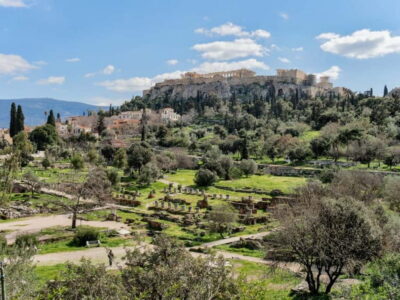
Acropolis & up to 5 Archaeological Sites Combo Pass
Read our review →
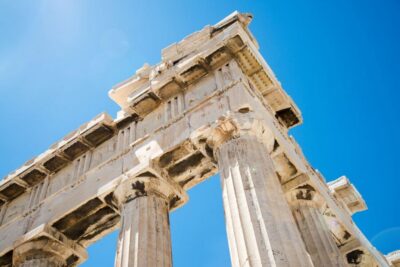
Acropolis, Parthenon & Acropolis Museum Guided Tour
Read our review →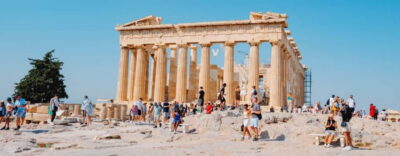
Acropolis, Parthenon & Acropolis Museum Guided Tour
Read our review →
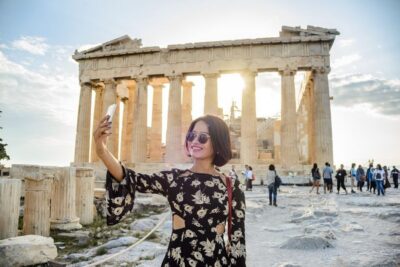
Acropolis monuments & Parthenon Walking Tour with Optional Acropolis Museum
Read our review →Browse the lists this tour appears in