
Reviewed · ATHENS ACROPOLIS TOURS
Acropolis & Agora: The Rise & Fall of Democracy
Athens makes more sense when you connect its marble monuments to the political experiment that grew below them. This three-hour walk links the Acropolis with the Ancient Agora, asking who counted as the people and what people-power really meant.
I like the clear focus on democracy, and I like that the tour does not stop at the Parthenon. The Agora gives the political story a physical setting, while guides such as Maria, Nathalia, Anastasia, and Helena have made room for questions, shade breaks, sitting time, and photos. The main drawback is the pace: three hours on stone paths and hills can feel demanding, and the tour is not suitable for children under eight, wheelchair users, or visually impaired people.
Key points to know before booking
- Democracy is the main subject: You learn how Athenian democracy began, what it was meant to do, and why it failed.
- Two major sites are combined: The Acropolis provides the grand public image of Athens, while the Agora shows its political and daily working life.
- The Parthenon gets the longest stop: Plan on about one hour here, with shorter guided visits at the other Acropolis monuments.
- The guide shapes the experience: English and French tours are available, and recent guides including Maria, Nathalia, Anastasia, and Helena received especially warm praise for clear explanations and thoughtful pacing.
- Tickets need attention: Acropolis and Agora admission is included only when you select that option, and tickets can also be bought in advance through the provider.
- Pack light: Backpacks, large bags, strollers, and pets are not allowed, although assistance dogs are permitted.
Why this Athens tour is different

Many Acropolis walks are built around architecture, mythology, or photo stops. This one uses the monuments to tell a political story. That gives you a useful thread to follow as you move from the hilltop to the lower city.
The central idea is simple but not shallow: democracy means people-power, yet you must ask who the people were and what power they actually held. That question keeps the tour from turning ancient Athens into a polished modern role model.
You will look at democracy as an experiment that lasted, changed, and ultimately failed in its ancient form. The discussion then turns toward present-day democracy, including the parts of the ancient system that still help societies and the parts that can break down.
I like that approach because the Acropolis can otherwise feel like a collection of famous stones. Here, the buildings become evidence of ambition, civic identity, political messaging, and public life.
More ways to see the Acropolis:
- Athens: Acropolis & up to 5 Archaeological Sites Combo Pass
★ 4.4 · 12,619 reviews - Athens: Acropolis Ticket with Optional Audio or Live Guide
★ 4.2 · 11,055 reviews - Athens: Acropolis, Parthenon & Acropolis Museum Guided Tour
★ 4.8 · 9,316 reviews
Starting on Dionysiou Areopagitou Street
The tour has two possible starting options, both listed at Dionysiou Areopagitou 45. Check your booking details carefully because the exact meeting point depends on the option you choose.
This is a walking tour from the start, not a bus outing with a quick stop at the Acropolis. Wear shoes that can handle uneven archaeological paths, and choose comfortable clothing. Bring your passport or identity card if you may qualify for free admission based on age or European Union citizenship.
You should also arrive with a small amount of luggage. Backpacks and big bags are not allowed at the Acropolis, and strollers are not permitted. The restrictions are easy to overlook when packing for a day in Athens, so plan around them before you leave your hotel.
The tour ends at the Ancient Agora. That is useful if you want to continue exploring central Athens on foot afterward, but it also means you should not expect to return to the original meeting point with the group.
The Acropolis: politics on a hilltop
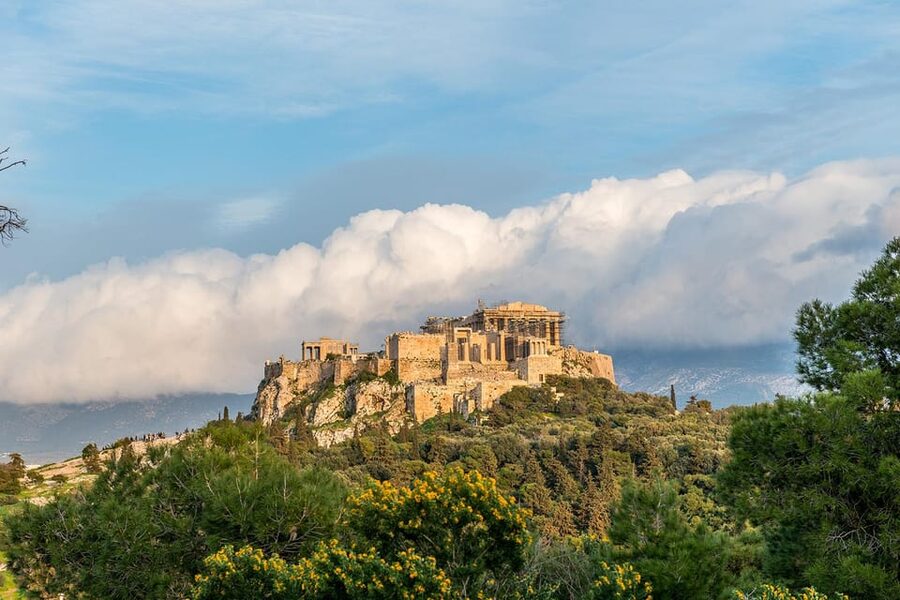
The Acropolis is the visual centerpiece of the tour. You will visit the famous monuments while learning how the hill worked as more than a religious site. The guide places it within the political story of Athens and explains how its buildings helped express the city’s power and identity.
The climb and stone surfaces require care. The tour is not suitable for wheelchair users or visually impaired people, and anyone with limited mobility should think seriously about the physical demands before booking. Children under eight are also excluded.
The Acropolis can be crowded and exposed, though the precise conditions vary by time of day and season. The practical answer is simple: wear good shoes, carry only what is allowed, and listen when your guide suggests a pause. Anastasia was specifically praised for building in shade breaks and sitting time, a helpful touch on a hot morning.
Odeon of Herodes Atticus
The Odeon of Herodes Atticus is scheduled as a 15-minute guided stop. It gives you an early look at the Acropolis as a place connected to public performance and civic life, not just temples.
This is a short visit, so expect an explanation and a chance to take photos rather than a long examination of every feature. The stop works well as an introduction to the idea that Athens used impressive public spaces to shape communal life.
More Ancient Agora and Kerameikos walks:
- Athens: Agora and Hephaistos Temple Entrance Ticket
★ 4.0 · 449 reviews - Athens: Ancient Agora E-Ticket and Audio Tour
★ 3.9 · 413 reviews - Athens: Kerameikos Stone House Cooking Class
★ 5.0 · 165 reviews - Athens: Roman Agora & Ancient Agora E-ticket & 2 Audio Tours
★ 4.1 · 107 reviews
The Propylaea
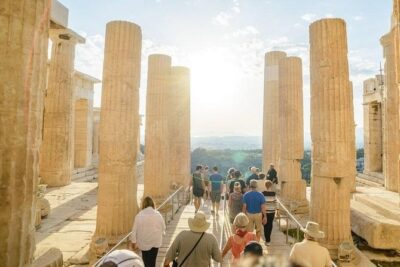
The Propylaea serves as the monumental entrance to the Acropolis. The tour allows about 15 minutes here, enough for the guide to explain the gateway and help you understand how the approach frames the monuments ahead.
It is also a practical point in the walk. Groups may need to keep moving through busy areas, and the steep or uneven ground can make lingering difficult. Keep your attention on both the guide and your footing.
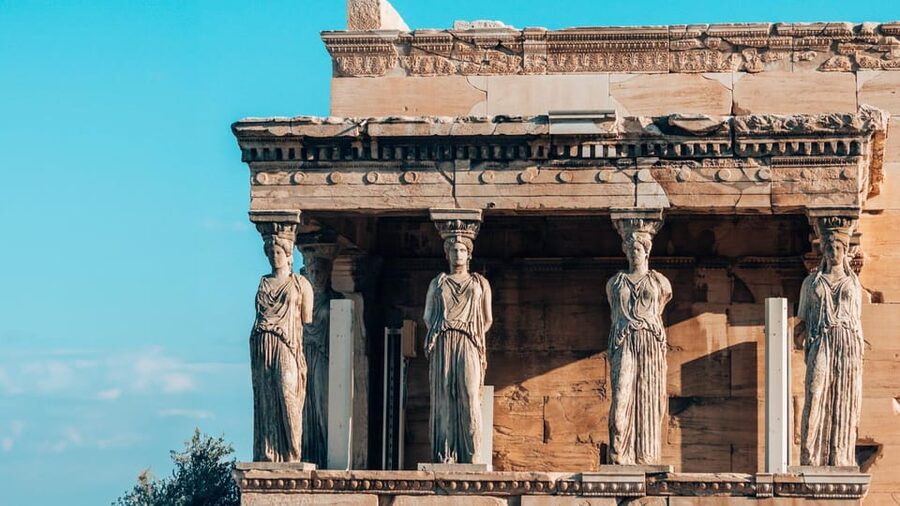
The Erechtheion
The Erechtheion receives another 15-minute guided visit. Its unusual design makes it a good counterpoint to the more familiar Parthenon, and the guide uses it to add texture to the Acropolis story.
This is the sort of stop where a strong guide matters. You will get more from the building if someone explains why it matters within the religious and civic life of ancient Athens. Nathalia was praised for adding anecdotes and still leaving time for photos, a useful balance at a site where you will want both context and a few quiet minutes to look.
The Temple of Athena Nike
The Temple of Athena Nike is also planned for 15 minutes. Its compact scale provides a change of rhythm after the larger structures, and the guide connects it to the values and public messages represented on the Acropolis.
Do not expect a separate long visit here. It is part of a tightly organized route, so the value comes from the explanation and the way the temple fits into the larger argument about Athens, rather than from the amount of time spent standing beside it.
One hour with the Parthenon
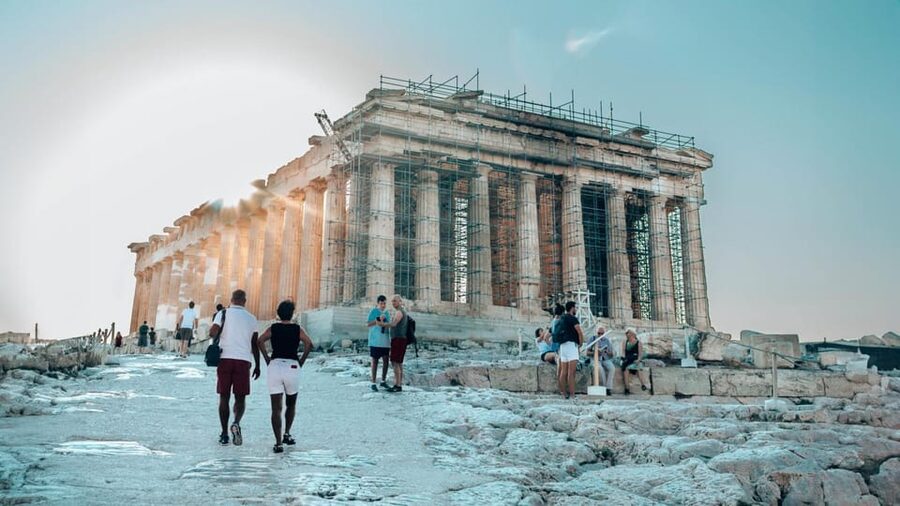
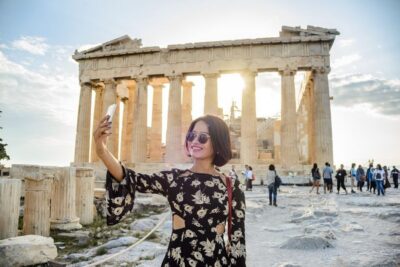
The Parthenon gets the longest scheduled stop, about one hour. That makes sense. It is the monument most people come to see, but it is also central to the tour’s political theme.
The guide presents the building as more than a perfect-looking temple. You will consider the way ancient Athens used the Acropolis to project confidence and civic power. The discussion places the monument within the city’s political ambitions instead of treating it as an isolated work of art.
This is likely to be the most photo-heavy part of the morning. You should have time to take pictures and ask questions, but the group still needs to follow a schedule. Cécilia noted that her daughters enjoyed the visit, while Claire valued Anastasia’s ability to explain difficult subjects in a clear, approachable way.
The Parthenon is also where expectations matter. You are visiting an archaeological site, not entering a complete ancient building. The guide’s interpretation supplies much of the structure that the surviving stone cannot. If you want a quick photo and a few facts, the stop may feel long. If you want to understand why the Acropolis matters to the story of democracy, the hour is useful.
Walking down to the Ancient Agora
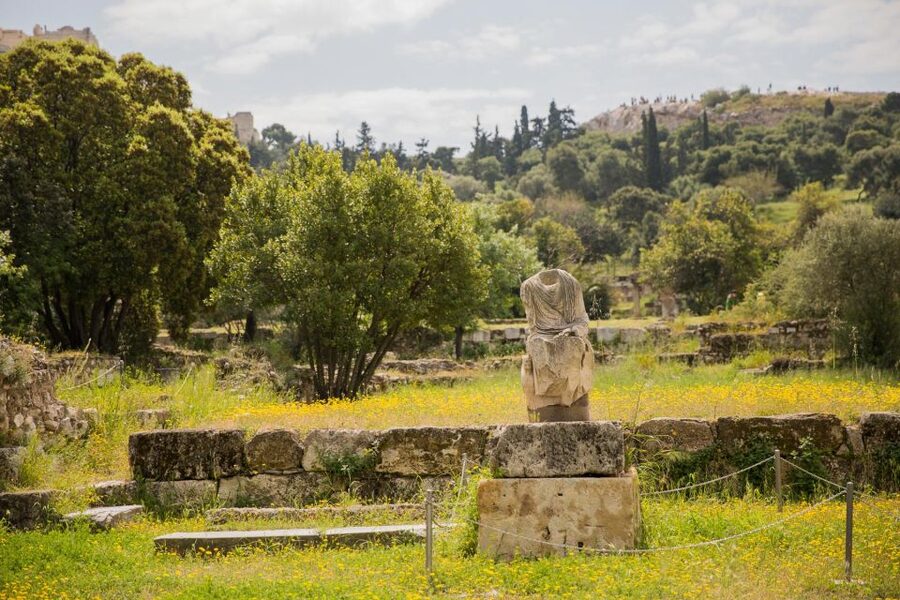
The move from the Acropolis to the Ancient Agora changes the mood of the tour. The hilltop monuments show the public face of Athens. The Agora brings you closer to the city’s political, commercial, and administrative center.
This is the heart of the democracy theme. The guide explains the personalities and events connected with the rise of democracy, then examines the system’s values, purpose, and weaknesses.
I especially like this pairing of sites. The Acropolis can leave you looking upward at grand monuments. The Agora helps you imagine the city as a place where political life happened among ordinary civic routines and public institutions.
The route remains a walking experience, so expect more uneven ground and outdoor exposure. The exact transitions between stops can vary with the group and site conditions. The tour’s small-group format should make it easier to hear the guide and ask questions, while a private option is available if you want the discussion tailored more closely to your group.
The Ancient Agora and the birth of democracy
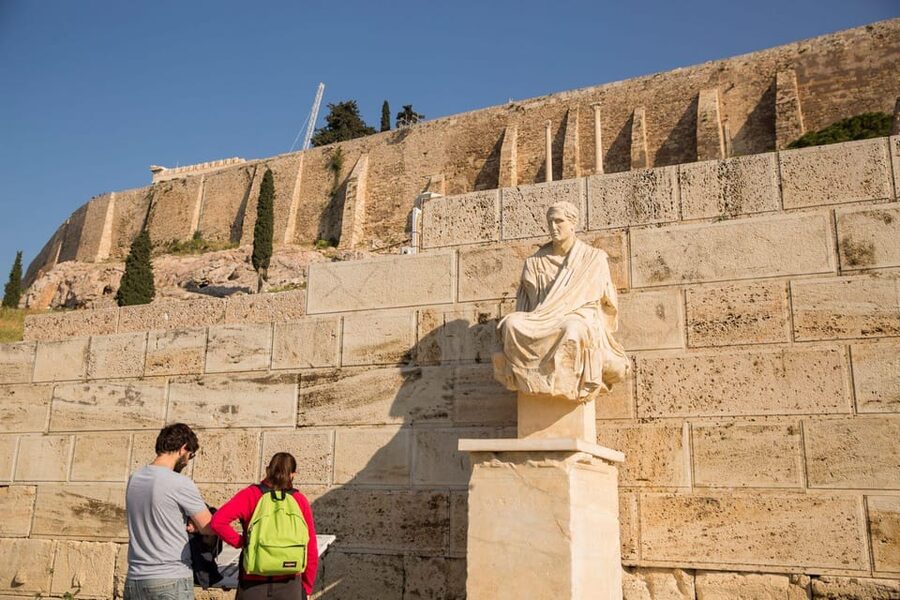
The Ancient Agora receives about 30 minutes of guided attention. That may sound brief for such an important site, but it follows a full Acropolis visit, so the guide has to keep the morning moving.
The focus here is not just on ruins. You will examine the Agora as the center of political, commercial, and administrative activity in ancient Athens. The guide uses the setting to explain how democracy developed and what made it radical for its time.
This is also where the tour’s questioning style works best. You will consider who had a political voice, what powers citizens held, and what purposes the system served. The subject is not presented as a clean success story. Instead, democracy appears as a bold experiment with limits and failures.
Charles specifically appreciated the focus points in the Agora museum. That is useful information for you because museums can easily become a blur of objects after an outdoor site visit. A guide who chooses a few key pieces can help you remember the political story instead of simply walking past displays.
The 30-minute timing means you will not receive a full museum tour. Think of it as a focused introduction that gives the objects a place in the larger story.
The Temple of Hephaestus
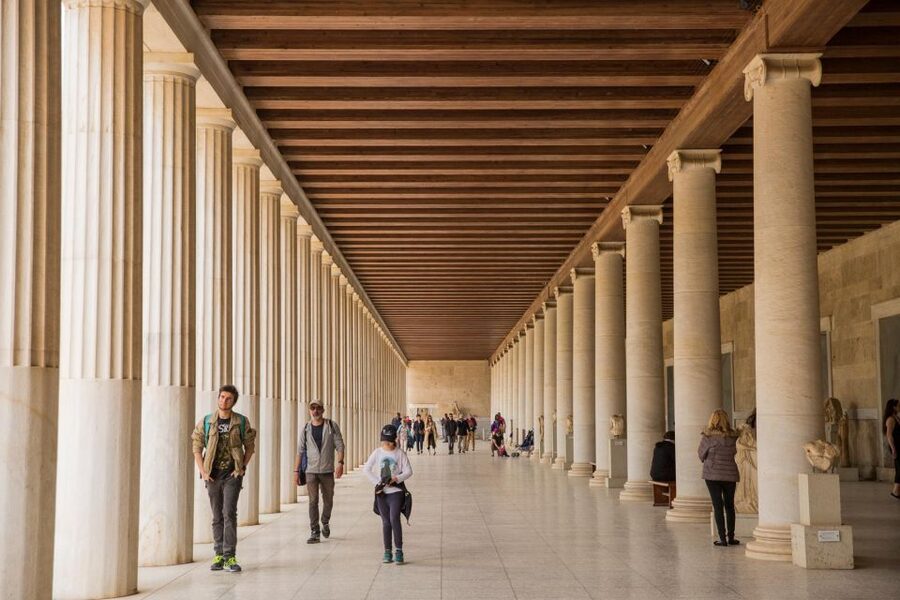
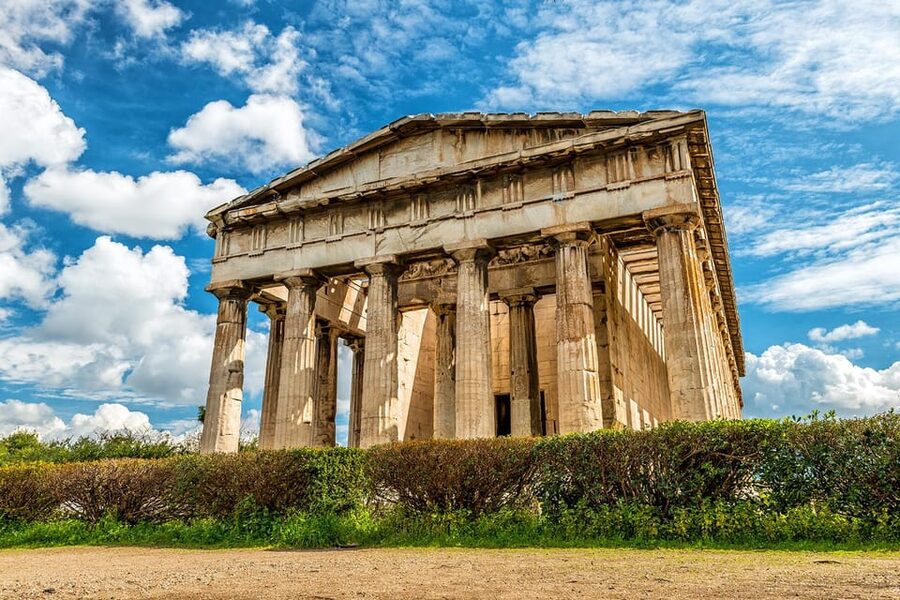
The final scheduled stop is the Temple of Hephaestus, with about 30 minutes of guided time. This is a fitting place to finish the ancient-site portion of the tour because it gives you another major structure within the Agora area without requiring a separate transfer.
The temple adds architectural variety after the Acropolis and helps round out your understanding of the Agora precinct. The guide can also use the setting to bring the discussion back to the relationship between religious buildings, public life, and the city’s values.
The tour ends at the Ancient Agora rather than returning to the starting point. You can treat this as an advantage if you plan to continue exploring central Athens from there. It is less convenient if you have a fixed appointment back near the Acropolis, so allow time for your own onward plans.
What the democracy discussion adds

The best part of this experience is the connection between physical places and political ideas. You are not simply told that democracy began in Athens. You are asked to consider how the system worked and why it eventually failed.
The tour also compares ancient democracy with contemporary democracy. You will look at the structural elements that still serve modern societies and the features that can fail or create problems.
This comparison gives the visit a present-day purpose without turning it into a lecture about current politics. You can use the ancient examples to think more clearly about participation, power, public purpose, and the limits of any political system.
I would book this tour if you enjoy asking why a famous place matters, not only when it was built. It is especially useful if you are visiting Athens with older children or teenagers who can follow a political discussion. Children under eight cannot join, and the walking conditions make it a poor match for very young families.
Guide quality and language options
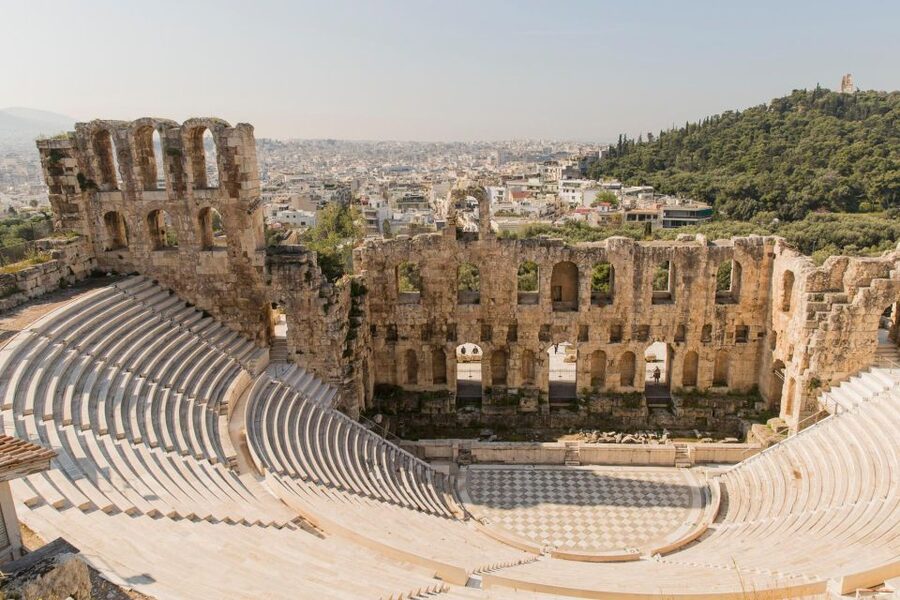
The guide is the key variable in any history walk. This experience uses certified guides and offers English and French. Recent guiding by Maria, Nathalia, Anastasia, and Helena shows the range of the format: clear explanations, anecdotes, answers to questions, photo time, and attention to shade and sitting breaks.
Anastasia was praised for being bilingual, patient, and good at explaining the history of Athens and the beginning of democracy. Helena was remembered for connecting mythology with democracy in a way that made the walk feel like a journey through time. Maria’s museum focus points were especially useful at the Agora.
Guide assignments can change, so you should not book on the assumption that one named guide is guaranteed. Still, the repeated pattern is encouraging: the experience depends on interpretation, and the guide is expected to adapt to the group.
A private group option is available. That may suit you if your party wants more time for questions or needs a pace adjusted within the limits of the archaeological sites.
Is $69 a fair price?
At $69 per person, this is not the cheapest way to see the Acropolis. The value depends on what you want from the visit.
The price covers a three-hour small-group walking experience with a certified guide. Acropolis and Ancient Agora entry tickets are included only if you select the ticket option. If you choose a version without admission, entry fees are extra, although the provider can pre-purchase tickets for you.
That distinction matters. Compare the final price with the cost of buying admission separately, and remember that entry fees are non-refundable and non-exchangeable. European Union citizens under 25 can enter free with valid identification, as can European Union and non-European Union citizens under 18, also with valid identification.
I think the price is reasonable for you if the democracy theme appeals and you want both major sites explained in one morning. It is less compelling if you only want independent time for photographs, or if you prefer to move slowly without a set route.
Practical advice for a smoother visit
Bring your passport or identity card if age-based admission rules may apply. Wear comfortable shoes and clothing, and leave backpacks, big bags, and strollers behind.
Food and drinks are not included. The tour lasts three hours, so plan your own refreshments before or after the walk rather than expecting a meal during the visit.
The tour offers free cancellation up to 24 hours before departure, and you can reserve now and pay later. Starting times vary, so check availability for the date you want.
French and English are offered. The activity is not suitable for children under eight, wheelchair users, or visually impaired people. Assistance dogs are allowed, but other pets are not.
Should you book Acropolis and Agora: The Rise and Fall of Democracy?
Book it if you want the Acropolis and Ancient Agora to form one connected story. The strongest reason to choose this experience is its focus: you will examine democracy as an experiment, not simply hear that Athens invented it.
The tour is also a good choice if you value a guide who can explain complex ideas clearly, answer questions, and make room for photos and breaks. The praise for Maria, Nathalia, Anastasia, and Helena points to a thoughtful guiding style, though the individual guide is not guaranteed.
Skip it if you need step-free access, are traveling with a child under eight, dislike walking on uneven archaeological ground, or want a relaxed photo tour with no political discussion. At three hours, it asks for real attention and stamina.
For the right audience, $69 is a fair price for two major Athens sites and a focused explanation of how democracy began, worked, and failed. You leave with more than a picture of the Parthenon. You leave with a better question: what does people-power actually mean?
FAQ
How long does the tour last?
The tour lasts three hours, with guided visits at the Acropolis and Ancient Agora.
Which languages are available?
The tour is offered in English and French.
Are Acropolis and Ancient Agora tickets included?
Entry tickets are included only with the ticket option you select. The provider can also pre-purchase them for you. If you do not choose an admission-included option, entrance fees are extra.
Where does the tour start and finish?
There are two possible starting options listed at Dionysiou Areopagitou 45. The exact meeting point depends on the option booked. The tour finishes at the Ancient Agora.
What should I bring?
Bring a passport or identity card, comfortable shoes, and comfortable clothing. Backpacks, large bags, and strollers are not allowed at the Acropolis.
Can children or wheelchair users join?
Children under eight cannot join, and the tour is not suitable for wheelchair users or visually impaired people. Assistance dogs are allowed, but other pets are not.
Newly reviewed around Athens
- Feel Ancient thermal Spa Visit Delphi, Leonidas ℨoo Spaʀtan★ 5.0 · 4 reviews
- Food Tour★ 5.0 · 3 reviews
- Explore the Hidden Food Gems of Athens★ 5.0 · 57 reviews
- Food Experience in Athens including Unlimited Lunch★ 5.0 · 3 reviews
- Eat Your Way Through Athens: A Local Food Walk★ 4.9 · 97 reviews
- From Athens: Delphi Private Tour with Lunch Time★ 4.0 · 3 reviews
- Delphi: Spanish guided one day tour★ 4.6 · 55 reviews
- Early Entry Acropolis & Museum. Beat the Crowds & the heat★ 5.0 · 3 reviews
Athens Acropolis Tours, compared.
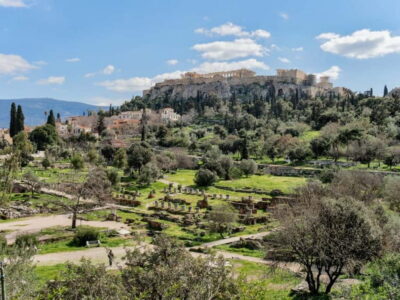
Acropolis & up to 5 Archaeological Sites Combo Pass
Read our review →
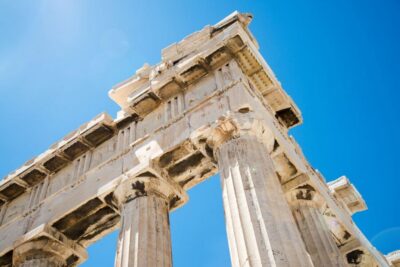
Acropolis, Parthenon & Acropolis Museum Guided Tour
Read our review →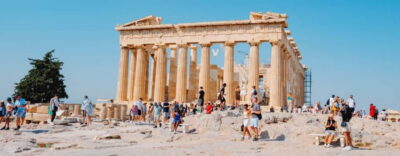
Acropolis, Parthenon & Acropolis Museum Guided Tour
Read our review →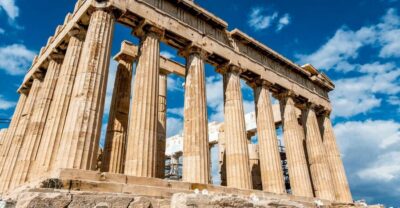
Acropolis monuments & Parthenon Walking Tour with Optional Acropolis Museum
Read our review →Browse the lists this tour appears in