
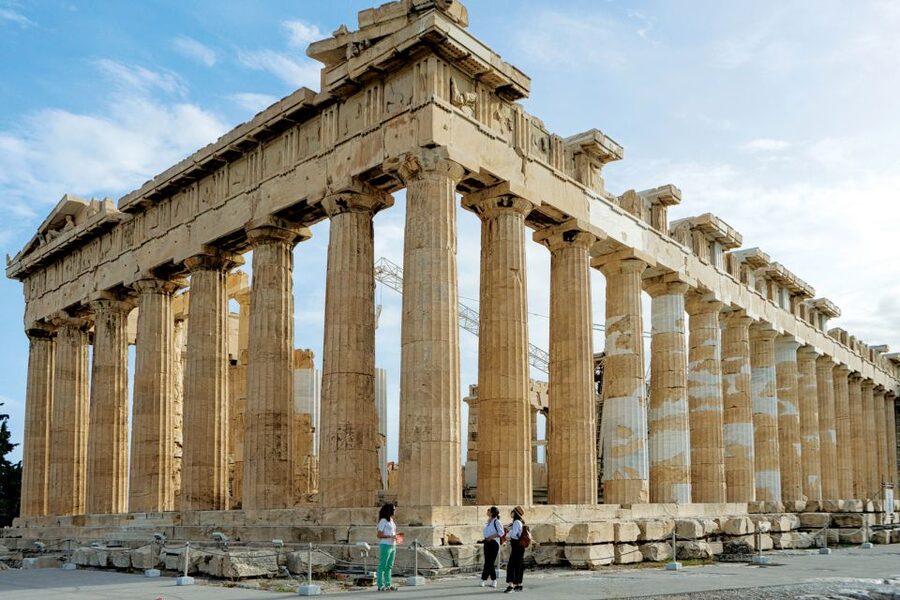
Reviewed · ATHENS ACROPOLIS TOURS
Acropolis, Plaka & Ancient Agora Guided Tour
The best feature of this 3.5-hour Athens tour is its smart pairing of the Acropolis with the Ancient Agora. You see the city’s famous hill, then walk into the place where daily business, politics, philosophy, and public life once happened. Guides such as Vasaliki, Tina, and Sissy have been praised for making bare stones and broken columns easier to picture.
I like the south-slope entry, which includes the Dionysus Sanctuary and Theater before the Acropolis monuments. I also like the visit to the Ancient Agora’s Attalos Museum, where everyday objects such as market weights and measures add human detail. The main catch is physical: steep paths, steps, sun, and security checks make this a poor choice if you have serious mobility limits.
Key points to know before you book
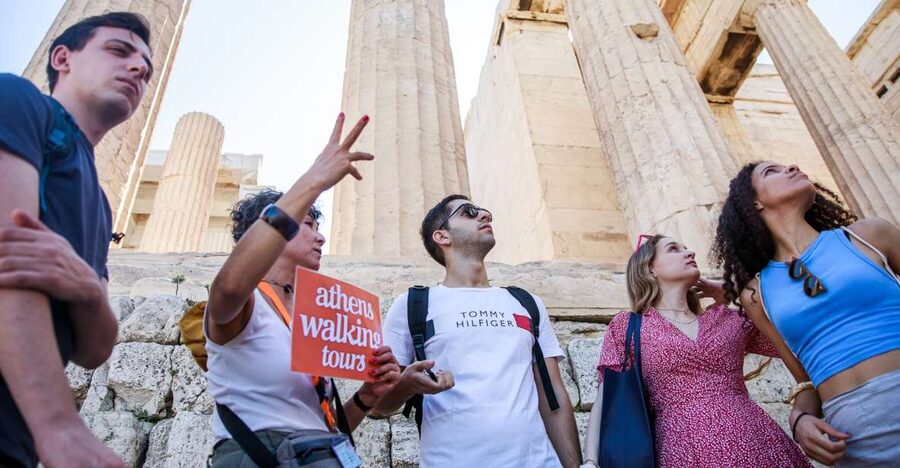
- Two major ancient sites in one morning: Visit the Acropolis at about 11 a.m., then the Ancient Agora at about 1 p.m.
- A more interesting Acropolis entrance: The south slope brings you past the Dionysus Sanctuary and Theater before the climb.
- Strong guide-led interpretation: Guides including Vasaliki, Tina, and Sissy have been praised for clear history, mythology, archaeology, and patient answers.
- A useful break, not a leisurely lunch: You get time for a snack or drink between sites, but not a full meal.
- Ticket choice matters: With-ticket and without-ticket options have different responsibilities, and the right timed admission is essential.
- Expect a real walk: The tour is not suitable for wheelchair users or people with mobility impairments.
Why pairing the Acropolis with the Agora works
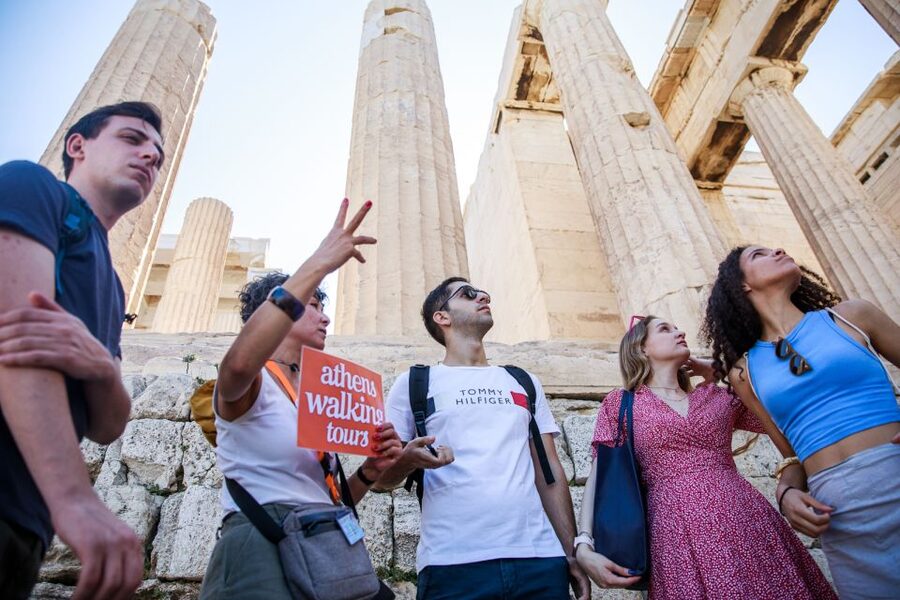
Athens can feel like a city of scattered ruins if you visit without context. This tour gives you two different views of ancient life in one outing.
The Acropolis was the city’s sacred high point, crowned by temples and monuments. The Ancient Agora was the practical center below, where people traded, debated, worshiped, inspected goods, and handled public business. Seeing both helps you understand Athens as a living city rather than a collection of famous photographs.
At $66 per person, the value depends mainly on your ticket choice and your interest in explanation. You are paying for a licensed English-speaking guide and a guided visit to two major sites. If you already know Greek architecture and mythology well, you may prefer to explore alone. If a field of columns leaves you asking what happened here, the guide can make the admission fee work harder.
The tour has a rating of 4.8 from 10 reviews, with particular praise for guide personality, clear explanations, and a comfortable pace. One guest with knee problems found the walking manageable, but that should not be taken as a promise that the route is easy. The Acropolis still requires uphill walking and steps.
More ways to see the Acropolis:
- Athens: Acropolis & up to 5 Archaeological Sites Combo Pass
★ 4.4 · 12,619 reviews - Athens: Acropolis Ticket with Optional Audio or Live Guide
★ 4.2 · 11,055 reviews - Athens: Acropolis, Parthenon & Acropolis Museum Guided Tour
★ 4.8 · 9,316 reviews
Meeting at Dionyssiou Areopagitou Street
Your meeting point is 3 Dionyssiou Areopagitou Street, at the start of the pedestrian walkway leading toward the Acropolis from Hadrian’s Arch and Syngrou Avenue. Look for the orange Athens Walking Tours sign.
Arrive 20 minutes early. That extra time matters because the Acropolis has strict timed entry rules, and the guide cannot wait for late arrivals. Bring your passport or ID card, and bring a student card if you are using a student admission category. Cash is also listed among the recommended items.
The walk begins at approximately 11 a.m., though you should check the available departure time when booking. The tour operates in rain or shine. Baby strollers, luggage, and large bags are not allowed, so arrange your day around a light daypack or small personal bag.
Entering through the Acropolis south slope
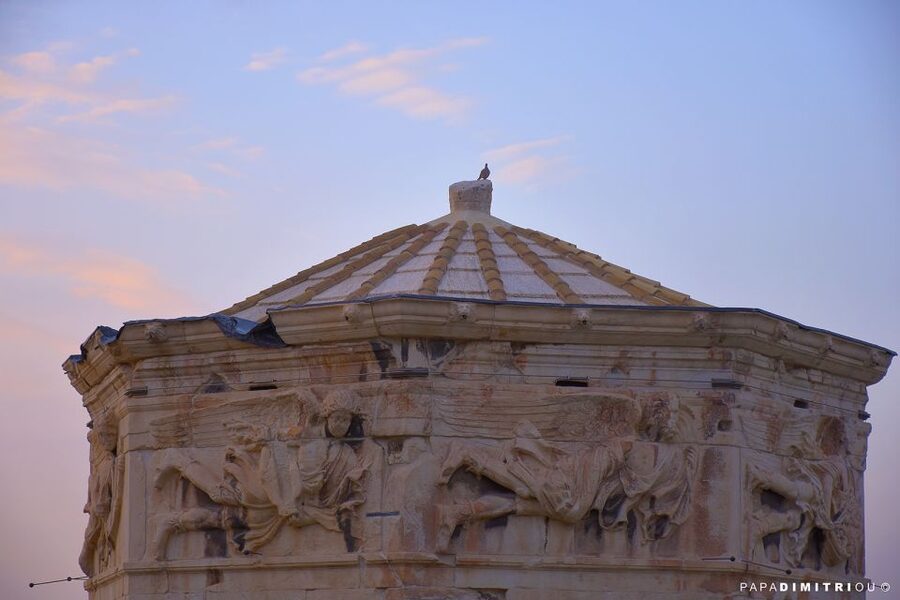
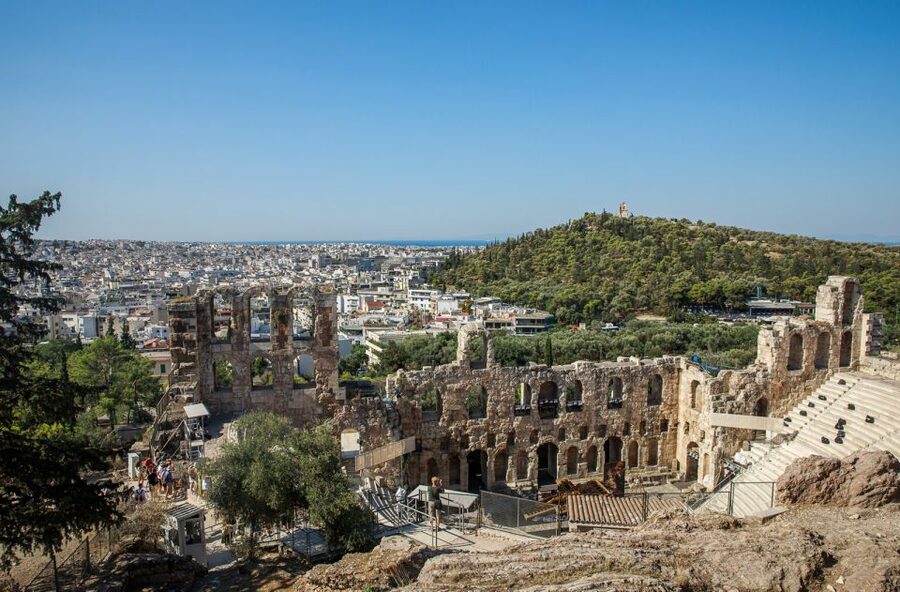
Many Acropolis visits begin with the main climb toward the Propylaia. This route first takes you through the Dionysus Sanctuary and Dionysus Theater, built in the 5th century BC.
That opening is especially useful because the theater gives you a glimpse of Athens as a place of performance, drama, and public gathering before you reach the hilltop temples. Your guide can connect the theater to the wider cultural life of ancient Athens, rather than treating the Acropolis as a single monument.
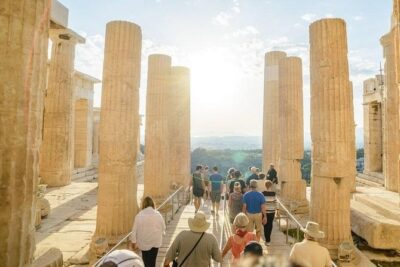
The route then climbs the sacred hill. The path includes inclines and steps, and the exposed setting can feel demanding in warm weather. Guides have made a point of stopping in the shade when possible, which is valuable in Athens, but shade is not guaranteed along every part of the route.
As you rise, the city opens below you. The view is not just a photo stop. It helps explain why the Acropolis worked as both a religious center and a dominant point above ancient Athens. Give yourself time to look outward, not only at the stones under your feet.
The Parthenon and the Acropolis monuments
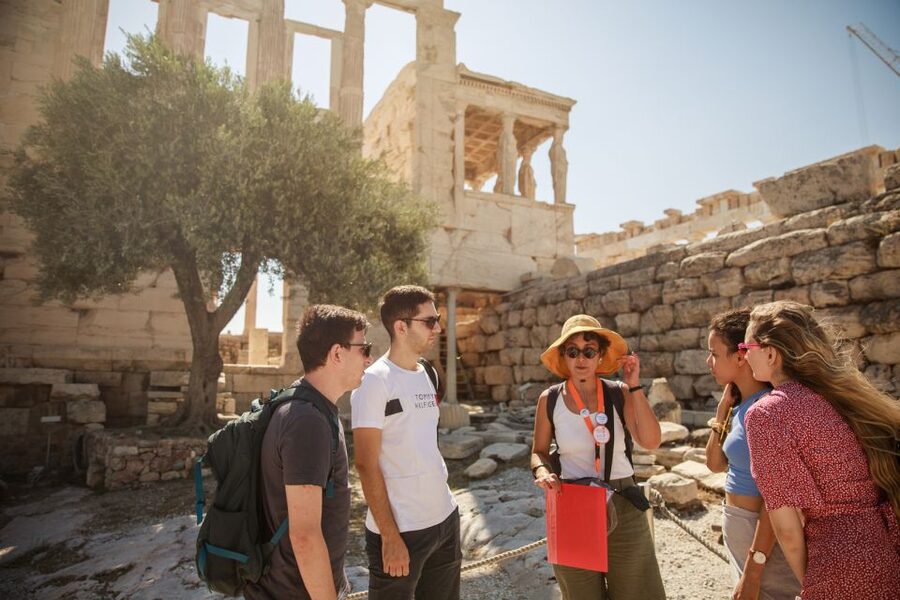
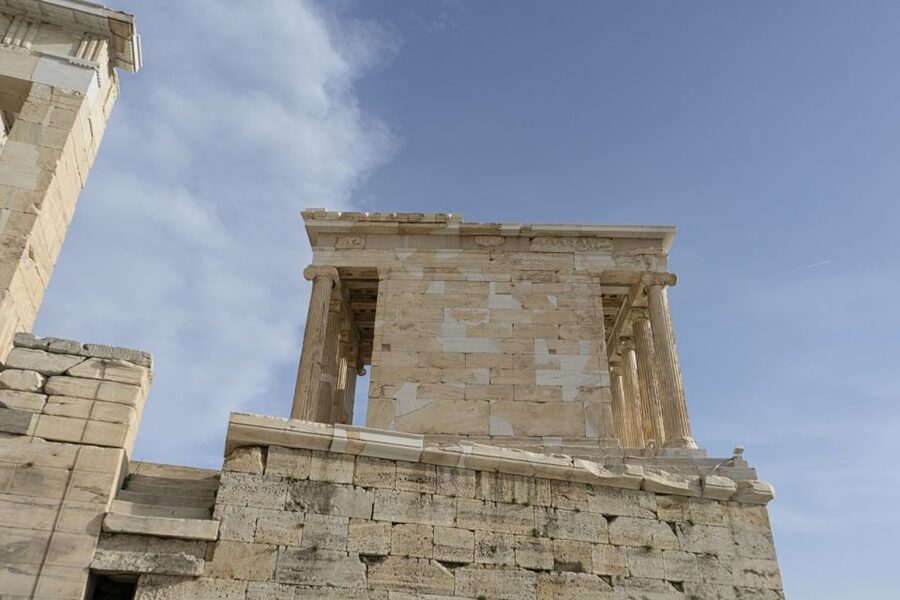
At the top, the guide explains the Parthenon, the monument most closely linked with Athens. You will also hear about the Erechtheion, the Propylaia, the Temple of Nike, and the Agrippa Monument.
A good guide helps you sort out the roles of these buildings. The Parthenon is the grand temple that dominates most views, but the Acropolis is a wider architectural group, with entrances, shrines, viewing points, and later additions. Without help, it is easy to photograph everything and remember little.
The Erechtheion offers a different architectural mood from the Parthenon. The Propylaia frames the approach to the summit, while the Temple of Nike is a smaller but important monument associated with victory. Your guide’s explanation gives these structures a place in the larger religious setting.
You will also hear about surrounding landmarks, including the Odeon of Herodes Atticus, the Observatory, Philopappos Hill, Mars Hill, and Pnyx Hill. These references broaden the view beyond the Acropolis walls. Mars Hill and the Pnyx, in particular, help place public speaking and civic life around the sacred center of the city.
The route is not a quiet museum visit. The site can be crowded, and all visitors pass through airport-style security. Even with skip-the-ticket-line service, waits can range from none to 10 or 30 minutes, with longer delays possible at busy times. That phrase means you skip the ticket-purchase queue, not every queue at the monument.
More Ancient Agora and Kerameikos walks:
- Athens: Agora and Hephaistos Temple Entrance Ticket
★ 4.0 · 449 reviews - Athens: Ancient Agora E-Ticket and Audio Tour
★ 3.9 · 413 reviews - Athens: Kerameikos Stone House Cooking Class
★ 5.0 · 165 reviews - Athens: Roman Agora & Ancient Agora E-ticket & 2 Audio Tours
★ 4.1 · 107 reviews
Free time for photographs on the hill
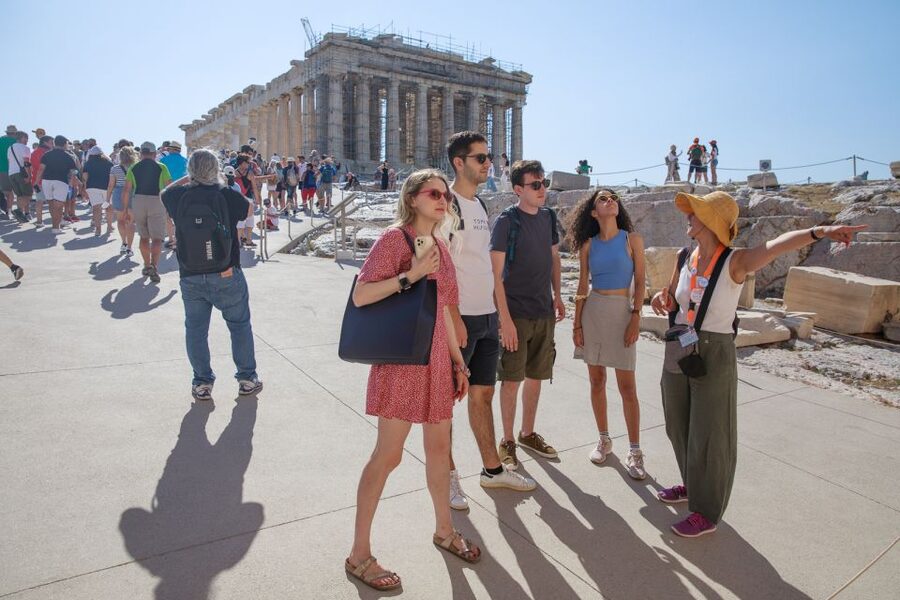
After the guided portion at the Acropolis, you get free time to explore and take pictures. This is a useful touch because a guide-led walk can move at a steady pace, while your own camera stops may take longer.
Use this time to revisit a favorite view, photograph architectural details, or simply look across Athens. You will not have unlimited time, so keep track of the meeting instructions for the next part of the tour.
The Acropolis has little room for an extended meal stop during this schedule. The plan allows a short break before the Agora, not a leisurely lunch. Bring water and a small snack if you know you will need one. The canteen can provide a drink or quick bite, but food and beverages are not included in the tour price.
Walking down to the Ancient Agora
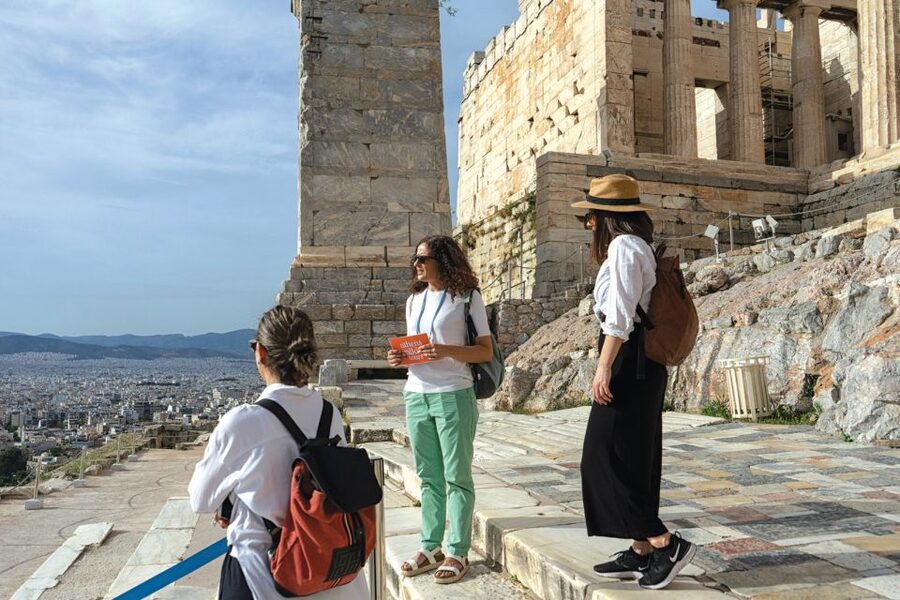
After the Acropolis, the group walks down to the Ancient Agora. This shift from the hilltop sanctuaries to the lower city is one of the tour’s strongest features.
The Agora was the commercial, political, and financial center of ancient Athens. Here, the focus changes from monumental temples to the practical machinery of urban life. You are following the sort of space where people conducted business, discussed public matters, and moved through the heart of the city.
The route gives the ancient stones a human scale. Instead of asking only how old a building is, you can consider what people did there and why the space mattered. That is where a live guide earns the fee. A ruined wall cannot explain itself, but a good explanation can show how several modest remains fit together.
The pace also gives you a second chance to appreciate Athens if the Acropolis felt crowded. The Agora is still an important archaeological site, but the experience is shaped by different buildings and a different kind of story.
Hephaestus Temple and the smaller monuments
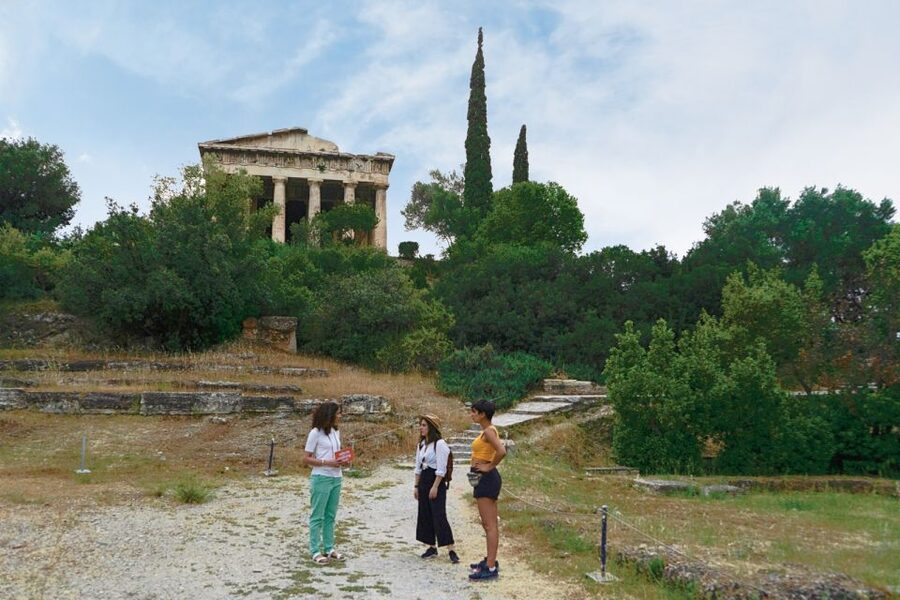
The Temple of Hephaestus is a major highlight. It is described as the best-preserved Greek temple from the 5th century BC, giving you a clearer sense of classical temple form than many heavily damaged ruins can provide.
The tour also includes the Church of the 12 Apostles, the Temple of Apollo Patroos, the Stoa of Zeus, and the Altar of Zeus. These stops may not have the instant recognition of the Parthenon, but they help you see the Agora as a working district with religious, civic, and commercial functions.
This is where guide quality matters most. A visit without explanation can become a walk among foundations. Guides have been praised for answering questions, explaining Greek mythology, and bringing archaeology into the discussion. Sissy, who is an archaeologist, was especially valued for helping a family understand both the Acropolis and Agora.
Guides have also included Vasaliki, Tina, and a male guide praised for a friendly manner and strong knowledge of Greek history and mythology. The exact guide depends on the departure, so do not book expecting one particular person. Still, the range of names and comments points to a guiding team that takes the interpretive side of the tour seriously.
Attalos Museum and the everyday side of Athens
The final museum stop is the Museum of the Stoa of Attalos. This building gives you shelter and a more focused look at objects connected with daily and civic life.
Among the details highlighted here are ancient Greek identification items, along with original measures and weights used by market inspectors. These objects are small compared with the Acropolis temples, but they answer practical questions. How did officials check goods? How did the market operate? What did identification look like in an ancient city?
I find this kind of museum stop valuable because it shifts your attention from famous names to ordinary systems. Socrates and Plato are connected with the Agora, but the market also needed standards, inspections, and rules. The museum helps you picture the people who used the space every day.
The museum is not a replacement for a full Athens museum visit. It is a compact final stop that supports what you have just seen outdoors. If you prefer uninterrupted ruins and views, it may feel like a slower ending. If you want objects that explain the city’s practical life, it is well chosen.
The walking, weather, and access questions
You should be comfortable walking uphill, over uneven ancient surfaces, and down through archaeological grounds. The Acropolis portion includes inclines and steps, while the Agora adds more walking after the first climb.
The tour is not suitable for wheelchair users or people with mobility impairments. Even if you can walk independently, consider knee strength, balance, heat, and the length of the outing. One older participant with knee issues found the pace manageable, helped by regular pauses, but individual comfort will vary.
Shade is limited at major parts of the Acropolis. Guides may stop in shaded areas when possible, and one guide was specifically praised for doing so. Still, plan for sun exposure and bring suitable protection. The rules list a passport or ID, student card, and cash among the items to bring.
Security can affect the timing. Airport-style checks apply to everyone, and peak-season waits can reach 30 minutes or more. The skip-the-ticket-line service saves you from buying tickets at the site, but it cannot remove security screening or guarantee a fast entrance.
Choosing the ticket option carefully
The most important booking detail is the difference between the with-ticket and without-ticket choices.
With the ticket option, admission is included. With the no-ticket option, you must buy official tickets yourself, choosing the correct date, time slot, and ticket category. You must do this before booking the tour, and your admission time must match the tour schedule.
The Acropolis entry is approximately 11 a.m., and the Ancient Agora entry is approximately 1 p.m. You need valid tickets for both sites if you are handling admission yourself. A wrong time slot can prevent you from joining, and strict Acropolis entry times mean late arrivals may be turned away without a refund.
Use the official ticket site provided for the attraction, hhticket.gr, if you select the no-ticket arrangement. Read the ticket category carefully, especially if you plan to use a student admission. Bring the required identification.
This is the one part of the booking that deserves your full attention. The tour itself is straightforward, but a ticket error can undo your plans before the history lesson begins.
Is $66 good value?
At $66, I see this as a fair price for someone who wants interpretation at both sites and prefers not to coordinate two major archaeological visits alone. The value improves if the price includes admission, since you are also paying for the licensed guide and the skip-the-ticket-line service.
The price is less attractive if you choose the no-ticket option and then discover that admission costs are separate. Compare the total before paying. Also remember that food, drinks, hotel pickup, and hotel drop-off are not included.
For a first visit to Athens, I would favor the guided option if you want the ancient city explained in real time. The combination of major monuments and everyday objects is more useful than seeing only the Parthenon. If you already have strong background knowledge or prefer long, quiet stops for photography, an independent visit may suit you better.
The tour also offers free cancellation up to 24 hours before departure and a reserve-now, pay-later option. Those policies add flexibility, but they do not protect against arriving late or holding the wrong timed ticket on the day.
Who should book this Athens tour?
I would recommend it to first-time Athens visitors, history fans, and families who want a clear story rather than a self-guided audio route. It also suits anyone who likes asking questions. Guides have been praised for patience, humor, archaeology, history, and mythology, which can make a long morning feel much more personal.
It is a good fit if you want the Acropolis and Agora handled in one planned block. The south-slope approach, Dionysus Theater, free time at the summit, and Attalos Museum give the schedule more range than a quick Parthenon-only visit.
I would hesitate if you dislike fixed timing, need a full lunch break, have trouble with hills and steps, or want to carry large bags. I would also avoid the no-ticket option unless you are comfortable matching official timed admissions to the tour schedule.
Should you book it?
Book this tour if you want clear context, two essential archaeological sites, and a guide who can connect grand temples with ordinary market life. The Acropolis supplies the famous monuments, while the Agora and Attalos Museum explain how Athens worked below the hill.
Skip it if you prefer total independence, need a slow pace with long meal breaks, or cannot manage uneven ground and uphill walking. For most first-time visitors who can handle the physical demands, the $66 price is sensible, especially when admission is included and the ticket timing is handled correctly.
FAQ
How long does the Acropolis and Ancient Agora tour last?
The tour lasts approximately 3.5 hours.
What language is the tour conducted in?
The live tour guide speaks English.
Where is the meeting point?
Meet at 3 Dionyssiou Areopagitou Street, at the start of the pedestrian walkway leading to the Acropolis from Hadrian’s Arch and Syngrou Avenue. Look for the orange Athens Walking Tours sign.
How early should I arrive?
Arrive 20 minutes before the scheduled departure time.
What time does the Acropolis portion begin?
The Acropolis portion starts at approximately 11 a.m. Check the available departure time when booking.
When does the Ancient Agora portion begin?
The Ancient Agora visit begins at approximately 1 p.m.
Are entrance tickets included?
Tickets depend on the option selected. The with-ticket option includes admission. With the without-ticket option, you must purchase official admission tickets yourself and match their date and time to the tour schedule.
Is the tour suitable for wheelchair users?
No. The tour is not suitable for wheelchair users or people with mobility impairments.
Can I cancel for a refund?
You can cancel up to 24 hours in advance for a full refund. The tour operates in rain or shine.
More walks around Plaka and Monastiraki
- Culinary Backstreets of Plaka – Athens Food Tour
★ 5.0 · 182 reviews - Acropolis monuments, Parthenon and Plaka, Monastiraki walking tour
★ 5.0 · 182 reviews - Traditional Greek Show in Plaka with Dinner
★ 3.6 · 178 reviews - VIP Private Guided Tour of Athens Acropolis & Plaka in a Sidecar
★ 5.0 · 108 reviews
Newly reviewed around Athens
- Feel Ancient thermal Spa Visit Delphi, Leonidas ℨoo Spaʀtan★ 5.0 · 4 reviews
- Food Tour★ 5.0 · 3 reviews
- Explore the Hidden Food Gems of Athens★ 5.0 · 57 reviews
- Food Experience in Athens including Unlimited Lunch★ 5.0 · 3 reviews
- Eat Your Way Through Athens: A Local Food Walk★ 4.9 · 97 reviews
- From Athens: Delphi Private Tour with Lunch Time★ 4.0 · 3 reviews
- Delphi: Spanish guided one day tour★ 4.6 · 55 reviews
- Early Entry Acropolis & Museum. Beat the Crowds & the heat★ 5.0 · 3 reviews
Athens Acropolis Tours, compared.
Acropolis & up to 5 Archaeological Sites Combo Pass
Read our review →
Acropolis, Parthenon & Acropolis Museum Guided Tour
Read our review →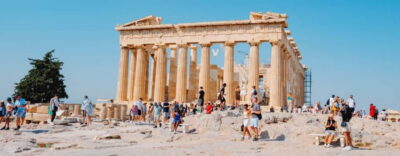
Acropolis, Parthenon & Acropolis Museum Guided Tour
Read our review →
Acropolis monuments & Parthenon Walking Tour with Optional Acropolis Museum
Read our review →Browse the lists this tour appears in