
Reviewed · ANCIENT AGORA TOURS
Private Luxury Tour: Mystic Pilgrimage – Kerameikos to Eleusis
The most unusual thing about this Athens tour is that it follows an ancient pilgrimage route rather than simply driving to one famous ruin. You begin at Kerameikos, the city’s old cemetery and the starting point of the Sacred Way, then follow that route west to Eleusis, where Demeter and Persephone once shaped one of Greece’s most secretive religious rites.
I like the private format and the chance to see places many Athens day trips skip, especially Daphni Monastery, the old bridges, and the Kallichoron Well. I also like the personal touch from drivers such as Pericles and Dimitris, whose storytelling and printed guides can add much-needed context. The catch is important: this is a private driving tour with historical commentary, not a licensed guide-led visit inside every monument, and admission fees are extra.
Key points to know before you book
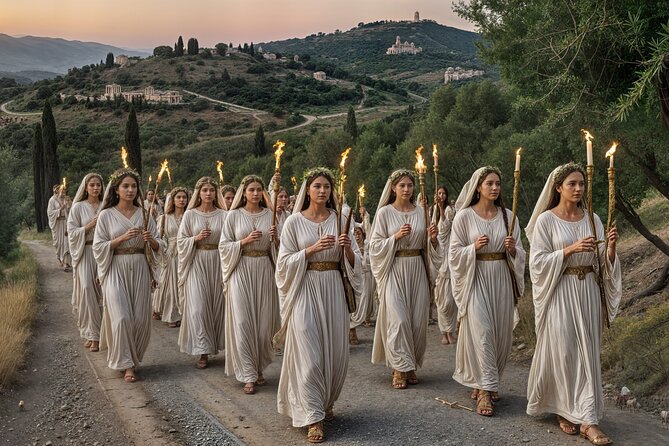
- The Sacred Way connects the whole day: Kerameikos, Daphni, old bridges, and Eleusis make more sense as one historical route.
- Pericles and Dimitris are named driver-guides: Their storytelling is a major part of the experience, but no licensed guide accompanies you inside the sites.
- You get comfortable private transport: Groups of one to four use a luxury sedan, while groups of five to seven use a minivan.
- Eleusis is the main event: The Great Propylaea, Telesterion, Ploutonion, well, and museum give the tour its strongest historical payoff.
- Bring money for extras: Archaeological admission, museum tickets, lunch, and tips are not included in the $129 price.
- Plan for sun and walking: Wear firm shoes and carry a hat and sunscreen.
Why the Sacred Way makes this tour different
Athens is full of ancient sites, but most visitors see them as separate stops. This tour gives you a thread to follow. The Sacred Way once linked Athens with Eleusis, about 20 kilometers west, and carried pilgrims toward the Sanctuary of Demeter and Persephone.
The route was not just a road. It was part of a religious journey tied to the Eleusinian Mysteries, a set of ceremonies that promised initiates some form of hope beyond death. The details of the rituals were kept secret, so the appeal today comes partly from what is known and partly from the gaps.
That makes the driver’s explanation especially important. Pericles is praised for combining humor with stories about the myths, while Dimitris is noted for lively descriptions of the Sacred Way, the Telesterion, and the Eleusinian cult. Printed material is also provided, which helps when you are looking at foundations and broken walls rather than complete buildings.
Still, set your expectations correctly. The driver-guide explains the route and its past, but the tour does not include a licensed archaeological guide inside the sites. If you want a formal, room-by-room lecture at every museum and sanctuary, you may prefer to hire a guide separately.
More Ancient Agora and Kerameikos walks:
- Athens: Agora and Hephaistos Temple Entrance Ticket
★ 4.0 · 449 reviews - Athens: Ancient Agora E-Ticket and Audio Tour
★ 3.9 · 413 reviews - Athens: Kerameikos Stone House Cooking Class
★ 5.0 · 165 reviews
Kerameikos: begin among graves, gates, and city walls
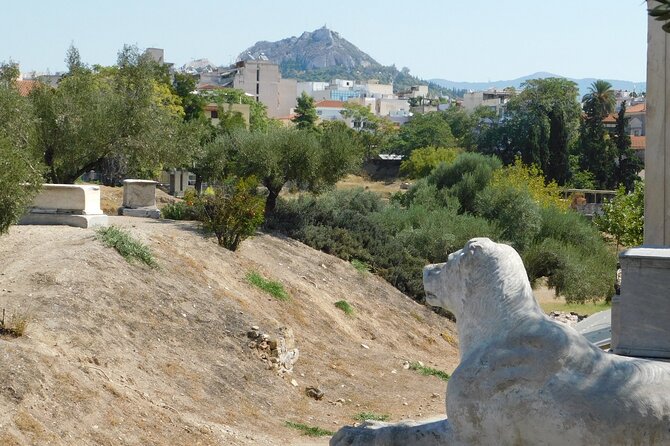
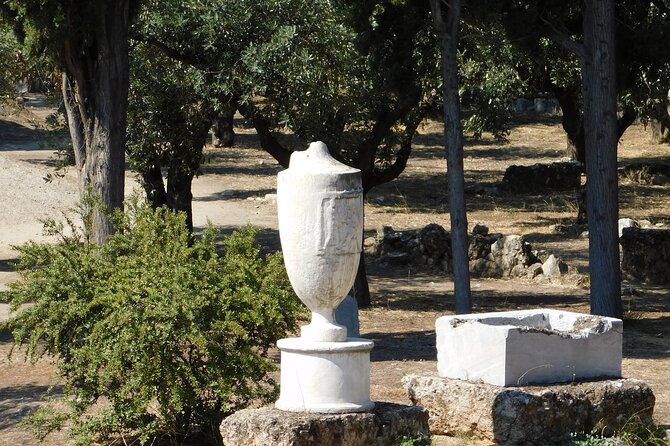
Kerameikos is a strong opening because it shows ancient Athens as a living city, not only as a collection of temples. This was once the potters’ quarter, and it later became one of Athens’ main burial grounds.
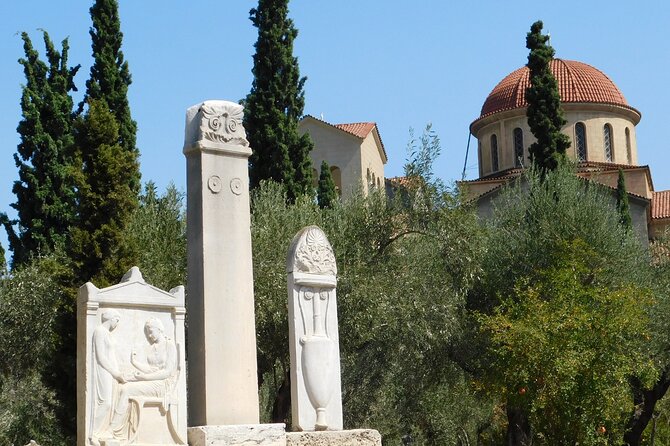
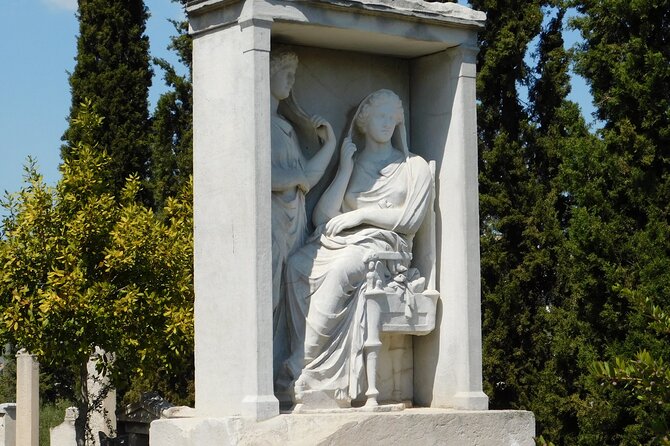
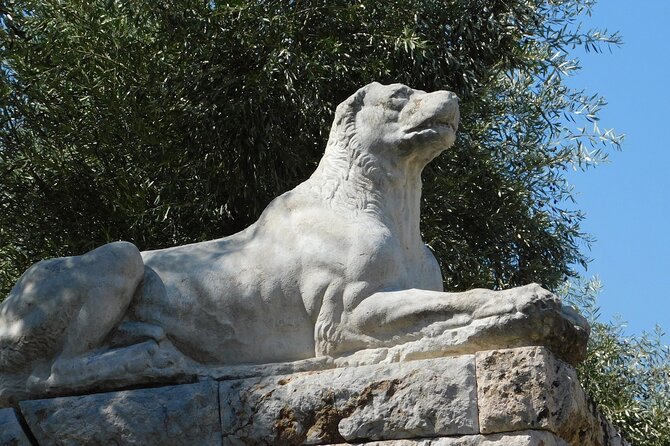
Give yourself time to look at the funerary monuments. Their carved figures and inscriptions reveal how families wanted to be remembered, while the grave goods in the small museum offer clues about work, belief, and daily life.
The Sacred Way began here. Ancient pilgrims left Athens through the Dipylon Gate and headed west toward Eleusis. You can picture a formal procession setting out from the city, though the modern surroundings make it clear that this is a fragment of a much larger route.
The remains of the Dipylon Gate are particularly useful for understanding Athens’ defenses. It was the city’s main entrance and also a route for the Panathenaic procession toward the Acropolis. The surviving stonework is not a grand gateway in the modern sense, so your driver’s explanation helps you read its scale and purpose.
The nearby Pompeion was connected with preparations for the Panathenaic procession. Its ruins are modest, but the site adds a civic and ceremonial layer to Kerameikos. You are not just seeing a cemetery. You are seeing the point where funerals, city defenses, trade, and public ritual met.
The planned time at Kerameikos and the museum is about 30 minutes each, with shorter stops at the gate and Pompeion. That is enough for orientation and photographs, but not a slow archaeological study. If Kerameikos is your main interest, ask in advance if the schedule can be adjusted.
The museum adds faces to the stones
The Kerameikos Museum is small, but it earns its place in the tour. Pottery, grave markers, statues, and burial objects give human scale to the open-air ruins.
Look closely at the funerary stelae. They can make the cemetery feel less abstract, showing how ancient Athenians represented family members and social identity. The museum also helps explain why this area mattered long before you reach Eleusis.
The stated visit lasts about 30 minutes. That works well for a first look, though anyone who reads every label may want longer. Admission is not included, so confirm the current fee and opening hours when booking.
Following the road through modern Athens
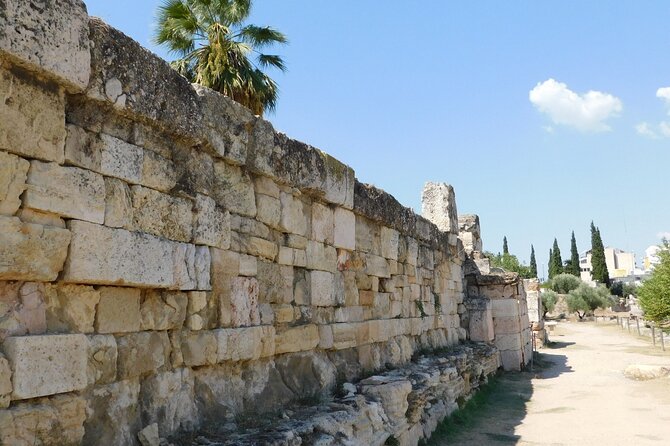
The Sacred Way is not preserved as one continuous ancient road. Parts are lost beneath modern development, traffic routes, and later construction. That is not a flaw in the tour, but it changes the experience.
Near the Eleonas Metro Station, you can see remains linked to an ancient crossing over the Kifisos River. Three bridge piers survive, suggesting a bridge of at least five arches. It is a quick stop, only about 10 minutes, but it shows the practical side of pilgrimage. Thousands of people needed roads and bridges, not just temples and legends.
The route continues through Aigaleo, where fragments of the ancient Iera Odos recall the procession toward Eleusis. Do not expect a long, uninterrupted walk along an ancient stone road. Instead, think of these stops as pieces of evidence that help you reconstruct the old journey.
This portion is strongest when your driver connects the ordinary details of movement with the sacred purpose of the route. The old road carried worshippers, goods, and ideas. The surrounding city also reminds you that ancient places rarely survive in isolation.
A few more Athens tours worth putting side by side
- Best of Athens Half Day Private Tour
★ 5.0 · 3,714 reviews - Athens Full Day Private Tour
★ 5.0 · 2,903 reviews - Athens Airport Private Arrival Transfer with Meet & Greet
★ 4.5 · 1,495 reviews - Athens Airport to Athens Hotels Private Arrival Transfer
★ 5.0 · 947 reviews
Daphni Monastery brings Byzantine Greece into the day
The Monastery of Daphni is one of the most rewarding stops because it shifts the story from classical Greece to the Byzantine era. It sits along the Sacred Way and dates from the 11th century.
Inside, the famous mosaic of Christ Pantocrator dominates the dome. The monastery’s art and architecture offer a sharp contrast to the earlier cemetery and pagan sanctuary. You are following the same general route, but the religious world has changed.
Daphni is also a welcome pause in a day filled with ruins. The setting is quieter, and 30 minutes gives you time to look at the building without rushing. Access can vary, so your driver will need to work around opening conditions. The tour describes admission here as free, but opening times and access rules can change.
This is one of the places that makes the private format useful. A large bus group would have less flexibility, while your own vehicle can keep the stop focused and move on when you are ready.
The Sanctuary of Aphrodite is a brief, limited stop
The remains of the Sanctuary of Aphrodite near Skaramagkas connect the route with another ancient cult. Aphrodite was associated with love and beauty, and the site gave pilgrims another sacred place to encounter along the road to Eleusis.
Access is the key detail. The interior is open on weekends. On weekdays, the tour stops outside for photographs and a look at the remains from the road.
Do not book this tour expecting a full exploration of the sanctuary on every departure day. It is better understood as a short roadside history stop, with more time available on weekends.
Roman engineering before the Sanctuary of Demeter
About one kilometer east of Eleusis, the ancient Roman bridge is another short but worthwhile pause. Built during the reign of Emperor Hadrian around 125 CE, it crosses the route associated with the Eleusinian Kephisos River.
The bridge is about 50 meters long and 5.30 meters wide, with four arches and sloped approaches. Two central arches are wider than those at the ends. These details matter because they show how Roman builders adapted infrastructure to the road and river system.
The stop takes about 10 minutes and is free. It will not replace a visit to a major monument, but it makes the route more concrete. Pilgrims needed a reliable crossing before they could reach the sanctuary.
Eleusis is where the day comes together
The Archaeological Site and Museum of Eleusis are the heart of the tour. This was the destination of the Sacred Way and the home of the Eleusinian Mysteries, ceremonies linked to Demeter, Persephone, and the cycle of loss and return.
The site sits near the coast, with views toward the Saronic Gulf and hills around the ancient city. The setting helps you understand why Eleusis could feel separate from Athens even though it was closely connected by road.
The Great Propylaea formed the monumental entrance to the sanctuary. Built in the second century CE under Marcus Aurelius, it echoed the Propylaea on the Acropolis. Its purpose was both practical and symbolic: initiates crossed from the ordinary world into a sacred precinct.
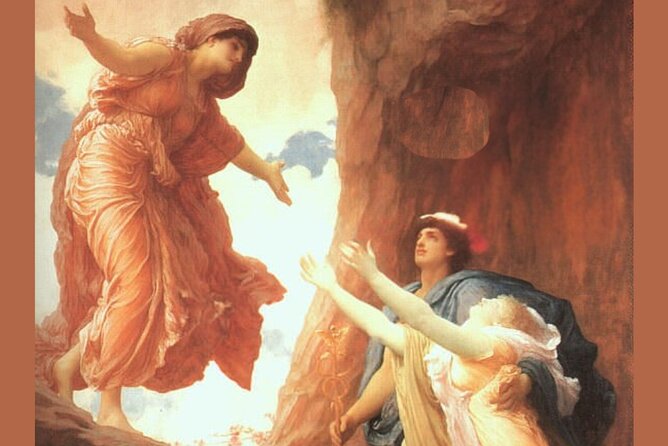
The Kallichoron Well is tied to the story of Demeter. According to the myth, she rested here while searching for Persephone. Its name means well of beautiful dances, linked to the women who were said to dance there in comfort and devotion.
The Ploutonion is a rocky cave associated with Plouton, or Hades. Ancient worshippers connected this place with the Underworld and Persephone’s descent. It is a small feature, but it carries much of the mythic power of Eleusis.
The Telesterion was the large hall where the central initiation ceremonies took place. Much of the building is now a plan of foundations and stones, yet its size and position within the sanctuary help you grasp how important the rites were.
This is where a good explanation makes the difference. The ruins do not reveal the secret ceremony itself. Your driver can explain the mythology, the known history, and the limits of what can be claimed. Be wary of anyone who presents the Mysteries as if every detail were certain.
The archaeological museum rounds out the visit with statues, reliefs, pottery, and sacred offerings. It is especially useful after seeing the sanctuary because the objects give form to names that can otherwise blur together. Plan for about 30 minutes at the main site and another 30 minutes at the museum, though the whole complex deserves more time if you have it.
Admission is extra at the Eleusis site and museum. This is the tour’s biggest cost consideration because several archaeological stops require tickets, and the $129 price does not cover them.
Lunch in Eleusis keeps the day grounded
After the ruins, the tour schedules about 45 minutes for lunch at a traditional taverna in Eleusis. Food is not included, so you pay for your own meal.
This is a useful pause rather than a decorative add-on. The day is heavy on mythology, stone, and dates. Sitting down for local dishes, salads, grilled meats, tzatziki, and eggplant dip gives you a simple connection with present-day Eleusis.
Do not assume the lunch is a fixed tasting menu. The supplied details describe a stop at a traditional restaurant, not a prepaid meal or a set selection of dishes. Ask your driver about timing and choices on the day.
Private transport, group size, and comfort
Pickup is available from your Athens hotel or port. The vehicle is air-conditioned, bottled water is supplied, and Wi-Fi is available on board. These details matter in Greece, where a warm afternoon and several exposed archaeological sites can drain your energy.
Groups of one to four use a luxury sedan. Groups of five to seven use a minivan. The private setup means you are not sharing the day with strangers, and you can discuss the pace with your driver.
The tour lasts roughly five to six hours, including driving time. That is enough for an overview of the route, but the listed stops are numerous. You should expect brief visits at several locations rather than a leisurely walk through every site.
Wear shoes suited to uneven stone and bring sunscreen and a hat. Kerameikos and Eleusis involve outdoor walking, with little promise of shade. Most people can take part, but the amount of walking and the condition of ancient surfaces are worth considering.
Is $129 good value?
At $129, the tour can be good value for a small group that wants private transportation and a route beyond central Athens. The price includes the vehicle, driver, water, Wi-Fi, and pickup and drop-off. For four people sharing a sedan, the transport portion becomes more attractive.
The calculation changes if you are alone or traveling as a couple. You still need to add archaeological admission, museum tickets, lunch, and a tip. Airport pickup also costs extra. The lack of a licensed guide inside the sites is the main reason not to treat this as a full luxury guided tour.
I would view it as a private historical route with strong driver commentary. The best value comes from the flexibility, the number of stops, and the chance to reach Eleusis without arranging several taxis or public transport connections.
Free cancellation is available up to 24 hours before the start time. Cancellations within 24 hours are not refunded, and poor weather may lead to a new date or a full refund.
Who should book this Sacred Way tour?
I would recommend it to you if you have already seen Athens’ central monuments and want a more unusual half-day outing. It suits people who enjoy ancient religion, mythology, archaeology, and the way old roads connect separate places.
It is also a good fit if you are arriving at the port, want hotel pickup, or prefer a private car over public transport. Families and small groups will appreciate the sedan or minivan and the ability to keep the day together.
I would hesitate if your main goal is a formal academic tour, long museum visits, or a fully guided archaeological experience. In that case, the extra cost of a licensed guide may be worthwhile. I would also skip it if you dislike short roadside stops or want to spend most of the day walking one major site.
Should you book it?
Book this tour if the route itself interests you. Kerameikos, Daphni, the old bridges, and Eleusis form a thoughtful chain, and the driver-guides Pericles and Dimitris have the storytelling style needed to make scattered ruins meaningful.
Before paying, confirm exactly which driver will accompany you, the current entrance fees, the opening status of Daphni and Aphrodite’s sanctuary, and how much time you can spend inside Eleusis. If you understand that the service is private transport with historical commentary rather than a licensed guide at every ruin, the experience offers a comfortable and unusual way to see the sacred westward side of Athens.
FAQ
What is included in the private Sacred Way tour?
The tour includes private transportation, an air-conditioned vehicle, bottled water, Wi-Fi on board, an English-speaking driver-guide, and hotel or cruise port pickup and drop-off. Groups of one to four use a sedan, while groups of five to seven use a minivan.
Are entrance tickets included?
No. Entrance fees for archaeological sites and museums are extra. The tour also does not include a licensed guide accompanying you inside the archaeological sites.
Is lunch included in the price?
No. A lunch stop at a traditional taverna in Eleusis is scheduled, but you pay for your own meal.
How long does the tour last?
The experience lasts about five to six hours, including the time spent driving between stops.
Can I be picked up from the Athens port?
Yes. Pickup is offered from an Athens cruise port or hotel. Airport pickup is available for an additional charge.
What happens if the weather is poor?
The tour requires good weather. If it is canceled because of poor weather, you will be offered another date or a full refund. You can cancel for a full refund up to 24 hours before the start time.
Newly reviewed around Athens
- Athens: workshop for painting landscape with local artist★ 4.6 · 3 reviews
- Athens: Greek Wine & Olive Oil Tasting at Brettos Plaka★ 4.5 · 3 reviews
- Outdoor Yoga and Pilates with Akropolis view★ 4.0 · 5 reviews
- Acropolis of Athens: 60′ Tour in a Vintage Motorcycle★ 5.0 · 4 reviews
- Ultimate Tasting of the Volcanic Wines of Greece★ 5.0 · 3 reviews
- Athens at Twilight Night Tour with Drinks and Meze Dishes★ 4.8 · 4 reviews
- Breakfast in the markets with olive oil and honey tasting★ 4.8 · 8 reviews
- workshop for painting acropolis/landscape with local artist★ 5.0 · 3 reviews
Ancient Agora Tours, compared.
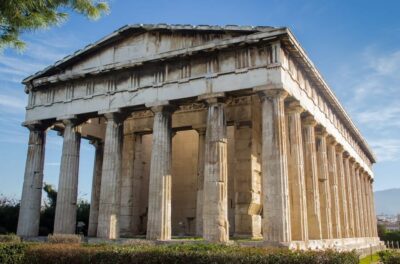
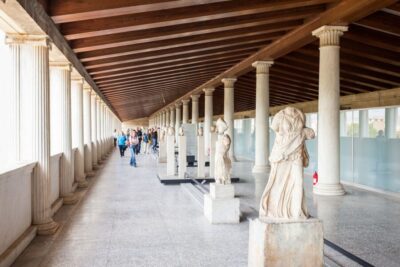

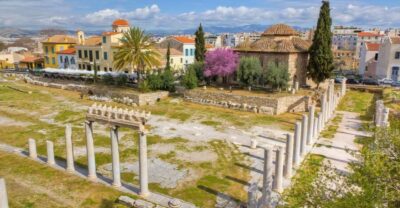
Roman Agora & Ancient Agora E-ticket & 2 Audio Tours
Read our review →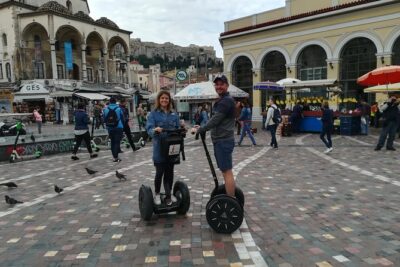
Ancient Athens Segway Tour with Agora and Kerameikos
Read our review →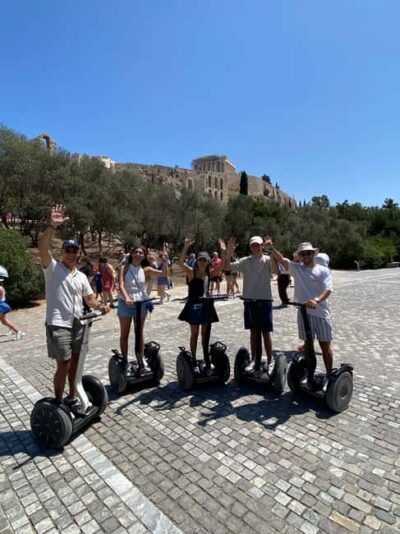
Ancient Athens, Agora, and Keramikos Segway Tour
Read our review →
Ancient Agora: Audiovisual self-guided tour with 3D models
Read our review →Browse the lists this tour appears in