
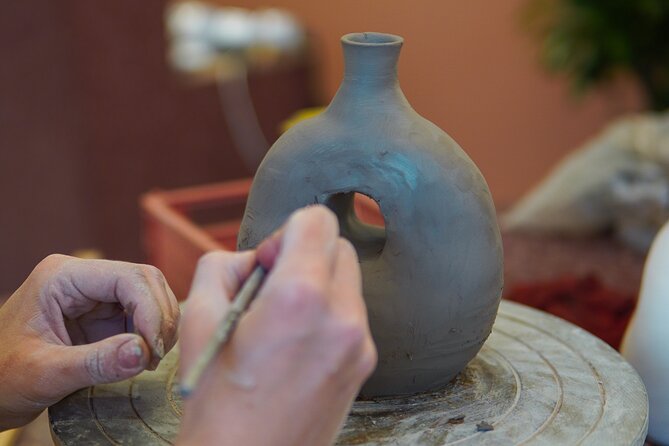
Reviewed · ATHENS CRAFT WORKSHOPS
Create and paint your own ceramic piece in a workshop in Athens
The most memorable souvenir from Athens may be one you shape yourself. At Tales in Tiles Experience Store, you spend about two hours making a mug, bowl, vase, or pot by hand, then painting it in your own style. You do not need pottery experience. The instructors guide you through each stage without taking over your idea.
I like the small maximum of six people, which gives the session a personal feel. I also like that you can leave your piece to be fired and glazed, then have it shipped home instead of risking a fragile souvenir in your luggage. The main catch is time: the finished piece takes at least four weeks, and shipping costs extra.
Key points at a glance
- Make a useful souvenir by hand: Choose from forms such as mugs, bowls, small vases, and pots.
- Beginner-friendly instruction: Patient instructors explain the free-hand clay technique and help you correct mistakes.
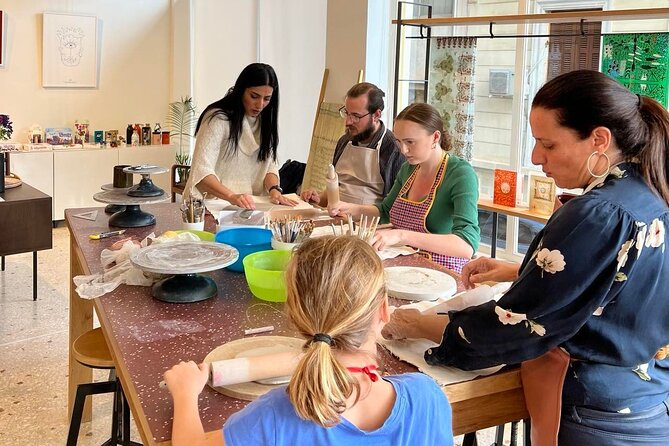
- Small group setting: The workshop accepts no more than six people, so you should have room for guidance.
- Paint before you leave: Once the clay form is complete, you add ceramic colors to give it a personal design.
- Plan ahead for delivery: Firing and glazing take at least four weeks. Shipping starts at 25 euros and is not included.
- A calm break from sightseeing: Iced tea, cookies, and a creative task make this a pleasant pause from Athens streets and ancient monuments.
Making a Greek souvenir with your own hands
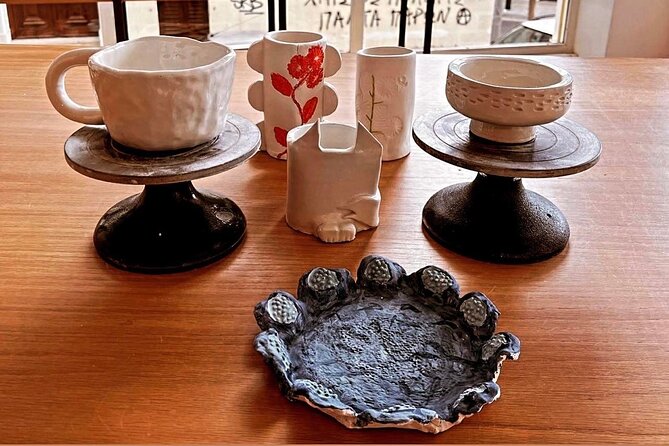
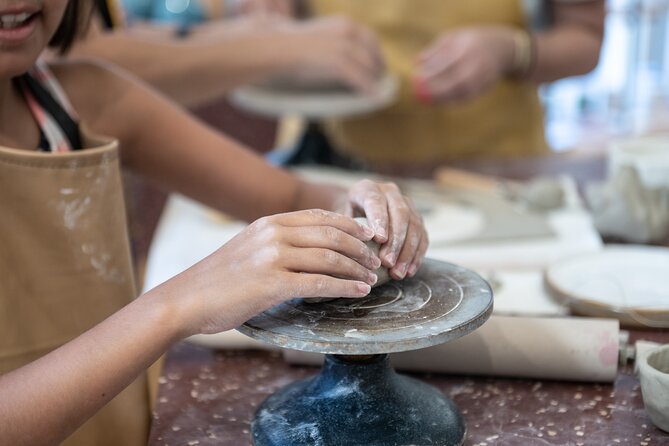
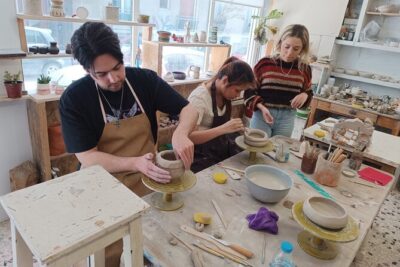
The workshop begins at Taichman 2 in Athens, at the Tales in Tiles Experience Store. This is not a quick demonstration where you watch an artist work and then buy something from a shelf. You make your own object, with clay, hand tools, table wheels, colors, glazes, and an apron supplied.
The central skill is free-hand clay-making. That matters because you are not simply pressing a souvenir mold. You decide what shape you want, then learn how to build and refine it with help from the instructor. A first attempt may look more handmade than store-bought, which is part of its charm.
You can choose a mug, small vase, bowl, or pot. The choice gives the session a useful range. A mug is a natural pick if you want something you will use at home. A bowl or pot may be easier if you prefer a broader form, while a vase gives you more room to play with shape.
Do not expect a perfect studio piece on your first try. Clay can change as you work, and one of the pleasures here is seeing an idea become a real object, even when the finished result differs from your original plan. The instructors can help you start again if something goes wrong, so a mistake does not have to end the project.
More hands-on workshops in Athens:
- Athens: Make your own Leather Sandals Workshop
★ 5.0 · 105 reviews - Athens: Create Your Own Mosaic 3h Private Art Class
★ 5.0 · 62 reviews - Ceramic and Pottery Creative Workshop with Two Local Artists
★ 4.0 · 57 reviews
Why the small group makes a difference
The workshop is limited to six people. That is a useful detail, not just a number. Pottery needs hands-on correction, and you may want help with a wall that is too thin, a rim that is uneven, or a shape that is losing balance. A small class gives the instructor more time to respond.
The instruction is designed for first-timers, including children and older adults. Younger participants can receive extra help with the shaping process, while adults can work more independently. Families can make separate pieces rather than producing one shared object, which gives everyone a personal souvenir.
The experience also suits a mixed-age group. A family of four, a pair of friends, siblings, or a solo visitor can all take part. You do not need to arrive with an artistic plan. You can decide at the table after seeing the available forms and hearing the basic guidance.
The teaching style is an important part of the value. The instructors explain the process in easy terms, offer tips, and allow you to keep your own idea. That balance is ideal for beginners. Too little help can make pottery frustrating, while too much direction can make the piece feel like the instructor’s work.
From wet clay to a shape you can keep
The first part of the session is the most tactile. You handle the clay, choose a form, and use the supplied tools to build it. The exact order can vary depending on your design and the pace of the group, but you should expect most of your attention to go toward forming the object rather than decorating it.
This is where the two-hour length works well. It gives you enough time to accomplish something substantial without turning the workshop into an all-day commitment. Several people have managed to make usable bowls, cups, spoons, pots, or vases in that window, though the amount of detail you add will affect how quickly you move.
The table wheels are available as part of the equipment. The workshop is not presented as a specialized wheel-throwing class, so you should think of them as part of a wider set of tools rather than expect a technical course in advanced pottery. The main lesson is free-hand construction, with the instructor showing you how to shape the clay into a stable object.
This format is especially good after a morning of museums or ancient sites. Athens can be hot, noisy, and demanding on your feet. Sitting down and concentrating on a soft piece of clay gives you a different kind of activity. You still make something connected to Greek craft, but you do it at a slower pace.
Painting your piece before the kiln
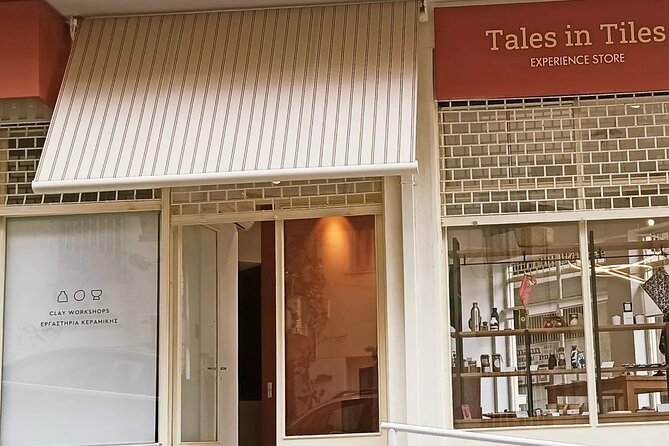
Once your clay form is complete, you paint it with the available clay colors. This stage gives you another chance to make the piece personal. You might keep the surface simple, add a pattern, or use colors that remind you of your time in Greece.
The paint is applied before the studio fires and glazes the piece. That means you will not see the final color and finish at the end of the two-hour session. This is the one point that can disappoint anyone expecting to leave with a ready-to-use souvenir.
The clay needs to dry before it can go into the kiln. After the first firing, the piece is glazed and fired again. The full process takes at least four weeks. Your object may look different after glazing than it did on the worktable, so a little patience is part of the experience.
I would take a quick photo of your piece before leaving. It gives you a record of the shape and colors while they are fresh in your mind, and it can be useful if you are waiting for delivery. The piece itself stays with the studio until the work is complete.
A different kind of day out from Athens:
- Athens: Acropolis & up to 5 Archaeological Sites Combo Pass
★ 4.4 · 12,619 reviews - Athens: Acropolis Ticket with Optional Audio or Live Guide
★ 4.2 · 11,055 reviews - Athens: Acropolis, Parthenon & Acropolis Museum Guided Tour
★ 4.8 · 9,316 reviews - Athens: Cape Sounion & Poseidon Temple Sunset Half-Day Trip
★ 4.8 · 8,241 reviews
Pickup or shipping from Athens
If you remain in Athens long enough, you can pick up the finished ceramic later. The supplied details do not give a precise pickup schedule beyond the minimum four-week firing and glazing period, so ask the studio when you book or during the workshop if you have a specific departure date.
For most short visits, shipping is the practical choice. The studio can send the completed piece to your home, and shipping begins at 25 euros. The final price varies by destination, and it is not included in the $60.34 workshop price.
Shipping is more than a minor extra, so include it when comparing the total cost. Still, it can be good value for a fragile, personal object that would be difficult to protect in a suitcase. A handmade mug or bowl also gives you a reason to remember Athens long after the trip.
If you have a tight budget, ask about the shipping charge before you commit to a large or heavy shape. A small mug may be easier to send than a wider pot, although the exact price depends on the country. The shipping arrangement is made upon request.
What the $60.34 price covers
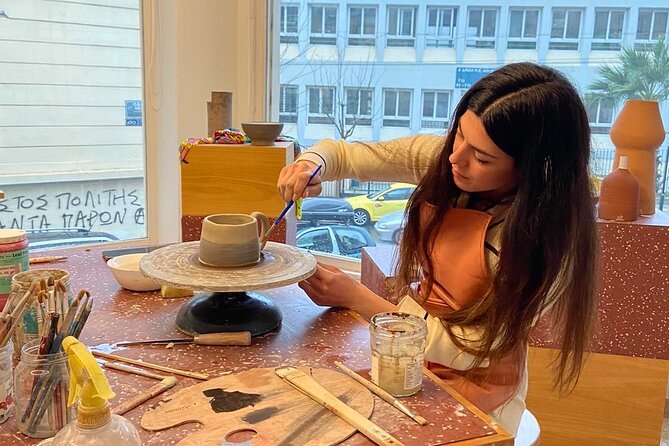
The cost is $60.34 per person. That includes the clay, tools, table wheels, glazes, colors, and aprons. Iced tea, cookies, and snacks are also included, which is a nice touch during a hands-on session.
The main value comes from the instruction and the chance to make a functional ceramic object, not from the snacks alone. You are paying for a guided creative activity, materials, kiln work, and access to the studio. Compared with a short souvenir-making demonstration, this offers more time and a piece that comes from your own decisions.
The price becomes easier to justify if you want an activity rather than another sightseeing stop. It also makes sense for families because everyone can make a separate object. The final cost is higher once shipping is added, so I would treat the workshop price and delivery as two parts of the same purchase.
The studio also displays creations by Greek artists. You can look at these works while you are there, which adds context to the session. They may give you ideas for form or decoration, but your own object remains the focus.
A relaxed family and couples activity
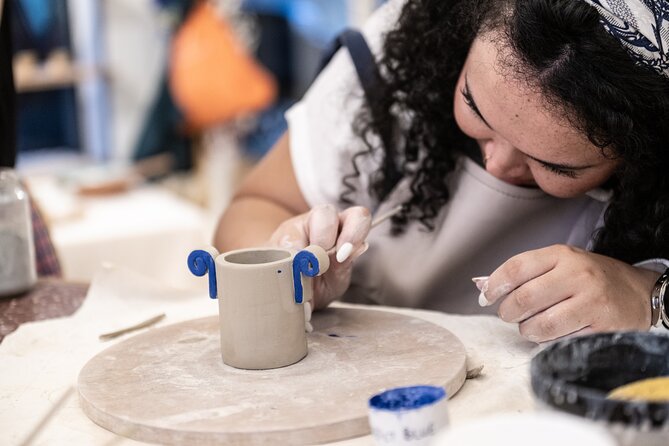
This workshop has a broad age range. Children can take part with support, teenagers can work on a design of their own, and adults do not need to be experienced artists. The setting is suitable for families who want something everyone can do together without splitting into separate activities.
It also works well for couples or siblings. You can compare shapes, help one another with ideas, and paint side by side. One useful advantage is that a mistake does not necessarily end the project. You may be able to redo part of the form, which takes pressure off beginners.
Solo visitors can fit in too, especially if they like making things. The maximum of six creates a social setting without turning the workshop into a large class. The activity is offered in English, so you can follow the instructions without needing pottery vocabulary in Greek.
This is not the right choice if you want a polished, professional ceramic piece immediately. It is also not ideal if your schedule leaves no room for a four-week finishing period and possible shipping. The appeal is the process and the personal connection to the object.
Location, timing, and practical details
The meeting point is Taichman 2, Athina 117 41, Greece. The activity begins and ends at the same location. It is near public transportation, which helps if you are fitting the workshop between other plans in Athens.
The session lasts approximately two hours. Allow extra time if you want to examine the Greek artists’ work in the studio or if your group takes longer with painting. One pair spent three hours refining and decorating their pieces, so the stated duration should be treated as an estimate rather than a strict guarantee.
You receive confirmation at booking. The experience is offered in English, and service animals are allowed. Most people can participate, but pottery involves sitting, reaching, and handling clay, so contact the provider if you have a specific mobility concern that is not covered by the general information.
The activity is booked an average of 19 days ahead. That does not guarantee that every date fills early, but it is a good reason to reserve before your Athens schedule is fixed, especially if you need a particular day or want to coordinate the four-week finishing period.
Free cancellation is available up to 24 hours before the start time for a full refund. Changes or cancellations made less than 24 hours before the session are not accepted for a refund, and the cut-off follows local Athens time.
How this fits into an Athens itinerary
I would place the workshop after a morning of sightseeing, rather than before a tightly timed museum visit. Clay work takes concentration, and you will enjoy it more if you are not watching the clock.
It also gives your Athens plans a different rhythm. Ancient pottery and sculpture are part of the city’s visual culture, but here you move from looking at old objects to making something with your own hands. The connection is informal, not a formal archaeology lesson, yet it adds meaning to the activity.
You might also book it on a warm afternoon when you want a break from outdoor sites. The studio provides a cool, seated change of pace, with iced tea and cookies included. The activity ends back at the meeting point, so you can continue with your plans from there.
Because the finished piece needs at least four weeks, book earlier in your trip if you hope to collect it in Athens. If you plan to have it sent home, the date matters less, but you still need to allow for the studio’s work and the shipping time after completion.
Who should book this workshop?
Book it if you want an Athens souvenir with a personal story. It is particularly well suited to families, couples, creative adults, teenagers, and first-time pottery makers. You will get the most from it if you enjoy the act of making something and do not need the final result to look perfect.
It is also a smart choice for visitors who have already seen the major ancient sites and want a quieter activity. The instructors provide structure, but you still have room to make your own choices. The small group and patient guidance are the strongest parts of the experience.
Think twice if you are leaving Athens in less than four weeks and do not want to pay for shipping. Also consider the extra delivery charge when working out your budget. The workshop price covers the making process, but getting the fired piece home is a separate expense.
For me, the best reason to book is simple: you leave with more than a photograph and a purchased object. You leave with something shaped by your own hands, even if its final form has a few charming surprises.
FAQ
How long does the ceramic workshop last?
The workshop lasts approximately two hours, although you may spend longer if you take extra time to refine and paint your piece.
What can I make during the session?
You can choose from forms such as a mug, small vase, bowl, or pot. The instructors help you use free-hand clay techniques to create your chosen object.
Do I need pottery experience?
No. The workshop is designed for people with no previous experience, and the instructors guide you through the process.
Is shipping included in the price?
No. Shipping is available upon request, starts at 25 euros, and varies by destination. You can also pick up the finished piece later if you remain in Athens.
How long does it take to finish the ceramic piece?
Firing and glazing take at least four weeks. The piece must dry, be fired, glazed, and fired again before pickup or shipping.
Where does the workshop start and end?
The workshop starts and ends at Tales in Tiles Experience Store, Taichman 2, Athina 117 41, Greece. It is near public transportation.
Newly reviewed around Athens
- Food Tour★ 5.0 · 3 reviews
- Feel Ancient thermal Spa Visit Delphi, Leonidas ℨoo Spaʀtan★ 5.0 · 4 reviews
- Explore the Hidden Food Gems of Athens★ 5.0 · 57 reviews
- Food Experience in Athens including Unlimited Lunch★ 5.0 · 3 reviews
- Eat Your Way Through Athens: A Local Food Walk★ 4.9 · 97 reviews
- From Athens: Delphi Private Tour with Lunch Time★ 4.0 · 3 reviews
- Delphi: Spanish guided one day tour★ 4.6 · 55 reviews
- Early Entry Acropolis & Museum. Beat the Crowds & the heat★ 5.0 · 3 reviews
Athens Craft Workshops, compared.

Ceramic and Pottery Creative Workshop with Two Local Artists
Read our review →
Graffiti Workshop and Tote Bag Painting Experience
Read our review →

Browse the lists this tour appears in