
Reviewed · ATHENS CRAFT WORKSHOPS
Marble Carving Workshop and Cultural Tour – Cycladic Art
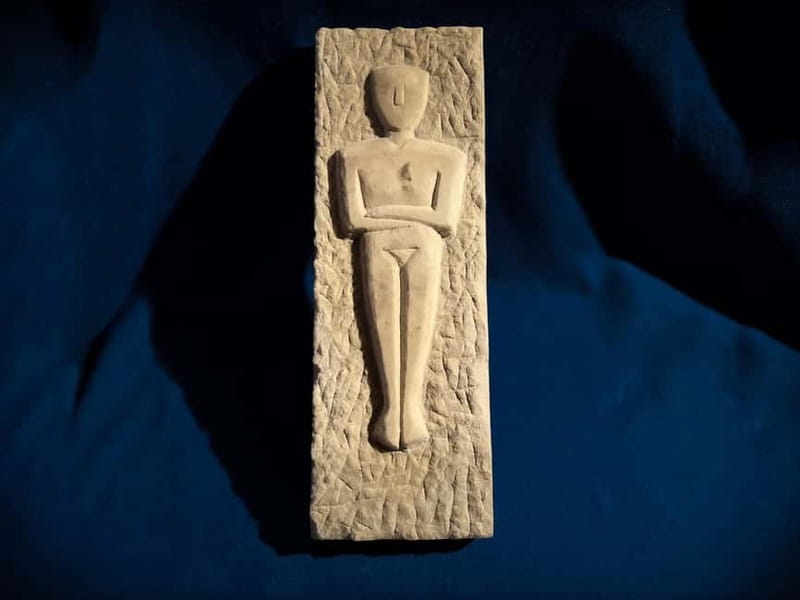
Creating a small marble sculpture with your own hands is the heart of this Athens experience. You learn how ancient Greek carving worked, then use traditional hand tools to make a personal relief rather than copy a standard souvenir design. I like the clear link between the workshop and the Cycladic islands, and I like that your finished piece goes home with you.
I also like the intimate teaching style described by the program, with Dimitris and his assistants offering help while leaving room for your own ideas. The main consideration is time: 135 minutes is enough for a rewarding introduction, but not enough to master marble carving or create a large, fully finished statue.
Key points at a glance
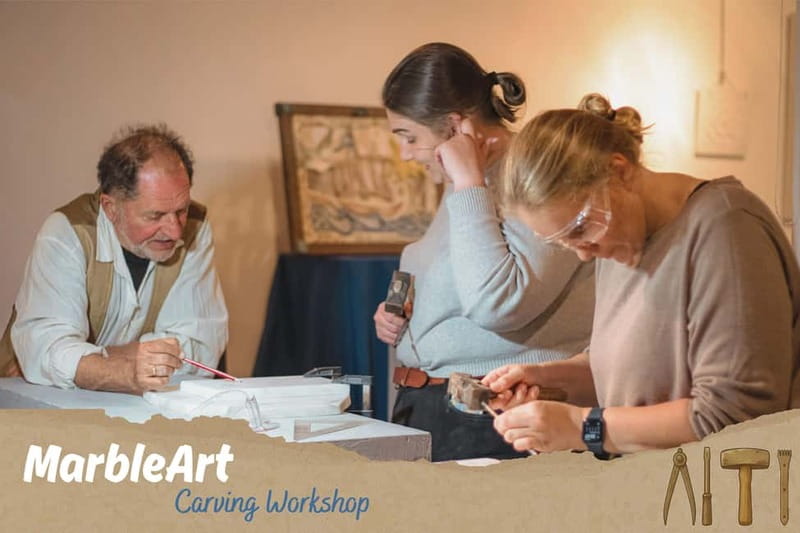
- Create your own Cycladic-inspired relief: Choose a personal symbol, draw it, transfer it to marble, and carve it by hand.
- Work with real stone: Learn about marble, rocks, crystals, metals, and fossils before you begin.
- Study ancient methods: The workshop explains how stone carving was done in ancient Greece, when tools were far more basic.
- Take home a personal artwork: Your finished piece is signed, colored, and treated before you leave.
- Learn from art specialists: The guide has a PhD in the philosophy and art of Ancient Greece, and the marble teacher is associated with the University of Fine Arts.
- Add a short Athens sculpture walk: If you wish, you can walk through the historic center to see and photograph nearby sculptures.
Why carving marble changes the way you see Athens
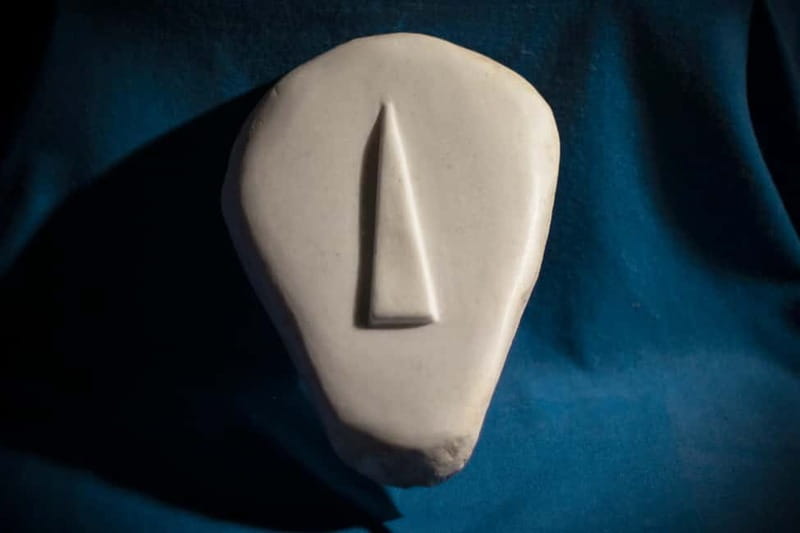
Most Athens sightseeing is based on looking. You walk around the Acropolis, examine museum objects, and admire carved figures that seem almost effortless. This workshop adds the missing physical lesson: marble is hard, resistant, and slow to shape.
Even a small relief gives you a better sense of the work behind ancient sculpture. You feel the tool catch on the stone. You learn that a line is not simply drawn onto marble, but cut into it at a controlled depth. Shadow comes from those changes in depth, so a simple shape can appear more striking once its edges and surfaces are carefully worked.
That is the real value here. You are not simply making a keepsake. You are learning why ancient sculptors paid such close attention to levels, contours, light, and shadow.
The subject is not handed to you as a pattern to copy. You select a personal symbol, then receive support with drawing and transferring it to the marble. That choice makes the final object more individual, though it also means you need to arrive with at least a rough idea of what you want to make.
If you prefer a tightly planned craft class with identical finished results, this may feel less structured. If you like making choices and accepting a few uneven lines as part of the process, the freedom is a major advantage.
More hands-on workshops in Athens:
- Athens: Make your own Leather Sandals Workshop
★ 5.0 · 105 reviews - Athens: Create Your Own Mosaic 3h Private Art Class
★ 5.0 · 62 reviews - Create and paint your own ceramic piece in a workshop in Athens
★ 5.0 · 58 reviews
Inside the MarbleArt collection and studio
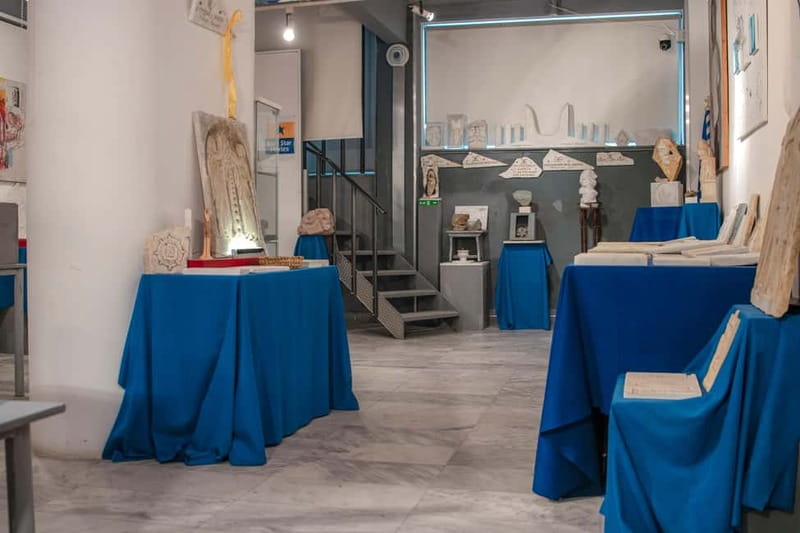
The experience begins with a tour of the MarbleArt collection and an introduction to the Creative Sculpture Workshop. The setting combines a collection, studio, and teaching space, so you see examples before handling the tools yourself.
The opening discussion places the craft in the Cycladic world, including Paros, Naxos, Santorini, Mykonos, and Delos. Those islands are closely tied to the marble traditions and artistic forms that shaped the ancient Aegean. The focus is not just on famous statues, but on how material, place, and technique connect.
You also receive an introduction to the structure of stone. Marble is discussed alongside rocks and crystals, with possible additions involving metals or fossils. This part may sound basic, but it helps you understand that a piece of stone is not just a blank white surface. Its grain, hardness, and texture affect how it responds to each mark.
The teaching includes real sculptures and digital examples. That combination lets you see the subject from two angles: as a physical object with tool marks and surface depth, and as an image that shows how a design is planned.
The guide is described as holding a PhD in the philosophy and art of Ancient Greece. The marble teacher is associated with the University of Fine Arts. For you, that means the historical explanation and the practical instruction are meant to support each other rather than function as two unrelated talks.
Choosing a symbol instead of copying a model
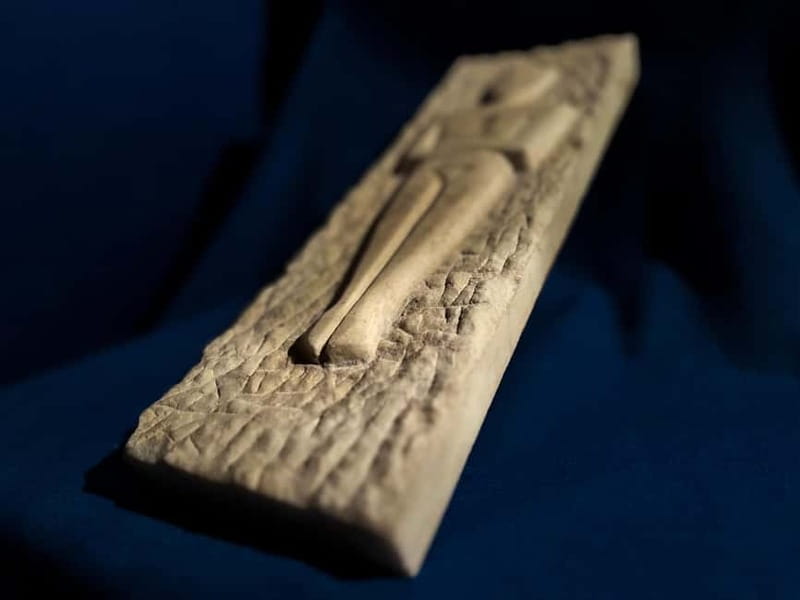
The creative decision comes early. You discuss a subject and select a personal symbol. Common patterns are not given as models for imitation, so you have room to make something that means something to you.
That freedom is useful for couples, families, and friends who want to make different pieces. It also makes the class more demanding for anyone who feels unsure about drawing. You are not being graded, and the goal is not perfect realism, but you still need to simplify your idea into a shape that can be carved into marble.
The instructor supports you while you draw and transfer the design to the surface. This is an important stage. A design that looks good on paper may not work in relief unless the main lines are clear and the levels are planned.
Think in bold shapes rather than tiny details. The workshop can include shadow highlighting and perforation of details, but a 135-minute session favors a design that can be completed with care. A simple symbol with strong outlines will usually serve you better than an ambitious scene with many small figures.
The program presents the work as an engraved and relief-like form, with different depths cut into the marble. These levels catch light differently. In exceptional cases, three-dimensional forms are not ruled out, but you should treat that as an extra possibility rather than the normal result of a short beginner session.
Learning the old tools and the rhythm of carving
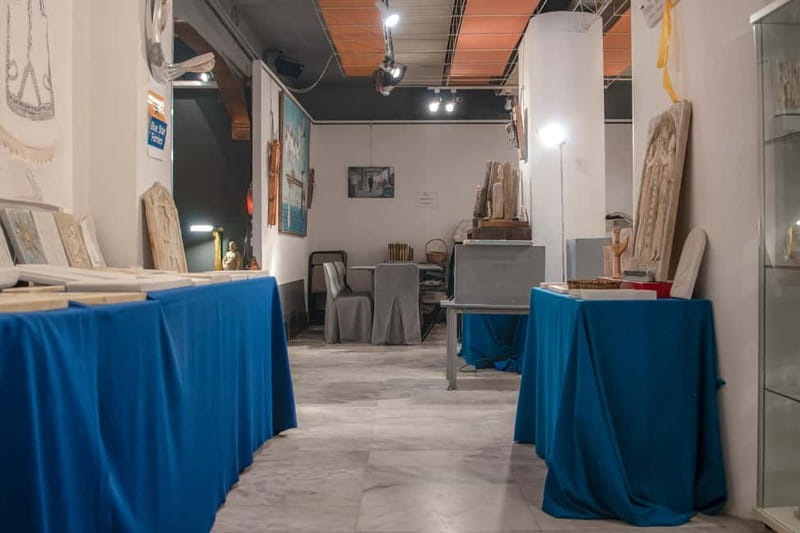
Before carving, you become familiar with the hand tools and learn how to use them for engraving. This is one of the strongest parts of the activity because it turns the ancient technique into something physical and understandable.
The tools are traditional in spirit, but the workshop does not suggest that you will work exactly as a sculptor did 5,000 years ago. One account of the experience notes that ancient craftsmen used obsidian rocks, while the class uses more modern tools. That distinction matters. You get a practical connection to ancient methods without pretending the modern studio is an archaeological reconstruction.
The first marks may feel cautious. Marble does not respond like wood, clay, or a soft craft material. You gradually learn how much pressure to use, how to deepen a line, and how to avoid treating every mark as if it were final.
Dimitris is identified in the experience details and participant accounts as the main instructor, with Jimmy assisting in at least one private workshop. The teaching approach is patient and encouraging. You can ask for help with a technique, then return to your own work instead of having an instructor take over the piece.
That balance is important. Too much correction would make the object feel manufactured by someone else. Too little guidance would leave beginners guessing. Here, the stated aim is to let you develop a personal piece while receiving practical support.
A different kind of day out from Athens:
- Athens: Acropolis & up to 5 Archaeological Sites Combo Pass
★ 4.4 · 12,619 reviews - Athens: Acropolis Ticket with Optional Audio or Live Guide
★ 4.2 · 11,055 reviews - Athens: Acropolis, Parthenon & Acropolis Museum Guided Tour
★ 4.8 · 9,316 reviews - Athens: Cape Sounion & Poseidon Temple Sunset Half-Day Trip
★ 4.8 · 8,241 reviews
From outline to relief
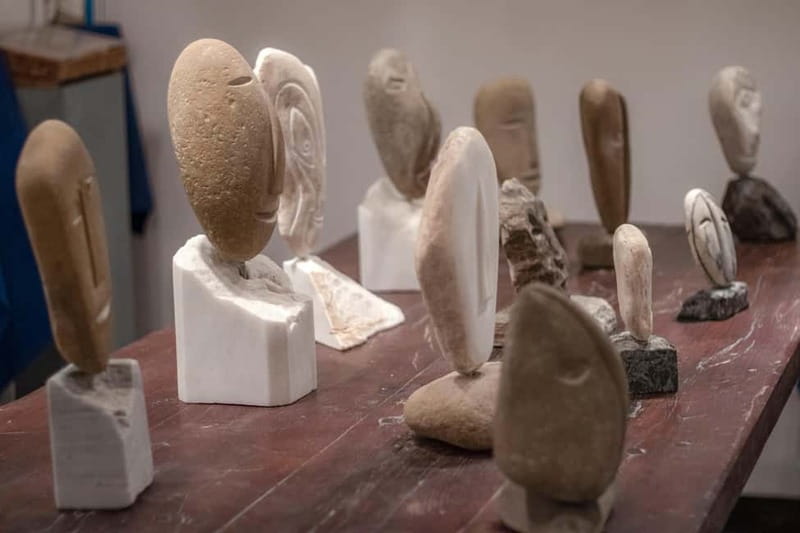
Once the design is transferred, the real work begins. You carve the subject into the marble, building the image through cuts and shallow levels rather than simply scratching a line across the surface.
This is where the workshop earns its cultural focus. Ancient Greek sculpture is often viewed as a finished product, polished and silent behind glass. Here you experience the sequence in reverse. You start with an unmarked stone surface and gradually create an image through removal.
The relief process also explains why light and shadow matter so much in carved art. A deeper cut produces a stronger shadow. A raised section catches light. A carefully placed edge can make a small image easier to read from across a room.
The program includes shadow highlighting and perforation of details. Those finishing choices can make your symbol clearer, but they need control. If you keep cutting simply because the stone allows it, you may lose the clean shape you started with.
You should expect your piece to look handmade. That is not a flaw. The point is to understand the work and leave with an object that records your decisions. The instructors help you make a piece you can feel proud of, but they cannot turn a short class into years of sculptural training.
Color, signature, and the finished piece
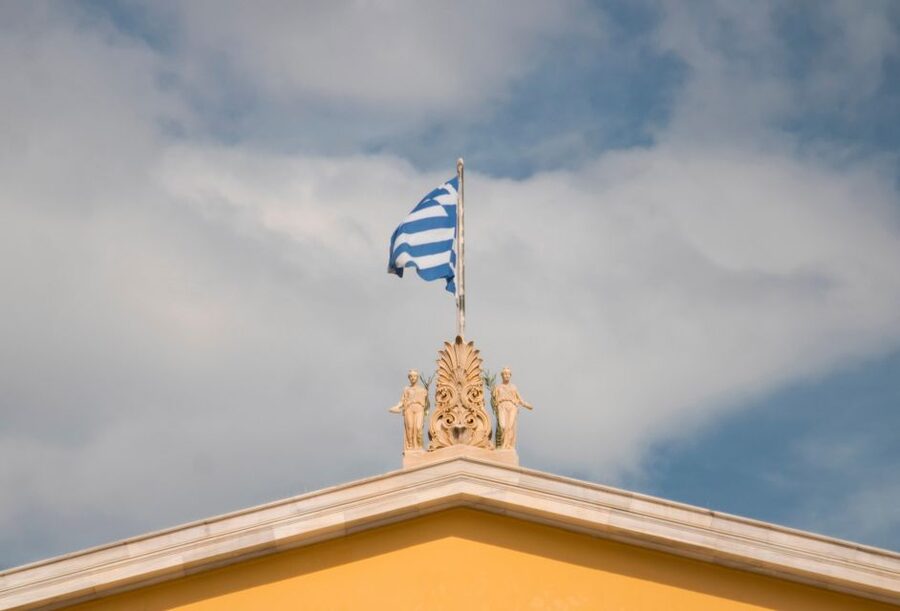
After the carving, you can engrave letters for your signature. This small step gives the object a clear connection to its maker. It also makes the piece more personal than a workshop object stamped with a business name.
The marble surface is then colored in a patina-like manner. The program also refers to a hagiography enrichment technique for coloring letters and details. The effect is intended to bring out the carved levels and give the surface more visual depth.
A liquid glass coating is included as part of the finishing process. The supplied information does not specify its exact appearance or drying time, so you should follow the studio’s instructions about handling the piece at the end.
The result is a compact artwork to take home. It is also an easy way to remember the activity months later, since the object carries your design, your signature, and the marks of your own work. You may want to leave room in your luggage for it, since marble is heavier than the usual paper or textile souvenir.
The optional walk through central Athens
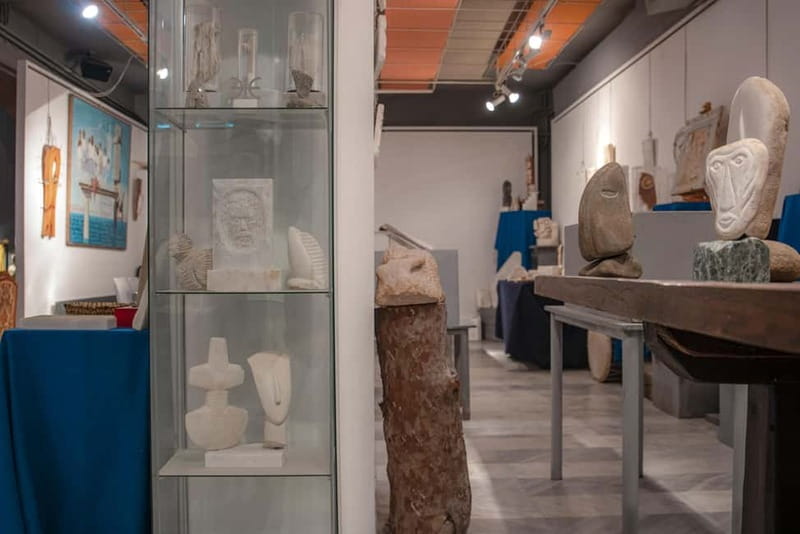
Those who want more can walk through the historic center to explore and photograph sculptures in the area where the workshop is located. This is not presented as a separate long sightseeing tour, so think of it as an added local look at public sculpture rather than a replacement for an Athens museum visit.
The walk gives the workshop a useful second chapter. You first learn how a relief is made, then look at sculptural work in the city with sharper eyes. Notice how surfaces catch the evening light, how shadows define faces and clothing, and how different materials change the appearance of a work.
Timing may affect this part. One account describes a 7 PM start, and the activity time is arranged and confirmed by email. An evening session could fit neatly after daytime sightseeing, but you should not assume every date begins at the same hour. Check the available start time before planning dinner or a museum visit afterward.
A soup after the discussion was also part of one workshop experience. It is described as a pleasant bonus, but it is not listed as a formal inclusion, so do not book the activity specifically for a meal.
What the $85 price is really buying
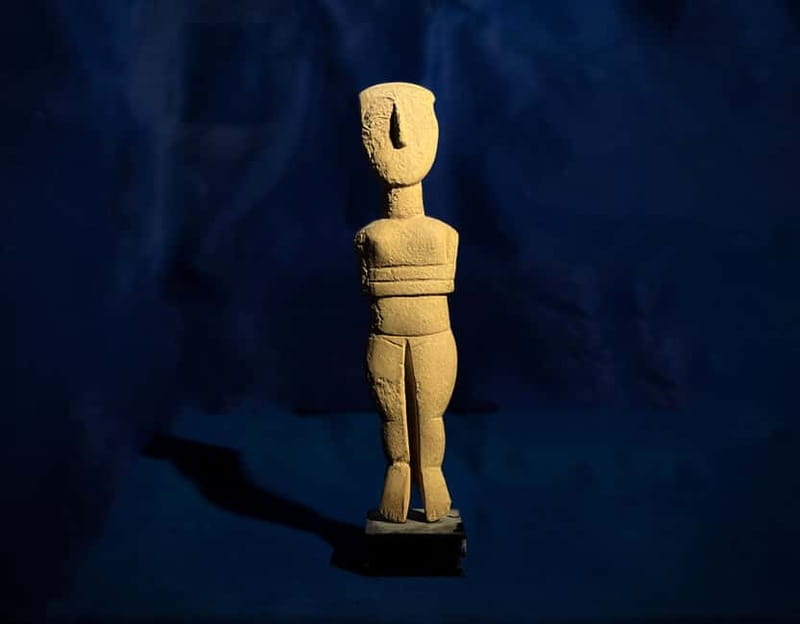
At $85 per person, this costs more than a basic museum entrance or a short craft demonstration. The price makes more sense when you count the teaching, studio time, materials, cultural talk, tool instruction, finishing work, and artwork you take home.
You are paying for participation rather than simply access. The experience gives you a guided introduction to marble carving, a personal design process, and a finished object. That is good value if you want something active and meaningful to do in Athens.
The value is weaker if you only want a quick souvenir or a polished sculpture made by an expert. Your piece will reflect beginner-level work, even with skilled instruction. That is exactly why the activity suits people who enjoy making things, but it may not suit anyone looking for a passive cultural tour.
The five-star rating from 15 reviews supports the idea that the workshop delivers a strong personal experience, especially for people seeking something different from the usual Athens route. I would still judge the price by your interests. Someone who dislikes handwork may find the time and cost hard to justify, while an art lover could consider it one of the more distinctive activities in the city.
Who should book this workshop
I would recommend it most strongly to:
- First-time or repeat visitors who want a break from monuments and museums.
- Couples who want to make separate keepsakes during the same activity.
- Families with older children who can follow tool instructions and work patiently.
- Art students and craft lovers interested in process rather than a perfect result.
- Anyone planning to visit ancient Greek sculpture collections and wanting a physical introduction first.
You should think twice if you need a fully accessible description of the venue, since the supplied information does not provide accessibility details. You should also think twice if you have a very tight schedule. The class lasts 135 minutes, and the optional walk adds more time.
Group size can affect the experience. If a group has seven or more people, an extra workshop can be arranged regardless of availability. That suggests the provider can accommodate larger parties, though you should confirm how your group will be divided when booking.
The workshop is offered in Greek and English. The guide’s background in Ancient Greek art and the teacher’s sculpture experience make it a good choice if you want context along with the craft.
Practical details before you reserve
The price is $85 per person, and the listed duration is 135 minutes. Starting times vary, so check availability and wait for the workshop time to be arranged and confirmed by email.
You can cancel up to 24 hours in advance for a full refund. A reserve-now, pay-later option is also available, which helps if your Athens schedule is still shifting.
Bring an idea for a personal symbol, but keep it simple. A bold icon, animal, letter, or meaningful shape is more realistic for a short relief workshop than a detailed portrait. Wear something you can work in comfortably, and remember that marble dust and hand tools are part of the setting, even though no specific clothing rule is provided.
Should you book MarbleArt Athens?
Book this experience if you want to understand Greek sculpture by making a small piece yourself. The best parts are the freedom to choose your own symbol, the patient instruction from Dimitris and his team, and the chance to leave with an artwork that carries your signature.
Do not book it expecting a full sculpture course or a museum-quality statue in two hours and fifteen minutes. You will get an introduction, not mastery. For the right person, that is enough: the class turns marble from a distant ancient material into something you can hold, cut, color, and take home.
FAQ
How long does the marble carving workshop last?
The activity lasts 135 minutes.
How much does the workshop cost?
The listed price is $85 per person.
Where does the workshop take place?
It takes place at MarbleArt Athens in the historic center of Athens, in central Greece.
What languages are available?
The live guide is available in Greek and English.
Do I get to choose what I carve?
Yes. You discuss a subject and freely select a personal symbol rather than copying a standard pattern.
Do I take my sculpture home?
Yes. The program includes a personal sculpture that you can take with you.
Are beginners welcome?
Yes. The program is designed to include beginners and provides instruction in using the hand tools.
What will I learn during the activity?
You learn about Cycladic art, marble and other stone materials, hand tools, drawing and transferring a design, relief carving, coloring, lettering, and finishing techniques.
Can I cancel for a full refund?
Yes. You can cancel up to 24 hours in advance for a full refund.
Can larger groups join the workshop?
If the group has seven or more people, an extra workshop can be arranged regardless of availability.
More ancient sites near Athens
- Historical Delphi One Day Tour with Arachova Stop & Expert Guide
★ 4.5 · 1,247 reviews - Historic Athens: Small Group Electric Bike Tour
★ 4.9 · 740 reviews - The History of Athens: Greek Mythology Private Tour
★ 5.0 · 138 reviews - Athens Highlights by E-Bike: Small-Group Historic Tour
★ 5.0 · 131 reviews
Newly reviewed around Athens
- Athens: workshop for painting landscape with local artist★ 4.6 · 3 reviews
- Athens: Greek Wine & Olive Oil Tasting at Brettos Plaka★ 4.5 · 3 reviews
- Outdoor Yoga and Pilates with Akropolis view★ 4.0 · 5 reviews
- Acropolis of Athens: 60′ Tour in a Vintage Motorcycle★ 5.0 · 4 reviews
- Ultimate Tasting of the Volcanic Wines of Greece★ 5.0 · 3 reviews
- workshop for painting acropolis/landscape with local artist★ 5.0 · 3 reviews
- Athens at Twilight Night Tour with Drinks and Meze Dishes★ 4.8 · 4 reviews
- Breakfast in the markets with olive oil and honey tasting★ 4.8 · 8 reviews
Athens Craft Workshops, compared.

Create and paint your own ceramic piece in a workshop in Athens
Read our review →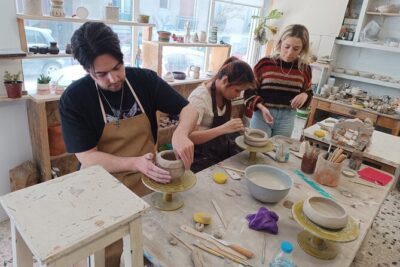
Ceramic and Pottery Creative Workshop with Two Local Artists
Read our review →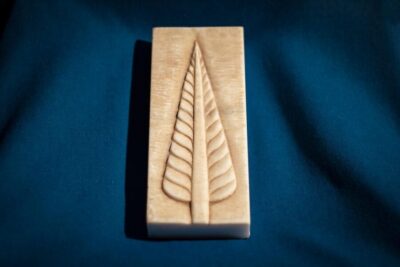
Marble Carving Workshop: Create Your own Symbol of Strength
Read our review →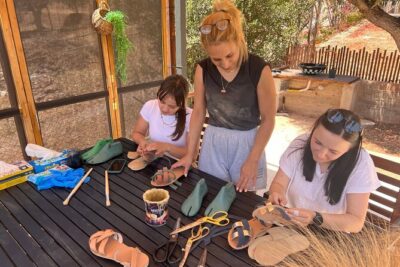
Athens Make Your Own Greek Leather Sandals Workshop
Read our review →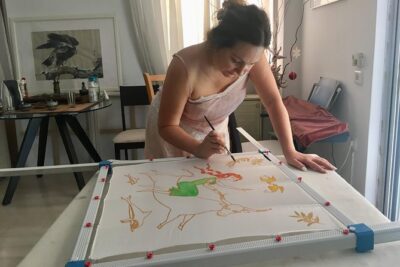
Small Group Silk Scarf Art Workshop with Greek Themes
Read our review →
Athens Loom Weaving Workshop: Create Your Own Masterpiece
Read our review →Browse the lists this tour appears in