
Reviewed · ANCIENT CORINTH TOURS
Ancient Corinth and canal Day trip from Athens: Private Tour
The Corinth Canal is the quick visual thrill here: a narrow cut through the Isthmus, linking the Ionian and Aegean seas and separating the Peloponnese from mainland Greece. Then the road leads to Ancient Corinth, where the Temple of Apollo, Roman ruins, and St. Paul’s preaching site give the outing real historical weight.
I like the private format, since you can set your own pace instead of trailing a flag through the ruins. I also like the easy pickup from your Athens hotel or Piraeus cruise terminal, plus the chance to see the old Diolkos trackway, an unusual reminder that ancient Greeks hauled boats overland.
The main thing to consider is that this is a driver-led tour, not a licensed guided tour. Your driver can share historical information, but you’ll need to buy site tickets separately and explore the archaeological area without an official guide.
Key points at a glance
- The Corinth Canal links two seas: Stop beside the dramatic waterway for about 30 minutes.
- Ancient boats once crossed the Isthmus by land: The Diolkos offers a rare look at early Greek engineering.
- Ancient Corinth packs several major sights together: See the Temple of Apollo, theater, Roman Odeon, Lechaion Street, museum, and the place tied to St. Paul.
- Acrocorinth adds a hilltop fortress: The stop is brief, but the upper citadel gives you broad views over the area.
- Your group has the vehicle to itself: The tour costs $570.15 for up to three people, making the per-person price more sensible with a full group.
- Bring extra money for admissions and food: Tickets, lunch, snacks, coffee, and a licensed guide are not included.
Why Corinth makes a smart half-day from Athens
Athens has more than enough to fill several days, but Corinth gives you a useful change of scene without requiring a long trip across the Peloponnese. The drive follows the coastal highway toward the Isthmus, and the six-hour schedule leaves time for major sights without turning the day into an exhausting marathon.
I like this trip for visitors who want ancient Greek history but have already spent time around the Acropolis and central Athens. Corinth feels different. Its story includes Greek mythology, Roman urban life, early Christian preaching, military fortresses, and a piece of practical engineering that served ships long before the modern canal existed.
The private setup also changes the mood. You do not have to wait for a large group at every stop, and you can spend more time at a place that catches your interest. The published experience notes that you may spend as much time as you want at each stop, although the total outing remains about six hours. That flexibility matters most at Ancient Corinth, where the ruins and museum deserve more attention than the short stops receive.
Andrew’s Unique Tours uses an SUV or a Mercedes E Class taxi. Pickup is offered from accommodations in Athens and from the Piraeus cruise terminal. Airport pickup and drop-off are not included, so you should arrange another transfer if you are flying in or out the same day.
More Ancient Corinth and canal trips:
- From Athens: Ancient Corinth Day Trip with Canal & VR Guide
★ 4.6 · 1,073 reviews - Private Biblical Tour Ancient Corinth & Isthmus Canal from Athens
★ 5.0 · 762 reviews - Athens: Ancient Corinth & Nafplio Full Day Trip with Swim
★ 4.8 · 523 reviews
The Corinth Canal: a sharp cut through Greece
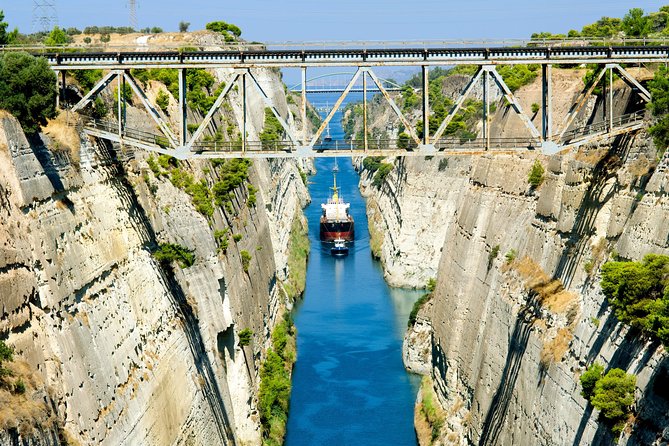
The first major stop is the Corinth Canal, where the modern waterway slices through the Isthmus. It connects the Ionian Sea with the Aegean Sea and creates a direct passage between the Gulf of Corinth and the Saronic Gulf.
You get about 30 minutes here. That is enough to look down into the canal, take photographs, and grasp the scale of the cut. It is not a museum stop or a long walk. Think of it as a strong visual introduction to the region.
The canal also explains the geography of the day. The Peloponnese is connected to mainland Greece by the Isthmus, and the waterway turns that narrow neck of land into a dramatic divide. From the roadside viewpoint, the canal’s steep walls make the engineering easy to understand, even if you know little about Greek maritime history.
A short stop works well here, but it also means you should not expect a full canal cruise or an extended visit. The experience includes the viewpoint, not a boat trip. There is no admission charge listed for this stop.
Diolkos and the ancient shortcut for ships
The Diolkos stop lasts about 15 minutes, yet it may be the most unusual part of the route. This paved trackway allowed boats to be moved overland across the Isthmus so they could avoid sailing around the Peloponnese peninsula.
That shortcut saved ancient vessels from a long and dangerous voyage. It also shows how practical ancient engineering could be. The Diolkos was not built for ceremony. It solved a hard transport problem with stone, labor, and careful planning.
Do not expect a large site with many displays. Your time here is brief, and the Diolkos is best understood as a compact historical stop along the route. I would pay close attention to the driver’s explanation, since a few remaining paving stones or traces can mean little without context.
This is one reason the driver’s background matters. The included driver is described as having historical knowledge, but drivers are not licensed to accompany you inside archaeological sites. At the Diolkos, that distinction may be less important than it is at Ancient Corinth, since the stop is short and relatively focused.
Ancient Corinth: Apollo, Roman streets, and St. Paul
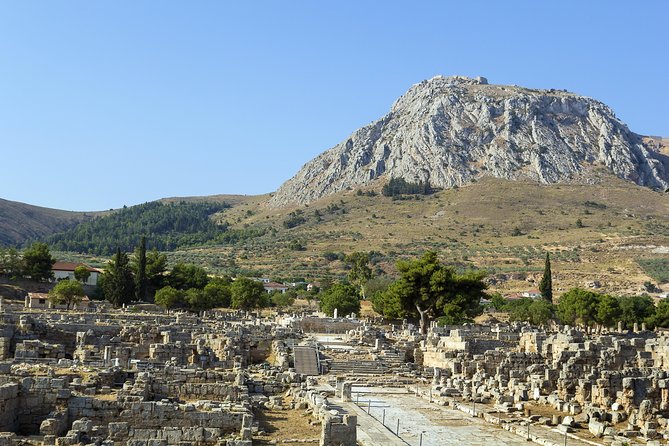
Ancient Corinth gets the longest scheduled visit, about two hours, and rightly so. This is the heart of the excursion. The site brings together Greek temples, Roman public buildings, streets, fountains, and early Christian history in one place.
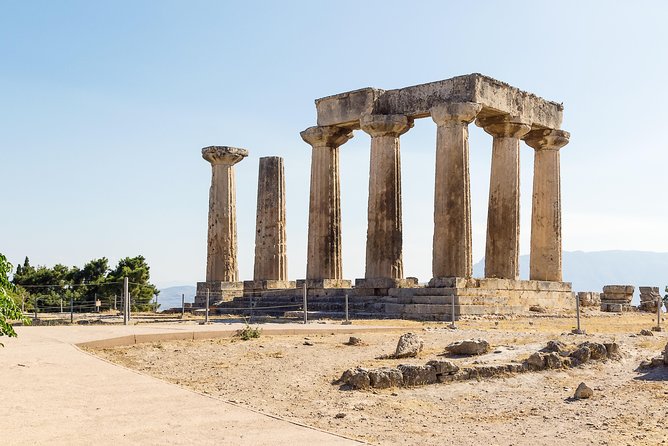
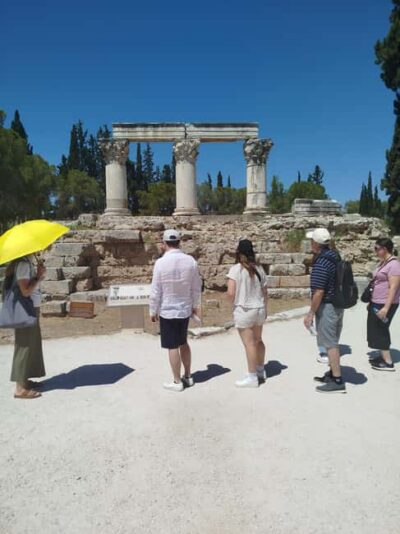
The Temple of Apollo is the visual anchor. Built around 560 B.C., it is one of the earliest Doric temples in the Peloponnese and on the Greek mainland. Its surviving columns are powerful because they belong to an early period of Greek temple design, long before many of the more familiar classical monuments visitors see in Athens.
The site also includes a theater and the Roman Odeon. These structures remind you that Corinth changed over time. The city was not frozen in the age of Greek mythology. Roman rule reshaped its public spaces, buildings, and daily life.
Look for the Glauke Fountain, the Vima, Lechaion Street, and the museum within the archaeological area. The Vima is especially important for Christian history. It is identified as the place from which St. Paul preached to the Corinthians in A.D. 52.
That combination gives Corinth unusual range. You can think about Apollo and Greek religious life, then Roman civic culture, then St. Paul’s ministry, all within the same visit. I find that more rewarding than a site that tells only one historical story.
The two-hour window should be enough for a solid visit, but your pace will depend on how closely you examine the ruins and how long you spend in the museum. Since admission is not included, budget for the archaeological site ticket before you arrive. The tour does not include a licensed guide, so a guidebook, downloaded notes, or a little advance reading will help you get more from the columns and foundations.
More day trips from Athens:
- Athens: Cape Sounion & Poseidon Temple Sunset Half-Day Trip
★ 4.8 · 8,241 reviews - Athens: Meteora Monasteries Day Trip with Caves and Lunch
★ 4.7 · 2,964 reviews - From Athens: Small-Group Delphi, Museum & Arachova Day Trip
★ 4.8 · 2,476 reviews - From Athens: Mycenae, Epidaurus & Nafplio Full Day Trip
★ 4.8 · 2,438 reviews
The Temple of Apollo deserves more than a passing glance
The itinerary gives the Temple of Apollo its own short stop as well as including it within Ancient Corinth. In practical terms, this is part of the same archaeological visit, not a separate temple reached by another long drive.
That arrangement can be useful. Your driver can point out the temple, then give you time to see it properly when you enter the site. The listed 10-minute temple stop should not be read as the full amount of time available there. The broader two-hour Ancient Corinth visit includes the temple among its main sights.
Apollo was associated with oracles and the sun, and the temple’s early Doric form gives you a direct link to the development of Greek architecture. The local oolithic limestone also ties the building to the geology and materials of the region.
If you have only a short time at the ruins, start here. The columns are the clearest symbol of Ancient Corinth, and they help you orient yourself before moving on to the smaller remains, streets, fountains, and museum displays.
The Archaeological Museum of Ancient Corinth
The museum sits inside the archaeological site and was built between 1931 and 1932 to display finds from excavations at Ancient Corinth. You get about 30 minutes for the museum, included within the overall site visit.
That half-hour is useful, though brief. A museum visit can make scattered ruins easier to understand by showing the objects that once belonged to the city’s homes, religious buildings, and public spaces.
I would treat the museum as part of the site rather than an optional extra. The outdoor ruins show the city’s scale, while the indoor displays can supply smaller details that stones alone cannot provide. Since the museum is under the Greek Archaeological Service, admission falls under the archaeological site cost and is not included in the tour price.
The driver will not accompany you as a licensed guide inside. That gives you freedom, but it also means you are responsible for deciding how to use those 30 minutes. If museums are your priority, tell the driver early so the flexible private schedule can work in your favor.
Acrocorinth: the fortress above the ancient city
Acrocorinth, or Upper Corinth, is the hilltop acropolis of Ancient Corinth. The stop is listed at about 15 minutes, so you should think of it mainly as a viewpoint and brief fortress visit rather than a long exploration.
Its position above the lower city is the reason to go. You can look back across the Corinth area and understand why this site mattered for defense. The higher ground also changes your view of the Isthmus and the route between mainland Greece and the Peloponnese.
The short timing is the biggest limitation. A fortress on a hill can require more walking and time than a quick roadside stop allows. Ask about the exact plan before setting out, especially if Acrocorinth is the main reason you want this excursion.
Still, even a brief visit adds something the lower ruins cannot. Ancient Corinth explains city life and religion. Acrocorinth explains control, protection, and height. Together, they give you a fuller picture of why Corinth mattered.
What the $570.15 private price really buys
The listed price is $570.15 per group of up to three people. That is a high total for a six-hour outing if you are traveling alone, but it becomes more reasonable when shared by two or three people.
For three people, the cost works out to about $190 per person before site admissions, meals, and any guide fee. For two, it is about $285 each. The value comes from the private vehicle, pickup and drop-off, tolls, bottled water, and control over the schedule rather than from included entrance fees.
You are paying to avoid arranging transport to several sites yourself. The tour also removes the need to manage the road, parking, and return journey to Athens. For a cruise passenger with limited time in Piraeus, that convenience can be worth more than the lowest possible price.
The exclusions are important. You pay for archaeological site tickets, lunch, snacks, coffee or tea, and a licensed guide. If you want detailed interpretation inside Ancient Corinth, add the cost of hiring a licensed guide or plan to explore with your own material.
Who will get the most from this tour
This outing suits you if you want a private half-day outside Athens and prefer history spread across several sites rather than one large museum. It is especially useful for couples, families, or a small group of friends who can share the vehicle cost.
It also fits a cruise schedule well because pickup and drop-off are available at Piraeus. Confirm your timing carefully, since the tour lasts about six hours and airport transfers are not included.
You will get the most from it if you enjoy choosing your own pace. The driver can provide historical information and manage the route, while you decide how long to spend at the canal, museum, and Corinth ruins.
It may not suit you if you want a fully guided archaeological tour with detailed commentary at every monument. It may also feel expensive for one person, particularly after adding admissions and lunch.
The experience requires good weather. If poor weather cancels the outing, you are offered a different date or a full refund. You can cancel for a full refund up to 24 hours before the start time, but changes or cancellations inside that window are not accepted.
Should you book the Ancient Corinth trip?
Book this private trip if you want an efficient way to see the Corinth Canal, Ancient Corinth, and Acrocorinth without joining a large group. The flexible timing, Athens and Piraeus pickup, and polite, friendly service associated with driver Andrew make it a practical choice for a small group.
Before booking, be clear about the tradeoff: private transport and flexibility instead of a licensed guide and included admissions. If that suits you, the tour gives you a useful look at Greek, Roman, and Christian Corinth in one day. If you want deep archaeological explanation at every stop, arrange a licensed guide separately or choose a tour that includes one.
FAQ
How long does the Ancient Corinth tour last?
The experience lasts approximately six hours.
Where can pickup and drop-off take place?
Pickup and drop-off are available from your accommodation in Athens and from the Piraeus cruise ship terminal.
Is airport pickup or drop-off included?
No. Pickup and drop-off at Athens airport are not included.
What vehicle is used for the private tour?
Transportation is provided in an SUV listed as a Codiaq or in a Mercedes E Class taxicab.
Are archaeological site tickets included?
No. Tickets to the archaeological sites are not included in the tour price.
Is a licensed tour guide included?
No. The driver provides historical information but is not licensed to accompany you inside the archaeological sites.
Can I cancel for a full refund?
Yes. You can cancel at least 24 hours before the experience start time for a full refund. If poor weather causes the tour to be canceled, you are offered another date or a full refund.
Newly reviewed around Athens
- Athens: workshop for painting landscape with local artist★ 4.6 · 3 reviews
- Athens: Greek Wine & Olive Oil Tasting at Brettos Plaka★ 4.5 · 3 reviews
- Outdoor Yoga and Pilates with Akropolis view★ 4.0 · 5 reviews
- Acropolis of Athens: 60′ Tour in a Vintage Motorcycle★ 5.0 · 4 reviews
- Ultimate Tasting of the Volcanic Wines of Greece★ 5.0 · 3 reviews
- workshop for painting acropolis/landscape with local artist★ 5.0 · 3 reviews
- Athens at Twilight Night Tour with Drinks and Meze Dishes★ 4.8 · 4 reviews
- Breakfast in the markets with olive oil and honey tasting★ 4.8 · 8 reviews
Ancient Corinth Tours, compared.
Ancient Corinth Day Trip with Canal & VR Guide
Read our review →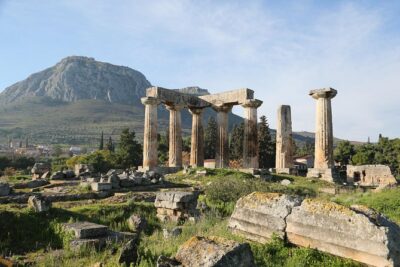
Private Biblical Tour Ancient Corinth & Isthmus Canal from Athens
Read our review →
Ancient Corinth & Nafplio Full Day Trip with Swim
Read our review →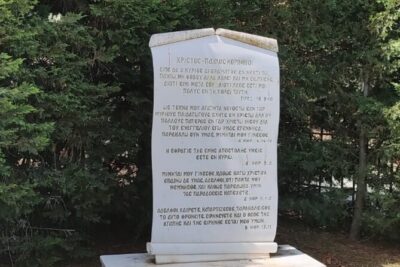
Private Tour of Apostle Paul’s Footsteps in Ancient Corinth
Read our review →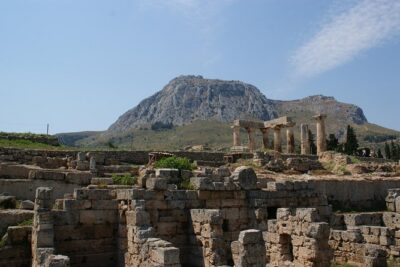
Corinth Half-Day Trip from Athens with Entrance Tickets
Read our review →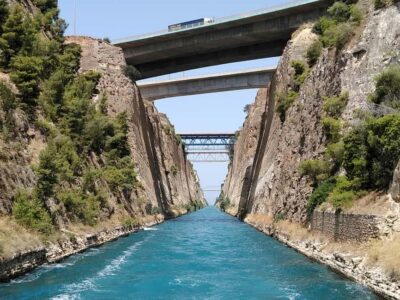
Browse the lists this tour appears in