
Reviewed · ANCIENT AGORA TOURS
Athens: Ancient Agora E-Ticket and Audio Tour
The Ancient Agora is where Athens’ political life took shape, and this self-guided visit gives you the story behind the stones. You’ll follow the rise of democracy from Solon’s reforms to the daily work of 500 citizens, then continue toward the Museum of the Agora, Pnyx, Mars Hill, and the supposed Prison of Socrates. I like the offline audio tour, since the archaeological site has no internet, and I like the freedom to pause for photos or linger where you wish. The catch is that directions can be vague, and the phone app may stop playing when you zoom in to take a picture.
Key points to know before you go
- See where Athenian democracy worked in practice: Visit the Bouleuterion, Tholos, and other civic remains linked to the city’s daily government.
- Use the tour offline: Download both your e-ticket and audio content before arriving, since there is no internet inside the archaeological site.
- Allow up to two hours: The Agora itself takes about 90 minutes to two hours if you include the museum, viewpoints, and nearby stops.
- Look beyond the main ruins: The route includes the Agora Museum, Pnyx, Mars Hill, and the Prison of Socrates.
- Bring the right gear: You need a charged Android or iOS smartphone and headphones. Large bags are not allowed.
- Plan carefully if you qualify for a discount: EU students and minors can enter free with identification, while non-EU students and people over 65 must queue for reduced tickets.
What this Ancient Agora experience really offers
At $30 per person, this is not simply an entrance ticket. You are paying for entry plus a phone-based audio route that places the ruins within the story of Athenian democracy. That can be good value if you want more than a quick walk among broken columns but do not want to join a scheduled group.
You do not get a live guide. Instead, Clio Muse provides recorded commentary in English, Italian, Greek, German, Spanish, and French. The format lets you set your own pace, stop to take photographs, and revisit sections that interest you. It also means you must manage the tour yourself, from downloading the app to finding each stop.
The experience generally takes 90 minutes to two hours. Give yourself extra time if you want to study the museum exhibits, pause at the viewpoints, or take the route slowly in hot weather. Early morning or late afternoon is the smarter choice in summer, since much of the site is open and exposed. The museum provides an air-conditioned break.
More Ancient Agora and Kerameikos walks:
- Athens: Agora and Hephaistos Temple Entrance Ticket
★ 4.0 · 449 reviews - Athens: Kerameikos Stone House Cooking Class
★ 5.0 · 165 reviews - Athens: Roman Agora & Ancient Agora E-ticket & 2 Audio Tours
★ 4.1 · 107 reviews
Entering beside the Temple of Hephaestus
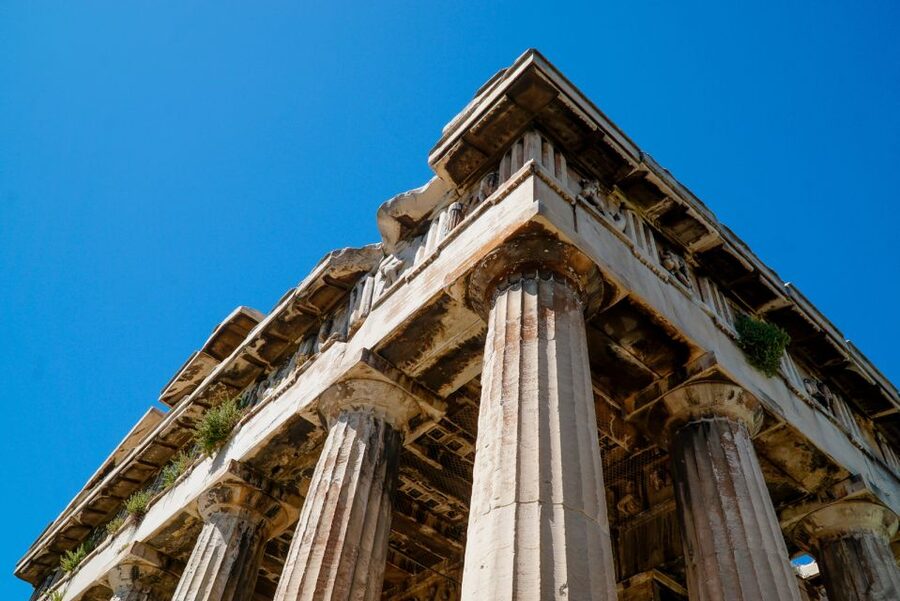
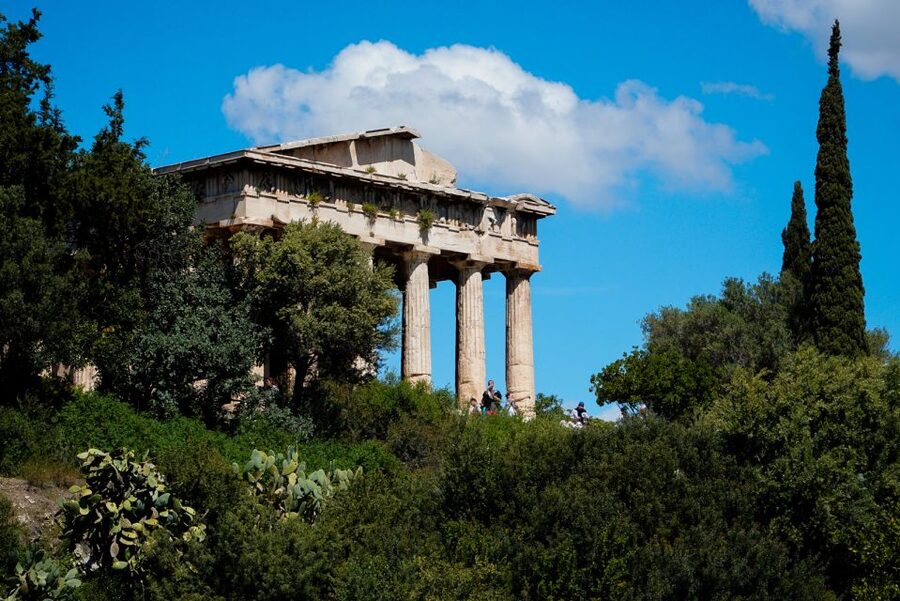
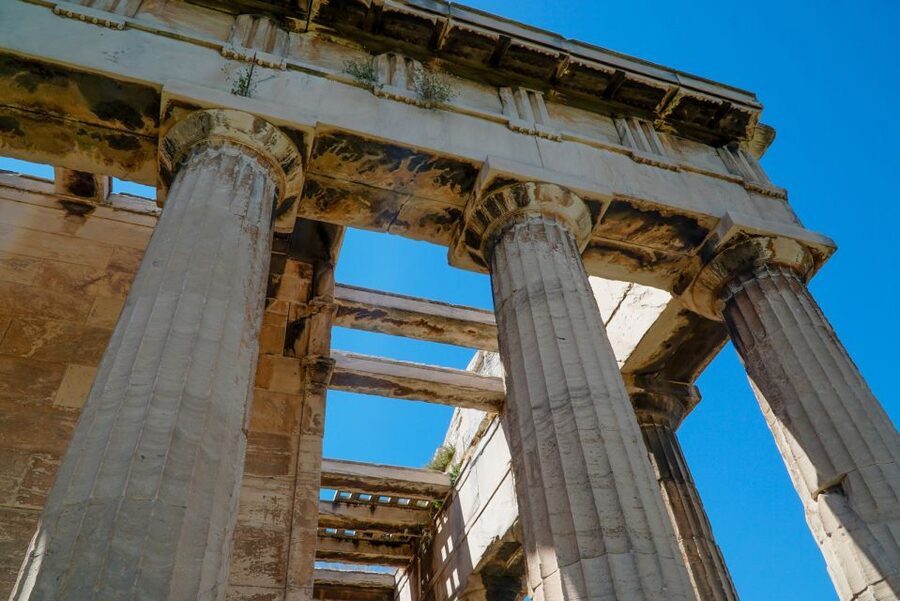
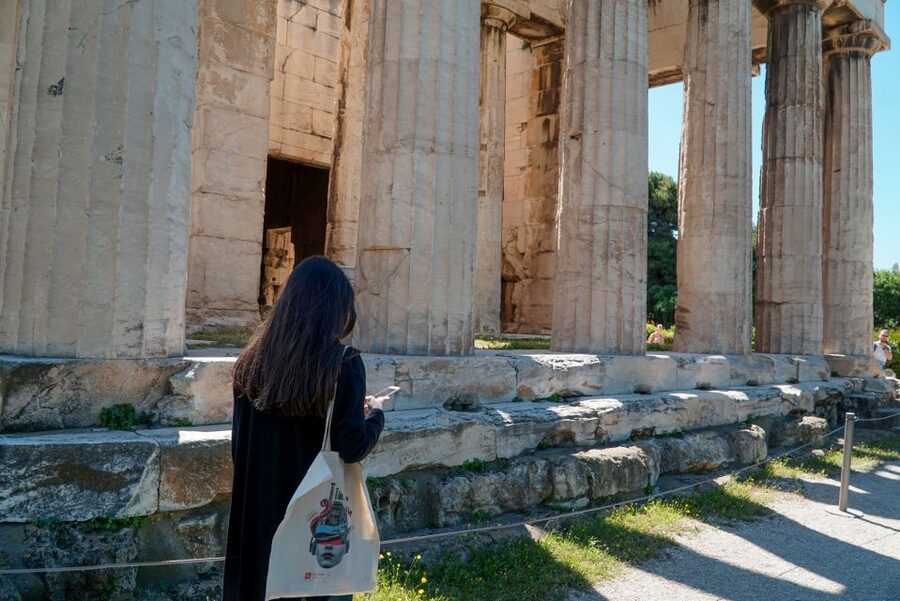
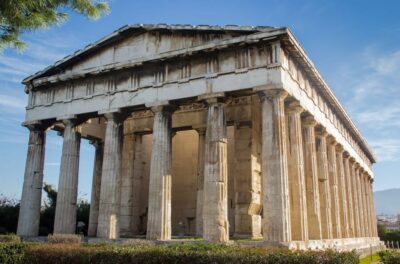
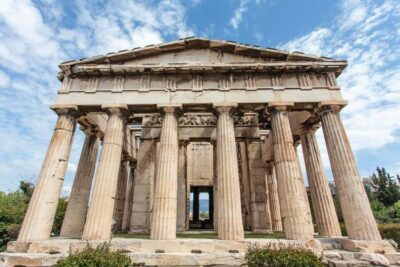
Your visit begins in the Ancient Agora, the old civic and commercial center of Athens. The Temple of Hephaestus is the first major landmark to give the site a sense of scale. Its columns and high position make it one of the clearest surviving reminders that this was once a working part of the city, not just an area of ruins.
The audio introduction sets up the political story. You hear about Solon, whose legal reforms helped prepare Athens for a new form of civic life. The point is not just that democracy began here. The useful lesson is that it developed through changes to laws, institutions, and citizen duties.
This opening is strongest when you stop looking at the Agora as a collection of stones and start asking what happened here each day. People debated, traded, judged disputes, worshipped, and handled public business in the same broad area. The site feels more understandable once you connect each building to a job.
The Temple of Hephaestus is also one of the easiest places to appreciate without much imagination. Its form remains clear, so it gives you a solid visual anchor before the route moves toward less complete structures.
The Bouleuterion and the daily work of 500 citizens
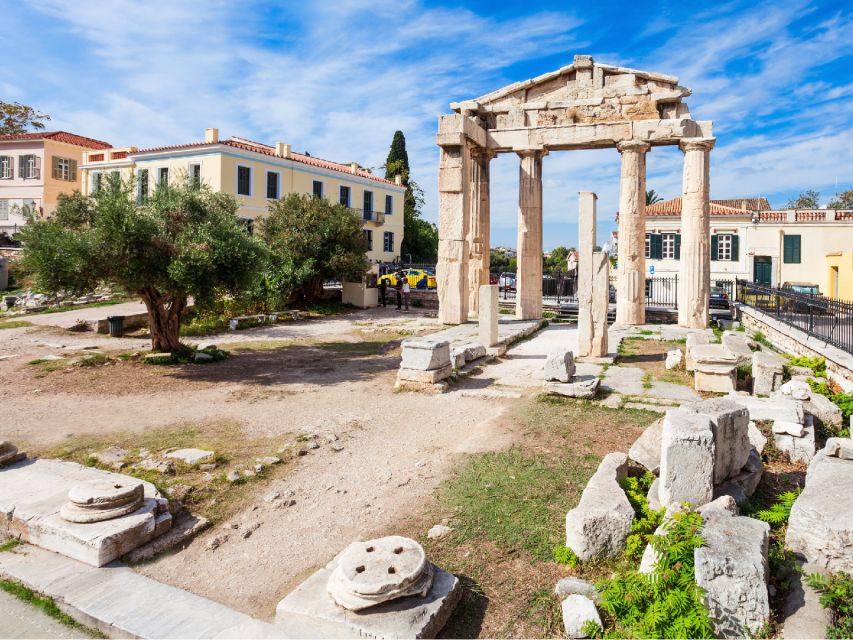
Near the Tholos, the route points you toward the ruined Bouleuterion. This was where the Council of 500 met to prepare laws and proposals for the popular assembly. That detail matters because it shows how Athenian democracy operated between the large public votes that usually receive the most attention.
The audio tour explains the system in practical terms. Citizens did not simply appear at a single meeting and decide everything on the spot. A council handled preparation and administration, while the wider assembly considered proposals. You can stand near the remains and picture a government shaped by repeated meetings, procedures, and public responsibility.
The ruins here are less visually complete than the Temple of Hephaestus. Do not expect an obvious, intact building waiting to be photographed. The audio is especially useful at this point because the political function is more important than the surviving walls.
The route also brings in figures such as Aristides the Just and Pericles. Their stories give the political system a human scale. You hear about personalities, rivalries, and decisions rather than only dates and architectural labels. The content has a serious level of detail, so younger children or people wanting a very light introduction may find it demanding.
The Agora Museum and its unusual political objects

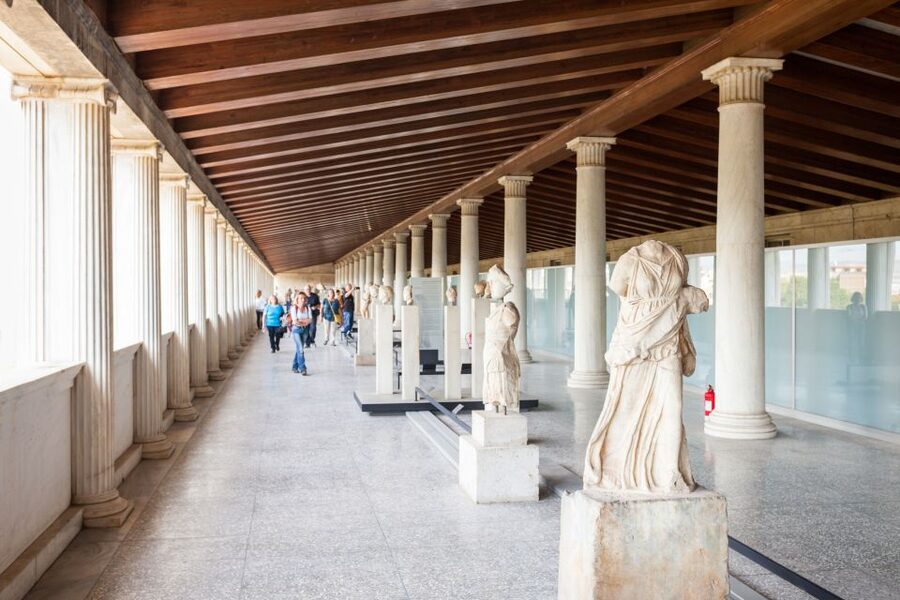
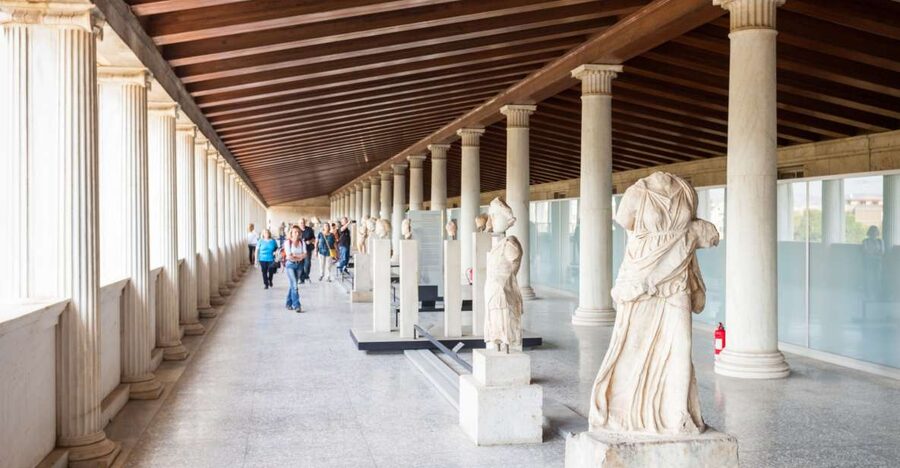
The Museum of the Ancient Agora is one of the best stops for understanding how government worked. Housed in the reconstructed Stoa of Attalos, it displays objects found in the area and explains the practical side of public life.
The exhibits include evidence of the ways Athenians tried to protect democracy from people they considered dangerous to the state. Some of these methods were ingenious. Others were harsh. The audio guide helps connect the objects to the larger question of how a society can defend public rule without using the same power to silence ordinary opposition.
Do not rush through the museum. The outdoor ruins can look dramatic, but the small objects often explain the system more clearly. Voting pieces, public records, and everyday items give you clues about how decisions were made and how citizens took part.
Make time for the second floor. It provides a different view over the Panathenaic Way and gives you a useful sense of how the Agora was arranged. This is an easy spot to miss if you follow only the most obvious museum path, yet it adds a helpful visual layer to the visit.
The air conditioning also makes the museum a welcome pause in warm weather. If you visit in the middle of the day, place this stop where you can enjoy the cool interior rather than treating it as a quick add-on.
More self-guided audio tours in Athens:
- Athens: Cape Sounio & Poseidon Temple Trip with Audio Guide
★ 4.4 · 4,521 reviews - Athens: Acropolis Ticket with Audio Guide
★ 4.0 · 3,575 reviews - Athens: Acropolis Museum Ticket with optional Audio Guide
★ 4.4 · 2,652 reviews - Athens: Acropolis Ticket & Optional Self-Guided Audio Tours
★ 4.1 · 2,542 reviews
Pnyx and Mars Hill: the best views on the route
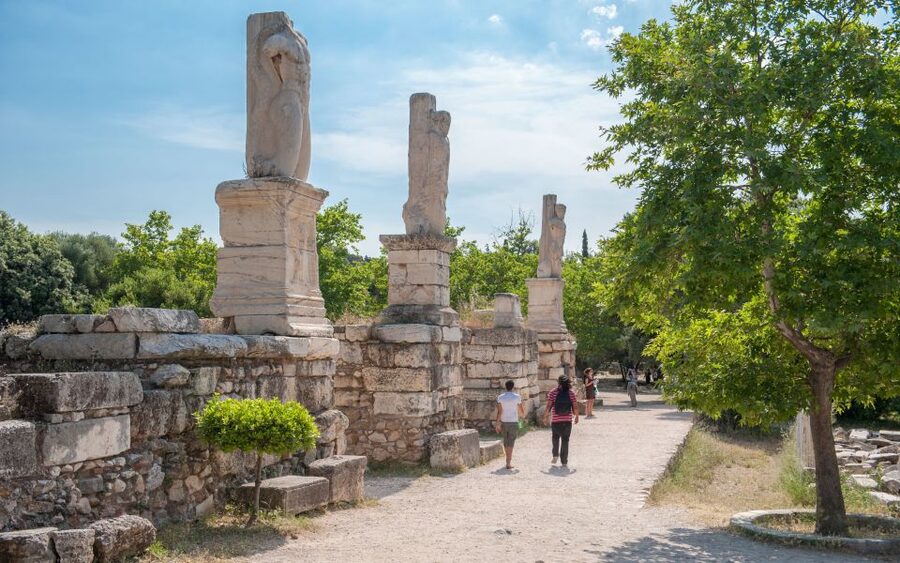
The route continues toward Pnyx and the Rock of Ares, also called Mars Hill. These spots provide some of the strongest views toward the Acropolis. Bring your camera, but do not let the photo stop replace the audio explanation. The value of these locations comes from their political setting as much as their view.
Pnyx is associated with the popular assembly, the place where citizens gathered to hear arguments and vote on public matters. From here, the connection between speech, citizenship, and physical space becomes easier to grasp. You are looking across the same city that these debates helped shape, with the Acropolis nearby as a constant visual presence.
Mars Hill gives you another fine angle toward the Acropolis and the surrounding center of Athens. The rock itself is uneven, and some points of interest are not wheelchair accessible. Comfortable shoes are important throughout the visit, especially if you plan to follow the entire route rather than stopping at the main Agora buildings.
The navigation is not always perfect. Several paths run close together, and labels are not always easy to match with the spoken directions. I would keep the offline map open, listen for landmarks, and avoid assuming that the nearest path is automatically the correct one. If you are not comfortable navigating with a phone, this can be the least relaxing part of the experience.
The Prison of Socrates and the final walk toward Dionysus

The route then goes up the hill of Philopappos toward the Prison of Socrates. The name is traditional, and the stop is used to explain the final days of the philosopher and the circumstances surrounding his death. The setting gives the story a more personal tone after the earlier focus on institutions and civic machinery.
The route also uses stories from the lives of Athenian figures to keep the commentary from becoming a string of textbook facts. One memorable section concerns Samuel the Cobbler and his connection with Socrates. Details like this help you picture philosophy as part of ordinary city life, not an activity separated from workshops, markets, and daily work.
This section requires more walking and uneven ground. If heat or mobility is a concern, you may want to focus on the central Agora and museum rather than trying to follow every outer stop. The activity is specifically not suitable for wheelchair users, and some points cannot be reached by wheelchair.
The route ends within easy reach of the Acropolis archaeological area, in front of the Theater of Dionysus. This is a satisfying finish because you move from democratic debate and philosophical questioning to public drama. Aeschylus, Sophocles, and Euripides had their tragedies performed here, in the world’s oldest theater.
The end point also makes this experience useful as part of a larger walking day. You can continue toward the Acropolis area after finishing, though the Ancient Agora ticket itself does not include entry to other sites.
Using the audio tour without losing your patience
Download everything before you arrive. That means the e-ticket, the audio files, and the offline interactive map. The archaeological site has no internet access, so waiting until the gate is a mistake.
You will receive the actual e-ticket and tour instructions in a separate email from the local partner. Check your spam folder if it does not appear. The GetYourGuide voucher is not accepted at the entrance, so have the separate ticket ready on your phone or print it.
Use headphones so you can hear the commentary clearly while keeping your hands free. Start with a fully charged phone, and consider carrying a small power bank if your battery is already low. The tour does not provide a smartphone or headphones.
The app works on Android and iOS, but there are older-device limits. It does not support Windows phones, iPhone 5 or 5C and older, older iPod Touch models, iPad 4 and earlier, or the first iPad Mini. If your phone is old, check compatibility before buying.
The app itself is described as easy to use, but the route guidance could be clearer. One practical habit helps: pause the audio only when necessary, and use the map between stops rather than trying to navigate while the narration is running. The recording may stop if you zoom in to take a photo, so check the playback before walking on.
Ticket value, timing, and who should buy
At $30, the package makes the most sense for people who want context without paying for a private guide. The entry ticket handles the main access, while the audio adds structure and background. You also avoid roaming charges by using the offline material.
It is less attractive if you qualify for a free or reduced ticket. EU students and minors can enter free with an identity card or passport, but they must queue to receive a zero-value pass. Non-EU students and people over 65 can receive reduced tickets, though they must queue at the ticket office. In those cases, compare the cost carefully before booking this package.
The advertised fast entry is useful for standard ticket holders, but do not treat it as a magic pass that removes every possible queue. You still need to use the validating machines, and special ticket categories require extra steps.
This suits independent visitors who enjoy listening, walking, and setting their own pace. It is also a good choice for first-time visitors who want help connecting the Agora to the Acropolis, democratic government, and classical drama.
It may not suit you if you want a human guide to answer questions, if you dislike phone-based tours, or if you need fully accessible paths. Families can use it, but the amount of political detail may be better for older children and adults.
Should you book the Ancient Agora audio tour?
Book it if you want a flexible visit with strong historical context, especially if the Agora is competing with the Acropolis for your limited Athens time. The political story, the Museum of the Agora, the Acropolis views from Pnyx and Mars Hill, and the final stop at the Theater of Dionysus give the route real range.
I would book early morning or late afternoon, download the material the night before, and allow two hours. Wear good shoes, skip large bags, and keep your phone charged.
Skip it if you already have a live guide, qualify for a free or reduced ticket, or need step-free access. For everyone else, the main trade-off is simple: you get useful, detailed commentary and freedom, but you must do the navigation yourself. That is a fair exchange for an independent look at the place where Athenian public life took shape.
FAQ
How long does the Ancient Agora audio tour take?
The activity takes about 90 minutes to two hours. Allow extra time if you want to study the museum, take photographs, or pause at the viewpoints.
Is a live guide included?
No. This is a self-guided audio tour for your smartphone. The audio is available in English, Italian, Greek, German, Spanish, and French.
Do I need internet inside the Ancient Agora?
No internet is available inside the archaeological site. Download the e-ticket, audio tour, and offline map before you arrive.
Is the smartphone included?
No. You must bring a charged Android or iOS smartphone and your own headphones.
Is the Acropolis included in the ticket?
No. The ticket covers the Ancient Agora. The route ends near the Acropolis archaeological area and the Theater of Dionysus, but other site entry is not included.
Can wheelchair users take this tour?
No. The experience is not suitable for wheelchair users, and some points of interest are not wheelchair accessible.
What should I bring?
Bring comfortable shoes, headphones, and a charged smartphone. Large bags and luggage are not allowed.
Can students or minors enter for free?
EU students and minors can enter free with an identity card or passport, but they must queue for a zero-value pass. Non-EU students and people over 65 may receive reduced tickets and must queue at the ticket office.
Newly reviewed around Athens
- Feel Ancient thermal Spa Visit Delphi, Leonidas ℨoo Spaʀtan★ 5.0 · 4 reviews
- Food Tour★ 5.0 · 3 reviews
- Explore the Hidden Food Gems of Athens★ 5.0 · 57 reviews
- Food Experience in Athens including Unlimited Lunch★ 5.0 · 3 reviews
- Eat Your Way Through Athens: A Local Food Walk★ 4.9 · 97 reviews
- From Athens: Delphi Private Tour with Lunch Time★ 4.0 · 3 reviews
- Delphi: Spanish guided one day tour★ 4.6 · 55 reviews
- Early Entry Acropolis & Museum. Beat the Crowds & the heat★ 5.0 · 3 reviews
Ancient Agora Tours, compared.

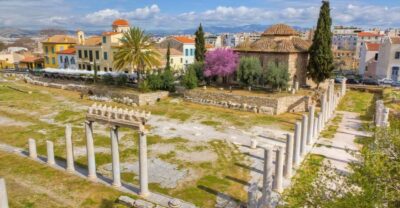
Roman Agora & Ancient Agora E-ticket & 2 Audio Tours
Read our review →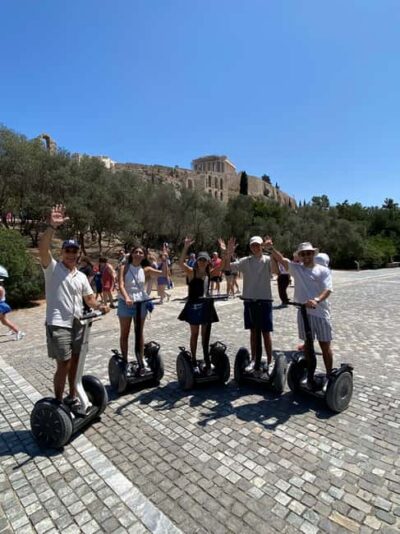
Ancient Athens, Agora, and Keramikos Segway Tour
Read our review →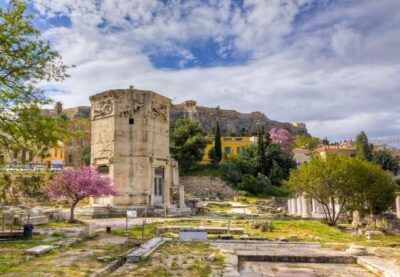
Ancient Agora: Audiovisual self-guided tour with 3D models
Read our review →

Browse the lists this tour appears in