Reviewed · DELPHI TOURS FROM ATHENS
6 Day Religious & Classical Tour of Thermopylae, Meteora, Delphi, Olympia, Mycenae, Nafplio, Epidaurus, ancient Corinth From Athens
Thermopylae, Meteora’s cliff monasteries, Delphi, Olympia, and Mycenae give this trip an unusually full look at Greece in six days. You move from the battlefield of Leonidas to the oracle of Apollo, then on to Olympic ruins, Venetian fortresses, Bronze Age tombs, and the place where St. Paul addressed the Corinthians. The private format lets your driver adjust the pace and add small detours when time and interests allow.
I especially like the overnight stops in Kalambaka or Kastraki, Delphi, Olympia, and Nafplio. They break up the long drives and give you time for a sunset, a village meal, or an evening walk instead of reducing every stop to a rushed photo break. The chance to tailor the circuit is another plus, as shown by the driver Tas arranging an out-of-the-way chapel visit and helping with a birthday celebration.
The tradeoff is cost and intensity. At $2,358.13 per person, before five nights of lodging, meals, and site tickets, this is a serious purchase. Six days also means plenty of time in the vehicle, and the archaeological sites require walking, steps, and sun protection.
Key points to know before booking
- Private touring from Athens: Your own group travels in a private luxury vehicle, with hotel, Airbnb, or port pickup and return.
- Seven major historic areas: The route includes Thermopylae, Meteora, Delphi, Olympia, Nafplio, Epidaurus, Mycenae, and ancient Corinth.
- Meteora gets an overnight stay: You can visit one or two monasteries on the first afternoon, then continue the remaining visits the next morning.
- Accommodation is not included: The price covers transport and driver service, but five hotel nights, meals, and admission fees are extra.
- A driver rather than a site guide: English-speaking and multilingual drivers provide historical commentary, while a licensed guide inside museums and sites costs extra.
- Flexibility is part of the appeal: The company has adjusted the route to suit personal interests, including a mountain chapel, family restaurant, and birthday food stop.
A six-day route that connects Greece’s big names
This is not a light sightseeing loop. It is a private road trip through central Greece and the Peloponnese, with a strong focus on ancient religion, mythology, early Christianity, and Greek independence.
The route starts and ends in Athens, but Athens itself is not the focus. You leave the city on Day 1 and return on Day 6. That makes the tour useful if you have already allowed separate time for the Acropolis and central Athens, or if you want to keep the capital as your base before and after the circuit.
Your driver picks you up at 10 a.m. from your hotel lobby. Apartment pickup is also available, and airport or port pickup can be arranged for an additional charge. Wi-Fi, bottled water, refreshing wipes, and handmade Greek biscuits are included in the vehicle.
The driver offers commentary and handles the road logistics, but this is not the same as having a licensed archaeologist walk through every site with you. If you want detailed interpretation inside museums and ruins, request a licensed guide at an added cost.
More Delphi trips from Athens:
- Athens: Mythology of Delphi, Museum and Arachova Guided Tour
★ 4.6 · 4,008 reviews - From Athens: Delphi Full Day V.R. Audio Guided Tour
★ 4.6 · 3,028 reviews - From Athens: Small-Group Delphi, Museum & Arachova Day Trip
★ 4.8 · 2,476 reviews
Thermopylae and the road to Meteora
Thermopylae gives the tour a dramatic opening. The narrow pass was the setting for the 480 BC battle in which Greek forces led by Leonidas of Sparta faced the Persian army of Xerxes. The site has gained legendary weight, but the visit also includes a museum devoted to the battle and its effect on Greek history.
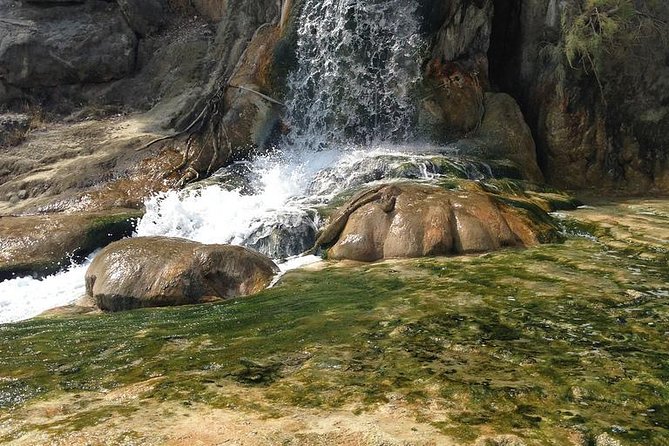
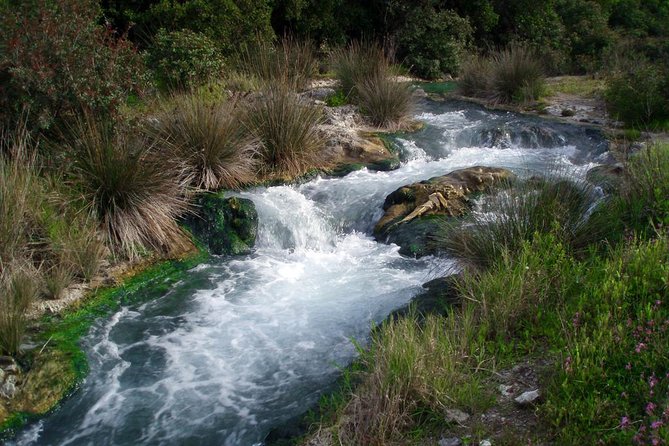
The Monument of King Leonidas, a brass figure holding spear and shield, offers the clearest visual reminder of the story. The nearby hot sulfur springs explain the ancient name Gates of Fire, and the area has long been associated with healing baths. The tour description refers to modern hydrotherapy facilities and numerous recognized springs, but your time here may depend on the day’s driving schedule.
After Thermopylae, you continue toward Meteora and check into a hotel in Kalambaka or Kastraki. The first Meteora visit lasts about four hours and may include one or two monasteries, followed by a sunset, a taverna meal, and time in village shops.
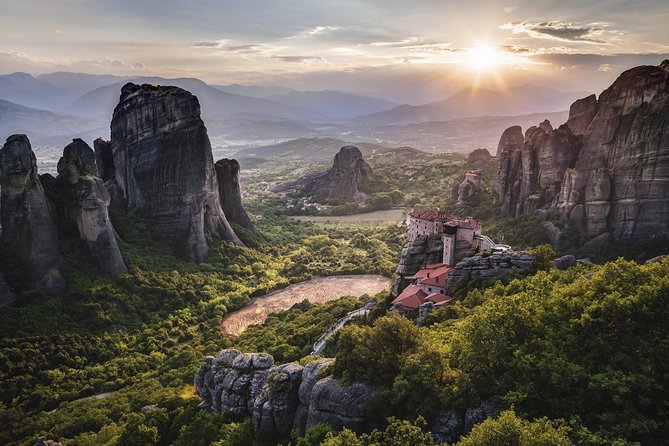
This overnight is well judged. Meteora is not a quick roadside stop. The monasteries sit on tall rock pillars, and the changing light late in the day adds much to the experience. Kastraki is the smaller village setting, while Kalambaka offers a broader choice of hotels and restaurants.
Meteora’s monasteries, stairs, and dress rules
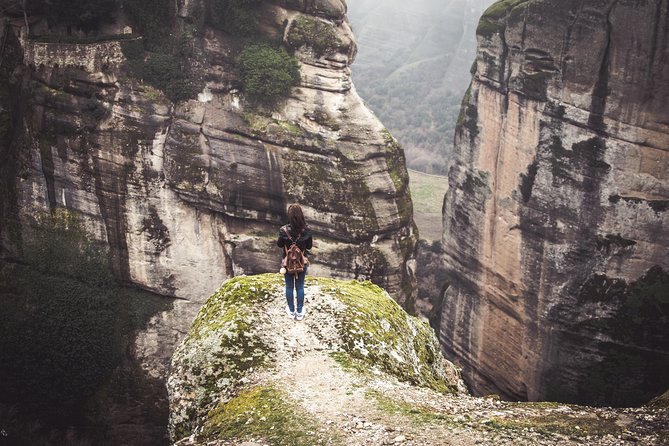
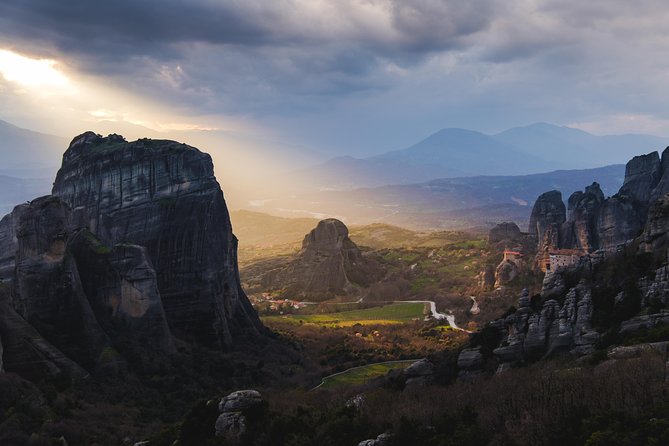
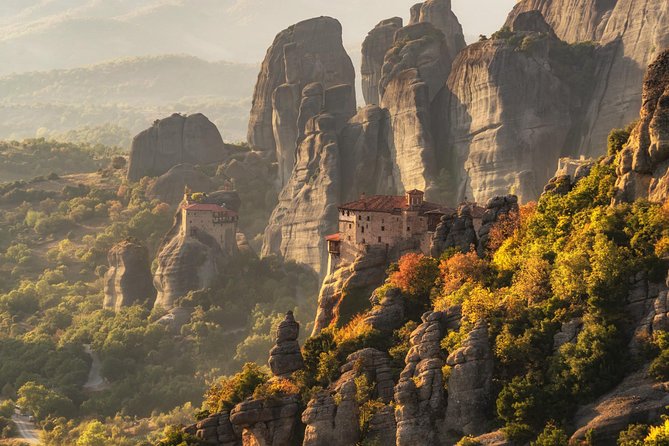
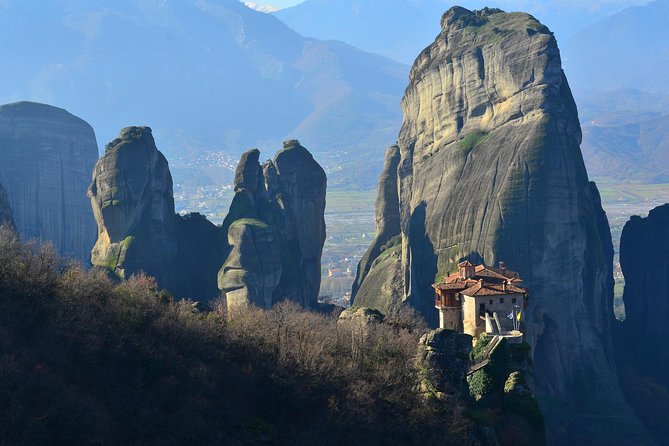
Meteora means monasteries suspended in the air, and the name fits. The route can include St. Nicholas, Rousanou, Varlaam, the Grand Monastery of Metamorphosis Sotiros, Holy Trinity, and St. Stephen. The precise number visited depends on opening hours, timing, and the day’s plan.
You should expect stairs and uneven surfaces. This is not a museum visit where you simply walk from room to room. The rock-top settings are the main event, and even the approach to a monastery can take effort.
Dress carefully. Places of worship and selected museums require knees and shoulders to be covered for men and women. Carry a light covering even in warm weather. Failing to meet the rule can mean refused entry.
Breakfast comes at Meteora before the remaining monasteries, lunch is planned at a traditional taverna in Kalambaka or Kastraki, and then you drive to Delphi. There is an option for dinner in Arachova, a mountain town often paired with Delphi, before your overnight stay.
The main limitation is that the day combines several monasteries with a long transfer. You will see a great deal, but you will not have unlimited time at each monastery. A private vehicle helps, since you are not waiting for a large group, but you should still tell the driver if photography, religious art, or architecture matters most to you.
Delphi, the Oracle, and the Navel of the World
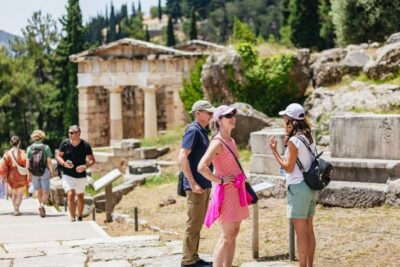
Delphi is one of the most rewarding stops on the route because the ancient site and museum work together. Ancient Greeks regarded Delphi as the center of the world, represented by the Omphalos stone. The sanctuary was home to Pythia, the oracle consulted on major decisions, and it also hosted the Pythian Games.
The archaeological site includes the Temple of Apollo, the ancient theater, the stadium, the Athenian Treasury, the gymnasium, and the Sanctuary of Athena Pronaia. The theater and stadium also explain that Delphi was more than a place for prophecy. It was a religious, athletic, and cultural center.
The museum holds some of Greece’s finest ancient works. Look for the Sphinx of Naxos, dated to about 560 BC, the kouroi Kleobis and Biton, the statue of Antinoos, and the famous Charioteer. The frieze from the Treasury of the Siphnians and the metopes from the Athenian Treasury give you a close look at the myths once displayed on the buildings.
Allow yourself enough time here. The site rises along a slope, and you will walk between scattered monuments. A driver’s commentary can set the scene, but the museum is a place where a licensed guide would add real value, particularly if you want help identifying the stories in the sculptures.
Lunch is planned in Delphi village, with views toward Itea and Amfissa. After lunch, the route continues to Olympia. This is another long transfer, so the overnight in Olympia matters. You can have dinner locally, including the option of a home-cooked meal at La Belle Helene, rather than arriving in the Peloponnese only to leave again.
More Meteora trips from Athens:
- Athens: Meteora Monasteries Day Trip with Caves and Lunch
★ 4.7 · 2,964 reviews - Athens: Meteora Monasteries Day Tour with Lunch
★ 4.8 · 2,196 reviews - Athens: Meteora Tour with Local Guide and Greek Lunch
★ 4.8 · 1,561 reviews - Athens: Meteora Monasteries, Caves & Coastal Stopovers with Lunch
★ 4.5 · 1,432 reviews
Olympia and the birthplace of the Olympic Games
Olympia was the sanctuary that hosted the original Olympic Games, beginning in the 8th century BC. Its ruins spread across an open archaeological area, with temples, training spaces, the stadium, and the remains of the athletic complex.
The Temple of Zeus was one of the great Doric temples of the classical period. The Temple of Hera is older, and its ruins are still tied to the modern lighting of the Olympic flame. The Philippeion, a circular building commissioned by Philip II of Macedon and completed by Alexander the Great, adds a political chapter to the religious site.
The Palaestra shows where athletes practiced wrestling, boxing, and jumping. The workshop of Pheidias is especially interesting because the sculptor is associated with the enormous gold-and-ivory Zeus, one of the Seven Wonders of the ancient world.
There are several museums to choose from. The Archaeological Museum of Olympia displays major finds from the site. The Museum of the History of the Olympic Games in Antiquity focuses on the early games, while the Museum of Archimedes uses working replicas to explain the inventions of the ancient mathematician and scientist.
That last museum offers a welcome change of pace after columns and broken walls. If you are traveling with teenagers, interactive demonstrations may hold their attention better than another display of pottery.
The village of Olympia has shops and tavernas, and the schedule allows time to walk around before driving to Nafplio. The drawback is familiar: you cannot give every museum equal time on a tightly planned day. Decide in advance if you care most about the athletic grounds, the Temple of Zeus, the archaeological collection, or Archimedes’ machines.
Nafplio, fortresses, and Greece’s first capital
Nafplio is one of the most pleasant pauses on the trip. It was the first capital of the modern Greek state after the War of Independence and has a waterfront, cobbled streets, historic buildings, and two fortresses.
Palamidi rises on a 216-meter hill above town. The fortress is reached by a famously steep stairway often described as having 999 steps. You do not have to make the climb on foot if the schedule or your knees say no, but the views over the Argolic Gulf are a major reason to visit.
Bourtzi sits in the harbor as a Venetian water fortress. From town, it gives Nafplio a strong seaside profile, even if your schedule does not include a boat visit.
Constitution Square is tied to the political history of the town. Nearby, a former mosque housed the first Hellenic Parliament from 1825 to 1826. The churches of St. Spyridon and Anastasios of Nafplia add religious and modern Greek history, including the assassination of Ioannis Kapodistrias outside St. Spyridon in 1831.
The schedule here is short, so treat Nafplio as a compact walking visit rather than a full free day. Make time for lunch at a traditional taverna, then try gelato at Antica Gelateria di Roma or loukoumades, small puffed pastries served with honey, chocolate, or almonds, at Pergamonto.
This is one of the tour’s best places for an evening stroll. Your overnight stay means you can see the town after the day’s driving is done, shop for handmade goods, and enjoy the waterfront without immediately returning to Athens.
Epidaurus and the power of ancient theater
The next morning begins with more Nafplio time, including the Palamidi area, Acronafplia, or Arvanitia, before the drive to Epidaurus.
Epidaurus is famous for its theater, and the acoustics are not just a guide’s trick. A small sound from the stage can carry to the upper seats. The theater was part of a larger sanctuary dedicated to Asclepius, the ancient Greek figure associated with medicine. People came here for healing, ritual, and care, making the site an early example of a medical retreat.
The archaeological museum includes architectural pieces, temple reconstructions, and inscriptions. You will want comfortable shoes here because the site spreads beyond the theater itself.
The description suggests about an hour for the drive and visit before continuing to Mycenae. That is enough for the main sights, but not for a slow examination of every inscription. If theater is your priority, tell the driver early so the time is protected.
Mycenae, the Lions Gate, and Bronze Age Greece
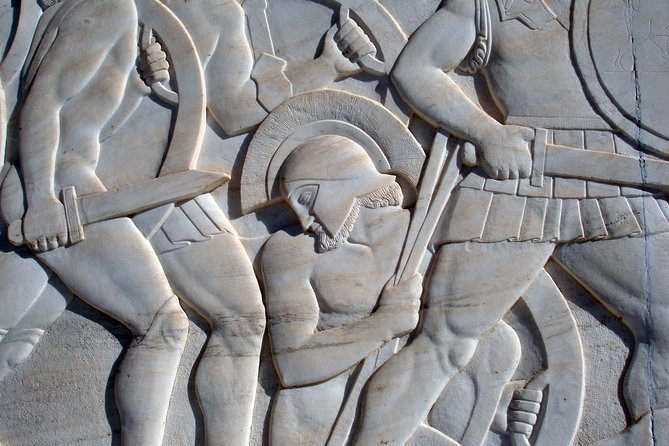
Mycenae brings you much further back, into the Late Bronze Age. It is tied to the legendary kingdom of Agamemnon, but the physical remains are impressive even without the Homeric connection.
The Lions Gate marks the entrance to the citadel. Its huge Cyclopean walls were so massive that later Greeks imagined only the Cyclopes could have moved the stones. Inside are the royal palace remains, Grave Circles A and B, and other parts of the fortified center.
The Treasury of Atreus is a large beehive-shaped tomb built around 1250 BC. The Tomb of Clytemnestra is another tholos tomb associated with the wife of Agamemnon. The museum displays gold burial goods, masks, jewelry, weapons, idols, and frescoes.
Mycenae is exposed and can feel hot. Bring water, use the bottled water supplied in the vehicle, and wear a hat. The archaeological site is not difficult in the same way as Palamidi or Meteora, but the ground is uneven and the sun can make a short visit tiring.
After Mycenae, you continue to ancient Corinth for the night. A late lunch or early dinner at a taverna overlooking the Temple of Apollo gives the day a fitting close.
Acrocorinth, ancient Corinth, and St. Paul
Acrocorinth is the high point of the final day in a literal sense. The monolithic rock above ancient Corinth held a fortified acropolis with three lines of walls, gates, towers, a keep, and remains from several periods.
Inside are the Peirene Spring, traces of the Temple of Aphrodite, and a Frankish tower. Remains of churches, mosques, houses, fountains, and cisterns show how the fortress changed over time. From the summit area, you can look toward Geraneia Mountain and the Corinthian Gulf.
This stop needs sturdy shoes and care on steep or uneven ground. The views are excellent, but the climb and exposed rock may not suit every member of your group.
At ancient Corinth, the Temple of Apollo is the visual anchor. Built around 560 BC, it is one of the earliest Doric temples on the Greek mainland and has unusual monolithic columns. The Agora, Roman buildings, theater, Odeon, Asklepieion, and Lechaion Road fill out the site.
The Bema is especially important for Christian history. It is the platform from which Apostle Paul addressed the Corinthians in AD 52. St. Paul’s Church nearby has a mosaic showing Saul’s vision of Christ.
The Archaeological Museum of Ancient Corinth holds finds from Corinth and nearby sites. You also see Hadgimoustafa Spring, a fountain from the Ottoman period, and village shops before continuing to the ancient Diolkos and the Corinth Canal.
The Corinth Canal and the return to Athens
The Corinth Canal is a sharp change from the ancient ruins. Cut through the isthmus in the 19th century, it is a major engineering work that changed passage between the Corinthian and Saronic gulfs.
The route then traces St. Paul’s connection to the area at Kechries Port. Lunch is planned by the Saronic Sea in the village associated with the Baths of Helen of Troy before the return drive to Athens.
The final transfer takes about two hours, followed by return to your Athens hotel, Airbnb, or apartment. That makes the tour practical for a continuing Athens stay, though you should avoid scheduling a flight soon after the planned return. Airport transfer is not included and costs extra.
What the $2,358 price really covers
The advertised price is per person and applies to a private six-day tour. It includes the vehicle, driver, hotel or port pickup and drop-off, Wi-Fi, bottled water, wipes, and handmade biscuits.
It does not include five hotel nights, entrance fees, food, drinks, airport pickup, or a licensed guide. This matters. The final cost can rise noticeably once you add lodging, meals, and admission to multiple archaeological sites and museums.
The value comes from having your own vehicle and a route designed around your interests. The company has shown flexibility in adding an unusual chapel visit, a family restaurant, and a birthday food stop. Tas is specifically noted for making a birthday special with donuts, pizza, and a thoughtful gift, while also chatting with teenagers and adapting the day without fuss.
You pay more than you would for a large bus circuit, but you also avoid a fixed group schedule. If your group values privacy, direct pickup, and the ability to shift time between sites, the premium can make sense. If you mainly want the lowest price, this is not the right format.
The tour offers free cancellation up to 24 hours before the start time. After that point, the amount paid is not refunded, and late changes are not accepted.
Who should book this Greek road trip?
I would choose this tour if you want to see the country’s major classical and religious sites without arranging several separate transfers. It suits families, couples, and small groups who prefer a private car and want room for personal requests.
It is also a good match for people with a strong interest in ancient Greece, Orthodox religious sites, mythology, early Christianity, and the history of the modern Greek state. You get all four threads in one route.
I would think twice if you dislike long drives, need slow museum visits, or want every site explained by an expert guide inside the ruins. Request the licensed guide option if interpretation is central to your trip, and confirm which monasteries, museums, and tickets are planned before departure.
FAQ
Is this tour private?
Yes. Only your group participates, and transportation is provided in a private luxury vehicle.
Does the tour start and end in Athens?
Yes. Pickup is offered from your Athens hotel, Airbnb, or apartment, and the tour returns you to your accommodation in Athens on Day 6.
Is hotel accommodation included?
No. The tour price does not include five nights of accommodation, though hotel reservations can be requested.
Are entrance fees included?
No. Admission fees to archaeological sites and museums are extra. Skip-the-line tickets may be arranged on request.
Is a licensed tour guide included?
No. An English-speaking or multilingual driver provides commentary. A licensed guide for sites and museums can be added for an additional cost.
What time does pickup begin?
The stated start time is 10 a.m. Your driver meets you in the lobby of your Athens hotel or at the entrance of your apartment building.
Can I be picked up at the airport or port?
Yes, airport and port pickup can be arranged for an additional cost. At those locations, the driver meets you at the gate with an Ancient Greece Tours sign.
Is food included?
No. Meals and drinks are extra, although bottled water and handmade Greek biscuits are provided in the vehicle.
What should I wear for Meteora monasteries and other religious sites?
Your knees and shoulders must be covered for both men and women at places of worship and selected museums. Shorts and sleeveless tops may result in refused entry.
More Nafplio trips from Athens
- From Athens: Mycenae, Epidaurus & Nafplio Full Day Trip
★ 4.8 · 2,438 reviews - From Athens: Mycenae, Epidaurus & Nafplio Full-Day Tour
★ 4.5 · 1,580 reviews - Mycenae and Nafplion Day Trip from Athens with Official guide
★ 4.5 · 501 reviews - Argolis: Full-Day Tour in Mycenae & Nafplio
★ 4.2 · 350 reviews
More Ancient Corinth and canal trips
- From Athens: Ancient Corinth Day Trip with Canal & VR Guide
★ 4.6 · 1,073 reviews - Private Biblical Tour Ancient Corinth & Isthmus Canal from Athens
★ 5.0 · 762 reviews - Athens: Ancient Corinth & Nafplio Full Day Trip with Swim
★ 4.8 · 523 reviews - Private Tour of Apostle Paul’s Footsteps in Ancient Corinth
★ 5.0 · 275 reviews
Newly reviewed around Athens
- Athens: workshop for painting landscape with local artist★ 4.6 · 3 reviews
- Athens: Greek Wine & Olive Oil Tasting at Brettos Plaka★ 4.5 · 3 reviews
- Outdoor Yoga and Pilates with Akropolis view★ 4.0 · 5 reviews
- Acropolis of Athens: 60′ Tour in a Vintage Motorcycle★ 5.0 · 4 reviews
- Ultimate Tasting of the Volcanic Wines of Greece★ 5.0 · 3 reviews
- workshop for painting acropolis/landscape with local artist★ 5.0 · 3 reviews
- Athens at Twilight Night Tour with Drinks and Meze Dishes★ 4.8 · 4 reviews
- Breakfast in the markets with olive oil and honey tasting★ 4.8 · 8 reviews
Delphi Tours from Athens, compared.
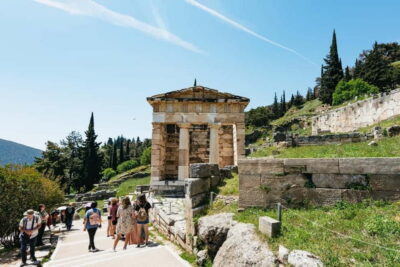
Mythology of Delphi, Museum and Arachova Guided Tour
Read our review →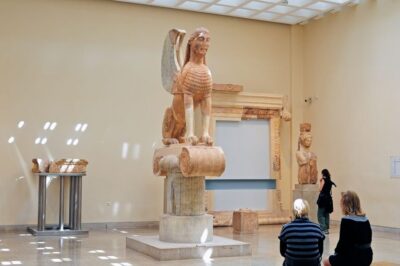
Small-Group Delphi, Museum & Arachova Day Trip
Read our review →
Delphi English Day Trip from Athens with Official Guide
Read our review →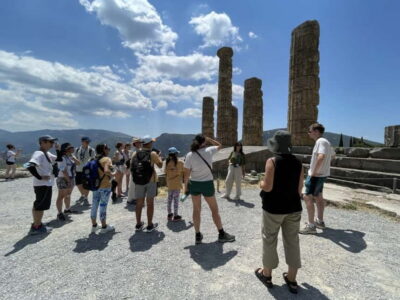
Delphi Guided Trip with Optional Lunch and Entry
Read our review →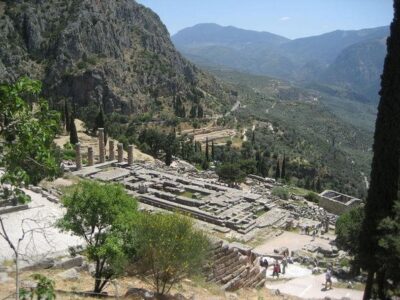
Historical Delphi One Day Tour with Arachova Stop & Expert Guide
Read our review →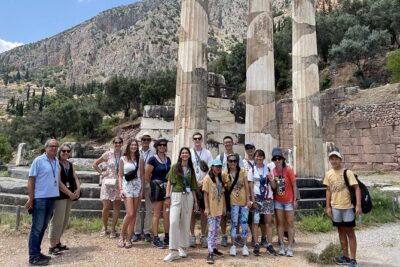
Premium Delphi Day Trip with an Expert Guide, Museum & Lunch
Read our review →