
Reviewed · DELPHI TOURS FROM ATHENS
3-Day Peloponnese and Delphi Private Tour from Athens
Ancient Greece comes at you fast on this private three-day tour from Athens. In a short loop, you see the Corinth Canal, Ancient Corinth, Epidaurus, Mycenae, Olympia, Delphi, and Hosios Loukas, with Nafplio, Nafpaktos, Galaxidi, and Arachova adding plenty of real Greek scenery between the ruins. The route is ambitious, but it covers far more ground than a series of day trips from Athens.
I especially like the private vehicle and flexible driver commentary, since you can ask questions and avoid the limits of a large coach. I also like the overnight stops in Nafplio and the Delphi area, where you get a taste of Greece beyond Athens. The main drawback is simple: this is a packed three days, with long drives and several archaeological sites requiring walking over uneven ground and up slopes.
Key points to know before booking
- Seven major ancient sites in three days: Corinth, Epidaurus, Mycenae, Olympia, Delphi, Hosios Loukas, and the museums attached to several sites.
- A private English-speaking driver: Drivers named Petros, Janus, and Giannis have been praised for history, mythology, dining advice, and helpful service.
- Two atmospheric overnight stops: You stay in Nafplio on night one and either Galaxidi or Delphi on night two, depending on hotel availability.
- Airport, port, and hotel transfers included: Pickup and return are available from Athens hotels, rentals, the airport, and ports.
- Archaeological admission is extra: The tour price includes transport, hotels, breakfast, WiFi, air conditioning, and water, but not most entrance fees.
- A strong fit for a first Greek visit: You see major classical sites without arranging several hotels, rental cars, and long-distance drives yourself.
Why this route works in only three days
The tour costs $1,078.60 per person, which is a serious price. The value comes from what is bundled: two nights in boutique or 4-star hotels, breakfast, private transport, bottled water, WiFi, airport or port transfers, and an English-speaking driver for the entire route.
You are paying for time and logistics as much as sightseeing. The Peloponnese is spread out, and Olympia and Delphi are not practical add-ons to a normal Athens day trip. A private vehicle lets you connect these places without changing buses or handling unfamiliar roads.
The trade-off is pace. You will not have a full leisurely day in each town. You will see the main monuments, hear context from your driver, eat lunch along the route, and keep moving. I would choose this tour for a first visit when your priority is seeing the major sites, not for a slow food-and-village holiday.
Entrance fees are not included, and neither are lunches, dinners, or drinks. A licensed guide can be arranged for an additional cost. The driver provides live commentary, but that is not the same as a licensed archaeologist leading you through every ruin.
More Delphi trips from Athens:
- Athens: Mythology of Delphi, Museum and Arachova Guided Tour
★ 4.6 · 4,008 reviews - From Athens: Delphi Full Day V.R. Audio Guided Tour
★ 4.6 · 3,028 reviews - From Athens: Small-Group Delphi, Museum & Arachova Day Trip
★ 4.8 · 2,476 reviews
Corinth Canal and Ancient Corinth on the first morning
Pickup begins at your Athens residence, hotel, rental, airport, or port. The first drive takes about an hour to the Corinth Canal, a 6.5-kilometer cut separating the Aegean and Ionian seas.
The canal stop lasts about 15 minutes, so treat it as a photo break rather than a full visit. Its steep walls and narrow waterway make the engineering easy to grasp, even in a short stop. Modern ships rarely use it now because of its width, but the canal remains an impressive opening to the journey.
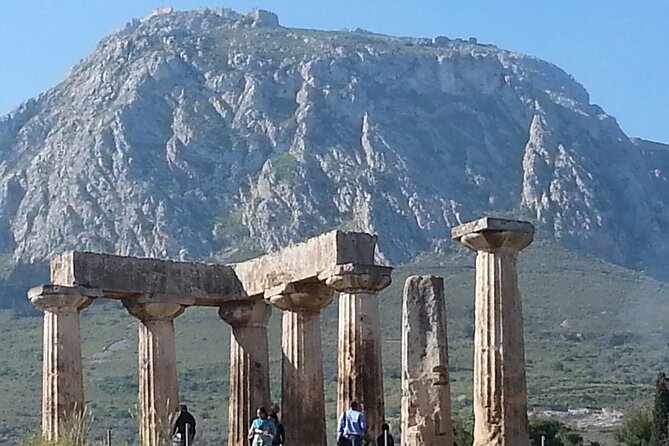
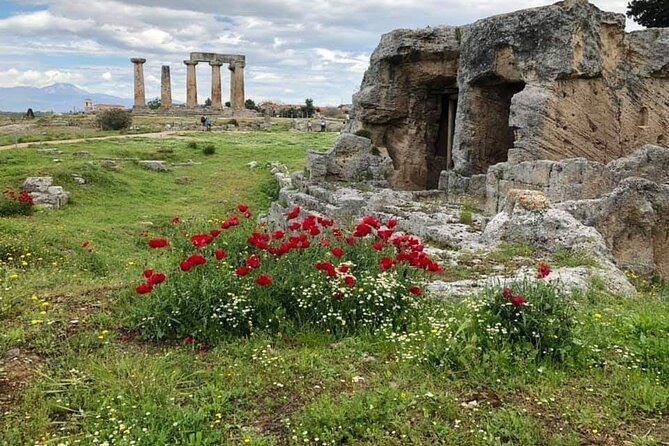
Ancient Corinth is close by and deserves more attention. You get about an hour to see the Doric Temple of Apollo, the forum, the Bema associated with St. Paul, Roman baths, and the Asklepeion. The local museum adds objects found at the site.
This is an important stop for connecting Greek and Roman history. The Temple of Apollo is older than most of the surviving buildings, while much of the forum belongs to the Roman period. Ask your driver to point out the Bema and explain Corinth’s place in the ancient world before you explore on foot.
The entrance fee is extra. The site is manageable in an hour, but you will want comfortable shoes and sun protection, especially in warmer months.
Epidaurus and Mycenae, two very different ancient worlds
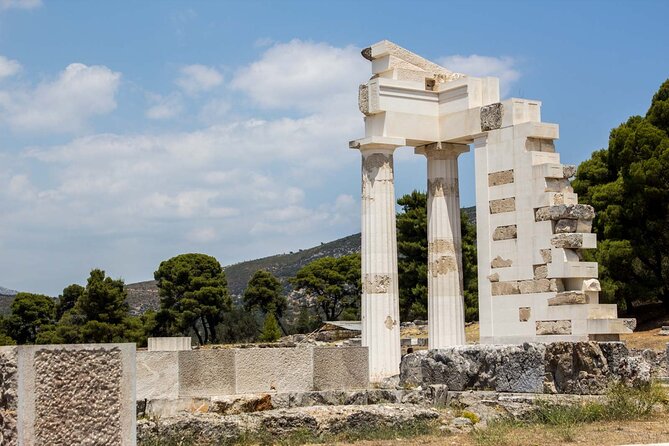
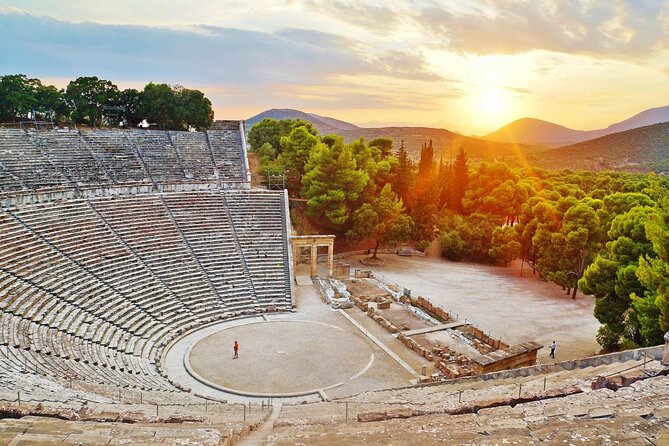
After Corinth, the road continues for roughly 75 minutes to Epidaurus. The Sanctuary of Asclepius was a healing center, but most visitors remember its theater first.
The Theater of Epidaurus is one of the best-preserved classical Greek theaters. Stand in the center and test its famous acoustics while someone speaks from the stage. Even with other people around, the design makes the sound carry remarkably well.
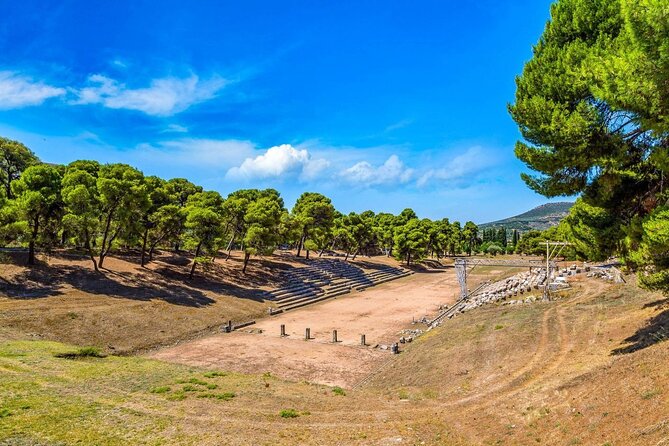
Your 90 minutes here also cover the Tholos, the Stoa of Abaton, the stadium, and the museum. The site is more than a theater stop. It shows how medicine, religion, athletics, and performance were linked in ancient Greek life.
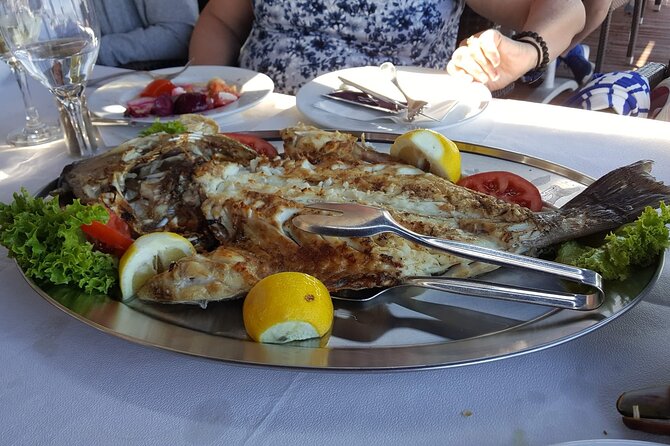
Next comes lunch in Tolo, a seaside village known for fish and seafood. Lunch is not included unless you choose the lunch option, so plan to pay separately. The stop gives you a needed break before Mycenae and lets you eat in a setting very different from Athens.
Mycenae is one of the most powerful stops on the tour. You enter through the Lion Gate and walk among the remains of the Mycenaean kingdom linked with Agamemnon and Homer’s Iliad. The massive Cyclopean walls make the site feel older and more severe than the polished marble ruins of Athens.
You will also see royal burial areas and the Treasury of Atreus. The planned visit lasts about an hour, but the ground is uneven and includes elevation changes. The site can feel exposed, so sturdy shoes and water matter.
The combination of Epidaurus and Mycenae works well. Epidaurus shows classical Greek order and balance. Mycenae feels more rugged and prehistoric, tied to a civilization that dominated the eastern Mediterranean from the 15th to the 12th century BC.
An evening in Nafplio
The first night is spent in Nafplio, one of the most appealing towns in the Peloponnese. It was Greece’s first capital and has neoclassical buildings, narrow cobbled lanes, a waterfront promenade, and three castles around the town.
The planned walk includes Syntagma Square, two old Turkish mosques, cafes, tavernas, and views toward Bourtzi Castle. This is a welcome change after a day of ruins and driving. You can stretch your legs, find dinner on your own, and enjoy a town that feels lived in rather than built only for sightseeing.
Accommodation is at a boutique or 4-star hotel such as Ippoliti, depending on availability. The overnight stop is one of the tour’s best choices because it breaks up the long route and gives you a proper evening in a historic Greek town.
Do not expect a long free afternoon here. The day includes five major stops, and arrival time depends on traffic and the amount of time spent at each site. Still, Nafplio gives the first day a pleasant finish.
More Peloponnese trips from Athens:
- Athens: Peloponnese Highlights Day Trip and V.R. Audio Guide
★ 4.5 · 1,425 reviews - Argolis: Full-Day Tour in Mycenae & Nafplio
★ 4.2 · 350 reviews - PELOPONNESE HIGHLIGHTS PRIVATE: Corinth Mycenae Nafplio Epidaurus
★ 5.0 · 103 reviews - Ancient Sparta Ancient Corinth Private Tour from Athens/ Nafplio
★ 5.0 · 58 reviews
Olympia and the birthplace of the Olympic Games
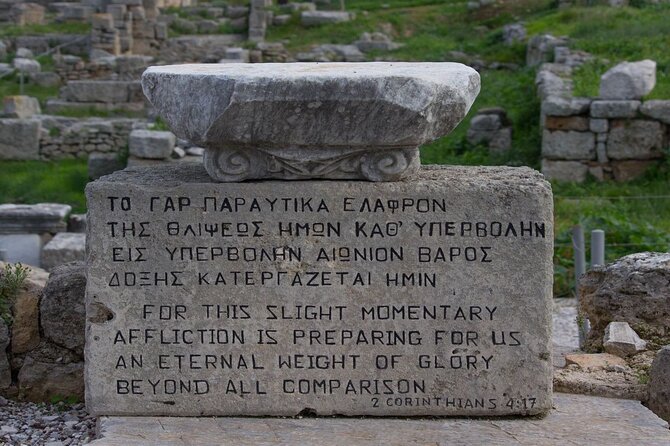
After breakfast, you drive for about two hours to Ancient Olympia. The site lies in the valley of the Alpheios River and was the most celebrated sanctuary connected with the ancient Olympic Games.
You have about two hours for the archaeological site and museum. The ruins include the Temples of Zeus and Hera, the stadium, gymnasium, palaestra, Bouleuterion, Prytaneion, and the Workshop of Pheidias.
The museum is essential, not optional decoration. Its major works include the Nike of Paionios and Hermes with the infant Dionysus. Seeing these sculptures after walking through the sanctuary helps you understand the artistic quality of the place, not just its role in athletics.
Olympia requires walking, and some of the paths can feel long after the previous day. The reward is a site with a strong sense of place. Ancient athletes came here for competition, but the sanctuary was also a religious center filled with temples and public buildings.
Lunch is in the modern village of Olympia, usually at a traditional local taverna. Again, lunch is extra unless you select the meal option. This is a good place to ask your driver for a practical recommendation, since the supplied comments specifically praise drivers for helping with restaurants.
Wine, bridges, and the road toward Delphi
After Olympia, you may take a free one-hour visit to Achaia Clauss, described as Greece’s oldest winery. The stop covers wine tasting and information about Greek grape varieties and winemaking methods.
This is an optional stop, so it is worth discussing the pace with your driver. If you are interested in Greek wine, it adds a local subject that ancient ruins cannot. If you prefer more time in towns or less time on the road, you may want to confirm how it affects the rest of the day.
The Rio-Antirrio Bridge follows. Completed in 2004 for the Olympic Games, it connects the Peloponnese with western mainland Greece across the Gulf of Corinth. The crossing takes only a short time, but it gives the route a clear change of setting.
Nafpaktos is the next stop, with about 30 minutes to walk around its Venetian harbor and perhaps have coffee. This is a brief visit, not a castle tour. The small port is scenic, and the pause breaks up the long drive toward Galaxidi and Delphi.
The second night is in Galaxidi or Delphi, depending on availability. Galaxidi has the feel of a Greek island town, while Delphi puts you closer to the next morning’s archaeological visit. Possible hotels include Ganimede in Galaxidi or Nidimos in Delphi.
Delphi, the center of the ancient Greek world
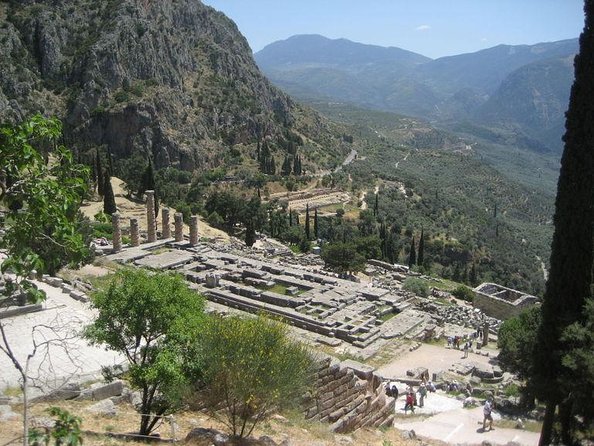
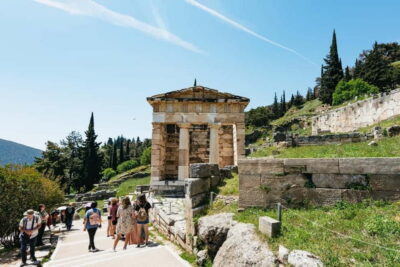
On the third morning, your driver takes you to Delphi for the archaeological site and museum. Delphi was the sanctuary where rulers and military leaders consulted the Pythia before major decisions. Its location on the slopes above the valley is part of its power.
The ruins include the Temple of Apollo, the Amphictyonic Council, the Siphnian Treasury, theater, Tholos, gymnasium, and stadium. The site involves slopes and uneven paths, so allow yourself time and wear shoes with a firm grip.
The museum makes the visit much more rewarding. Its key works include the Charioteer of Delphi, the Sphinx of the Naxians, and the statues of Kleobis and Biton. I would give the museum your full attention rather than treating it as a quick indoor stop after the ruins.
The planned time is about two hours for the site and museum. That is enough for the major points, though visitors who love archaeology may want more. A licensed guide is available at extra cost if you want detailed interpretation of the monuments. Otherwise, your English-speaking driver provides commentary but may not accompany you through every gallery or explain each object at specialist level.
Lunch is at a traditional taverna such as To Patriko mas, chosen for its food, service, hygiene, and broad views over the valley and sea. Lunch is not included, but this is a useful place to enjoy a proper meal before the final stops.
Arachova and Hosios Loukas
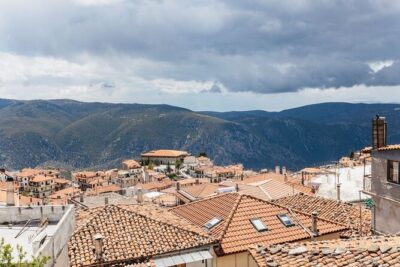
After Delphi, you stop in Arachova for about 30 minutes. This mountain resort is known for skiing, local crafts, embroidery, olives, and formaella cheese.
The stop is short, so think of it as a chance to see the village and taste local products rather than a full shopping visit. Arachova adds a modern mountain community to a route otherwise dominated by ancient sanctuaries and ruins.
The final major stop is Hosios Loukas, a UNESCO-listed monastery with early 10th-century mosaics and frescoes. It is one of the most important Middle Byzantine monuments in Greece.
This visit broadens the tour beyond classical antiquity. The crypt frescoes were cleaned in 1960 after being covered with plaster, and the monastery’s mosaics show the skill and visual language of the Byzantine period. The planned visit lasts about an hour, and admission is extra.
After Hosios Loukas, you return through the countryside to your Athens residence, port, or airport. The direct return is useful if your schedule moves onward that day, but allow plenty of margin before a flight. The tour promises drop-off without an extra charge, yet the day still includes a monastery visit and a long drive.
The vehicle, driver, and hotel setup
The tour is private, so only your group participates. That matters here because the schedule is tight. You can ask to spend more time at Olympia, shorten a coffee stop, or discuss the optional winery without waiting for a bus full of people.
Vehicles are described as new luxury models with air conditioning, WiFi, and bottled mineral water. Those details matter on long Greek road days. The vehicle becomes your resting place between sites, and WiFi can help with messages and basic trip planning.
Drivers such as Petros, Janus, and Giannis are singled out for bringing Greek history and mythology to life, helping with restaurant choices, and explaining both ancient and modern culture. Giannis is also praised for careful driving and a comfortable vehicle. Since the exact driver is not guaranteed, treat those names as examples rather than a promise.
Hotels are boutique or 4-star properties with breakfast. The possible choices in Nafplio, Galaxidi, and Delphi are smaller, characterful properties rather than standardized large hotels. Availability determines the final selection, so confirm the hotel names if the room matters to you.
Who should book this private Greek history tour?
I would choose this tour if you have only three days beyond Athens and want the major Peloponnese and Delphi sites handled in one plan. It is also a good fit if you prefer a private car, hotel breakfasts, and local advice over public transport or a large group coach.
It suits people who enjoy ancient history but also want seaside towns, mountain villages, wine, local cheese, and Greek food. The route gives you a better sense of the country than staying in Athens alone.
I would think twice if you want slow mornings, long beach time, or detailed study at each museum. You will walk at Corinth, Epidaurus, Mycenae, Olympia, Delphi, and Hosios Loukas, often on uneven ground with elevation changes. The tour is manageable for most people, but it is not a low-effort sightseeing break.
Free cancellation is available up to 24 hours before the start time. Pickup and return from Athens hotels, rentals, the airport, and ports are included, which can remove a major planning headache.
Should you book it?
Book this tour if your goal is maximum historical coverage with minimum transport planning. The strongest parts are the private vehicle, the overnight in Nafplio, the chance to see Olympia and Delphi in one trip, and the personal help from an English-speaking driver.
Before paying, add up entrance fees and meals, and ask about the exact hotels, driver, optional winery stop, and whether you want a licensed guide. If you accept the brisk pace, this is an efficient and rewarding way to see the Peloponnese and Delphi without renting a car.
FAQ
How long is the tour?
The tour lasts approximately three days and includes two nights of accommodation.
Where can pickup and drop-off take place?
Pickup and return are available from Athens hotels, Airbnb accommodations and rentals in Athens and the suburbs, Athens airport, and ports.
Is this a private tour?
Yes. Only your group participates in the activity.
What type of vehicle is used?
The tour provides new luxury vehicles with WiFi, air conditioning, and bottled mineral water.
Are archaeological entrance fees included?
No. Admission fees for the archaeological sites are not included. The winery visit and Rio-Antirrio Bridge crossing are listed as included, while Hosios Loukas and the main archaeological sites require separate admission.
Are meals included?
Breakfast at the two hotels is included. Lunches, drinks, and dinners are not included unless you choose the available lunch option.
Can I arrange a licensed guide?
Yes. A licensed guide is available on request for an additional cost. The standard tour includes an English-speaking professional driver who provides live commentary.
More three-day trips from Athens
- 3-Day Classical Greece Tour: Epidaurus, Mycenae, Nafplion, Olympia, Delphi
★ 4.5 · 342 reviews - From Athens: 3 Days in Meteora & Delphi with Tours & Hotel
★ 4.6 · 97 reviews - Meteora & Delphi 3 Days Semi Private Tour
★ 4.5 · 80 reviews - Athens: 3 days 2 nights Meteora with small size tours & hotel
★ 5.0 · 63 reviews
Newly reviewed around Athens
- Athens: workshop for painting landscape with local artist★ 4.6 · 3 reviews
- Athens: Greek Wine & Olive Oil Tasting at Brettos Plaka★ 4.5 · 3 reviews
- Outdoor Yoga and Pilates with Akropolis view★ 4.0 · 5 reviews
- Acropolis of Athens: 60′ Tour in a Vintage Motorcycle★ 5.0 · 4 reviews
- Ultimate Tasting of the Volcanic Wines of Greece★ 5.0 · 3 reviews
- workshop for painting acropolis/landscape with local artist★ 5.0 · 3 reviews
- Athens at Twilight Night Tour with Drinks and Meze Dishes★ 4.8 · 4 reviews
- Breakfast in the markets with olive oil and honey tasting★ 4.8 · 8 reviews
Delphi Tours from Athens, compared.
Mythology of Delphi, Museum and Arachova Guided Tour
Read our review →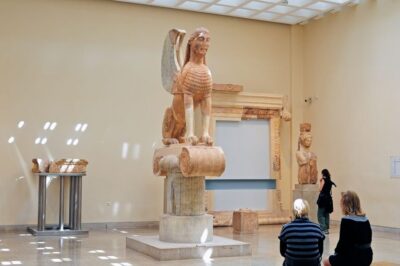
Small-Group Delphi, Museum & Arachova Day Trip
Read our review →
Delphi English Day Trip from Athens with Official Guide
Read our review →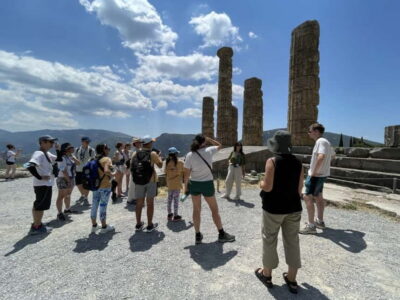
Delphi Guided Trip with Optional Lunch and Entry
Read our review →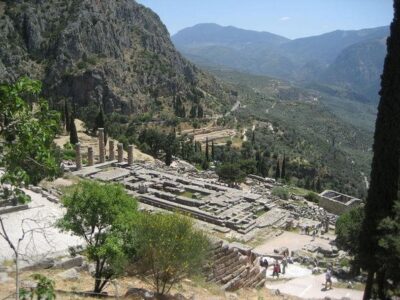
Historical Delphi One Day Tour with Arachova Stop & Expert Guide
Read our review →
Premium Delphi Day Trip with an Expert Guide, Museum & Lunch
Read our review →
Browse the lists this tour appears in