
Reviewed · DELPHI TOURS FROM ATHENS
3-day classical Spanish guided tour in Peloponesse & Delphi
Ancient Greece comes into focus on this three-day route from Athens. You move from Mycenaean tombs and the theatre at Epidaurus to the birthplace of the Olympic Games, then finish at Delphi, the sacred center linked to Apollo and the Pythia. The trip works best when you want the big sites explained in Spanish, not simply pointed out.
I like the licensed Spanish-speaking guidance, especially the clear, lively teaching style reported from guide Faneri. I also like that admission tickets, two dinners, breakfasts, hotels and coach transport are bundled together, which removes much of the planning work. The trade-off is a brisk schedule with long road stretches, optional lunches, and walking on ancient stone surfaces that are not suitable for wheelchair users.
Key details to know before booking
- Three major archaeological centers: Mycenae, Olympia and Delphi each show a different side of Greek history.
- Epidaurus is the acoustic star: The ancient theatre is famous for how clearly sound carries across its seating.
- Spanish is the only guide language: This is a strong choice for Spanish speakers, but not for anyone needing English or another language.
- Two hotel nights and dinners are included: You sleep in Olympia and Delphi, with breakfast and dinner provided at each stop.
- The price covers the expensive basics: At $506 per person, entrance fees, hotels, meals listed, headsets and transport are already built in.
- Expect active sightseeing: Comfortable shoes, a hat and a passport or ID card are useful, while mobility limitations may make the trip difficult.
Why this three-day Greek route works
This tour links four sites that are often awkward to visit on your own from Athens. Mycenae introduces the Bronze Age world, Epidaurus shows the artistic side of ancient Greece, Olympia connects history with sport, and Delphi brings religion and prophecy into the picture.
I like the order. You begin in the Peloponnese, travel west to Olympia, then cross back toward Delphi before returning to Athens. The route is not relaxed, but it gives you a broad view of Greek culture in just three days.
The guide stays with you through the trip, rather than handing you from one local escort to another. That matters because the sites are connected by themes such as mythology, religious practice, public life and athletic competition. A good explanation can turn a pile of stones into a place with a clear purpose.
The transport is by luxury, air-conditioned coach with WiFi and headsets. Those details may sound minor, but they help on a schedule that includes several long road sections. Headsets also let you hear the guide without having to crowd around one person at every stop.
The main limitation is pace. You cover a lot of ground, and the itinerary does not leave room for long, unplanned visits. If you prefer to sit quietly at one ruin for hours, this will feel too organized. If you want a well-planned first look at classical Greece, the tight schedule is useful.
More Delphi trips from Athens:
- Athens: Mythology of Delphi, Museum and Arachova Guided Tour
★ 4.6 · 4,008 reviews - From Athens: Delphi Full Day V.R. Audio Guided Tour
★ 4.6 · 3,028 reviews - From Athens: Small-Group Delphi, Museum & Arachova Day Trip
★ 4.8 · 2,476 reviews
Day one: Corinth, Mycenae and the theatre at Epidaurus
The first day begins in Athens at the Melina Mercouri monument, near the Acropolis metro station. Representatives meet you there and board you onto the coach before you join your Spanish-speaking guide.
Your first stop is the Corinth Canal. The canal cuts through the narrow Isthmus of Corinth and offers a quick visual reminder of how geography shaped travel in Greece. It is a short stop rather than a full archaeological visit, but it breaks up the morning drive and gives you a sense of the route into the Peloponnese.
The day then moves toward Argolis and Mycenae. This archaeological site belongs to the Bronze Age, long before the classical Athens most people picture when they think of Greece. The massive stone walls, gateways and tombs offer a different introduction to Greek history, one tied to palace power, heroic legends and the world associated with Agamemnon.
You visit both the archaeological site and its museum. That combination is important. At the ruins, you see the scale and setting of the settlement. In the museum, objects and displays help explain what the site was and how archaeologists understand it.
Mycenae can feel stark and exposed, so bring a hat and water for the day. The supplied information does not include drinks, and lunch is also your responsibility. An optional lunch follows the Argolis sightseeing, but it is not part of the $506 price.
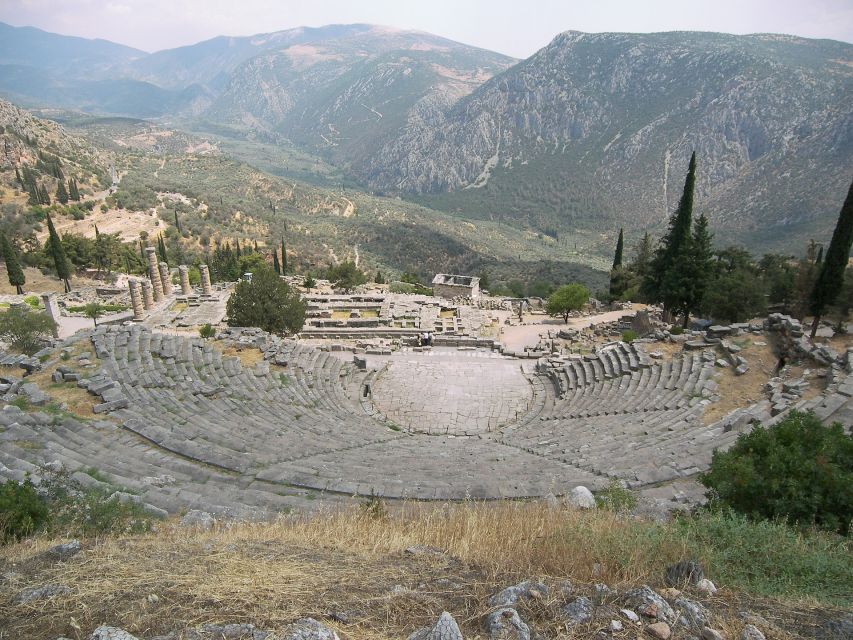
Epidaurus provides a sharp change of mood. Its ancient theatre is famous for its acoustics, and the guide usually gives the group a chance to appreciate how sound travels across the seating area. This is one of those moments when the design of an ancient building becomes easier to understand through a simple demonstration.
The theatre is not just a pretty ruin. It shows how performance, religion and public gatherings fit together in Greek life. The site also gives you a welcome contrast to the heavy walls and tombs of Mycenae.
After Epidaurus, the coach continues to Olympia. Dinner and the first overnight stay are included at a hotel in Olympia. The hotels are described as correct for their category, with accommodation in a three or four-star property. You should think of them as practical bases for sightseeing rather than destination hotels.
Day two: Walking through the birthplace of the Olympic Games
After breakfast, you check out and visit Ancient Olympia in the morning. This is the strongest day for anyone interested in sport, ritual or the way public events shaped ancient society.
Olympia was the site of the Olympic Games, and the archaeological area includes the remains connected with those contests. You visit the archaeological site and museum, so the day combines the physical setting with objects and explanations that add context.
The appeal of Olympia is not limited to athletics. The games were tied to religious life, and the site reflects the connection between competition, worship and civic identity. Your guide can explain the myths, customs and practical details that are easy to miss when you walk through the ruins alone.
I appreciate that the tour gives Olympia a full morning rather than treating it as a quick roadside stop. You have time for the site and museum, although the overall program remains structured. Wear comfortable shoes, since the visit requires walking across an ancient archaeological area.
After the morning visit, you can buy an optional lunch. Again, lunch and drinks are not included, so set aside extra money and do not assume every meal is covered because breakfast and dinner are provided.
The afternoon is spent on the road to Delphi. This is one of the less glamorous parts of the tour, but it is necessary to connect the two regions without changing hotels again. The coach, air conditioning and WiFi make the transfer easier, and the scenery gives you a look at the changing Greek countryside as the route heads north.
Dinner and the second overnight stay are in Delphi. Having dinner included is useful here because it saves you from arranging a meal after a full day of sightseeing and a long transfer.
Day three: Delphi and the Oracle of Apollo
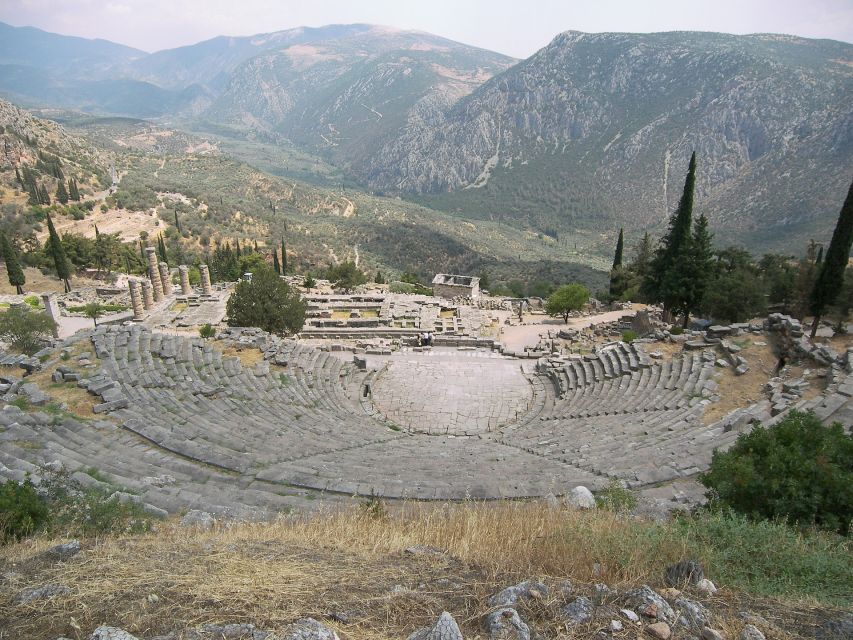
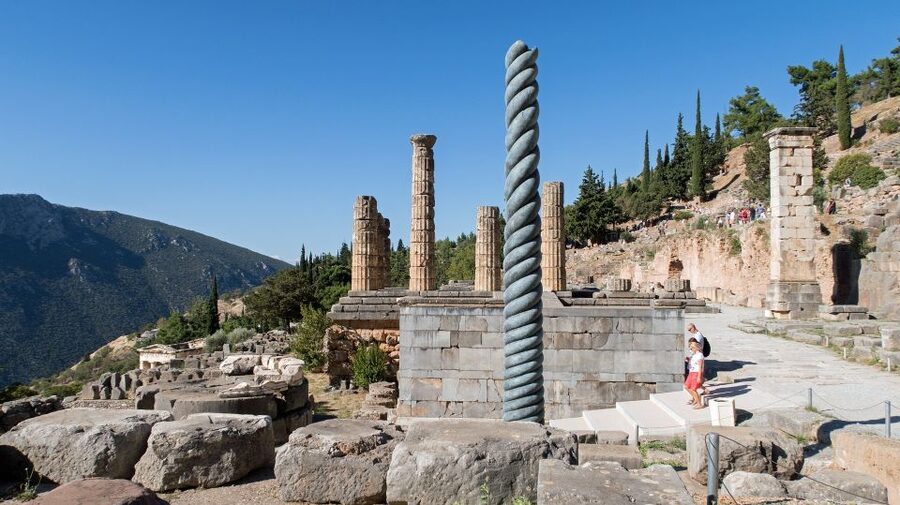
After breakfast and checkout, you visit Delphi’s archaeological site and museum. The setting is one of the most memorable on the route, with the sanctuary linked to Mount Parnassus and the ancient religious world of Apollo.
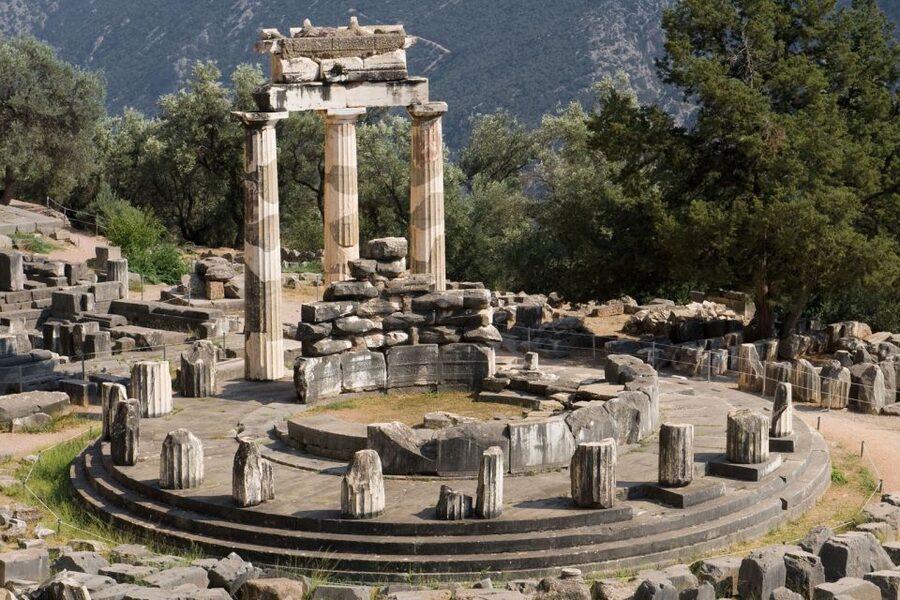
Ancient Greeks regarded Delphi as the Navel of the Earth, a central spiritual point for their world. The site was dedicated to Apollo and connected with Pythia, the high priestess whose prophecies made Delphi famous throughout Greece.
Your guide explains how the oracle functioned and why rulers, city-states and ordinary people sought its advice. The visit is much more rewarding when you understand Delphi as a religious institution, not merely a collection of columns on a hillside.
The museum helps fill in the gaps left by the ruins. You can see how sculpture, offerings and architectural pieces expressed the power of the sanctuary. The combination of site and museum gives the final day a strong narrative: you see the physical setting, then study the objects that once made it important.
After the tour, an optional lunch is available at a traditional Greek tavern. It is not included, but it gives you a chance to eat before the return drive. The trip back to Athens takes about two and a half hours.
Delphi requires walking and may include uneven surfaces, steps and sloping ground. The experience is not suitable for people with mobility impairments or wheelchair users. Comfortable shoes are essential, and a hat is sensible in warm weather.
More Peloponnese trips from Athens:
- Athens: Peloponnese Highlights Day Trip and V.R. Audio Guide
★ 4.5 · 1,425 reviews - Argolis: Full-Day Tour in Mycenae & Nafplio
★ 4.2 · 350 reviews - PELOPONNESE HIGHLIGHTS PRIVATE: Corinth Mycenae Nafplio Epidaurus
★ 5.0 · 103 reviews - Ancient Sparta Ancient Corinth Private Tour from Athens/ Nafplio
★ 5.0 · 58 reviews
Spanish guidance is the main reason to choose it
The guide is the heart of this experience. You receive live explanations in Spanish, with headsets supplied so you can follow along during site visits. The strongest comments point to clear, precise and engaging teaching, with Faneri singled out for making mythology, ancient customs and history easy to follow.
That style matters at places such as Mycenae and Delphi. Without context, it is easy to see broken walls and imagine only a distant past. With a good explanation, you can connect the ruins to power, worship, drama, sport and daily life.
The driver also plays an important role on a route with many road hours. The feedback highlights a strong sense of safety and good organization, which is valuable when you are relying on a coach to cover the entire circuit.
Do note the language restriction. The tour is exclusively in Spanish. That makes it especially useful for Spanish speakers who want detailed interpretation, but it is not a flexible multilingual option.
What the $506 price really covers
At $506 per person, the cost is not simply paying for bus transport. It includes:
- Two hotel nights
- Two breakfasts
- Two dinners
- Entrance fees to the archaeological sites and museums
- Spanish-speaking professional guides
- Headsets
- Luxury air-conditioned coach transport
- WiFi on board
- Skip-the-line access
That package gives the price solid value if you planned to visit all these places independently. You would otherwise need to arrange intercity transport, hotel rooms, admission tickets and meals, while also building a route that links the Peloponnese and Delphi.
The price does not cover lunch, drinks, personal expenses or the accommodation tax. The tax is paid at the hotel reception and varies by season and hotel category. From April through October, it is €5 per room per night at a three-star hotel and €10 per room per night at a four-star hotel. From November through March, the rates are €1.50 and €3 per room per night.
The tax is charged per room, not per person, based on the supplied details. Still, confirm the current amount when booking because local charges can change.
The included dinners make the package easier to manage, but you should budget for two optional lunches and drinks. Those small extras can add up over three days.
Who will enjoy this tour most
I would choose this tour if you want a broad introduction to ancient Greece and prefer having the historical story explained in Spanish. It suits first-time visitors who want the main archaeological highlights without arranging several separate day trips.
It is also a good fit if you value convenience. The coach, hotels, meals, entrance tickets and guide are handled together, and skip-the-line access can save time at busy sites.
The tour is less suited to you if you want a slow holiday, free evenings or the ability to change plans. The schedule is fixed, the road transfers are necessary, and optional lunches are not included.
Physical comfort matters too. You need to manage walking at outdoor archaeological sites, uneven ground and museum visits over three consecutive days. Anyone using a wheelchair or dealing with limited mobility should choose a different format.
The cancellation policy is forgiving: you can cancel up to 24 hours before departure for a full refund. You can also reserve now and pay later, which helps if your Athens plans are not fully settled.
Should you book the Peloponnese and Delphi circuit?
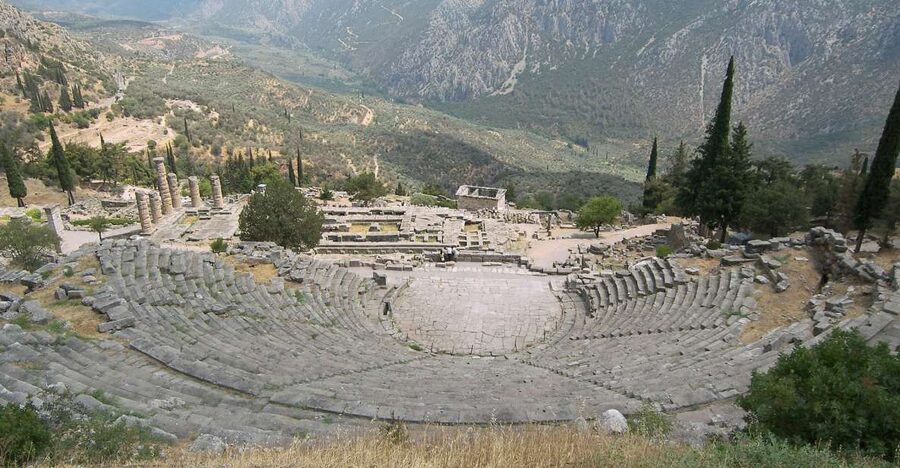
Book it if you want three days of major Greek history in Spanish, with the costly basics already arranged. The mix is strong: Mycenae for Bronze Age power, Epidaurus for theatre, Olympia for sport and Delphi for religion and prophecy.
The best reason to go is the guide-led format. A clear Spanish explanation can make these sites far more meaningful than a quick walk through ruins. The main compromise is pace, road time and limited freedom to linger.
For an active visitor who wants structure, good organization and a wide sweep of ancient Greece, $506 is a reasonable package price. Bring comfortable shoes, a hat and extra money for lunches, drinks and the hotel tax, and you will be prepared for the trip.
FAQ
Is the tour conducted in Spanish?
Yes. The live guide service is exclusively in Spanish.
How long does the tour last?
The tour lasts three days, beginning in Athens and returning to Athens after the visit to Delphi.
What accommodation is included?
You receive two hotel nights, one in Olympia and one in Delphi. Accommodation is in a three or four-star hotel, depending on the arrangements.
Are meals included?
Two breakfasts and two dinners are included. Lunches and drinks are not included, though optional lunches are available during the itinerary.
Are entrance fees included?
Yes. Entrance fees to the archaeological sites and museums are included, along with skip-the-line access.
Where is the meeting point in Athens?
Meet in front of the Melina Mercouri monument. The closest metro station is Acropolis.
Is the tour suitable for wheelchair users?
No. The tour is not suitable for wheelchair users or people with mobility impairments because of the walking and archaeological site conditions.
More three-day trips from Athens
- 3-Day Classical Greece Tour: Epidaurus, Mycenae, Nafplion, Olympia, Delphi
★ 4.5 · 342 reviews - 3-Day Ancient Greek Archaeological Sites Tour from Athens
★ 4.5 · 52 reviews - BEST 3-Day CLASSICAL GREECE: Corinth Epidaurus Olympia Delphi
★ 5.0 · 18 reviews
Newly reviewed around Athens
- Feel Ancient thermal Spa Visit Delphi, Leonidas ℨoo Spaʀtan★ 5.0 · 4 reviews
- Food Tour★ 5.0 · 3 reviews
- Eat Your Way Through Athens: A Local Food Walk★ 4.9 · 97 reviews
- Explore the Hidden Food Gems of Athens★ 5.0 · 57 reviews
- Food Experience in Athens including Unlimited Lunch★ 5.0 · 3 reviews
- From Athens: Delphi Private Tour with Lunch Time★ 4.0 · 3 reviews
- Delphi: Spanish guided one day tour★ 4.6 · 55 reviews
- Early Entry Acropolis & Museum. Beat the Crowds & the heat★ 5.0 · 3 reviews
Delphi Tours from Athens, compared.
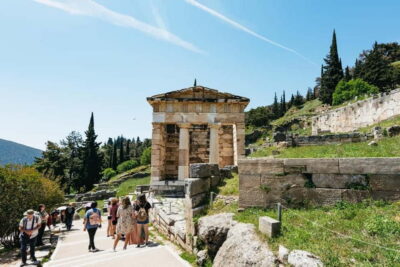
Mythology of Delphi, Museum and Arachova Guided Tour
Read our review →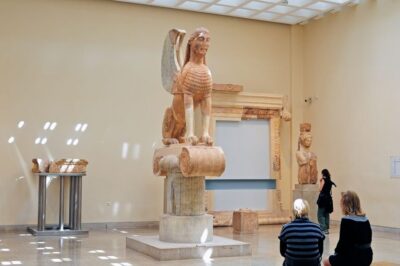
Small-Group Delphi, Museum & Arachova Day Trip
Read our review →
Delphi English Day Trip from Athens with Official Guide
Read our review →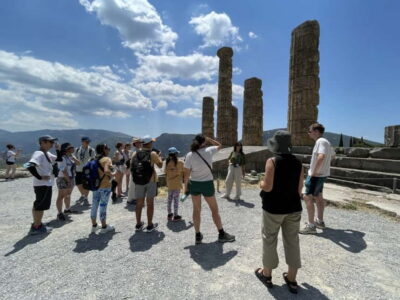
Delphi Guided Trip with Optional Lunch and Entry
Read our review →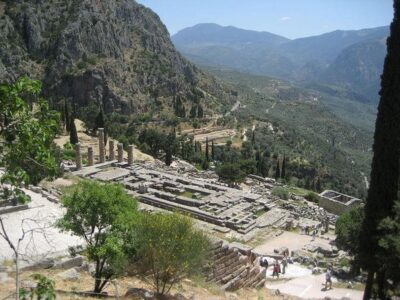
Historical Delphi One Day Tour with Arachova Stop & Expert Guide
Read our review →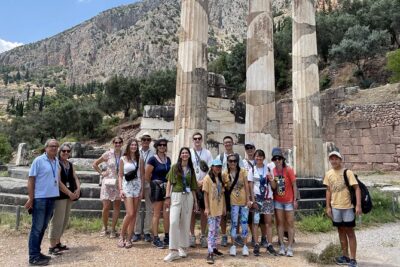
Premium Delphi Day Trip with an Expert Guide, Museum & Lunch
Read our review →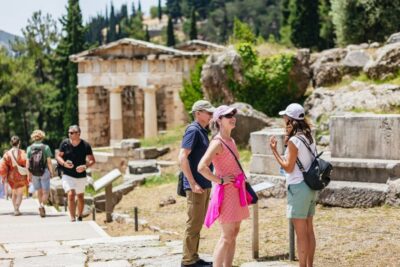
Browse the lists this tour appears in