
Reviewed · ATHENS WALKING TOURS
Walking Tour for Understanding the Refugee Crisis in Athens
Athens is more than ancient stones and sunny squares. This 90-minute walk examines the refugee crisis through real places in the city, asking why people leave home and what happens after they arrive. Guide Isaac leads the discussion with a social and political focus, rather than offering a standard sightseeing stroll.
I like two things right away: the route connects a major public park with central Athens, and the conversation aims to build empathy instead of reducing refugees to headlines. The main consideration is the subject matter. This is not a light city walk, and the route includes neighborhoods that some people may find uncomfortable.
Key points to know before you book
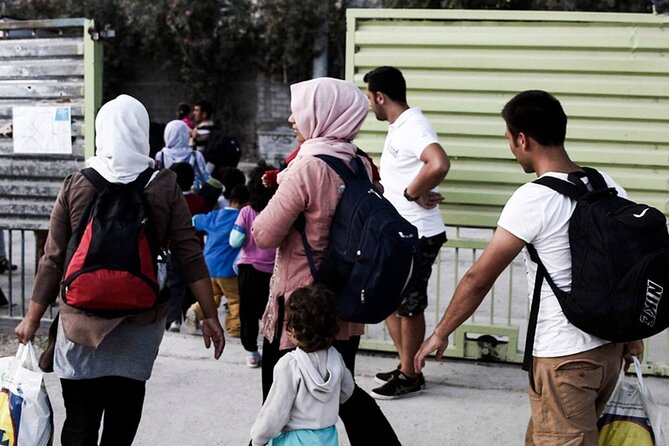
- Pedion tou Areos gives the tour a meaningful starting point: You look at how this public space relates to refugees and the pressures created by arrivals in Athens.
- Isaac is the named guide: He brings a social justice and political focus, answers questions, and encourages you to think beyond easy explanations.
- The route ends at Varvakios Central Municipal Market: The walk crosses from Green Park to one of central Athens’ best-known public markets.
- The experience takes about 1 hour and 30 minutes: That is enough time for serious discussion without consuming half your day.
- The group can reach 30 people: You may get a broad group conversation, but this is not an intimate private walk.
- The subject can feel heavy: The experience is safe, yet it may not suit anyone who is easily overwhelmed by difficult social issues.
Why this Athens walk feels different from a standard city tour
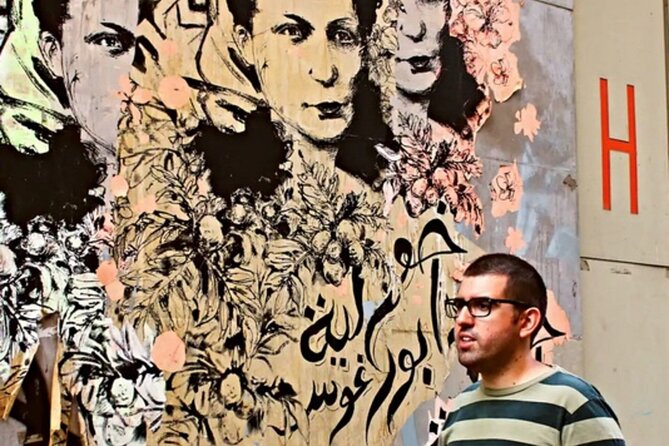
Most Athens walks explain ancient monuments, neighborhood architecture, or local food. This one asks you to pay attention to a current human issue that is often reduced to statistics and political slogans.
The focus is on the refugee crisis in Greece and Europe, including the reasons people flee their countries and the problems they face after reaching safety. That distinction matters. You are not simply being shown a location connected to refugees. You are being asked to consider the forces behind migration and the human cost of policies made far from the people affected by them.
I like that the experience uses the city as a setting for discussion rather than treating the subject as an abstract classroom lesson. Athens becomes a place where public spaces, neighborhoods, and daily routines connect with a wider European story.
The tone is serious, but the walk is not described as unsafe. You should still understand the nature of the route before booking. The experience may take you through areas that some people consider uncomfortable, so I would choose it for its subject, not because you want a relaxed stroll through postcard Athens.
More walking tours in Athens:
- Athens: Acropolis and Parthenon Guided Walking Tour
★ 4.6 · 5,882 reviews - Greek Food Walking Tour in Athens
★ 5.0 · 4,740 reviews - Acropolis: Acropolis and Parthenon Guided Walking Tour
★ 4.7 · 3,442 reviews
Starting near Green Park and Pedion tou Areos
The walk begins at Green Park, at Mavrommateon 22, near Pedion tou Areos. This is a practical meeting point because it is close to public transportation, although you should allow time to locate the exact starting place.
Pedion tou Areos is not just a green break from the city. During this experience, its connection to the refugee crisis is part of the first major discussion. You learn how the park relates to the arrival of refugees and the efforts to respond to the needs created by that movement of people.
The park gives the subject a useful physical setting. Instead of beginning with a lecture in a room, you start in a public part of Athens and consider how places in the city can become connected to emergency housing, aid, public debate, and social tension.
The supplied route details do not identify every stop by name. That means you should not expect a fixed sightseeing checklist with a long list of monuments. The value lies in the explanations at each location and in the links Isaac draws between those places and the wider crisis.
Following the route through central Athens
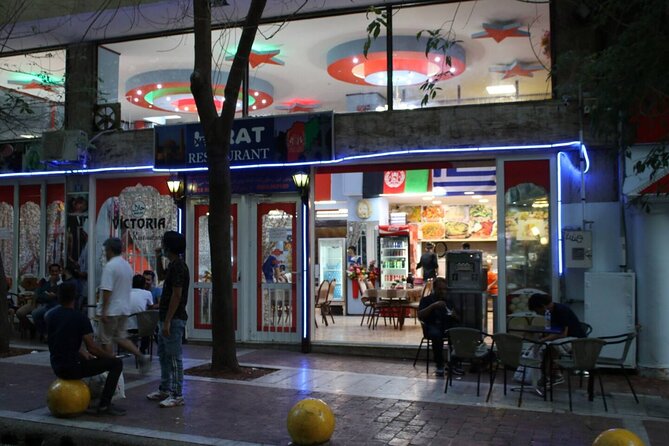
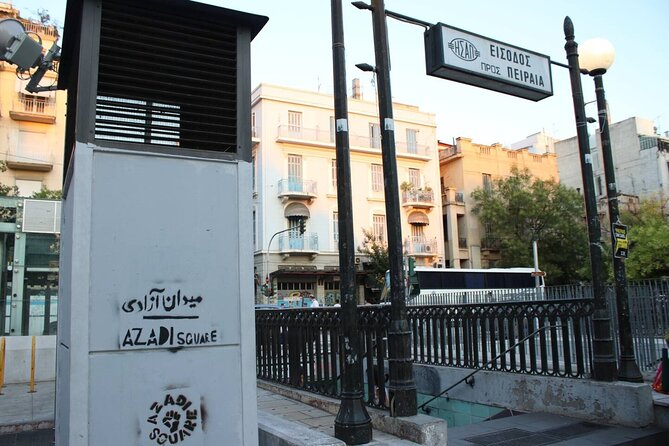
After Pedion tou Areos, the walk continues through additional locations connected with the refugee crisis. The exact names and order of these stops are not specified, so I would treat this as a guided conversation route rather than a conventional point-to-point attraction tour.
That can be a strength. Social issues are rarely confined to one building or one square. The walk appears designed to show how refugee questions touch different parts of Athens, from public space and accommodation to services, politics, and everyday city life.
You should expect Isaac to explain why each location matters and how it relates to the experience of refugees in Greece. The guide’s role is especially important here. One person who took the walk described Isaac as friendly, well informed, and willing to answer questions while also raising new ones to consider. That is a good sign for anyone who wants discussion rather than a memorized speech.
Still, this format will not suit everyone. If you prefer a precise route with famous sights and plenty of free time for photographs, you may find the walk too issue-focused. The locations are there to support the subject, not to serve as the main attraction.
Isaac’s approach to a difficult subject
Isaac is the guide named for this experience, and his approach appears to be one of the strongest reasons to choose it. The walk is built around questions of social justice and politics, so a guide who can explain complicated issues in plain language makes a real difference.
You can expect room for questions. That does not mean every political or historical question will have a simple answer. In fact, the most useful part may be leaving with new questions about why people flee, how Europe responds, and what life looks like after arrival.
I like this kind of guiding because it does not ask you to memorize a set of dates. It asks you to adjust your point of view. The aim is empathy, but not through vague sentiment. The discussion focuses on the harsh realities refugees endure and on the gap between media coverage and the reasons people leave their homes.
The experience is not presented as neutral sightseeing in the usual sense. It has a clear purpose: to help you understand the refugee crisis from a human perspective. That makes it a good match for people interested in social justice, migration, and modern Athens. It may be a poor match if you want a purely historical or recreational tour.
A different kind of day out from Athens:
- Athens: Acropolis & up to 5 Archaeological Sites Combo Pass
★ 4.4 · 12,619 reviews - Athens: Acropolis Ticket with Optional Audio or Live Guide
★ 4.2 · 11,055 reviews - Athens: Acropolis, Parthenon & Acropolis Museum Guided Tour
★ 4.8 · 9,316 reviews - Athens: Cape Sounion & Poseidon Temple Sunset Half-Day Trip
★ 4.8 · 8,241 reviews
The final stretch to Varvakios Central Market
The walk ends at Varvakios Central Municipal Market, at No. 68 Varvakios Agora. This gives the route a clear finish in central Athens and leaves you near a useful area for continuing your day.
The market is not presented as a separate food tour or as a stop for tastings. Its role here is as the endpoint of the discussion route. You should not book this experience expecting a guided market visit, shopping time, or a meal.
Ending at the market does have practical value. You can continue exploring central Athens from there, use nearby public transportation, or arrange your next stop without returning to the starting point. A one-way route is often easier to fit into a sightseeing day than a walk that loops back to its beginning.
The change from the park to the market also gives the experience a natural arc. You begin by considering public space and the refugee crisis, then finish in a central part of everyday Athens. The tour does not promise to solve the issue, but it gives you a way to think about it while moving through the city.
How much value do you get for $32.38?
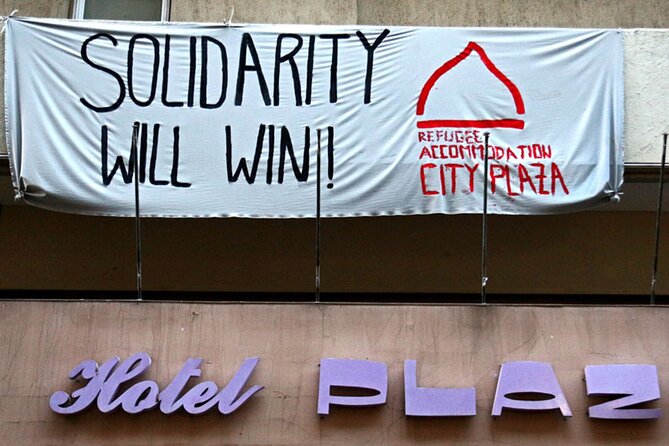
At $32.38 per person, this is priced like a focused guided experience rather than a basic orientation walk. The value depends almost entirely on your interest in the subject and on the quality of the conversation.
I would consider the price reasonable if you want a structured introduction to the refugee crisis in Athens and prefer learning through place-based discussion. You are paying for Isaac’s guidance, the route, and the chance to ask questions, not for entrance tickets, a meal, or a long list of attractions.
The 90-minute length helps the value. The walk is long enough to develop an argument and visit several relevant locations, but short enough to fit before or after other Athens plans. If the group reaches its maximum of 30 people, the price may feel less attractive to someone seeking a personal conversation. A larger group can also bring more questions and viewpoints, so the tradeoff depends on what you want.
This is not the tour I would choose for a first introduction to Athens. For that, a broad city walk would cover more landmarks. I would choose this one as a second experience, after you have seen the basic sights and want to understand a present-day issue affecting the city and Europe.
Who should choose this experience?
This walk suits you if you want to:
- Understand the refugee crisis beyond short news reports
- Examine why people flee their countries
- Hear a social justice and political perspective
- Ask questions and take part in a serious discussion
- Connect current events with actual places in Athens
- Spend about 90 minutes on a focused activity
It may not suit you if you are looking for a cheerful introduction to Athens, a monument-heavy route, or a food-focused experience. The subject can be emotionally difficult, and the walk itself warns that it may overwhelm some people.
You should also think about your group. One direct assessment of the route noted that it passes through neighborhoods described as allegedly unsafe. The experience is considered safe, but you should decide if the setting and topic are right for everyone with you, especially children or anyone sensitive to distressing subjects.
Service animals are allowed, and most people can participate. The tour operates with a mobile ticket, and confirmation is sent at booking. It is also close to public transportation, which makes the start and finish easier to manage.
Timing, weather, and cancellation details
The experience is usually booked about 18 days ahead, so I would reserve early if your Athens dates are fixed. The operator can also be contacted to arrange a date and time that suits you, which gives the experience some flexibility.
You can cancel for a full refund up to 24 hours before the start time. Changes or cancellations made less than 24 hours before the experience are not refunded or accepted.
Good weather is required. If poor weather cancels the walk, you can choose another date or receive a full refund. The tour also requires a minimum number of participants. If that minimum is not reached, you can select another date or experience, or receive a full refund.
The group maximum is 30 people. That is small enough to keep the activity organized, but it is not a tiny walking seminar. If you want the best chance to ask questions, arrive ready to participate and keep your questions focused.
Should you book the refugee crisis walk in Athens?
Book it if you want a serious, current, and human-centered look at Athens. The strongest reasons are the clear social purpose, Isaac’s discussion-led approach, and the route connecting Pedion tou Areos with central Athens and Varvakios Market.
Skip it if you want ancient history, relaxed sightseeing, or a predictable route filled with famous landmarks. This walk asks you to think, and some parts may be upsetting. At $32.38 for about 90 minutes, it is worthwhile for an engaged audience that wants context and conversation, not for someone seeking simple entertainment.
FAQ
How long does the walking tour last?
The experience lasts approximately 1 hour and 30 minutes.
Where does the tour begin?
It begins at Green Park, Mavrommateon 22, Athens 104 34, near Pedion tou Areos.
Where does the tour end?
It ends at Varvakios Central Municipal Market, No. 68 Varvakios Agora, Athens 105 51.
Who leads the walk?
The guide named for the experience is Isaac.
How many people can join the tour?
The maximum group size is 30 people.
Can I cancel for a full refund?
Yes. You must cancel at least 24 hours before the local start time to receive a full refund.
Newly reviewed around Athens
- Athens: workshop for painting landscape with local artist★ 4.6 · 3 reviews
- Athens: Greek Wine & Olive Oil Tasting at Brettos Plaka★ 4.5 · 3 reviews
- Outdoor Yoga and Pilates with Akropolis view★ 4.0 · 5 reviews
- Acropolis of Athens: 60′ Tour in a Vintage Motorcycle★ 5.0 · 4 reviews
- Ultimate Tasting of the Volcanic Wines of Greece★ 5.0 · 3 reviews
- Breakfast in the markets with olive oil and honey tasting★ 4.8 · 8 reviews
- workshop for painting acropolis/landscape with local artist★ 5.0 · 3 reviews
- Athens at Twilight Night Tour with Drinks and Meze Dishes★ 4.8 · 4 reviews
Athens Walking Tours, compared.
Acropolis monuments & Parthenon Walking Tour with Optional Acropolis Museum
Read our review →

Athens Authentic Greek Food Walking Tour (Small Group)
Read our review →
Early Morning Acropolis & Old Athens Guided Walking Tour
Read our review →
Browse the lists this tour appears in