

Reviewed · HISTORICAL TOURS
Walk through the history of Athens
Athens reveals itself in layers on this 2.5-hour historical walk, from grand 19th-century buildings on Panepistimiou Avenue to the ancient monuments near the Acropolis. You move through the city rather than viewing it from a coach, which makes the shifts in architecture and atmosphere easy to grasp.
I like the clear route from the Neoclassical Trilogy to the Acropolis, and I like that the group is limited to 14 people. The changing guard at Syntagma, the all-marble Kallimármaro Stadium, and the Temple of Olympian Zeus give the walk a useful mix of modern Greek history, Olympic stories, and classical Athens.
The main caution is that this is an outside-view walking tour, not an Acropolis admission tour. Tickets for the Acropolis and some archaeological sites are extra, and the posted rating of 3.3 out of 5 suggests that organization can be uneven even though several guides have earned warm praise.
Key points to know before you book

- The route covers central Athens in one direction: Start near Titania Hotel and finish at Acropolis Metro Station.
- The changing guard is part of the plan: You stop at Syntagma Square for a look at the Hellenic Parliament and its traditional soldiers.
- The Acropolis is viewed from outside: The walk ends near Dionysiou Areopagitou pedestrian street, but entry tickets are not included.
- The group stays fairly small: A maximum of 14 people should make it easier to hear the guide and ask questions.
- You can choose Spanish or English: The included service is an assistant in the language selected at booking.
- The price is modest for a guided orientation: At $31.13 per person, the value depends on how much you want historical context rather than site entry.
From Panepistimiou Avenue to the Acropolis

This walk gives you a useful first look at Athens because it follows the city’s central spine. You begin at Titania Hotel, at Panepistimiou 52, then head toward the neoclassical buildings that helped shape modern Athens after it became the capital of Greece.
The route is not only about ancient temples. You see institutions that reflect the city’s later political, religious, medical, and financial life. That is important because Athens can otherwise feel like two separate places: the classical city around the Acropolis and the modern capital below it.
The walk ends at Acropolis Metro Station. From there, you are close to Dionysiou Areopagitou, the pedestrian street with views toward the Acropolis and the Parthenon. You can continue to the archaeological site, visit the Acropolis Museum, or walk into Plaka for lunch and shopping.
Because the tour ends at a useful transport point rather than returning to its start, it works well as a first activity after arriving in Athens. It also leaves you near several places where you can continue on your own.
More ancient sites near Athens:
- Historical Delphi One Day Tour with Arachova Stop & Expert Guide
★ 4.5 · 1,247 reviews - Historic Athens: Small Group Electric Bike Tour
★ 4.9 · 740 reviews - The History of Athens: Greek Mythology Private Tour
★ 5.0 · 138 reviews
The Neoclassical Trilogy and Panepistimiou Avenue
The first stop is the Numismatic Museum, where the tour begins by looking at the grand buildings along Panepistimiou Avenue. The museum occupies a neoclassical building, and the surrounding architecture sets the tone for the walk.
You will also see the Archaeological Company Building, the Catholic Church of St. Dionysius, the Athens Ophthalmological Hospital, and the Central Bank of Greece. These buildings show how modern Athens borrowed from classical forms while creating a capital city for a new era.
The listed stop lasts about 10 minutes, and admission to the Numismatic Museum is not included. The short visit is best understood as an architectural introduction rather than a museum tour. If coins and monetary history interest you, you will need to return later and pay separately.
I like this beginning because it gives you a better sense of Athens beyond ruins. You see how the city’s public institutions used columns, symmetry, and formal facades to present a modern national identity. The drawback is that 10 minutes is not enough for detailed architectural study, so your guide’s explanation matters a great deal.
Syntagma Square and the Hellenic Parliament
At Syntagma Square, the route reaches the political heart of present-day Athens. The Hellenic Parliament occupies the former royal palace, and the square is one of the city’s main meeting points.
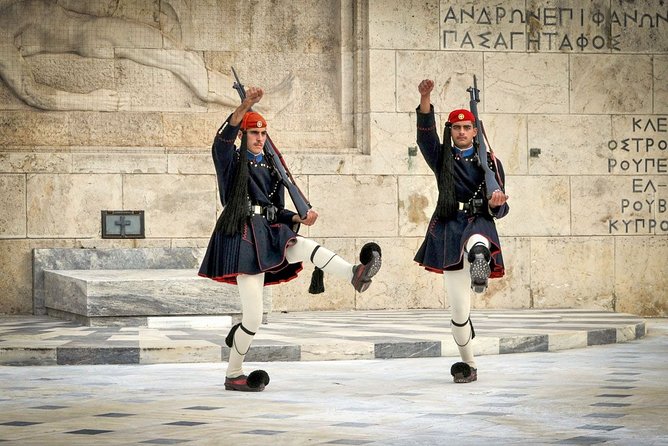
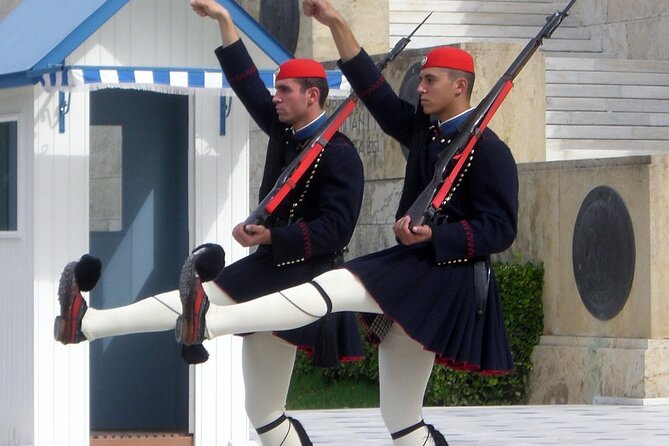
You have time to watch the changing of the guard. The traditional soldiers, known as evzones, wear distinctive ceremonial uniforms and perform a formal routine in front of the parliament. The stop is listed at about 10 minutes and does not require an admission ticket.
This is one of the walk’s most useful modern touches. You are not simply moving from one ancient monument to another. You see a living civic ceremony tied to the Greek state and its public traditions.
The timing of the guard change can affect what you see. The tour description promises time to watch the changing of the guard, but it does not state a specific departure time or guarantee a full ceremonial change. Ask the guide at the beginning how the stop will be handled, especially if this moment is a top reason for booking.
Kallimármaro, the all-marble Olympic stadium
The next major sight is Kallimármaro, better known as the Panathenaic Stadium. The name means good marble, and the stadium is built entirely of white marble. You view it from a panoramic position rather than entering.
The stadium hosted the first modern Olympic Games. That gives the stop a clear connection between ancient athletic traditions and the modern international event. Its bright marble seats and curved shape make it easy to recognize, even from outside.
The 10-minute stop is short, but the outside view keeps the walk affordable. If you want to explore the stadium’s interior, the ticket is not included, and you will need to arrange that separately. The tour is designed to give you the story and the view, not a full stadium visit.
I like this part because it connects Athens’ ancient identity with its modern role. It also breaks up the formal city streets with a large, memorable monument. Keep your expectations practical: this is a photo and explanation stop, not an extended stadium visit.
More walking tours in Athens:
- Athens: Acropolis and Parthenon Guided Walking Tour
★ 4.6 · 5,882 reviews - Greek Food Walking Tour in Athens
★ 5.0 · 4,740 reviews - Acropolis: Acropolis and Parthenon Guided Walking Tour
★ 4.7 · 3,442 reviews - Acropolis monuments & Parthenon Walking Tour with Optional Acropolis Museum
★ 5.0 · 2,678 reviews
Zappeion and the city’s Olympic connection
The walk continues to the Zappeion, described as the first building created specifically for the modern Olympic Games. Today, it is used for official and private ceremonies and meetings.
The building adds another layer to the Olympic story. Kallimármaro represents the stadium, while Zappeion represents the civic and ceremonial side of the modern Games. Together, the two stops help you see how the Olympics became part of Athens’ national presentation.
The planned stop lasts about 10 minutes. You should expect to contemplate the building from the route, not spend a long period inside. The information provided does not promise interior access or admission, so treat the Zappeion as an exterior landmark.
For me, this is a good example of why a walking guide can add value. On your own, you might pass the building without knowing why it matters. With a short explanation, it becomes part of a larger story about Athens in the 19th and 20th centuries.
The Temple of Olympian Zeus and Hadrian’s Athens

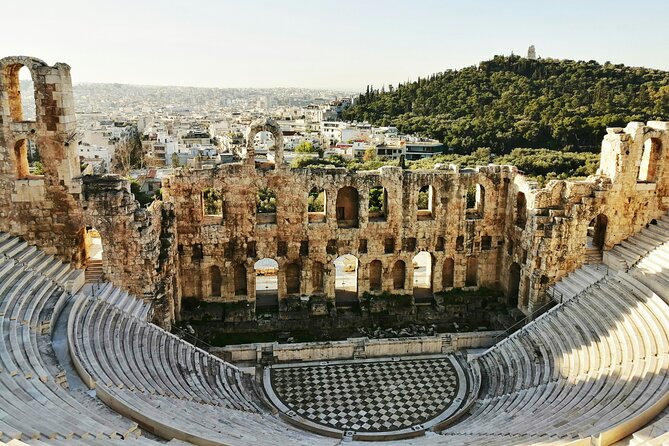
Near the end of the route, you pass the Temple of Olympian Zeus. Its huge surviving columns make it one of the most striking ancient sights in central Athens, even if you only see it from outside.
The temple’s long construction story is tied to the Roman Emperor Hadrian. The tour description also recalls a statue of Hadrian placed beside a monumental statue of Zeus, said to have been 13 meters high and decorated with gold and ivory in the style of the statue sculpted by Phidias.
The stop lasts about 10 minutes, and admission is not included. That distinction matters. You may get a strong view from the outside, but entry into the archaeological site requires a separate ticket.
This is a place where a good guide can turn fragments into a clear picture. You see an ancient Greek religious monument, Roman imperial ambition, and the way later rulers linked themselves to classical ideals. The time is brief, so listen closely and ask questions while you are there.
Finishing beside the Acropolis
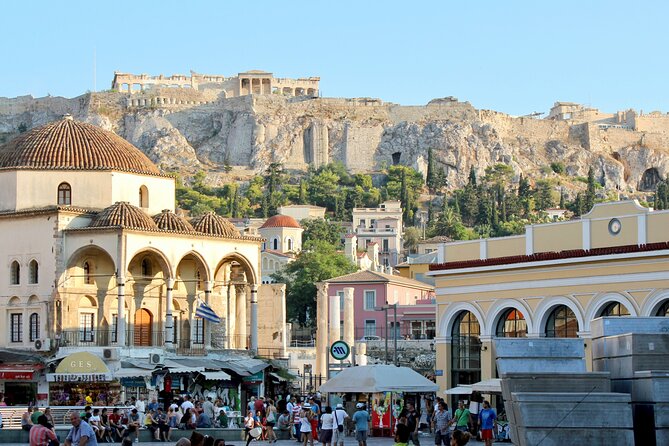
The final stop is Acropolis Metro Station, near Dionysiou Areopagitou. From this area, you can look up toward the Acropolis crowned by the Parthenon.
The tour does not include entry to the Acropolis archaeological site. That is the most important practical point in the whole description. If you want to go inside, purchase an admission ticket separately and allow extra time after the walk.
You can also visit the Acropolis Museum or wander through Plaka. The route gives you a sensible place to make that choice. You might continue straight to the Acropolis, pause for a meal, or spend the afternoon browsing shops and side streets.
This finish is better than ending at an isolated landmark because you are left with choices. It also means you should plan your day around the tour. Do not schedule a tight appointment immediately afterward if you hope to add the Acropolis or museum.
What $31.13 buys you
At $31.13 per person, this is priced as a guided orientation rather than a full sightseeing package. You are paying for an assistant in Spanish or English, a structured route, and explanations at several important places. You are not paying for Acropolis admission, Numismatic Museum admission, or entry to the Temple of Olympian Zeus.
That can be good value if you are new to Athens and want a framework before exploring alone. The route covers several landmarks that are spread through central Athens, and the one-way design saves you from planning the sequence yourself.
The value is weaker if you already know the city or want long visits inside monuments. The tour gives each stop about 10 minutes, so it favors breadth over detail. You will see more places, but you will not study each one at length.
Group discounts are available, and the maximum group size is 14. A group of that size is not private, but it is more manageable than a large coach group. You should be able to hear the guide more easily, though the experience can still depend on the guide’s pace and the group’s walking speed.
The guide makes the difference
The booking includes a Spanish or English assistant according to your selection. The guide assignment is not named in advance for this experience, so you should not book it expecting a particular person.
Greca’s Athens guiding team has included Magdalene, who has been praised for bringing historical moments to life and explaining the Plaka area, and Jenni, who has been praised for answering questions, sharing city curiosities, and adapting well to a family with a 16-month-old child. Those names show the type of guiding available, but they do not guarantee who will lead your walk.
One English-language account specifically praised a guide’s storytelling and willingness to answer questions, while also noting that the Acropolis area can feel overwhelming because it is heavily visited. That is useful context: the guide can help you understand the setting, but no short walking tour can remove the crowds around Athens’ main monument.
There have also been serious complaints about missed meetings and poor organization on some Greca services. The company responded to those cases and explained that contact and guide availability had been involved. I would confirm the meeting details carefully, keep the provider’s contact information available, and arrive at Titania Hotel early.
Who should choose this Athens walk
This experience suits you if you want:
- A first orientation to central Athens
- A mix of classical monuments and modern Greek institutions
- Spanish or English guidance
- A small group rather than a large coach
- A route that ends near the Acropolis and Plaka
- Historical context before independent sightseeing
It is less suitable if you want to enter every major site, spend an hour at the Panathenaic Stadium, or focus only on ancient Athens. It is also not the best choice if you dislike walking or need a fully timed, admission-included program.
The tour description says most people can participate, service animals are allowed, and the route is near public transportation. It does not provide a detailed accessibility assessment, so if you have specific mobility needs, ask Greca about surfaces, slopes, rest opportunities, and the exact walking distance before booking.
The price is per person, the service requires good weather, and a minimum number of participants may apply. You can cancel for a full refund up to 24 hours before the start time. Last-minute changes or cancellations are not accepted for a refund under the stated policy.
Should you book it?
Book this walk if you want a friendly, compact introduction to Athens that links the Neoclassical Trilogy, parliament, Olympic landmarks, Zeus, and the Acropolis in one route. The small group and low price make it a reasonable way to get your bearings fast, especially if you plan to explore the Acropolis and Plaka afterward.
Skip it if you need monument admission included or prefer a deep visit to one site. The mixed feedback about organization means you should confirm the meeting details and keep your schedule flexible. For a first day in Athens, though, the route offers a useful city story and a strong handoff to your own afternoon.
FAQ
Where does the tour begin?
It begins at Titania Hotel Athens, Panepistimiou 52, Athens 106 78, Greece.
Where does the tour end?
It ends at Acropolis Metro Station, near Dionysiou Areopagitou pedestrian street.
How long does the experience last?
The walk lasts approximately 2 hours and 30 minutes.
What languages are available?
You can select an assistant in Spanish or English.
Is Acropolis admission included?
No. Tickets to the Acropolis archaeological site are not included.
Are other admission tickets included?
No. Admission to the Numismatic Museum and the Temple of Olympian Zeus is not included.
How large is the group?
The experience has a maximum of 14 participants.
Is the changing of the guard included?
Yes. The route includes a stop at Syntagma Square, where you have time to watch the changing of the guard.
Can I continue sightseeing after the tour?
Yes. The walk ends near the Acropolis, the Acropolis Museum, and Plaka, so you can continue independently.
Can I cancel for a refund?
Yes. You can cancel at least 24 hours before the local start time for a full refund. Cancellations or changes made less than 24 hours before the start time are not refunded.
Newly reviewed around Athens
- Athens: workshop for painting landscape with local artist★ 4.6 · 3 reviews
- Athens: Greek Wine & Olive Oil Tasting at Brettos Plaka★ 4.5 · 3 reviews
- Outdoor Yoga and Pilates with Akropolis view★ 4.0 · 5 reviews
- Acropolis of Athens: 60′ Tour in a Vintage Motorcycle★ 5.0 · 4 reviews
- Ultimate Tasting of the Volcanic Wines of Greece★ 5.0 · 3 reviews
- Athens at Twilight Night Tour with Drinks and Meze Dishes★ 4.8 · 4 reviews
- Breakfast in the markets with olive oil and honey tasting★ 4.8 · 8 reviews
- workshop for painting acropolis/landscape with local artist★ 5.0 · 3 reviews
Historical Tours, compared.
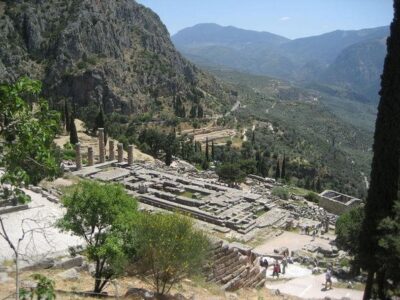
Historical Delphi One Day Tour with Arachova Stop & Expert Guide
Read our review →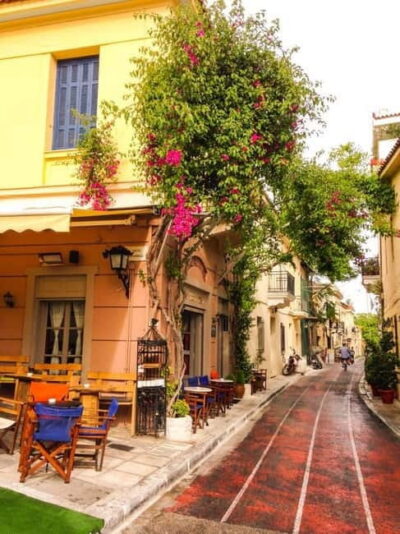
Historic Athens: Small Group Electric Bike Tour
Read our review →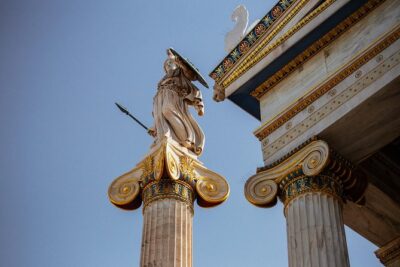
The History of Athens: Greek Mythology Private Tour
Read our review →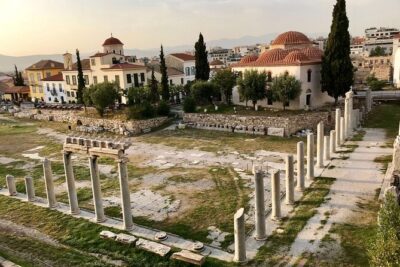
Athens Highlights by E-Bike: Small-Group Historic Tour
Read our review →


Half Day Historical Athens City Private Taxi Service Tour
Read our review →
Half day tour to Acropolis and the must-see historical sites and downtown
Read our review →Browse the lists this tour appears in