
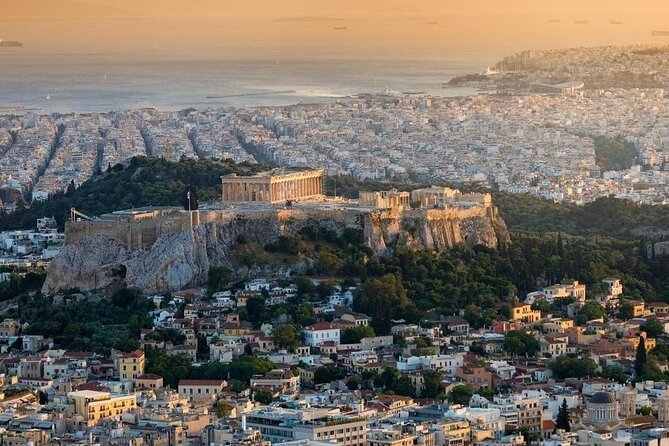
Reviewed · ATHENS ACROPOLIS TOURS
Visit of the Acropolis with an official guide in Spanish
The best thing about this Acropolis visit is that it turns a grand but sometimes confusing hilltop of ruins into a story you can follow. In about two hours, your Spanish-speaking official guide links Athena, Persian wars, Roman Athens, Byzantine worship, Ottoman rule, and modern restoration while you walk among the monuments.
I like the Spanish-only format, especially if you want more than a few facts translated on the spot. I also like the early 8:30 am start and the wireless audio system, which should help you hear the guide in a group of up to 27 people. The main drawback is plain but important: your Acropolis admission ticket is not included, so you must arrange entry separately.
Key points at a glance
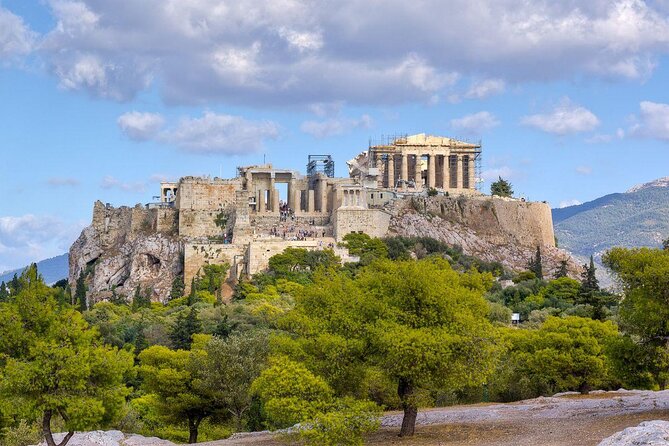
- A Spanish-speaking official guide: Guides including Efi, Ari, Simon, and Maria have been praised for clear storytelling, warmth, and strong knowledge of mythology, history, and geography.
- The Parthenon gets proper context: You’ll hear about its optical refinements, changing religious roles, decoration, looting, and ongoing restoration.
- The route covers more than the Parthenon: Propylaea, Erechtheion, Odeon of Herodes Atticus, Theater of Dionysus, and the Sanctuary of Asclepius are included.
- An early start helps: Meeting at 8:30 am gives you a better chance of walking before the strongest heat of the day.
- You finish at the top: The official tour ends directly on the Acropolis, leaving you time to take photographs and look around on your own.
- The price excludes entry: At $44.03 per person, you are paying for the guide and audio system, not the archaeological site ticket.
Why a Spanish guide changes the Acropolis visit
The Acropolis is famous enough that many people arrive with a basic picture already in mind: a hill, a few temples, and the Parthenon in the middle. The trouble is that the site is not one single building from one single moment. It is a layered place shaped by religion, war, politics, changing empires, and centuries of reuse.
This tour gives you that framework in Spanish. You begin with historical, mythological, and cultural background before moving through the monuments. That matters because the stones make more sense once you understand why Athena mattered to Athens, why the hill was fortified, and how the site changed after classical Greece.
The guides are not limited to one personality. Efi receives especially strong praise for bringing the Golden Age of Athens to life and keeping children involved. Ari, Simon, and Maria are also named as effective guides, with a clear interest in history and an easy way of explaining complicated subjects. The guide assigned to your departure may vary, but the format remains the same: an official guide speaking exclusively in Spanish.
I especially like the use of questions and imagination. Instead of treating the Acropolis as a list of dates, the guide can ask you to picture the ceremonies, processions, worshippers, performers, and political power that once filled these spaces. That approach works well for adults who want context, and it can keep children focused when the marble and mythology begin to blur together.
More ways to see the Acropolis:
- Athens: Acropolis & up to 5 Archaeological Sites Combo Pass
★ 4.4 · 12,619 reviews - Athens: Acropolis Ticket with Optional Audio or Live Guide
★ 4.2 · 11,055 reviews - Athens: Acropolis, Parthenon & Acropolis Museum Guided Tour
★ 4.8 · 9,316 reviews
Meeting at Dionysiou Areopagitou Street
The meeting point is the Greek National Tourism Organisation Information Point at Dionysiou Areopagitou 18, Athens 117 42. The start time is 8:30 am. You should arrive ready for an entirely walking visit, with no transfer provided.
This location puts you near the Acropolis pedestrian area and the monuments connected with the southern slope. The tour is not a ride through Athens or a broad city sightseeing trip. It is a focused visit to the Acropolis itself, so plan your day around reaching the meeting point on time.
The group can include up to 27 people. That is not a private visit, and the size matters when the guide pauses at popular viewpoints or when the group moves through narrow areas. The wireless audio system is a useful inclusion here. It lets you listen without having to crowd around the guide every time an explanation begins.
You need an entry ticket to get inside. The tour price of $44.03 covers the guiding service, state taxes, and the wireless audio system, but not admission to the archaeological site. Check your ticket arrangements carefully before the morning begins. The guide may help with the ticket process, but the ticket itself remains your responsibility.
The Acropolis introduction: myth before marble
The visit opens with the wider story of the Acropolis. This is more than a warm-up. It gives you the basic map of the hill and explains the religious and civic meaning of the place before you reach each monument.
Expect discussion of ancient Athens, its myths, and its cultural importance. The central figures include Athena, the city’s patron goddess, and the other gods connected with the hill. The setting also lets the guide explain how the Acropolis worked as a sacred center rather than simply a collection of beautiful structures.
The guide’s job here is to help you see relationships. The Parthenon is not just a temple. The Propylaea is not merely an entrance. The Erechtheion is not only the famous building with the female-shaped columns. Each part had a role in a larger religious and political program.
This opening can be especially helpful if you are visiting with children or if Greek mythology is not familiar territory. The explanations from Efi and other guides have been described as engaging, didactic, and easy to follow. The tone is intended to make the subject accessible, not to test you on ancient dates.
The Parthenon and its optical refinements
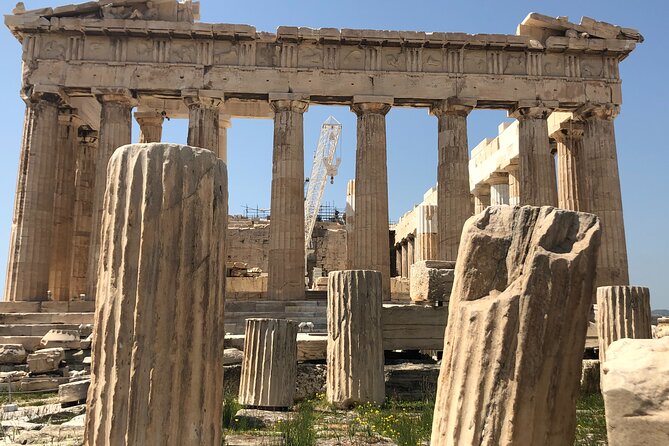
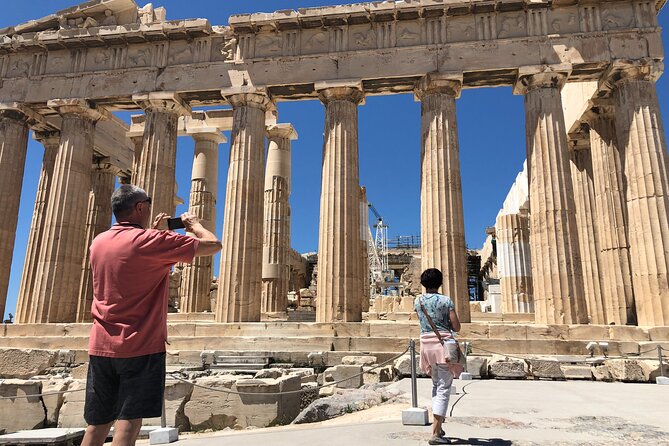
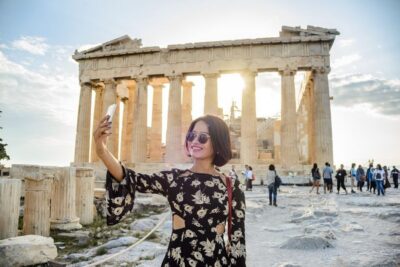
The Parthenon receives the most attention, as it should. Built about 2,500 years ago, it is presented as a building valued not only for its size but also for its balance, harmony, and careful visual design.
Your guide explains the optical refinements that make the structure appear more regular and harmonious to the human eye. You also learn about the temple’s construction and decoration, followed by its later roles as a church during the Byzantine period and a mosque under Ottoman rule.
That long afterlife is one of the most useful parts of the visit. It keeps you from imagining the Parthenon as a frozen classical monument that was untouched after the fifth century BCE. The building was adapted, damaged, used, and altered across different periods.
The tour also covers looting and the restoration work now in progress. This is a good place to ask questions about what remains on the hill, what was moved elsewhere, and why the building still looks incomplete. The guide does not simply point out missing pieces. You get a sense of how the Parthenon became the famous symbol it is today, and why preserving it is such a demanding task.
The planned Parthenon explanation is about 20 minutes, though the overall visit lasts roughly two hours. Bring patience for pauses, photographs, and movement between stops. The focus is on interpretation rather than a quick photo stop.
A few more Athens tours worth putting side by side
- Athens: Acropolis and Parthenon Guided Walking Tour
★ 4.6 · 5,882 reviews - Athens: Cape Sounio & Poseidon Temple Trip with Audio Guide
★ 4.4 · 4,521 reviews - Athens: Mythology of Delphi, Museum and Arachova Guided Tour
★ 4.6 · 4,008 reviews - Athens: Acropolis, Parthenon & Acropolis Museum Guided Tour
★ 4.8 · 3,579 reviews
Propylaea, the grand entrance to the sacred hill
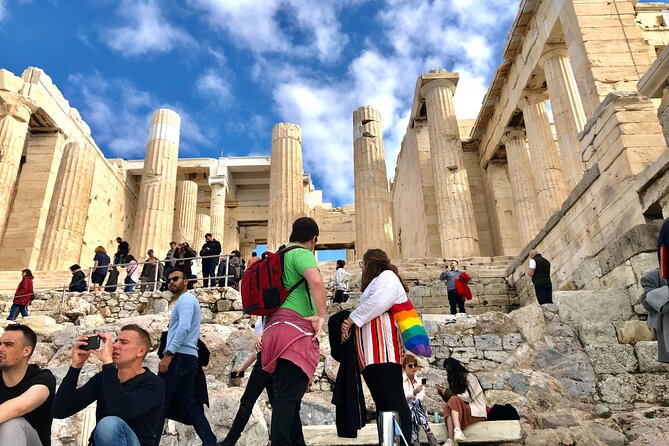
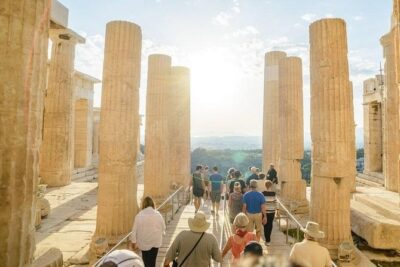
The Propylaea is the monumental entrance to the Acropolis, built largely from marble to impress ancient pilgrims and modern visitors alike. It is an important stop because it establishes the power of the site before you reach the main temples.
The guide explains the structure’s strategic position and how the terrain helped make it a funnel during wartime. You also learn why different types of columns were used. Those details are easy to miss when you are concentrating on the path and the view, but they show that the entrance had practical and symbolic work to do.
The Propylaea is scheduled for about 10 minutes. That is enough for a focused explanation, though you may wish you had more time to study the architecture at your own pace. Since the tour ends at the top, you can later spend some free time photographing the monuments after the formal commentary is finished.
The Temple of Athena Nike and the memory of victory
A smaller monument near the entrance honors Athena Nike, the goddess of victory. The temple was built by the Athenians after victories over the Persians, and its position made it part of the arrival experience for anyone entering the Acropolis.
The point is not simply that the temple is attractive. It carries a political message. Athens wanted visitors to connect the sacred hill with military success, civic pride, and the city’s golden age.
The description of the stop presents the monument as a reminder passed from one generation to the next. Your guide can help you see how architecture worked as public memory in ancient Athens. A small temple could carry a large claim about the city’s place in the Greek world.
The Erechtheion and the famous Caryatids
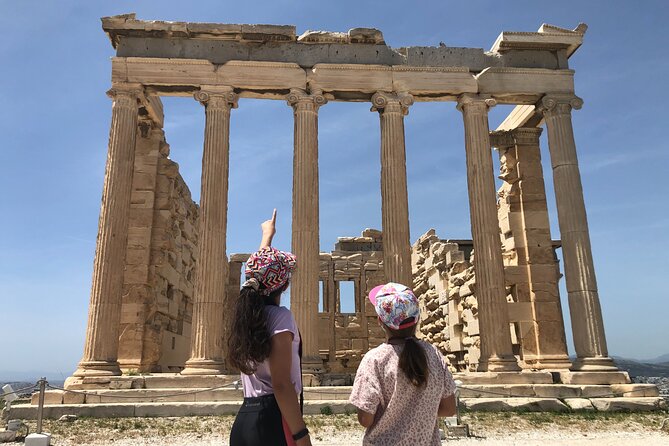
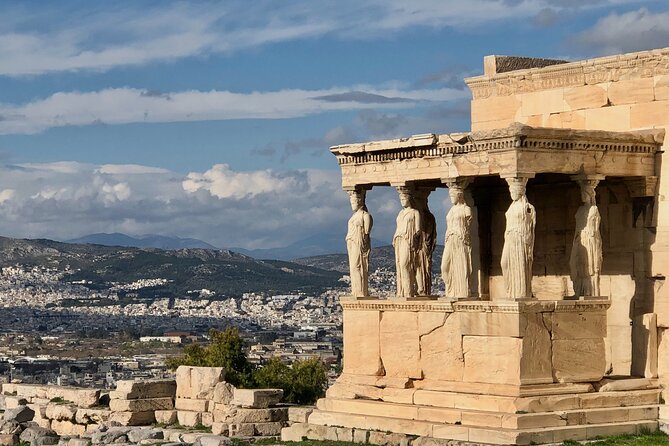
The Erechtheion is likely to be your favorite photo stop. Its Caryatids, the sculpted female figures used as columns, make it one of the most recognizable buildings on the Acropolis.
The guide connects the building with Athena, Poseidon, and Erechtheus, the mythological first king of Athens. That mixture of worship is important. The Erechtheion was dedicated to several figures and traditions, so it does not follow the simple pattern of one temple for one god.
You will also hear why the olive tree associated with Athena is sacred. This is a chance to connect mythology with the city’s identity, agriculture, and claims about its divine patron.
The stop lasts about 10 minutes. You will have time for the main explanation and photographs, but the area can feel busy. The guide can point out the best places to frame the Caryatids, allowing you to listen first and take pictures without missing the story. One useful feature of this style of tour is that the guide may suggest photo spots directly, saving you from choosing between watching the group and finding a good angle.
Herod Atticus Odeon and ancient performance
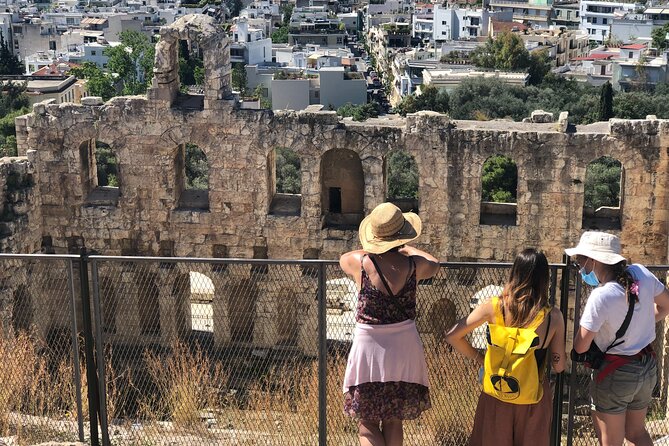
The Odeon of Herodes Atticus is a Roman-era theater built by Herodes Atticus and dedicated to his wife, Regilla. It could hold about 5,000 spectators and is now the only fully restored ancient building on the Acropolis that remains in use.
The guide explains its role in the modern Athens Festival, when performances take place in the theater. That connection makes the ruin easier to understand. You are not looking at a dead structure only. You are seeing an ancient performance space that still serves its original broad purpose.
The stop is about 10 minutes. You may not enter the theater as part of this visit, but you will see and discuss it from the route. The contrast between the Odeon’s restored appearance and the more damaged monuments nearby is worth noting. It gives you a quick lesson in how restoration choices affect what you see.
The Sanctuary of Asclepius and ancient healing
The Sanctuary of Asclepius is a short five-minute stop, but it adds a different side of ancient life. Asclepius was the god of medicine, and this sanctuary was connected with healing practices.
Here you learn how Athenians treated illness and what kinds of votive offerings they gave in thanks. Those offerings help connect religious belief with daily worries. People did not visit the Acropolis only for grand civic ceremonies. They also came with private hopes, illnesses, and gratitude.
Because the stop is brief, the guide has to keep the explanation tight. Still, I like its inclusion. It moves the tour beyond famous architecture and shows how ordinary people used sacred places.
Theater of Dionysus and the birth of drama
The Theater of Dionysus Eleuthereus is one of the oldest theaters in the world and was built entirely of marble. Its position on the slope of the Acropolis helped provide acoustics for a crowd said to number about 17,000.
This is where the works of Euripides, Aeschylus, Sophocles, and Aristophanes were first performed. The names can feel like a school lesson until you picture the theater as a living public space, filled with spectators watching tragedy and comedy together.
The guide explains why the theater was placed on the slope and how its design helped sound carry. The stop lasts about 10 minutes, enough to connect the physical seating with the development of Western drama.
For me, this is one of the most valuable stops for understanding Athens as a city of public debate and performance. The Acropolis was not isolated from civic life. Its sanctuaries, festivals, theaters, and political messages all worked together.
Two hours on foot, then free time at the summit
The complete visit lasts about two hours and is done on foot. You need a moderate level of physical fitness, since the route involves walking around an archaeological hill with uneven historic surfaces and changes in elevation. The supplied details do not specify a step-free route, so anyone with mobility concerns should confirm suitability before booking.
The early start is a practical strength. Athens can be hot, and one Spanish-speaking guide has been praised for keeping a group interested despite intense heat. Starting at 8:30 am does not guarantee cool conditions, but it gives you a better chance of avoiding the worst part of the day.
The tour ends at Theorias 21, directly at the top of the Acropolis. That is convenient because you are not rushed straight back to the entrance. Once the formal visit ends, you have free time to photograph the monuments and take in the hill at your own pace.
You will need to arrange your own onward plans. Transfers are not included, and personal expenses are also your responsibility. The mobile ticket format makes the booking easy to carry on your phone, but admission to the site is still separate.
What $44.03 buys you
At $44.03 per person, this is a guide-focused purchase. You are paying for an official Spanish-speaking guide, a wireless audio system, state taxes, and an organized route through the Acropolis. You are not paying for entry, transportation, or a private group.
The value is strongest if you want interpretation in Spanish and would otherwise rely on a guidebook or try to follow a large general-language tour. A good guide can point out the optical design of the Parthenon, explain why the olive tree matters, and connect the theaters and sanctuaries to the wider city. Those are details easy to miss on your own.
The value is less clear if you already have a strong background in ancient Athens, prefer complete solitude, or want to set your own pace at every monument. A group of up to 27 people may feel less personal than a private visit, and the extra cost of the admission ticket must be added to the advertised price.
The cancellation terms are reasonable. You can cancel up to 24 hours before the start time for a full refund. Changes or cancellations inside that window are not accepted for a refund.
Who should book this Spanish Acropolis tour?
I would choose this visit if Spanish is your preferred language, you want a human guide rather than an audio guide, and you care about mythology and architecture as much as photographs. It also suits families, since the guides use questions and storytelling to keep younger people involved.
It is a good match for a first Acropolis visit. The route gives you the major monuments without trying to cover every corner of Athens in one morning. You leave with a clearer sense of how the Parthenon, Erechtheion, theaters, entrance, and healing sanctuary fit together.
I would think twice if your priority is a private experience, a very slow photographic session, or a tour with transport. You also need to handle the entrance ticket separately, which makes the booking less all-inclusive than the headline price may first suggest.
Should you book it?
Book this tour if you want the Acropolis explained in Spanish by an official guide and you are happy to walk with a small-to-medium group. The strongest feature is the storytelling, especially around Efi, whose passion and ability to involve children have made a lasting impression, along with guides such as Ari, Simon, and Maria.
Before paying, confirm the separate Acropolis entry requirement and plan for an early start, sun, and a moderate amount of walking. If those points suit you, the $44.03 guide fee is a fair way to turn a famous hill of ruins into a connected story about faith, power, war, art, theater, and the long life of Athens.
FAQ
Is the Acropolis entry ticket included?
No. Admission to the Acropolis is not included, and you must have an entry ticket to enter the site.
What language is the tour conducted in?
The tour is conducted exclusively in Spanish by an official tourist guide.
How long does the visit last?
The visit lasts approximately two hours.
Where does the tour start?
The meeting point is the Greek National Tourism Organisation Information Point at Dionysiou Areopagitou 18, Athens 117 42, Greece.
What time does the tour begin?
The start time is 8:30 am.
Where does the tour end?
The tour ends at Theorias 21, directly at the top of the Acropolis. You can use the remaining free time to photograph the monuments.
Is transportation included?
No. The entire visit is on foot, and transfers are not included.
Newly reviewed around Athens
- Feel Ancient thermal Spa Visit Delphi, Leonidas ℨoo Spaʀtan★ 5.0 · 4 reviews
- Food Tour★ 5.0 · 3 reviews
- Explore the Hidden Food Gems of Athens★ 5.0 · 57 reviews
- Food Experience in Athens including Unlimited Lunch★ 5.0 · 3 reviews
- Eat Your Way Through Athens: A Local Food Walk★ 4.9 · 97 reviews
- From Athens: Delphi Private Tour with Lunch Time★ 4.0 · 3 reviews
- Delphi: Spanish guided one day tour★ 4.6 · 55 reviews
- Early Entry Acropolis & Museum. Beat the Crowds & the heat★ 5.0 · 3 reviews
Athens Acropolis Tours, compared.
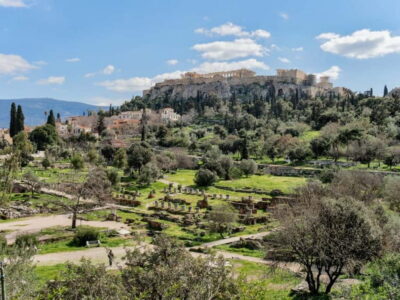
Acropolis & up to 5 Archaeological Sites Combo Pass
Read our review →
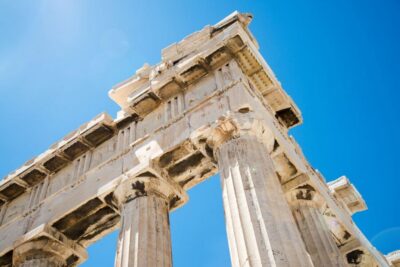
Acropolis, Parthenon & Acropolis Museum Guided Tour
Read our review →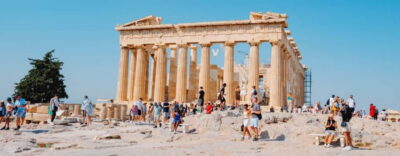
Acropolis, Parthenon & Acropolis Museum Guided Tour
Read our review →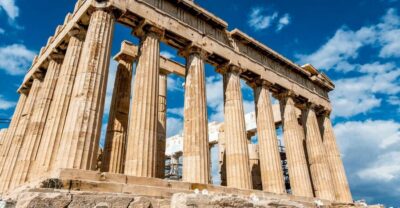
Acropolis monuments & Parthenon Walking Tour with Optional Acropolis Museum
Read our review →Browse the lists this tour appears in