
Reviewed · ATHENS ACROPOLIS TOURS
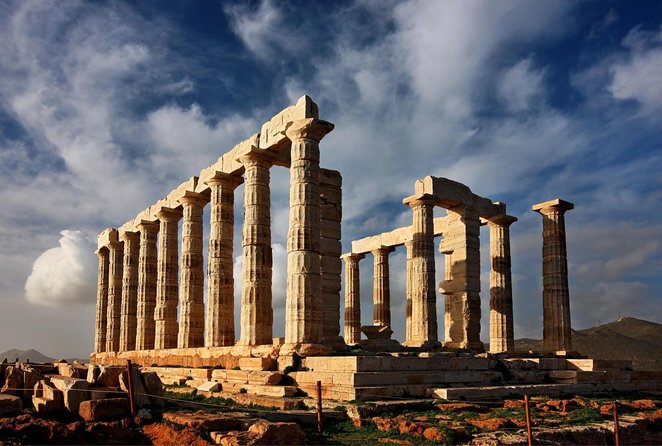
Visit Acropolis Parthenon & Private Luxury Sunset PoseidonTemple
The big draw here is the pairing of Athens’ Acropolis and Parthenon with sunset at the Temple of Poseidon. You get the city’s ancient center in the morning or afternoon, then ride south to Cape Sounion for a sea view that feels completely different from central Athens.
I like the private format and the flexibility to shape the day around your group. I also like the comfortable vehicle, bottled water, WiFi, and the chance to hear local history from an English-speaking driver such as Andreas. The main catch is cost: at $197.79 per person, you still pay separate admission fees, meals, and any licensed guide.
Key points at a glance
- Acropolis and Parthenon: See the Propylaea, Temple of Athena Nike, Theater of Dionysus, and the hilltop monuments.
- Sunset at Cape Sounion: Finish beside the Temple of Poseidon, perched above the Aegean Sea.
- Private transportation: Groups of one to three use a luxury sedan, while four to seven ride in a luxury minivan.
- A broad Athens circuit: The route includes Lycabettus Hill, the Panathenaic Stadium, the Temple of Olympian Zeus, Plaka, and the Ancient Agora area.
- Driver-led, not automatically guide-led: Your driver can explain Greek history, but is not licensed to accompany you inside archaeological sites unless you arrange and pay for a licensed guide.
- Flexible pickup: Pickup and drop-off are available at an Athens hotel, Airbnb, or port. Airport pickup costs extra.
Why the Acropolis and Poseidon Temple work so well together
Many Athens outings focus only on the city center. This one gives you two very different views of ancient Greece. The Acropolis is urban, crowded, and packed with monuments. Cape Sounion is open, windy, and surrounded on three sides by the sea.
That contrast is the heart of the experience. At the Acropolis, you are looking at the political and religious center of ancient Athens. At Sounion, the Temple of Poseidon feels tied to sailors, sea routes, and the edge of the Attic peninsula.
The day lasts about eight to nine hours, so you should expect a full schedule rather than a relaxed stroll. The long list of stops is useful for first-time visitors who want broad coverage, but you will not have unlimited time at each place. If the Acropolis is your main reason for booking, ask in advance how much time will be spent inside the site and how much will be a drive-by or photo stop.
More ways to see the Acropolis:
- Athens: Acropolis & up to 5 Archaeological Sites Combo Pass
★ 4.4 · 12,619 reviews - Athens: Acropolis Ticket with Optional Audio or Live Guide
★ 4.2 · 11,055 reviews - Athens: Acropolis, Parthenon & Acropolis Museum Guided Tour
★ 4.8 · 9,316 reviews
Starting at the Acropolis, the heart of ancient Athens
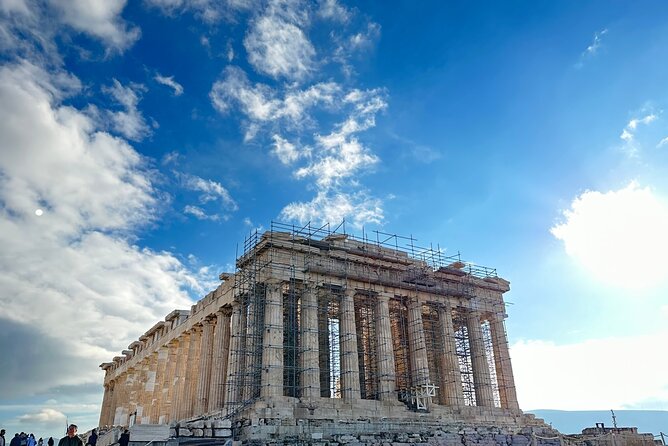
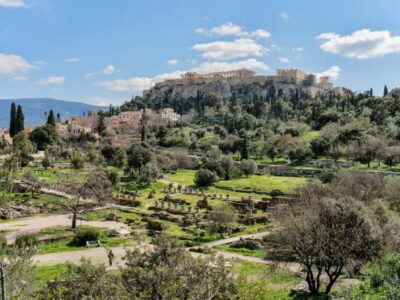
The Acropolis portion begins with the rocky hill above Athens. The word means high city, and the location explains why the ancient Athenians chose it. From the top, you can connect the monuments with the city below and understand why this hill mattered both spiritually and politically.
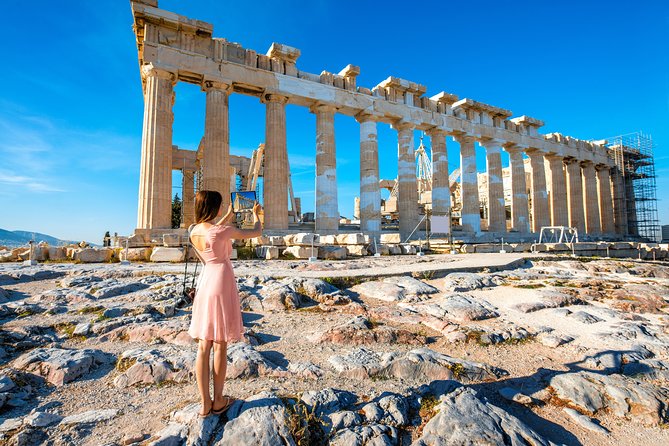
The itinerary allows about two hours at the Acropolis, with separate attention to the Parthenon, Propylaea, Temple of Athena Nike, and the Theater of Dionysus. Admission is not included, so budget for tickets before you arrive.
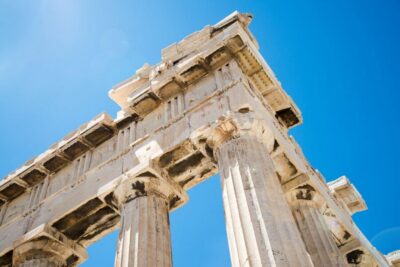
The Parthenon is the centerpiece. Built in the fifth century BC, it was dedicated to Athena and became a symbol of Athenian power and artistic skill. You will see the familiar columns and surviving sculpture, though the building is not intact and restoration work remains part of the view.
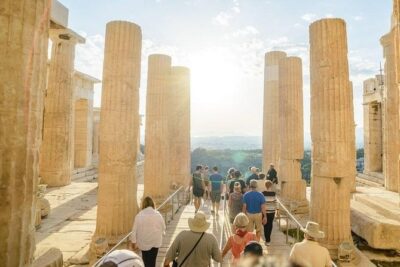
The Propylaea was the monumental entrance to the Acropolis. It was part of the building program associated with Pericles, the Athenian leader linked with the city’s fifth-century golden age. Passing through this gateway helps you picture the Acropolis as a carefully planned sacred precinct rather than a collection of ruins.
The small Temple of Athena Nike sits near the entrance on a steep bastion. Its Ionic design and location make it easy to miss if you rush toward the Parthenon. Give it a moment. The position offers a fine look over the surrounding city and the old approach to the hill.
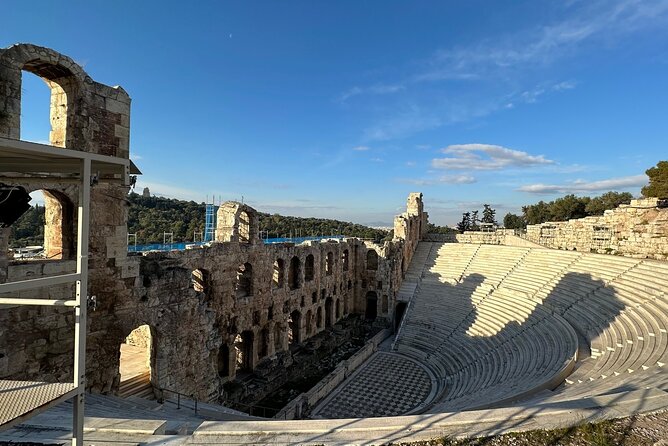
Below the Acropolis, the Theater of Dionysus connects the site to drama. This is where the City Dionysia was held, and the theater eventually held as many as 17,000 people. A 15-minute stop will give you the basic setting, but it will not allow much time for a detailed examination.
Wear sturdy shoes. The Acropolis has uneven stone, exposed sun, and slopes that can feel tiring, especially in warm weather. A private vehicle helps with transport, but it does not remove the physical effort required on the hill.
The Acropolis Museum and the monuments below
The Acropolis Museum is listed for about 45 minutes. It houses ancient statues and architectural pieces from the Acropolis in a modern building at the foot of the hill. It is a useful follow-up to the monuments because you can see details and sculpture that are harder to understand outdoors.
The museum admission is extra. Forty-five minutes is enough for a focused visit, but not enough for every gallery at a slow pace. If you want serious museum time, ask to reduce some of the smaller city stops.
The Temple of Olympian Zeus receives about 45 minutes. Only part of this huge project survives, but the scale is easy to grasp from the remaining columns. Construction began in the sixth century BC and was completed under the Roman emperor Hadrian almost 700 years later.
Nearby Hadrian’s Gate marks the old division between the earlier Greek city and the Roman expansion. It is a quick stop rather than a major visit, but it adds useful context to the Temple of Olympian Zeus.
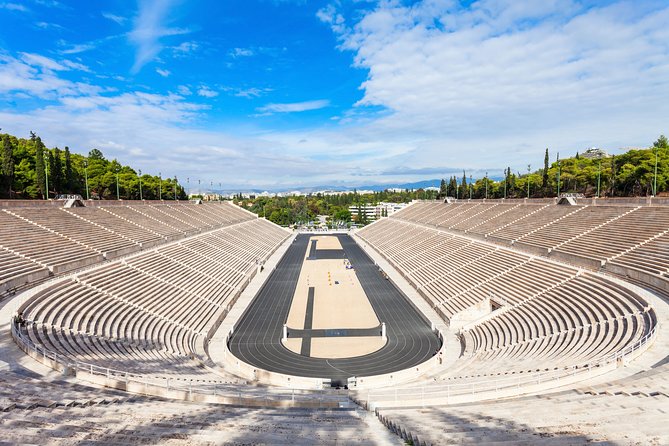
The Panathenaic Stadium gets about 15 minutes. The present marble stadium hosted the opening and closing ceremonies of the first modern Olympics in 1896. Its earlier role was tied to the Panathenaic Games, held in honor of Athena.
Fifteen minutes is enough for a look and some photographs. Admission is not included, so decide if you want to enter or simply view the stadium from the designated area.
Athens’ Neoclassical Trilogy and Lycabettus Hill
The city drive includes the Academy of Athens, the University of Athens, and the National Library. Together, these buildings form Athens’ famous Neoclassical Trilogy. The Academy is Greece’s national research institution, while the university has operated since 1837.
The schedule gives about ten minutes to the Academy. The University and National Library appear as city sights rather than long interior visits. This section works best as a quick introduction to modern Athens and its nineteenth-century public architecture.
Lycabettus Hill is one of the better viewpoint stops. At 277 meters above sea level, it is the second-highest point in the Athens basin after the nearby Turkovounia area. A small church dedicated to Agios Georgios sits at the summit, and a cable car serves the hill.
The stop is scheduled for about 45 minutes and is free. You get a broad view across Athens, with the Acropolis visible among the modern buildings. The hill is also tied to a myth about Athena dropping a piece of rock after a crow brought her bad news. In that story, the crows turned black.
This is a good place to slow the pace for a few minutes. Still, ask about the exact plan if reaching the summit is important to you, since the description does not specify whether the cable car ride is included or how far you will walk.
More evening and night tours in Athens:
- Athens: Cape Sounion & Poseidon Temple Sunset Half-Day Trip
★ 4.8 · 8,241 reviews - Athens: Cape Sounion & Temple of Poseidon Sunset Experience
★ 4.3 · 857 reviews - Athens Evening Food Tour
★ 5.0 · 766 reviews - Enjoy Cape Sounio Private Majestic Sunset With Seaside Dinner
★ 5.0 · 613 reviews
Plaka, the Roman Agora, and the Tower of the Winds
Plaka lies on the slopes around the Acropolis. Its narrow streets, old homes, neoclassical buildings, and archaeological remains make it a pleasant change from the grand monuments. The area is close to the ancient city, and parts of it sit above former residential districts.
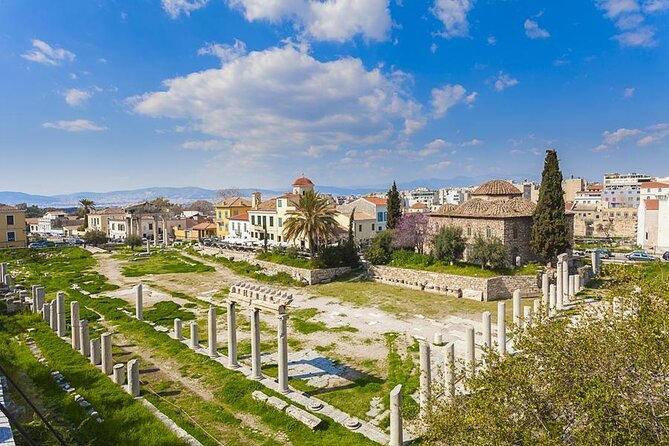
The Roman Agora is scheduled for about 45 minutes. It was built after Roman additions began to crowd the older Agora, including the Odeon of Agrippa. The site helps explain how Athens changed under Roman rule.
The Tower of the Winds is a smaller but memorable stop. This ancient octagonal structure functioned as a water clock, weather station, and time marker. Admission is included for this stop, unlike most of the major archaeological sites on the route.
You should clarify the order of these stops with your driver. The full itinerary contains many points of interest, and the day can be adjusted. A private tour is most useful when you decide which places deserve actual time and which are best viewed from the vehicle.
The Athens Riviera before Cape Sounion
The route heads south through Glyfada and along the Athens Riviera. Glyfada is one of the city’s large southern suburbs, stretching from Mount Hymettus toward the Saronic Gulf.
A short stop at Lake Vouliagmeni adds a natural pause. This brackish lake is fed by underground water moving through Mount Hymettus. The scheduled visit is only ten minutes, so think of it as a photo stop rather than time for swimming or a full visit.
The route also passes through Varkiza before continuing toward Cape Sounion. These southern suburbs show you a side of Attica that is easy to miss if you stay in central Athens. The city gradually gives way to open coastal views and smaller communities.
The drive to Sounion is a major part of the day. You should be comfortable spending substantial time in the vehicle. The benefit of a private car is that you are not tied to a large group’s pace, and you can ask for a pause if the schedule allows.
Sunset at the Temple of Poseidon
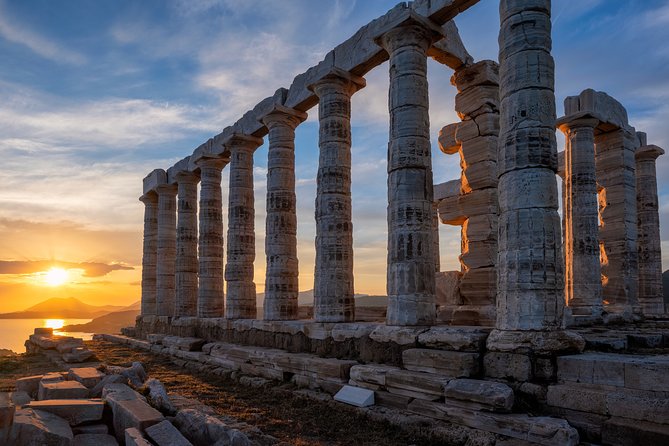
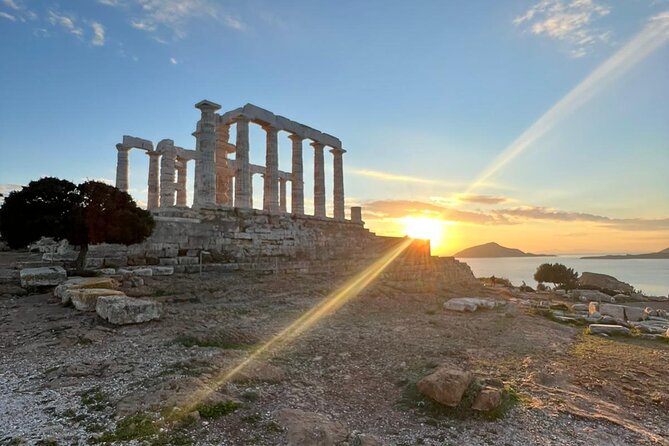
Cape Sounion is about 59.6 kilometers from Athens, at the southern tip of the Attic peninsula. The archaeological site sits on a headland with sea on three sides, making the setting as important as the temple itself.
The Temple of Poseidon was built between 444 and 440 BC, during the same broad period that produced the Parthenon. Its Doric columns rise nearly 60 meters above the sea, and its location made sense for a god linked with sailing and the water.
The visit includes about an hour at the archaeological site and roughly 30 minutes specifically at the temple. Admission is extra. Check the sunset timing when you book, since the best light changes throughout the year and the tour requires good weather.
This is the emotional finish of the day. The Acropolis shows the power of Athens from inside the city. Poseidon’s sanctuary looks outward toward the Aegean, with the ruins framed by sky and water. You will want a little time here without rushing from one photograph to the next.
The site can be windy and exposed. Bring a light layer even if Athens feels hot earlier in the day. Also remember that the temple is an archaeological site, not a fully restored building. The surviving columns and foundations carry the setting, but you should not expect intact rooms or a complete roof.
What the private vehicle adds
Pickup and drop-off are available from an Athens hotel, Airbnb, or Piraeus port. Airport pickup is optional and costs extra, so confirm the price before booking if you are arriving by air.
Groups of one to three people use a luxury sedan. Groups of four to seven use a luxury minivan. Vehicles include air-conditioning, WiFi, and bottled water. Infant or child seats can be arranged in advance.
The driver is English-speaking and has extensive knowledge of Greek history, but is not licensed to accompany you inside archaeological sites. That distinction matters. A driver can explain the route and set the day’s rhythm, while a licensed guide can provide formal commentary inside the Acropolis, museum, Agora, and other sites.
You can request a licensed guide if one is available, but this costs extra. If you care about architecture, mythology, or the political story behind the monuments, adding a guide may be worth the added expense.
Communication can be practical as well. Andreas has been praised for prompt replies and friendly service, and WhatsApp is a useful way to communicate without incurring long-distance phone charges. Confirm that arrangement before the pickup day.
Is $197.79 per person a fair price?
The price makes more sense for a small group than for one person. You are paying for a full day of private transportation, hotel or port pickup, a comfortable vehicle, water, WiFi, and a flexible route. For four to seven people sharing the minivan, the private format can offer solid value.
The calculation changes once you add entrance fees. The Acropolis, Acropolis Museum, Panathenaic Stadium, Ancient Agora, Roman Agora, and Temple of Poseidon are not included. Lunch and other drinks are also extra, and a licensed guide costs more.
I would compare this with the price of separate taxis, transfers, and a guided Acropolis visit. The tour earns its keep if you want Cape Sounion at sunset and do not want to arrange the long return journey yourself. It is less appealing if you only want the Acropolis and central Athens, since several stops will feel brief.
Group discounts are offered, but the exact reduction is not provided. Ask for the total price based on your party size, entrance plans, and any airport service before you commit.
Who should book this Athens day?
I would recommend it to first-time visitors with one full day for major sights and Cape Sounion. It also suits families or friends who value door-to-door transport and do not want to manage several taxis.
The tour is a good match for cruise passengers using Piraeus port pickup, provided the timing fits your ship schedule. It can also work well for people who want a private vehicle and a flexible plan rather than a fixed group departure.
I would hesitate if you prefer slow museum visits, long meals, or detailed archaeological lectures at every stop. The schedule is ambitious. The driver can adjust it, but you should agree on priorities before the day begins.
Free cancellation is available up to 24 hours before the start time. Changes inside that window are not accepted, and poor weather can lead to a new date or full refund.
Should you book it?
Book this tour if you want the Acropolis and Cape Sounion in one private day, with Athens’ major landmarks added along the way. The sunset at Poseidon Temple is the strongest reason to choose it, while the vehicle and flexible pickup make the long route much easier.
Before paying, ask for a clear plan covering admission tickets, the amount of time at the Acropolis, the sunset arrival time, and the cost of a licensed guide. If those details match your priorities, this is a broad and memorable way to see both the center of Athens and its southern coast.
FAQ
How long does the tour last?
The experience lasts approximately eight to nine hours.
Where can pickup and drop-off take place?
Pickup and drop-off are available at an Athens hotel, Airbnb residence, or Piraeus port. Airport pickup is available for an additional charge.
Is this a private tour?
Yes. Only your group participates in the tour.
What type of vehicle is used?
Groups of one to three people travel in a luxury sedan. Groups of four to seven use a luxury minivan. Vehicles have air-conditioning, WiFi, and bottled water.
Are entrance fees included?
No. Entrance fees for the Parthenon, Acropolis Museum, Panathenaic Stadium, Ancient Agora, Roman Agora, and Temple of Poseidon are not included.
Is a licensed guide included?
No. The English-speaking driver can explain Greek history but is not licensed to accompany you inside archaeological sites. A licensed guide may be requested for an additional cost, subject to availability.
Are meals included?
No. Lunch, other beverages, and meals are not included.
What is the cancellation policy?
You can cancel at least 24 hours before the start time for a full refund. Cancellations or changes made less than 24 hours before the experience are not accepted, and poor weather may result in a different date or full refund.
Newly reviewed around Athens
- Athens: workshop for painting landscape with local artist★ 4.6 · 3 reviews
- Athens: Greek Wine & Olive Oil Tasting at Brettos Plaka★ 4.5 · 3 reviews
- Outdoor Yoga and Pilates with Akropolis view★ 4.0 · 5 reviews
- Acropolis of Athens: 60′ Tour in a Vintage Motorcycle★ 5.0 · 4 reviews
- Ultimate Tasting of the Volcanic Wines of Greece★ 5.0 · 3 reviews
- Breakfast in the markets with olive oil and honey tasting★ 4.8 · 8 reviews
- workshop for painting acropolis/landscape with local artist★ 5.0 · 3 reviews
- Athens at Twilight Night Tour with Drinks and Meze Dishes★ 4.8 · 4 reviews
Athens Acropolis Tours, compared.
Acropolis & up to 5 Archaeological Sites Combo Pass
Read our review →
Acropolis, Parthenon & Acropolis Museum Guided Tour
Read our review →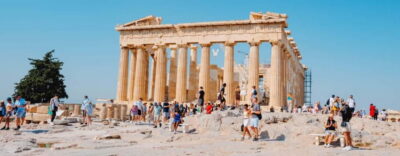
Acropolis, Parthenon & Acropolis Museum Guided Tour
Read our review →

Acropolis monuments & Parthenon Walking Tour with Optional Acropolis Museum
Read our review →Browse the lists this tour appears in