
Reviewed · PRIVATE
Semi-Private Tour Athens to Tirana; Greece, Albania & N.Macedonia
This is a fast-moving Balkan road journey built around ancient ruins, mountain towns, lake views and food stops. Starting in Athens and ending in Tirana, you’ll cross from Greece into Albania and North Macedonia, visiting Delphi, Meteora, Gjirokaster, Berat, Ohrid and several smaller places along the way.
I like the route for two clear reasons: the UNESCO sites are unusually varied, and the private transport saves you from piecing together buses across three countries. I also like the small maximum group of 10, which should make border crossings, hotel check-ins and walking tours easier.
The main caution is pace. Seven days covers a lot of ground, and some visits are brief. Also, the description refers to seven West Balkan countries, but the detailed route names Greece, Albania and North Macedonia. Confirm the exact countries, overnight towns and final schedule before paying.
Key points to know before booking
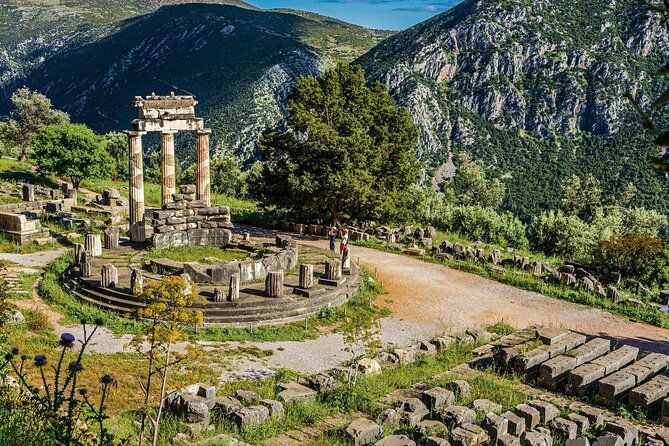
- Delphi and Meteora on day one: You see two of Greece’s major cultural sights in a single long day, including the Temple of Apollo and Meteora’s cliff-top monasteries.
- A small group of up to 10: This is more intimate than a large coach tour and should make the road journey less cumbersome.
- Gjirokaster and Berat: Albania receives the most attention, with castle towns, historic homes, bazaars, churches and traditional neighborhoods.
- Lake Ohrid from both sides: Drilon, Tushemisht, St. Naum and Ohrid give you several views of this famous lake region.
- Food in Tirana: The final day includes byrek, qofte, Albanian coffee, dessert and raki.
- Three-star lodging and shared-room pricing: The $2,636.15 price is calculated around double, twin, triple or quadruple occupancy, so solo pricing and room arrangements need checking.
What this Athens to Tirana route really offers
This is not a leisurely stay in one country. It is a compact sampler of the southern Balkans, with a new setting almost every day. You start among classical Greek ruins, move through mountain scenery and Ottoman-era towns, then finish with Albanian food and Cold War history.
The tour includes private transportation, a professional tour leader, hotel pickup in Athens and drop-off at your Tirana hotel. Breakfast and tourist taxes are included, as are road costs, petrol and international car insurance. Entry tickets are included for the sites marked for admission, including Skenduli House, Berat Castle, the Onufri Museum, St. Naum and Bunk’Art 2.
Lunches, dinners, drinks, snacks and personal purchases are not included. That gives you some control over spending, but you should budget for several meals each day. The price also depends on shared accommodation in three-star hotels, not private rooms at an upscale property.
The operation has received strong praise for planning and guide service. Besa is associated with several tours, Mira has been singled out as a fun and helpful guide, and Sirma has handled last-minute planning and extra pre-tour or post-tour accommodation. Your specific guide may differ, so treat those names as useful points of contact rather than a guarantee.
A few more Athens tours worth putting side by side
- Best of Athens Half Day Private Tour
★ 5.0 · 3,714 reviews - Athens Full Day Private Tour
★ 5.0 · 2,903 reviews - Athens Airport Private Arrival Transfer with Meet & Greet
★ 4.5 · 1,495 reviews
Day one: Delphi and Meteora make a powerful opening
Pickup in Athens is scheduled for 9:00 a.m. The first major stop is Delphi, the ancient sanctuary on the slopes of Mount Parnassus. In about an hour, you are meant to see the Temple of Apollo, the Castalian Fountain, the Treasury of the Athenians, the theater, the stadium and the museum.
The museum’s highlights include the Charioteer of Delphi, a bronze statue from 475 B.C., and a statue of Antinous. Delphi is the sort of place where a guide adds real value because the ruins are spread across a steep site and the surviving stones do not explain themselves.
One hour is short. You will need to keep moving and may not have time to examine every monument. If Delphi is a major reason for your trip, ask how much time is spent inside the archaeological site and museum, and whether the schedule can change.
After Delphi, the route continues toward Meteora. The stop is listed at two hours, with time to see the towering rock formations and the monasteries built on top of them. The sunset timing is presented as a highlight, but sunset depends on the season and the day’s driving conditions.
Meteora is one of the most memorable places on this route because nature and architecture share the same scene. The practical drawback is that the first day combines two major Greek sites with a long transfer. Expect a full day rather than a gentle introduction.
Day two: Ioannina brings Ottoman and Byzantine layers
Ioannina receives about three hours, giving you time to walk its old town and see Ioannina Castle. The town’s architecture reflects both Byzantine and Ottoman periods, and the castle contains narrow lanes and historic buildings.
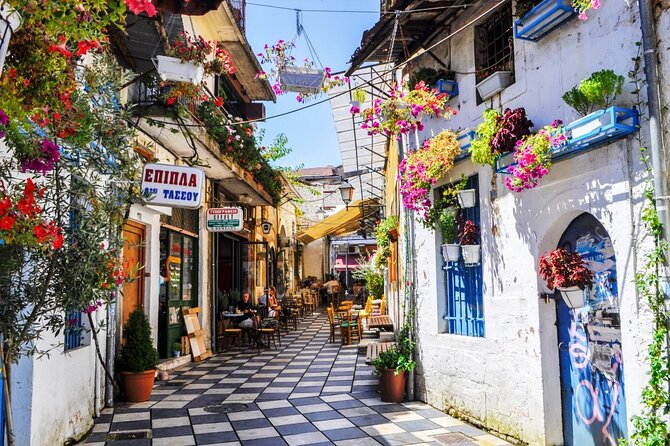
This is one of the better stops for unscheduled wandering. You can sit at a café, look through the old streets and have some free time instead of following a strict sequence of monuments. Traditional Greek food is available in town, but meals are your own responsibility.
The route then heads toward Gjirokaster, called the Stone City. The listed transfer stop is only 30 minutes, while the main visit takes place on the following day. That means day two is primarily a transfer day after Ioannina, with Gjirokaster serving as the overnight base.
Day three: Gjirokaster, its bazaar and Skenduli House
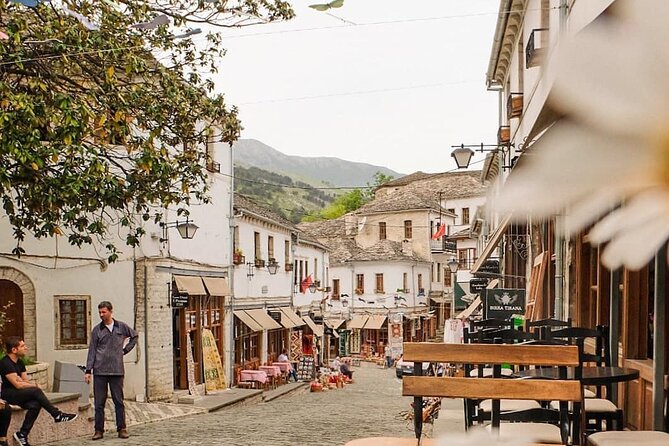
Gjirokaster is one of the strongest cultural stops on the route. Its stone houses climb the hillside, and many look more like small fortresses than ordinary homes. The town grew around its castle and remains one of the best-preserved medieval places in the Balkans.
The castle visit is listed at one hour. You should expect old walls, broad views and a sense of how the town was organized around defense. The tour description also connects Gjirokaster with Albanian folklore and traditional music, a reminder that this is more than a collection of photogenic buildings.
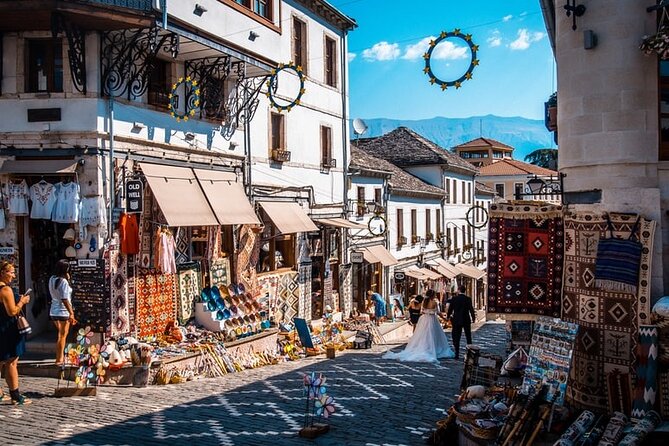
You then pass through the medieval bazaar for about two hours. Its sloping stone lanes are lined with handmade crafts and local goods. This is a good place to browse, but keep your spending in check because souvenirs are not covered by the tour price.
The one-hour visit to Skenduli House is included. This preserved Ottoman-era home is especially useful because it shows domestic life rather than only grand public monuments. The house’s original furnishings and structure give you a closer look at how families lived in Gjirokaster.
The schedule gives Gjirokaster a fair amount of attention, but the listed times still require efficient sightseeing. Comfortable shoes matter on steep, uneven stone streets.
A different kind of day out from Athens:
- Athens: Acropolis & up to 5 Archaeological Sites Combo Pass
★ 4.4 · 12,619 reviews - Athens: Acropolis Ticket with Optional Audio or Live Guide
★ 4.2 · 11,055 reviews - Athens: Acropolis, Parthenon & Acropolis Museum Guided Tour
★ 4.8 · 9,316 reviews - Athens: Cape Sounion & Poseidon Temple Sunset Half-Day Trip
★ 4.8 · 8,241 reviews
Day four: Berat’s castle town and the Onufri Museum
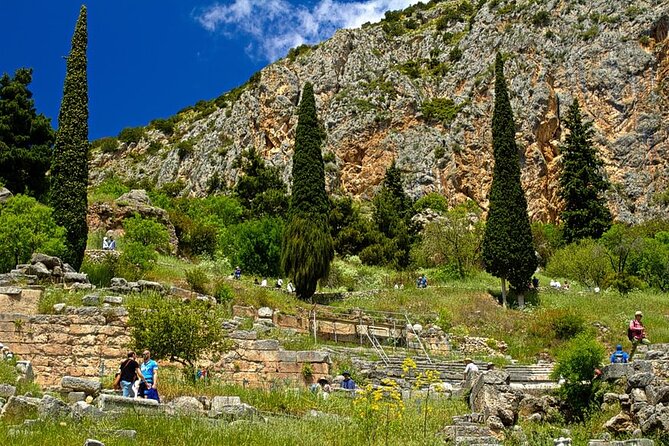
Berat is known as the town of 1,001 windows. Its old houses climb the hillsides in tightly packed rows, creating the famous layered view. The town began as an Illyrian settlement and later developed as the castle city of Antipatrea.
The short introductory walk is followed by Berat Castle, with one hour set aside for the visit. The unusual feature here is that people still live within the castle walls. You are not walking through a sealed archaeological site, but through a living neighborhood with churches, mosques, homes and old lanes.
The included visit to the National Iconographic Museum Onufri adds an artistic focus. Onufri was a major church painter in the Balkans, known for a distinctive reddish color. The museum helps explain why Berat matters beyond its architecture.
The route continues to the Gorica neighborhood and Gorica Bridge for about 30 minutes. This gives you a different angle on the town and the riverfront. As with Gjirokaster, Berat is hilly and paved with stone, so the walking can be tiring even though the scheduled visits are not long.
Berat is also where the pace may feel tightest. The castle, museum and neighborhoods deserve time, but the schedule divides the day among several short stops. I would ask in advance how much free time remains for simply sitting in the old town.
Day five: Drilon, Tushemisht and St. Naum
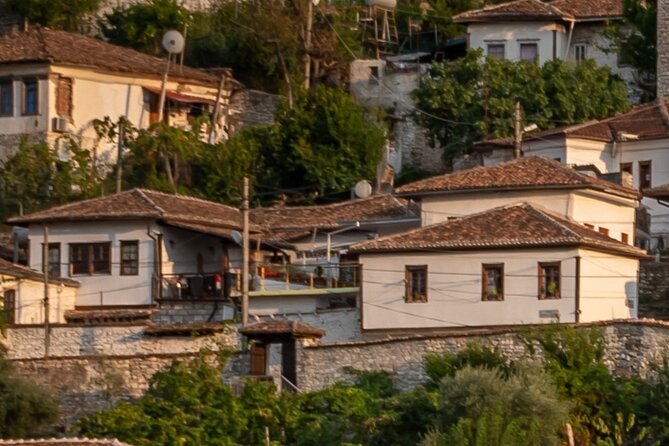
Before crossing into North Macedonia, the tour stops at Drilon National Park. Springs feed a small lake surrounded by greenery and willow trees. The one-hour visit is designed for a calm pause rather than a major historical site.
Tushemisht follows for about 30 minutes. It is described as a small place with natural scenery, local culture and a welcoming feel. This stop breaks up the drive and gives you another view of the Lake Ohrid region before crossing the border.
The first North Macedonian stop is the Monastery of Saint Naum. The monastery sits near the source of the Crni Drim River, where clear spring water reflects the surrounding trees and mountains. Entry is included, and the visit lasts about an hour.
Border crossings can affect the schedule. The tour notes that weather, strikes, holidays, temporary closures and other outside events may require changes. Keep this in mind when planning independent activities after the tour.
Day six: Ohrid and the many faces of Lake Ohrid
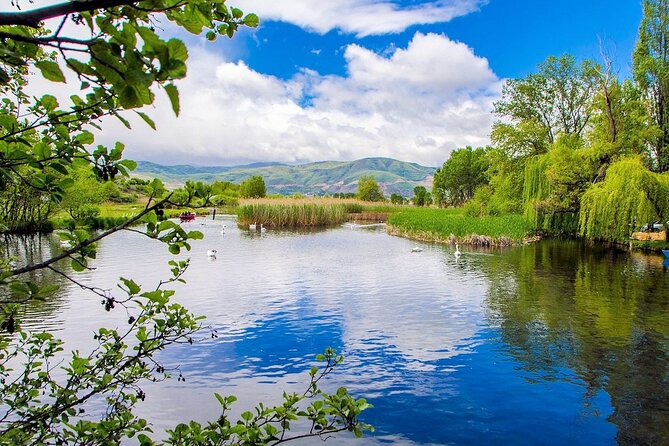
Ohrid gets about three hours. The city and lake have UNESCO status, and the area has been inhabited since ancient times. Roman writers called the lake Lyhnidas, meaning the Light Lake, a fitting name for a place where water and mountain views dominate the town.
The walking route includes a viewpoint near the Church of St. John, the Church of St. Nicholas and the Halveti Hayati Tekke mosque. Ohrid is known for its Orthodox tradition and its claim of having 365 churches, one for every day of the year.
Three hours lets you see the central sights, but it is not enough for a full study of the city, the lake and its religious buildings. You should expect an introduction rather than a slow visit. The tour does not list a boat ride or extended free time by the water, so do not assume either is included.
Ohrid is one of the visual high points of the route. After several stone towns and hilltop sites, the lake gives the journey a more open setting. It also shows why the tour is best for people who want variety more than depth in one destination.
Day seven: Tirana through food, markets and Cold War history
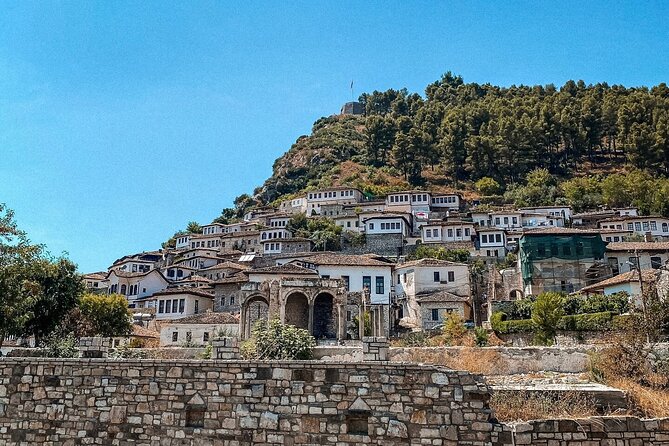
The final day is built around Tirana and local food. You meet a local companion and begin at Tregu Çam, where byrek is served as a local-style breakfast. This pastry may be filled with cheese, meat or spinach.
The route then moves through Çam Bazaar, connected with the Albanian Çam community. You can browse clothing, kitchen goods and other everyday items, with bargaining part of the market experience.
The food stops continue with a traditional dessert, Albanian coffee and a visit to Pazari i Ri, the New Bazaar. Lunch includes qofte, grilled meatballs with fresh bread. Vegetarians are offered bread with Albanian gjize, a cottage cheese. Raki is also included as a tasting.
This is a useful final day because it shifts attention from monuments to daily life. You see markets, cafés, side streets and colorful buildings while learning about local food customs. The schedule lists about an hour for each main section, so the culinary visits are tastings rather than a long food tour.
The final stop is Bunk’Art 2, a former nuclear bunker turned museum. It focuses on Albania’s communist army and the daily life of people during the regime. For many visitors, this will be one of the most important history stops because it addresses a recent period that is often less familiar than ancient Greece or medieval Albania.
Price, accommodation and the real value
At $2,636.15 per person, this is not a budget bus trip. The value comes from combining private road transport, a tour leader, border travel, seven days of routing and several entry tickets across three countries.
Breakfast, tourist taxes, petrol, road costs and international car insurance are included. That removes several small expenses that can otherwise pile up during a multi-country trip. Hotel pickup in Athens and drop-off in Tirana also simplify the start and finish.
The price is calculated on shared three-star accommodation. Double, twin, triple and quadruple rooms are part of the pricing structure, so you need to confirm the room arrangement that applies to your booking. A solo traveler should specifically ask about any single supplement.
You must pay for lunches, dinners, drinks, snacks and souvenirs. Since the route includes many road days and food stops, your total cost will be higher than the headline price. Still, the arrangement may be worthwhile if you value having one company manage transport, hotels, border crossings and site visits.
Who will enjoy this tour most
I would choose this tour if you want to see a large slice of the southern Balkans without renting a car or coordinating several bus systems. It suits people who enjoy ancient ruins one day, medieval streets the next, then a lake town or food market after that.
It is also a good match for families and friends who prefer a small group. The maximum of 10 is small enough for a more personal atmosphere, and the operation has experience helping with last-minute arrangements and pre-tour or post-tour lodging.
I would be cautious if you want long museum visits, slow mornings or several free afternoons. The route is full, and the listed stop lengths show that many places receive an introduction rather than a complete visit.
Most participants can take part, but you should be comfortable with walking on hills, stone lanes and uneven surfaces. Health and travel insurance are your responsibility. Tips are not required in the Balkans, but tipping the tour leader and driver for good service is recommended.
Should you book Athens to Tirana?
Book it if your priority is range and convenience: Delphi, Meteora, Albania’s stone towns, Lake Ohrid and Tirana in one connected trip. The route offers strong variety, included transport and a maximum group of 10.
Before booking, get written clarification on the advertised seven-country wording, since the detailed route identifies Greece, Albania and North Macedonia. Also confirm the hotels, room occupancy, exact guide, border timing and how much free time you receive in each town.
The experience is non-refundable and cannot be changed after booking. That makes pre-trip questions especially important. If you are comfortable with a brisk schedule and shared three-star accommodation, this is a practical way to cover a difficult-to-organize part of Europe in one week.
FAQ
Where does the tour start?
The tour starts in Athens, Greece, with hotel pickup scheduled for 9:00 a.m.
Where does the tour finish?
The tour ends in Tirana, Albania, with drop-off at your hotel.
How long is the tour?
The tour lasts approximately seven days.
What countries are named in the detailed route?
The detailed route names Greece, Albania and North Macedonia. The tour description also refers to seven West Balkan countries, so confirm the final country list before booking.
How large is the group?
The tour has a maximum of 10 travelers.
Is transportation included?
Yes. Private transportation, petrol, road taxes and international car insurance are included.
Are hotels included?
Yes. Accommodation and breakfast are included in three-star hotels for all overnight stays.
Are admission tickets included?
Entry tickets are included for the sites marked for admission. These include Skenduli House, Berat Castle, the National Iconographic Museum Onufri, the Monastery of Saint Naum and Bunk’Art 2.
Are meals included?
Breakfast is included. Lunches, dinners, drinks and snacks are not included. The Tirana day includes several food tastings, including byrek, dessert, Albanian coffee, qofte, bread with gjize and raki.
Is the tour refundable?
No. The experience is non-refundable and cannot be changed for any reason after booking.
Newly reviewed around Athens
- Athens: workshop for painting landscape with local artist★ 4.6 · 3 reviews
- Athens: Greek Wine & Olive Oil Tasting at Brettos Plaka★ 4.5 · 3 reviews
- Outdoor Yoga and Pilates with Akropolis view★ 4.0 · 5 reviews
- Acropolis of Athens: 60′ Tour in a Vintage Motorcycle★ 5.0 · 4 reviews
- Ultimate Tasting of the Volcanic Wines of Greece★ 5.0 · 3 reviews
- workshop for painting acropolis/landscape with local artist★ 5.0 · 3 reviews
- Athens at Twilight Night Tour with Drinks and Meze Dishes★ 4.8 · 4 reviews
- Breakfast in the markets with olive oil and honey tasting★ 4.8 · 8 reviews
Private, compared.
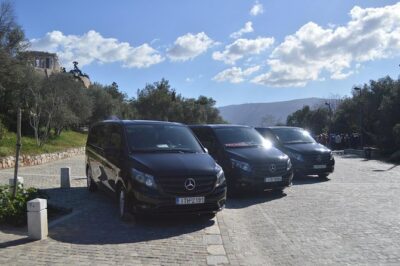
Athens Airport Private Arrival Transfer with Meet & Greet
Read our review →
Athens Airport to Athens Hotels Private Arrival Transfer
Read our review →
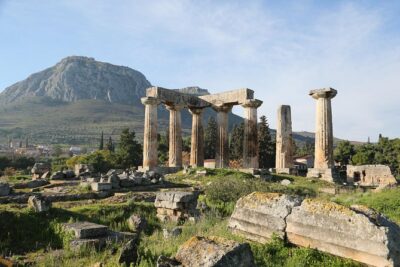
Private Biblical Tour Ancient Corinth & Isthmus Canal from Athens
Read our review →
4 Hours – Athens & Acropolis Highlights Private Tour
Read our review →