
Reviewed · PRIVATE
Semi-Private Balkans Tour; From Athens to Sarajevo or Belgrade
The most striking thing about this 14-day journey is its reach. Starting in Athens, you cross seven countries and finish in Sarajevo or Belgrade, passing ancient ruins, Ottoman towns, mountain monasteries, Adriatic ports, and cities shaped by both the Yugoslav era and earlier empires. This is a serious amount of Balkans in two weeks.
I like the mix of major sights and smaller stops, especially the sunset at Meteora, the stone towns of Gjirokaster and Berat, and the local food walk in Tirana. I also like the small maximum of 10 people, which should make border crossings, city walks, and schedule changes easier to manage. The main drawback is the pace: several days involve long drives and short visits, so you get a strong first look rather than a slow stay.
Key points at a glance
- Seven countries in one trip: Greece, North Macedonia, Kosovo, Albania, Montenegro, Bosnia and Herzegovina, and Serbia.
- Small group format: Departures are limited to 10 people, with private transportation and a professional guide.
- Excellent UNESCO coverage: Delphi, Meteora, Gjirokaster, Berat, Ohrid, Decan, Kotor, Mostar, and other protected sites feature in the route.
- Food with local context: Try byrek, qofte, Albanian coffee, raki, and traditional dishes during a guided food experience in Tirana.
- Flexible finish: Your final transfer goes to Sarajevo Airport or to a hotel in Belgrade.
- Simple accommodation plan: Thirteen nights in three-star hotels with breakfast included.
Why this route works for a first visit
The western Balkans can be awkward to plan independently. Borders are frequent, public transport links are uneven, and some of the finest places are not connected by a simple train route. Here, private road transport carries you from Athens across the region, while a guide handles the practical work.
You also get useful contrasts. Delphi and Meteora introduce ancient and Orthodox Greece. Albania brings Ottoman-era towns, communist history, and a strong food culture. Kosovo adds medieval monasteries and lively old bazaars. Montenegro and Bosnia and Herzegovina bring dramatic coastal and mountain scenery, while Sarajevo gives the trip a thoughtful historical finish.
The price is $5,142.79 per person. That is a high total for a 14-day tour, but it includes private transport, hotels, breakfasts, entry tickets for the scheduled sites, tourist taxes, fuel, road charges, international vehicle insurance, and guide services. You still pay for lunches, dinners, drinks, snacks, and personal purchases, so budget for those separately.
The value depends on what you want to avoid. If you enjoy arranging border crossings, researching hotels, and comparing transport routes, you may find the price steep. If you want one company to coordinate seven countries and keep the trip moving, the cost covers a lot of useful groundwork.
A few more Athens tours worth putting side by side
- Best of Athens Half Day Private Tour
★ 5.0 · 3,714 reviews - Athens Full Day Private Tour
★ 5.0 · 2,903 reviews - Athens Airport Private Arrival Transfer with Meet & Greet
★ 4.5 · 1,495 reviews
Days 1 and 2: Delphi, Meteora, Ioannina, and Gjirokaster
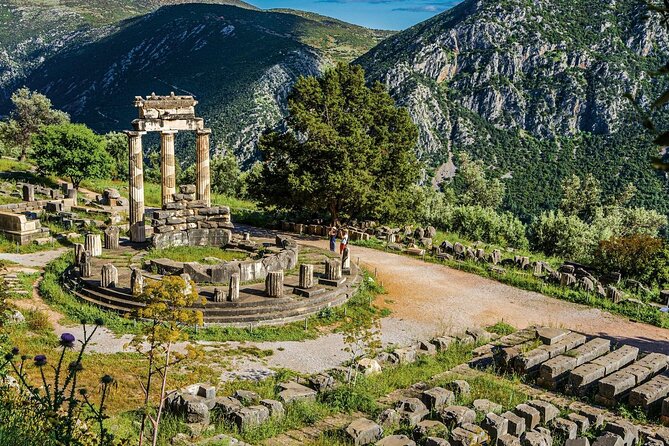
Your Athens hotel pickup begins at 9:00 a.m. The first stop is Delphi, one of Greece’s great ancient sites. You see the Temple of Apollo, the Castalian Fountain, the Treasury of the Athenians, the theater, the stadium, and the museum’s Charioteer of Delphi.
The scheduled visit is about an hour, which is enough to get the main story but not enough for a slow archaeological study. If ancient sites are your main interest, keep your expectations measured. This is an introduction, not a full-day examination of every monument.
The road then leads to Meteora, where monasteries perch on tall rock pillars. You have about two hours and, according to the plan, a chance to watch sunset. That timing gives the stop real atmosphere. The unusual rock formations and high monasteries are among the most memorable sights of the trip, though the short visit means you should not expect to explore every monastery.
On day two, Ioannina offers a change of mood. Its old town, Byzantine and Ottoman remains, and castle area give you time to walk rather than simply photograph a viewpoint. You also have free time for a café or a taste of local Greek food.
The afternoon drive reaches Gjirokaster, Albania’s Stone City. The half-hour arrival visit is only a preview, with the fuller exploration scheduled for the next day. This is one of the first places where the route’s pace becomes clear: you arrive, get oriented, and return for a proper visit later.
Days 3 and 4: Stone houses, castles, and Albanian art
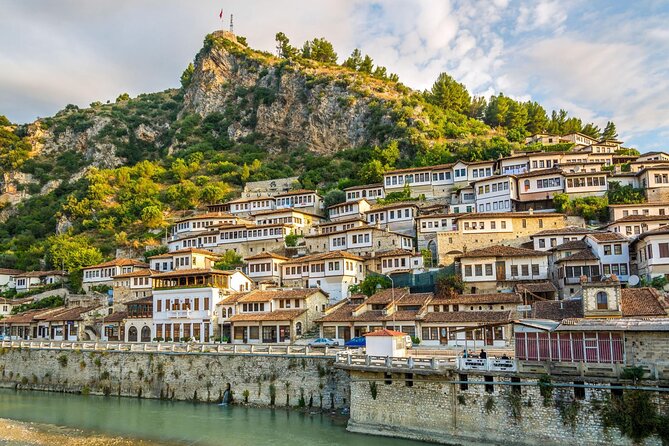
Gjirokaster is one of the strongest stops in the south. Its houses climb the hillside like small fortresses, and its stone streets lead toward the castle. The old bazaar is a good place for handmade crafts and local products, though you should leave room in your luggage if you like textiles, jewelry, or other small purchases.
The visit to Skenduli House adds something a standard castle walk cannot. The house preserves its original interior and shows how a prosperous Gjirokaster family lived. That kind of stop helps you understand the town as a home, not just a pretty collection of old buildings.
Berat follows on day four. Known for its many windows, the town rises on steep hillsides beneath its castle. Residents still live within the castle area, which keeps the place connected to daily life rather than turning it into a museum district.
Inside Berat Castle, you see old churches, mosques, and streets with broad views over the town. The National Iconographic Museum Onufri adds a focused look at religious painting, including the distinctive red color linked with the painter Onufri. Gorica Bridge and the Gorica neighborhood round out the visit with a lower-town perspective.
The drawback is that both Gjirokaster and Berat deserve more time than the schedule gives them. You get about a day’s worth of key sights in each place, but not much room for unplanned wandering, long meals, or museums beyond those included.
Days 5 and 6: Lake Ohrid and the Orthodox heart of North Macedonia
The route pauses in Driloni National Park before crossing into North Macedonia. Springs feed the small lake, and willow trees shade the water. Tushemisht offers another short stop before you continue to the Monastery of Saint Naum.
Saint Naum is set beside the source of the River Crni Drim, at the edge of Lake Ohrid. The clear water, mountain setting, and monastery grounds make this one of the trip’s more peaceful pauses. The entry ticket is included, and the stop gives you a good break from the road.
The following day focuses on Ohrid and the lake, both UNESCO protected. The town has long been an Orthodox center, with churches, old streets, and hillside views. The route includes the viewpoint near Saint John’s Church, Saint Nicolas Church, and the Halveti Hayati Tekke, giving you a useful look at Christian and Muslim traditions in the same city.
Ohrid receives about three hours, which is sensible for a guided introduction. You can see the key areas and still have some time to absorb the lakeside setting. If you want swimming, a boat ride, or a quiet afternoon by the water, this schedule will feel too tight.
A different kind of day out from Athens:
- Athens: Acropolis & up to 5 Archaeological Sites Combo Pass
★ 4.4 · 12,619 reviews - Athens: Acropolis Ticket with Optional Audio or Live Guide
★ 4.2 · 11,055 reviews - Athens: Acropolis, Parthenon & Acropolis Museum Guided Tour
★ 4.8 · 9,316 reviews - Athens: Cape Sounion & Poseidon Temple Sunset Half-Day Trip
★ 4.8 · 8,241 reviews
Day 7: Tirana through food and recent history
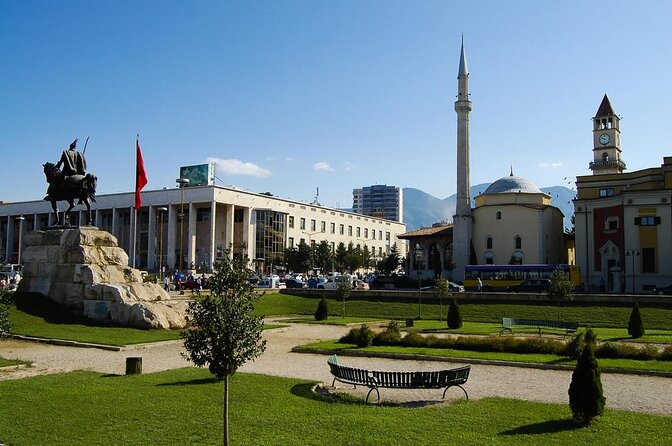
Tirana is handled differently from the archaeological sites. You meet a local companion and explore through food, markets, coffee, and neighborhoods rather than a long list of monuments.
The morning begins with byrek, a pastry filled with cheese, meat, or spinach. At the Çam Bazaar, you can browse practical goods and bargain with sellers. The food walk continues with a traditional dessert, Albanian coffee, and time in local streets and markets.
At the New Bazaar, you try qofte with bread. Vegetarians are offered bread with gjize, a local cottage cheese, and raki is part of the tasting. This is a useful way to understand Albania through everyday habits rather than only through castles and churches.
BUNKART 2 gives the day a darker but important finish. The former nuclear bunker now presents Albania’s communist period and the daily lives of people under the regime. The museum helps explain some of the country’s recent past, especially after several days focused on much older history.
The food visits are included in the experience, but the precise amount of food and drink is not separately detailed. If you have dietary needs, raise them before booking so the operator can confirm what can be arranged.
Days 8 and 9: Kruja, Prizren, Gjakova, and Decan
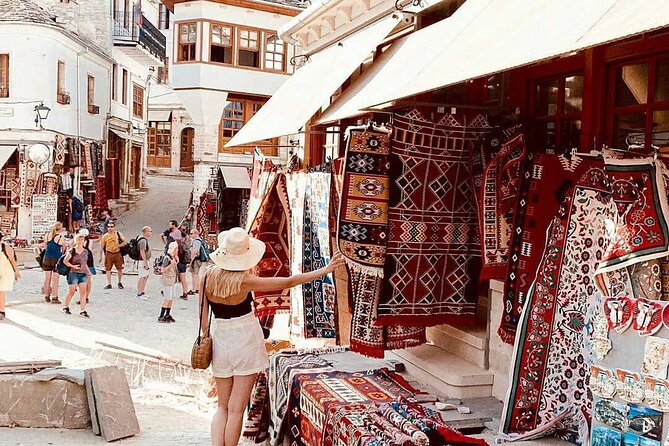
Kruja was a center of Albanian resistance during the Ottoman expansion. Its castle sits on a rocky hill, and the medieval bazaar below is one of the best places on the route for carpets, jewelry, and handmade souvenirs.
The guide also takes you along lesser-used paths connected with the castle’s defensive past. The visit is short, but the combination of bazaar and hilltop fortress makes Kruja easy to appreciate even on a tight schedule.
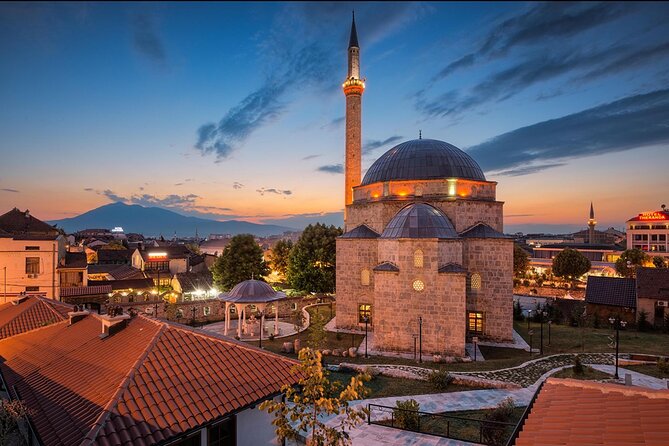
After crossing into Kosovo, you reach Prizren. The river, stone bridges, old houses, and Ottoman-era buildings give the town a strong visual identity. The Sinan Pasha Mosque offers detailed decoration, while Kalaja Fortress gives you a broad view over the old town.
Prizren is also a good place to slow your walking pace and notice small details. Filigree metalwork is a local craft, and the old streets have enough shops and cafés to fill free time. The schedule gives you an introduction, not a full cultural program.
Day nine takes you to Gjakova’s rebuilt bazaar, where traditional crafts and food shops fill the old market area. Decan Monastery brings another change of tone. Orthodox monks still live there, and the monastery’s frescoes earned UNESCO recognition for their importance to medieval Byzantine art.
The final stop is Rahovec Valley, a wine-producing area with vineyards on rolling hills. Grape growing here reaches back to Illyrian times, and the annual wine festival takes place in September. The schedule does not promise a formal wine tasting, so treat this as a regional stop rather than a guaranteed winery visit.
Days 10 and 11: Farm cooking, Shkoder, Budva, and Kotor
Mrizi i Zanave is one of the most distinctive stops. This working agro-tourism farm uses local products and adapted communist-era buildings for storage. You learn how the family business supports jobs in the surrounding area, then have time for a traditional meal or to buy farm products.
It is an appealing break from monuments because it shows present-day Albania: food production, small business, and rural employment. Lunch is not included, so you should plan to pay separately if you eat there.
Shkoder follows, with Rozafa Castle as the main sight. The castle offers views toward Lake Shkoder and the rivers flowing toward the Adriatic. The town also carries Venetian influence, including a tradition of handmade carnival masks.
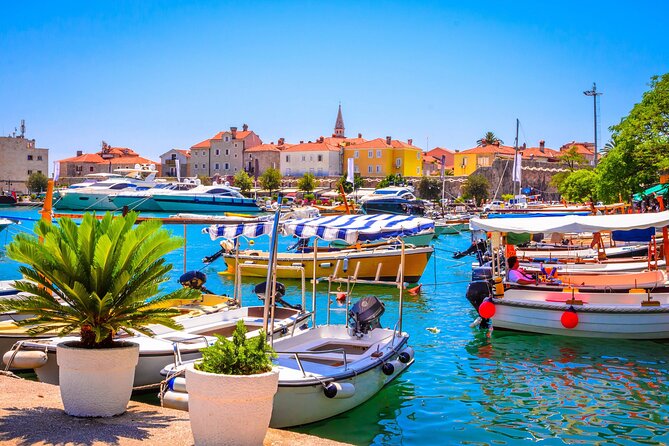
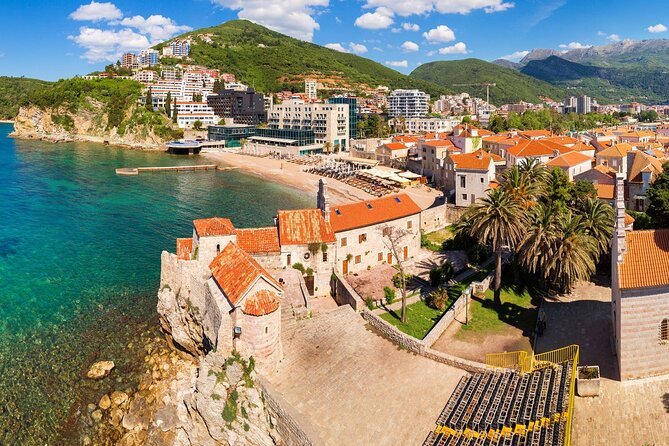
Montenegro begins with a viewpoint near Sveti Stefan. The island is now an exclusive residential resort and cannot be visited, but the coastal view is still worth a short stop. Budva then gives you a compact look at both resort development and an older fortified center.
Kotor is the day’s major prize. Its UNESCO old town is built from narrow stone streets, churches, and buildings with plaques explaining their original use. Saint Luke’s Church is included, and the walk is short enough to leave you wanting more.
You should know that Montenegro’s coast can be busy, especially in the warmer months. The one-hour visits to Budva and Kotor provide orientation, but not enough time for every church, wall, or café.
Days 12 and 13: Mostar and Sarajevo
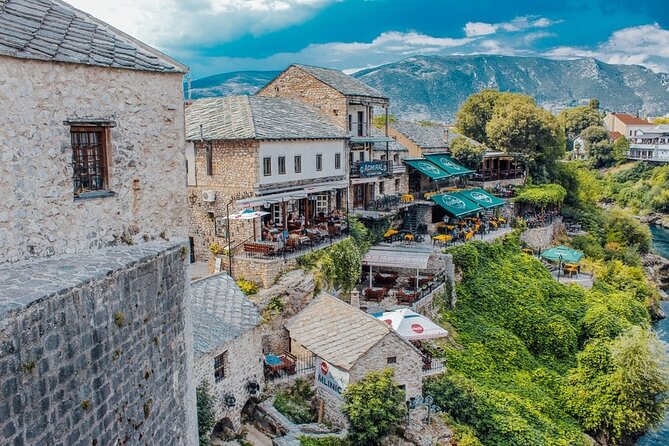
Crossing into Bosnia and Herzegovina, you reach Mostar and its famous Old Bridge. Built in the 16th century, Stari Most links the two sides of the old town and remains the city’s defining sight.
The nearby bazaar has stone lanes, mosques, shops, and reminders of the city’s wartime destruction and rebuilding. Mostar can feel crowded around the bridge, but the surrounding streets reward a slower walk.
Blagaj Tekija adds a quieter stop outside town. The Ottoman-era monastery sits beneath a cliff beside the spring of the Buna River. Its blue water and dramatic setting make it a natural companion to Mostar’s urban history.
Sarajevo is the final full day. The walk covers Ottoman and Austro-Hungarian quarters, markets, mosques, churches, and synagogues. Bullet holes and cannon marks remain visible in parts of the city, so the tour does not treat Sarajevo as a polished old town detached from its recent past.
At Latin Bridge, you learn how the assassination associated with the bridge helped trigger World War I. You also have free time to eat in the old town, where meat dishes and desserts are part of Sarajevo’s food culture.
The walking can include uneven ground and ruined areas. Comfortable shoes matter, and anyone with mobility concerns should ask for details before booking.
Transport, hotels, and group size
The maximum group size is 10. That is small enough for conversation with the guide and easier movement through old towns, though the tour is still a shared experience rather than a private trip for just your party.
Private transportation is included, along with fuel, road taxes, and international vehicle insurance. This matters in the Balkans, where border crossings and changing road conditions can make self-drive planning tiring.
Accommodation is in three-star hotels, based on double, twin, triple, or quadruple occupancy. Breakfast is included for all 13 nights. Solo room pricing is not specified, so ask about any single supplement before paying.
Guides associated with departures have included Ervin Veseli, Ervin, Julian, and other local staff. The strongest guide can make a major difference on a route with this much history, so it is worth confirming who will lead your departure if that matters to you.
Who should book this 14-day Balkan tour?
You should consider it if you want a broad first trip, prefer not to drive, and value having hotels, border transport, and entrance tickets arranged. It suits active adults who can handle frequent hotel changes, long road days, short city visits, and walking on uneven surfaces.
It is less suitable if you want beach time, long museum visits, late mornings, or several nights in each city. The route favors breadth over rest.
You also need to be comfortable paying for most lunches and dinners yourself. Breakfast is included, but the other meals, drinks, snacks, souvenirs, and personal expenses are not.
The cancellation terms are strict: the experience is non-refundable and cannot be changed after booking. Since the route can be adjusted for weather, strikes, holidays, closures, or other outside events, read the terms carefully before committing.
Should you book it?
Book this tour if your goal is to see the western Balkans in one organized sweep. The UNESCO sites are strong, the food-focused Tirana day adds character, and the private road transport removes much of the region’s logistical strain.
Skip it if you prefer to settle into one country or city. For a first look at seven countries, though, this is an ambitious and well-structured route. Just budget beyond the headline price, expect busy days, and treat each stop as an introduction that may inspire a return visit.
FAQ
How long is the tour?
The tour lasts approximately 14 days, with hotel pickup in Athens on the first day and transfer to Sarajevo Airport or Belgrade on the final day.
Which countries does the tour visit?
The route visits Greece, North Macedonia, Kosovo, Albania, Montenegro, Bosnia and Herzegovina, and Serbia.
Where does the tour start?
The tour starts with pickup from your hotel in Athens. The listed start time is 9:00 a.m.
Where does the tour finish?
On day 14, you can be transferred to Sarajevo Airport or to a hotel in Belgrade, based on your preference.
How many people can join?
The maximum group size is 10 people.
Are hotels and breakfast included?
Yes. The price includes 13 nights in three-star hotels and breakfast each morning. Room pricing is based on double, twin, triple, or quadruple occupancy.
Are entrance tickets included?
Entry tickets are included for the sites designated for visits, including places such as Skenduli House, Berat Castle, Saint Naum, BUNKART 2, Kruja Castle, Sinan Pasha Mosque, Kalaja Fortress, Mostar’s Old Bridge, and Blagaj Tekija.
Are lunch and dinner included?
No. Lunches, dinners, drinks, snacks, souvenirs, and personal spending are not included.
Newly reviewed around Athens
- Athens: workshop for painting landscape with local artist★ 4.6 · 3 reviews
- Athens: Greek Wine & Olive Oil Tasting at Brettos Plaka★ 4.5 · 3 reviews
- Outdoor Yoga and Pilates with Akropolis view★ 4.0 · 5 reviews
- Acropolis of Athens: 60′ Tour in a Vintage Motorcycle★ 5.0 · 4 reviews
- Ultimate Tasting of the Volcanic Wines of Greece★ 5.0 · 3 reviews
- Athens at Twilight Night Tour with Drinks and Meze Dishes★ 4.8 · 4 reviews
- Breakfast in the markets with olive oil and honey tasting★ 4.8 · 8 reviews
- workshop for painting acropolis/landscape with local artist★ 5.0 · 3 reviews
Private, compared.
Athens Airport Private Arrival Transfer with Meet & Greet
Read our review →
Athens Airport to Athens Hotels Private Arrival Transfer
Read our review →
Private Biblical Tour Ancient Corinth & Isthmus Canal from Athens
Read our review →
4 Hours – Athens & Acropolis Highlights Private Tour
Read our review →