
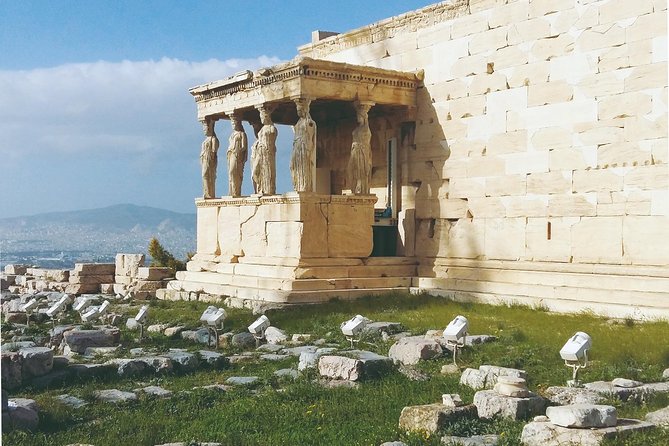
Reviewed · ATHENS ACROPOLIS TOURS
Private Walking Tour: The Acropolis & Athens City Tour
The best part of this Athens tour is the way it builds toward the Acropolis instead of dropping you at the hill with no context. You begin at Syntagma Square, pass Parliament and the National Gardens, then walk through Plaka before reaching the ancient citadel. By the time you see the Parthenon, the city’s layers make better sense.
I like the private format, which lets your guide adjust the pace and answer real questions. I also like the small archaeological display near Syntagma Square, with household pottery, mosaics, and a 2,000-year-old beehive. The main drawback is cost: at $324.40 per person, plus about €28 for admission, this is a serious splurge for a three-and-a-half-hour walk.
Key points to know before booking
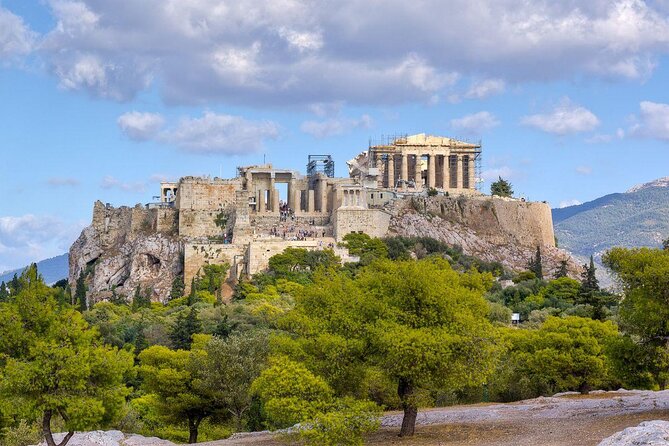
- The route connects modern Athens with antiquity, starting at Parliament and ending on the Acropolis.
- Your guide leads only your group, so the explanation can suit children, first-time visitors, or people with a strong interest in ancient history.
- The Temple of Olympian Zeus, Acropolis, and other admission sites cost extra, with about €28 payable in cash.
- The walk includes an uphill route to the Acropolis, along with roughly 90 minutes among its monuments.
- Plaka, Mars Hill, the Theatre of Dionysus, and the Odeon of Herodes add useful context beyond the Parthenon.
- The tour has a 4.8 rating from 51 reviews and a 96 percent recommendation rate, with guides such as Vicki, Nicos, Aristotle, Giota, Marta, and Despina receiving especially warm praise.
From Syntagma Square to the ancient heart of Athens
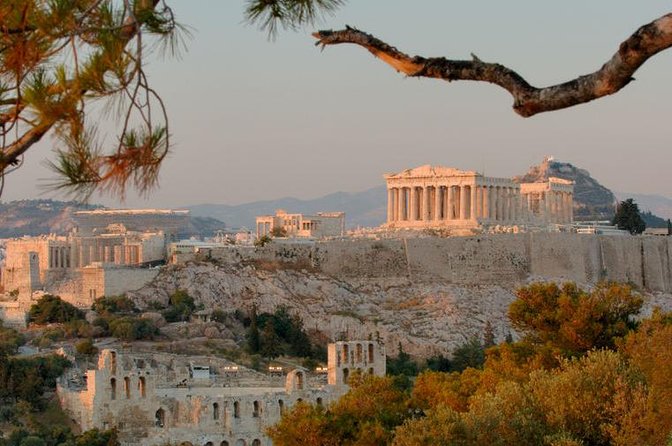
This private tour lasts about three hours and 30 minutes. It starts at Syntagma Square, a practical meeting point near public transportation, and finishes at the Acropolis area. You do not return to Syntagma, so plan your next stop around Acropoli station or the surrounding historic center.
Your guide begins with an archaeological exhibition found near the square. This is a modest start, but a smart one. Instead of treating Athens as a string of famous ruins, the display shows how ordinary people lived. Pottery, mosaics, and the ancient beehive connect the grand monuments ahead with daily life.
That beehive is an especially memorable detail. It is roughly 2,000 years old, and it gives you an immediate sense that archaeology is not only about temples and statues. Small finds can tell you how a city worked long before the large stones caught everyone’s attention.
At the far end of the square, you stop at the Greek Parliament. The Monument to the Unknown Soldier is guarded by the evzones, Greece’s presidential guards, in their distinctive uniforms. Your guide explains the setting, and you have time for photographs.
The change of guards stop lasts about 20 minutes and is free. The schedule of a private tour gives your guide some room to manage the timing, though the exact ceremony you see depends on the tour hour.
More ways to see the Acropolis:
- Athens: Acropolis & up to 5 Archaeological Sites Combo Pass
★ 4.4 · 12,619 reviews - Athens: Acropolis Ticket with Optional Audio or Live Guide
★ 4.2 · 11,055 reviews - Athens: Acropolis, Parthenon & Acropolis Museum Guided Tour
★ 4.8 · 9,316 reviews
A calm crossing through the National Gardens and Zappeion
From Syntagma, you walk through the National Gardens. This is a welcome change of pace after the traffic and open stone of the square. The gardens provide shade and a softer route toward the archaeological sites.
You then reach the Zappeion Conference and Exhibition Center, one of Athens’ most graceful neoclassical buildings. Its formal design helps show how modern Greek Athens looked back to classical ideals while building its own public institutions.
The route is pleasant, but it is still a walking tour, not a vehicle-based sightseeing circuit. You need comfortable shoes and enough energy for the climb later. The garden section is easy to take at a relaxed pace, but the full outing becomes more demanding once the Acropolis slopes begin.
Temple of Olympian Zeus and Hadrian’s Arch
The next major stop is the Temple of Olympian Zeus, often called the Olympieion. It was planned on a huge scale and became one of the largest temples associated with Athens. Today, the surviving columns give you a strong sense of the building’s size, even though most of the temple is gone.
The stop is scheduled for about 25 minutes. Admission is not included, and the total extra entrance cost for the tour is listed at about €28, payable in cash on the day. Since the tour includes skip-the-ticket line service, you are paying for the entry itself, not simply for faster access.
Nearby, you see Hadrian’s Arch. This Roman monument marks the point where the older Greek city and the Roman-era expansion met. It is an excellent place to ask your guide how Athens changed under Roman rule, since the city was not frozen in the age of Pericles.
This part of the route is valuable because it prevents the Acropolis from becoming an isolated postcard. You see the city as a long-running place of worship, politics, architecture, and daily life.
Plaka, the Lysicrates Monument, and early Christian Athens
The walk continues into Plaka, the old neighborhood below the Acropolis. Its paved streets, tavernas, and bars give the tour a more lived-in feel than a straight march between ruins. You pass the Lysicrates Monument, a stone structure built to display a competition trophy in the fourth century BC.
Your guide uses the monument to explain how public competitions and theatrical culture shaped Athens. That background becomes useful later when you reach the Theatre of Dionysus. The tour does not simply point out isolated stones. It links them.
You also see the remains of an early Christian church. This is another reminder that Athens changed its religious identity over time. Classical temples are only one layer of the city. Roman, Christian, and modern Greek periods all left traces along the same streets.
The Plaka portion is also a good place to ask for suggestions about food or independent exploring after the tour. The experience ends near the Acropolis, so you can return to this neighborhood later without having to cross the city.
More walking tours in Athens:
- Athens: Acropolis and Parthenon Guided Walking Tour
★ 4.6 · 5,882 reviews - Greek Food Walking Tour in Athens
★ 5.0 · 4,740 reviews - Acropolis: Acropolis and Parthenon Guided Walking Tour
★ 4.7 · 3,442 reviews - Acropolis monuments & Parthenon Walking Tour with Optional Acropolis Museum
★ 5.0 · 2,678 reviews
Walking the Acropolis approach
From Plaka, you follow the Dionysiou Areopagitou walkway toward the Acropolis. This pedestrian route brings you past several important places before the main entrance.
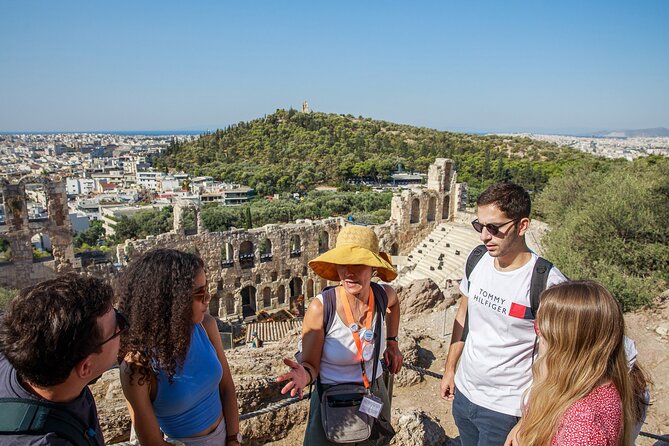
You see the Sanctuary of Dionysus, tied to the god of theater and performance. You also pause at Mars Hill, or the Areopagus, and look toward the Philopappos Hill monument. These viewpoints help you understand how the Acropolis sits within the wider city rather than floating apart from it.
The route includes the Odeon of Herodes Atticus, the grand ancient performance space built into the southern slope of the Acropolis. It remains one of Athens’ most recognizable monuments, and the tour allows about 10 minutes here. The Theatre of Dionysus receives about 15 minutes and is especially important because it is associated with the beginnings of Western theater.
These stops are more than filler before the Parthenon. The Theatre of Dionysus and the Odeon show that Athens was a place for performance as well as religious ceremony. If you enjoy drama, architecture, or public life, this section may be one of the most rewarding parts of the tour.
Inside the Acropolis: Propylaea, Athena Nike, and the Parthenon
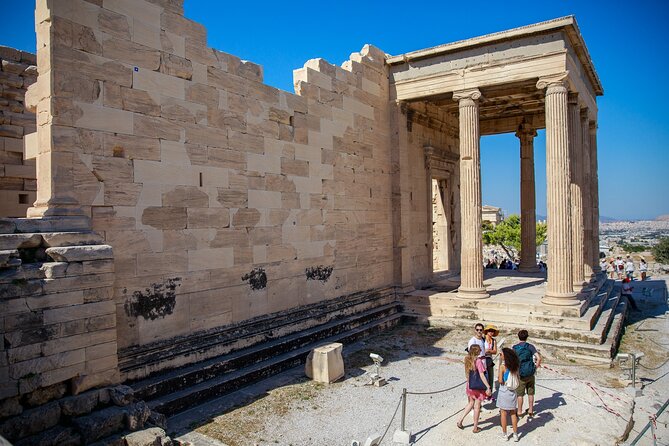
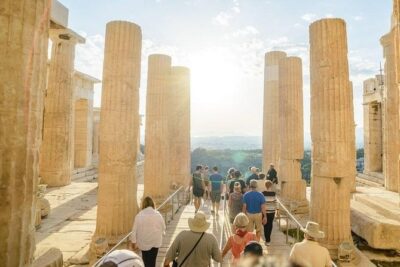
The Acropolis visit takes about 90 minutes. You enter the ancient citadel with your guide and focus on the major monuments, including the Propylaea gateway, the Temple of Athena Nike, and the Parthenon.
The Propylaea was designed as the grand entrance to the sanctuary. Its columns and imposing approach prepare you for the buildings above. The Temple of Athena Nike is smaller, but its position near the entrance gives it unusual visual power. Your guide explains the role of these structures and how they fit into the larger sacred complex.
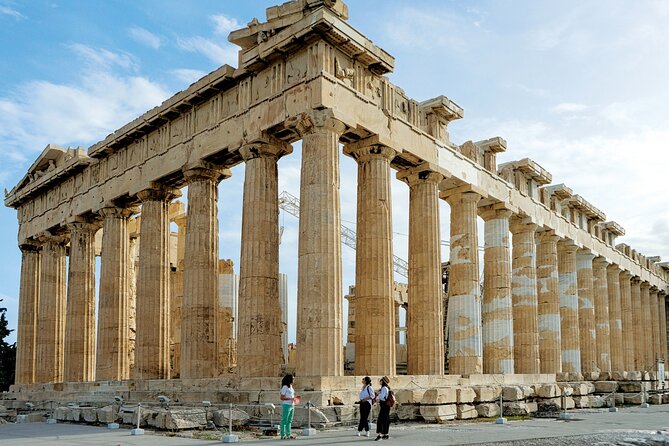
Then comes the Parthenon. The tour allows about 20 minutes specifically at the temple, though you spend much of the Acropolis visit viewing it from different angles. You learn about its construction and purpose, while also having time to take photographs and look across Athens.
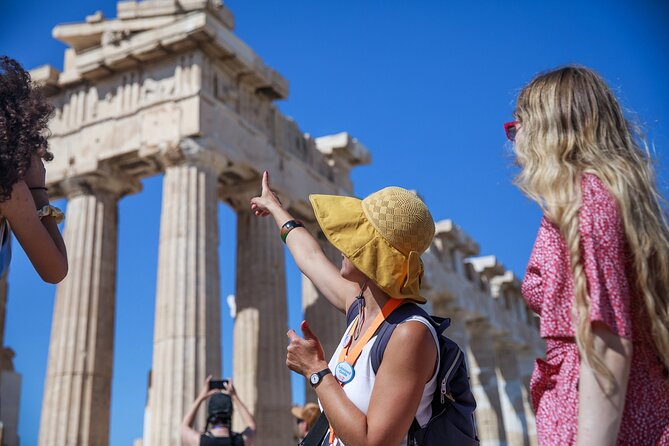
The Parthenon is crowded and exposed, so the private format matters here. You can ask your guide to clarify a detail instead of trying to follow a general speech in a moving group. If you have children, the guide can simplify the explanation. If you already know ancient history, you can ask more technical questions. Several guides, including Aristotle and Nicos, have been praised for handling questions well, while Despina has adapted explanations for children.
The views are a major part of the experience. From the Acropolis, you look down over Athens and connect the monuments you have just passed with the modern city around them. Your guide does the historical work, but you need to leave space simply to stop and look.
How the private format affects the experience
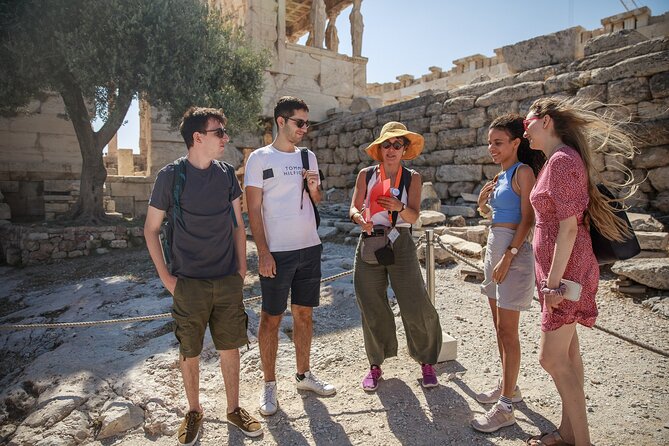
Only your group participates, and at least two people are required per booking. This is not a large coach tour with a fixed speech. You meet an English-speaking local guide and receive individual attention throughout the walk.
That flexibility has practical value. One guide, Marianna, has been especially praised for changing the pace and content around the group’s interests. Another, Despina, adjusted explanations for children. Guides such as Giota, Marta, Artemis, Vicki, and Aristotle have also been singled out for warmth, patience, humor, or strong command of the subject.
Guide quality can never be guaranteed by a list of names, but the repeated pattern is clear: the human element is the main reason to book this experience. You are paying for interpretation, orientation, and conversation, not only for access to monuments.
A private tour can also rescue a difficult day. When a general strike threatened access to the Acropolis, the local operator rearranged a booking so the group could visit earlier. That kind of flexibility is useful, though it depends on circumstances and availability rather than forming a standard promise of every tour.
Is $324.40 per person a fair price?
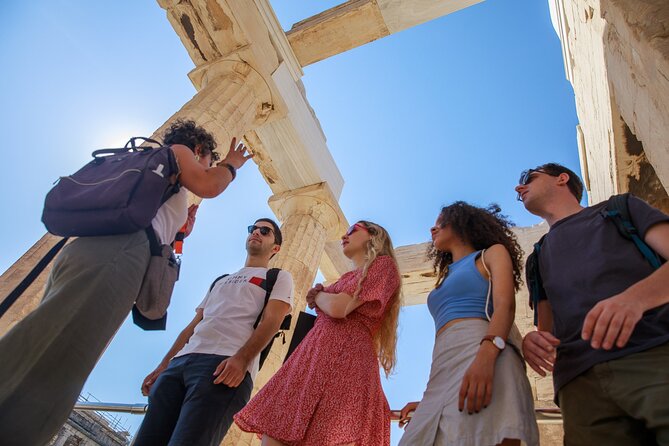
The price is $324.40 per person, and the booking requires at least two people. Entrance fees are extra, about €28 in cash. Food, drinks, and hotel transport are not included.
That makes this expensive compared with a standard group walking tour or a self-guided visit. You should be comfortable paying a premium for a private guide. The value improves if you are a small group that wants a flexible pace, has children, wants to ask many questions, or has a serious interest in archaeology and ancient Athens.
The price is harder to justify if you mainly want quick access to the Parthenon and do not care much about the surrounding sites. You could visit the Acropolis on your own and spend far less. You would, however, lose the connected route through Syntagma, the gardens, Zeus, Plaka, the theater district, and the Acropolis approach.
One point needs careful attention at booking: skip-the-ticket line service does not mean admission is included. Bring the required cash for the entrance fees, and check the final amount when you book because the stated figure is approximate.
Timing, walking, and what to bring
This is a three-and-a-half-hour walking experience with an uphill section to the Acropolis. Most people can participate, but the physical demand should not be underestimated. The route includes paved streets, archaeological grounds, and slopes, with open areas where Athens’ heat can feel strong.
An early start is a smart choice in warm weather. One booking was specifically moved earlier because the Acropolis becomes hot later in the day. If you are sensitive to heat, ask about an early departure when arranging your tour.
Wear sturdy, comfortable shoes. Carry water, sun protection, and a camera. The tour includes the Athens guide magazine and map, which can help you continue exploring after your guide leaves.
The experience is offered in English. Confirmation is normally provided at booking, though bookings made within two days of departure may require up to 48 hours for confirmation, subject to availability.
Who will get the most from this Athens tour?
I would choose this tour for a first visit to Athens when you want orientation as well as ancient monuments. It gives you a useful mental map, from Syntagma Square to the Acropolis, and leaves you at a good starting point for further exploring.
It also suits families. A guide can adapt the amount of detail, and the monuments offer enough variety to keep the walk from becoming a long lesson about one building. The theater, guards, gardens, and city streets break up the archaeological stops.
History students and serious amateur archaeologists may also appreciate the private setup. Aristotle, described as an archaeologist, has handled groups with different levels of background, while other guides have encouraged detailed questions.
I would hesitate to book it for anyone seeking a low-cost introduction, a short sightseeing stop, or a tour with every expense included. You must pay admission separately, walk uphill, and accept that weather can affect the enjoyment. A poor-weather day can reduce the value of an outdoor experience this expensive.
Should you book the Acropolis and Athens City Tour?
Book it if you want the Acropolis placed in the story of Athens, not treated as a single monument. The route covers Parliament, the guards, National Gardens, Zappeion, the Temple of Olympian Zeus, Plaka, the Theatre of Dionysus, the Odeon of Herodes, and the Acropolis in one private outing.
The strongest reason to choose it is the guide. You may be paired with someone like Vicki, Nicos, Aristotle, Giota, or Marianna, and the private structure lets that person adjust the tour to your interests. At $324.40 per person, plus admission, it is costly, but it can be good value for a small group that wants personal attention and a clear historical thread.
Skip it if you want the cheapest possible Acropolis visit or dislike long walks. For everyone else, especially first-time visitors who want Athens to make sense from the ground up, this is a thoughtful and well-paced introduction.
FAQ
Where does the tour start?
The tour starts at Syntagma Square in Athens, at Pl. Sintagmatos, Athina 105 63, Greece.
Where does the tour finish?
The tour finishes in the Acropolis area at Acropoli, Athens 117 42, Greece.
How long does the tour last?
The walking tour lasts approximately three hours and 30 minutes.
What places are included?
The route includes Syntagma Square, the Greek Parliament and change of guards, the National Gardens, Zappeion Hall, the Temple of Olympian Zeus, Plaka, the Theatre of Dionysus, the Odeon of Herodes, and the Acropolis with its monuments.
Is the Acropolis entrance fee included?
No. Entrance fees are not included and cost approximately €28, payable in cash directly on the day of the tour.
Does the tour include skip-the-ticket line service?
Yes. Skip-the-ticket line service is included, but it does not cover the cost of admission.
Is this a private tour?
Yes. Only your group participates, and a minimum of two people is required per booking.
Is the tour offered in English?
Yes. The tour is offered in English and includes a local guide.
Can I cancel the booking?
You can cancel up to 24 hours before the experience starts for a full refund. Cancellations or changes made less than 24 hours before the start time are not accepted for a refund.
More city tours in Athens
- Best of Athens Half Day Private Tour
★ 5.0 · 3,714 reviews - Athens Half-Day Sightseeing Tour with Tickets of Acropolis
★ 4.0 · 1,402 reviews - Highlights of Athens biketour
★ 5.0 · 840 reviews - Essential Athens Highlights Plus Cape Sounion Skip-The-Line Tour
★ 5.0 · 705 reviews
Newly reviewed around Athens
- Athens: workshop for painting landscape with local artist★ 4.6 · 3 reviews
- Athens: Greek Wine & Olive Oil Tasting at Brettos Plaka★ 4.5 · 3 reviews
- Outdoor Yoga and Pilates with Akropolis view★ 4.0 · 5 reviews
- Acropolis of Athens: 60′ Tour in a Vintage Motorcycle★ 5.0 · 4 reviews
- Ultimate Tasting of the Volcanic Wines of Greece★ 5.0 · 3 reviews
- Athens at Twilight Night Tour with Drinks and Meze Dishes★ 4.8 · 4 reviews
- Breakfast in the markets with olive oil and honey tasting★ 4.8 · 8 reviews
- workshop for painting acropolis/landscape with local artist★ 5.0 · 3 reviews
Athens Acropolis Tours, compared.
Acropolis & up to 5 Archaeological Sites Combo Pass
Read our review →
Acropolis, Parthenon & Acropolis Museum Guided Tour
Read our review →
Acropolis, Parthenon & Acropolis Museum Guided Tour
Read our review →

Acropolis monuments & Parthenon Walking Tour with Optional Acropolis Museum
Read our review →Browse the lists this tour appears in