
Reviewed · ATHENS ACROPOLIS TOURS
Private Athens & Acropolis Highlights and Mythological Tour
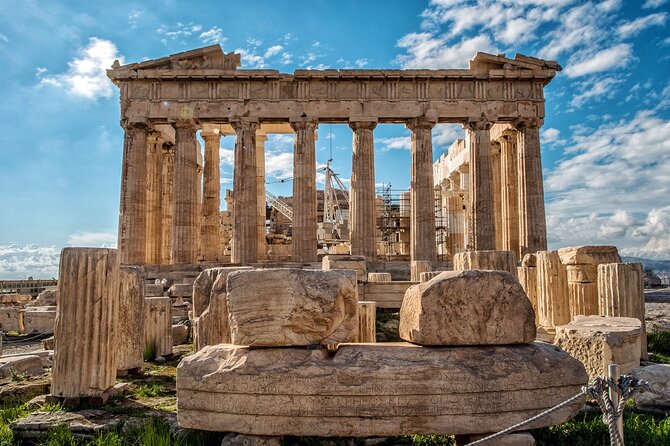
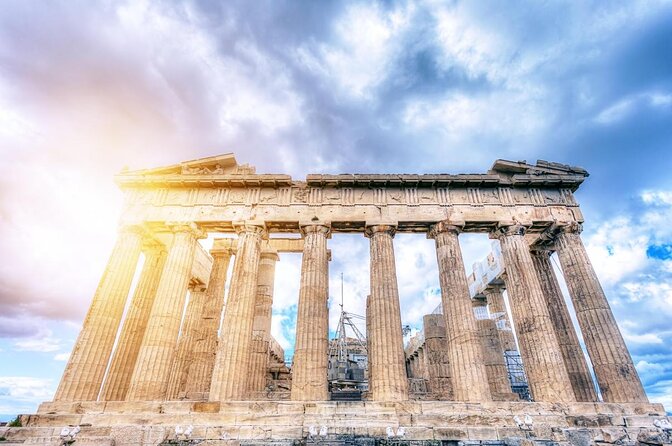
The best thing about this tour is the way it ties Athens’ stones to its stories. At the Acropolis, you are not just looking at the Parthenon, the Erechtheion, and the Temple of Athena Nike. You are hearing how gods, heroes, rituals, and rival city-states shaped the places in front of you. Greek mythology is the thread running through the morning, and guides such as Antonia, Alex, Demi, and Viki are praised for making the old tales easy to follow.
I like the private format, since your group gets the guide’s full attention and can ask questions without waiting for a large crowd to catch up. I also like the route from the Arch of Hadrian to the Ancient Agora, which links major monuments instead of treating the Acropolis as a single isolated stop.
The catch is the pace and footing. This is a physically demanding four-hour walk on an ancient site, with uneven surfaces and uphill sections. You can manage it if you are reasonably mobile, but do not expect a gentle stroll, and leave large bags at your accommodation because backpacks and big bags are not allowed inside the Acropolis.
Key points to know before booking
- Mythology shapes the tour: Expect stories about the gods alongside explanations of temples, theaters, and civic life.
- The Acropolis takes 90 minutes: The main visit allows time for the hilltop monuments, though admission is extra.
- You get a private guide: Only your own group participates, making it easier to ask questions and adjust the discussion.
- The route ends at the Ancient Agora: The walk begins near Hadrian’s Arch and finishes in the heart of ancient Athens.
- It is a serious walking tour: Four hours on historic ground can be tiring, especially in warm weather.
- Tickets cost extra: Entrance fees are not included, though the operator can arrange advance purchase.
Why this Athens tour works best for mythology fans
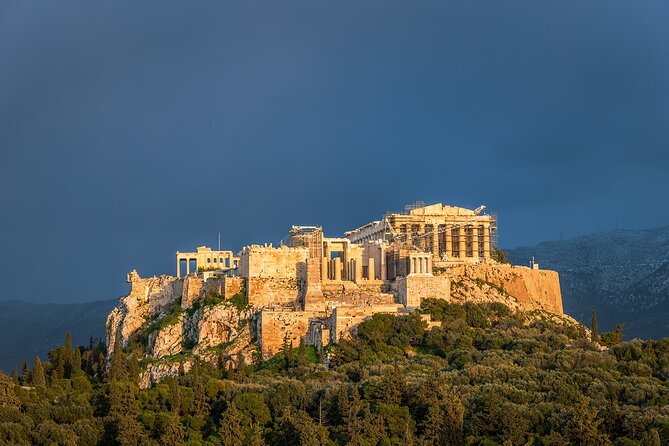
Athens can feel like a pile of famous names until someone explains how the pieces fit. This experience gives you that connecting story. The Acropolis is not presented only as an architectural triumph. It becomes a place where Athena, Dionysus, Zeus, Nike, and the wider Greek pantheon help explain what you are seeing.
That approach matters because many ancient sites are visually impressive but hard to read on your own. A broken column tells you little until a guide explains its purpose, its god, or the ceremony that once took place there. The private setting gives you room to stop and ask why a temple was built, what a myth meant to ancient Athenians, or how a monument fitted into city life.
The guides are a major part of the experience. Antonia Konstantiou is singled out for her engaging delivery and command of mythology. Alex is praised for covering both ancient and modern Athens while answering questions in detail. Demi is particularly good for families with teenagers, and Viki is noted for balancing mythology with Greek history.
You should not assume you will receive one specific guide, since the assigned guide depends on availability. Still, the repeated strength of the guiding is important: this tour succeeds or fails less on the number of monuments than on how clearly the guide explains them.
More ways to see the Acropolis:
- Athens: Acropolis & up to 5 Archaeological Sites Combo Pass
★ 4.4 · 12,619 reviews - Athens: Acropolis Ticket with Optional Audio or Live Guide
★ 4.2 · 11,055 reviews - Athens: Acropolis, Parthenon & Acropolis Museum Guided Tour
★ 4.8 · 9,316 reviews
Starting at Hadrian’s Arch
The meeting point is the Arch of Hadrian, at Leof. Vasilisis Amalias 50. It is a useful starting place because the arch marks the transition between old Athens and the Roman-era expansion of the city.
You begin near the Temple of Olympian Zeus, and the route then works toward the Acropolis. That gives you a sense of scale before you reach the hilltop. You are not simply dropped at the main entrance and rushed through the famous monuments.
The start is near public transportation, and pickup is offered. Since the activity is listed as a walking tour, confirm the exact pickup arrangement when booking if you need more than the stated meeting point. The route ends at the Ancient Agora of Athens, so plan your next activity from there rather than expecting a return to your hotel.
The Acropolis in a focused 90 minutes
The Acropolis receives the largest share of the tour, about one hour and thirty minutes. That is sensible. The hill contains several major monuments, and a rushed visit can leave you remembering only the Parthenon.
The climb and surfaces require care. You will be moving through an archaeological site rather than a modern museum, so comfortable shoes and a steady pace matter. Large backpacks and big bags are not allowed, and the practical answer is simple: carry only what you need.
The guide helps you read the site in layers. You can expect discussion of the religious role of the Acropolis, the importance of Athena, and the political meaning of monumental building in ancient Athens. Ask questions as they come up. A private tour is most useful when you use the guide as a live interpreter rather than waiting for a formal speech at every stop.
Admission is not part of the tour price. The operator can pre-purchase tickets, which may make the day easier, but entry fees remain an additional cost. Be clear about that when comparing this tour with a package that includes admissions.
The Parthenon and the power of Athena
The Parthenon receives about 30 minutes within the Acropolis visit. That is enough time to study its exterior, hear why it was built, and understand its connection to Athena, the city’s patron goddess.
The temple is often treated as the whole Acropolis, but your guide should help you see it as one part of a larger sacred complex. Look closely at the design, the surviving sculpture, and the way the building occupies the hilltop. Your guide can also explain why the Parthenon is both a religious monument and a statement about Athenian power.
Because this is a private tour, you can spend more time on the details that interest you. If you care about mythology, ask how Athena’s identity shaped the city. If you prefer architecture, ask about the building’s design and later use. The flexibility is one of the clearest benefits of paying for a private experience.
A few more Athens tours worth putting side by side
- Best of Athens Half Day Private Tour
★ 5.0 · 3,714 reviews - Athens Full Day Private Tour
★ 5.0 · 2,903 reviews - Athens Airport Private Arrival Transfer with Meet & Greet
★ 4.5 · 1,495 reviews - Athens Airport to Athens Hotels Private Arrival Transfer
★ 5.0 · 947 reviews
The Theater of Dionysus and ancient performance
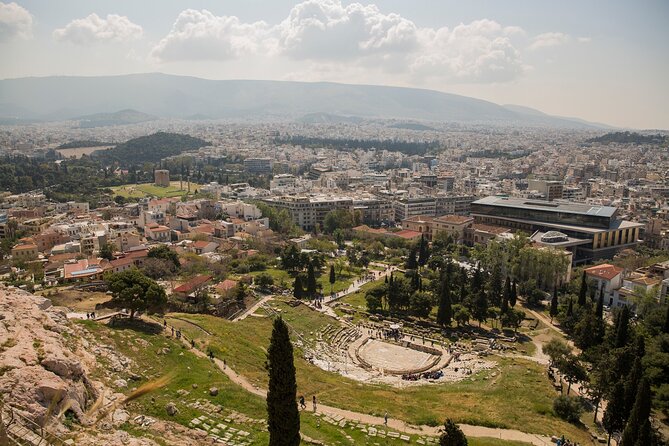
The Theater of Dionysus is scheduled for about 10 minutes. That sounds brief, but the stop opens a completely different window onto ancient Athens.
This was a place for public performance, not just private worship. Greek drama, civic identity, and religious festivals were closely linked, and the guide can use the theater to explain how myths moved from sacred stories into plays watched by large audiences.
Ten minutes will not support a long lecture, so think of this as a sharply focused stop. You will get the setting and its importance, then move on. If theater interests you, ask your guide for more context while walking between sites.
Zeus and the Roman edge of Athens
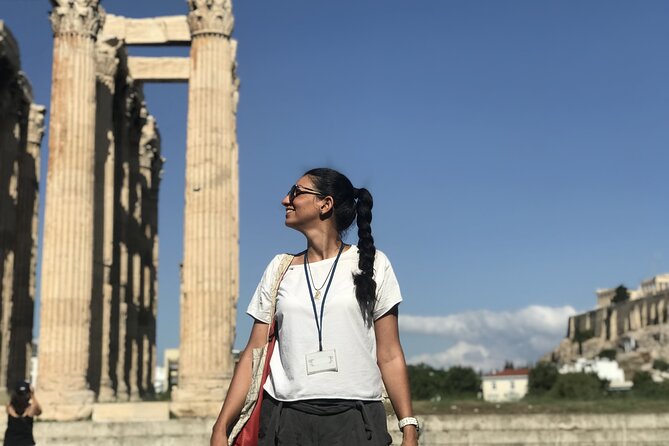
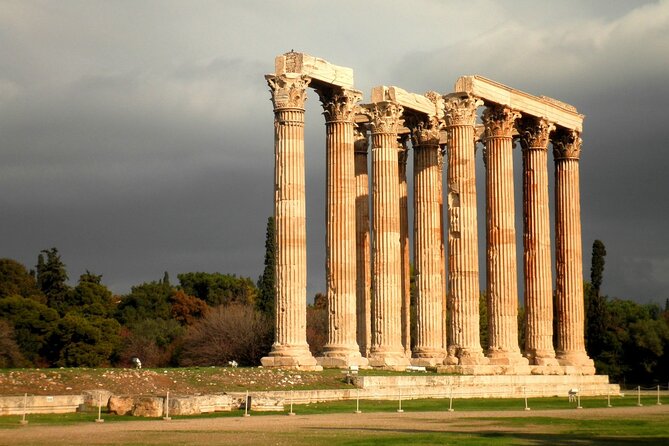
The Temple of Olympian Zeus receives about 20 minutes. Its scale helps you understand the ambition behind ancient monumental building, even in its incomplete and ruined condition.
Zeus was the chief god of the Greek pantheon, and the temple gives mythology a physical anchor. The columns are also a useful reminder that Athens changed over time. Roman influence is part of the story here, especially when you connect this temple with Hadrian’s Arch at the start.
This stop is outside the main Acropolis hilltop experience, so it helps break up the climb and gives your legs a different rhythm. You will still be walking on an active sightseeing route, though, not resting for long. If heat or fatigue is a concern, keep your water and pace in mind.
The Erechtheion and Athena Nike
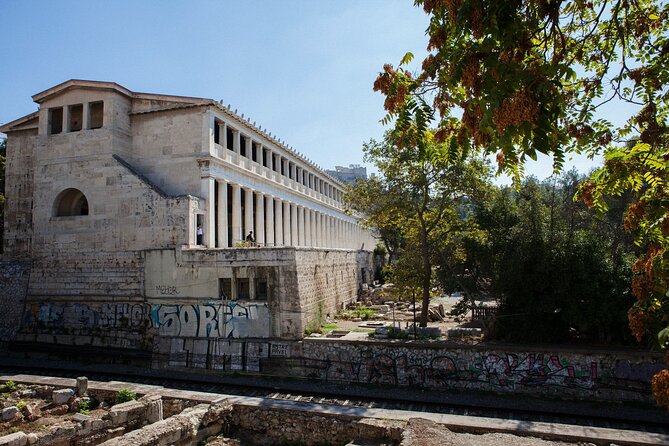
The Erechtheion is allocated about 10 minutes, as is the Temple of Athena Nike. Both deserve attention, even though the schedule is tight.
The Erechtheion is especially useful for discussing the layered character of Athenian worship. Ancient sacred places often served more than one purpose, and this building can prompt explanations about Athena, Poseidon, and the legends tied to the Acropolis.
The Temple of Athena Nike is smaller and more delicate than the Parthenon. Its name connects it with victory, so it gives your guide another chance to show how myth and political ambition worked together. Ten minutes at each site is enough for orientation and key details, but not a long architectural study.
If you want extended time at every monument, this may feel brisk. The advantage is coverage: in four hours, you see a broad selection of Athens rather than spending the entire morning at one structure.
Hephaestus and the walk to the Ancient Agora
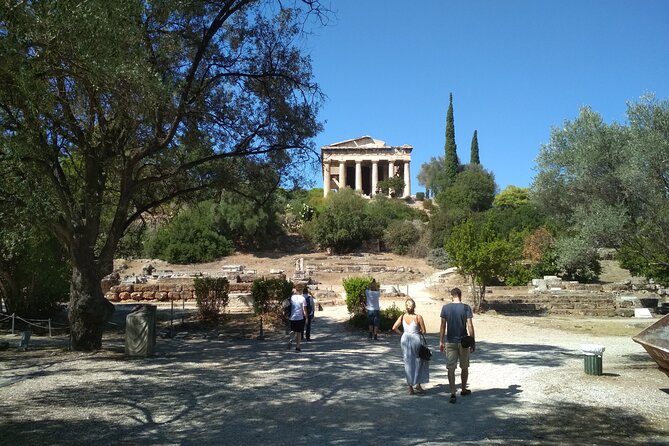
The final listed monument is the Temple of Hephaestus, described in the schedule as the Temple of Aries. The stop lasts about 30 minutes and leads toward the Ancient Agora, where the tour ends.
Hephaestus was associated with fire, metalworking, and craftsmanship, making this temple a good counterpoint to the civic and military themes of the Acropolis. Its place near the Agora helps you shift from the world of gods and temples to the public life of ancient Athens.
The endpoint is useful. The Ancient Agora is one of the city’s best places for understanding ordinary civic life, debate, trade, and public gathering. This tour finishes there rather than looping back, so you can continue exploring if you have the time and the separate site access needed.
The route also makes the four hours feel purposeful. You start by the Roman-era arch, move through the Acropolis and its sacred buildings, visit Zeus and Hephaestus, and finish where the city’s public life once played out.
What the $310.86 price means
At $310.86 per person, this is not a budget walking tour. The price makes the most sense for a small private group that values personal attention, a dedicated English-speaking guide, and a mythology-focused explanation of the monuments.
Admission fees are extra, which raises the total cost. Food and drinks are also not included, although a four-hour walking tour is short enough that you can handle refreshments before or after. Group discounts may improve the value if you are booking for several people.
For a solo visitor, the price is harder to justify unless you strongly want a private guide. For a family or group of friends, the cost can compare more favorably with several individual tickets and a larger shared tour, especially if everyone is interested in asking questions.
The tour has a 4.8 rating from 22 published ratings, with 95 percent recommending it. More important than the number is the pattern of praise: the guides are repeatedly described as engaging, clear, and strong storytellers. That is exactly the service you are paying for here.
Physical demands, families, and practical details
You should plan for a demanding walk. One person described being out of shape but able to complete it, while also noting that the day was tiring enough for a solid night’s sleep. That is a fair description of what to expect: manageable for many people, but not effortless.
Children must be accompanied by an adult, and most people can participate. Service animals are allowed. The route is near public transportation, and pickup is offered, but the key practical issue remains the ancient terrain rather than the meeting point.
Bring small essentials only. Since backpacks and large bags are prohibited at the Acropolis, avoid arriving with luggage or a daypack you cannot leave elsewhere. Entrance fees are non-refundable and non-exchangeable, so check your plans before having tickets purchased.
The experience is offered in English and confirmation is provided at booking. Free cancellation is available up to 24 hours before the start time. Changes or cancellations inside that window are not accepted for a refund.
Who should book this private Athens walk
I would choose this tour if you want the Acropolis explained through mythology rather than viewed as a series of ruins. It is especially well suited to families with older children or teenagers, couples, and friends who prefer to ask questions and set the tone of their own visit.
You will get the most from it if you enjoy stories, ancient religion, and the link between mythology and public life. The guides’ strong storytelling is a central part of the experience, so this is a better fit for a curious listener than for someone who wants only quick photo stops.
I would hesitate if you dislike hills, uneven ground, or a firm four-hour walking schedule. I would also compare the total price carefully if you are alone or watching your budget, since admission fees are added separately.
Should you book it?
Book this tour if you want a private, mythology-led introduction to the Acropolis and the main ancient sites around it. The route covers the essential monuments, ends at the Ancient Agora, and gives you a guide who can connect Athena, Zeus, Dionysus, Nike, and Hephaestus to the places you are seeing.
Skip it if you want a slow, self-guided day or a ticket-inclusive bargain. For everyone else, the combination of private attention, strong storytelling, and broad coverage makes the price easier to defend, provided you are ready for a serious walk and remember to budget for admission.
FAQ
How long is the Athens and Acropolis tour?
The tour lasts approximately four hours.
Is this a private tour?
Yes. Only your group participates in the activity.
Is admission to the archaeological sites included?
No. Entrance fees are separate, though the operator can pre-purchase tickets for you.
Where does the tour start?
It starts at the Arch of Hadrian, at Leof. Vasilisis Amalias 50, Athens 105 58, Greece.
Where does the tour finish?
The tour ends at the Ancient Agora of Athens, Athens 105 55, Greece.
Is the tour offered in English?
Yes. The experience is offered in English.
Can I bring a backpack to the Acropolis?
Backpacks and large bags are not allowed in the Acropolis and should not be brought on the tour.
Newly reviewed around Athens
- Athens: workshop for painting landscape with local artist★ 4.6 · 3 reviews
- Athens: Greek Wine & Olive Oil Tasting at Brettos Plaka★ 4.5 · 3 reviews
- Outdoor Yoga and Pilates with Akropolis view★ 4.0 · 5 reviews
- Acropolis of Athens: 60′ Tour in a Vintage Motorcycle★ 5.0 · 4 reviews
- Ultimate Tasting of the Volcanic Wines of Greece★ 5.0 · 3 reviews
- workshop for painting acropolis/landscape with local artist★ 5.0 · 3 reviews
- Athens at Twilight Night Tour with Drinks and Meze Dishes★ 4.8 · 4 reviews
- Breakfast in the markets with olive oil and honey tasting★ 4.8 · 8 reviews
Athens Acropolis Tours, compared.
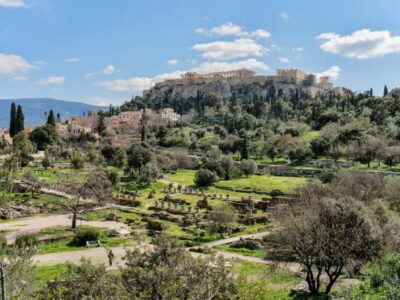
Acropolis & up to 5 Archaeological Sites Combo Pass
Read our review →
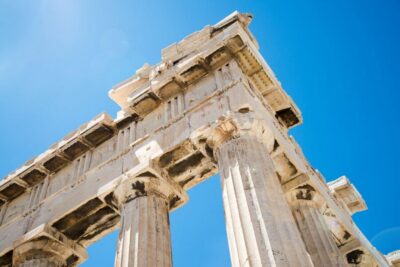
Acropolis, Parthenon & Acropolis Museum Guided Tour
Read our review →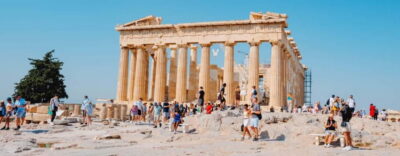
Acropolis, Parthenon & Acropolis Museum Guided Tour
Read our review →

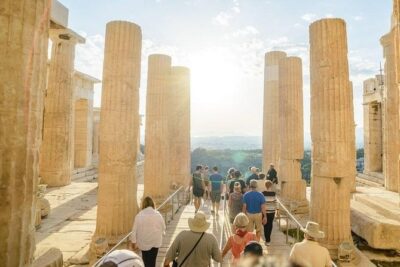
Acropolis monuments & Parthenon Walking Tour with Optional Acropolis Museum
Read our review →Browse the lists this tour appears in