
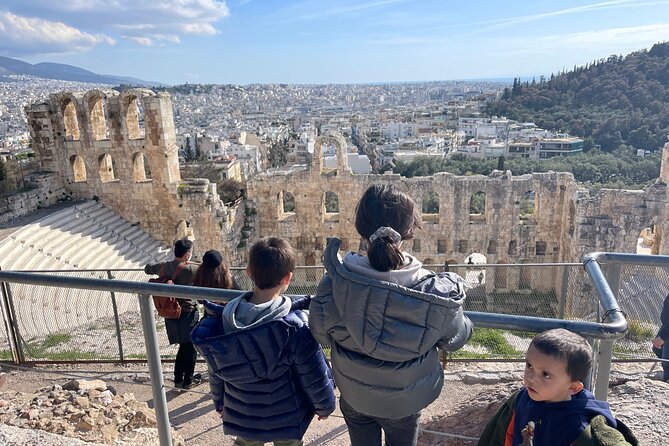
Reviewed · ATHENS ACROPOLIS TOURS
Private 4-hour Walking Tour of Acropolis and Acropolis Museum in Athens
The best part of this four-hour Athens tour is the order: you begin with the Acropolis Museum, then climb to the monuments themselves. That lets you see the sculptures and architectural details indoors before standing among the ruins they came from. The private format also means your guide can explain the myths and answer questions without a large group slowing you down.
I like the included admission, since it removes one common source of delay at two busy sights. I also like the human scale of the tour. Guides such as Anna, Kathy, Ioanna, Maria, and Nikos have been praised for clear explanations, patience, and adjusting the pace to the group.
The main consideration is the price: $383.55 per person is a serious outlay, especially since the tour requires at least two people. You are paying for a private guide, four hours, and entry tickets, so the value improves when you share the experience with family or friends.
Key points to know before booking
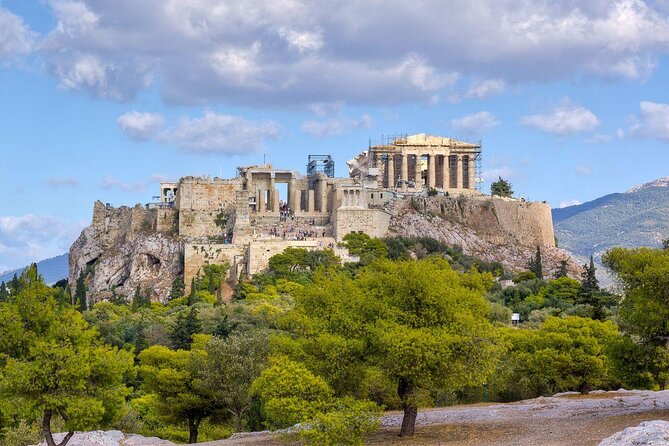
- Museum first, monuments second: You see the Acropolis sculpture collection before walking up to the temples.
- Private four-hour format: Only your group joins the guide, with room for questions and a slower pace when needed.
- The Parthenon is not the whole story: You also explore the Erechtheion, Propylaea, Athena Nike, Roman remains, and ancient sanctuaries.
- Tickets are included: Admission covers both the Acropolis and Acropolis Museum.
- Expect a real uphill walk: The climb and uneven ancient site call for water and sensible shoes.
- Meeting point matters: The tour begins at the Acropolis Museum, with no food, drinks, or transportation included.
Why starting at the Acropolis Museum works so well
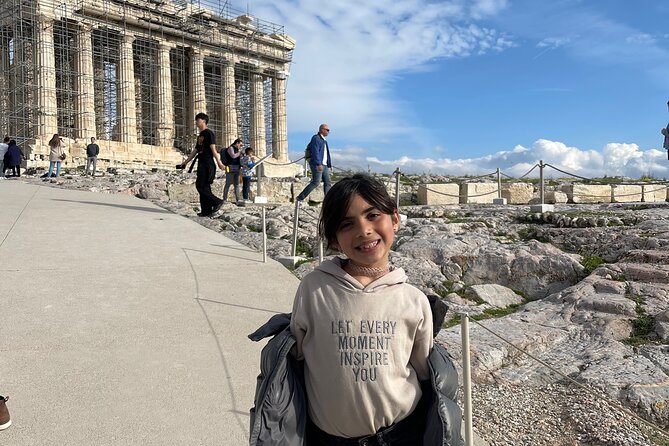
Meet your English-speaking guide in front of the Acropolis Museum on Dionysiou Areopagitou Street. The museum is not just a waiting room before the hill. It is the intellectual beginning of the visit.
The permanent collection is arranged in five broad sections, and a guide helps connect objects that can otherwise feel scattered. You begin with finds from the Acropolis slopes, including pottery, everyday objects, reliefs, and votive offerings. These modest pieces help you picture the hill as a working sacred place, not only as a collection of famous temples.
The Archaic section brings you face to face with the early sculpture of Athens. Look for the Moskophoros, the well-known korai, pediment figures, and votive statues. A guide can explain how these works differ from later Classical sculpture and why the Persian destruction of Athens changed what was built afterward.
The Parthenon gallery is the museum’s central experience. Its orientation and proportions echo the temple above, and the display includes parts of the frieze, metopes, pediments, and inscriptions connected with the building. That visual link makes the later walk much easier to follow.
One especially useful detail is the way the museum reveals archaeological remains beneath its floors. Excavations found on the building site remain visible through sections of glass. You can connect the monumental Acropolis with the ordinary homes and earlier layers of Athens below it.
Your guide may also point out material from the Propylaea, Temple of Athena Nike, and Erechtheion. The final section covers the fifth century BC through the fifth century AD, including Classical, Hellenistic, and Roman sculpture, inscriptions, and portraits.
The museum portion lasts about an hour. That is enough for a focused introduction, though not enough to study every case at length. If you like archaeology and want to read every label, you may wish for more museum time. If you prefer a clear story before heading uphill, the hour is well judged.
More ways to see the Acropolis:
- Athens: Acropolis & up to 5 Archaeological Sites Combo Pass
★ 4.4 · 12,619 reviews - Athens: Acropolis Ticket with Optional Audio or Live Guide
★ 4.2 · 11,055 reviews - Athens: Acropolis, Parthenon & Acropolis Museum Guided Tour
★ 4.8 · 9,316 reviews
Walking from the museum to the Acropolis
After the museum, you walk toward the Acropolis and begin gaining height. The hill rises 156 meters above sea level, and the route involves an uphill approach over ancient ground. Take water. You can buy some up there, but carrying a bottle is easier.
The tour is described as suitable for most people, yet this is still a walking experience. The path can feel demanding in warm weather, and the stones are uneven. The private setup helps here. Your guide can pause, explain a site from a comfortable point, and avoid forcing the whole group into a rushed climb.
The first approach can include the Beule Gate, the current access gate west of the Propylaea. Built in the third century AD, it formed part of a later defensive wall. Its two rectangular towers use pieces taken from earlier buildings, including material from the choregic monument of Nikias.
That reuse tells you something important about Athens. The Acropolis was not frozen in the fifth century BC. Later communities repaired, fortified, adapted, and reused the sacred hill. A guide makes these less famous layers easier to notice.
The Propylaea and the first grand view
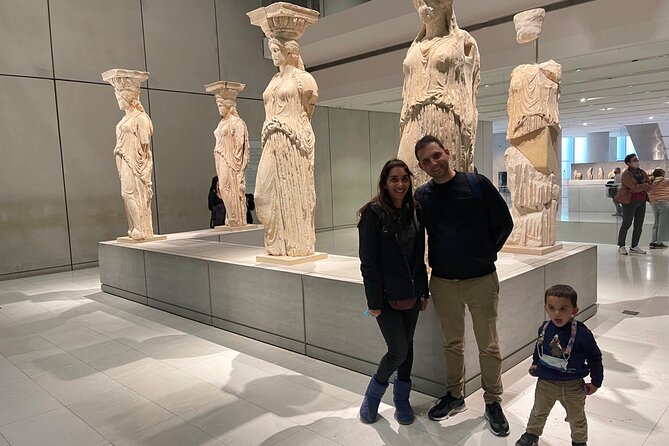
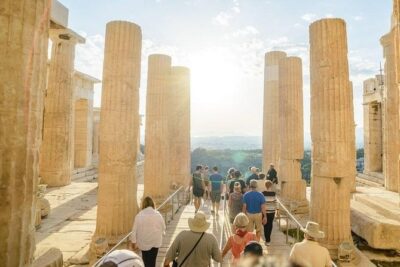
The Propylaea form the monumental entrance to the Acropolis. Built under Pericles between 437 and 431 BC, they replaced an earlier entrance from the time of Pisistratus. The architect Mnesicles designed the gateway with the look of a Doric temple, but adapted it to the steep and awkward ground.
The outer portico had Doric fronts and Ionic columns on its side platforms. Pentelic marble gave the entrance a formal, polished appearance, while five openings in the access wall controlled movement into the sacred precinct.
As you pass through, you get the first full sense of the Acropolis as a planned religious complex. The Propylaea also frame the route toward the monuments beyond. I find this pause valuable because it gives the hill a sequence: entrance, ascent, sacred buildings, and views across Athens.
The passage can be crowded, and you may not linger wherever you want. A private guide cannot clear the path, but can help you find a better place to stop and explain what you are seeing without the usual headsets or group shouting.
Temple of Athena Nike, a small monument with a large message
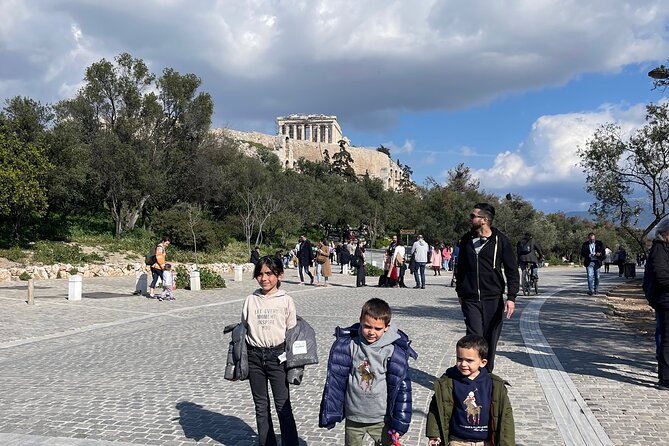
The Temple of Athena Nike sits beside the entrance on a bastion. Built between 426 and 421 BC, it replaced earlier temples whose remains survive within the structure.
This small Ionic temple carried a powerful political message. Its frieze showed gods and scenes of warfare, including the Greek victory over the Persians at Marathon. The temple’s size can surprise you after the scale of the Propylaea and Parthenon, but its position made it a visible guardian of the entrance.
The experience includes discussion of the temple and its surviving remains. Because some sculpture is now protected in the Acropolis Museum, seeing both places in one visit is useful. You can look at the actual building above, then understand its decorative program indoors.
The schedule allows about 15 minutes here. That is enough for orientation and explanation, but not a long architectural study.
More museums and ancient sites in Athens:
- Athens: Acropolis, Parthenon & Acropolis Museum Guided Tour
★ 4.8 · 3,579 reviews - Acropolis monuments & Parthenon Walking Tour with Optional Acropolis Museum
★ 5.0 · 2,678 reviews - Athens: Acropolis Museum Ticket with optional Audio Guide
★ 4.4 · 2,652 reviews - Parthenon & Acropolis Museum with Audio or Live Tour Option
★ 4.1 · 2,446 reviews
The Parthenon and the heart of the visit
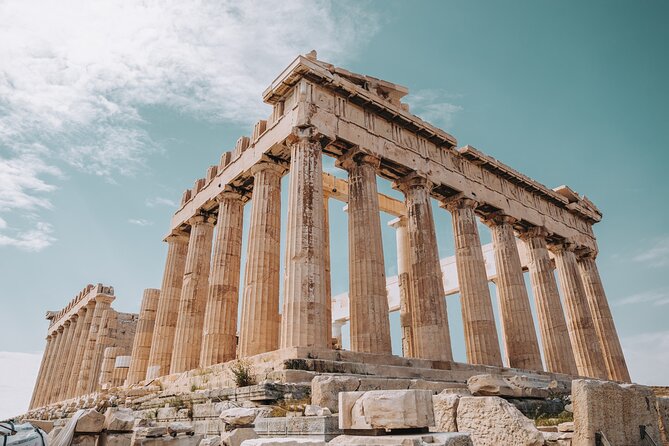
The Parthenon is the main reason many people come to Athens, and the tour gives it about 20 minutes of focused attention. Built between 447 and 432 BC, the Doric temple was designed to house a colossal statue of Athena Parthenos made from wood, ivory, and gold.
Today you see the building as a weathered monument under continuing restoration. Scaffolding and reconstruction work can affect the view, and the site is not a pristine ruin. That is part of the honest experience. The temple has been altered, damaged, and repaired for centuries, including the destruction that left much of its sculpture elsewhere.
Your guide can help you look past the familiar postcard image. Notice the surviving columns, the marble construction, the temple’s position above Athens, and the relationship between the building and the other structures on the hill.
This is also where the museum preparation pays off. Having seen sections of the frieze and other sculpture indoors, you have a better idea of what once completed the architecture. The Parthenon becomes more than a famous shell.
The Erechtheion and the sacred stories of the hill
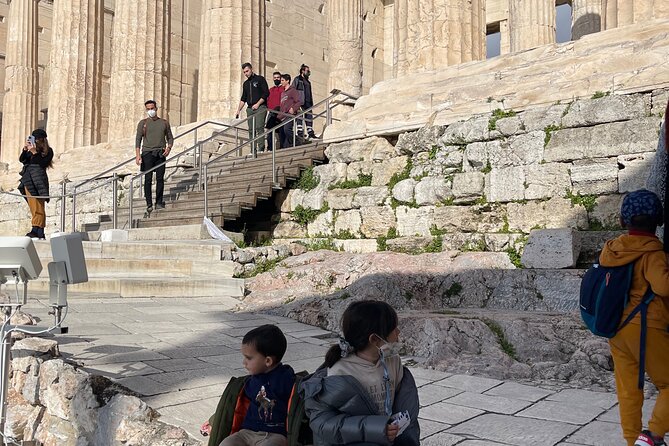
The Erechtheion is one of the most interesting stops because it does not rely on simple symmetry. Built on uneven ground, it had to accommodate several old shrines and sacred traditions, including places linked with Poseidon, Hephaestus, and Erechtheus.
Its design includes a northwest portico supported by Ionic columns and a southwest porch supported by six female figures, the Caryatids. These statues are among the most recognizable images on the Acropolis.
The building’s awkward shape is not a failure of planning. It reflects the need to preserve older sacred locations while creating a new temple. That makes the Erechtheion a fine example of how religion, myth, and construction overlapped in ancient Athens.
The visit allows about 15 minutes. You may not be able to inspect every side of the building closely, but your guide can explain why it looks so different from the Parthenon. That contrast is one of the strongest lessons of the tour.
Smaller ruins that give the hill depth
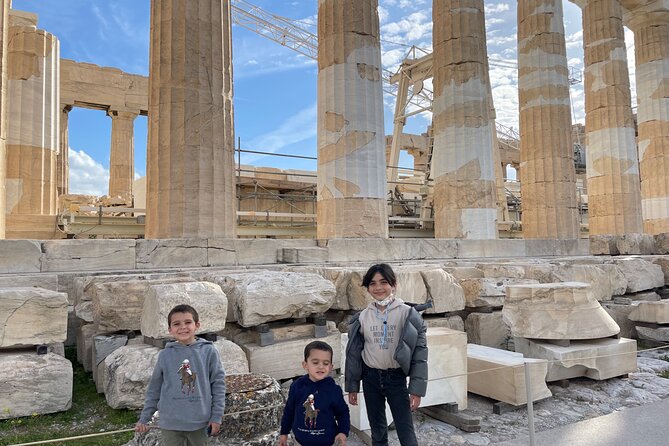
Several shorter stops round out the Acropolis experience. The Sanctuary of Artemis Brauronia lies south of the Propylaea. It served Artemis, protector of women before and after childbirth, and probably worked alongside her larger sanctuary at Brauron in Attica.
Only foundation cuts in the bedrock remain, yet the outline of the former pi-shaped Doric stoa can still be understood. The head of a statue from the sanctuary is now in the Acropolis Museum, giving you another useful connection between the two sites.
You also see the Temple of Rome and Augustus, a small circular building from the late first century BC. Athens dedicated it to the goddess Rome and Octavian Augustus. Its nine Ionic columns and white marble roof marked the Roman presence on a hill usually associated with Classical Greece.
The Monument of Agrippa is represented by a tall rectangular pedestal. It originally honored Eumenes II of Pergamon after a chariot-race victory, then received a later dedication to Marcus Agrippa. The surviving block is easy to overlook, but its changing purpose illustrates how the Acropolis continued to carry new political messages.
There is also discussion of an older Temple of Athena Polias, probably dating to the sixth century BC. The Persians damaged it in 480 BC, and it was never rebuilt. Its surviving foundations and altar remain visible, while sculpture from its pediments is displayed in the museum.
These stops are not as instantly impressive as the Parthenon. I like them because they prevent the visit from becoming a one-building photo stop. You get a sense of many centuries of worship, destruction, rebuilding, and reuse.
How the private format affects the experience
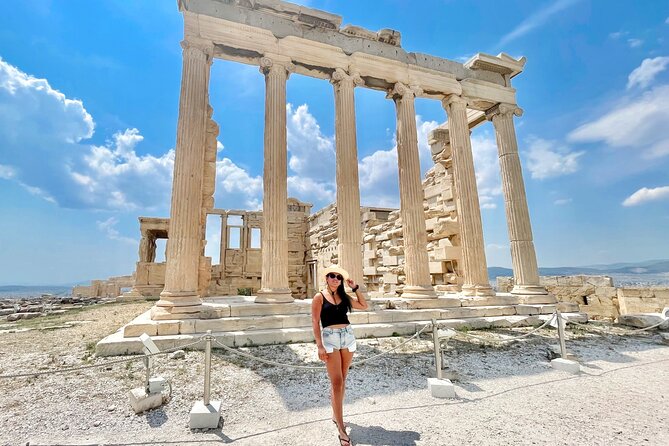
A private tour is most useful here because the Acropolis is both crowded and complicated. The monuments are spread across a steep site, and a guide can keep the story moving while still stopping for questions.
The experience requires at least two people, and the price is charged per person. At $383.55 each, it is not the budget choice for a couple. The cost makes more sense for a small family or group that wants a dedicated guide rather than a large shared departure.
The pace is another advantage. One group used four people with a guide and found that arrangement comfortable. The guides named in the feedback, including Anna, Kathy, Ioanna, Maria, and Nikos, were praised for explaining mythology, history, and architecture in an approachable way. One guide was particularly good at adapting the walk to physical limits within the group.
That flexibility is useful, but you should still be clear about what the tour does not include. Food and drinks are not provided, and transportation is not included. Pickup is offered in the sense that the guide meets you at the museum or a nearby place, so confirm the exact meeting instructions before setting out. One person had trouble with meeting-point clarity, so allow time to locate the museum entrance.
Timing, tickets, and practical comfort
The tour lasts about four hours, with roughly one hour in the museum and the rest on the Acropolis and its monuments. The exact time at each stop can shift because this is a private activity, but the published schedule gives you a useful picture: 20 minutes at the Parthenon, 15 minutes at several smaller temples, and shorter attention to the Roman remains.
Admission to both major sights is included. That matters because you can move from the museum to the Acropolis without arranging separate entry on the day, and you avoid waiting in the usual ticket lines.
Wear shoes suited to uneven stone and bring water. The hill is exposed, and the walk is more demanding than the four-hour duration might suggest. Most people can participate, but the private format is especially helpful if someone in your group needs occasional pauses.
The tour is offered in English and includes local taxes. Confirmation arrives when you book, and free cancellation is available until 24 hours before the start time. Changes or cancellations inside that window are not refunded.
Who should book this Acropolis tour?
I would choose this tour if you want the famous sights explained in context, not simply pointed out. It suits first-time visitors to Athens, families, small groups, and anyone who prefers asking questions instead of following a guide holding up a flag.
It is also a good fit if mythology and sculpture matter to you. The museum gives the tour intellectual structure, while the uphill walk supplies the setting. Guides have been praised for making complex mythology easier to follow and for maintaining a relaxed pace.
I would hesitate if your priority is the lowest possible cost, a very long museum visit, or a short photo stop at the Parthenon. Four hours is a firm commitment, and the price is high for two people. You also need to be comfortable walking uphill over uneven ground.
Should you book it?
Book this private Acropolis and Acropolis Museum tour if you value time, context, and a guide who can adapt the visit to your group. The museum-to-hill sequence is smart, the tickets are included, and the private format helps you cope with a crowded site and a demanding climb.
Skip it if you are happy reading signs on your own or already know the Classical monuments well. For everyone else, the cost buys more than entry: it gives you a clear story linking the sculptures, temples, myths, and later Roman additions. That makes the Acropolis easier to understand and far more rewarding to see.
FAQ
Where does the tour begin?
The tour begins at the Acropolis Museum on Dionysiou Areopagitou Street in Athens. Your guide meets you in front of the museum or at a nearby place.
How long does the tour last?
The experience lasts approximately four hours. About one hour is spent at the Acropolis Museum, followed by the Acropolis and its monuments.
Are admission tickets included?
Yes. Admission to the Acropolis and entrance to the Acropolis Museum are included in the tour price.
Is this a private tour?
Yes. Only your group participates, and at least two people are required per booking.
What language is the tour offered in?
The tour is offered in English with a private official tour guide.
Can I cancel for a refund?
You can cancel at least 24 hours before the local start time for a full refund. Cancellations or changes made less than 24 hours before the start time are not refunded or accepted.
More walking tours in Athens
- Athens: Acropolis and Parthenon Guided Walking Tour
★ 4.6 · 5,882 reviews - Greek Food Walking Tour in Athens
★ 5.0 · 4,740 reviews - Acropolis: Acropolis and Parthenon Guided Walking Tour
★ 4.7 · 3,442 reviews - Athens Acropolis and Parthenon Walking Tour
★ 4.5 · 1,355 reviews
Newly reviewed around Athens
- Athens: workshop for painting landscape with local artist★ 4.6 · 3 reviews
- Athens: Greek Wine & Olive Oil Tasting at Brettos Plaka★ 4.5 · 3 reviews
- Outdoor Yoga and Pilates with Akropolis view★ 4.0 · 5 reviews
- Acropolis of Athens: 60′ Tour in a Vintage Motorcycle★ 5.0 · 4 reviews
- Ultimate Tasting of the Volcanic Wines of Greece★ 5.0 · 3 reviews
- workshop for painting acropolis/landscape with local artist★ 5.0 · 3 reviews
- Athens at Twilight Night Tour with Drinks and Meze Dishes★ 4.8 · 4 reviews
- Breakfast in the markets with olive oil and honey tasting★ 4.8 · 8 reviews
Athens Acropolis Tours, compared.
Acropolis & up to 5 Archaeological Sites Combo Pass
Read our review →
Acropolis, Parthenon & Acropolis Museum Guided Tour
Read our review →
Acropolis, Parthenon & Acropolis Museum Guided Tour
Read our review →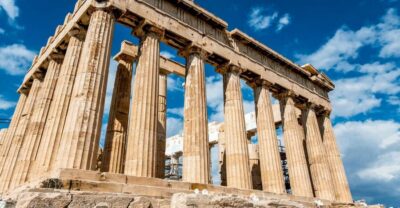

Acropolis monuments & Parthenon Walking Tour with Optional Acropolis Museum
Read our review →Browse the lists this tour appears in