
Reviewed · ATHENS ACROPOLIS TOURS
Parthenon & Acropolis Guided Tour in Spanish -Option Tickets
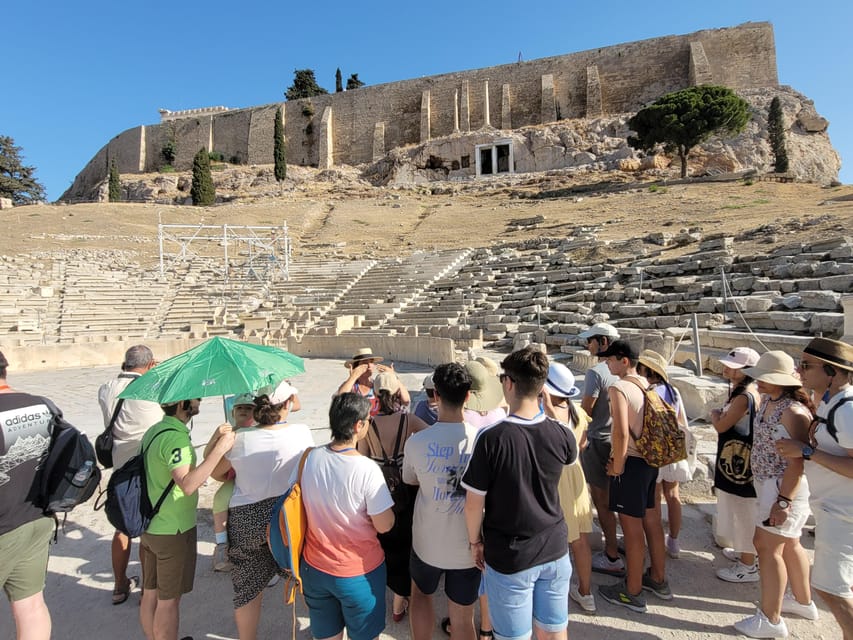
The best part of this Acropolis tour is its clear route through the whole hill, from the Theatre of Dionysus to the Parthenon and Erechtheion. You get the big monuments, the myths of Athena and Poseidon, and time at the top for photos, all in Spanish with an official certified guide.
I like the early start, which can mean cooler air and fewer people, and I like the way the tour gives every major monument a place instead of rushing straight to the Parthenon. Guides such as Efi and Simon are praised for their storytelling, careful pacing, and ability to keep children involved.
The main drawback is the two-hour limit. It is enough for a strong introduction, but not for a slow archaeological study or a long stop at every viewpoint. You also need to carry very little, since bags, food, drinks, strollers, and several types of wheelchairs are not allowed.
Key points at a glance
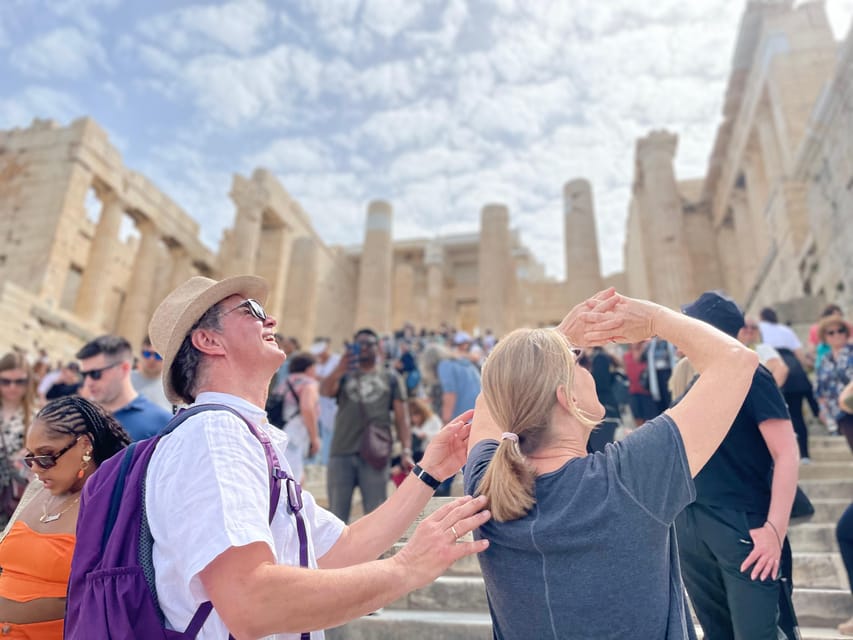
- The route covers the major Acropolis monuments, including the Theatre of Dionysus, Odeon of Herodes Atticus, Propylaea, Parthenon, and Erechtheion.
- Spanish is the only tour language, with an official qualified guide and headphones to make explanations easier to hear.
- Early entry helps with heat and crowds, especially during Athens’ hot summer months.
- The guide connects archaeology with myth, including the contest between Athena and Poseidon and the story behind the Caryatids.
- You finish at the summit, where you can remain for photos and 360-degree views after the guided portion.
- The ticket is optional, so check the booking choice carefully before paying. The $33 price applies to the stated experience, but the entrance-ticket option matters.
A well-planned Spanish route up the Acropolis
The Acropolis is easier to understand when you follow its natural approach from the southern slope. This tour does that well. You meet near the southern entrance, across from the Acropolis Museum and a short walk from the Acropolis metro station, then walk uphill through the monuments in a sensible order.
That meeting point is practical. You do not need a hotel transfer, and the metro puts you close to the start. Look for the TOP TOURS GREECE office sign. Arrive ready to walk, since the entire experience takes place on foot and includes uneven ancient ground and uphill sections.
The guide uses headphones, which are particularly useful near crowded monuments. You can keep your eyes on the stones and columns instead of standing shoulder to shoulder with the guide to hear every sentence.
The tour is designed for a moderate pace. That does not mean a leisurely museum visit. Two hours passes quickly on the Acropolis, so I would treat this as an organized introduction followed by your own time at the summit, not as a complete archaeological study.
More ways to see the Acropolis:
- Athens: Acropolis & up to 5 Archaeological Sites Combo Pass
★ 4.4 · 12,619 reviews - Athens: Acropolis Ticket with Optional Audio or Live Guide
★ 4.2 · 11,055 reviews - Athens: Acropolis, Parthenon & Acropolis Museum Guided Tour
★ 4.8 · 9,316 reviews
Theatre of Dionysus: where Greek drama began
The first guided stop is the Theatre of Dionysus, with about 10 minutes devoted to the site. This is a smart opening because it puts the Acropolis into the wider social life of ancient Athens.
The theatre was built in the 5th century BC and dedicated to Dionysus, the god associated with wine and theatre. It could hold about 17,000 spectators, a reminder that drama was not a small private art form. It was part of public life, religion, and civic culture.
I like beginning here because the Parthenon can otherwise feel like an isolated monument on a hill. At the theatre, you begin to see the Acropolis as a place connected to performance, worship, politics, and public gatherings.
Ten minutes is enough for an explanation and a look, but not enough to explore every detail of the seating and stage area. If the theatre interests you most, take mental notes and consider returning later on your own.
Asklepieion and the ancient concern with health
Next comes the Asklepieion of Athens, also called the sanctuary of Asclepius. The guide spends about 10 minutes here, explaining the site and the findings connected with health and healing.
This stop adds a useful human touch. The Acropolis was not only a place for grand temples and civic display. It also included a sanctuary dedicated to Asclepius, the god of medicine, where people sought help and healing.
The remains may not have the instant visual impact of the Parthenon, so the guide’s explanation matters here. A good story helps you understand why a less complete set of ruins deserves attention. This is one reason I prefer a guided visit to simply walking up with a map.
Odeon of Herodes Atticus and the living Acropolis
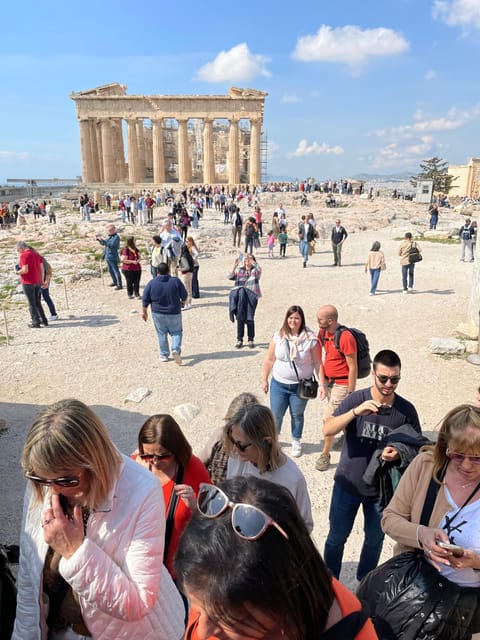
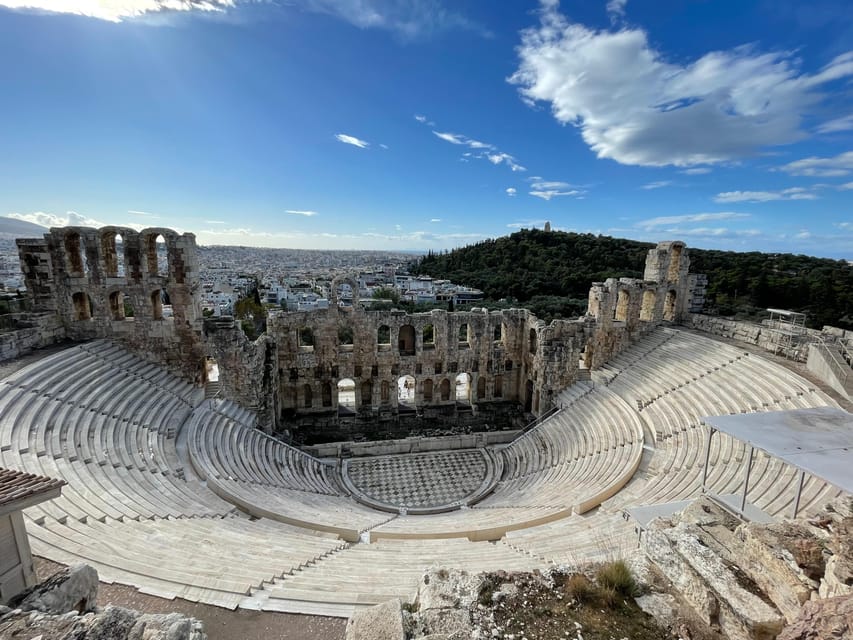
The Odeon of Herodes Atticus receives another 10-minute explanation. This large ancient performance building once had a roof, and it remains in use for concerts today.
Its continued role gives the Acropolis a welcome connection to modern Athens. You are not only looking at a dead ruin. You are seeing a performance space that still serves its original broad purpose, even though its setting and technical needs have changed.
The guide can point out the scale and design of the building before you continue uphill. You will not enter every interior space during this route, so think of the stop as a close look and a historical orientation rather than a full theatre visit.
More Athens tickets worth pre-booking:
- Athens: Acropolis Ticket with Audio Guide
★ 4.0 · 3,575 reviews - Athens All Included: Acropolis and Museum Guided Tour with Ticket
★ 4.5 · 2,673 reviews - Athens: Acropolis Museum Ticket with optional Audio Guide
★ 4.4 · 2,652 reviews - Athens: Acropolis Ticket & Optional Self-Guided Audio Tours
★ 4.1 · 2,542 reviews
Propylaea: the grand entrance
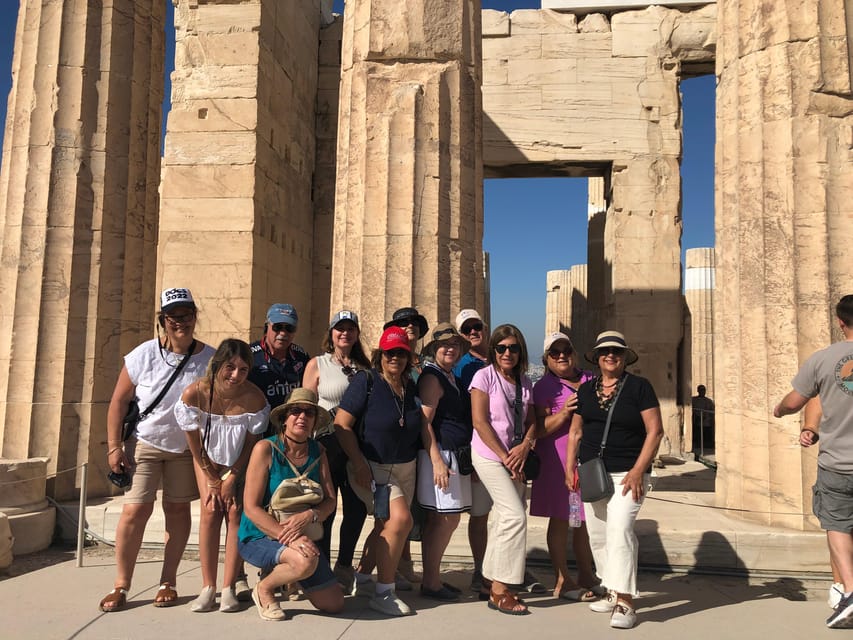
The Propylaea is the monumental gateway to the Acropolis. You spend about 10 minutes here, taking in its Doric and Ionic features before moving toward the central temples.
This is where the route begins to feel especially dramatic. The entrance was designed to make arrival feel important, and it still does. Passing through it gives you a sense of ceremony before the Parthenon comes fully into view.
The guide explains how the different architectural orders work. That helps you notice details you might otherwise file away as simply ancient Greek columns. The Doric style is generally heavier and simpler, while the Ionic style is more slender and decorative. You do not need to memorize every term, but hearing the distinction makes the ruins easier to read.
The approach can be busy, and the stone underfoot is not modern pavement. Wear firm shoes and keep your hands free. The prohibition on bags is important, so do not arrive carrying a large daypack.
Temple of Athena Nike: a small temple with a big role
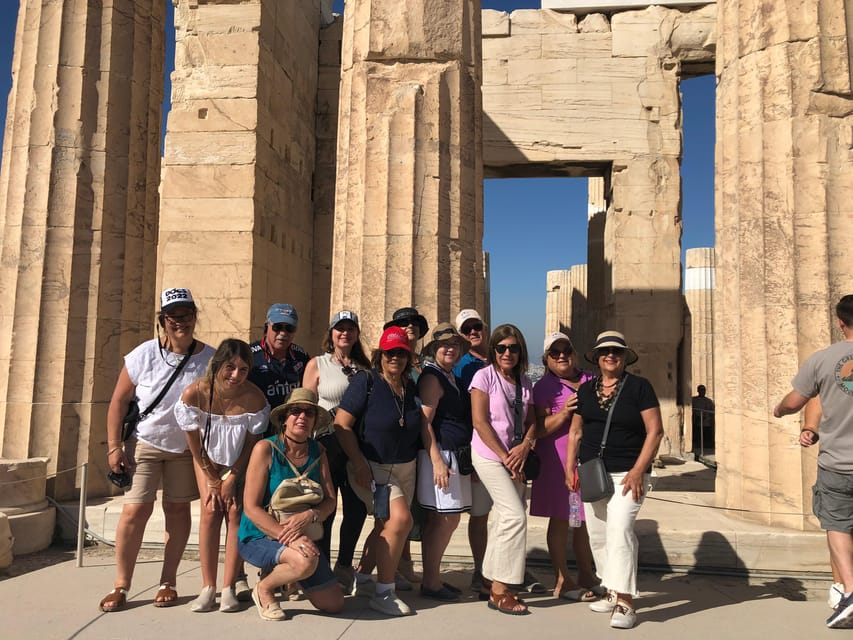
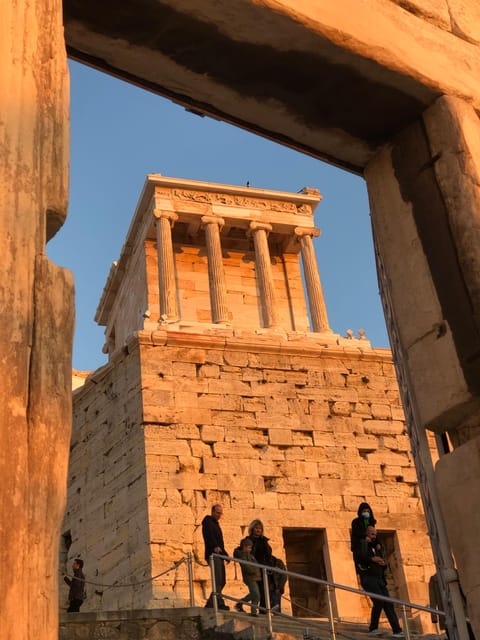
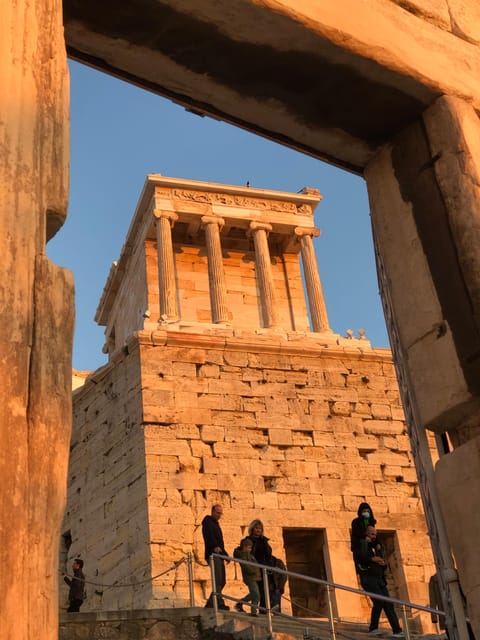
The Temple of Athena Nike receives a shorter explanation of about five minutes. It is smaller than the Parthenon, but its position near the entrance makes it an important part of the Acropolis story.
The temple honored Athena in her aspect as Nike, or victory. Its location by the gateway gave visitors a final reminder of the city’s protective goddess before they entered the sacred and civic center above.
Five minutes will not satisfy anyone who wants a long architectural lecture, but it fits the tour’s overall rhythm. The guide gives you the essential meaning, then keeps the group moving toward the main summit.
The Parthenon: the centerpiece, not the whole story
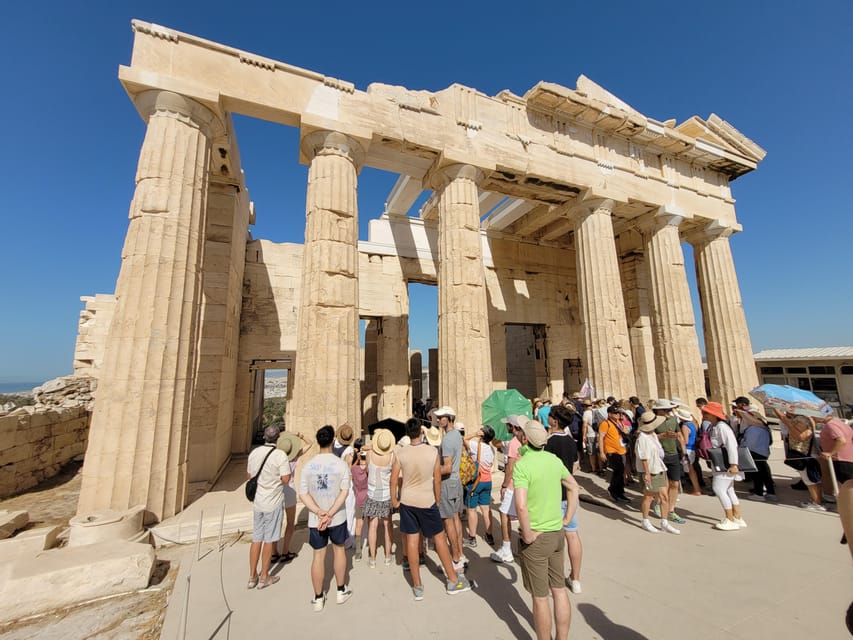
The Parthenon receives the longest stop, about 20 minutes. It was built in honor of Athena, the protective goddess of Athens, and remains the visual center of the hill.
You will hear why the temple is admired for its proportions and harmony. The structure looks solid and orderly, yet ancient Greek architects used subtle refinements that make it appear more balanced to the eye. A guide can point out the design choices and explain the building’s purpose far better than a quick photograph can.
The tour also brings in the contest between Athena and Poseidon for the city. Athena offered the olive tree, while Poseidon offered a water source. The story gives the temple and the wider Acropolis a memorable link to the identity of Athens.
Do not expect the Parthenon to look untouched. It has suffered damage, alteration, and the loss of much of its original decoration. That is part of what you are seeing. A good explanation helps you picture the monument as a working temple rather than judging it only by its present ruins.
Twenty minutes is useful but brief. You will have time to hear the main explanation, look around, and take photographs from permitted viewpoints. If you want to study every column or architectural feature, plan to stay after the guided portion.
Erechtheion and the famous Caryatids
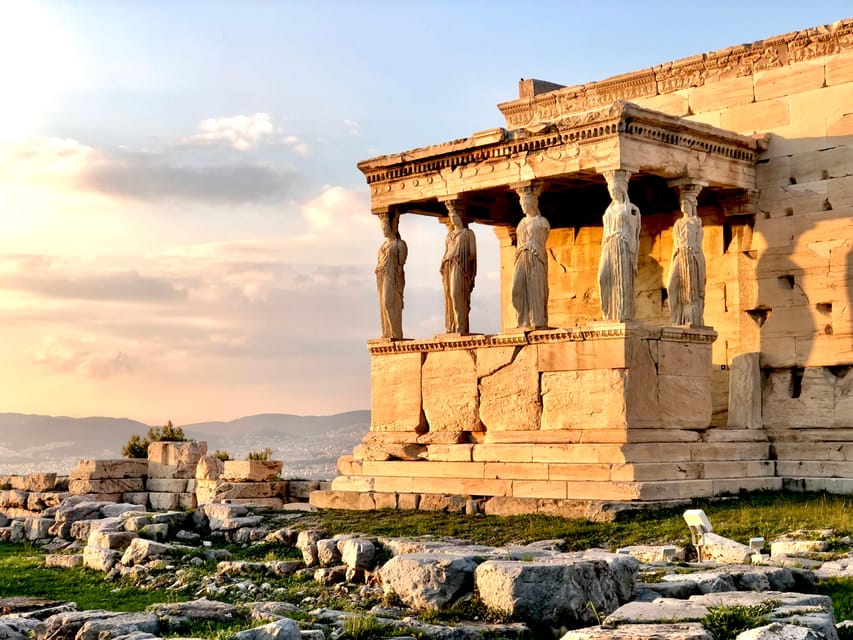
The Erechtheion receives about 10 minutes, followed by another 10 minutes focused on the Porch of the Caryatids. For many people, this is the most immediately memorable part of the visit.
The Caryatids are feminine-shaped columns that support the porch. Their human form makes them feel unusually expressive compared with the more familiar rows of plain columns. The guide explains their place within the building and helps you separate the original structure from the pieces now protected elsewhere.
The Erechtheion is also tied to the contest between Athena and Poseidon. The building preserves the memory of the gods’ struggle over the city, including Athena’s olive tree and Poseidon’s water source. Myth here is not a side story. It explains why the Athenians attached such meaning to this particular hill.
The stop can be crowded, so do not expect a quiet, private look at the Caryatids. The guide’s position and headphones help, but you may need patience for a clear photograph.
Eumenes, Asclepius, and the route’s final views
The route also passes through the Portico of Eumenes and the sanctuary of Asclepius. These sections help fill in the spaces between the headline monuments.
The Portico of Eumenes once provided a covered walkway along the southern side. It is easy to overlook when your eyes are fixed on the Parthenon, but it helps show how the Acropolis included paths, gathering spaces, and buildings that supported daily movement.
After the guided stops, you finish at the top of the hill. This is a useful design choice. You are not pushed straight out after the final explanation. You can stay to photograph the monuments and take in the 360-degree views across Athens.
The views are one of the strongest reasons to start early. Morning light can be pleasant, and cooler conditions make the uphill walk easier. Summer heat becomes serious on exposed stone, so bring water for before or after the visit, while remembering that food and drinks are not allowed inside the activity area according to the stated rules.
Several guide experiences also point to practical shade stops and good timing. Efi, in particular, is praised for keeping the group moving while finding relief from the sun, and for offering suggestions about what to do next. That kind of help can matter as much as a memorized list of dates.
What the guides add in Spanish
The tour is conducted in Spanish, not as a bilingual presentation. That is a major advantage if you want to follow the detail without constantly translating in your head.
The guide is officially qualified, and the emphasis is not limited to dates and names. You can expect explanations about history, art, geopolitics, Greek culture, and mythology, with storytelling used to connect the pieces.
Efi is singled out repeatedly for her energy, passion, and ability to keep children interested. Simon is also praised for his clear explanations and friendly manner. The exact guide depends on the day, so do not book expecting one named person unless the provider confirms it.
The strongest guide reports describe a good walking pace, lively storytelling, helpful communication, and time for questions. One particularly useful detail is the effort to adjust the rhythm for heat and crowds. On the Acropolis, that practical awareness improves the experience.
Price, timing, and what you actually receive
At $33 per person, this is a fair price for a two-hour guided visit if the entrance-ticket option is selected and you value a Spanish-speaking official guide. The ticket choice needs careful attention when booking, since admission is included only if that option is chosen.
The price also covers the guided visit to all the stated Acropolis monuments, early entrance, headphones, and the walking tour. It does not cover hotel pickup, transfers, food, or drinks.
The main value is time saved and meaning gained. You can walk up alone for less, but you may miss the connections between the theatre, sanctuaries, temples, myths, and civic life. The skip-the-ticket-line feature can also matter on a busy day, though it does not remove the need to pass through site security or follow access rules.
The tour lasts two hours, with starting times depending on availability. An early slot is the best choice if you can manage it. You gain a better chance of avoiding the strongest heat and the thickest crowds, though conditions at a major Athens monument can change quickly.
Who should book this Acropolis tour
I would choose this tour if you want the main monuments explained in Spanish, prefer a clear route, or have only a short time in Athens. It is also a good fit for families who need a guide with enough energy to keep the walk moving.
History and mythology fans will get the most from it. The explanations about Athena, Poseidon, Dionysus, Asclepius, and the Caryatids give the stones a human story instead of leaving you with a collection of impressive but disconnected ruins.
I would be more cautious if you need wheelchair access, use a non-folding wheelchair, travel with a stroller, or want to carry a bag. The activity is not suitable for wheelchair users, and the stated restrictions are strict.
You should also think twice if you want a slow photographic session or a long archaeological inspection. The tour is well paced, but two hours means the guide must keep moving. You can stay at the summit after the tour, which helps, but the guided part remains focused.
Cancellation is flexible up to 24 hours before the start for a full refund, and you can reserve now and pay later. Those terms are useful when your Athens plans are still shifting.
Should you book it?
Book this tour if Spanish is your preferred language and you want a well-organized introduction to the entire Acropolis rather than a quick Parthenon-only visit. The early start, headphones, official guide, and route from the Theatre of Dionysus to the Caryatids make the $33 price sensible, especially when the ticket option is included.
Skip it if you want complete independence, need accessible facilities, or plan to spend several hours studying every stone. For most first visits, though, a strong guide can turn the Acropolis from a famous photograph into a place with purpose, arguments, gods, theatres, healers, and ordinary human concerns.
FAQ
Is the tour conducted in Spanish?
Yes. The tour includes a live, officially qualified guide who conducts the experience in Spanish.
How long does the Acropolis tour last?
The guided tour lasts two hours. Afterward, you can remain at the top of the hill to take photographs and enjoy the views.
Does the tour include an Acropolis entrance ticket?
The entrance ticket is included only when you choose the ticket option during booking. Check the selected option before completing your reservation.
Where is the meeting point?
The meeting point is next to the southern entrance of the Acropolis, across from the Acropolis Museum and a few meters from the Acropolis metro stop. Look for the TOP TOURS GREECE office sign.
Does the tour include hotel pickup?
No. Hotel pickup and transfers are not included.
Are headphones provided?
Yes. Headphones are included so you can hear the guide clearly during the walking tour.
What monuments are visited?
The route includes the Theatre of Dionysus, Asklepieion of Athens, Odeon of Herodes Atticus, Propylaea, Temple of Athena Nike, Parthenon, Erechtheion, and Porch of the Caryatids.
Is the tour suitable for wheelchair users?
No. The activity is not suitable for wheelchair users. Non-folding wheelchairs and electric wheelchairs are also not allowed.
Can I bring a stroller or bag?
No. Baby strollers and bags are not allowed. Food and drinks are also prohibited.
Can I cancel the booking?
Yes. You can cancel up to 24 hours in advance for a full refund. The reserve-now, pay-later option is also available.
Newly reviewed around Athens
- Feel Ancient thermal Spa Visit Delphi, Leonidas ℨoo Spaʀtan★ 5.0 · 4 reviews
- Food Tour★ 5.0 · 3 reviews
- Explore the Hidden Food Gems of Athens★ 5.0 · 57 reviews
- Food Experience in Athens including Unlimited Lunch★ 5.0 · 3 reviews
- Eat Your Way Through Athens: A Local Food Walk★ 4.9 · 97 reviews
- From Athens: Delphi Private Tour with Lunch Time★ 4.0 · 3 reviews
- Delphi: Spanish guided one day tour★ 4.6 · 55 reviews
- Early Entry Acropolis & Museum. Beat the Crowds & the heat★ 5.0 · 3 reviews
Athens Acropolis Tours, compared.
Acropolis & up to 5 Archaeological Sites Combo Pass
Read our review →
Acropolis, Parthenon & Acropolis Museum Guided Tour
Read our review →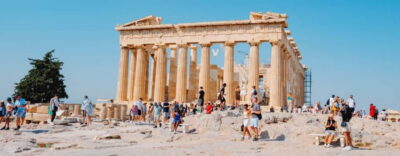
Acropolis, Parthenon & Acropolis Museum Guided Tour
Read our review →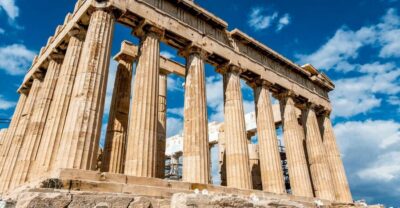
Acropolis monuments & Parthenon Walking Tour with Optional Acropolis Museum
Read our review →Browse the lists this tour appears in