
Reviewed · MUSEUMS
National Archeological Museum Private Tour with Admission
The Antikythera Mechanism is the sort of object that can change how you see ancient Greece. This 2,000-year-old device is not just another display case item. It shows how advanced ancient Greek science could be, and a good guide can turn a puzzling object into a clear, memorable story. You’ll also see Agamemnon’s gold death mask, the Cup of Nestor, the Ring of Theseus, Aphrodite, and Poseidon.
I like two things here. First, the tour is private, so your guide can focus on mythology, history, sculpture, archaeology, or the museum’s main highlights instead of following a fixed script. Second, admission is included and the guide meets you at the main entrance, which keeps the start simple. The main drawback is the price: at $199 per person, this makes the most sense for visitors who want context and personal attention, not for someone planning a quick, self-guided museum visit.
Key points to know before booking
- Two hours inside one of Athens’ great museums: The visit concentrates on major ancient Greek objects without trying to cover every room.
- A private licensed archaeological guide: Your guide can adapt the explanation to your group’s interests and ages.
- Agamemnon’s gold death mask: One of the museum’s best-known Mycenaean treasures is part of the route.
- The Antikythera Mechanism: This ancient scientific instrument gives the tour a welcome change of pace from statues and gold.
- Flexible language options: Tours are offered in English, German, or Italian.
- A practical meeting point: You meet at the museum’s main entrance and finish there, with admission and skip-the-ticket-line access included.
Why this museum deserves two focused hours
Athens has no shortage of ancient sites, but the National Archaeological Museum gives you something the outdoor ruins cannot: objects removed from their original setting and placed together for close study. Here, you can examine a gold mask, a bronze statue, a painted vessel, or a delicate scientific instrument from only a few feet away.
That concentration is both the museum’s strength and its challenge. There is a great deal to see, and many objects carry names and stories that can blur together after an hour. A private guide helps you sort the important pieces from the merely interesting ones.
The tour lasts two hours. That is long enough to build a clear picture of ancient Greek culture, but short enough to fit into a busy Athens day. I would not expect to see every gallery. Instead, think of this as a guided route through key collections, with time for questions and a little adjustment if one subject catches your attention.
More museums and ancient sites in Athens:
- Athens: Acropolis, Parthenon & Acropolis Museum Guided Tour
★ 4.8 · 9,316 reviews - Athens: Mythology of Delphi, Museum and Arachova Guided Tour
★ 4.6 · 4,008 reviews - Athens: Acropolis, Parthenon & Acropolis Museum Guided Tour
★ 4.8 · 3,579 reviews
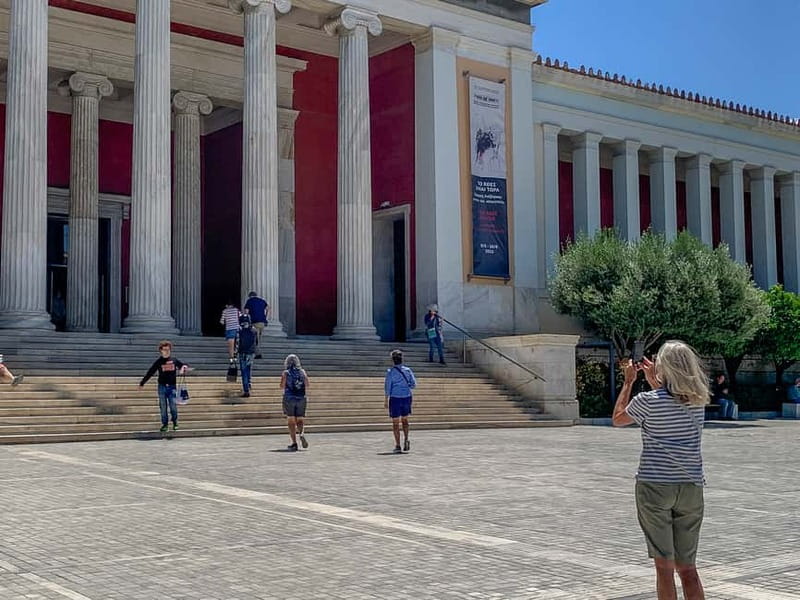
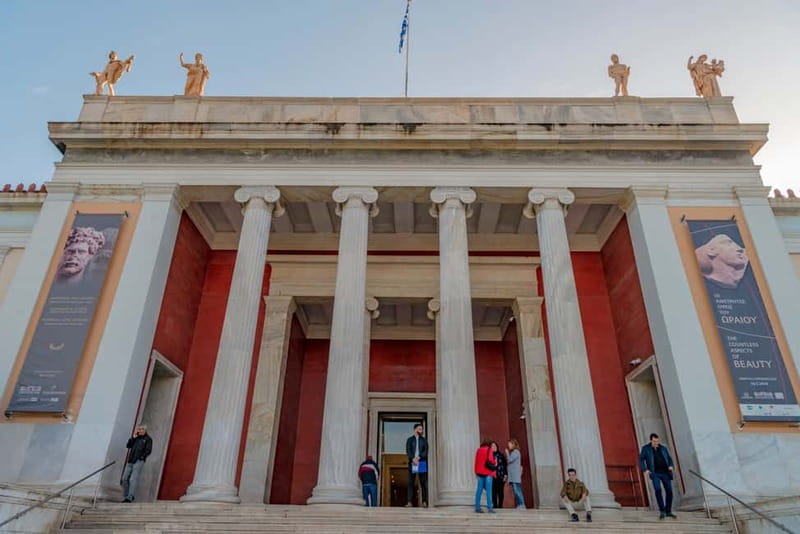
Meeting at the neoclassical museum entrance

Your guide meets you at the main entrance with a sign bearing your name. This is useful in central Athens, where a clear meeting point saves time and avoids the awkward question of finding someone in a large public building.
The tour begins and ends at the museum. There is no transportation between stops because there is only one stop: the National Archaeological Museum itself. That makes this a simple addition to a morning or afternoon in the city.
Admission tickets are included, and the activity offers skip-the-ticket-line access. You should still check the available starting times before booking, since the duration is fixed at two hours but the start time depends on availability.
The building is neoclassical and has been renovated. Inside, exhibition rooms open toward a leafy inner garden decorated with mosaics and archaeological pieces. A café by the garden gives you a place to pause before or after the tour, though the experience itself is centered on the galleries.
Agamemnon’s mask and the Mycenaean treasures
The gold death mask associated with Agamemnon is one of the objects most people expect to see. It is a striking piece, but the value of a guide is in explaining what it can and cannot tell us.
The mask is linked to the legendary king of Homer’s Trojan War, yet archaeology and mythology do not always line up neatly. That tension gives your guide a chance to explain the difference between a famous literary tradition and the evidence found in the ground. You get more than a quick look at gold behind glass. You get a lesson in how ancient stories, later interpretation, and archaeological discovery meet.
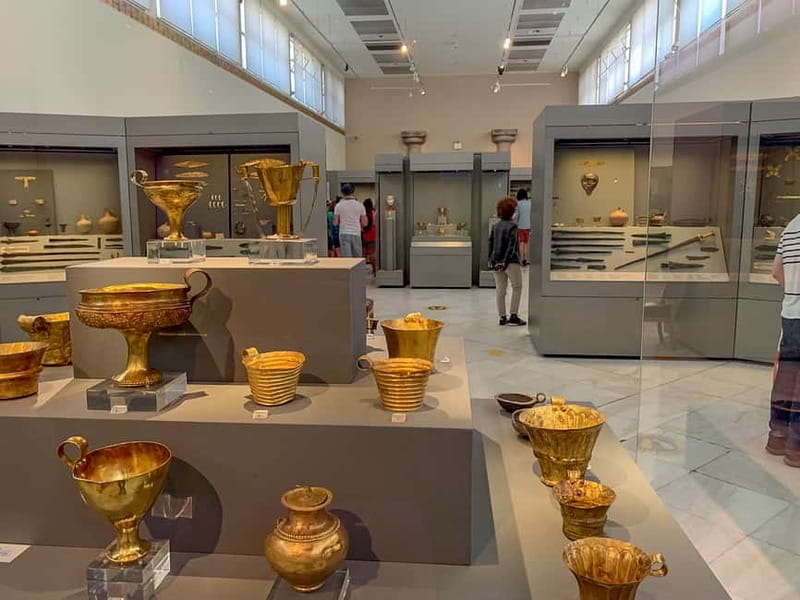
The Mycenaean gold hoard adds scale to the story. Gold objects can make the ancient world seem distant and decorative, but a guided explanation can connect them to burial customs, social rank, craft skill, and the power of early Greek societies.
The Cup of Nestor and the Ring of Theseus continue that mix of object and story. Their names immediately point toward Greek mythology and epic tradition. If mythology interests you, tell your guide at the start. The route can give extra weight to the stories behind the objects rather than treating each display as an isolated relic.
The Antikythera Mechanism changes the pace

The Antikythera Mechanism is a highlight for a different reason. It is not mainly about kings, gods, or heroic legends. It points to ancient Greek work in astronomy, mathematics, and mechanical design.
The object is about 2,000 years old, and its presence adds welcome variety to a museum visit often remembered for marble sculpture and gold. It also makes a useful teaching point: ancient Greece was not only a world of temples and myths. It was also a place where people measured, calculated, observed, and built complicated devices.
This is the kind of display that benefits greatly from a live explanation. Without context, the mechanism can look like a small, damaged object. With a guide, you can understand why it matters and why its survival is so remarkable. I would tell your guide if science or technology is a main interest, since the tour can give this object more attention.
A few more Athens tours worth putting side by side
- Best of Athens Half Day Private Tour
★ 5.0 · 3,714 reviews - Athens Full Day Private Tour
★ 5.0 · 2,903 reviews - Athens Airport Private Arrival Transfer with Meet & Greet
★ 4.5 · 1,495 reviews - Athens Airport to Athens Hotels Private Arrival Transfer
★ 5.0 · 947 reviews
Aphrodite, Poseidon, and the power of sculpture
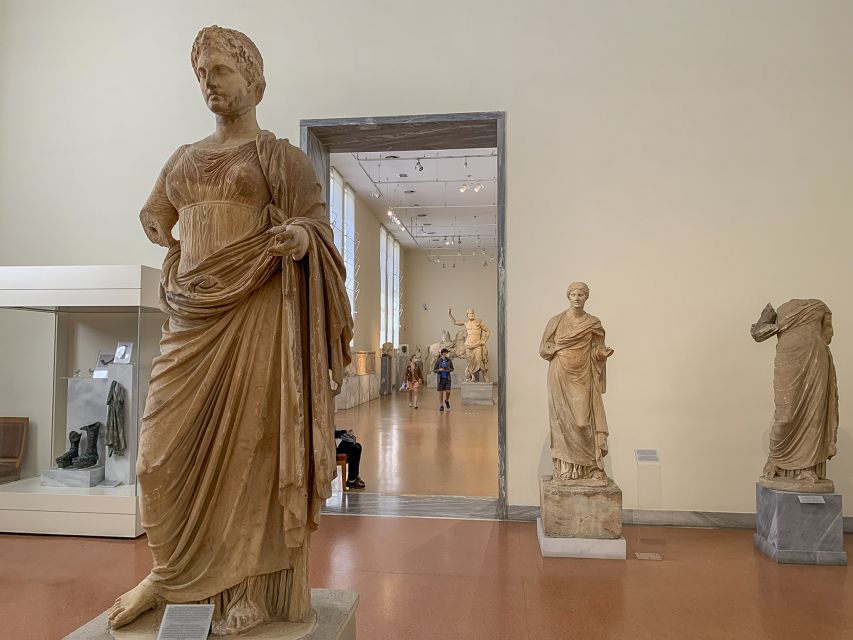
The museum’s sculpture collection offers a different experience from the gold objects. Aphrodite and Poseidon help show how Greek artists used the human body, movement, balance, and expression to suggest character and divine power.
A self-guided visit may leave you looking at one statue after another without knowing what to notice. A licensed archaeological guide can point out the details that give a sculpture meaning, from posture and gesture to the way an image reflects the beliefs of its period.
The museum is especially useful for comparing objects from different eras. You can see how artistic ideas changed, how gods were represented, and how later generations shaped their view of ideal beauty. The tour does not need to become a technical art lecture. You can ask for the main points, or request more detail if sculpture is your main reason for visiting.
This flexibility matters for families. Younger visitors may respond better to Poseidon, heroic tales, and unusual objects than to a long sequence of dates. Adults may want more detail about style, excavation, or historical setting. Since the group is private, the guide can adjust the pace and language.
A private format with room for your interests
The strongest feature of this experience is not simply the list of objects. It is the private format. Your guide can shape the commentary around what your group actually wants to understand.
You can choose a broad introduction to ancient Greek history, a mythology-focused visit, a sculpture route, or a highlights tour. You can also ask for explanations suited to different ages. That is a better fit than a large group tour if one person wants mythology while another cares more about science or art.
The tour is led by a state-accredited licensed archaeological expert. That credential matters in a museum where the difference between a memorable explanation and a string of dates can be considerable. The guide’s job is not just to identify an object, but to place it in a useful story.
The available languages are English, German, and Italian. If your group includes children or adults who do not usually seek out museums, ask for a clear, story-based approach. One useful quality of this tour is that it can explain why an object matters without assuming you already know ancient Greek history.
For groups of six or more, a whisper communication system is included. That helps you hear the guide in the galleries without requiring the guide to raise their voice. It is a small practical feature, but it can make a difference in a crowded museum room.
Is $199 per person good value?
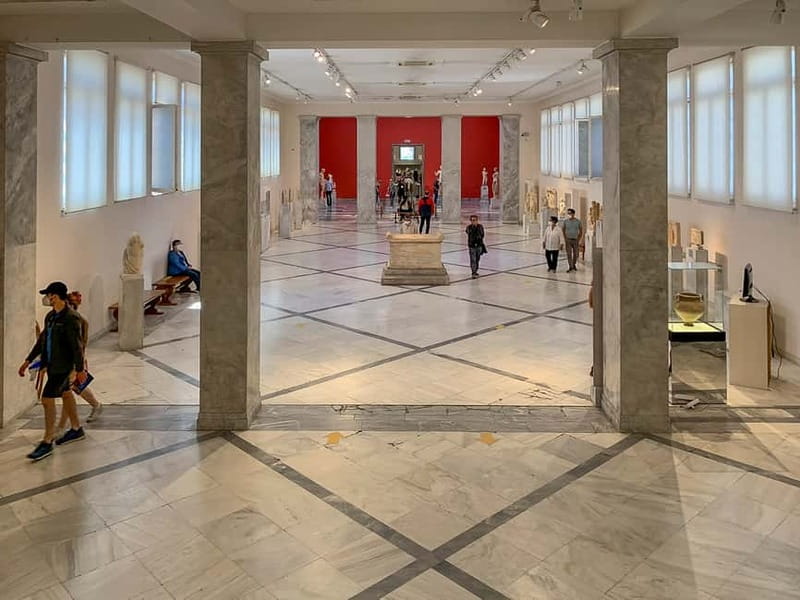
At $199 per person, this is not a budget museum entry. The value depends on how much help you want inside the museum and how many people share the cost.
You are paying for a private group, a licensed guide, admission, and a two-hour route shaped around your interests. That can be worthwhile if you want the main objects explained clearly and do not want to spend time working out which galleries deserve priority.
The price is harder to justify if you enjoy reading labels, moving slowly on your own, or planning to spend several hours with a museum map. A self-guided visit gives you more freedom and may suit you better if the museum itself is your main project.
I see the strongest value for first-time visitors to Athens, families, couples with limited time, and anyone who wants a human explanation of objects that can otherwise feel remote. It can also work well for a group with mixed interests because the guide can adjust the route.
The 4.8 rating from 35 reviews reflects the qualities that matter most here: clear information, friendly guiding, and a stronger understanding of the objects than many people would gain alone. The praise is especially strong for the guide’s ability to explain the meaning and context of the collection, not merely point out famous names.
What the two-hour route feels like
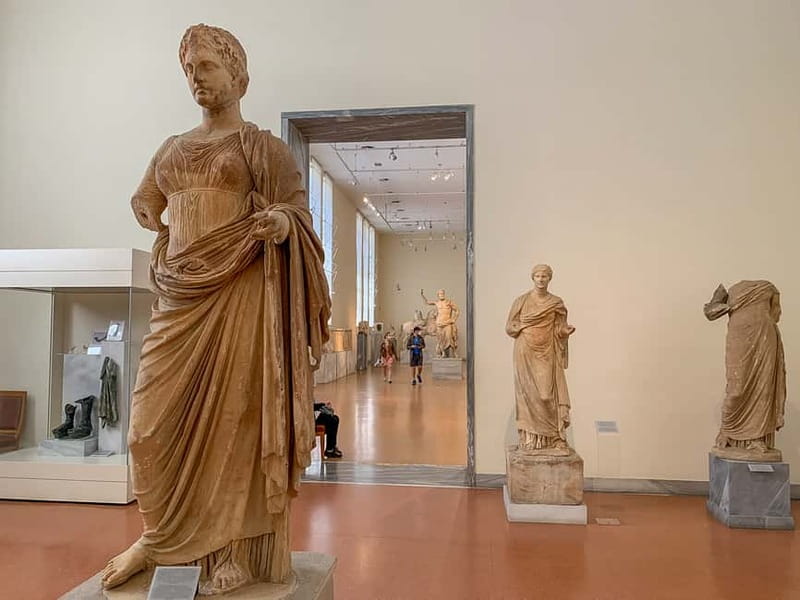
The first part begins at the main entrance, where you meet your guide and enter the museum together. There is no long transfer or separate ticket collection described, so the time is used inside the museum.
From there, expect a selection of major pieces rather than every room. Agamemnon’s mask and the Mycenaean gold objects give the tour an early anchor. The Cup of Nestor and Ring of Theseus bring mythology and legendary figures into the discussion.
The Antikythera Mechanism changes the subject to ancient science. Then the statues of Aphrodite and Poseidon provide a look at Greek sculpture and religious imagery. The exact order can vary, since the guide adapts the tour to your interests.
At the end, you return to the museum entrance. You can then continue exploring on your own if you want to spend more time in the galleries, visit the café by the inner garden, or leave for another Athens sight.
Two hours will pass quickly. If you want a slow look at every display, this tour will feel selective. That is not a flaw, but you should book it for guidance and priorities rather than total coverage.
Who should book this private museum visit?

I would recommend it most strongly to people who want context. The museum contains important objects, but importance is not always obvious from a label. A guide can connect an item to mythology, burial practice, engineering, art, or the wider story of ancient Greece.
It is also a good choice for families. The private setting makes it easier to ask questions, change the pace, and keep children involved. The tour is wheelchair accessible, and pets are not allowed.
This experience suits a first visit to Athens when you want a solid introduction without giving the museum an entire day. It also suits repeat visitors who want to focus on one theme rather than repeat a general highlights tour.
I would be more cautious if your main goal is solitude or a very long museum session. You will have less control over the pace than on a self-guided visit, and the $199 price per person is a serious cost for a two-hour activity.
Practical details that matter
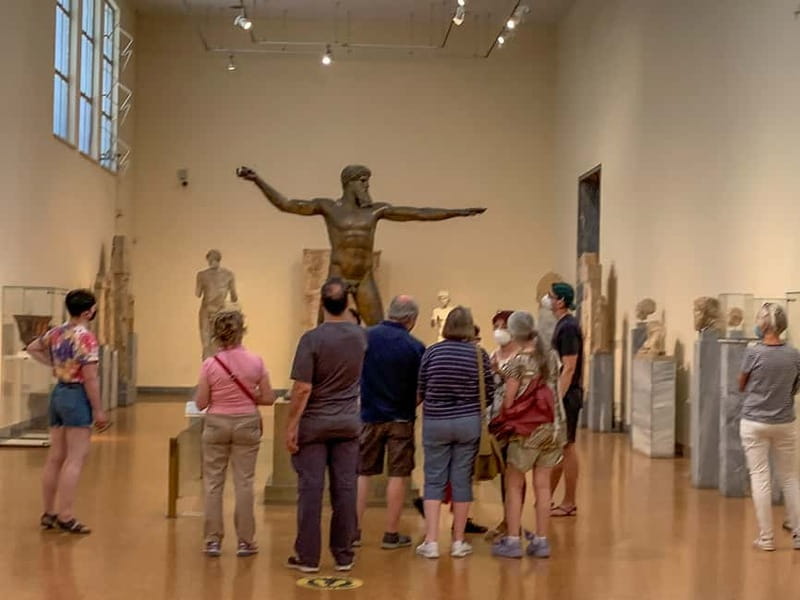
The private tour is offered in English, German, or Italian. You meet your guide at the main entrance, and the guide carries a sign with your name. The experience begins and ends at the National Archaeological Museum.
Admission is included, and you can cancel up to 24 hours before the start for a full refund. A reserve-now-and-pay-later option is available, which helps if your Athens schedule is still shifting.
The museum is wheelchair accessible. Pets are not permitted. For groups of six or more, the whisper communication system is included.
Before the tour starts, tell the guide what you want from the visit. Say if you prefer mythology, archaeology, sculpture, ancient science, family-friendly explanations, or only the major highlights. That small conversation can make this private format much more useful.
Should you book it?
Book this tour if you want the National Archaeological Museum to make sense, not simply to see a famous mask and take a few photos. The licensed guide, included admission, private format, and adaptable subject matter give you a focused introduction to one of Athens’ most important museums.
Skip it if you prefer exploring alone, already know the collection well, or want several unhurried hours inside. At $199 per person, the tour earns its price through explanation and personal attention. For a first Athens visit, a family group, or anyone who usually finds museums difficult to navigate, that can be a fair trade.
FAQ
Where does the tour begin?
You meet your guide at the main entrance of the National Archaeological Museum. The guide will have a sign with your name.
Where does the tour end?
The activity ends back at the National Archaeological Museum, at the meeting point.
How long does the tour last?
The guided tour lasts two hours. Starting times depend on availability.
Is admission included?
Yes. Admission tickets are included in the activity price.
Is this a private tour?
Yes. The experience is for a private group.
Which languages are available?
The live tour guide is available in English, German, and Italian.
Can the guide adapt the tour to our interests?
Yes. The commentary can focus on mythology, history, one particular subject, or the museum’s main highlights. The guide can also adapt the explanation to the ages in your group.
Is the tour wheelchair accessible?
Yes. The activity is wheelchair accessible.
What happens if I need to cancel?
You can cancel up to 24 hours in advance for a full refund. A reserve-now-and-pay-later option is also available.
Newly reviewed around Athens
- Athens: workshop for painting landscape with local artist★ 4.6 · 3 reviews
- Athens: Greek Wine & Olive Oil Tasting at Brettos Plaka★ 4.5 · 3 reviews
- Ultimate Tasting of the Volcanic Wines of Greece★ 5.0 · 3 reviews
- Outdoor Yoga and Pilates with Akropolis view★ 4.0 · 5 reviews
- Acropolis of Athens: 60′ Tour in a Vintage Motorcycle★ 5.0 · 4 reviews
- workshop for painting acropolis/landscape with local artist★ 5.0 · 3 reviews
- Athens at Twilight Night Tour with Drinks and Meze Dishes★ 4.8 · 4 reviews
- Breakfast in the markets with olive oil and honey tasting★ 4.8 · 8 reviews
Museums, compared.
Acropolis, Parthenon & Acropolis Museum Guided Tour
Read our review →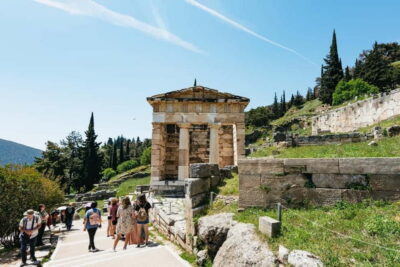
Mythology of Delphi, Museum and Arachova Guided Tour
Read our review →Acropolis, Parthenon & Acropolis Museum Guided Tour
Read our review →
Acropolis monuments & Parthenon Walking Tour with Optional Acropolis Museum
Read our review →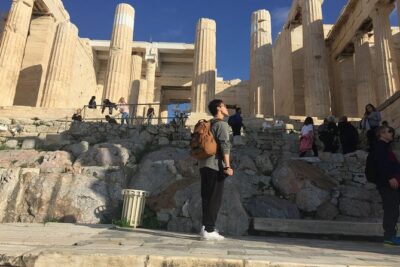
Athens All Included: Acropolis and Museum Guided Tour with Ticket
Read our review →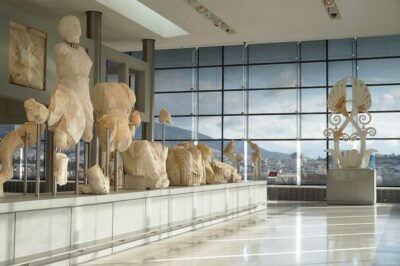
Acropolis Museum Ticket with optional Audio Guide
Read our review →
Small-Group Delphi, Museum & Arachova Day Trip
Read our review →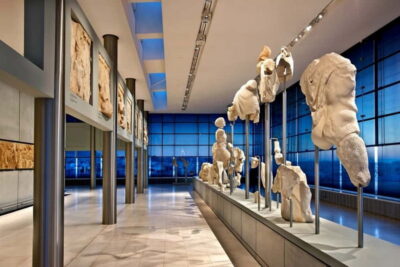
Parthenon & Acropolis Museum with Audio or Live Tour Option
Read our review →Browse the lists this tour appears in