
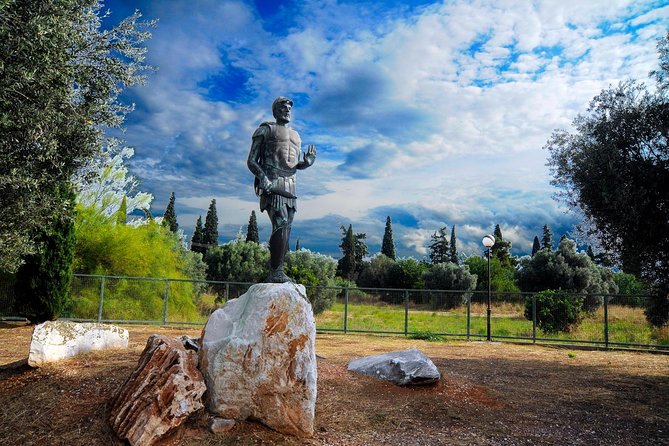
Reviewed · THERMOPYLAE TOURS FROM ATHENS
Marathon, Thermopylae, Thebes/Plataea, Herodotus Private Tour 10h
The most unusual thing about this Athens day trip is that it takes you to the actual ground where the Persian Wars unfolded. You are not simply looking at statues in a city museum. You are standing beside the Marathon burial mound, crossing the old fighting ground at Thermopylae, and visiting Plataea, where the Greek victory of 479 BC helped end the Persian invasion.
I like the private door-to-door transport, which turns a difficult day of driving into a manageable one. I also like the way guides such as Christos, Nikos, and Philippi use maps, booklets, and battle documentaries to make quiet fields easier to understand. The drawback is clear: this is a very long day with a lot of time in the car, and the sites are mostly open fields, roads, springs, and museums rather than grand ruins.
Key points to know before booking
- Three major Persian War battlefields: Visit Marathon, Thermopylae, and Plataea in one ambitious day.
- Private vehicle and flexible timing: Choose a sedan, minivan, or minibus, with pickup from central Athens or Piraeus for an added charge.
- Strong guide element: English-speaking driver-guides provide maps, books, audio material, and documentary clips during the drive.
- Thebes adds real museum value: Its Archaeological Museum has objects from the Palaeolithic period through the Byzantine era.
- Plan for extra costs: Museum and site tickets are not all included, and the advertised price is before entrance fees and possible longer-distance pickup charges.
- Best for serious history fans: If battlefields and ancient military strategy interest you, the long drive has a clear purpose. If not, Delphi may be a better day out.
Why these battlefields matter
The Persian Wars are often reduced to a few famous names: Marathon, Leonidas, and the 300 Spartans. This tour gives you a wider view. It connects the 490 BC battle at Marathon with the stand at Thermopylae in 480 BC and the Greek victory at Plataea in 479 BC.
That sequence matters. Marathon showed that the Persian army could be defeated on Greek soil. Thermopylae became a symbol of resistance, even though the Greek force was defeated. Plataea brought the land campaign toward its end. You begin to see these battles as part of one long struggle rather than isolated stories from a textbook.
The tour is especially useful if you read Herodotus before you go. Even a short refresher will help you follow the movements of armies, the importance of mountain passes, and the way geography shaped each battle. Your guide can add context as you travel, but the day will be more rewarding if the names are already familiar.
More Thermopylae trips from Athens:
- Delphi, Thermopylae, Corycian Cave 300 Spartans Tour
★ 5.0 · 492 reviews - Delphi & Thermopylae Full Day Private Tour from Athens
★ 5.0 · 259 reviews - Thermopylae, Meteora and Delphi Private Full Day Tour
★ 5.0 · 216 reviews
Marathon begins beside the burial mound
The first major stop is the Marathon Tomb, about one kilometer west of Marathon beach. The burial mound rises roughly 10 meters and marks the burial place of the Athenians who died in the 490 BC battle.
You get about 20 minutes here, which is enough to see the mound and absorb the setting, but not enough for a long, unhurried visit. Admission is not included, with a listed price of €5, or €3 reduced. This is one of the places where the physical setting does most of the work. There are no monumental ruins to explore, so the guide’s explanation matters.
From there, you continue to Schinias, the coastal area around Marathon Bay. Today it is known for clear water and beach facilities, but the bay also helps you understand why this area mattered. The stop lasts about 15 minutes, so think of it as a quick look at the coast and a chance for photographs, not a beach visit.
The contrast is useful. You move from the quiet burial mound to a modern resort area, then see how the same coast can be read as both a holiday setting and a military landing zone.
Marathon’s museum fills in the missing pieces
The Archaeological Museum of Marathon is about five kilometers from the bay. Admission is included in the listed itinerary, though the general entrance costs elsewhere in the tour information suggest that you should confirm the exact ticket arrangements before departure.
The museum displays finds from several periods, including Neolithic pottery from the Cave of Pan and objects from the Tomb of the Athenians. This stop gives you something the battlefield itself cannot: artifacts that connect the area to daily life, burial customs, and settlement across long stretches of time.
You have about 20 minutes, so you will need to keep moving. The museum is closed every Tuesday. If your visit falls on that day, ask the operator how the schedule will change. A private tour gives you some room to adjust, but the route already covers a great deal.
You also pass along Leoforos Marathonos, the modern road associated with the Athens Marathon. The race starts in the modern town of Marathon and finishes at Athens’ Olympic Stadium. It is a small but enjoyable link between ancient endurance and a modern sporting tradition.
Lake Marathon and the northern Attica drive
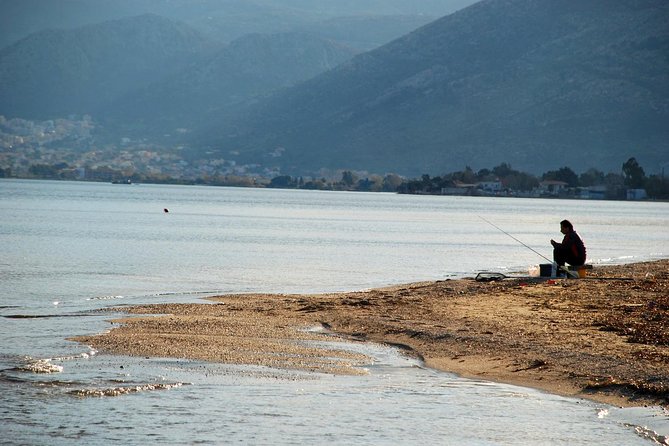
The route includes Lake Marathon, a reservoir created by the Marathon Dam at the meeting point of the Charadros and Varnavas torrents. It supplied Athens from 1931 until 1959, when water from Lake Yliki became available.
This is a scenic pause rather than an archaeological stop. It also breaks up the historical sequence with a look at modern infrastructure. The roads through northern Attica and toward central Greece add to the sense that this is a touring day, not a series of museum visits.
Your driver may stop for photographs or a short break when time allows. Several guides are described as careful drivers who keep the vehicle clean and provide bottled water, phone charging, maps, and printed material. Those details matter on a 10-hour outing.
More Marathon trips from Athens:
- Athens: Marathon Cape and Bay of Schinias Snorkeling Trip
★ 4.8 · 131 reviews - Private Off-Road Tour Marathon Lake and Mountain from Athens
★ 5.0 · 90 reviews - Marathon & Thermopylae Battlefields Private Day Tour from Athens
★ 5.0 · 64 reviews - Private Luxury Tour: Marathon – Battle & Run That Changed History
★ 5.0 · 30 reviews
Thermopylae is more than the statue of Leonidas
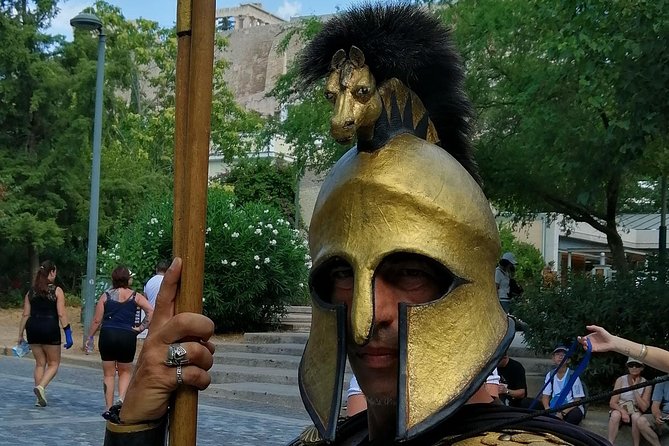
Thermopylae is the emotional center of the tour. The name means Hot Gates, referring to the springs in the area. In 480 BC, the narrow passage became the scene of the famous battle between the Greek force led by Leonidas and the invading Persian army.
The battlefield has changed greatly over time. The shoreline has moved, and the narrow pass described in ancient accounts is not identical to what you see today. That makes the guide’s explanation especially useful. You need help picturing the old route, the surrounding hills, and the tactical problem faced by the Greeks.
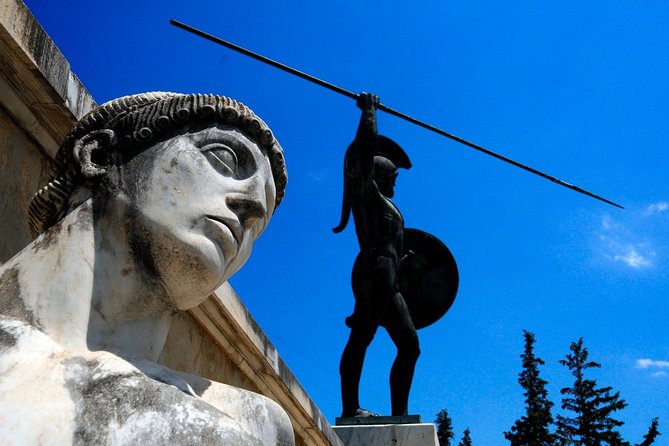
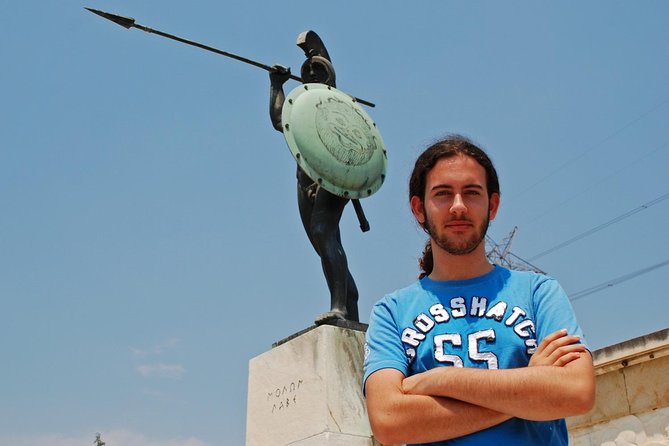
The tour allows about 30 minutes at the battlefield. There is a monument to Leonidas, and you can pause to consider the famous epitaph associated with the fallen Spartans. The setting can feel quiet and surprisingly open, which may be a strength if you want time to think, but a disappointment if you expect preserved walls or a large archaeological complex.
One practical warning deserves attention. You may need to cross a busy highway to reach parts of the Thermopylae site. Take care, follow your guide, and ask whether the vehicle can bring you closer. The road layout is a real safety concern and not a detail to ignore.
The Thermopylae museum and hot springs
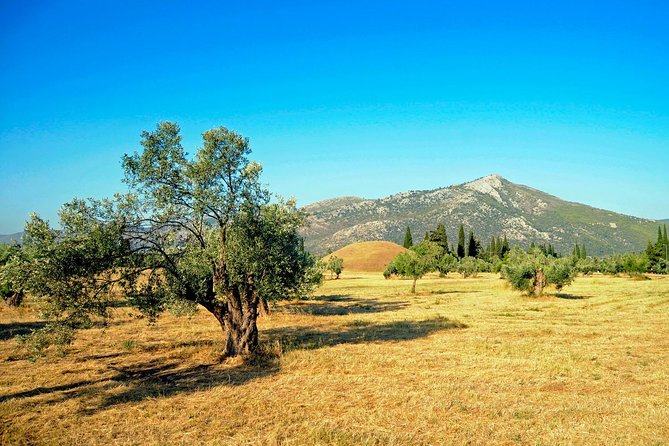
Next to the Leonidas monument is an interactive museum focused on the 480 BC battle. The visit lasts about 30 minutes, and admission is listed at €3, or €1 reduced. It is a useful companion to the open-air stop because it can show the battle in a clearer sequence.
You can use this time to connect the terrain with the military decisions. The museum cannot replace standing outside, and the battlefield cannot explain everything on its own. Taken together, the two stops offer a better picture.
Loutra Thermopilon, the hot springs, receives about 15 minutes. The springs are tied to the area’s name and to ancient mythology, where the hot gates were linked with cavernous entrances to Hades. This is a short atmospheric stop, not a bathing session or a full spa visit.
Thebes brings the best museum stop
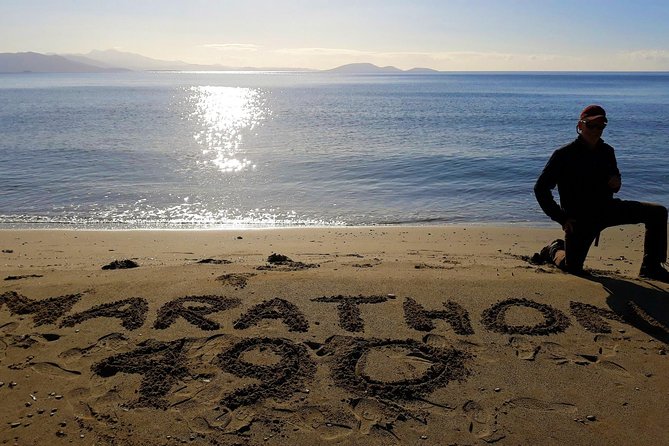
The drive continues through Thebes, one of the most important ancient cities in Boeotia. The Archaeological Museum of Thebes is the most substantial museum visit of the day, with about an hour scheduled.
Its collections cover a long period, from the Palaeolithic era to post-Byzantine times. Finds come from excavations across Boeotia, and some of the objects are rare or unique. This makes the museum valuable even if your main interest is the Persian Wars. It places the battles within a much older regional story.
The museum is closed every Tuesday. General summer admission is listed at €10, with a reduced winter price of €5. Since the tour description gives different entrance-fee details in different places, I would confirm the current total before you set your budget.
An hour is a fair amount of time here, but the museum deserves focus. If you want to read every label, you may need to choose between a detailed museum visit and extra time at Plataea. Tell your guide what matters most to you at the start of the day.
Plataea makes the military story complete
At Plataea, you visit the battlefield associated with the Greek victory of 479 BC. The stop includes Gargathia spring, identified as the place where the battle began, and lasts about 30 minutes.
This is another open site, so do not expect standing temples or reconstructed fortifications. What you gain is scale. You can look across the ground and imagine how armies moved, where water mattered, and why control of the area was important.
Plataea is easy to rush past if you are focused only on famous names. I would not skip it. Without Plataea, the tour ends with the defeat at Thermopylae rather than the Greek recovery and final land victory over the Persian invasion.
The return crosses mountain country
The return route passes through Mount Cithaeron and the ancient area of Eleutherai, then follows the old Athens to Thebes road. Eleutherai controlled a narrow route between Athens and Thebes and formed part of the Athenian defense network in the fourth century BC.
The route also connects with the story of Dionysus Eleuthereus. Ancient tradition linked the god with Eleutherai, and the cult statue was later moved to Athens under Peisistratus. You may not stop for a full archaeological visit, but the drive gives your guide a chance to explain how roads, passes, religion, and military defense overlapped.
You then pass Elefsina and follow the coastal road back toward Athens. After a full day, the return drive can feel long. That is the price of fitting Marathon, Thermopylae, Thebes, and Plataea into one outing.
What the private format is really worth
The price is listed at $331.32 per person, but the value depends heavily on your group size. You can travel in a sedan for up to three adults, a minivan for up to seven people, or a minibus for up to 14. The price varies by vehicle and group size, so a larger party may find the private format more reasonable than a solo visitor.
The fee includes fuel, toll roads, parking, air conditioning, and pickup and drop-off from your Athens hotel or apartment within the stated central area. That removes the hardest part of this route: arranging transport between several distant sites.
Entrance tickets are extra. The listed amounts include €5 for the Marathon Tomb, €3 for Thermopylae Museum, and €10 for the Thebes museum in summer, though the overall tour notes also refer to a combined seasonal admission amount. Set aside additional money and confirm the current total.
Pickup from locations more than seven kilometers from central Athens costs extra. Piraeus and the cruise terminal require a surcharge, while airport and Lavrio port transfers need prior agreement. If you are staying outside central Athens, ask for the exact price before booking.
The guides shape the day
This is sold as a driver-led tour rather than a traditional walking tour with a separate lecturer. That makes the individual guide important. Christos is noted for safe driving, a clean Mercedes sedan, maps, booklets, documentaries, cold water, and phone charging. Nikos is described as friendly and able to add historical detail throughout the route. Philippi is also singled out for patience and extra information.
The operator provides books, maps, and an audio documentary, so you have material to use while driving. Some guides have also adjusted the route when time and circumstances allowed, including adding Salamis or Delphi. Do not assume those additions are included. If one is important to you, ask in advance and understand that adding a major site may change the day or cost.
The tour can be extended beyond 10 hours by arrangement, with an additional hourly charge of €30 for a sedan, €45 for a minivan, or €60 for a minibus.
Who should book this day trip?
I would choose this tour if you have a strong interest in classical history, ancient warfare, Herodotus, or the Persian Wars. It is also a good fit if you have limited time in Athens and want to see several sites that are awkward to reach without a car.
You should think twice if you prefer large ruins, relaxed meals, or a slow pace. Much of the day is spent driving, and several stops last only 15 to 30 minutes. The scenery is part of the experience, but the battlefields can look like ordinary open ground without preparation.
For a non-specialist, Delphi may offer a more immediately rewarding day, with larger archaeological remains and a more obvious visual payoff. For a history-minded visitor, though, this tour offers something Delphi cannot: the chance to connect several decisive events across the actual terrain of central Greece.
Should you book it?
Book it if Marathon, Thermopylae, and Plataea are names you already care about. Read Herodotus beforehand, start at 7:30 a.m. or earlier in summer, and tell your guide which museum or battlefield deserves the most time.
Skip it if you want an easy sightseeing day with little driving. This is a demanding route, but its purpose is clear. You are following the ground of the Persian Wars with a private guide who can turn quiet fields and modern roads into a readable chapter of ancient history.
Cancellation is free up to 24 hours before departure. The experience is offered in English, and most people can take part, but ask about any personal mobility concerns before booking because the route includes uneven outdoor sites and a busy road near Thermopylae.
FAQ
How long does the Marathon, Thermopylae, Thebes, and Plataea tour last?
The tour lasts approximately 10 hours. It is offered as a private, flexible experience, but extending the day beyond the agreed hours costs extra.
Where does pickup take place?
Pickup and drop-off are offered from hotels or apartments in central Athens, generally within seven kilometers of the city center. Piraeus and the cruise terminal require an additional charge, while airport and Lavrio port pickups need prior agreement.
Is transportation included?
Yes. The tour includes private air-conditioned transportation, fuel, toll roads, parking, and pickup and drop-off within the stated service area.
Are entrance fees included?
No. Entrance fees are generally extra. Listed prices include €5 for the Marathon Tomb, €3 for the Thermopylae Museum, and €10 for the Archaeological Museum of Thebes in summer, with reduced rates in some cases.
Are the museums open every day?
The Archaeological Museum of Marathon and the Archaeological Museum of Thebes are closed every Tuesday.
What vehicles are available?
You can choose a sedan for up to three adults or a family of four, a minivan for one to seven people, or a minibus for one to 14 people. The price varies by group size and vehicle type.
Is the tour suitable for people who are not history fans?
The tour is designed mainly for history buffs and focuses on battlefields, museums, mountain roads, and historical explanation. If you prefer major ruins or a slower sightseeing day, Delphi may be a better choice.
Newly reviewed around Athens
- Athens: workshop for painting landscape with local artist★ 4.6 · 3 reviews
- Athens: Greek Wine & Olive Oil Tasting at Brettos Plaka★ 4.5 · 3 reviews
- Outdoor Yoga and Pilates with Akropolis view★ 4.0 · 5 reviews
- Acropolis of Athens: 60′ Tour in a Vintage Motorcycle★ 5.0 · 4 reviews
- Ultimate Tasting of the Volcanic Wines of Greece★ 5.0 · 3 reviews
- workshop for painting acropolis/landscape with local artist★ 5.0 · 3 reviews
- Athens at Twilight Night Tour with Drinks and Meze Dishes★ 4.8 · 4 reviews
- Breakfast in the markets with olive oil and honey tasting★ 4.8 · 8 reviews
Thermopylae Tours from Athens, compared.
Delphi, Thermopylae, Corycian Cave 300 Spartans Tour
Read our review →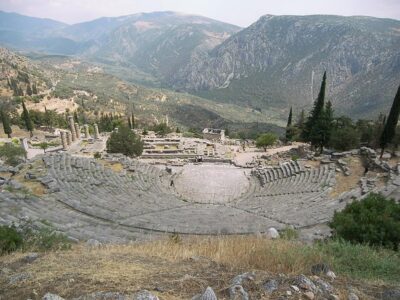
Delphi & Thermopylae Full Day Private Tour from Athens
Read our review →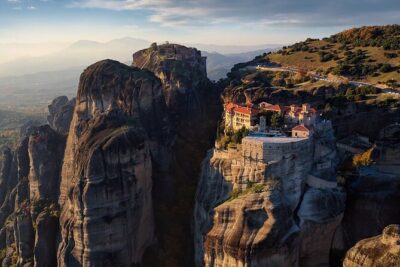
Thermopylae, Meteora and Delphi Private Full Day Tour
Read our review →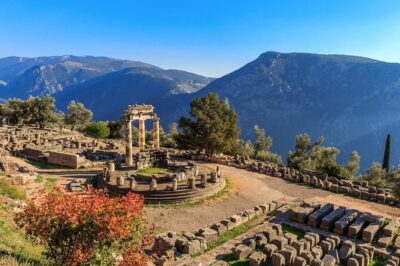
Thermopylae and Delphi Private Full-Day Tour from Athens
Read our review →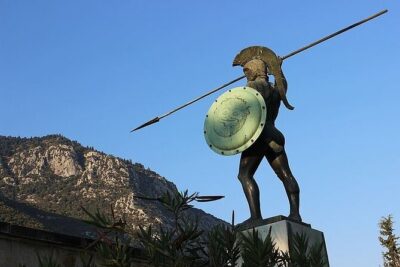
Thermopylae The battle of the 300 Spartans & Delphi Day Tour
Read our review →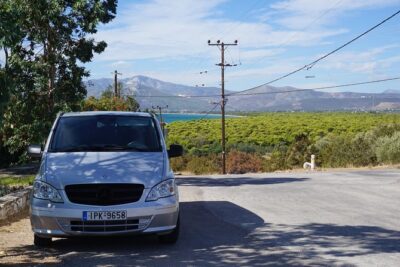
Marathon & Thermopylae Battlefields Private Day Tour from Athens
Read our review →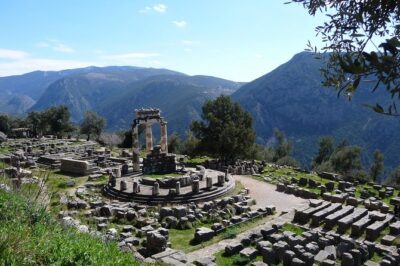
Thermopylae and Delphi full day private tour from Athens
Read our review →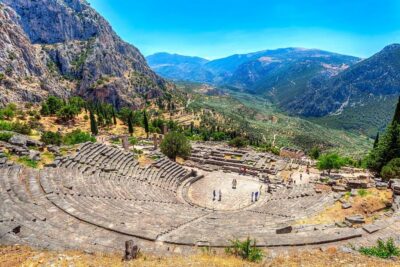
Browse the lists this tour appears in