
Reviewed · ATHENS WALKING TOURS
Highlights and Hidden Gems in Athens Walking Tour
Athens reveals itself best on foot, and this tour links its headline sights with the side streets and quiet corners you could easily miss alone. You start at Syntagma Square and finish at Monastiraki, passing the Acropolis, Temple of Olympian Zeus, Panathenaic Stadium, Plaka, and Mars Hill along the way.
I like the compact route because it gives you a useful first look at central Athens in only two and a half hours. I also like the stop for a traditional Greek sweet in a café favored by locals, plus the chance to hear practical shopping tips instead of being marched through souvenir stalls. The main drawback is the amount of uphill walking, so comfortable shoes are essential, and the schedule can feel tight if you stop often for photos or have a cruise transfer to catch.
Key points to know before booking
- Syntagma Square sets the scene: Learn how modern Athens works before heading into its ancient core.
- The route covers major landmarks: You see the Acropolis, Temple of Olympian Zeus, Panathenaic Stadium, and Tomb of the Unknown Soldier.
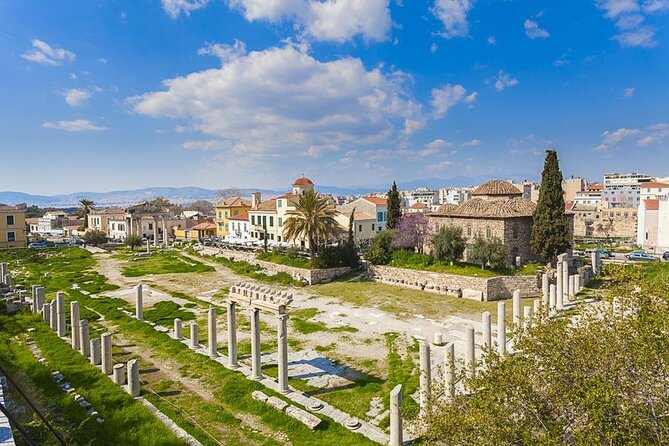
- Plaka gets more than a quick glance: Small lanes, red-roofed houses, and the quiet National Garden add texture to the walk.
- Mars Hill brings a strong city view: The stop gives you a different angle on the Acropolis and central Athens.
- A Greek sweet breaks up the walk: You pause at a local café and hear about nearby artisan shops.
- The route ends at Monastiraki: This makes the tour useful for continuing into the market area after your guide leaves.
Starting at Syntagma Square and the Tomb of the Unknown Soldier

The tour begins at Leoforos Vasilisis Amalias 2, beside Syntagma Square. This is a sensible meeting point because it puts you in the middle of modern Athens, close to public transport and the ceremonial heart of the city.
Your first stop covers the square, the meaning of the word Syntagma, the Tomb of the Unknown Soldier, and the National Guards. Allow about ten minutes here. The guard ceremony gives you a quick look at present-day Greek tradition before the tour turns toward ancient monuments.
I like this opening because it avoids treating Athens as one giant archaeological site. You first get a sense of the city as a capital with government buildings, public squares, and national rituals. The route then moves through layers of time rather than presenting the Acropolis as an isolated postcard.
The meeting point is easy to reach, but Syntagma can feel confusing if you arrive at the last minute. Give yourself enough time to identify the exact starting address and find your guide. Confirmation arrives when you book, and the tour is offered in English.
More walking tours in Athens:
- Athens: Acropolis and Parthenon Guided Walking Tour
★ 4.6 · 5,882 reviews - Greek Food Walking Tour in Athens
★ 5.0 · 4,740 reviews - Acropolis: Acropolis and Parthenon Guided Walking Tour
★ 4.7 · 3,442 reviews
A quieter walk through the National Garden
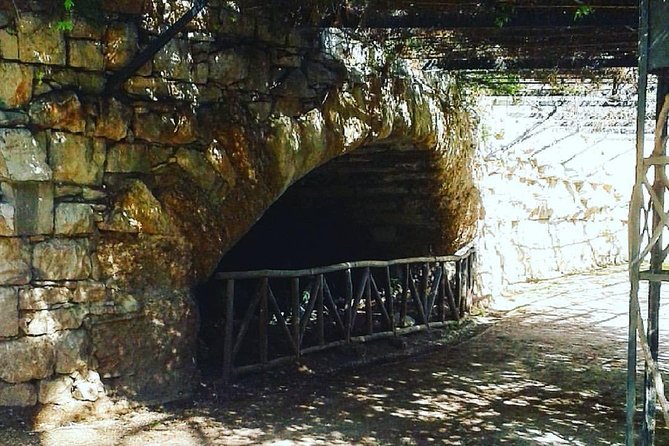
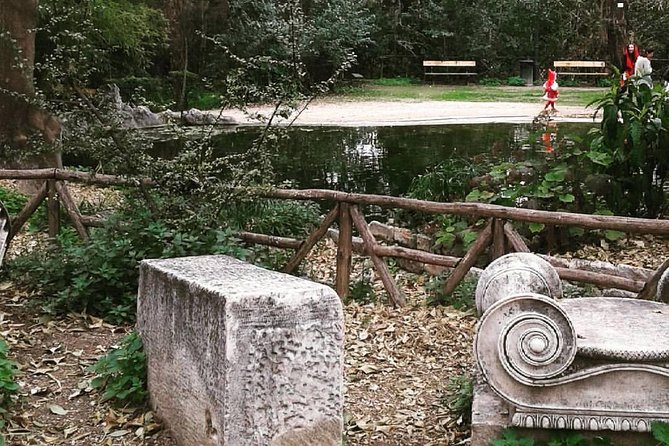
From Syntagma, the route continues through the National Garden. This portion offers a break from traffic and gives you a chance to see traces of the ancient city in a greener setting.
The garden stop is useful because a guide can point out details that have little explanation on their own. The itinerary refers to ruins from the ancient city, so you are not simply crossing a park on the way to the next major monument. You are looking at surviving pieces of Athens within the modern capital.
This section also helps pace the walk. The tour moves through several major sights, and a quieter stretch gives you time to listen, ask questions, and adjust to the heat. Athens can be hot even when the walking distance looks modest on paper, so this pause matters.
You should still think of the experience as an active walking tour. The full route includes uneven city streets, open spaces, and uphill sections. If you need a slow pace, tell your guide at the start. Most people can participate, but the schedule is not designed as a seated sightseeing trip.
The Panathenaic Stadium and the 1896 Olympic story
Next comes the neoclassical ceremonial center connected with the first modern Olympic Games of 1896, followed by the Panathenaic Stadium. The stadium is one of Athens’ most memorable sights because its white marble seating and long, narrow shape make it feel different from a modern sports arena.
The guide provides the setting for what you are seeing rather than leaving the stadium as a quick photo stop. You can connect the ancient athletic tradition with the revival of the Olympic Games in the modern era.
The itinerary says the tour heads to the stadium, but it does not promise an interior admission ticket. Treat this as a guided exterior visit unless your booking details say otherwise. That distinction matters if you hope to walk through the stands or onto the track.
This is one place where timing can affect your experience. A two-and-a-half-hour tour cannot offer long visits at every monument. You get a broad introduction and useful context, not an in-depth archaeological examination of each site.
Temple of Olympian Zeus, seen in the middle of the city
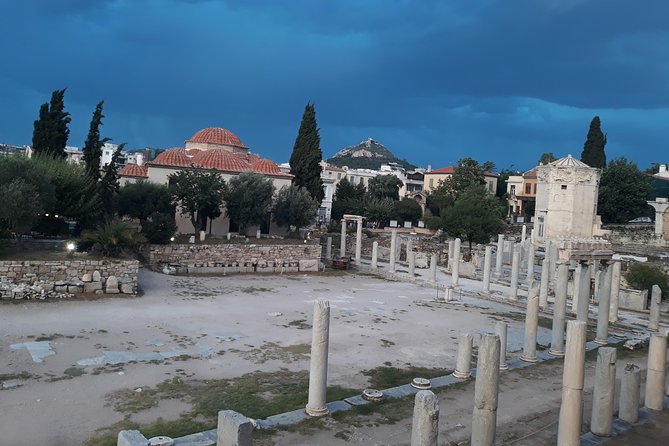
The walk then reaches the Temple of Olympian Zeus. Even from the surrounding area, the remaining columns show the scale of the ancient project and the ambition behind it.
The stop works well within this tour because it connects naturally with the Acropolis. You see two of Athens’ major ancient landmarks in one route, but from different settings. The Temple of Olympian Zeus sits amid the modern city, while the Acropolis rises above it and dominates the wider view.
Again, the description focuses on strolling around the temple rather than promising entry. If you want to spend serious time inside the archaeological site, you will need a separate visit or a tour built around admission and extended exploration.
The guaranteed skip-the-long-lines feature is useful when it applies to an attraction with a queue, but you should confirm exactly which entrances it covers. The supplied details do not specify individual ticket inclusions, and food, drinks, lunch, and admission charges are not listed as included.
A different kind of day out from Athens:
- Athens: Acropolis & up to 5 Archaeological Sites Combo Pass
★ 4.4 · 12,619 reviews - Athens: Acropolis Ticket with Optional Audio or Live Guide
★ 4.2 · 11,055 reviews - Athens: Acropolis, Parthenon & Acropolis Museum Guided Tour
★ 4.8 · 9,316 reviews - Athens: Cape Sounion & Poseidon Temple Sunset Half-Day Trip
★ 4.8 · 8,241 reviews
Plaka, the Acropolis, and Athens from Mars Hill
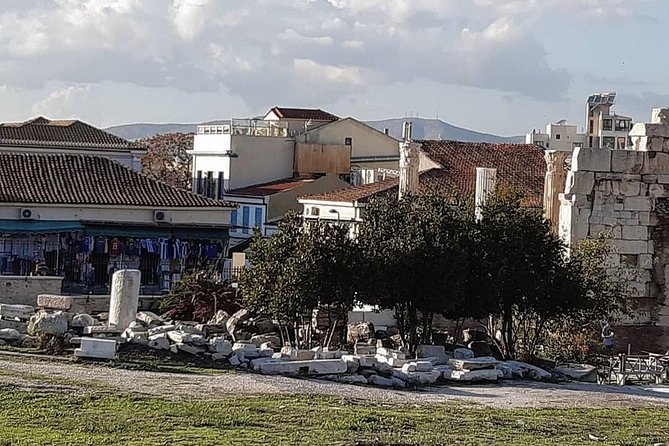
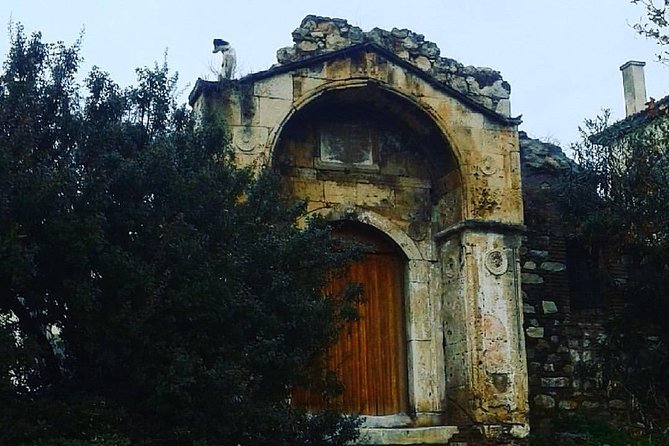
The route continues around the Acropolis and through Plaka, Athens’ old central quarter. Here the tour shifts from grand monuments to small lanes, older houses, and the kind of street-level detail that is easy to miss when you follow only the main road.
One especially appealing part is the route through quieter areas and the small red-roofed houses. The phrase hidden island of Athens refers to this tucked-away feel, not a separate island excursion. You remain in the city, but the narrow lanes can make central Athens feel surprisingly removed from its traffic.
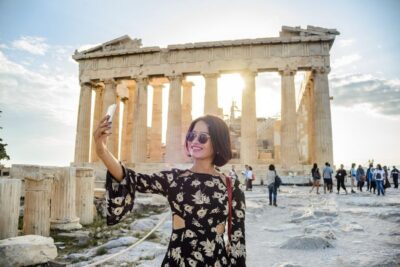
The Acropolis portion appears to be a guided walk around the area, not a full archaeological-site visit. You will see the landmark and hear about its place in Athens, but do not assume that the $90.93 price includes a ticket to enter the Acropolis complex.
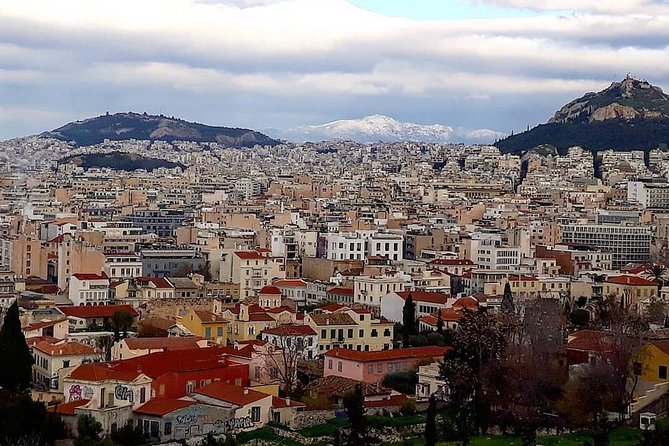
Mars Hill adds one of the route’s best viewpoints. From here, you can admire the Acropolis from a different angle and see how the ancient hill relates to the surrounding neighborhoods. The stop also comes after a good deal of walking, including uphill stretches, so this is where sturdy shoes and water become especially important.
The guide can add value here by explaining how the old quarter, ancient monuments, and modern city fit together. Dionysis, Alice, and Elena are names associated with this experience, and Elena was praised for answering questions carefully and making the walk work for a five-year-old child. Guide quality can vary by departure, but the format allows for conversation rather than a one-way lecture.
A Greek sweet and practical shopping advice
Near the end, you take a break from the heat at a café favored by locals and sample a traditional Greek sweet. Food is not generally included as a meal, and drinks are not included, so think of this as a small tasting stop rather than lunch.
This is one of my favorite features of the route. A short café pause gives the walk a human rhythm, and a sweet offers a simple introduction to Greek food without taking up the time or cost of a full restaurant meal. Alcoholic drinks are available to buy, but they are not part of the tour price.
You also hear about nearby artisan souvenir shops. That guidance can help you shop with more purpose after the tour. Instead of wandering through every shop around Monastiraki, you can ask where to look for locally made items and compare what you see.
Do not expect a dedicated shopping excursion. The point is orientation and local advice. If you spend too long browsing, you may cut into the time available for the later stops.
Ending at Monastiraki Square and the old market area

The tour ends at Monastiraki Square, at Apollonos 21. This is a practical finish because you are left in one of central Athens’ best areas for continuing on your own.
The itinerary describes the market as having more than a thousand years of use, a reminder that this part of Athens has long been tied to trade and public life. Today, Monastiraki gives you a useful contrast with Syntagma. You began among government buildings and national ceremonies, then crossed ancient sites and residential lanes, and finish in a busy commercial quarter.
Monastiraki metro station is nearby, so the end point works well if you need to continue by public transport. It is also helpful for anyone catching a transfer, though you should allow your own extra time. One participant had to shorten a longer version of the walking experience because of cruise timing, which is a good warning for anyone with a ship departure or fixed pickup.
The guide does not return you to Syntagma. Plan your onward route before the walk, especially if you are carrying luggage or need to reach a port transfer.
How much value do you get for $90.93?
At $90.93 per person, this is not the cheapest way to see central Athens. The value comes from the number of major sights covered, the English-speaking local guide, the small format, the route planning, and the chance to hear about places beyond the usual photo stops.
You are paying for a guided overview rather than individual entry into every monument. That makes the price easier to justify if you want a quick orientation at the start of a longer Athens visit, or if you have only a short port stop and need someone else to organize the route.
The experience is less compelling if you already plan to spend a full day at the Acropolis and visit each landmark independently. You may prefer to put the money toward entrance tickets and take your time inside the sites.
The group size is advertised as limited to 12 people, while the booking information also describes the activity as private, with only your group participating. Since those descriptions do not fully match, confirm the arrangement before paying if group size is important to you. A smaller group usually makes questions and pace easier, but the exact format should be clear at booking.
The tour is often reserved well ahead of time, with an average booking lead time of 71 days. That suggests you should reserve early for a particular date, especially if your visit falls in a busy season.
Pace, heat, and what to wear
This is a city walk, not a gentle stroll. The route includes uphill walking toward the Acropolis and Mars Hill, long stretches between landmarks, and outdoor stops with limited shade.
Wear casual clothing and comfortable shoes. Bring water, and plan for sun and heat even if the official duration looks short. The guide can adjust attention and pace to some degree, but the tour still needs to reach Monastiraki within about two and a half hours.
Families can take part, and children must be accompanied by an adult. The experience worked well for one five-year-old when the guide kept the explanations engaging, but younger children may tire during the uphill sections.
Service animals are allowed, and the tour is near public transportation. Most people can participate, but the combination of distance, stairs or uneven pavement, and heat is worth considering before booking.
Who should book this Athens walk?
I would choose this tour for a first visit when you want the big Athens sights explained in one connected route. It also suits you if you prefer local stories, side streets, and a café stop to a strict monument-to-monument schedule.
It is a good fit for cruise passengers only if your port timing leaves plenty of room. The tour can be adapted in some cases, but you should not count on a refund if you miss it because your ship arrives late or does not arrive. Allow a generous buffer before any required transfer.
Families may appreciate the shorter format and the guide’s ability to answer questions. Couples and small groups who want a private experience should clarify the group arrangement, since the details describe both a maximum of 12 people and a private activity.
I would skip it if you dislike uphill walking, need extensive time inside each archaeological site, or want a relaxed food tour. This experience gives you a broad, lively introduction to central Athens, but it asks you to keep moving.
Should you book the Highlights and Hidden Gems in Athens Walking Tour?
Book it if you want one efficient introduction to Athens that combines Syntagma, the Olympic sites, Zeus, Plaka, the Acropolis area, Mars Hill, and Monastiraki. The guide-led route adds value by showing you quieter corners and giving you a café pause instead of rushing between monuments.
Before booking, confirm whether your departure is private or capped at 12 people, and check what the skip-the-line benefit covers. If you can handle the hills and keep your schedule flexible, the tour offers a useful first chapter to an Athens visit. If you want deep time inside the Acropolis or a slow, sit-down day, choose a longer or more specialized experience instead.
FAQ
How long does the Athens walking tour last?
The tour lasts approximately two hours and 30 minutes.
Where does the tour begin?
It begins at Leoforos Vasilisis Amalias 2 in Athens, near Syntagma Square.
Where does the tour end?
It ends at Monastiraki Square, near Monastiraki metro station, at Apollonos 21.
Is food included?
A traditional Greek sweet is included as part of the café stop, but drinks, lunch, food and drinks, and alcoholic drinks are not listed as included. Alcoholic drinks can be purchased.
Is the tour suitable for children?
Children can participate but must be accompanied by an adult. Most people can take part, although the route includes uphill walking.
What is the cancellation policy?
You can cancel at least 24 hours before the local start time for a full refund. Cancellations or changes made within 24 hours are not refunded or accepted, and no refund is issued if you miss the activity because your cruise ship is late or does not arrive.
Newly reviewed around Athens
- Athens: workshop for painting landscape with local artist★ 4.6 · 3 reviews
- Athens: Greek Wine & Olive Oil Tasting at Brettos Plaka★ 4.5 · 3 reviews
- Outdoor Yoga and Pilates with Akropolis view★ 4.0 · 5 reviews
- Acropolis of Athens: 60′ Tour in a Vintage Motorcycle★ 5.0 · 4 reviews
- Ultimate Tasting of the Volcanic Wines of Greece★ 5.0 · 3 reviews
- workshop for painting acropolis/landscape with local artist★ 5.0 · 3 reviews
- Athens at Twilight Night Tour with Drinks and Meze Dishes★ 4.8 · 4 reviews
- Breakfast in the markets with olive oil and honey tasting★ 4.8 · 8 reviews
Athens Walking Tours, compared.

Acropolis monuments & Parthenon Walking Tour with Optional Acropolis Museum
Read our review →

Athens Authentic Greek Food Walking Tour (Small Group)
Read our review →
Early Morning Acropolis & Old Athens Guided Walking Tour
Read our review →
Browse the lists this tour appears in